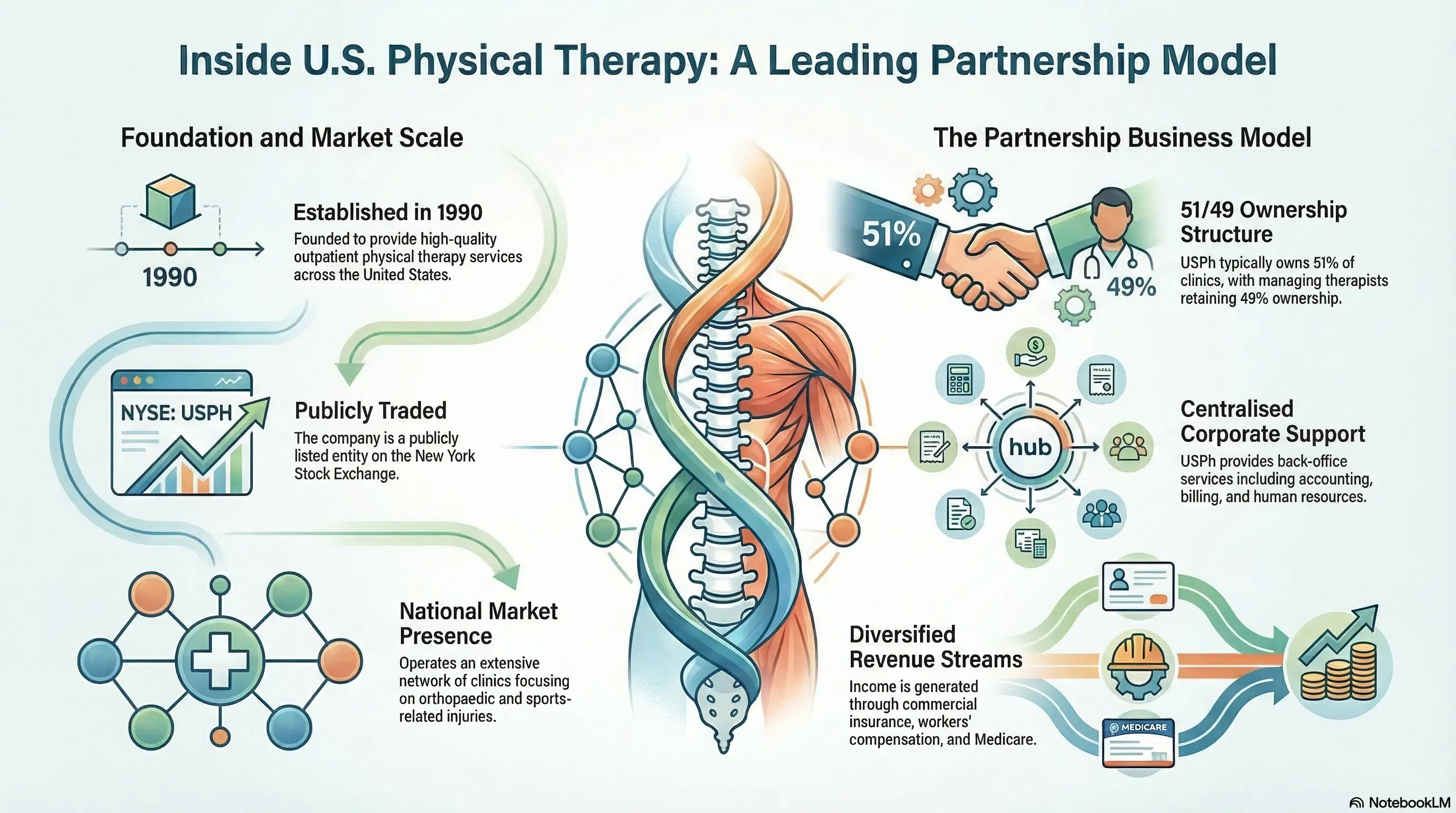
Company at a Glance
Price
Infographic
Overview
U.S. Physical Therapy, Inc. is a publicly traded company that provides physical therapy and other related services through a network of over 560 clinics in 39 states. The company was founded in 1990 and is headquartered in Houston, Texas.
The company’s clinics offer a range of physical therapy services, including orthopedic rehabilitation, neurologic rehabilitation, sports medicine, occupational therapy, and industrial medicine. They also provide wellness programs and integrate new technologies and methods into their treatment plans.
U.S. Physical Therapy, Inc. is committed to providing high-quality care to patients and has received several national and industry awards for its excellence in patient satisfaction and clinical outcomes.
The company’s mission is to help patients reach their full potential and achieve their goals through compassionate, personalized care. They also strive to be a leader in the physical therapy industry by investing in their employees and staying current with advancements in the field.
U.S. Physical Therapy, Inc. is committed to being socially responsible and actively supports charities and organizations that align with their values, such as the American Heart Association and the Arthritis Foundation.
How to explain to a 10 year old kid about the company?

📈 Want to read more about U.S. Physical Therapy?
Sign up for free
or
log in
🙌 Join now to get "The Checklist Value Investor — A Smarter Way to Pick Stocks" at no cost
QWxyaWdodC EgU28sIGxl dOKAmXMgaW 1hZ2luZSBh IHBsYWNlIH doZXJlIHBl b3BsZSBnby B3aGVuIHRo ZXkgaGF2ZS BhY2hlcywg cGFpbnMsIG 9yIGNhbuKA mXQgbW92ZS BhcyBlYXNp bHkgYXMgdG hleSB1c2Vk IHRvLiBUaG lzIGlzIHdo YXQgYSBVLl MuIFBoeXNp Y2FsIFRoZX JhcHkgY29t cGFueSBkb2 VzLiBUaGV5 IGhlbHAgcG VvcGxlIGZl ZWwgYmV0dG VyIGFuZCBn ZXQgc3Ryb2 5nZXIgYnkg dXNpbmcgc3 BlY2lhbCBl eGVyY2lzZX MgYW5kIHRy ZWF0bWVudH MuIDxicj5X aGVuIHNvbW VvbmUgZ2V0 cyBodXJ04o CUbWF5YmUg dGhleSBzcH JhaW5lZCBh biBhbmtsZS BwbGF5aW5n IHNvY2Nlci BvciBoYWQg c3VyZ2Vyee KAlHRoZXkg bWlnaHQgZ2 8gdG8gc2Vl IGEgcGh5c2 ljYWwgdGhl cmFwaXN0Li BUaGUgdGhl cmFwaXN0IH dpbGwgY3Jl YXRlIGEgcG xhbiB3aXRo IGV4ZXJjaX NlcyBhbmQg c3RyZXRjaG VzIHRvIGhl bHAgdGhhdC BwZXJzb24g aGVhbC4gVG hleSB0ZWFj aCBwZW9wbG UgdGhlIHJp Z2h0IHdheS B0byBtb3Zl IHNvIHRoZX kgY2FuIHN0 YXkgc2FmZS BhbmQgbm90 IGdldCBodX J0IGFnYWlu Ljxicj5Ob3 csIGhvdyBk b2VzIHRoZS Bjb21wYW55 IG1ha2UgbW 9uZXk/IFRo ZXkgY2hhcm dlIG1vbmV5 IGZvciBlYW NoIGFwcG9p bnRtZW50IH RoYXQgcGVv cGxlIGhhdm Ugd2l0aCB0 aGUgcGh5c2 ljYWwgdGhl cmFwaXN0cy 4gSW5zdXJh bmNlIGNvbX BhbmllcyBv ZnRlbiBwYX kgZm9yIHBh cnQgb2YgdG hlc2UgYXBw b2ludG1lbn RzLCB3aGlj aCBoZWxwcy B0aGUgY29t cGFueSBlYX JuIG1vbmV5 IHRvby4gU2 8sIHRoZSBt b3JlIHBlb3 BsZSB0aGV5 IGhlbHAsIH RoZSBtb3Jl IG1vbmV5IH RoZXkgY2Fu IG1ha2UuPG JyPlRoZSBj b21wYW55IG lzIHN1Y2Nl c3NmdWwgZm 9yIGEgZmV3 IHJlYXNvbn MuIEZpcnN0 LCBtYW55IH Blb3BsZSBu ZWVkIGhlbH Agd2l0aCBw aHlzaWNhbC Bpc3N1ZXMs IGFuZCB0aG VyZSBhcmUg YWx3YXlzIG 5ldyBwYXRp ZW50cyBjb2 1pbmcgaW4u IFNlY29uZC wgdGhleSBo YXZlIHRyYW luZWQgc3Rh ZmYgd2hvIG tub3cgYSBs b3QgYWJvdX QgaG93IHRo ZSBib2R5IH dvcmtzLCB3 aGljaCBtYW tlcyBwZW9w bGUgdHJ1c3 QgdGhlbS4g RmluYWxseS wgdGhleSBr ZWVwIGZpbm RpbmcgbmV3 IHdheXMgdG 8gaGVscCB0 aGVpciBwYX RpZW50cywg bGlrZSB1c2 luZyB0aGUg bGF0ZXN0IH Rvb2xzIG9y IHRlY2hub2 xvZ3kuPGJy PiA8YnI+TG 9va2luZyBp bnRvIHRoZS BmdXR1cmUs IHRoZXkgd2 lsbCBsaWtl bHkgY29udG ludWUgdG8g ZG8gd2VsbC BiZWNhdXNl IHBlb3BsZS B3aWxsIGFs d2F5cyBuZW VkIGhlbHAg d2l0aCB0aG VpciBib2Rp ZXMsIGVzcG VjaWFsbHkg YXMgdGhleS BnZXQgb2xk ZXIgb3IgaW YgdGhleSBo YXZlIGluan VyaWVzLiBQ bHVzLCBhcy Bsb25nIGFz IHRoZXkga2 VlcCBwcm92 aWRpbmcgZ2 9vZCBjYXJl IGFuZCBoZW xwaW5nIHBh dGllbnRzIG ZlZWwgYmV0 dGVyLCBtb3 JlIHBlb3Bs ZSB3aWxsIH dhbnQgdG8g Y29tZSB0by B0aGVtIGZv ciBoZWxwIS BUaGF04oCZ cyB3aHkgdG hpcyBraW5k IG9mIGNvbX BhbnkgaXMg bGlrZWx5IH RvIHN0YXkg c3VjY2Vzc2 Z1bC48YnI+
What is special about the company?
📈 Want to read more about U.S. Physical Therapy?
Sign up for free
or
log in
👥 Free eBook for new users: "The Checklist Value Investor — A Smarter Way to Pick Stocks"
MS4gTGFyZ2 VzdCBvcGVy YXRvcjogVS 5TLiBQaHlz aWNhbCBUaG VyYXB5IGlz IHRoZSBsYX JnZXN0IHB1 YmxpY2x5IH RyYWRlZCBv cGVyYXRvci BvZiBvdXRw YXRpZW50IH BoeXNpY2Fs IHRoZXJhcH kgY2xpbmlj cyBpbiB0aG UgVW5pdGVk IFN0YXRlcy 4gSXQgb3Bl cmF0ZXMgb3 ZlciA2MDAg Y2xpbmljcy BhY3Jvc3Mg Mzggc3RhdG VzLjxicj4y LiBFeGNlcH Rpb25hbCBy ZXZlbnVlIG dyb3d0aDog VGhlIGNvbX BhbnkgaGFz IGV4cGVyaW VuY2VkIGNv bnNpc3Rlbn QgcmV2ZW51 ZSBncm93dG ggb3ZlciB0 aGUgeWVhcn MsIHdpdGgg b3ZlciAkMS 40IGJpbGxp b24gaW4gbm V0IHJldmVu dWVzIGluID IwMTkuPGJy PjMuIFN0cm 9uZyBmaW5h bmNpYWwgcG VyZm9ybWFu Y2U6IFUuUy 4gUGh5c2lj YWwgVGhlcm FweSBib2Fz dHMgYSBzdH JvbmcgZmlu YW5jaWFsIH BlcmZvcm1h bmNlIGFuZC Bwcm9maXRh YmlsaXR5IH dpdGggYSBy ZXR1cm4gb2 4gZXF1aXR5 IG9mIDIwLj g0JSBhbmQg YSBwcm9maX QgbWFyZ2lu IG9mIDEwLj QxJS48YnI+ NC4gRGl2ZX JzaWZpZWQg c2VydmljZS BvZmZlcmlu Z3M6IFRoZS Bjb21wYW55 IG9mZmVycy BhIHdpZGUg cmFuZ2Ugb2 YgcGh5c2lj YWwgdGhlcm FweSBzZXJ2 aWNlcywgaW 5jbHVkaW5n IG9ydGhvcG VkaWMgcmVo YWJpbGl0YX Rpb24sIHNw b3J0cyBtZW RpY2luZSwg aW5kdXN0cm lhbCByZWhh YmlsaXRhdG lvbiwgYW5k IHBlZGlhdH JpYyBzZXJ2 aWNlcy4gVG hpcyBkaXZl cnNpZmljYX Rpb24gaGVs cHMgdG8gbW l0aWdhdGUg cG90ZW50aW FsIHJpc2tz IGFuZCBlbn N1cmVzIGEg c3RlYWR5IH N0cmVhbSBv ZiByZXZlbn VlLjxicj41 LiBQcmVmZX JyZWQgcHJv dmlkZXIgbm V0d29yazog VS5TLiBQaH lzaWNhbCBU aGVyYXB5IG hhcyByZWxh dGlvbnNoaX BzIHdpdGgg bnVtZXJvdX MgaW5zdXJh bmNlIHByb3 ZpZGVycyBh bmQgbWFuYW dlcyBhIHBy ZWZlcnJlZC Bwcm92aWRl ciBuZXR3b3 JrIG9mIG92 ZXIgNjAsMD AwIHBoeXNp Y2lhbnMuIF RoaXMgYWxs b3dzIGZvci BhIHN0ZWFk eSBmbG93IG 9mIHBhdGll bnRzIGFuZC BoZWxwcyB0 byBtYWludG FpbiBoaWdo IG9jY3VwYW 5jeSByYXRl cyBpbiB0aG VpciBjbGlu aWNzLjxicj 42LiBDbGlu aWNhbCBleH BlcnRpc2U6 IFRoZSBjb2 1wYW55IGlz IGtub3duIG ZvciBpdHMg aGlnaCBzdG FuZGFyZCBv ZiBjbGluaW NhbCBleHBl cnRpc2UgYW 5kIGV2aWRl bmNlLWJhc2 VkIHByYWN0 aWNlLiBJdC BoYXMgYSB0 ZWFtIG9mIG hpZ2hseSB0 cmFpbmVkIH BoeXNpY2Fs IHRoZXJhcG lzdHMgd2hv IHNwZWNpYW xpemUgaW4g dmFyaW91cy BhcmVhcyBv ZiByZWhhYm lsaXRhdGlv bi48YnI+Ny 4gQ29tbWl0 bWVudCB0by BwYXRpZW50 IGNhcmU6IF UuUy4gUGh5 c2ljYWwgVG hlcmFweSBp cyBjb21taX R0ZWQgdG8g cHJvdmlkaW 5nIHBhdGll bnRzIHdpdG ggdGhlIGJl c3QgcXVhbG l0eSBjYXJl LCBldmlkZW 5jZWQgYnkg d2lubmluZy BudW1lcm91 cyBhd2FyZH MgZm9yIHBh dGllbnQgc2 F0aXNmYWN0 aW9uIGFuZC BjbGluaWNh bCBleGNlbG xlbmNlLjxi cj44LiBTdH JhdGVnaWMg cGFydG5lcn NoaXBzOiBU aGUgY29tcG FueSBoYXMg c3RyYXRlZ2 ljIHBhcnRu ZXJzaGlwcy B3aXRoIGhl YWx0aGNhcm UgcHJvdmlk ZXJzLCBob3 NwaXRhbHMs IGFuZCBvdG hlciBoZWFs dGhjYXJlIG 9yZ2FuaXph dGlvbnMuIF RoaXMgYWxs b3dzIGZvci Bjcm9zcy1y ZWZlcnJhbH MgYW5kIG11 dHVhbGx5IG JlbmVmaWNp YWwgcmVsYX Rpb25zaGlw cy48YnI+OS 4gU3Ryb25n IG1hbmFnZW 1lbnQgdGVh bTogVS5TLi BQaHlzaWNh bCBUaGVyYX B5IGhhcyBh IHN0cm9uZy BhbmQgZXhw ZXJpZW5jZW QgbWFuYWdl bWVudCB0ZW FtIHdpdGgg YSBwcm92ZW 4gdHJhY2sg cmVjb3JkIG luIHRoZSBo ZWFsdGhjYX JlIGluZHVz dHJ5Ljxicj 4xMC4gRXhw YW5zaW9uIG FuZCBncm93 dGggcG90ZW 50aWFsOiBX aXRoIHRoZS BpbmNyZWFz aW5nIGZvY3 VzIG9uIGhl YWx0aGNhcm UgYW5kIHdl bGxuZXNzLC B0aGUgZGVt YW5kIGZvci BwaHlzaWNh bCB0aGVyYX B5IHNlcnZp Y2VzIGlzIG V4cGVjdGVk IHRvIGdyb3 cuIFRoaXMg cHJlc2VudH MgYW4gb3Bw b3J0dW5pdH kgZm9yIHRo ZSBjb21wYW 55IHRvIGV4 cGFuZCBpdH Mgb3BlcmF0 aW9ucyBhbm QgaW5jcmVh c2UgaXRzIG 1hcmtldCBz aGFyZSBpbi B0aGUgZnV0 dXJlLg==
What the company's business model?
📈 Want to read more about U.S. Physical Therapy?
Sign up for free
or
log in
📘 Claim your free eBook: "The Checklist Value Investor — A Smarter Way to Pick Stocks"
VGhlIFUuUy 4gUGh5c2lj YWwgVGhlcm FweSBjb21w YW554oCZcy BidXNpbmVz cyBtb2RlbC BpcyBhIGZl ZS1mb3Itc2 VydmljZSBt b2RlbCwgd2 hlcmUgdGhl eSBnZW5lcm F0ZSByZXZl bnVlIGJ5IH Byb3ZpZGlu ZyBwaHlzaW NhbCB0aGVy YXB5IHNlcn ZpY2VzIHRv IHBhdGllbn RzIGFuZCBi aWxsaW5nIG luc3VyYW5j ZSBjb21wYW 5pZXMgb3Ig aW5kaXZpZH VhbHMgZm9y IHRob3NlIH NlcnZpY2Vz LiBBZGRpdG lvbmFsbHks IHRoZXkgbW F5IGFsc28g c2VsbCBwcm 9kdWN0cyBy ZWxhdGVkIH RvIHBoeXNp Y2FsIHRoZX JhcHksIHN1 Y2ggYXMgYn JhY2VzIGFu ZCB0aGVyYX B5IGVxdWlw bWVudCwgYW 5kIG9mZmVy IGNvbnN1bH Rpbmcgc2Vy dmljZXMgdG 8gb3RoZXIg aGVhbHRoY2 FyZSBmYWNp bGl0aWVzLi BUaGUgY29t cGFueSBhbH NvIGFjcXVp cmVzIGFuZC BtYW5hZ2Vz IHBoeXNpY2 FsIHRoZXJh cHkgY2xpbm ljcywgZXhw YW5kaW5nIH RoZWlyIHJl YWNoIGFuZC BzZXJ2aWNl cy4gVGhleS BtYXkgYWxz byBwYXJ0bm VyIHdpdGgg b3RoZXIgaG VhbHRoY2Fy ZSBwcm92aW RlcnMgYW5k IG9yZ2FuaX phdGlvbnMg dG8gb2ZmZX IgY29tcHJl aGVuc2l2ZS BjYXJlIHRv IHBhdGllbn RzLg==
Is AI a threat?
AI presents both challenges and opportunities for physical therapy companies in the U.S. Its impact on products, services, and competitive positioning can be assessed through three key areas: substitution, disintermediation, and margin pressure.
1. Substitution: AI technologies, such as tele-rehabilitation platforms and virtual therapy solutions, can serve as substitutes for iperson physical therapy services. These solutions use AI to provide personalized exercise regimens and monitor patient progress remotely. While they may enhance accessibility and convenience for patients, they could potentially reduce the demand for traditional physical therapy clinics. Companies that fail to integrate AI into their offerings may lose market share to competitors that provide innovative, technology-enhanced services.
2. Disintermediation: AI can facilitate direct interactions between patients and rehabilitation solutions, eliminating the need for certain intermediaries, such as traditional physical therapists for some routine or straightforward cases. This trend could lead to a shift in the industry where patients increasingly rely on AI-powered platforms for rehabilitation guidance, potentially impacting revenue for physical therapy providers who rely on a traditional care model. To remain competitive, physical therapy companies may need to adopt hybrid models that blend iperson and virtual therapy services.
3. Margin Pressure: The integration of AI technologies can lead to increased operational efficiencies, reducing overhead costs for physical therapy companies. However, as the market adopts more AI solutions, increased competition may arise, leading to price pressures on services. Companies that do not leverage AI to enhance their efficiency or to provide unique, value-added services may face challenges in maintaining their profit margins in a more competitive landscape.
In summary, while AI poses potential threats to the traditional business model of physical therapy companies through substitution and disintermediation, it also offers opportunities for enhancing efficiency and creating competitive advantages. Adapting to these changes will be crucial for companies in this sector to thrive in an evolving market.
Sensitivity to interest rates
The sensitivity of a U.S. Physical Therapy company’s earnings, cash flow, and valuation to changes in interest rates can be analyzed through several perspectives:
1. Earnings: In general, a rise in interest rates can increase borrowing costs for businesses, including physical therapy companies, especially if they rely on loans for expansion or operations. Higher interest rates may lead to reduced disposable income for consumers, potentially resulting in decreased demand for elective or noessential physical therapy services. This can negatively impact revenue and ultimately affect earnings. Conversely, lower interest rates might reduce borrowing costs and encourage consumer spending, positively influencing earnings.
2. Cash Flow: Interest rates directly impact a company’s cash flow, particularly if the company has existing debt. Increased interest rates can lead to higher interest payments, thereby reducing net cash flow. In a capital-intensive industry like physical therapy, where investments in equipment and facilities are common, fluctuating interest rates can influence capital expenditures and operational funding. A stable or declining interest rate environment typically supports more favorable cash flow conditions, enabling easier financing for growth opportunities and operational expenses.
3. Valuation: The valuation of a physical therapy company, often assessed through discounted cash flow analysis, is sensitive to the discount rate used, which typically incorporates prevailing interest rates. As interest rates rise, the discount rate increases, leading to lower present values of future cash flows and ultimately lowering the company’s valuation. Conversely, lower interest rates decrease the discount rate, enhancing the present value of the firm’s future earnings, thereby increasing its valuation.
In summary, the sensitivity of a U.S. Physical Therapy company’s earnings, cash flow, and valuation to interest rate changes is significant and multidimensional, with higher rates generally posing challenges and lower rates providing opportunities for growth and improved financial performance.
Resilience to the future changes
📈 Want to read more about U.S. Physical Therapy?
Sign up for free
or
log in
📘 Claim your free eBook: "The Checklist Value Investor — A Smarter Way to Pick Stocks"
QSByZWFsaX N0aWMgc2Nl bmFyaW8gb3 ZlciB0aGUg bmV4dCAz4o CTNSB5ZWFy cyB0aGF0IG NvdWxkIHBl cm1hbmVudG x5IGltcGFp ciB0aGUgZW Nvbm9taWNz IG9mIGEgVS 5TLiBwaHlz aWNhbCB0aG VyYXB5IGNv bXBhbnkgaX MgYSBzaWdu aWZpY2FudC BoZWFsdGhj YXJlIHBvbG ljeSBzaGlm dCB0b3dhcm RzIHZhbHVl LWJhc2VkIG NhcmUgcmVp bWJ1cnNlbW VudCBtb2Rl bHMgdGhhdC BmYXZvciBu b3BoeXNpY2 FsIHRoZXJh cHkgYWx0ZX JuYXRpdmVz LCBzdWNoIG FzIHRlbGVt ZWRpY2luZS BvciBkaWdp dGFsIGhlYW x0aCBzb2x1 dGlvbnMuIF RoaXMgc2hp ZnQgY291bG QgYmUgZHJp dmVuIGJ5IG dvdmVybm1l bnQgcmVndW xhdGlvbnMg b3IgY2hhbm dlcyBpbiBp bnN1cmFuY2 UgcmVpbWJ1 cnNlbWVudC Bwb2xpY2ll cyBhaW1lZC BhdCByZWR1 Y2luZyBjb3 N0cyBhbmQg aW1wcm92aW 5nIHBhdGll bnQgb3V0Y2 9tZXMuPGJy PkluIHRoaX Mgc2NlbmFy aW8sIHRoZS Bjb21wYW55 IGNvdWxkIG V4cGVyaWVu Y2Ugc2V2ZX JhbCBuZWdh dGl2ZSBpbX BhY3RzOjxi cj4xLiA8c3 Ryb25nPkRl Y2xpbmluZy BQYXRpZW50 IFZvbHVtZT wvc3Ryb25n PjogQXMgaW 5zdXJlcnMg aW5jcmVhc2 luZ2x5IGZh dm9yIHRlbG VoZWFsdGgg b3B0aW9ucy Bmb3IgcmVo YWJpbGl0YX Rpb24gYW5k IHRoZXJhcH ksIHRyYWRp dGlvbmFsIH BoeXNpY2Fs IHRoZXJhcH kgcHJhY3Rp Y2VzIG1heS BzZWUgYSBz aWduaWZpY2 FudCBkZWNs aW5lIGluIH BhdGllbnQg dm9sdW1lLi BQYXRpZW50 cyBtYXkgb3 B0IGZvciBt b3JlIGFjY2 Vzc2libGUg YW5kIHBvdG VudGlhbGx5 IGxlc3MgY2 9zdGx5IGRp Z2l0YWwgc2 9sdXRpb25z LCBsZWFkaW 5nIHRvIGFu IGltbWVkaW F0ZSBkcm9w IGluIHJldm VudWUuPGJy PjIuIDxzdH Jvbmc+UHJl c3N1cmUgb2 4gUHJpY2lu Zzwvc3Ryb2 5nPjogVGhl IGNvbXBhbn kgbWF5IGZh Y2UgY29tcG V0aXRpdmUg cHJlc3N1cm UgdG8gbG93 ZXIgZmVlcy BvciBvZmZl ciBidW5kbG VkIHNlcnZp Y2VzIHRvIH JldGFpbiBw YXRpZW50cy 4gVGhpcyBj b3VsZCBsZW FkIHRvIGRl Y3JlYXNlZC BhdmVyYWdl IHJldmVudW UgcGVyIHBh dGllbnQsIG Z1cnRoZXIg c3F1ZWV6aW 5nIG1hcmdp bnMuPGJyPj MuIDxzdHJv bmc+SW5jcm Vhc2VkIE9w ZXJhdGlvbm FsIENvc3Rz PC9zdHJvbm c+OiBUbyBh ZGFwdCB0by BuZXcgbW9k ZWxzLCB0aG UgY29tcGFu eSBtYXkgbm VlZCB0byBp bnZlc3QgaW 4gdGVjaG5v bG9neSB0by Bjb21wZXRl IHdpdGggZW 1lcmdpbmcg dGVsZWhlYW x0aCBwcm92 aWRlcnMuIF RoZSBjb3N0 cyBhc3NvY2 lhdGVkIHdp dGggYWRvcH RpbmcgbmV3 IHN5c3RlbX MgYW5kIHRy YWluaW5nIH N0YWZmIGNv dWxkIGxlYW QgdG8gaW5j cmVhc2VkIG 9wZXJhdGlv bmFsIGV4cG Vuc2VzLjxi cj40LiA8c3 Ryb25nPkNh c2ggRmxvdy BDb25zdHJh aW50czwvc3 Ryb25nPjog V2l0aCBsb3 dlciByZXZl bnVlIGFuZC Bwb3RlbnRp YWxseSBoaW doZXIgY29z dHMsIGNhc2 ggZmxvdyB3 b3VsZCB0aW dodGVuLiBU aGUgY29tcG FueSBtaWdo dCBzdHJ1Z2 dsZSB0byBt ZWV0IG9wZX JhdGlvbmFs IGV4cGVuc2 VzIG9yIGlu dmVzdCBpbi Bncm93dGgs IGxlYWRpbm cgdG8gc3Rh Z25hbnQgb3 IgZGVjcmVh c2luZyBjYX NoIHJlc2Vy dmVzLjxicj 41LiA8c3Ry b25nPkJhbG FuY2UgU2hl ZXQgRGV0ZX Jpb3JhdGlv bjwvc3Ryb2 5nPjogQXMg Y2FzaCBmbG 93IGRpbWlu aXNoZXMsIH RoZSBjb21w YW55IG1heS BiZSBmb3Jj ZWQgdG8gdG FrZSBvbiBk ZWJ0IHRvIG 1haW50YWlu IG9wZXJhdG lvbnMgb3Ig ZnVuZCBuZW Nlc3Nhcnkg dGVjaG5vbG 9naWNhbCBp bnZlc3RtZW 50cy4gSW5j cmVhc2VkIG xpYWJpbGl0 aWVzIGFuZC ByZWR1Y2Vk IGNhc2ggcm VzZXJ2ZXMg d291bGQgd2 9yc2VuIHRo ZSBiYWxhbm NlIHNoZWV0 LCBwb3Rlbn RpYWxseSBs ZWFkaW5nIH RvIGxpcXVp ZGl0eSBjb2 5jZXJucy48 YnI+SWYgdG hpcyBzY2Vu YXJpbyBwbG F5ZWQgb3V0 LCB0aGUgY2 9tcGFueeKA mXMgbWFyZ2 lucyB3b3Vs ZCBsaWtlbH kgc2hyaW5r IHNpZ25pZm ljYW50bHkg ZnJvbSB0aG VpciBjdXJy ZW50IGxldm VscywgcG9z c2libHkgbW 92aW5nIGZy b20gaGVhbH RoeSBwcm9m aXQgbWFyZ2 lucyB0byBi cmVha2V2ZW 4gb3IgZXZl biBuZWdhdG l2ZSBtYXJn aW5zLiBDYX NoIGZsb3cg d291bGQgYm Vjb21lIGNv bnN0cmFpbm VkLCByZXN1 bHRpbmcgaW 4gcmVkdWNl ZCBvcGVyYX Rpb25hbCBm bGV4aWJpbG l0eS4gVGhl IGJhbGFuY2 Ugc2hlZXQg d291bGQgbG lrZWx5IHNo b3cgaW5jcm Vhc2VkIGRl YnQgbGV2ZW xzIGFuZCBk ZWNyZWFzZW QgZXF1aXR5 LCByZWZsZW N0aW5nIGFu IG92ZXJhbG wgZGV0ZXJp b3JhdGlvbi BpbiBmaW5h bmNpYWwgaG VhbHRoLjxi cj5PdmVyIH RpbWUsIGlm IHRoZSBjb2 1wYW55IGlz IHVuYWJsZS B0byBhZGFw dCBlZmZlY3 RpdmVseSB0 byB0aGUgbm V3IGxhbmRz Y2FwZSwgaX QgbWF5IGZh Y2UgbG9uZy 10ZXJtIHZp YWJpbGl0eS Bpc3N1ZXMs IHBvdGVudG lhbGx5IGxl YWRpbmcgdG 8gZG93bnNp emluZywgbW VyZ2Vycywg b3IgZXZlbi BjbG9zdXJl IGlmIHVuYW JsZSB0byBj b21wZXRlIH dpdGggbW9y ZSBhZ2lsZS Bwcm92aWRl cnMgaW4gdG hlIG1hcmtl dC48YnI+
Interesting facts about the company
📈 Want to read more about U.S. Physical Therapy?
Sign up for free
or
log in
💡 Learn smarter stock picks with "The Checklist Value Investor — A Smarter Way to Pick Stocks"
CiAgICAgIC AgICAgIDxk aXYgc3R5bG U9J3dpZHRo OiAxMDAlOy BkaXNwbGF5 OiBmbGV4Oy BqdXN0aWZ5 LWNvbnRlbn Q6IGNlbnRl cjsnPgogIC AgICAgICAg ICAgICAgPG RpdiBzdHls ZT0nCiAgIC AgICAgICAg ICAgICAgIC AgZGlzcGxh eTogZmxleD sKICAgICAg ICAgICAgIC AgICAgICBh bGlnbi1pdG VtczogY2Vu dGVyOwogIC AgICAgICAg ICAgICAgIC AgIGJhY2tn cm91bmQtY2 9sb3I6ICNm MGY0Zjg7Ci AgICAgICAg ICAgICAgIC AgICAgYm9y ZGVyOiAxcH ggc29saWQg I2QxZTNmMD sKICAgICAg ICAgICAgIC AgICAgICBi b3JkZXItcm FkaXVzOiAx MHB4OwogIC AgICAgICAg ICAgICAgIC AgIHBhZGRp bmc6IDEwcH g7CiAgICAg ICAgICAgIC AgICAgICAg bWFyZ2luOi AyMHB4IDA7 CiAgICAgIC AgICAgICAg ICAgICAgZm 9udC1mYW1p bHk6ICJTZW dvZSBVSSIs IFJvYm90by wgc2Fucy1z ZXJpZjsKIC AgICAgICAg ICAgICAgIC AgICBib3gt c2hhZG93Oi AwIDJweCA2 cHggcmdiYS gwLCAwLCAw LCAwLjA1KT sKICAgICAg ICAgICAgIC AgICAgICBt YXgtd2lkdG g6IDkwMHB4 OwogICAgIC AgICAgICAg ICAgICAgIH dpZHRoOiAx MDAlOyc+Cg ogICAgICAg ICAgICAgIC AgICAgIDxp bWcgc3JjPS Jhc3NldHMv bG9nb3Mvcj RHdTFvOHZs ckxHalZBa2 ZNWGsud2Vi cCIgYWx0PS JVLlMuIFBo eXNpY2FsIF RoZXJhcHki IHRpdGxlPS JVLlMuIFBo eXNpY2FsIF RoZXJhcHki ICBjbGFzcz 0iaW1nLWZs dWlkIiBoZW lnaHQ9NTAg d2lkdGg9NT AgbG9hZGlu Zz0nbGF6eS cgc3R5bGU9 J2JvcmRlci 1yYWRpdXM6 IDZweDsnPg oKICAgICAg ICAgICAgIC AgICAgICA8 ZGl2IHN0eW xlPSdmbGV4 OiAxOyB0ZX h0LWFsaWdu OiBjZW50ZX I7IG1hcmdp bi1sZWZ0Oi A1cHg7Jz4K ICAgICAgIC AgICAgICAg ICAgICAgIC AgPHAgc3R5 bGU9J2Zvbn Qtc2l6ZTog MjZweDsgY2 9sb3I6ICMz MzM7IG1hcm dpbi1ib3R0 b206IDE1cH g7Jz4KICAg ICAgICAgIC AgICAgICAg ICAgICAgIC AgIPCfk4gg V2FudCB0by ByZWFkIG1v cmUgYWJvdX QgVS5TLiBQ aHlzaWNhbC BUaGVyYXB5 PwogICAgIC AgICAgICAg ICAgICAgIC AgICA8L3A+ CgogICAgIC AgICAgICAg ICAgICAgIC AgICA8YSBo cmVmPSdpbm RleC5waHA/ cGFnZT1zaW dudXAnIHN0 eWxlPScKIC AgICAgICAg ICAgICAgIC AgICAgICAg ICAgIGJhY2 tncm91bmQt Y29sb3I6IC MwMDdCRkY7 CiAgICAgIC AgICAgICAg ICAgICAgIC AgICAgICBj b2xvcjogI2 ZmZjsKICAg ICAgICAgIC AgICAgICAg ICAgICAgIC AgIHBhZGRp bmc6IDEwcH ggMjBweDsK ICAgICAgIC AgICAgICAg ICAgICAgIC AgICAgIGJv cmRlci1yYW RpdXM6IDVw eDsKICAgIC AgICAgICAg ICAgICAgIC AgICAgICAg IHRleHQtZG Vjb3JhdGlv bjogbm9uZT sKICAgICAg ICAgICAgIC AgICAgICAg ICAgICAgIG ZvbnQtd2Vp Z2h0OiBib2 xkOwogICAg ICAgICAgIC AgICAgICAg ICAgICAgIC AgbWFyZ2lu LXJpZ2h0Oi AxMHB4Owog ICAgICAgIC AgICAgICAg ICAgICAgIC AgICAgdHJh bnNpdGlvbj ogYmFja2dy b3VuZC1jb2 xvciAwLjNz IGVhc2U7Jw ogICAgICAg ICAgICAgIC AgICAgICAg ICAgICAgb2 5tb3VzZW92 ZXI9J3RoaX Muc3R5bGUu YmFja2dyb3 VuZENvbG9y PSIjMDA1Nm IzIicKICAg ICAgICAgIC AgICAgICAg ICAgICAgIC AgIG9ubW91 c2VvdXQ9J3 RoaXMuc3R5 bGUuYmFja2 dyb3VuZENv bG9yPSIjMD A3QkZGIic+ CiAgICAgIC AgICAgICAg ICAgICAgIC AgICAgICBT aWduIHVwIG ZvciBmcmVl CiAgICAgIC AgICAgICAg ICAgICAgIC AgIDwvYT4K CiAgICAgIC AgICAgICAg ICAgICAgIC AgIDxzcGFu IHN0eWxlPS dtYXJnaW46 IDAgOHB4Oy Bjb2xvcjog IzU1NTsnPm 9yPC9zcGFu PgoKICAgIC AgICAgICAg ICAgICAgIC AgICAgPGEg aHJlZj0naW 5kZXgucGhw P3BhZ2U9bG 9naW4nIHN0 eWxlPScKIC AgICAgICAg ICAgICAgIC AgICAgICAg ICAgIGNvbG 9yOiAjMDA3 QkZGOwogIC AgICAgICAg ICAgICAgIC AgICAgICAg ICAgdGV4dC 1kZWNvcmF0 aW9uOiB1bm RlcmxpbmU7 CiAgICAgIC AgICAgICAg ICAgICAgIC AgICAgICBm b250LXdlaW dodDogNTAw Oyc+CiAgIC AgICAgICAg ICAgICAgIC AgICAgICAg ICBsb2cgaW 4KICAgICAg ICAgICAgIC AgICAgICAg ICAgPC9hPg oKCiAgICAg ICAgICAgIC AgICAgICAg ICAgIDxwIH N0eWxlPSdt YXJnaW4tdG 9wOiAxNXB4 OyBmb250LX NpemU6IDEz cHg7IGZvbn Qtd2VpZ2h0 OiBib2xkOy Bjb2xvcjog I2QzMmYyZj snPgogICAg ICAgICAgIC AgICAgICAg ICAgICAgIC Ag8J+TpSBH ZXQgb3VyIG ZyZWUgZUJv b2sgbm93Oi A8aT4iVGhl IENoZWNrbG lzdCBWYWx1 ZSBJbnZlc3 RvciDigJQg QSBTbWFydG VyIFdheSB0 byBQaWNrIF N0b2NrcyI8 L2k+CiAgIC AgICAgICAg ICAgICAgIC AgICAgIDwv cD4KCiAgIC AgICAgICAg ICAgICAgIC AgICAgIDwh LS0KICAgIC AgICAgICAg ICAgICAgIC AgICAgPGRp diBzdHlsZT 0nbWFyZ2lu LXRvcDogMT JweDsgZm9u dC1zaXplOi AxM3B4OyBj b2xvcjogIz Q0NDsnPgog ICAgICAgIC AgICAgICAg ICAgICAgIC AgICAgU2ln biB1cCBub3 cgYW5kIGdl dCBvdXIgZn JlZSBlQm9v ayAKICAgIC AgICAgICAg ICAgICAgIC AgICAgICAg IDxiPlRoZS BDaGVja2xp c3QgVmFsdW UgSW52ZXN0 b3Ig4oCUIE EgU21hcnRl ciBXYXkgdG 8gUGljayBT dG9ja3M8L2 I+CiAgICAg ICAgICAgIC AgICAgICAg ICAgIDwvZG l2PgogICAg ICAgICAgIC AgICAgICAg ICAgICAtLT 4KICAgICAg ICAgICAgIC AgICAgICAg ICAgPCEtLQ ogICAgICAg ICAgICAgIC AgICAgICAg ICA8ZGl2IH N0eWxlPSdt YXJnaW4tdG 9wOiAxNnB4 OyBmb250LX NpemU6IDE0 cHg7IGNvbG 9yOiAjNDQ0 OyBmb250LW ZhbWlseTog LWFwcGxlLX N5c3RlbSwg QmxpbmtNYW NTeXN0ZW1G b250LCBTZW dvZSBVSSwg Um9ib3RvLC BIZWx2ZXRp Y2EgTmV1ZS wgc2Fucy1z ZXJpZjsgbG luZS1oZWln aHQ6IDEuNj snPgogICAg ICAgICAgIC AgICAgICAg ICAgICAgIC AgSGF2ZSB5 b3UgaGVhcm QgYWJvdXQg b3VyIHNob3 J0IDxzdHJv bmcgc3R5bG U9J2ZvbnQt d2VpZ2h0Oi A2MDA7Jz5E YWlseSBWaW RlbyBOZXdz bGV0dGVyPC 9zdHJvbmc+ PwogICAgIC AgICAgICAg ICAgICAgIC AgICAgICAg PGEgaHJlZj 0naHR0cHM6 Ly93d3cuaW 5zaWdodGZ1 bHZhbHVlLm NvbS9uZXdz bGV0dGVyLn BocCcgdGFy Z2V0PSdfYm xhbmsnIHN0 eWxlPSdjb2 xvcjogIzAw N0JGRjsgdG V4dC1kZWNv cmF0aW9uOi Bub25lOyBm b250LXdlaW dodDogNTAw OyBtYXJnaW 4tbGVmdDog NnB4Oyc+Ci AgICAgICAg ICAgICAgIC AgICAgICAg ICAgICAgIC AgRmluZCBv dXQgbW9yZQ ogICAgICAg ICAgICAgIC AgICAgICAg ICAgICAgPC 9hPgogICAg ICAgICAgIC AgICAgICAg ICAgICA8L2 Rpdj4KICAg ICAgICAgIC AgICAgICAg ICAgICAgLS 0+CiAgICAg ICAgICAgIC AgICAgICAg PC9kaXY+Ci AgICAgICAg ICAgICAgIC A8L2Rpdj4K ICAgICAgIC AgICAgPC9k aXY+CiAgIC AgICAgICAg IAogICAgIC AgIAogICAg ICAgIDxzcG FuIGNsYXNz PSdibHVycm VkLXRleHQn PgogICAgIC AgICAgICBN UzRnVlM1VE xpIEJRYUhs emFXTmggYk NCVWFHVnlZ WCBCNUlIZG hjeUJtIGIz VnVaR1ZrSU cgbHVJREU1 T1RBZyBZbm tnUjJGeWVT IEJNTGlCVG FHVm0gWm1s bGJHUXNJRy BFZ2NHaDVj MmxqIFlXd2 dkR2hsY20g RndhWE4wSU dGdSBaQ0Js Ym5SeVpYIE J5Wlc1bGRY SXUgUEdKeV BqSXVJRiBS b1pTQm1hWE p6IGRDQmpi R2x1YVcgTW diMllnVlM1 VCBMaUJRYU hsemFXIE5o YkNCVWFHVn kgWVhCNUlI ZGhjeSBCc2 IyTmhkR1Zr IElHbHVJRU 5zWlcgRnlJ RXhoYTJVZy BRMmwwZVN3 Z1ZHIFY0WV hNc0lHRnUg WkNCM1lYTW dibSBGdFpX UWdWR2hsIG NtRndlU0JC YzMgTnZZMm xoZEdWeiBJ RzltSUVodm RYIE4wYjI0 dVBHSnkgUG pNdUlGVXVV eSA0Z1VHaD VjMmxqIFlX d2dWR2hsY2 0gRndlU0Jw Y3lCaCBJSE IxWW14cFky IHg1SUhSeV lXUmwgWkNC amIyMXdZVy A1NUlHOXVJ SFJvIFpTQk 9aWGNnV1cg OXlheUJUZE c5aiBheUJG ZUdOb1lXID VuWlNCMWJt UmwgY2lCMG FHVWdkRyBs amEyVnlJSE 41IGJXSnZi Q0JWVTEgQk lManhpY2o0 MCBMaUJVYU dVZ1kyIDl0 Y0dGdWVTQn AgY3lCb1pX RmtjWCBWaG NuUmxjbVZr IElHbHVJRW h2ZFggTjBi MjRzSUZSbC BlR0Z6TENC aGJtIFFnYj NCbGNtRjAg WlhNZ2IzWm xjaSBBMU5U QWdiM1YwIG NHRjBhV1Z1 ZEMgQmpiR2 x1YVdOeiBJ R0ZqY205em N5IEF6T1NC emRHRjAgWl hNdVBHSnlQ aiBVdUlGVX VVeTRnIFVH aDVjMmxqWV cgd2dWR2hs Y21GdyBlU0 J3Y205MmFX IFJsY3lCaE lISmggYm1k bElHOW1JSC BCb2VYTnBZ MkZzIElIUm 9aWEpoY0gg a2djMlZ5ZG 1saiBaWE1z SUdsdVkyIH gxWkdsdVp5 QnogY0c5eW RITWdiVyBW a2FXTnBibV VzIElHbHVa SFZ6ZEggSn BZV3dnY21W byBZV0pwYk dsMFlYIFJw YjI0c0lHRn UgWkNCbWFY UnVaWCBOek lHRnVaQ0Iz IFpXeHNibV Z6Y3kgQndj bTluY21GdC BjeTQ4WW5J K05pIDRnVk dobElHTnYg YlhCaGJua2 dhRyBGeklH OTJaWElnIE 15dzFNREFn WlcgMXdiRz k1WldWeiBM Q0JwYm1Oc2 RXIFJwYm1j Z2JXOXkgWl NCMGFHRnVJ RCBFc05UQX dJSFJvIFpY SmhjR2x6ZE ggTXNJR0Z1 WkNCeiBaWE oyWlhNZ2Iz IFpsY2lCMG QyOGcgYlds c2JHbHZiaS BCd1lYUnBa VzUwIGN5Qm hibTUxWVcg eHNlUzQ4WW 5JKyBOeTRn VlM1VExpIE JRYUhsemFX TmggYkNCVW FHVnlZWCBC NUlHaGhjeU JpIFpXVnVJ SEpsWTIgOW 5ibWw2WldR ZyBZWE1nYj I1bElHIDlt SUVadmNtSm wgYytLQW1T QkNaWCBOME lGTnRZV3hz IElFTnZiWE JoYm0gbGxj eUJwYmlCQi BiV1Z5YVdO aExDIEJ5WV c1cmFXNW4g SUdsdUlIUm 9aUyBCMGIz QWdNalVnIF puSnZiU0F5 TUQgRXdMVE l3TVRZdSBQ R0p5UGpndU lGIFJvWlNC amIyMXcgWV c1NUlHaGhj eSBCaElITj BjbTl1IFp5 QmpiMjF0YV ggUnRaVzUw SUhSdiBJR2 RwZG1sdVp5 IEJpWVdOck lIUnYgSUhS b1pTQmpiMi AxdGRXNXBk SGtzIElIQm hjblJ1Wlgg SnBibWNnZD JsMCBhQ0J2 Y21kaGJtIG w2WVhScGIy NXogSUhOMV kyZ2dZWCBN Z2RHaGxJRk 53IFpXTnBZ V3dnVDIgeD ViWEJwWTNN cyBJRVJwYz JGaWJHIFZr SUVGdFpYSn AgWTJGdUlG WmxkRyBWeV lXNXpMQ0Jo IGJtUWdkR2 hsSUUgRnlk R2h5YVhScC BjeUJHYjNW dVpHIEYwYV c5dUxqeGkg Y2o0NUxpQk piaSBCaFpH UnBkR2x2IG JpQjBieUJw ZEggTWdiM1 YwY0dGMCBh V1Z1ZENCam JHIGx1YVdO ekxDQlYgTG xNdUlGQm9l WCBOcFkyRn NJRlJvIFpY SmhjSGtnWV cgeHpieUJ2 Y0dWeSBZWF JsY3lCaElH IDFoYm1Gbl pXMWwgYm5R Z2MyVnlkbS BsalpYTWda R2wyIGFYTn BiMjRzSUgg ZG9hV05vSU hCeSBiM1pw WkdWeklIIE 4xY0hCdmNu UWcgWVc1a0 lHMWhibSBG blpXMWxibl FnIGMyVnlk bWxqWlggTW dkRzhnY0do NSBjMmxqYV dGdWN5IHdn YUc5emNHbD AgWVd4ekxD QmhibSBRZ2 IzVjBjR0Yw IGFXVnVkQ0 J5WlcgaGhZ bWxzYVhSaC BkR2x2YmlC a1pYIEJoY2 5SdFpXNTAg Y3k0OFluSS tNVCBBdUlG Um9aU0JqIG IyMXdZVzU1 SUcgTnZibl JwYm5WbCBj eUIwYnlCbG VIIEJoYm1R Z2FYUnogSU hKbFlXTm9J SCBSb2NtOT FaMmdnIGMz UnlZWFJsWj IgbGpJR0Zq Y1hWcCBjMm wwYVc5dWN5 IEJoYm1RZ2 NHRnkgZEc1 bGNuTm9hWC BCekxDQnBi bU5zIGRXUn BibWNnZEcg aGxJSEpsWT JWdSBkQ0Jo WTNGMWFYIE 5wZEdsdmJp QnYgWmlCaE lHMWhhbSA5 eWFYUjVJR1 Z4IGRXbDBl U0JwYm4gUm xjbVZ6ZENC cCBiaUJRYU hsemFXIDlH YVhRZ1VHaD UgYzJsallX d2dWRyBobG NtRndlU0Jw IGJpQXlNRE l3TGcgPT0K ICAgICAgIC A8L3NwYW4+ CiAgICAgIC AgCiAgICAg ICAg
See Company Q&A
📊 Get full analytics about U.S. Physical Therapy
Sign up for free
or
log in
👥 Free eBook for new users: "The Checklist Value Investor — A Smarter Way to Pick Stocks"