Company at a Glance
Price
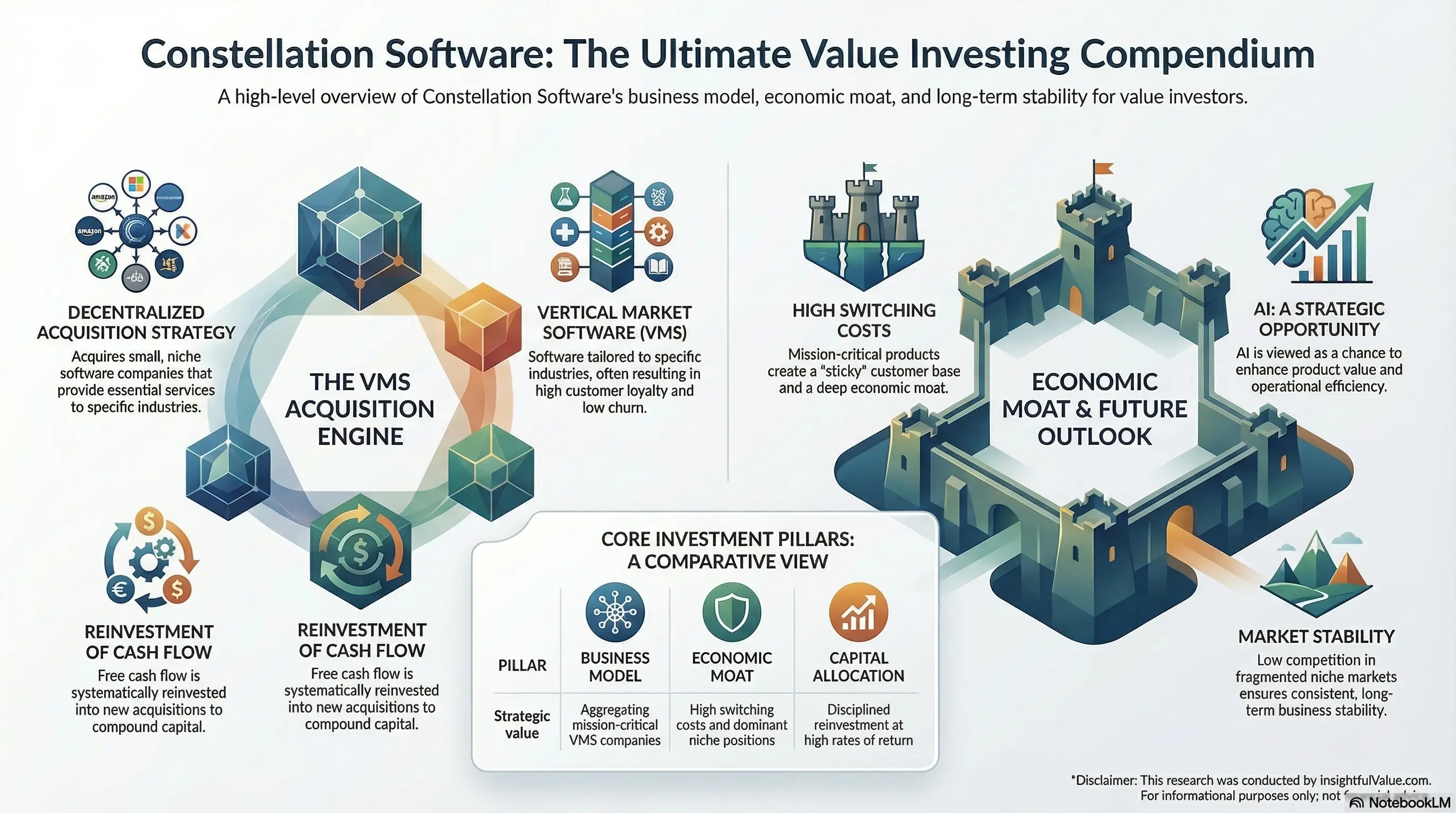
Infographic
Overview
Constellation Software is a leading international provider of software and services to a variety of public and private sector markets. The company was founded in 1995 and is headquartered in Toronto, Canada.
Constellation Software’s portfolio includes more than 500 companies in over 100 different industries, with a focus on vertical market software solutions. The company’s businesses operate independently and provide mission-critical software products and services that are essential to their customers’ operations.
The primary business of Constellation Software is to identify, acquire, and integrate vertical market software businesses, with the goal of creating long-term value for its shareholders. The company’s approach is to maintain and grow the acquired businesses while providing them with the necessary resources and support to increase their market share and profitability.
Constellation Software is listed on the Toronto Stock Exchange and the company’s shares are also traded on the OTCQX in the United States.
Leadership and management
The founder and CEO of Constellation Software is Mark Leonard, who has been with the company since its inception in 1995. Leonard is also the largest shareholder of the company, holding approximately 12% of its shares.
Under Leonard’s leadership, Constellation Software has grown from a small startup to a multi-billion-dollar company, acquiring over 500 businesses in just over two decades.
The company’s management team consists of experienced professionals with a diverse set of skills and backgrounds. The team is responsible for identifying and evaluating potential acquisition targets, overseeing the integration of acquired businesses, and managing the overall operations of the company.
Market presence and growth
Constellation Software has a significant presence in the North American, European, and Australian markets, with a customer base consisting of both public and private sector organizations.
The company has experienced significant growth over the years, with its revenue increasing from $21 million in 1995 to over $3 billion in 2020. This growth can be attributed to its successful acquisition strategy and the strength and stability of its diverse portfolio of businesses.
In 2020, Constellation Software was ranked 13th on the Forbes list of Canada’s Best Employers, and in 2021, it was named one of the Best Workplaces in Technology by Great Place to Work®. The company has also received numerous awards for its growth and financial performance, including being named one of the best-performing companies on the Toronto Stock Exchange for eight consecutive years.
Acquisitions and investments
Constellation Software is known for its aggressive acquisition strategy, with a focus on vertical market software companies that have a strong position in their respective markets. The company targets businesses with a recurring revenue model, strong customer relationships, and a track record of profitability.
In recent years, Constellation Software has acquired several high-profile companies, including Total Specific Solutions, Volaris Group, and Jonas Software. The company also invests in its existing portfolio of businesses, providing them with the resources and support they need to continue growing and expanding their market share.
In addition to its acquisition strategy, Constellation Software also invests in research and development to enhance its existing products and develop new solutions to meet the changing needs of its customers.
Community involvement
Constellation Software is committed to giving back to the communities in which it operates. The company supports various charitable organizations and initiatives through donations and volunteer work by its employees.
The company also has initiatives in place to promote diversity and inclusivity within its workforce and the communities it serves. These initiatives include diversity training, equal employment opportunities, and partnerships with organizations promoting diversity and inclusion.
Overall, Constellation Software strives to be a responsible corporate citizen and make a positive impact on society and the environment.
How to explain to a 10 year old kid about the company?

📈 Want to read more about Constellation Software?
Sign up for free
or
log in
🚀 Don’t miss "The Checklist Value Investor — A Smarter Way to Pick Stocks" — free!
U3VyZSEgQ2 9uc3RlbGxh dGlvbiBTb2 Z0d2FyZSBp cyBhIGNvbX BhbnkgdGhh dCBoZWxwcy BvdGhlciBi dXNpbmVzc2 VzIGJ5IG1h a2luZyBzcG VjaWFsIGNv bXB1dGVyIH Byb2dyYW1z IGFuZCBzb2 Z0d2FyZS4g VGhlc2UgcH JvZ3JhbXMg aGVscCBjb2 1wYW5pZXMg bWFuYWdlIH RoZWlyIGV2 ZXJ5ZGF5IH Rhc2tzIGJl dHRlciwgbG lrZSBrZWVw aW5nIHRyYW NrIG9mIGN1 c3RvbWVycy wgb3JnYW5p emluZyBkYX RhLCBvciBo YW5kbGluZy BmaW5hbmNl cy48YnI+SW 1hZ2luZSB5 b3UgaGF2ZS BhIGxlbW9u YWRlIHN0YW 5kLiBZb3Ug bmVlZCB0by Brbm93IGhv dyBtYW55IG xlbW9ucyB5 b3UgaGF2ZS wgaG93IG1h bnkgY3Vwcy B5b3XigJl2 ZSBzb2xkLC BhbmQgaG93 IG11Y2ggbW 9uZXkgeW91 4oCZdmUgbW FkZS4gQSBz b2Z0d2FyZS Bwcm9ncmFt IGNhbiBoZW xwIHlvdSBr ZWVwIHRyYW NrIG9mIGFs bCB0aGF0IG luZm9ybWF0 aW9uIGVhc2 lseS4gQ29u c3RlbGxhdG lvbiBTb2Z0 d2FyZSBjcm VhdGVzIHRo ZXNlIGtpbm RzIG9mIHBy b2dyYW1zIG ZvciBtYW55 IGRpZmZlcm VudCB0eXBl cyBvZiBidX NpbmVzc2Vz LCBsaWtlIH NjaG9vbHMs IGhvc3BpdG FscywgYW5k IGV2ZW4gY2 9tcGFuaWVz IHRoYXQgYn VpbGQgdGhp bmdzLjxicj 5Ob3csIGhv dyBkb2VzIE NvbnN0ZWxs YXRpb24gU2 9mdHdhcmUg bWFrZSBtb2 5leT8gV2Vs bCwgd2hlbi BidXNpbmVz c2VzIHBheS Bmb3IgdGhl aXIgc29mdH dhcmUsIHRo ZXkgdXN1YW xseSBkbyB0 aGlzIGluIG RpZmZlcmVu dCB3YXlzLi BTb21lIHBh eSBhIG9uZS 10aW1lIGZl ZSB0byBnZX QgdGhlIHNv ZnR3YXJlLC B3aGlsZSBv dGhlcnMgcG F5IGV2ZXJ5 IG1vbnRoIG 9yIHllYXIg dG8ga2VlcC B1c2luZyBp dCBhbmQgZ2 V0IHVwZGF0 ZXMuIEl04o CZcyBsaWtl IGhvdyB5b3 UgbWlnaHQg cGF5IGZvci BhIHZpZGVv IGdhbWUgb2 5jZSBvciBw YXkgYSBzdW JzY3JpcHRp b24gdG8gcG xheSBvbmxp bmUuPGJyPk NvbnN0ZWxs YXRpb24gU2 9mdHdhcmUg aXMgc3VjY2 Vzc2Z1bCBm b3IgYSBmZX cgcmVhc29u cy4gRmlyc3 QsIHRoZXkg aGF2ZSBhIG xvdCBvZiBk aWZmZXJlbn Qgc29mdHdh cmUgcHJvZ3 JhbXMgZm9y IG1hbnkga2 luZHMgb2Yg YnVzaW5lc3 Nlcywgd2hp Y2ggbWVhbn MgdGhleSBj YW4gaGVscC BtYW55IHBl b3BsZS4gU2 Vjb25kLCB0 aGV5IGFyZS ByZWFsbHkg Z29vZCBhdC BmaW5kaW5n IG5ldyBjb2 1wYW5pZXMg dGhhdCBtYW tlIGdyZWF0 IHNvZnR3YX JlLCBhbmQg dGhleSBidX kgdGhlbSB0 byBncm93IH RoZWlyIG93 biBjb2xsZW N0aW9uIG9m IHByb2dyYW 1zLiBUaGlz IGhlbHBzIH RoZW0gYmVj b21lIGV2ZW 4gYmlnZ2Vy IGFuZCBiZX R0ZXIgYXQg d2hhdCB0aG V5IGRvLjxi cj5Gb3IgdG hlIGZ1dHVy ZSwgQ29uc3 RlbGxhdGlv biBTb2Z0d2 FyZSBpcyBs aWtlbHkgdG 8gc3RheSBz dWNjZXNzZn VsIGJlY2F1 c2UgYnVzaW 5lc3NlcyBh bHdheXMgbm VlZCBoZWxw IHdpdGggdG VjaG5vbG9n eSB0byBiZS Btb3JlIGVm ZmljaWVudC wgYW5kIG1v cmUgYW5kIG 1vcmUgY29t cGFuaWVzIG FyZSBzdGFy dGluZyBldm VyeSBkYXku IFNpbmNlIH RoZXkga25v dyBob3cgdG 8gY3JlYXRl IGFuZCBpbX Byb3ZlIHNv ZnR3YXJlLC B0aGV5IGNh biBrZWVwIG hlbHBpbmcg dGhlc2UgYn VzaW5lc3Nl cyBncm93IG FuZCBzdWNj ZWVkLCB3aG ljaCBtZWFu cyBDb25zdG VsbGF0aW9u IFNvZnR3YX JlIHdpbGwg a2VlcCBtYW tpbmcgbW9u ZXkgYW5kIH N0YXkgc3Ry b25nLjxicj 4=
What is special about the company?
📈 Want to read more about Constellation Software?
Sign up for free
or
log in
📝 Join us and grab your copy of "The Checklist Value Investor — A Smarter Way to Pick Stocks"
Q29uc3RlbG xhdGlvbiBT b2Z0d2FyZS BpcyBhIGds b2JhbCBwcm 92aWRlciBv ZiBzb2Z0d2 FyZSBhbmQg c2VydmljZX MsIG9wZXJh dGluZyBpbi Btb3JlIHRo YW4gMTAwIG NvdW50cmll cy4gRm91bm RlZCBpbiAx OTk1LCB0aG UgY29tcGFu eSBoYXMgYS B1bmlxdWUg ZGVjZW50cm FsaXplZCBi dXNpbmVzcy Btb2RlbCwg d2hpY2ggYW xsb3dzIGl0 cyBzdWJzaW RpYXJpZXMg dG8gb3Blcm F0ZSBpbmRl cGVuZGVudG x5IGFuZCBt YWtlIHRoZW lyIG93biBi dXNpbmVzcy BkZWNpc2lv bnMgd2hpbG UgYmVuZWZp dGluZyBmcm 9tIHNoYXJl ZCByZXNvdX JjZXMgYW5k IGV4cGVydG lzZS4gVGhp cyBtb2RlbC BoYXMgcmVz dWx0ZWQgaW 4gY29uc2lz dGVudCBncm 93dGggYW5k IHByb2ZpdG FiaWxpdHkg Zm9yIHRoZS Bjb21wYW55 LCB3aXRoIG EgdHJhY2sg cmVjb3JkIG 9mIGFjcXVp cmluZyBhbm Qgc3VjY2Vz c2Z1bGx5IG ludGVncmF0 aW5nIG5pY2 hlIHNvZnR3 YXJlIGJ1c2 luZXNzZXMu PGJyPkFub3 RoZXIgZGlz dGluZ3Vpc2 hpbmcgZmFj dG9yIG9mIE NvbnN0ZWxs YXRpb24gU2 9mdHdhcmUg aXMgaXRzIG ZvY3VzIG9u IGxvbmctdG VybSBpbnZl c3RtZW50cy BpbiBwcm9m aXRhYmxlIG FuZCBzdGFi bGUgc29mdH dhcmUgY29t cGFuaWVzIH dpdGggcmVj dXJyaW5nIH JldmVudWUg c3RyZWFtcy 4gVGhpcyBh cHByb2FjaC BoYXMgbGVk IHRvIGEgcG 9ydGZvbGlv IG9mIG92ZX IgNTAwIGJ1 c2luZXNzZX MgaW4gdmFy aW91cyBpbm R1c3RyaWVz IHN1Y2ggYX MgaGVhbHRo Y2FyZSwgZW R1Y2F0aW9u LCBmaW5hbm NlLCBhbmQg Z292ZXJubW VudCwgcHJv dmlkaW5nIG EgZGl2ZXJz aWZpZWQgcm V2ZW51ZSBi YXNlLjxicj 5UaGUgY29t cGFueSBhbH NvIHByaWRl cyBpdHNlbG Ygb24gaXRz IHN0cm9uZy Bjb3Jwb3Jh dGUgY3VsdH VyZSwgYmFz ZWQgb24gdm FsdWVzIG9m IGludGVncm l0eSwgcmVz cGVjdCwgYW 5kIGNvbGxh Ym9yYXRpb2 4uIFRoaXMg aGFzIHJlc3 VsdGVkIGlu IGEgbG95YW wgY3VzdG9t ZXIgYmFzZS BhbmQgYSBo aWdoIGVtcG xveWVlIHJl dGVudGlvbi ByYXRlLCBh cyB3ZWxsIG FzIHJlY29n bml0aW9uIG FzIG9uZSBv ZiB0aGUgYm VzdCBwbGFj ZXMgdG8gd2 9yayBpbiBD YW5hZGEuPG JyPk92ZXJh bGwsIENvbn N0ZWxsYXRp b24gU29mdH dhcmXigJlz IHVuaXF1ZS BidXNpbmVz cyBtb2RlbC wgcHJvdmVu IHRyYWNrIH JlY29yZCwg YW5kIHN0cm 9uZyBjb3Jw b3JhdGUgY3 VsdHVyZSBt YWtlIGl0IG EgbGVhZGVy IGluIHRoZS Bzb2Z0d2Fy ZSBpbmR1c3 RyeSBhbmQg YSB0cnVzdG VkIHBhcnRu ZXIgZm9yIG l0cyBjdXN0 b21lcnMgYW 5kIGVtcGxv eWVlcy4=
What the company's business model?
📈 Want to read more about Constellation Software?
Sign up for free
or
log in
🎁 Free download! "The Checklist Value Investor — A Smarter Way to Pick Stocks"
VGhlIGJ1c2 luZXNzIG1v ZGVsIG9mIE NvbnN0ZWxs YXRpb24gU2 9mdHdhcmUg aXMgdG8gYW NxdWlyZSwg bWFuYWdlLC BhbmQgZ3Jv dyB2ZXJ0aW NhbCBtYXJr ZXQgc29mdH dhcmUgYnVz aW5lc3Nlcy 4gVGhleSB0 eXBpY2FsbH kgdGFyZ2V0 IHNtYWxsIH RvIG1lZGl1 bSBzaXplZC Bjb21wYW5p ZXMgdGhhdC BoYXZlIG5p Y2hlIG1hcm tldCBkb21p bmFuY2UgYW 5kIHNvbGlk IGdyb3d0aC Bwcm9zcGVj dHMuIENvbn N0ZWxsYXRp b24gU29mdH dhcmUgcHJv dmlkZXMgb3 BlcmF0aW9u YWwgc3VwcG 9ydCBhbmQg cmVzb3VyY2 VzIHRvIGhl bHAgdGhlc2 UgY29tcGFu aWVzIHNjYW xlIGFuZCBp bXByb3ZlIH RoZWlyIG9w ZXJhdGlvbn MuIFRoZXkg YWxzbyBhY3 RpdmVseSBz ZWVrIG91dC BvcHBvcnR1 bml0aWVzIH RvIGFjcXVp cmUgbmV3IG NvbXBhbmll cyBhbmQgaW 50ZWdyYXRl IHRoZW0gaW 50byB0aGVp ciBwb3J0Zm 9saW8uIFRo aXMgYXBwcm 9hY2ggYWxs b3dzIENvbn N0ZWxsYXRp b24gU29mdH dhcmUgdG8g Z2VuZXJhdG UgbG9uZy10 ZXJtLCByZW N1cnJpbmcg cmV2ZW51ZS BzdHJlYW1z IGFuZCBkZW xpdmVyIHZh bHVlIHRvIH NoYXJlaG9s ZGVycy4=
Is AI a threat?
AI can indeed pose various risks to companies like Constellation Software, which operates in the software and technology sector. Here are some potential threats:
1. Substitution: AI technologies may enable new software solutions that directly substitute the products offered by Constellation Software. If new AI-driven solutions emerge that provide similar or enhanced functionalities—potentially at a lower cost—customers may shift towards these alternatives, impacting Constellation’s market share.
2. Disintermediation: AI can facilitate direct connections between service providers and customers, reducing the need for intermediary software solutions. If clients can leverage AI tools to manage processes or data more efficiently on their own, it could diminish the demand for certain services offered by Constellation and similar companies.
3. Margin Pressure: The integration of AI into software products may require significant investment in research and development. Competitors who adopt AI technologies may produce more efficient, cost-effective solutions, thereby applying pressure on Constellation to lower prices or increase investment to maintain competitiveness. This could affect overall profit margins.
4. Customer Expectations: As AI becomes more prevalent, customer expectations for software performance, features, and responsiveness may increase. Constellation may face pressure to continually innovate and improve its offerings to meet these demands, which could strain resources and budgets.
5. Talent Acquisition: The increasing focus on AI means that skilled professionals in this field are in high demand. Constellation Software may face challenges in attracting and retaining talent necessary for developing advanced AI features, which could hinder its ability to compete effectively.
Overall, while AI presents opportunities for growth and innovation, it also poses material risks that require strategic consideration and proactive management from companies like Constellation Software.
Sensitivity to interest rates
The sensitivity of Constellation Software’s earnings, cash flow, and valuation to changes in interest rates can be understood through several key factors:
1. Earnings Sensitivity: Interest rates can influence borrowing costs for a company. If Constellation Software uses debt for acquisitions or operations, an increase in interest rates could lead to higher interest expenses, adversely affecting net earnings. Conversely, lower rates can reduce borrowing costs, enhancing profitability.
2. Cash Flow Impact: Interest rates impact the discount rate used in valuing future cash flows. As interest rates rise, the present value of future cash flows declines. This can lead to a decrease in the perceived valuation of the company if investors adjust their required rate of return. Higher interest expenses can also reduce free cash flow, impacting cash available for investment or distribution to shareholders.
3. Valuation Sensitivity: The valuation of Constellation Software, like many technology companies, often relies on discounted cash flow (DCF) analysis. If interest rates increase, the discount rate applied to future cash flows will also rise, leading to lower valuation multiples. This can affect stock prices significantly. In contrast, lower interest rates generally support higher valuations as future cash flows are discounted less heavily.
4. Acquisition Strategy: Constellation Software has a strategy of acquiring smaller software companies. Interest rates play a crucial role in this strategy as they influence the cost of financing these acquisitions. Higher rates may lead to fewer high-value acquisitions or a reconsideration of deal structures.
5. Overall Market Sentiment: Interest rate changes can affect overall market sentiment and investor appetite for risk. Higher rates might lead investors to seek safer, fixed-income investments, which could decrease demand for equities like Constellation Software, impacting its stock price.
In summary, Constellation Software’s earnings, cash flow, and valuation are moderately sensitive to interest rate changes, primarily through their influence on borrowing costs, cash flow discounting, and market dynamics.
Resilience to the future changes
📈 Want to read more about Constellation Software?
Sign up for free
or
log in
⚡ Instantly access "The Checklist Value Investor — A Smarter Way to Pick Stocks" — free!
QSByZWFsaX N0aWMgc2Nl bmFyaW8gdG hhdCBjb3Vs ZCBwZXJtYW 5lbnRseSBp bXBhaXIgQ2 9uc3RlbGxh dGlvbiBTb2 Z0d2FyZeKA mXMgZWNvbm 9taWNzIG92 ZXIgdGhlIG 5leHQgM+KA kzUgeWVhcn MgY291bGQg YXJpc2UgZn JvbSBhIHNp Z25pZmljYW 50IGFuZCBz dXN0YWluZW QgZG93bnR1 cm4gaW4gdG hlIG1hcmtl dCBmb3Igc2 9mdHdhcmUg Y29tcGFuaW VzIHRhcmdl dGluZyBuaW NoZSBzZWN0 b3JzLiBUaG lzIGNvdWxk IGJlIGRyaX ZlbiBieSBt dWx0aXBsZS BmYWN0b3Jz LCBzdWNoIG FzOjxicj4x LiA8c3Ryb2 5nPkVjb25v bWljIFJlY2 Vzc2lvbjwv c3Ryb25nPj ogQSBwcm9s b25nZWQgZW Nvbm9taWMg ZG93bnR1cm 4gY291bGQg bGVhZCB0by ByZWR1Y2Vk IHNwZW5kaW 5nIGJ5IGJ1 c2luZXNzZX Mgb24gc29m dHdhcmUgc2 9sdXRpb25z LiBDb21wYW 5pZXMgbWln aHQgZGVsYX kgb3IgZm9y Z28gdXBncm FkZXMsIHJl c3VsdGluZy BpbiBkZWNs aW5pbmcgcm V2ZW51ZXMg Zm9yIENvbn N0ZWxsYXRp b24gU29mdH dhcmUsIHdo aWNoIHJlbG llcyBvbiBh IHN0ZWFkeS BpbmZsb3cg ZnJvbSBpdH MgdmFyaW91 cyB2ZXJ0aW NhbCBtYXJr ZXQgc29mdH dhcmUgKFZN UykgYWNxdW lzaXRpb25z Ljxicj4yLi A8c3Ryb25n PkluY3JlYX NlZCBDb21w ZXRpdGlvbj wvc3Ryb25n PjogSWYgbm V3IGVudHJh bnRzIG9yIG V4aXN0aW5n IGNvbXBldG l0b3JzIGlu IHRoZSBTYW FTIHNwYWNl IGRldmVsb3 Agc3VwZXJp b3IgcHJvZH VjdHMgb3Ig bW9yZSBjb2 1wZXRpdGl2 ZSBwcmljaW 5nLCBDb25z dGVsbGF0aW 9uIGNvdWxk IGZhY2Ugcm VkdWNlZCBt YXJrZXQgc2 hhcmUgaW4g aXRzIHRhcm dldGVkIG5p Y2hlcywgd2 hpY2ggbWln aHQgZXJvZG UgcHJvZml0 IG1hcmdpbn MuPGJyPjMu IDxzdHJvbm c+UmVndWxh dG9yeSBDaG FuZ2VzPC9z dHJvbmc+Oi BOZXcgcmVn dWxhdGlvbn MgaW1wYWN0 aW5nIHNvZn R3YXJlIHNl Y3VyaXR5LC BkYXRhIHBy aXZhY3ksIG 9yIGluZHVz dHJ5LXNwZW NpZmljIGNv bXBsaWFuY2 UgY291bGQg cmVzdWx0IG luIGluY3Jl YXNlZCBjb3 N0cyBmb3Ig Q29uc3RlbG xhdGlvbiBT b2Z0d2FyZS 4gQ29tcGxp YW5jZSB3aX RoIHRoZXNl IHJlZ3VsYX Rpb25zIG1p Z2h0IHJlcX VpcmUgc3Vi c3RhbnRpYW wgaW52ZXN0 bWVudCBpbi BkZXZlbG9w bWVudCBvci BvcGVyYXRp b25hbCByZX N0cnVjdHVy aW5nLCBmdX J0aGVyIHNx dWVlemluZy BtYXJnaW5z Ljxicj40Li A8c3Ryb25n PlRlY2hub2 xvZ2ljYWwg RGlzcnVwdG lvbjwvc3Ry b25nPjogUm FwaWQgYWR2 YW5jZW1lbn RzIGluIHRl Y2hub2xvZ3 kgY291bGQg cmVuZGVyIG NlcnRhaW4g bmljaGUgc2 9mdHdhcmUg c29sdXRpb2 5zIG9ic29s ZXRlIG9yIG xlc3MgcmVs ZXZhbnQuIE lmIENvbnN0 ZWxsYXRpb2 4gZmFpbHMg dG8gYWRhcH Qgb3IgaW5u b3ZhdGUsIG l0IHJpc2tz IGxvc2luZy BpdHMgY3Vz dG9tZXIgYm FzZSB0byBt b3JlIGFnaW xlIGNvbXBl dGl0b3JzLj xicj5JbiBz dWNoIHNjZW 5hcmlvcywg aWYgYSBwZX JtYW5lbnQg aW1wYWlybW VudCB0byB0 aGUgY29tcG FueeKAmXMg YnVzaW5lc3 MgbW9kZWwg b2NjdXJzLC B0aGUgZm9s bG93aW5nIG ltcGFjdHMg bWlnaHQgYm Ugb2JzZXJ2 ZWQ6PGJyPi 0gPHN0cm9u Zz5NYXJnaW 5zPC9zdHJv bmc+OiBPcG VyYXRpbmcg bWFyZ2lucy B3b3VsZCBs aWtlbHkgY2 9tcHJlc3Mg c2lnbmlmaW NhbnRseSBk dWUgdG8gZm l4ZWQgY29z dHMgcmVtYW luaW5nIHJl bGF0aXZlbH kgY29uc3Rh bnQgd2hpbG UgcmV2ZW51 ZXMgZGVjbG luZS4gVGhl IGNvbXBhbn kgbWF5IG5l ZWQgdG8gaW 1wbGVtZW50 IGNvc3QtY3 V0dGluZyBt ZWFzdXJlcy wgYnV0IHRo ZXNlIG1pZ2 h0IG5vdCBm dWxseSBvZm ZzZXQgcmV2 ZW51ZSBsb3 NzZXMuIEFz IGEgcmVzdW x0LCBuZXQg cHJvZml0IG 1hcmdpbnMg Y291bGQgZG lwIHN1YnN0 YW50aWFsbH ksIHBvdGVu dGlhbGx5IG ZhbGxpbmcg YmVsb3cgaG lzdG9yaWNh bCBsZXZlbH MgaWYgcmV2 ZW51ZSBkZW NsaW5lcyBw ZXJzaXN0Lj xicj4tIDxz dHJvbmc+Q2 FzaCBGbG93 PC9zdHJvbm c+OiBDYXNo IGZsb3cgZn JvbSBvcGVy YXRpb25zIH dvdWxkIGxp a2VseSBkZW NyZWFzZSBk dWUgdG8gcm VkdWNlZCBz YWxlcy4gSW YgY3VzdG9t ZXJzIGZhY2 UgYnVkZ2V0 IGNvbnN0cm FpbnRzLCBj b2xsZWN0aW 9uIHBlcmlv ZHMgbWF5IG V4dGVuZCwg ZnVydGhlci BzdHJhaW5p bmcgY2FzaC BmbG93LiBB ZGRpdGlvbm FsbHksIGEg ZHJvcCBpbi BjYXNoIGZs b3cgY291bG QgaGluZGVy IENvbnN0ZW xsYXRpb27i gJlzIGFiaW xpdHkgdG8g cHVyc3VlIG dyb3d0aCBv cHBvcnR1bm l0aWVzIHRo cm91Z2ggYW NxdWlzaXRp b25zLCB3aG ljaCBoYXZl IGJlZW4gYS BjZW50cmFs IHN0cmF0ZW d5IGZvciB0 aGUgY29tcG FueS48YnI+ LSA8c3Ryb2 5nPkJhbGFu Y2UgU2hlZX Q8L3N0cm9u Zz46IFRoZS BiYWxhbmNl IHNoZWV0IG NvdWxkIGRl dGVyaW9yYX RlIGlmIHRo ZSBjb21wYW 55IGlzIHVu YWJsZSB0by BtYWludGFp biBwcm9maX RhYmlsaXR5 LiBBIGRlY2 xpbmUgaW4g cmV0YWluZW QgZWFybmlu Z3MgY291bG Qgd2Vha2Vu IHNoYXJlaG 9sZGVyIGVx dWl0eSwgd2 hpbGUgaW5j cmVhc2VkIH JlbGlhbmNl IG9uIGRlYn QgdG8gZnVu ZCBvcGVyYX Rpb25zIG9y IGFjcXVpc2 l0aW9ucyBt aWdodCBsZW FkIHRvIGEg aGlnaGVyIG RlYnQtdG8t ZXF1aXR5IH JhdGlvLiBU aGlzIGNvdW xkIHJhaXNl IGNvbmNlcm 5zIGFtb25n IGludmVzdG 9ycyBhbmQg Y3JlZGl0b3 JzLCBwb3Rl bnRpYWxseS BsZWFkaW5n IHRvIGluY3 JlYXNlZCBi b3Jyb3dpbm cgY29zdHMg YW5kIGEgZn VydGhlciBz cXVlZXplIG 9uIGNhc2gg Zmxvdy48Yn I+SW4gc3Vt bWFyeSwgaW Ygc3VjaCBh IHNjZW5hcm lvIG1hdGVy aWFsaXplcy wgQ29uc3Rl bGxhdGlvbi BTb2Z0d2Fy ZSBjb3VsZC BmYWNlIGEg Y2hhbGxlbm dpbmcgZWNv bm9taWMgbG FuZHNjYXBl IGNoYXJhY3 Rlcml6ZWQg YnkgbG93ZX IgbWFyZ2lu cywgd2Vha2 VuZWQgY2Fz aCBmbG93LC BhbmQgYSBs ZXNzIGZhdm 9yYWJsZSBi YWxhbmNlIH NoZWV0LCBu ZWNlc3NpdG F0aW5nIHNp Z25pZmljYW 50IG9wZXJh dGlvbmFsIG FkanVzdG1l bnRzIHRvIH N1cnZpdmUg YW5kIGFkYX B0IHRvIHRo ZSBuZXcgbW Fya2V0IHJl YWxpdGllcy 48YnI+
Interesting facts about the company
📈 Want to read more about Constellation Software?
Sign up for free
or
log in
⚡ Instantly access "The Checklist Value Investor — A Smarter Way to Pick Stocks" — free!
CiAgICAgIC AgICAgIDxk aXYgc3R5bG U9J3dpZHRo OiAxMDAlOy BkaXNwbGF5 OiBmbGV4Oy BqdXN0aWZ5 LWNvbnRlbn Q6IGNlbnRl cjsnPgogIC AgICAgICAg ICAgICAgPG RpdiBzdHls ZT0nCiAgIC AgICAgICAg ICAgICAgIC AgZGlzcGxh eTogZmxleD sKICAgICAg ICAgICAgIC AgICAgICBh bGlnbi1pdG VtczogY2Vu dGVyOwogIC AgICAgICAg ICAgICAgIC AgIGJhY2tn cm91bmQtY2 9sb3I6ICNm MGY0Zjg7Ci AgICAgICAg ICAgICAgIC AgICAgYm9y ZGVyOiAxcH ggc29saWQg I2QxZTNmMD sKICAgICAg ICAgICAgIC AgICAgICBi b3JkZXItcm FkaXVzOiAx MHB4OwogIC AgICAgICAg ICAgICAgIC AgIHBhZGRp bmc6IDEwcH g7CiAgICAg ICAgICAgIC AgICAgICAg bWFyZ2luOi AyMHB4IDA7 CiAgICAgIC AgICAgICAg ICAgICAgZm 9udC1mYW1p bHk6ICJTZW dvZSBVSSIs IFJvYm90by wgc2Fucy1z ZXJpZjsKIC AgICAgICAg ICAgICAgIC AgICBib3gt c2hhZG93Oi AwIDJweCA2 cHggcmdiYS gwLCAwLCAw LCAwLjA1KT sKICAgICAg ICAgICAgIC AgICAgICBt YXgtd2lkdG g6IDkwMHB4 OwogICAgIC AgICAgICAg ICAgICAgIH dpZHRoOiAx MDAlOyc+Cg ogICAgICAg ICAgICAgIC AgICAgIDxp bWcgc3JjPS Jhc3NldHMv bG9nb3Mva2 xqRU9hc2RX VmtkRGhZRF g5Y1Uud2Vi cCIgYWx0PS JDb25zdGVs bGF0aW9uIF NvZnR3YXJl IiB0aXRsZT 0iQ29uc3Rl bGxhdGlvbi BTb2Z0d2Fy ZSIgIGNsYX NzPSJpbWct Zmx1aWQiIG hlaWdodD01 MCB3aWR0aD 01MCBsb2Fk aW5nPSdsYX p5JyBzdHls ZT0nYm9yZG VyLXJhZGl1 czogNnB4Oy c+CgogICAg ICAgICAgIC AgICAgICAg IDxkaXYgc3 R5bGU9J2Zs ZXg6IDE7IH RleHQtYWxp Z246IGNlbn RlcjsgbWFy Z2luLWxlZn Q6IDVweDsn PgogICAgIC AgICAgICAg ICAgICAgIC AgICA8cCBz dHlsZT0nZm 9udC1zaXpl OiAyNnB4Oy Bjb2xvcjog IzMzMzsgbW FyZ2luLWJv dHRvbTogMT VweDsnPgog ICAgICAgIC AgICAgICAg ICAgICAgIC AgICAg8J+T iCBXYW50IH RvIHJlYWQg bW9yZSBhYm 91dCBDb25z dGVsbGF0aW 9uIFNvZnR3 YXJlPwogIC AgICAgICAg ICAgICAgIC AgICAgICA8 L3A+CgogIC AgICAgICAg ICAgICAgIC AgICAgICA8 YSBocmVmPS dpbmRleC5w aHA/cGFnZT 1zaWdudXAn IHN0eWxlPS cKICAgICAg ICAgICAgIC AgICAgICAg ICAgICAgIG JhY2tncm91 bmQtY29sb3 I6ICMwMDdC RkY7CiAgIC AgICAgICAg ICAgICAgIC AgICAgICAg ICBjb2xvcj ogI2ZmZjsK ICAgICAgIC AgICAgICAg ICAgICAgIC AgICAgIHBh ZGRpbmc6ID EwcHggMjBw eDsKICAgIC AgICAgICAg ICAgICAgIC AgICAgICAg IGJvcmRlci 1yYWRpdXM6 IDVweDsKIC AgICAgICAg ICAgICAgIC AgICAgICAg ICAgIHRleH QtZGVjb3Jh dGlvbjogbm 9uZTsKICAg ICAgICAgIC AgICAgICAg ICAgICAgIC AgIGZvbnQt d2VpZ2h0Oi Bib2xkOwog ICAgICAgIC AgICAgICAg ICAgICAgIC AgICAgbWFy Z2luLXJpZ2 h0OiAxMHB4 OwogICAgIC AgICAgICAg ICAgICAgIC AgICAgICAg dHJhbnNpdG lvbjogYmFj a2dyb3VuZC 1jb2xvciAw LjNzIGVhc2 U7JwogICAg ICAgICAgIC AgICAgICAg ICAgICAgIC Agb25tb3Vz ZW92ZXI9J3 RoaXMuc3R5 bGUuYmFja2 dyb3VuZENv bG9yPSIjMD A1NmIzIicK ICAgICAgIC AgICAgICAg ICAgICAgIC AgICAgIG9u bW91c2VvdX Q9J3RoaXMu c3R5bGUuYm Fja2dyb3Vu ZENvbG9yPS IjMDA3QkZG Iic+CiAgIC AgICAgICAg ICAgICAgIC AgICAgICAg ICBTaWduIH VwIGZvciBm cmVlCiAgIC AgICAgICAg ICAgICAgIC AgICAgIDwv YT4KCiAgIC AgICAgICAg ICAgICAgIC AgICAgIDxz cGFuIHN0eW xlPSdtYXJn aW46IDAgOH B4OyBjb2xv cjogIzU1NT snPm9yPC9z cGFuPgoKIC AgICAgICAg ICAgICAgIC AgICAgICAg PGEgaHJlZj 0naW5kZXgu cGhwP3BhZ2 U9bG9naW4n IHN0eWxlPS cKICAgICAg ICAgICAgIC AgICAgICAg ICAgICAgIG NvbG9yOiAj MDA3QkZGOw ogICAgICAg ICAgICAgIC AgICAgICAg ICAgICAgdG V4dC1kZWNv cmF0aW9uOi B1bmRlcmxp bmU7CiAgIC AgICAgICAg ICAgICAgIC AgICAgICAg ICBmb250LX dlaWdodDog NTAwOyc+Ci AgICAgICAg ICAgICAgIC AgICAgICAg ICAgICBsb2 cgaW4KICAg ICAgICAgIC AgICAgICAg ICAgICAgPC 9hPgoKCiAg ICAgICAgIC AgICAgICAg ICAgICAgID xwIHN0eWxl PSdtYXJnaW 4tdG9wOiAx NXB4OyBmb2 50LXNpemU6 IDEzcHg7IG ZvbnQtd2Vp Z2h0OiBib2 xkOyBjb2xv cjogI2QzMm YyZjsnPgog ICAgICAgIC AgICAgICAg ICAgICAgIC AgICAg8J+G kyBEaXNjb3 ZlciA8aT4i VGhlIENoZW NrbGlzdCBW YWx1ZSBJbn Zlc3RvciDi gJQgQSBTbW FydGVyIFdh eSB0byBQaW NrIFN0b2Nr cyI8L2k+IO KAlCBmcmVl IGVCb29rIQ ogICAgICAg ICAgICAgIC AgICAgICAg ICA8L3A+Cg ogICAgICAg ICAgICAgIC AgICAgICAg ICA8IS0tCi AgICAgICAg ICAgICAgIC AgICAgICAg IDxkaXYgc3 R5bGU9J21h cmdpbi10b3 A6IDEycHg7 IGZvbnQtc2 l6ZTogMTNw eDsgY29sb3 I6ICM0NDQ7 Jz4KICAgIC AgICAgICAg ICAgICAgIC AgICAgICAg IFNpZ24gdX Agbm93IGFu ZCBnZXQgb3 VyIGZyZWUg ZUJvb2sgCi AgICAgICAg ICAgICAgIC AgICAgICAg ICAgICA8Yj 5UaGUgQ2hl Y2tsaXN0IF ZhbHVlIElu dmVzdG9yIO KAlCBBIFNt YXJ0ZXIgV2 F5IHRvIFBp Y2sgU3RvY2 tzPC9iPgog ICAgICAgIC AgICAgICAg ICAgICAgIC A8L2Rpdj4K ICAgICAgIC AgICAgICAg ICAgICAgIC AgLS0+CiAg ICAgICAgIC AgICAgICAg ICAgICAgID whLS0KICAg ICAgICAgIC AgICAgICAg ICAgICAgPG RpdiBzdHls ZT0nbWFyZ2 luLXRvcDog MTZweDsgZm 9udC1zaXpl OiAxNHB4Oy Bjb2xvcjog IzQ0NDsgZm 9udC1mYW1p bHk6IC1hcH BsZS1zeXN0 ZW0sIEJsaW 5rTWFjU3lz dGVtRm9udC wgU2Vnb2Ug VUksIFJvYm 90bywgSGVs dmV0aWNhIE 5ldWUsIHNh bnMtc2VyaW Y7IGxpbmUt aGVpZ2h0Oi AxLjY7Jz4K ICAgICAgIC AgICAgICAg ICAgICAgIC AgICAgIEhh dmUgeW91IG hlYXJkIGFi b3V0IG91ci BzaG9ydCA8 c3Ryb25nIH N0eWxlPSdm b250LXdlaW dodDogNjAw Oyc+RGFpbH kgVmlkZW8g TmV3c2xldH Rlcjwvc3Ry b25nPj8KIC AgICAgICAg ICAgICAgIC AgICAgICAg ICAgIDxhIG hyZWY9J2h0 dHBzOi8vd3 d3Lmluc2ln aHRmdWx2YW x1ZS5jb20v bmV3c2xldH Rlci5waHAn IHRhcmdldD 0nX2JsYW5r JyBzdHlsZT 0nY29sb3I6 ICMwMDdCRk Y7IHRleHQt ZGVjb3JhdG lvbjogbm9u ZTsgZm9udC 13ZWlnaHQ6 IDUwMDsgbW FyZ2luLWxl ZnQ6IDZweD snPgogICAg ICAgICAgIC AgICAgICAg ICAgICAgIC AgICAgIEZp bmQgb3V0IG 1vcmUKICAg ICAgICAgIC AgICAgICAg ICAgICAgIC AgIDwvYT4K ICAgICAgIC AgICAgICAg ICAgICAgIC AgPC9kaXY+ CiAgICAgIC AgICAgICAg ICAgICAgIC AgIC0tPgog ICAgICAgIC AgICAgICAg ICAgIDwvZG l2PgogICAg ICAgICAgIC AgICAgPC9k aXY+CiAgIC AgICAgICAg IDwvZGl2Pg ogICAgICAg ICAgICAKIC AgICAgICAK ICAgICAgIC A8c3BhbiBj bGFzcz0nYm x1cnJlZC10 ZXh0Jz4KIC AgICAgICAg ICAgTVM0Z1 EyOXVjMyBS bGJHeGhkR2 x2IGJpQlRi MlowZDIgRn laU0IzWVhN ZyBabTkxYm 1SbFpDIEJw YmlBeE9Uaz EgSUdKNUlH SjFjMiBsdV pYTnpiV0Z1 IElFMWhjbX NnVEcgVnZi bUZ5WkM0Zy BWR2hsSUdO dmJYIEJoYm 5uaWdKbHog SUdobFlXUn hkVyBGeWRH VnljeUJoIG NtVWdiRzlq WVggUmxaQ0 JwYmlCVSBi M0p2Ym5Sdk xDIEJEWVc1 aFpHRXUgUE dKeVBqSXVJ RiBSb1pTQm piMjF3IFlX NTU0b0NaY3 kgQndjbWx0 WVhKNSBJR1 p2WTNWeklH IGx6SUc5dU lHRmogY1hW cGNtbHVaeS BCaGJtUWdi V0Z1IFlXZH BibWNnYzIg MWhiR3dnZE c4ZyBiV1Zr YVhWdExYIE 5wZW1Wa0lI TnYgWm5SM1 lYSmxJRyBO dmJYQmhibW xsIGN5QnBi aUIyWVggSn BiM1Z6SUds dSBaSFZ6ZE hKcFpYIE1z SUdsdVkyeD EgWkdsdVp5 Qm9aVyBGc2 RHaGpZWEps IExDQndkV0 pzYVcgTWdj MlZqZEc5eS BMQ0JtYVc1 aGJtIE5wWV d3Z2MyVnkg ZG1salpYTX NJRyBGdVpD QnRiM0psIE xqeGljajR6 TGkgQkRiMj V6ZEdWcyBi R0YwYVc5dU lGIE52Wm5S M1lYSmwgSU doaGN5QmhJ SCBWdWFYRj FaU0JpIGRY TnBibVZ6Y3 kgQnRiMlJs YkNCMyBhR1 Z5WlNCcGRD IEJ2Y0dWeV lYUmwgY3lC aGN5QmhJRy BaaGJXbHNl U0J2IFppQn BibVJsY0cg VnVaR1Z1ZE NCayBhWFpw YzJsdmJuIE 1zSUdGc2JH OTMgYVc1bk lHVmhZMiBn Z1pHbDJhWE 5wIGIyNGdk RzhnWm0gOW pkWE1nYjI0 ZyBhWFJ6SU hOd1pXIE5w Wm1saklHMW ggY210bGRD QmhibSBRZ1 kzVnpkRzl0 IFpYSnpMan hpY2ogNDBM aUJVYUdVZy BZMjl0Y0dG dWVTIEJvWV hNZ1lTQmsg WldObGJuUn lZVyB4cGVt VmtJRzFoIG JtRm5aVzFs Ym4gUWdjM1 J5ZFdOMCBk WEpsTENCM2 FYIFJvSUcx cGJtbHQgWV d3Z2FXNTBa WCBKMlpXNT BhVzl1IElH WnliMjBnZE cgaGxJR052 Y25CdiBjbU YwWlNCc1pY IFpsYkM0Z1 JXRmogYUNC a2FYWnBjMi BsdmJpQnBj eUJ5IFpYTn diMjV6YVcg SnNaU0JtYj NJZyBhWFJ6 SUc5M2JpIE J2Y0dWeVlY UnAgYjI1ek lHRnVaQyBC a1pXTnBjMm x2IGJpMXRZ V3RwYm0gY3 VQR0p5UGpV dSBJRU52Ym 5OMFpXIHhz WVhScGIyNG cgVTI5bWRI ZGhjbSBVZ2 FHRnpJR0Zq IGNYVnBjbV ZrSUcgOTJa WElnTlRBdy BJSE52Wm5S M1lYIEpsSU dOdmJYQmgg Ym1sbGN5Qn phVyA1alpT QnBkSE1nIG FXNWpaWEIw YVcgOXVMQ0 J0WVd0cCBi bWNnYVhRZ2 IyIDVsSUc5 bUlIUm8gWl NCc1lYSm5a WCBOMElITn ZablIzIFlY SmxJR052Yl ggQmhibWxs Y3lCcCBiaU IwYUdVZ2Qy IDl5YkdRdV BHSnkgUGpZ dUlGUm9aUy BCamIyMXdZ VzU1IElHaG hjeUJoSUgg UnlZV05ySU hKbCBZMjl5 WkNCdlppIE J3Y205bWFY UmggWW14bE lHZHliMyBk MGFDd2dZMj l1IGMybHpk R1Z1ZEcgeD VJR1JsYkds MiBaWEpwYm 1jZ2FHIGxu YUNCeVpYUj EgY201eklI UnZJRyBsMG N5QnphR0Z5 IFpXaHZiR1 JsY24gTXVQ R0p5UGpjdS BJRWx1SURJ d01qIEFzSU VOdmJuTjAg Wld4c1lYUn BiMiA0Z1Uy OW1kSGRoIG NtVWdkMkZ6 SUcgNWhiV1 ZrSUhSbyBa U0EyZEdnZ1 ltIFZ6ZEMx d1pYSm0gYj NKdGFXNW5J SCBOMGIyTn JJRzltIElI Um9aU0JzWV ggTjBJR1Js WTJGayBaU0 J2YmlCMGFH IFVnVkc5eW IyNTAgYnlC VGRHOWpheS BCRmVHTm9Z VzVuIFpTND hZbkkrT0Mg NGdWR2hsSU dOdiBiWEJo Ym5uaWdKIG x6SUhOdlpu UjMgWVhKbE lITnZiSCBW MGFXOXVjeU JoIGNtVWdk WE5sWkMgQm llU0J2ZG1W eSBJREV5Tl N3d01EIEFn WTNWemRHOX QgWlhKeklH bHVJRyA5Ml pYSWdNVEF3 IElHTnZkVz UwY20gbGxj eUIzYjNKcy BaSGRwWkdV dVBHIEp5UG prdUlFTnYg Ym5OMFpXeH NZWCBScGIy NGdVMjltIG RIZGhjbVVn YUcgRnpJR0 VnWkdsMiBa WEp6WlNCd2 IzIEowWm05 c2FXOHMgSU hkcGRHZ2di MyBabGNpQX hNREFnIFpH bG1abVZ5Wl cgNTBJSEJ5 YjJSMSBZM1 J6SUdGdVpD IEJ6WlhKMm FXTmwgY3lC dlptWmxjbS BWa0lHRmpj bTl6IGN5Qn BkSE1nZG0g RnlhVzkxY3 lCayBhWFpw YzJsdmJuIE 11UEdKeVBq RXcgTGlCSm JpQmhaRyBS cGRHbHZiaU IwIGJ5QnBk SE1nYUcgbG 5hQ0JuY205 MyBkR2dnWV c1a0lIIEJ5 YjJacGRHRm kgYVd4cGRI a3NJSCBSb1 pTQmpiMjF3 IFlXNTVJR0 ZzYzIgOGdj SEpwYjNKcC BkR2w2WlhN Z1pXIDUyYV hKdmJtMWwg Ym5SaGJDQm hibSBRZ2My OWphV0ZzIE lISmxjM0J2 Ym4gTnBZbW xzYVhSNSBM Q0JwYlhCc1 pXIDFsYm5S cGJtY2cgYz NWemRHRnBi bSBGaWJHVW djSEpoIFkz UnBZMlZ6SU cgRnVaQ0Ju YVhacCBibW NnWW1GamF5 IEIwYnlCMG FHVWcgWTI5 dGJYVnVhWC BScFpYTWdh VzRnIGQyaH BZMmdnYVgg UWdiM0JsY2 1GMCBaWE11 CiAgICAgIC AgPC9zcGFu PgogICAgIC AgIAogICAg ICAgIA==
See Company Q&A
📊 Get full analytics about Constellation Software
Sign up for free
or
log in
📝 Join us and grab your copy of "The Checklist Value Investor — A Smarter Way to Pick Stocks"