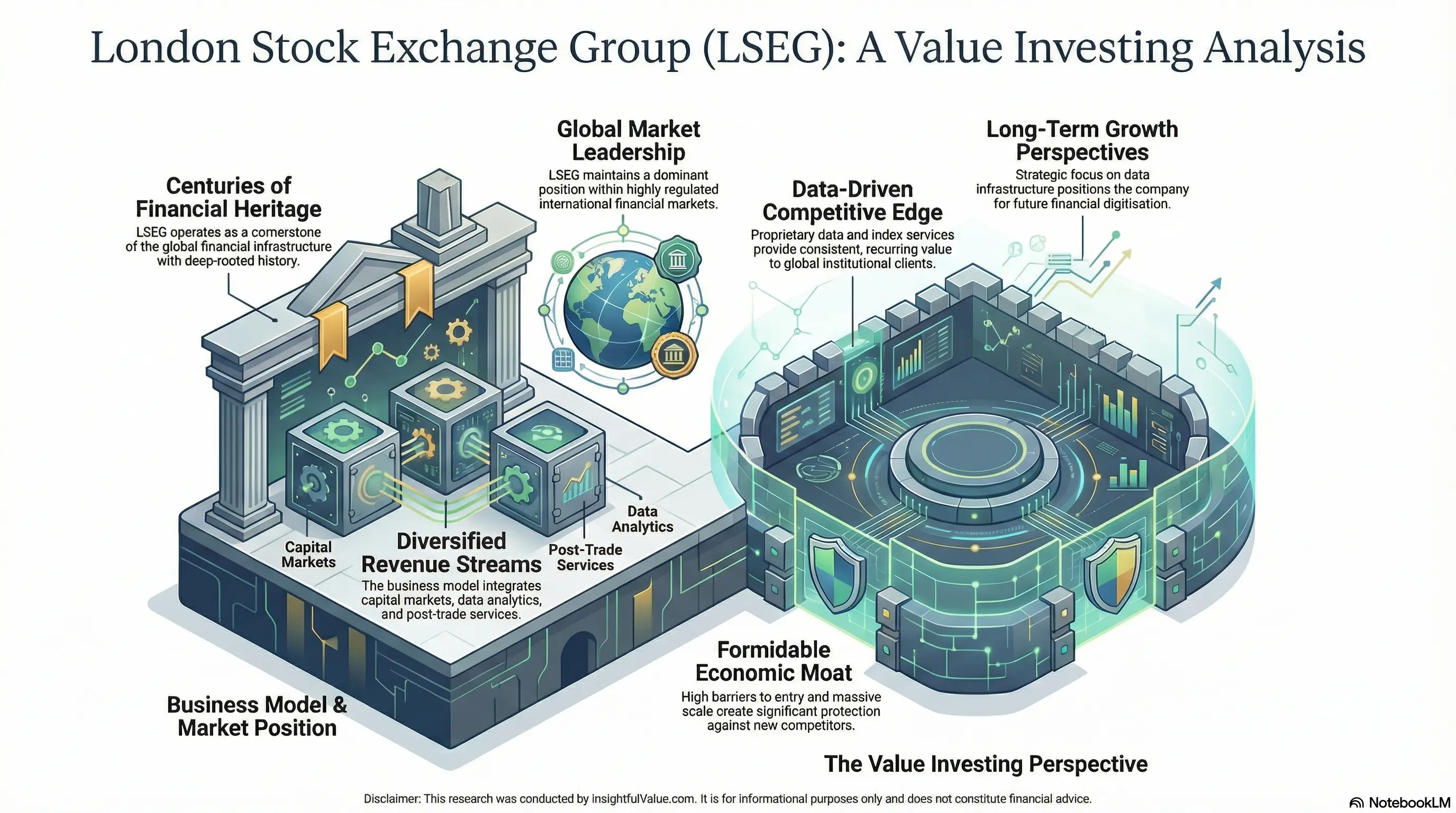
Company at a Glance
Price
Infographic
Overview
The London Stock Exchange is a British stock exchange that is located in the City of London, England. It is one of the oldest and largest stock exchanges in the world, having been founded in 1801. The London Stock Exchange is a primary market for trading securities and is the world’s fourth largest stock exchange by total market capitalization of listed companies. It is regulated by the Financial Conduct Authority.
History
The origins of the London Stock Exchange can be traced back to the coffee houses of 17th century London, where merchants and businessmen would gather to trade shares and conduct financial transactions. The first formal stock exchange was established in 1773, known as the “Stock Exchange” or “New Jonathan's Coffee House.” In 1801, the London Stock Exchange was officially founded when several small exchanges merged together.
Structure
The London Stock Exchange is made up of two key markets: the Main Market and the Alternative Investment Market (AIM). The Main Market is the primary market for larger, established companies to trade and is split into two sections: the Premium Segment and the Standard Segment. The Premium Segment is reserved for companies that meet certain eligibility criteria and have high levels of corporate governance. The Standard Segment is open to companies that do not meet the criteria for the Premium Segment.
The AIM is a market for smaller and growing companies. It is seen as a stepping stone for companies to eventually list on the Main Market. Companies on the AIM are subject to less stringent regulatory requirements and have less reporting obligations, making it an attractive option for smaller companies.
Trading hours
The London Stock Exchange is open for trading from Monday to Friday between 8:00am and 4:30pm, with a lunch break between 12:00pm and 1:00pm. The exchange is closed on weekends and on certain public holidays.
Trading platforms
The London Stock Exchange has three trading platforms: SETS (Stock Exchange Electronic Trading Service), SETSqx (Stock Exchange Trading Service – quotes and crosses), and SEAQ (Stock Exchange Automated Quotation system). SETS is the primary electronic trading platform for the Main Market, while SETSqx is used for trading AIM securities. SEAQ is the order-driven trading platform for smaller companies.
Membership and listing requirements
In order to trade on the London Stock Exchange, companies must be a member of the exchange or have an agreement with a member firm to trade on their behalf. The membership process involves meeting strict eligibility criteria and passing a thorough due diligence process.
For companies seeking to list on the Main Market, a number of requirements must be met, including a minimum market capitalization of £700,000 and at least 25% of the shares must be in public hands. Companies seeking to list on the AIM market have less strict requirements, but still must meet certain eligibility criteria and submit an admission document for approval.
Overall, the London Stock Exchange is a highly regulated and prestigious exchange that offers companies access to global capital and investors. It continues to play a major role in the global financial landscape and is a key player in the UK’s economy.
How to explain to a 10 year old kid about the company?

📈 Want to read more about London Stock Exchange?
Sign up for free
or
log in
📚 Your free copy of "The Checklist Value Investor — A Smarter Way to Pick Stocks" is waiting
VGhlIExvbm RvbiBTdG9j ayBFeGNoYW 5nZSAob2Z0 ZW4gY2FsbG VkIHRoZSBM U0UpIGlzIG EgcGxhY2Ug d2hlcmUgcG VvcGxlIGNh biBidXkgYW 5kIHNlbGwg cGllY2VzIG 9mIGNvbXBh bmllcywgd2 hpY2ggYXJl IGNhbGxlZC BzaGFyZXMu IENvbXBhbm llcyB0aGF0 IHdhbnQgdG 8gZ3JvdyBh bmQgbWFrZS Btb3JlIG1v bmV5IGNhbi BzZWxsIHRo ZXNlIHNoYX JlcyB0byB0 aGUgcHVibG ljLiBXaGVu IHBlb3BsZS BidXkgc2hh cmVzLCB0aG V5IGJlY29t ZSBwYXJ0IG 93bmVycyBv ZiB0aGUgY2 9tcGFueS4g PGJyPlRoZS BMU0UgbWFr ZXMgbW9uZX kgaW4gYSBm ZXcgd2F5cy 4gRmlyc3Qs IHdoZW4gY2 9tcGFuaWVz IGRlY2lkZS B0byBzZWxs IHRoZWlyIH NoYXJlcyBm b3IgdGhlIG ZpcnN0IHRp bWUsIHRoZX kgcGF5IHRo ZSBMU0UgZm 9yIGhlbHBp bmcgdGhlbS B3aXRoIHRo YXQgcHJvY2 Vzcy4gVGhp cyBpcyBjYW xsZWQgYW4g aW5pdGlhbC BwdWJsaWMg b2ZmZXJpbm cgb3IgSVBP LiBTZWNvbm QsIGV2ZXJ5 IHRpbWUgc2 9tZW9uZSBi dXlzIG9yIH NlbGxzIGEg c2hhcmUgb2 4gdGhlIGV4 Y2hhbmdlLC B0aGUgTFNF IGNoYXJnZX MgYSBzbWFs bCBmZWUgZm 9yIG1ha2lu ZyB0aGF0IH RyYWRlIHBv c3NpYmxlLi A8YnI+VGhl IExvbmRvbi BTdG9jayBF eGNoYW5nZS BoYXMgYmVl biBzdWNjZX NzZnVsIGZv ciBtYW55IH JlYXNvbnMu IEl04oCZcy BvbmUgb2Yg dGhlIG9sZG VzdCBhbmQg bGFyZ2VzdC BzdG9jayBl eGNoYW5nZX MgaW4gdGhl IHdvcmxkLC B3aGljaCBt ZWFucyBpdC BoYXMgYSBs b3Qgb2YgY2 9tcGFuaWVz IGFuZCBpbn Zlc3RvcnMg dXNpbmcgaX QuIE1hbnkg cGVvcGxlIH RydXN0IHRo ZSBMU0UgYm VjYXVzZSBp dOKAmXMga2 5vd24gZm9y IGJlaW5nIG ZhaXIgYW5k IHRyYW5zcG FyZW50LCBt ZWFuaW5nIG V2ZXJ5b25l IGNhbiBzZW Ugd2hhdOKA mXMgaGFwcG VuaW5nIHdp dGggdGhlIH NoYXJlcy4g PGJyPkluIH RoZSBmdXR1 cmUsIHRoZS BMU0UgaXMg bGlrZWx5IH RvIHN0YXkg c3VjY2Vzc2 Z1bCBiZWNh dXNlIG1vcm UgY29tcGFu aWVzIGZyb2 0gZGlmZmVy ZW50IHBhcn RzIG9mIHRo ZSB3b3JsZC B3aWxsIHdh bnQgdG8gam 9pbiBpdCwg YW5kIG1vcm UgcGVvcGxl IHdpbGwgd2 FudCB0byBp bnZlc3QgaW 4gZ3JlYXQg YnVzaW5lc3 Nlcy4gUGx1 cywgYXMgdG VjaG5vbG9n eSBpbXByb3 ZlcywgdHJh ZGluZyBiZW NvbWVzIGZh c3RlciBhbm QgZWFzaWVy LCBtYWtpbm cgaXQgbW9y ZSBhcHBlYW xpbmcgZm9y IGludmVzdG 9ycy4gT3Zl cmFsbCwgdG hlIExTRSBp cyB3ZWxsLX Bvc2l0aW9u ZWQgdG8ga2 VlcCBoZWxw aW5nIGNvbX BhbmllcyBn cm93IGFuZC BnaXZpbmcg cGVvcGxlIG 9wcG9ydHVu aXRpZXMgdG 8gaW52ZXN0 IHRoZWlyIG 1vbmV5Ljxi cj4=
What is special about the company?
📈 Want to read more about London Stock Exchange?
Sign up for free
or
log in
🚀 Don’t miss "The Checklist Value Investor — A Smarter Way to Pick Stocks" — free!
MS4gSGlzdG 9yeSBhbmQg UHJlc3RpZ2 U6IFRoZSBM b25kb24gU3 RvY2sgRXhj aGFuZ2UgKE xTRSkgaXMg b25lIG9mIH RoZSBvbGRl c3QgYW5kIG 1vc3QgcHJl c3RpZ2lvdX Mgc3RvY2sg ZXhjaGFuZ2 VzIGluIHRo ZSB3b3JsZC wgd2l0aCBy b290cyBkYX RpbmcgYmFj ayB0byB0aG UgMTd0aCBj ZW50dXJ5Li BJdCBoYXMg YSBsb25nIG hpc3Rvcnkg b2YgcHJvdm lkaW5nIGEg cGxhdGZvcm 0gZm9yIGNv bXBhbmllcy B0byByYWlz ZSBjYXBpdG FsIGFuZCBp bnZlc3Rvcn MgdG8gdHJh ZGUgc2VjdX JpdGllcy48 YnI+Mi4gR2 xvYmFsIFJl YWNoOiBUaG UgTFNFIGlz IG9uZSBvZi B0aGUgbGFy Z2VzdCBhbm QgbW9zdCBp bnRlcm5hdG lvbmFsIHN0 b2NrIGV4Y2 hhbmdlcywg d2l0aCBvdm VyIDMsMDAw IGNvbXBhbm llcyBmcm9t IDcwIGNvdW 50cmllcyBs aXN0ZWQgb2 4gaXRzIG1h cmtldHMuIF RoaXMgZ2xv YmFsIHJlYW NoIG1ha2Vz IGl0IGEgcH JlZmVycmVk IGV4Y2hhbm dlIGZvciBj b21wYW5pZX MgbG9va2lu ZyB0byByYW lzZSBjYXBp dGFsIGFuZC BpbnZlc3Rv cnMgc2Vla2 luZyBkaXZl cnNlIGludm VzdG1lbnQg b3Bwb3J0dW 5pdGllcy48 YnI+My4gRG l2ZXJzZSBS YW5nZSBvZi BQcm9kdWN0 czogVGhlIE xTRSBvZmZl cnMgYSBkaX ZlcnNlIHJh bmdlIG9mIH Byb2R1Y3Rz LCBpbmNsdW RpbmcgZXF1 aXRpZXMsIG JvbmRzLCBk ZXJpdmF0aX ZlcywgYW5k IGV4Y2hhbm dlLXRyYWRl ZCBmdW5kcy AoRVRGcyku IFRoaXMgYW xsb3dzIGlu dmVzdG9ycy B0byBhY2Nl c3MgYSB3aW RlIHZhcmll dHkgb2YgaW 52ZXN0bWVu dCBvcHRpb2 5zIGFuZCBt YW5hZ2UgdG hlaXIgcmlz ayBtb3JlIG VmZmVjdGl2 ZWx5Ljxicj 40LiBTdHJv bmcgUmVndW xhdG9yeSBG cmFtZXdvcm s6IFRoZSBM U0Ugb3Blcm F0ZXMgdW5k ZXIgYSByb2 J1c3QgcmVn dWxhdG9yeS BmcmFtZXdv cmssIHByb3 ZpZGluZyB0 cmFuc3Bhcm VuY3kgYW5k IGNvbmZpZG VuY2UgdG8g aW52ZXN0b3 JzLiBJdCBp cyByZWd1bG F0ZWQgYnkg dGhlIEZpbm FuY2lhbCBD b25kdWN0IE F1dGhvcml0 eSAoRkNBKS BhbmQgaXMg c3ViamVjdC B0byBzdHJp Y3QgbGlzdG luZyBydWxl cyB0byBlbn N1cmUgY29t cGFuaWVzIG 1lZXQgY2Vy dGFpbiByZX F1aXJlbWVu dHMgYmVmb3 JlIGxpc3Rp bmcgb24gdG hlIGV4Y2hh bmdlLjxicj 41LiBUZWNo bm9sb2dpY2 FsIEFkdmFu Y2VtZW50cz ogVGhlIExT RSBpcyBrbm 93biBmb3Ig aXRzIGFkdm FuY2VkIHRy YWRpbmcgdG VjaG5vbG9n eSwgd2hpY2 ggcHJvdmlk ZXMgZmFzdC BhbmQgZWZm aWNpZW50IG 9yZGVyIGV4 ZWN1dGlvbi BhbmQgcmVh bC10aW1lIG 1hcmtldCBk YXRhLiBUaG lzIGhhcyBt YWRlIGl0IG EgcG9wdWxh ciBjaG9pY2 UgZm9yIGhp Z2gtZnJlcX VlbmN5IHRy YWRlcnMgYW 5kIGluc3Rp dHV0aW9uYW wgaW52ZXN0 b3JzLjxicj 42LiBIb21l IHRvIE1ham 9yIENvbXBh bmllczogVG hlIExTRSBp cyBob21lIH RvIHNvbWUg b2YgdGhlIH dvcmxkJ3Mg bGFyZ2VzdC BhbmQgbW9z dCBzdWNjZX NzZnVsIGNv bXBhbmllcy wgaW5jbHVk aW5nIEJQLC BWb2RhZm9u ZSwgYW5kIE dsYXhvU21p dGhLbGluZS 4gVGhpcyBh dHRyYWN0cy BnbG9iYWwg aW52ZXN0b3 JzIGFuZCBz dHJlbmd0aG VucyB0aGUg cmVwdXRhdG lvbiBvZiB0 aGUgZXhjaG FuZ2UuPGJy PjcuIFN0cm F0ZWdpYyBM b2NhdGlvbj ogTG9uZG9u IGlzIGEgbG VhZGluZyBn bG9iYWwgZm luYW5jaWFs IGNlbnRlci wgbWFraW5n IHRoZSBMU0 UgYW4gYXR0 cmFjdGl2ZS Bsb2NhdGlv biBmb3IgY2 9tcGFuaWVz IGFuZCBpbn Zlc3RvcnMu IEl0IG9mZm VycyBhY2Nl c3MgdG8gYS BoaWdobHkg c2tpbGxlZC B3b3JrZm9y Y2UsIGEgZm F2b3JhYmxl IGJ1c2luZX NzIGVudmly b25tZW50LC BhbmQgYSBj b25jZW50cm F0aW9uIG9m IGZpbmFuY2 lhbCBpbnN0 aXR1dGlvbn MuPGJyPjgu IElubm92YX Rpb24gYW5k IEFkYXB0YW JpbGl0eTog VGhlIExTRS BpcyBrbm93 biBmb3IgaX RzIGlubm92 YXRpdmUgYX Bwcm9hY2gg dG8gbmV3IH RlY2hub2xv Z2llcyBhbm QgZmluYW5j aWFsIHByb2 R1Y3RzLiBJ dCB3YXMgdG hlIGZpcnN0 IG1ham9yIH N0b2NrIGV4 Y2hhbmdlIH RvIGludHJv ZHVjZSBhbi BlbGVjdHJv bmljIHRyYW RpbmcgcGxh dGZvcm0sIG FuZCBpdCBj b250aW51ZX MgdG8gYWRh cHQgYW5kIG lubm92YXRl IHRvIG1lZX QgdGhlIGNo YW5naW5nIG 5lZWRzIG9m IGludmVzdG 9ycyBhbmQg Y29tcGFuaW VzLjxicj45 LiBSZXB1dG F0aW9uIGZv ciBTdGFiaW xpdHkgYW5k IFJlc2lsaW VuY2U6IFRo ZSBMU0UgaG FzIGEgcmVw dXRhdGlvbi Bmb3Igc3Rh YmlsaXR5IG FuZCByZXNp bGllbmNlLC BoYXZpbmcg d2VhdGhlcm VkIG1ham9y IGZpbmFuY2 lhbCBjcmlz ZXMgYW5kIG dsb2JhbCBl dmVudHMuIF RoaXMgbWFr ZXMgaXQgYS B0cnVzdGVk IGV4Y2hhbm dlIGFtb25n IGludmVzdG 9ycywgZXZl biBpbiB0aW 1lcyBvZiB1 bmNlcnRhaW 50eS48YnI+ MTAuIFN0cm 9uZyBJbnRl cm5hdGlvbm FsIFBhcnRu ZXJzaGlwcz ogVGhlIExT RSBoYXMgc3 Ryb25nIHBh cnRuZXJzaG lwcyB3aXRo IG90aGVyIG 1ham9yIHN0 b2NrIGV4Y2 hhbmdlcyBh cm91bmQgdG hlIHdvcmxk LCBzdWNoIG FzIFNoYW5n aGFpIFN0b2 NrIEV4Y2hh bmdlIGFuZC BOZXcgWW9y ayBTdG9jay BFeGNoYW5n ZS4gVGhlc2 UgY29sbGFi b3JhdGlvbn MgcHJvdmlk ZSBvcHBvcn R1bml0aWVz IGZvciBjb2 1wYW5pZXMg dG8gYWNjZX NzIGludGVy bmF0aW9uYW wgY2FwaXRh bCBhbmQgaW 52ZXN0b3Jz IHRvIGRpdm Vyc2lmeSB0 aGVpciBwb3 J0Zm9saW9z Lg==
What the company's business model?
📈 Want to read more about London Stock Exchange?
Sign up for free
or
log in
📝 Join us and grab your copy of "The Checklist Value Investor — A Smarter Way to Pick Stocks"
VGhlIExvbm RvbiBTdG9j ayBFeGNoYW 5nZSAoTFNF KSBpcyBhIG ZpbmFuY2lh bCBzZXJ2aW NlcyBjb21w YW55IHRoYX QgcHJvdmlk ZXMgYSBwbG F0Zm9ybSBm b3IgYnV5aW 5nIGFuZCBz ZWxsaW5nIH NlY3VyaXRp ZXMsIHN1Y2 ggYXMgc3Rv Y2tzLCBib2 5kcywgYW5k IGRlcml2YX RpdmVzLiBU aGVpciBwcm ltYXJ5IGJ1 c2luZXNzIG 1vZGVsIGlz IHRvIGZhY2 lsaXRhdGUg dHJhZGluZy BvbiB0aGVp ciBleGNoYW 5nZSwgZWFy bmluZyByZX ZlbnVlIGZy b20gY29tbW lzc2lvbnMg YW5kIGZlZX MgZm9yIGVh Y2ggdHJhbn NhY3Rpb24u PGJyPlRoZS BMU0UgYWxz byBvZmZlcn MgdmFyaW91 cyBkYXRhIG FuZCBpbmZv cm1hdGlvbi BzZXJ2aWNl cywgaW5jbH VkaW5nIG1h cmtldCBkYX RhLCBpbmRp Y2VzLCBhbm QgYW5hbHl0 aWNzLCB3aG ljaCBnZW5l cmF0ZSBhZG RpdGlvbmFs IHJldmVudW UuIFRoZXkg YWxzbyBwcm 92aWRlIGxp c3Rpbmcgc2 VydmljZXMg Zm9yIGNvbX BhbmllcyB0 aGF0IHdhbn QgdG8gYmUg cHVibGljbH kgdHJhZGVk IG9uIHRoZS BleGNoYW5n ZSwgZWFybm luZyBsaXN0 aW5nIGZlZX MgYW5kIGFu bnVhbCBjaG FyZ2VzLjxi cj5JbiByZW NlbnQgeWVh cnMsIHRoZS BMU0UgaGFz IGV4cGFuZG VkIGl0cyBi dXNpbmVzcy Btb2RlbCB0 byBpbmNsdW RlIHBvc3Qt dHJhZGUgc2 VydmljZXMs IHN1Y2ggYX MgY2xlYXJp bmcsIHNldH RsZW1lbnQs IGFuZCBjdX N0b2R5LCBh cyB3ZWxsIG FzIHRlY2hu b2xvZ3kgc2 9sdXRpb25z IGZvciBvdG hlciBleGNo YW5nZXMgYW 5kIGZpbmFu Y2lhbCBpbn N0aXR1dGlv bnMuPGJyPk 92ZXJhbGws IHRoZSBMU0 UncyBidXNp bmVzcyBtb2 RlbCBpcyBi YXNlZCBvbi Bwcm92aWRp bmcgYSBzZW N1cmUgYW5k IGVmZmljaW VudCBtYXJr ZXRwbGFjZS Bmb3IgdGhl IGJ1eWluZy BhbmQgc2Vs bGluZyBvZi BmaW5hbmNp YWwgYXNzZX RzIGFuZCBv ZmZlcmluZy BhIHJhbmdl IG9mIHJlbG F0ZWQgc2Vy dmljZXMgdG 8gdGhlaXIg Y2xpZW50cy 4=
Is AI a threat?
AI indeed has the potential to pose various threats to the London Stock Exchange company’s products, services, and competitive positioning. Here are some points to consider:
1. Substitution: AI technologies can provide alternative ways to engage in trading and investing, potentially replacing traditional methods offered by the London Stock Exchange. Automated trading algorithms and AI-driven investment platforms can execute trades more efficiently and at lower costs, attracting customers away from established exchanges.
2. Disintermediation: AI can facilitate direct trading between buyers and sellers, reducing the need for intermediaries like the London Stock Exchange. Peer-to-peer trading platforms powered by AI could disrupt the traditional exchange model, offering users more direct access to markets and lower transaction fees.
3. Margin Pressure: With the rise of AI-driven trading and analysis tools, competition may intensify, leading to reduced fees and margins for existing services provided by the London Stock Exchange. As AI solutions become more prevalent, customers may demand lower costs and more value-added services, putting further pressure on profit margins.
4. Enhanced Market Predictions: AI’s capabilities in data analysis and prediction could lead to more informed trading strategies from competing entities, potentially diminishing the value proposition of traditional market insights or analysis services offered by the exchange.
5. Regulation and Compliance: AI can assist in regulatory compliance and risk management, which may lead to emerging players in the market being able to meet regulatory requirements more efficiently than traditional exchanges, thus increasing competitive pressure.
In summary, while AI presents opportunities for innovation and efficiency, it also poses significant challenges to the competitive landscape of the London Stock Exchange through substitution, disintermediation, and margin pressure. The exchange will need to adapt its offerings and enhance its services to mitigate these threats and retain its market position.
Sensitivity to interest rates
The sensitivity of a London Stock Exchange company’s earnings, cash flow, and valuation to changes in interest rates can vary significantly based on several factors, including the industry in which the company operates, its capital structure, and its operational leverage. Here are some key points to consider:
1. Earnings Sensitivity: Companies with significant debt are often more sensitive to interest rate changes. An increase in interest rates can raise borrowing costs, leading to lower profitability due to higher interest expenses. Conversely, companies that are less leveraged or have stable cash flows may be less affected by rate hikes.
2. Cash Flow Sensitivity: Cash flow is impacted by interest rates primarily through debt servicing costs. Companies with variable-rate debt may experience immediate changes in cash flow due to fluctuating interest payments. Additionally, higher interest rates can slow economic growth, potentially reducing cash inflows from operations due to decreased consumer spending and demand.
3. Valuation Sensitivity: The valuation of a company is often assessed using discounted cash flow (DCF) models, which rely heavily on the discount rate. Higher interest rates increase the discount rate, which lowers the present value of future cash flows, thereby negatively affecting the company’s valuation. Moreover, rising rates can make fixed-income investments more attractive, leading to a potential shift in investor preferences away from equities.
4. Industry Impact: Different sectors react differently to rate changes. For example, financial companies might benefit from higher rates due to improved net interest margins, while utility and real estate sectors may suffer because of their reliance on debt financing and the income-generating nature of their assets.
In summary, while changes in interest rates can have a significant impact on earnings, cash flow, and valuation, the extent of this impact depends heavily on a company’s financial structure, industry dynamics, and broader economic conditions. Understanding these relationships is crucial for investors and analysts evaluating London Stock Exchange companies.
Resilience to the future changes
📈 Want to read more about London Stock Exchange?
Sign up for free
or
log in
📥 Get our free eBook now: "The Checklist Value Investor — A Smarter Way to Pick Stocks"
T25lIHJlYW xpc3RpYyBz Y2VuYXJpby B0aGF0IGNv dWxkIHBlcm 1hbmVudGx5 IGltcGFpci B0aGUgZWNv bm9taWNzIG 9mIHRoZSBM b25kb24gU3 RvY2sgRXhj aGFuZ2UgR3 JvdXAgKExT RUcpIG92ZX IgdGhlIG5l eHQgM+KAkz UgeWVhcnMg aXMgYSBzaW duaWZpY2Fu dCB0ZWNobm 9sb2dpY2Fs IGRpc3J1cH Rpb24gaW4g dGhlIHRyYW RpbmcgYW5k IGZpbmFuY2 lhbCBzZXJ2 aWNlcyBpbm R1c3RyeSwg ZHJpdmVuIG J5IGFkdmFu Y2VtZW50cy BpbiBkZWNl bnRyYWxpem VkIGZpbmFu Y2UgKERlRm kpIGFuZCBi bG9ja2NoYW luIHRlY2hu b2xvZ2llcy 4gVGhpcyBj b3VsZCBsZW FkIHRvIGEg c3Vic3Rhbn RpYWwgZGVj bGluZSBpbi B0cmFkaW5n IHZvbHVtZX Mgb24gdHJh ZGl0aW9uYW wgZXhjaGFu Z2VzLCBpbm NsdWRpbmcg dGhlIExTRU cuPGJyPklu IHRoaXMgc2 NlbmFyaW8s IHRoZSByaX NlIG9mIGRl Y2VudHJhbG l6ZWQgZXhj aGFuZ2VzIC hERVhzKSBj b3VsZCBhdH RyYWN0IGEg c3Vic3Rhbn RpYWwgcG9y dGlvbiBvZi BsaXF1aWRp dHkgYW5kIG 1hcmtldCBw YXJ0aWNpcG FudHMgYXdh eSBmcm9tIH RyYWRpdGlv bmFsIG1hcm tldHMuIEFz IG1vcmUgdH JhZGVycyBh bmQgaW5zdG l0dXRpb25z IGFkb3B0IG Jsb2NrY2hh aWJhc2VkIH RyYWRpbmcg cGxhdGZvcm 1zIHRoYXQg b2ZmZXIgbG 93ZXIgZmVl cywgZmFzdG VyIHRyYW5z YWN0aW9uIH RpbWVzLCBh bmQgaW5jcm Vhc2VkIHRy YW5zcGFyZW 5jeSwgdGhl IExTRUcgbW lnaHQgZXhw ZXJpZW5jZS BhIGRlY2xp bmUgaW4gdH JhbnNhY3Rp b24gcmV2ZW 51ZXMgYW5k IGxpc3Rpbm cgZmVlcy48 YnI+SWYgc3 VjaCBhIGRp c3J1cHRpb2 4gb2NjdXJz LCB0aGUgY2 9tcGFueeKA mXMgbWFyZ2 lucyB3b3Vs ZCBsaWtlbH kgY29udHJh Y3QgZHVlIH RvIHJlZHVj ZWQgdHJhZG luZyByZXZl bnVlcy4gVG hlIGZpeGVk IGNvc3RzIG 9mIG9wZXJh dGluZyB0aG UgZXhjaGFu Z2UgY291bG QgcmVtYWlu IGNvbnN0YW 50IG9yIGV2 ZW4gaW5jcm Vhc2UgYXMg dGhlIGNvbX BhbnkgaW52 ZXN0cyBpbi B0ZWNobm9s b2d5IHRvIG NvbXBldGUg d2l0aCBlbW VyZ2luZyBw bGF0Zm9ybX MsIGxlYWRp bmcgdG8gbG 93ZXIgcHJv Zml0IG1hcm dpbnMuPGJy PkNhc2ggZm xvdyB3b3Vs ZCBhbHNvIG JlIGltcGFj dGVkIG5lZ2 F0aXZlbHks IGFzIHRoZS BkZWNyZWFz ZSBpbiB0cm FkaW5nIHZv bHVtZXMgd2 91bGQgcmVk dWNlIHRoZS BjYXNoIGlu Zmxvd3MgZn JvbSB0cmFu c2FjdGlvbi BmZWVzLiBJ ZiB0aGUgY2 9tcGFueSBm YWlscyB0by BhZGFwdCBx dWlja2x5IG FuZCBpbm5v dmF0ZSBpbi ByZXNwb25z ZSB0byB0aG UgRGVGaSB0 cmVuZCwgaX QgY291bGQg c2VlIGEgc3 VzdGFpbmVk IGRyb3AgaW 4gY2FzaCBn ZW5lcmF0aW 9uLCBpbXBh Y3RpbmcgaX RzIGFiaWxp dHkgdG8gZn VuZCBvcGVy YXRpb25zLC BtYWtlIHN0 cmF0ZWdpYy BpbnZlc3Rt ZW50cywgYW 5kIHJldHVy biBjYXBpdG FsIHRvIHNo YXJlaG9sZG Vycy48YnI+ T24gdGhlIG JhbGFuY2Ug c2hlZXQsIH RoZSBpbXBs aWNhdGlvbn MgY291bGQg YmUgc2V2ZX JlLiBJZiBy ZXZlbnVlcy BkZWNsaW5l IHNpZ25pZm ljYW50bHkg YW5kIHRoZS Bjb21wYW55 IHRha2VzIG 9uIGFkZGl0 aW9uYWwgZG VidCB0byBp bnZlc3QgaW 4gbmV3IHRl Y2hub2xvZ2 llcyBvciBy ZXN0cnVjdH VyZSBvcGVy YXRpb25zLC B0aGlzIGNv dWxkIGxlYW QgdG8gYSBk ZXRlcmlvcm F0aW9uIG9m IGl0cyBkZW J0LXRvLWVx dWl0eSByYX Rpby4gQWRk aXRpb25hbG x5LCBpZiB0 aGUgbWFya2 V0IHBlcmNl aXZlcyB0aG UgZXhjaGFu Z2UgYXMgc3 RydWdnbGlu ZyB0byBhZG FwdCwgaXQg Y291bGQgbm VnYXRpdmVs eSBhZmZlY3 QgaXRzIHN0 b2NrIHByaW NlLCBsZWFk aW5nIHRvIG RlY3JlYXNl ZCBlcXVpdH kgdmFsdWUu PGJyPkluIH N1bW1hcnks IGlmIHRoZS BMU0VHIGZh aWxzIHRvIG FkYXB0IHRv IGEgc2lnbm lmaWNhbnQg dGVjaG5vbG 9naWNhbCBk aXNydXB0aW 9uIGZyb20g ZGVjZW50cm FsaXplZCBm aW5hbmNlIG FuZCBibG9j a2NoYWluIH RlY2hub2xv Z2llcywgaX QgY291bGQg ZmFjZSByZW R1Y2VkIG1h cmdpbnMsIG 5lZ2F0aXZl IGNhc2ggZm xvdywgYW5k IGEgd2Vha2 VuZWQgYmFs YW5jZSBzaG VldCwgcG90 ZW50aWFsbH kgaW1wYWly aW5nIGl0cy Bsb25nLXRl cm0gZWNvbm 9taWMgdmlh YmlsaXR5IG luIHRoZSBt YXJrZXQuPG JyPg==
Interesting facts about the company
📈 Want to read more about London Stock Exchange?
Sign up for free
or
log in
📘 Claim your free eBook: "The Checklist Value Investor — A Smarter Way to Pick Stocks"
CiAgICAgIC AgICAgIDxk aXYgc3R5bG U9J3dpZHRo OiAxMDAlOy BkaXNwbGF5 OiBmbGV4Oy BqdXN0aWZ5 LWNvbnRlbn Q6IGNlbnRl cjsnPgogIC AgICAgICAg ICAgICAgPG RpdiBzdHls ZT0nCiAgIC AgICAgICAg ICAgICAgIC AgZGlzcGxh eTogZmxleD sKICAgICAg ICAgICAgIC AgICAgICBh bGlnbi1pdG VtczogY2Vu dGVyOwogIC AgICAgICAg ICAgICAgIC AgIGJhY2tn cm91bmQtY2 9sb3I6ICNm MGY0Zjg7Ci AgICAgICAg ICAgICAgIC AgICAgYm9y ZGVyOiAxcH ggc29saWQg I2QxZTNmMD sKICAgICAg ICAgICAgIC AgICAgICBi b3JkZXItcm FkaXVzOiAx MHB4OwogIC AgICAgICAg ICAgICAgIC AgIHBhZGRp bmc6IDEwcH g7CiAgICAg ICAgICAgIC AgICAgICAg bWFyZ2luOi AyMHB4IDA7 CiAgICAgIC AgICAgICAg ICAgICAgZm 9udC1mYW1p bHk6ICJTZW dvZSBVSSIs IFJvYm90by wgc2Fucy1z ZXJpZjsKIC AgICAgICAg ICAgICAgIC AgICBib3gt c2hhZG93Oi AwIDJweCA2 cHggcmdiYS gwLCAwLCAw LCAwLjA1KT sKICAgICAg ICAgICAgIC AgICAgICBt YXgtd2lkdG g6IDkwMHB4 OwogICAgIC AgICAgICAg ICAgICAgIH dpZHRoOiAx MDAlOyc+Cg ogICAgICAg ICAgICAgIC AgICAgIDxp bWcgc3JjPS Jhc3NldHMv bG9nb3Mvel g3ZVl2NWE2 ZXhVenFJcm U0M3cud2Vi cCIgYWx0PS JMb25kb24g U3RvY2sgRX hjaGFuZ2Ui IHRpdGxlPS JMb25kb24g U3RvY2sgRX hjaGFuZ2Ui ICBjbGFzcz 0iaW1nLWZs dWlkIiBoZW lnaHQ9NTAg d2lkdGg9NT AgbG9hZGlu Zz0nbGF6eS cgc3R5bGU9 J2JvcmRlci 1yYWRpdXM6 IDZweDsnPg oKICAgICAg ICAgICAgIC AgICAgICA8 ZGl2IHN0eW xlPSdmbGV4 OiAxOyB0ZX h0LWFsaWdu OiBjZW50ZX I7IG1hcmdp bi1sZWZ0Oi A1cHg7Jz4K ICAgICAgIC AgICAgICAg ICAgICAgIC AgPHAgc3R5 bGU9J2Zvbn Qtc2l6ZTog MjZweDsgY2 9sb3I6ICMz MzM7IG1hcm dpbi1ib3R0 b206IDE1cH g7Jz4KICAg ICAgICAgIC AgICAgICAg ICAgICAgIC AgIPCfk4gg V2FudCB0by ByZWFkIG1v cmUgYWJvdX QgTG9uZG9u IFN0b2NrIE V4Y2hhbmdl PwogICAgIC AgICAgICAg ICAgICAgIC AgICA8L3A+ CgogICAgIC AgICAgICAg ICAgICAgIC AgICA8YSBo cmVmPSdpbm RleC5waHA/ cGFnZT1zaW dudXAnIHN0 eWxlPScKIC AgICAgICAg ICAgICAgIC AgICAgICAg ICAgIGJhY2 tncm91bmQt Y29sb3I6IC MwMDdCRkY7 CiAgICAgIC AgICAgICAg ICAgICAgIC AgICAgICBj b2xvcjogI2 ZmZjsKICAg ICAgICAgIC AgICAgICAg ICAgICAgIC AgIHBhZGRp bmc6IDEwcH ggMjBweDsK ICAgICAgIC AgICAgICAg ICAgICAgIC AgICAgIGJv cmRlci1yYW RpdXM6IDVw eDsKICAgIC AgICAgICAg ICAgICAgIC AgICAgICAg IHRleHQtZG Vjb3JhdGlv bjogbm9uZT sKICAgICAg ICAgICAgIC AgICAgICAg ICAgICAgIG ZvbnQtd2Vp Z2h0OiBib2 xkOwogICAg ICAgICAgIC AgICAgICAg ICAgICAgIC AgbWFyZ2lu LXJpZ2h0Oi AxMHB4Owog ICAgICAgIC AgICAgICAg ICAgICAgIC AgICAgdHJh bnNpdGlvbj ogYmFja2dy b3VuZC1jb2 xvciAwLjNz IGVhc2U7Jw ogICAgICAg ICAgICAgIC AgICAgICAg ICAgICAgb2 5tb3VzZW92 ZXI9J3RoaX Muc3R5bGUu YmFja2dyb3 VuZENvbG9y PSIjMDA1Nm IzIicKICAg ICAgICAgIC AgICAgICAg ICAgICAgIC AgIG9ubW91 c2VvdXQ9J3 RoaXMuc3R5 bGUuYmFja2 dyb3VuZENv bG9yPSIjMD A3QkZGIic+ CiAgICAgIC AgICAgICAg ICAgICAgIC AgICAgICBT aWduIHVwIG ZvciBmcmVl CiAgICAgIC AgICAgICAg ICAgICAgIC AgIDwvYT4K CiAgICAgIC AgICAgICAg ICAgICAgIC AgIDxzcGFu IHN0eWxlPS dtYXJnaW46 IDAgOHB4Oy Bjb2xvcjog IzU1NTsnPm 9yPC9zcGFu PgoKICAgIC AgICAgICAg ICAgICAgIC AgICAgPGEg aHJlZj0naW 5kZXgucGhw P3BhZ2U9bG 9naW4nIHN0 eWxlPScKIC AgICAgICAg ICAgICAgIC AgICAgICAg ICAgIGNvbG 9yOiAjMDA3 QkZGOwogIC AgICAgICAg ICAgICAgIC AgICAgICAg ICAgdGV4dC 1kZWNvcmF0 aW9uOiB1bm RlcmxpbmU7 CiAgICAgIC AgICAgICAg ICAgICAgIC AgICAgICBm b250LXdlaW dodDogNTAw Oyc+CiAgIC AgICAgICAg ICAgICAgIC AgICAgICAg ICBsb2cgaW 4KICAgICAg ICAgICAgIC AgICAgICAg ICAgPC9hPg oKCiAgICAg ICAgICAgIC AgICAgICAg ICAgIDxwIH N0eWxlPSdt YXJnaW4tdG 9wOiAxNXB4 OyBmb250LX NpemU6IDEz cHg7IGZvbn Qtd2VpZ2h0 OiBib2xkOy Bjb2xvcjog I2QzMmYyZj snPgogICAg ICAgICAgIC AgICAgICAg ICAgICAgIC Ag4pqhIElu c3RhbnRseS BhY2Nlc3Mg PGk+IlRoZS BDaGVja2xp c3QgVmFsdW UgSW52ZXN0 b3Ig4oCUIE EgU21hcnRl ciBXYXkgdG 8gUGljayBT dG9ja3MiPC 9pPiDigJQg ZnJlZSEKIC AgICAgICAg ICAgICAgIC AgICAgICAg PC9wPgoKIC AgICAgICAg ICAgICAgIC AgICAgICAg PCEtLQogIC AgICAgICAg ICAgICAgIC AgICAgICA8 ZGl2IHN0eW xlPSdtYXJn aW4tdG9wOi AxMnB4OyBm b250LXNpem U6IDEzcHg7 IGNvbG9yOi AjNDQ0Oyc+ CiAgICAgIC AgICAgICAg ICAgICAgIC AgICAgICBT aWduIHVwIG 5vdyBhbmQg Z2V0IG91ci BmcmVlIGVC b29rIAogIC AgICAgICAg ICAgICAgIC AgICAgICAg ICAgPGI+VG hlIENoZWNr bGlzdCBWYW x1ZSBJbnZl c3RvciDigJ QgQSBTbWFy dGVyIFdheS B0byBQaWNr IFN0b2Nrcz wvYj4KICAg ICAgICAgIC AgICAgICAg ICAgICAgPC 9kaXY+CiAg ICAgICAgIC AgICAgICAg ICAgICAgIC 0tPgogICAg ICAgICAgIC AgICAgICAg ICAgICA8IS 0tCiAgICAg ICAgICAgIC AgICAgICAg ICAgIDxkaX Ygc3R5bGU9 J21hcmdpbi 10b3A6IDE2 cHg7IGZvbn Qtc2l6ZTog MTRweDsgY2 9sb3I6ICM0 NDQ7IGZvbn QtZmFtaWx5 OiAtYXBwbG Utc3lzdGVt LCBCbGlua0 1hY1N5c3Rl bUZvbnQsIF NlZ29lIFVJ LCBSb2JvdG 8sIEhlbHZl dGljYSBOZX VlLCBzYW5z LXNlcmlmOy BsaW5lLWhl aWdodDogMS 42Oyc+CiAg ICAgICAgIC AgICAgICAg ICAgICAgIC AgICBIYXZl IHlvdSBoZW FyZCBhYm91 dCBvdXIgc2 hvcnQgPHN0 cm9uZyBzdH lsZT0nZm9u dC13ZWlnaH Q6IDYwMDsn PkRhaWx5IF ZpZGVvIE5l d3NsZXR0ZX I8L3N0cm9u Zz4/CiAgIC AgICAgICAg ICAgICAgIC AgICAgICAg ICA8YSBocm VmPSdodHRw czovL3d3dy 5pbnNpZ2h0 ZnVsdmFsdW UuY29tL25l d3NsZXR0ZX IucGhwJyB0 YXJnZXQ9J1 9ibGFuaycg c3R5bGU9J2 NvbG9yOiAj MDA3QkZGOy B0ZXh0LWRl Y29yYXRpb2 46IG5vbmU7 IGZvbnQtd2 VpZ2h0OiA1 MDA7IG1hcm dpbi1sZWZ0 OiA2cHg7Jz 4KICAgICAg ICAgICAgIC AgICAgICAg ICAgICAgIC AgICBGaW5k IG91dCBtb3 JlCiAgICAg ICAgICAgIC AgICAgICAg ICAgICAgIC A8L2E+CiAg ICAgICAgIC AgICAgICAg ICAgICAgID wvZGl2Pgog ICAgICAgIC AgICAgICAg ICAgICAgIC AtLT4KICAg ICAgICAgIC AgICAgICAg ICA8L2Rpdj 4KICAgICAg ICAgICAgIC AgIDwvZGl2 PgogICAgIC AgICAgICA8 L2Rpdj4KIC AgICAgICAg ICAgCiAgIC AgICAgCiAg ICAgICAgPH NwYW4gY2xh c3M9J2JsdX JyZWQtdGV4 dCc+CiAgIC AgICAgICAg IE1TNGdWR2 hsSUUgeHZi bVJ2YmlCVC BkRzlqYXlC RmVHIE5vWV c1blpTQjMg WVhNZ1ptOT FibSBSbFpD QnBiaUF4IE 9EQXhMQ0J0 WVcgdHBibW NnYVhRZyBi MjVsSUc5bU lIIFJvWlNC dmJHUmwgYz NRZ2MzUnZZ MiBzZ1pYaG phR0Z1IFoy VnpJR2x1SU ggUm9aU0Iz YjNKcyBaQz Q4WW5JK01p IDRnVkdobE lHWnAgY25O MElHTnZiWC BCaGJua2dk RzhnIFltVW diR2x6ZEcg VmtJRzl1SU hSbyBaU0JN YjI1a2IyID RnVTNSdlky c2cgUlhoam FHRnVaMiBV Z2QyRnpJSF JvIFpTQkZZ WE4wSUUgbH VaR2xoSUVO diBiWEJoYm 5rc0lHIGx1 SURFNE1UWX UgUEdKeVBq TXVJRiBSb1 pTQk1iMjVr IGIyNGdVM1 J2WTIgc2dS WGhqYUdGdS BaMlVnZDJG eklIIEJ5Wl hacGIzVnog YkhrZ2JHOW pZWCBSbFpD QnBiaUJoIE lHTnZabVps WlMgQm9iM1 Z6WlNCdiBi aUJVYUhKbF lXIFJ1WldW a2JHVWcgVT NSeVpXVjBM QyBCaVpXWn ZjbVVnIGJX OTJhVzVuSU ggUnZJR2ww Y3lCaiBkWE p5Wlc1MElH IHh2WTJGMG FXOXUgSUc5 dUlGQmhkRy BWeWJtOXpk R1Z5IElGTn hkV0Z5WlMg QnBiaUF5TU RBMCBManhp Y2o0MExpIE JKYmlBeE9U Y3ogTENCMG FHVWdURyA5 dVpHOXVJRk 4wIGIyTnJJ RVY0WTIgaG hibWRsSUds dSBkSEp2Wk hWalpXIFFn WTI5dGNIVj AgWlhKcGVt VmtJSCBSeV lXUnBibWNz IElHMWhhMm x1WnkgQnBk Q0IwYUdVZy BabWx5YzNR Z2MzIFJ2WT JzZ1pYaGog YUdGdVoyVW dhVyA0Z2RH aGxJSGR2IG NteGtJSFJ2 SUcgUnZJSE 52TGp4aSBj ajQxTGlCVW FHIFVnVEc5 dVpHOXUgSU ZOMGIyTnJJ RSBWNFkyaG hibWRsIElH bHpJRzl1Wl MgQnZaaUIw YUdVZyBiR0 Z5WjJWemRD IEJ6ZEc5am F5QmwgZUdO b1lXNW5aWC BNZ2FXNGdk R2hsIElIZH ZjbXhrTEMg QjNhWFJvSU c5MiBaWEln TWl3MU1EIE FnWTI5dGNH RnUgYVdWek lHeHBjMyBS bFpDQnZiaU JwIGRITWdU V0ZwYmkgQk 5ZWEpyWlhR ZyBZVzVrSU VGc2RHIFZ5 Ym1GMGFYWm wgSUVsdWRt VnpkRyAxbG JuUWdUV0Z5 IGEyVjBMan hpY2ogNDJM aUJVYUdVZy BURzl1Wkc5 dUlGIE4wYj JOcklFVjQg WTJoaGJtZG xJRSBkeWIz VndMQ0IwIG FHVWdjR0Z5 WlcgNTBJR0 52YlhCaCBi bmtnYjJZZ2 RHIGhsSUV4 dmJtUnYgYm lCVGRHOWph eSBCRmVHTm 9ZVzVuIFpT d2dZV3h6Yn kgQnZkMjV6 SUhSbyBaU0 JDYjNKellT IEJKZEdGc2 FXRnUgWVN3 Z2RHaGxJRS AxcGJHRnVJ Rk4wIGIyTn JJRVY0WTIg aGhibWRsTG p4aSBjajQz TGlCSmJpIE F5TURBM0xD QjAgYUdVZ1 RHOXVaRyA5 dUlGTjBiMk 5yIElFVjRZ MmhoYm0gZG xJSEpsYW1W aiBkR1ZrSU dFZ2JXIFZ5 WjJWeUlHOW 0gWm1WeUlH WnliMiAwZ2 RHaGxJRTVo IGMyUmhjU0 JUZEcgOWph eUJOWVhKci BaWFFzSUd4 bFlXIFJwYm 1jZ2RHOGcg WVNCb2IzTj BhVyB4bElI UmhhMlZ2IG RtVnlJR0Yw ZEcgVnRjSF F1UEdKeSBQ amd1SUZSb1 pTIEJNYjI1 a2IyNGcgVT NSdlkyc2dS WCBoamFHRn VaMlVnIGQy RnpJR1pwY2 4gTjBJR1pz YjJGMCBaV1 FnYjI0Z2FY IFJ6SUc5M2 JpQnogZEc5 amF5QnRZWC BKclpYUWdh VzRnIE1qQX dNUzQ4WW4g SStPUzRnVk dobCBJRXh2 Ym1SdmJpIE JUZEc5amF5 QkYgZUdOb1 lXNW5aUyBC M1lYTWdhR1 ZoIGRtbHNl U0JrWVcgMW haMlZrSUdS MSBjbWx1Wn lCMGFHIFVn UW14cGRIb2 cgYVc0Z1Yy OXliRyBRZ1 YyRnlJRWxK IExDQmlkWF FnYlcgRnVZ V2RsWkNCMC BieUJqYjI1 MGFXIDUxWl NCMGNtRmsg YVc1bklIUm 9jbSA5MVoy aHZkWFFnIG RHaGxJSGRo Y2kgNDhZbk krTVRBdSBJ RlJvWlNCTW IyIDVrYjI0 Z1UzUnYgWT JzZ1JYaGph RyBGdVoyVW dkVzVrIFpY SjNaVzUwSU cgRWdiV0Zx YjNJZyBiVz lrWlhKdWFY IHBoZEdsdm JpQmggYm1R Z1pYaHdZVy A1emFXOXVJ SEJ5IGIycG xZM1FnYVcg NGdkR2hsSU RFNSBPVEJ6 TENCcmJtID kzYmlCaGN5 QjAgYUdVZ1 FtbG5JRSBK aGJtY3NJSG RvIGFXTm9J R2x1ZEggSn ZaSFZqWldR ZyBaV3hsWT NSeWIyIDVw WXlCMGNtRm sgYVc1bklH RnVaQyBCa1 pYSmxaM1Zz IFlYUmxaQ0 J0WVcgNTVJ R0Z6Y0dWai BkSE1nYjJZ Z2RHIGhsSU dacGJtRnUg WTJsaGJDQn BibSBSMWMz UnllUzQ9Ci AgICAgICAg PC9zcGFuPg ogICAgICAg IAogICAgIC AgIA==
See Company Q&A
📊 Get full analytics about London Stock Exchange
Sign up for free
or
log in
📚 Your free copy of "The Checklist Value Investor — A Smarter Way to Pick Stocks" is waiting