Company at a Glance
Price
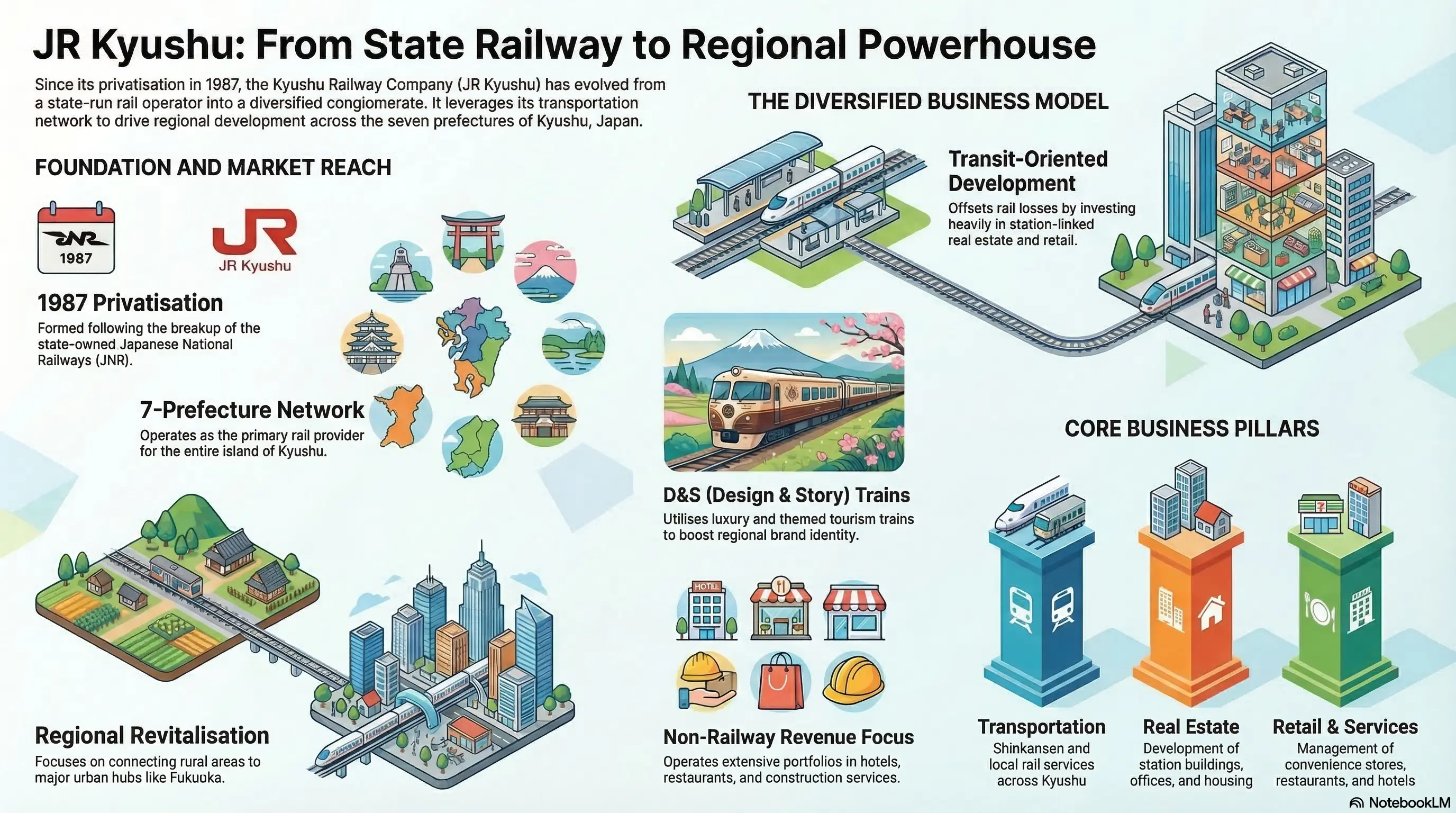
Infographic
Overview
Kyushu Railway Company, also known as JR Kyushu, is a railway company that serves the island of Kyushu in Japan. It is one of the seven Japan Railway (JR) companies, and operates both passenger and freight trains. The company was established in 1987 after the privatization and breakup of the government-run Japanese National Railways (JNR).
JR Kyushu operates multiple lines on the island, including the Kyushu Shinkansen high-speed train line, which connects Kyushu to the rest of Japan. In addition to traditional train services, the company also operates a number of specialized trains, such as the Seven Stars in Kyushu luxury sleeper train and the Yufuin no Mori sightseeing train.
The company also operates various station facilities, including shopping areas and restaurants, as well as hotels and resorts near popular tourist destinations.
In recent years, JR Kyushu has expanded its operations to include overseas ventures, such as the operation of luxury trains in Taiwan and the development of a new railway service in Indonesia.
JR Kyushu is committed to sustainability and has implemented eco-friendly practices in its operations, such as the use of renewable energy sources and the introduction of eco-friendly train cars.
The company has also been involved in social and cultural initiatives, such as promoting the local cuisine and supporting local festivals and events. JR Kyushu works closely with local communities to enhance the travel experience in the region and promote economic growth.
How to explain to a 10 year old kid about the company?
Kyushu Railway Company, often called JR Kyushu, is a company in Japan that runs trains. Imagine trains as big, fast buses that take people and things from one place to another. JR Kyushu has a lot of different trains, including regular trains that go between cities and special trains that are really fancy and fun to ride.
The company makes money when people buy tickets to ride the trains. Just like when you pay to get into a fun amusement park, people pay to take a trip on these trains. JR Kyushu also makes money by selling food and drinks on the trains and at the train stations. Sometimes they even have shops and hotels at train stations where they can earn extra money.
One reason JR Kyushu is successful is because the trains are very reliable and safe. People can trust that if they take the train, they will get to where they want to go on time. Plus, the trains go to a lot of different places, including beautiful spots in nature, which attracts both locals and tourists.
In the future, JR Kyushu is likely to stay successful because many people will always need to travel. With more people wanting to see Japan and its amazing places, the trains will continue to be an important way to get around. The company is also working on making the trains even better, with more comfortable seats and faster rides, which will keep people interested in using their services. So, as long as they keep providing good service and continuing to improve, they will probably be around for a long time!
What is special about the company?

📈 Want to read more about Kyushu Railway Company?
Sign up for free
or
log in
👥 Free eBook for new users: "The Checklist Value Investor — A Smarter Way to Pick Stocks"
MS4gT2xkZX N0IFJhaWx3 YXkgQ29tcG FueSBpbiBK YXBhbjogRX N0YWJsaXNo ZWQgaW4gMT g5NywgdGhl IEt5dXNodS BSYWlsd2F5 IENvbXBhbn kgKEpSIEt5 dXNodSkgaX MgdGhlIG9s ZGVzdCByYW lsd2F5IGNv bXBhbnkgaW 4gSmFwYW4s IHdpdGggb3 ZlciAxMjAg eWVhcnMgb2 YgZXhwZXJp ZW5jZSBpbi B0aGUgaW5k dXN0cnkuPG JyPjIuIEV4 dGVuc2l2ZS BOZXR3b3Jr OiBKUiBLeX VzaHUgb3Bl cmF0ZXMgb3 ZlciAxLDgw MCBraWxvbW V0ZXJzIG9m IHJhaWx3YX kgdHJhY2tz LCBjb25uZW N0aW5nIG1h am9yIGNpdG llcyBhbmQg ZGVzdGluYX Rpb25zIGlu IEt5dXNodS wgaW5jbHVk aW5nIEZ1a3 Vva2EsIE5h Z2FzYWtpLC BhbmQgS3Vt YW1vdG8uPG JyPjMuIE1v ZGVybiBhbm QgSW5ub3Zh dGl2ZTogSl IgS3l1c2h1 IGlzIGtub3 duIGZvciBp dHMgbW9kZX JuIGFuZCBp bm5vdmF0aX ZlIGFwcHJv YWNoIHRvIH JhaWx3YXkg b3BlcmF0aW 9ucy4gSXQg d2FzIHRoZS BmaXJzdCBj b21wYW55IG luIEphcGFu IHRvIGludH JvZHVjZSBm dWxseSBhdX RvbWF0ZWQg dHJhaW4gY2 9udHJvbCBz eXN0ZW0gYW 5kIHNtYXJ0 IGNhcmQgdG lja2V0aW5n IHN5c3RlbS 48YnI+NC4g VW5pcXVlIF RyYWluIFNl cnZpY2VzOi BKUiBLeXVz aHUgb2ZmZX JzIHVuaXF1 ZSB0cmFpbi BzZXJ2aWNl cyBzdWNoIG FzIHRoZSBT ZXZlbiBTdG FycyBpbiBL eXVzaHUgbH V4dXJ5IHRy YWluLCBkZX NpZ25lZCB0 byBzaG93Y2 FzZSB0aGUg YmVhdXR5IG 9mIEt5dXNo deKAmXMgbG FuZHNjYXBl LCBhbmQgdG hlIFl1ZnVp biBubyBNb3 JpIHRyYWlu LCB3aGljaC BydW5zIHRo cm91Z2ggdG hlIHNjZW5p YyBZdWZ1aW 4gYXJlYS48 YnI+NS4gTX VsdGktbGlu Z3VhbCBTZX J2aWNlczog SlIgS3l1c2 h1IGNhdGVy cyB0byBpbn Rlcm5hdGlv bmFsIHRyYX ZlbGVycyBi eSBvZmZlcm luZyBtdWx0 aS1saW5ndW FsIHNlcnZp Y2VzLCBpbm NsdWRpbmcg RW5nbGlzaC 1zcGVha2lu ZyBzdGFmZi BhdCBtYWpv ciBzdGF0aW 9ucyBhbmQg bXVsdGktbG FuZ3VhZ2Ug YW5ub3VuY2 VtZW50cyBv biB0cmFpbn MuPGJyPjYu IEZvY3VzIG 9uIFN1c3Rh aW5hYmlsaX R5OiBKUiBL eXVzaHUgaX MgY29tbWl0 dGVkIHRvIH Byb21vdGlu ZyBzdXN0YW luYWJsZSBh bmQgZWNvLW ZyaWVuZGx5 IHByYWN0aW Nlcy4gSXQg aGFzIGltcG xlbWVudGVk IHZhcmlvdX MgZW52aXJv bm1lbnRhbC Bpbml0aWF0 aXZlcywgc3 VjaCBhcyB1 c2luZyByZW 5ld2FibGUg ZW5lcmd5IH NvdXJjZXMg YW5kIHJlZH VjaW5nIGNh cmJvbiBlbW lzc2lvbnMu PGJyPjcuIE NvbW11bml0 eSBJbnZvbH ZlbWVudDog VGhlIGNvbX BhbnkgYWN0 aXZlbHkgZW 5nYWdlcyB3 aXRoIHRoZS Bsb2NhbCBj b21tdW5pdG llcyBpbiB3 aGljaCBpdC BvcGVyYXRl cy4gSXQgaG FzIGxhdW5j aGVkIHZhcm lvdXMgY29t bXVuaXR5IH Byb2plY3Rz IHRvIHN1cH BvcnQgdGhl IGVjb25vbW ljIGFuZCBj dWx0dXJhbC BkZXZlbG9w bWVudCBvZi BLeXVzaHUu PGJyPjguIE N1bHR1cmFs IFByZXNlcn ZhdGlvbjog SlIgS3l1c2 h1IGlzIGRl ZGljYXRlZC B0byBwcmVz ZXJ2aW5nIH RoZSBjdWx0 dXJhbCBoZX JpdGFnZSBv ZiBLeXVzaH UuIEl0IHJ1 bnMgaGVyaX RhZ2UgdHJh aW5zIHRoYX Qgc2hvd2Nh c2UgdHJhZG l0aW9uYWwg SmFwYW5lc2 UgYXJjaGl0 ZWN0dXJlLC BhcnQsIGFu ZCBjcmFmdH MuPGJyPjku IFF1YWxpdH kgQ3VzdG9t ZXIgU2Vydm ljZTogSlIg S3l1c2h1IG hhcyBhIHJl cHV0YXRpb2 4gZm9yIHBy b3ZpZGluZy BleGNlbGxl bnQgY3VzdG 9tZXIgc2Vy dmljZS4gSX Qgb2ZmZXJz IHZhcmlvdX MgYW1lbml0 aWVzIGFuZC BzZXJ2aWNl cyBvbiB0cm FpbnMsIHN1 Y2ggYXMgV2 ktRmksIG51 cnNpbmcgcm 9vbXMsIGFu ZCBsdWdnYW dlIHN0b3Jh Z2UuPGJyPj EwLiBEaXZl cnNlIEJ1c2 luZXNzIEdy b3d0aDogQX BhcnQgZnJv bSByYWlsd2 F5IG9wZXJh dGlvbnMsIE pSIEt5dXNo dSBoYXMgZX hwYW5kZWQg aXRzIGJ1c2 luZXNzIHRv IGluY2x1ZG UgdGhlbWUg cGFya3MsIG hvdGVscywg YW5kIHJldG FpbCBmYWNp bGl0aWVzLi BUaGlzIGRp dmVyc2lmaW NhdGlvbiBo YXMgY29udH JpYnV0ZWQg dG8gdGhlIG NvbXBhbnni gJlzIGZpbm FuY2lhbCBz dGFiaWxpdH kgYW5kIGdy b3d0aC4=
What the company's business model?
📈 Want to read more about Kyushu Railway Company?
Sign up for free
or
log in
📝 Join us and grab your copy of "The Checklist Value Investor — A Smarter Way to Pick Stocks"
VGhlIEt5dX NodSBSYWls d2F5IENvbX BhbnkgKEpS IEt5dXNodS kgaXMgYSBK YXBhbmVzZS B0cmFuc3Bv cnRhdGlvbi Bjb21wYW55 IHRoYXQgb3 BlcmF0ZXMg cGFzc2VuZ2 VyIGFuZCBm cmVpZ2h0IH RyYWlucywg YXMgd2VsbC BhcyBidXMg YW5kIGZlcn J5IHNlcnZp Y2VzIGluIH RoZSBLeXVz aHUgcmVnaW 9uIG9mIEph cGFuLiBJdH MgYnVzaW5l c3MgbW9kZW wgaXMgYmFz ZWQgb24gcH JvdmlkaW5n IHNhZmUsIH JlbGlhYmxl LCBhbmQgY2 9udmVuaWVu dCB0cmFuc3 BvcnRhdGlv biBzZXJ2aW NlcyBmb3Ig cGFzc2VuZ2 VycyBhbmQg ZnJlaWdodC BjdXN0b21l cnMuPGJyPk pSIEt5dXNo dSBnZW5lcm F0ZXMgcmV2 ZW51ZSBwcm ltYXJpbHkg dGhyb3VnaC B0aGUgc2Fs ZSBvZiB0aW NrZXRzIGFu ZCB0cmFuc3 BvcnRhdGlv biBzZXJ2aW NlcywgYXMg d2VsbCBhcy BhZHZlcnRp c2luZyBhbm QgcmV0YWls IGJ1c2luZX NzZXMgYXQg aXRzIHRyYW luIHN0YXRp b25zIGFuZC BvbmJvYXJk IHRyYWlucy 4gVGhlIGNv bXBhbnkgYW xzbyBvZmZl cnMgdmFyaW 91cyB0cmF2 ZWwgcGFja2 FnZXMsIHN1 Y2ggYXMgdG 91ciBwYWNr YWdlcyBhbm QgZ3JvdXAg ZGlzY291bn QgdGlja2V0 cywgdG8gYX R0cmFjdCBj dXN0b21lcn MgYW5kIGdl bmVyYXRlIG FkZGl0aW9u YWwgcmV2ZW 51ZS48YnI+ SW4gYWRkaX Rpb24gdG8g dHJhbnNwb3 J0YXRpb24g c2VydmljZX MsIEpSIEt5 dXNodSBhbH NvIGhhcyBh IGRpdmVyc2 UgcmFuZ2Ug b2Ygc3Vic2 lkaWFyeSBi dXNpbmVzc2 VzLCBpbmNs dWRpbmcgcm VhbCBlc3Rh dGUgZGV2ZW xvcG1lbnQs IGhvdGVsIG FuZCByZXNv cnQgbWFuYW dlbWVudCwg YW5kIGZvb2 QgYW5kIGJl dmVyYWdlIH NlcnZpY2Vz LiBUaGVzZS BidXNpbmVz c2VzIGNvbn RyaWJ1dGUg dG8gdGhlIG NvbXBhbnni gJlzIG92ZX JhbGwgcHJv Zml0YWJpbG l0eSBhbmQg aGVscCBkaX ZlcnNpZnkg aXRzIHJldm VudWUgc3Ry ZWFtcy48Yn I+VGhlIGNv bXBhbnkgYW xzbyBmb2N1 c2VzIG9uIH N1c3RhaW5h YmlsaXR5IG FuZCBjb21t dW5pdHkgaW 52b2x2ZW1l bnQgaW4gaX RzIGJ1c2lu ZXNzIG1vZG VsLiBJdCBh Y3RpdmVseS Bwcm9tb3Rl cyBlbnZpcm 9ubWVudGFs bHktZnJpZW 5kbHkgcHJh Y3RpY2VzLC BzdWNoIGFz IHRoZSB1c2 Ugb2YgZWNv LWZyaWVuZG x5IHRyYWlu cywgYW5kIG VuZ2FnZXMg aW4gdmFyaW 91cyBpbml0 aWF0aXZlcy B0byBzdXBw b3J0IGxvY2 FsIGNvbW11 bml0aWVzIG FuZCBwcmVz ZXJ2ZSBjdW x0dXJhbCBo ZXJpdGFnZS BzaXRlcyBh bG9uZyBpdH MgcmFpbHdh eSBsaW5lcy 48YnI+T3Zl cmFsbCwgSl IgS3l1c2h1 4oCZcyBidX NpbmVzcyBt b2RlbCBjZW 50ZXJzIGFy b3VuZCBwcm 92aWRpbmcg ZWZmaWNpZW 50IGFuZCBy ZWxpYWJsZS B0cmFuc3Bv cnRhdGlvbi BzZXJ2aWNl cyB3aGlsZS BhbHNvIGRp dmVyc2lmeW luZyBpdHMg cmV2ZW51ZS BzdHJlYW1z IGFuZCBwcm 9tb3Rpbmcg c3VzdGFpbm FiaWxpdHkg YW5kIGNvbW 11bml0eSBp bnZvbHZlbW VudC4=
Is AI a threat?
AI can pose a material threat to the Kyushu Railway Company in several ways.
Firstly, substitution could emerge as AI enables alternative modes of transportation, such as autonomous vehicles or advanced ride-sharing services. These options may become more efficient and convenient for consumers, potentially leading to a decline in demand for traditional rail services.
Secondly, disintermediation is a concern as AI-driven platforms could streamline travel planning and ticket purchasing, allowing customers to bypass the traditional purchasing processes associated with rail travel. This could undermine the company’s existing sales channels and market position.
Lastly, margin pressure may arise if competitors adopt AI technologies to significantly reduce operational costs or enhance service offerings. If these competitors can provide cheaper or more efficient alternatives, it would force the Kyushu Railway Company to either lower its prices or invest heavily in technology upgrades, impacting profitability.
Overall, while AI presents opportunities for innovation and improved efficiency, it also carries substantial risks that the Kyushu Railway Company must address proactively to maintain its competitive position in the transportation sector.
Sensitivity to interest rates
The sensitivity of Kyushu Railway Company’s earnings, cash flow, and valuation to changes in interest rates can typically be assessed through a few key factors.
1. Earnings Sensitivity: The company’s earnings may be impacted by interest rates primarily through the cost of borrowing. If interest rates rise, the cost of servicing existing debt increases, potentially reducing net income. Conversely, lower interest rates could lead to lower borrowing costs and potentially higher earnings if the company can leverage that for growth or investment.
2. Cash Flow Sensitivity: Cash flow is also influenced by interest rates, particularly in terms of operating costs and capital expenditures. Higher interest rates can lead to increased costs for financing new projects or maintaining liquidity, thereby constraining cash flow. On the other hand, if the company has fixed-rate debt, the immediate cash flow may remain stable until refinancing is necessary.
3. Valuation Sensitivity: Valuation, which often relies on discounted cash flow models, is directly affected by interest rates through the discount rate applied to future cash flows. An increase in interest rates generally raises the discount rate, which lowers present value calculations and could lead to a decrease in the company’s valuation. Conversely, lower interest rates decrease the discount rate, potentially increasing valuation.
Overall, while Kyushu Railway Company may be sensitive to interest rate changes, the exact impact would depend on their specific financial structure, current debt levels, the maturity profile of their bonds, and their ability to manage costs and investments in response to these changes.
Interesting facts about the company
📈 Want to read more about Kyushu Railway Company?
Sign up for free
or
log in
✍️ Sign up to get "The Checklist Value Investor — A Smarter Way to Pick Stocks" for free
CiAgICAgIC AgICAgIDxk aXYgc3R5bG U9J3dpZHRo OiAxMDAlOy BkaXNwbGF5 OiBmbGV4Oy BqdXN0aWZ5 LWNvbnRlbn Q6IGNlbnRl cjsnPgogIC AgICAgICAg ICAgICAgPG RpdiBzdHls ZT0nCiAgIC AgICAgICAg ICAgICAgIC AgZGlzcGxh eTogZmxleD sKICAgICAg ICAgICAgIC AgICAgICBh bGlnbi1pdG VtczogY2Vu dGVyOwogIC AgICAgICAg ICAgICAgIC AgIGJhY2tn cm91bmQtY2 9sb3I6ICNm MGY0Zjg7Ci AgICAgICAg ICAgICAgIC AgICAgYm9y ZGVyOiAxcH ggc29saWQg I2QxZTNmMD sKICAgICAg ICAgICAgIC AgICAgICBi b3JkZXItcm FkaXVzOiAx MHB4OwogIC AgICAgICAg ICAgICAgIC AgIHBhZGRp bmc6IDEwcH g7CiAgICAg ICAgICAgIC AgICAgICAg bWFyZ2luOi AyMHB4IDA7 CiAgICAgIC AgICAgICAg ICAgICAgZm 9udC1mYW1p bHk6ICJTZW dvZSBVSSIs IFJvYm90by wgc2Fucy1z ZXJpZjsKIC AgICAgICAg ICAgICAgIC AgICBib3gt c2hhZG93Oi AwIDJweCA2 cHggcmdiYS gwLCAwLCAw LCAwLjA1KT sKICAgICAg ICAgICAgIC AgICAgICBt YXgtd2lkdG g6IDkwMHB4 OwogICAgIC AgICAgICAg ICAgICAgIH dpZHRoOiAx MDAlOyc+Cg ogICAgICAg ICAgICAgIC AgICAgIDxp bWcgc3JjPS Jhc3NldHMv bG9nb3MveW JTcWtSQ3NR d0JKS1NUdT h4WGMud2Vi cCIgYWx0PS JLeXVzaHUg UmFpbHdheS BDb21wYW55 IiB0aXRsZT 0iS3l1c2h1 IFJhaWx3YX kgQ29tcGFu eSIgIGNsYX NzPSJpbWct Zmx1aWQiIG hlaWdodD05 MCB3aWR0aD 05MCBsb2Fk aW5nPSdsYX p5JyBzdHls ZT0nYm9yZG VyLXJhZGl1 czogNnB4Oy c+CgogICAg ICAgICAgIC AgICAgICAg IDxkaXYgc3 R5bGU9J2Zs ZXg6IDE7IH RleHQtYWxp Z246IGNlbn RlcjsgbWFy Z2luLWxlZn Q6IDVweDsn PgogICAgIC AgICAgICAg ICAgICAgIC AgICA8cCBz dHlsZT0nZm 9udC1zaXpl OiAyNnB4Oy Bjb2xvcjog IzMzMzsgbW FyZ2luLWJv dHRvbTogMT VweDsnPgog ICAgICAgIC AgICAgICAg ICAgICAgIC AgICAg8J+T iCBXYW50IH RvIHJlYWQg bW9yZSBhYm 91dCBLeXVz aHUgUmFpbH dheSBDb21w YW55PwogIC AgICAgICAg ICAgICAgIC AgICAgICA8 L3A+CgogIC AgICAgICAg ICAgICAgIC AgICAgICA8 YSBocmVmPS dpbmRleC5w aHA/cGFnZT 1zaWdudXAn IHN0eWxlPS cKICAgICAg ICAgICAgIC AgICAgICAg ICAgICAgIG JhY2tncm91 bmQtY29sb3 I6ICMwMDdC RkY7CiAgIC AgICAgICAg ICAgICAgIC AgICAgICAg ICBjb2xvcj ogI2ZmZjsK ICAgICAgIC AgICAgICAg ICAgICAgIC AgICAgIHBh ZGRpbmc6ID EwcHggMjBw eDsKICAgIC AgICAgICAg ICAgICAgIC AgICAgICAg IGJvcmRlci 1yYWRpdXM6 IDVweDsKIC AgICAgICAg ICAgICAgIC AgICAgICAg ICAgIHRleH QtZGVjb3Jh dGlvbjogbm 9uZTsKICAg ICAgICAgIC AgICAgICAg ICAgICAgIC AgIGZvbnQt d2VpZ2h0Oi Bib2xkOwog ICAgICAgIC AgICAgICAg ICAgICAgIC AgICAgbWFy Z2luLXJpZ2 h0OiAxMHB4 OwogICAgIC AgICAgICAg ICAgICAgIC AgICAgICAg dHJhbnNpdG lvbjogYmFj a2dyb3VuZC 1jb2xvciAw LjNzIGVhc2 U7JwogICAg ICAgICAgIC AgICAgICAg ICAgICAgIC Agb25tb3Vz ZW92ZXI9J3 RoaXMuc3R5 bGUuYmFja2 dyb3VuZENv bG9yPSIjMD A1NmIzIicK ICAgICAgIC AgICAgICAg ICAgICAgIC AgICAgIG9u bW91c2VvdX Q9J3RoaXMu c3R5bGUuYm Fja2dyb3Vu ZENvbG9yPS IjMDA3QkZG Iic+CiAgIC AgICAgICAg ICAgICAgIC AgICAgICAg ICBTaWduIH VwIGZvciBm cmVlCiAgIC AgICAgICAg ICAgICAgIC AgICAgIDwv YT4KCiAgIC AgICAgICAg ICAgICAgIC AgICAgIDxz cGFuIHN0eW xlPSdtYXJn aW46IDAgOH B4OyBjb2xv cjogIzU1NT snPm9yPC9z cGFuPgoKIC AgICAgICAg ICAgICAgIC AgICAgICAg PGEgaHJlZj 0naW5kZXgu cGhwP3BhZ2 U9bG9naW4n IHN0eWxlPS cKICAgICAg ICAgICAgIC AgICAgICAg ICAgICAgIG NvbG9yOiAj MDA3QkZGOw ogICAgICAg ICAgICAgIC AgICAgICAg ICAgICAgdG V4dC1kZWNv cmF0aW9uOi B1bmRlcmxp bmU7CiAgIC AgICAgICAg ICAgICAgIC AgICAgICAg ICBmb250LX dlaWdodDog NTAwOyc+Ci AgICAgICAg ICAgICAgIC AgICAgICAg ICAgICBsb2 cgaW4KICAg ICAgICAgIC AgICAgICAg ICAgICAgPC 9hPgoKCiAg ICAgICAgIC AgICAgICAg ICAgICAgID xwIHN0eWxl PSdtYXJnaW 4tdG9wOiAx NXB4OyBmb2 50LXNpemU6 IDEzcHg7IG ZvbnQtd2Vp Z2h0OiBib2 xkOyBjb2xv cjogI2QzMm YyZjsnPgog ICAgICAgIC AgICAgICAg ICAgICAgIC AgICAg8J+T mCBDbGFpbS B5b3VyIGZy ZWUgZUJvb2 s6IDxpPiJU aGUgQ2hlY2 tsaXN0IFZh bHVlIEludm VzdG9yIOKA lCBBIFNtYX J0ZXIgV2F5 IHRvIFBpY2 sgU3RvY2tz IjwvaT4KIC AgICAgICAg ICAgICAgIC AgICAgICAg PC9wPgoKIC AgICAgICAg ICAgICAgIC AgICAgICAg PCEtLQogIC AgICAgICAg ICAgICAgIC AgICAgICA8 ZGl2IHN0eW xlPSdtYXJn aW4tdG9wOi AxMnB4OyBm b250LXNpem U6IDEzcHg7 IGNvbG9yOi AjNDQ0Oyc+ CiAgICAgIC AgICAgICAg ICAgICAgIC AgICAgICBT aWduIHVwIG 5vdyBhbmQg Z2V0IG91ci BmcmVlIGVC b29rIAogIC AgICAgICAg ICAgICAgIC AgICAgICAg ICAgPGI+VG hlIENoZWNr bGlzdCBWYW x1ZSBJbnZl c3RvciDigJ QgQSBTbWFy dGVyIFdheS B0byBQaWNr IFN0b2Nrcz wvYj4KICAg ICAgICAgIC AgICAgICAg ICAgICAgPC 9kaXY+CiAg ICAgICAgIC AgICAgICAg ICAgICAgIC 0tPgogICAg ICAgICAgIC AgICAgICAg ICAgICA8IS 0tCiAgICAg ICAgICAgIC AgICAgICAg ICAgIDxkaX Ygc3R5bGU9 J21hcmdpbi 10b3A6IDE2 cHg7IGZvbn Qtc2l6ZTog MTRweDsgY2 9sb3I6ICM0 NDQ7IGZvbn QtZmFtaWx5 OiAtYXBwbG Utc3lzdGVt LCBCbGlua0 1hY1N5c3Rl bUZvbnQsIF NlZ29lIFVJ LCBSb2JvdG 8sIEhlbHZl dGljYSBOZX VlLCBzYW5z LXNlcmlmOy BsaW5lLWhl aWdodDogMS 42Oyc+CiAg ICAgICAgIC AgICAgICAg ICAgICAgIC AgICBIYXZl IHlvdSBoZW FyZCBhYm91 dCBvdXIgc2 hvcnQgPHN0 cm9uZyBzdH lsZT0nZm9u dC13ZWlnaH Q6IDYwMDsn PkRhaWx5IF ZpZGVvIE5l d3NsZXR0ZX I8L3N0cm9u Zz4/CiAgIC AgICAgICAg ICAgICAgIC AgICAgICAg ICA8YSBocm VmPSdodHRw czovL3d3dy 5pbnNpZ2h0 ZnVsdmFsdW UuY29tL25l d3NsZXR0ZX IucGhwJyB0 YXJnZXQ9J1 9ibGFuaycg c3R5bGU9J2 NvbG9yOiAj MDA3QkZGOy B0ZXh0LWRl Y29yYXRpb2 46IG5vbmU7 IGZvbnQtd2 VpZ2h0OiA1 MDA7IG1hcm dpbi1sZWZ0 OiA2cHg7Jz 4KICAgICAg ICAgICAgIC AgICAgICAg ICAgICAgIC AgICBGaW5k IG91dCBtb3 JlCiAgICAg ICAgICAgIC AgICAgICAg ICAgICAgIC A8L2E+CiAg ICAgICAgIC AgICAgICAg ICAgICAgID wvZGl2Pgog ICAgICAgIC AgICAgICAg ICAgICAgIC AtLT4KICAg ICAgICAgIC AgICAgICAg ICA8L2Rpdj 4KICAgICAg ICAgICAgIC AgIDwvZGl2 PgogICAgIC AgICAgICA8 L2Rpdj4KIC AgICAgICAg ICAgCiAgIC AgICAgCiAg ICAgICAgPH NwYW4gY2xh c3M9J2JsdX JyZWQtdGV4 dCc+CiAgIC AgICAgICAg IExTQlVhR1 VnUzMgbDFj MmgxSUZKaC BhV3gzWVhr Z1EyIDl0Y0 dGdWVTQW8g U2xJZ1MzbD FjMiBoMUtT QnBjeUIwIG FHVWdkR2hw Y20gUWdiR0 Z5WjJWeiBk Q0J2WmlCMG FHIFVnYzJW MlpXNGcgU2 1Gd1lXNGdV bSBGcGJIZG hlWE1nIFIz SnZkWEFnWT IgOXRjR0Z1 YVdWeiBMQ0 J5WlhOd2Iy IDV6YVdKc1 pTQm0gYjNJ Z2IzQmxjbS BGMGFXNW5J SFJ5IFlXbH VJSE5sY24g WnBZMlZ6SU c5dSBJSFJv WlNCemIzIF YwYUdWeWJt MXYgYzNRZ2 IyWWdkRyBo bElHWnZkWE lnIGJXRnBi aUJwYzIgeG hibVJ6SUc5 bSBJRXBoY0 dGdUxDIEJM ZVhWemFIVX UgUEdKeVBp MGdTbCBJZ1 MzbDFjMmgx IElIZGhjeU JtYjMgVnVa R1ZrSUdsdS BJREU1T0Rj Z1lYIE1nY0 dGeWRDQnYg WmlCMGFHVW djSCBKcGRt RjBhWHBoIG RHbHZiaUJ2 WmkgQjBhR1 VnU21GdyBZ VzVsYzJVZ1 RtIEYwYVc5 dVlXd2cgVW 1GcGJIZGhl WCBNc0lIZG 9hV05vIElH aGhaQ0J0WV cgbHVkR0Zw Ym1WayBJR0 52Ym5SeWIy IHdnYjJZZ2 RHaGwgSUdO dmRXNTBjbi BuaWdKbHpJ SEpoIGFXeD NZWGtnYzMg bHpkR1Z0SU hOcCBibU5s SURFNE56IE l1UEdKeVBp MGcgVkdobE lHTnZiWCBC aGJubmlnSm x6IElHTnZj bkJ2Y20gRj BaU0JvWldG ayBjWFZoY2 5SbGNuIE1n WVhKbElHeH YgWTJGMFpX UWdhVyA0Z1 NHRnJZWFJo IExDQkdkV3 QxYjIgdGhM Q0JoYm1RZy BhWFFnWlcx d2JHIDk1Y3 lCdmRtVnkg SURFMkxEQX dNQyBCd1pX OXdiR1V1IF BHSnlQaTBn U2wgSWdTM2 wxYzJoMSBJ Rzl3WlhKaG RHIFZ6SUdF Z2FHbG4gYU MxemNHVmxa QyBCMGNtRn BiaUJ6IFpY SjJhV05sSU cgTmhiR3hs WkNCMCBhR1 VnUzNsMWMy IGgxSUZOb2 FXNXIgWVc1 elpXNHNJSC Bkb2FXTm9J R052IGJtNW xZM1J6SUgg Um9aU0J6Yj NWMCBhR1Z5 YmlCcGMyIH hoYm1RZ2Iy WWcgUzNsMW MyaDFJSCBS dklIUm9aU0 J0IFlXbHVJ R2x6YkcgRn VaQ0J2WmlC SSBiMjV6YU hVdUlFIGww SUdseklIUm 8gWlNCdGIz TjBJSCBOdm RYUm9aWEp1 IElHOW1JSF JvWlMgQm1i M1Z5SUZOby BhVzVyWVc1 elpXIDRnYk dsdVpYTWcg YVc0Z1NtRn dZVyA0dVBH SnlQaTBnIF ZHaGxJRXQ1 ZFggTm9kU0 JUYUdsdSBh MkZ1YzJWdU lIIEoxYm5N Z1puSnYgYl NCSVlXdGhk RyBFZ2RHOG dTMkZuIGIz Tm9hVzFoSU cgbHVJR0Zp YjNWMCBJRE VnYUc5MWNp IEJoYm1RZ0 1Ua2cgYlds dWRYUmxjeS B3Z2JXRnJh VzVuIElHbD BJSFJvWlMg Qm1ZWE4wWl hOMCBJSFJ5 WVdsdUlIIE 5sY25acFky VWcgYVc0Z1 NtRndZVyA0 dVBHSnlQaT BnIFNXNGdZ V1JrYVggUn BiMjRnZEc4 ZyBhWFJ6SU docFoyIGd0 YzNCbFpXUW cgZEhKaGFX NGdjMiBWeW RtbGpaU3dn IFNsSWdTM2 wxYzIgaDFJ R0ZzYzI4Zy BiM0JsY21G MFpYIE1nYk c5allXd2cg WVc1a0lISm xaMiBsdmJt RnNJSFJ5IF lXbHVJR3hw Ym0gVnpMQ0 JoY3lCMyBa V3hzSUdGek lHIEoxY3lC aGJtUWcgWm 1WeWNua2dj MiBWeWRtbG paWE11IFBH SnlQaTBnVT IgOXRaU0J2 WmlCMCBhR1 VnZFc1cGNY IFZsSUhSeV lXbHUgY3lC eWRXNGdZbi BrZ1NsSWdT M2wxIGMyaD FJR2x1WTIg eDFaR1VnZE dobCBJRk5s ZG1WdUlGIE 4wWVhKeklH eDEgZUhWeW VTQjBjbSBG cGJpd2dkR2 hsIElFRnlk U0JTWlggTn phR0VnYzJs biBhSFJ6Wl dWcGJtIGNn ZEhKaGFXNH MgSUdGdVpD QjBhRyBVZ2 NHOXdkV3ho IGNpQlpkV1 oxYVcgNGdi bThnVFc5eS BhU0IwY21G cGJpIEIwYU dGMElISjEg Ym5NZ2RHaH liMyBWbmFD QjBhR1VnIG MyTmxibWxq SUYgbDFabl VnYlc5MSBi blJoYVc0Z2 NtIEZ1WjJV dVBHSnkgUG kwZ1NsSWdT MyBsMWMyaD FJR2x6IElH RnNjMjhnYV cgNTJiMngy WldRZyBhVz RnZEc5MWNt IGx6YlNCaG JtUWcgY21W aGJDQmxjMy BSaGRHVWda R1YyIFpXeH ZjRzFsYm4g UXNJSGRwZE dnZyBjSEp2 YW1WamRIIE 1nYzNWamFD QmggY3lCMG FHVWdTMyBs MWMyaDFJRk 5oIFoyRWdT VzUwWlggSn VZWFJwYjI1 aCBiQ0JCYV hKd2IzIEow SUdGdVpDQj AgYUdVZ1Mz bDFjMiBoMU lGSmhhV3gz IFlYa2dTR2 x6ZEcgOXll U0JOZFhObC BkVzB1UEdK eVBpIDBnVk dobElHTnYg YlhCaGJubm lnSiBseklH eHZaMjhnIF ptVmhkSFZ5 WlggTWdZU0 J6ZEhscyBh WHBsWkNCMl pYIEp6YVc5 dUlHOW0gSU hSb1pTQnBj MiB4aGJtUW diMllnIFMz bDFjMmgxTE MgQjNhWFJv SUhSbyBaU0 JzWlhSMFpY IElnU3lCbW IzSWcgUzNs MWMyaDFJRy BsdVkyOXlj Rzl5IFlYUm xaQ0IzYVgg Um9hVzRnYV hRdSBQR0p5 UGkwZ1NsIE lnUzNsMWMy aDEgSUdoaG N5QmlaVyBW dUlISmxZMj luIGJtbDZa V1FnWm0gOX lJR2wwY3lC aiBiMjF0YV hSdFpXIDUw SUhSdklITj EgYzNSaGFX NWhZbSBsc2 FYUjVJR0Z1 IFpDQmxibl pwY20gOXVi V1Z1ZEdGcy BJR2x1YVhS cFlYIFJwZG 1WekxDQnog ZFdOb0lHRn pJSCBSb1pT QnBiblJ5IG IyUjFZM1Jw YjIgNGdiMl lnWldOdiBM V1p5YVdWdV pHIHg1SUhS eVlXbHUgY3 lCaGJtUWdj MiA5c1lYSW djR0Z1IFpX eHpJRzl1SU cgbDBjeUJp ZFdscyBaR2 x1WjNNdUlF IGwwSUdoaG N5QmggYkhO dklIZHZiaS BCaGQyRnla SE1nIFptOX lJR2wwY3kg QmpkWE4wYj IxbCBjaUJ6 WlhKMmFXIE 5sSUdGdVpD QnQgWVc1aF oyVnRaVyA1 MElIQnlZV0 4wIGFXTmxj eTQ9CiAgIC AgICAgPC9z cGFuPgogIC AgICAgIAog ICAgICAgIA ==
See Company Q&A
📊 Get full analytics about Kyushu Railway Company
Sign up for free
or
log in
✅ Download "The Checklist Value Investor — A Smarter Way to Pick Stocks" — totally free!