Company at a Glance
Price
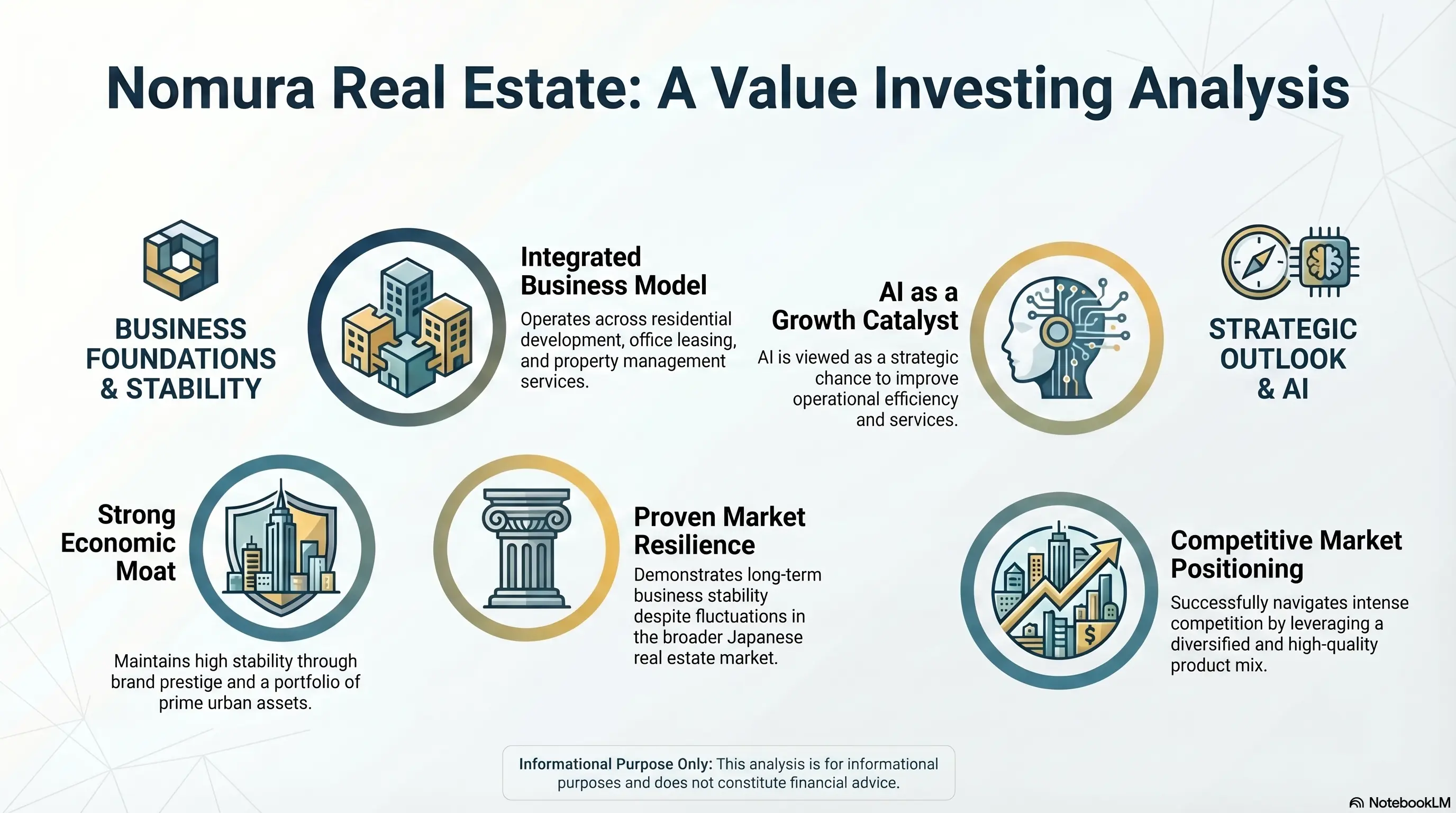
Infographic
Overview
Nomura Real Estate is a prominent Japanese real estate company that operates in the development, leasing, and management of properties. Established in 1957 as a subsidiary of Nomura Holdings, the company has since grown to become one of the leading players in Japan’s real estate sector.
The company’s activities encompass various segments, including residential development, commercial real estate, and asset management. Nomura Real Estate is known for its commitment to high-quality construction and innovative design, reflecting modern urban living standards.
In addition to domestic operations in Japan, Nomura Real Estate has expanded its reach internationally, participating in real estate projects and investments in various countries. The company focuses on sustainable development practices, aiming to create environmentally friendly spaces that contribute positively to communities.
With a reputation built on reliability and quality, Nomura Real Estate continues to play a significant role in shaping Japan’s urban landscapes and contributing to the growth of the real estate market.
How to explain to a 10 year old kid about the company?

📈 Want to read more about Nomura Real Estate?
Sign up for free
or
log in
🙌 Join now to get "The Checklist Value Investor — A Smarter Way to Pick Stocks" at no cost
Tm9tdXJhIF JlYWwgRXN0 YXRlIGlzIG EgY29tcGFu eSB0aGF0IG ZvY3VzZXMg b24gYnVpbG RpbmdzIGFu ZCBsYW5kLi BUaGluayBv ZiBpdCBsaW tlIGEgYmln IHB1enpsZS B3aGVyZSBk aWZmZXJlbn QgcGllY2Vz IGFyZSBidW lsZGluZ3Ms IGxpa2UgaG 9tZXMsIG9m ZmljZXMsIG FuZCBzaG9w cGluZyBhcm Vhcy4gTm9t dXJhIFJlYW wgRXN0YXRl IG1ha2VzIG 1vbmV5IGJ5 IGJ1aWxkaW 5nIG5ldyBw bGFjZXMgZm 9yIHBlb3Bs ZSB0byBsaX ZlIGFuZCB3 b3JrLCBidX lpbmcgbGFu ZCwgYW5kIH NlbGxpbmcg b3IgcmVudG luZyB0aG9z ZSBidWlsZG luZ3MgdG8g b3RoZXJzLj xicj5JbWFn aW5lIHlvdS BoYXZlIGEg dG95IHRoYX QgeW91IGNh biBsZW5kIH RvIHlvdXIg ZnJpZW5kcy 4gV2hlbiB0 aGV5IHBsYX kgd2l0aCBp dCwgdGhleS BtaWdodCBn aXZlIHlvdS BhIGxpdHRs ZSBiaXQgb2 YgdGhlaXIg YWxsb3dhbm NlLiBUaGF0 4oCZcyBzaW 1pbGFyIHRv IGhvdyBOb2 11cmEgZWFy bnMgbW9uZX kgd2hlbiBw ZW9wbGUgcm VudCB0aGUg YnVpbGRpbm dzIHRoZXkg b3duLiBUaG V5IGFsc28g YnVpbGQgbm V3IHBsYWNl cywgd2hpY2 ggY2FuIGJl IHNvbGQgZm 9yIG1vbmV5 IG9uY2UgdG hleSBhcmUg cmVhZHkuPG JyPk5vbXVy YSBSZWFsIE VzdGF0ZSBp cyBzdWNjZX NzZnVsIGZv ciBhIGZldy ByZWFzb25z LiBGaXJzdC wgdGhleSBr bm93IGhvdy B0byBwaWNr IHRoZSBiZX N0IHNwb3Rz IHRvIGJ1aW xkLiBJZiB5 b3Ugd2VyZS BjaG9vc2lu ZyBhIHBsYW NlIGZvciBh IGxlbW9uYW RlIHN0YW5k LCB5b3XigJ lkIHdhbnQg YSBidXN5IH Nwb3Qgd2hl cmUgbG90cy BvZiBwZW9w bGUgd2Fsay BieS4gTm9t dXJhIGRvZX MgdGhlIHNh bWUgdGhpbm cgYnV0IHdp dGggYmlnZ2 VyIGJ1aWxk aW5ncyEgU2 Vjb25kLCB0 aGV5IGhhdm UgbG90cyBv ZiBleHBlcm llbmNlIGFu ZCBzbWFydC BwZW9wbGUg d2hvIHVuZG Vyc3RhbmQg d2hhdCBwZW 9wbGUgbmVl ZC4gV2hlbi Btb3JlIHBl b3BsZSB3YW 50IHRvIGxp dmUgb3Igd2 9yayBpbiBh IGNpdHksIG NvbXBhbmll cyBsaWtlIE 5vbXVyYSBj YW4gY3JlYX RlIHRob3Nl IHNwYWNlcy 48YnI+TG9v a2luZyB0by B0aGUgZnV0 dXJlLCBtb3 JlIHBlb3Bs ZSB3aWxsIH Byb2JhYmx5 IG5lZWQgaG 9tZXMgYW5k IHBsYWNlcy B0byB3b3Jr LiBFdmVuIH Rob3VnaCBz b21lIGJ1aW xkaW5ncyBj YW4gZ2V0IG 9sZCBvciBl bXB0eSwgTm 9tdXJhIFJl YWwgRXN0YX RlIGNhbiBh ZGFwdCBieS Bjb21pbmcg dXAgd2l0aC BuZXcgaWRl YXMgb3IgY2 hhbmdpbmcg YnVpbGRpbm dzIHRvIG1h dGNoIHdoYX QgcGVvcGxl IHdhbnQuIF NvLCBiZWNh dXNlIHRoZX kgbWFrZSBz bWFydCBjaG 9pY2VzIGFu ZCBhZGp1c3 QgdG8gd2hh dCBwZW9wbG UgbmVlZCwg aXTigJlzIG xpa2VseSB0 aGF0IE5vbX VyYSBSZWFs IEVzdGF0ZS B3aWxsIGNv bnRpbnVlIH RvIGJlIHN1 Y2Nlc3NmdW wuPGJyPg==
What is special about the company?
📈 Want to read more about Nomura Real Estate?
Sign up for free
or
log in
🚀 Don’t miss "The Checklist Value Investor — A Smarter Way to Pick Stocks" — free!
MS4gRXhwZX JpZW5jZWQg YW5kIGxvbm ctc3RhbmRp bmcgY29tcG FueTogTm9t dXJhIFJlYW wgRXN0YXRl IHdhcyBmb3 VuZGVkIGlu IDE5NTcgYW 5kIGhhcyBv dmVyIDYwIH llYXJzIG9m IGV4cGVyaW VuY2UgaW4g dGhlIHJlYW wgZXN0YXRl IG1hcmtldC 4gSXQgaGFz IGEgc3Ryb2 5nIHRyYWNr IHJlY29yZC BhbmQgYSBw cm92ZW4gcm VwdXRhdGlv biBpbiB0aG UgaW5kdXN0 cnkuPGJyPj IuIERpdmVy c2lmaWVkIH BvcnRmb2xp bzogVGhlIG NvbXBhbnkg aGFzIGEgZG l2ZXJzaWZp ZWQgcG9ydG ZvbGlvIHRo YXQgaW5jbH VkZXMgcmVz aWRlbnRpYW wsIGNvbW1l cmNpYWwsIG FuZCBpbmR1 c3RyaWFsIH Byb3BlcnRp ZXMuIFRoaX MgaGVscHMg aW4gcmVkdW Npbmcgcmlz a3MgYW5kIG Vuc3VyaW5n IHN0ZWFkeS BpbmNvbWUg c3RyZWFtcy 48YnI+My4g TGFyZ2Utc2 NhbGUgcHJv amVjdHM6IE 5vbXVyYSBS ZWFsIEVzdG F0ZSBpcyBr bm93biBmb3 IgZGV2ZWxv cGluZyBsYX JnZS1zY2Fs ZSBwcm9qZW N0cyBzdWNo IGFzIHNob3 BwaW5nIG1h bGxzLCBvZm ZpY2UgYnVp bGRpbmdzLC BhbmQgbWl4 ZWQtdXNlIG RldmVsb3Bt ZW50cy4gVG hlc2UgcHJv amVjdHMgaG F2ZSBhIHNp Z25pZmljYW 50IGltcGFj dCBvbiB0aG UgbG9jYWwg ZWNvbm9teS BhbmQgY29u dHJpYnV0ZS B0byB0aGUg Y29tcGFuee KAmXMgZ3Jv d3RoLjxicj 40LiBGb2N1 cyBvbiBzdX N0YWluYWJp bGl0eTogVG hlIGNvbXBh bnkgaGFzIG Egc3Ryb25n IGNvbW1pdG 1lbnQgdG8g c3VzdGFpbm FiaWxpdHkg YW5kIGhhcy BkZXZlbG9w ZWQgZW52aX Jvbm1lbnRh bGx5IGZyaW VuZGx5IGJ1 aWxkaW5ncy B0aGF0IGhh dmUgcmVjZW l2ZWQgdmFy aW91cyBjZX J0aWZpY2F0 aW9ucy4gSX QgYWxzbyBw cm9tb3Rlcy BncmVlbiBp bml0aWF0aX ZlcyBpbiBp dHMgb3Blcm F0aW9ucyBh bmQgZGV2ZW xvcG1lbnRz Ljxicj41Li BTdHJvbmcg ZmluYW5jaW FsIHBvc2l0 aW9uOiBOb2 11cmEgUmVh bCBFc3RhdG UgaGFzIGEg c3Ryb25nIG ZpbmFuY2lh bCBwb3NpdG lvbiB3aXRo IGEgaGlnaC BjcmVkaXQg cmF0aW5nLC B3aGljaCBh bGxvd3MgaX QgdG8gZWFz aWx5IHNlY3 VyZSBmaW5h bmNpbmcgZm 9yIGl0cyBw cm9qZWN0cy 48YnI+Ni4g SW50ZXJuYX Rpb25hbCBw cmVzZW5jZT ogVGhlIGNv bXBhbnkgaG FzIGEgZ2xv YmFsIHByZX NlbmNlLCB3 aXRoIG9mZm ljZXMgYW5k IHByb3Blcn RpZXMgaW4g dmFyaW91cy Bjb3VudHJp ZXMgc3VjaC BhcyB0aGUg VW5pdGVkIF N0YXRlcywg QXVzdHJhbG lhLCBhbmQg Q2hpbmEuIF RoaXMgaGVs cHMgaW4gZG l2ZXJzaWZ5 aW5nIGl0cy Bwb3J0Zm9s aW8gYW5kIG V4cGFuZGlu ZyBpdHMgbW Fya2V0IHJl YWNoLjxicj 43LiBJbm5v dmF0aXZlIG FwcHJvYWNo OiBOb211cm EgUmVhbCBF c3RhdGUgaX Mga25vd24g Zm9yIGl0cy Bpbm5vdmF0 aXZlIGFwcH JvYWNoIHRv IGRldmVsb3 BtZW50IGFu ZCBtYW5hZ2 VtZW50IG9m IHByb3Blcn RpZXMuIEl0 IGNvbnN0YW 50bHkgZXhw bG9yZXMgbm V3IHRlY2hu b2xvZ2llcy BhbmQgdHJl bmRzIHRvIG NyZWF0ZSBl ZmZpY2llbn QgYW5kIHN1 c3RhaW5hYm xlIHNwYWNl cy48YnI+OC 4gU29jaWFs IHJlc3Bvbn NpYmlsaXR5 OiBUaGUgY2 9tcGFueSBo YXMgYSBzdH Jvbmcgc2Vu c2Ugb2Ygc2 9jaWFsIHJl c3BvbnNpYm lsaXR5IGFu ZCBhY3Rpdm VseSBlbmdh Z2VzIGluIG NvbW11bml0 eSBkZXZlbG 9wbWVudCBh bmQgcGhpbG FudGhyb3Bp YyBhY3Rpdm l0aWVzLiBU aGlzIGhlbH BzIGluIGNy ZWF0aW5nIG EgcG9zaXRp dmUgaW1hZ2 Ugb2YgdGhl IGNvbXBhbn kgYW5kIGJ1 aWxkaW5nIH RydXN0IHdp dGggdGhlIG xvY2FsIGNv bW11bml0eS 48YnI+OS4g Q3VzdG9tZX ItY2VudHJp YyBhcHByb2 FjaDogTm9t dXJhIFJlYW wgRXN0YXRl IGlzIGhpZ2 hseSBmb2N1 c2VkIG9uIH Byb3ZpZGlu ZyBxdWFsaX R5IHNlcnZp Y2VzIGFuZC BtZWV0aW5n IHRoZSBuZW VkcyBvZiBp dHMgY3VzdG 9tZXJzLiBJ dCBjb25kdW N0cyB0aG9y b3VnaCBtYX JrZXQgcmVz ZWFyY2ggYW 5kIHN0cml2 ZXMgdG8gdW 5kZXJzdGFu ZCB0aGUgcH JlZmVyZW5j ZXMgb2YgaX RzIHRhcmdl dCBhdWRpZW 5jZSB0byBk ZWxpdmVyIG N1c3RvbWl6 ZWQgc29sdX Rpb25zLjxi cj4xMC4gU3 Ryb25nIG1h bmFnZW1lbn QgdGVhbTog VGhlIGNvbX BhbnkgaGFz IGEgc3Ryb2 5nIGFuZCBl eHBlcmllbm NlZCBtYW5h Z2VtZW50IH RlYW0gd2l0 aCBhIGRlZX AgdW5kZXJz dGFuZGluZy BvZiB0aGUg cmVhbCBlc3 RhdGUgbWFy a2V0LiBUaG lzIGVuYWJs ZXMgdGhlIG NvbXBhbnkg dG8gbWFrZS BzdHJhdGVn aWMgZGVjaX Npb25zIGFu ZCBuYXZpZ2 F0ZSB0aHJv dWdoIGNoYW xsZW5nZXMg ZWZmZWN0aX ZlbHku
What the company's business model?
📈 Want to read more about Nomura Real Estate?
Sign up for free
or
log in
⚡ Instantly access "The Checklist Value Investor — A Smarter Way to Pick Stocks" — free!
VGhlIE5vbX VyYSBSZWFs IEVzdGF0ZS Bjb21wYW55 IGlzIGEgcm VhbCBlc3Rh dGUgZGV2ZW xvcG1lbnQs IGludmVzdG 1lbnQsIGFu ZCBtYW5hZ2 VtZW50IGZp cm0uIEl0cy BidXNpbmVz cyBtb2RlbC BpcyBjZW50 ZXJlZCBhcm 91bmQgYWNx dWlyaW5nIG FuZCBkZXZl bG9waW5nIG hpZ2gtcXVh bGl0eSByZW FsIGVzdGF0 ZSBhc3NldH MsIGVuaGFu Y2luZyB0aG VpciB2YWx1 ZSB0aHJvdW doIHByb2Fj dGl2ZSBtYW 5hZ2VtZW50 IGFuZCB2YW x1ZS1hZGQg c3RyYXRlZ2 llcywgYW5k IHRoZW4gYW N0aXZlbHkg bWFuYWdpbm cgYW5kIG9w dGltaXppbm cgdGhlc2Ug YXNzZXRzIG ZvciBsb25n LXRlcm0gZ3 Jvd3RoLjxi cj5UaGUgY2 9tcGFueeKA mXMgY29yZS BidXNpbmVz cyBhY3Rpdm l0aWVzIGlu Y2x1ZGU6PG JyPjEuIFJl YWwgZXN0YX RlIGRldmVs b3BtZW50Oi BUaGlzIGlu dm9sdmVzIG FjcXVpcmlu ZyBsYW5kIG FuZCBkZXZl bG9waW5nIG 5ldyBwcm9w ZXJ0aWVzLC BzdWNoIGFz IG9mZmljZS BidWlsZGlu Z3MsIHJlc2 lkZW50aWFs IGNvbXBsZX hlcywgYW5k IGNvbW1lcm NpYWwgc3Bh Y2VzLjxicj 4yLiBSZWFs IGVzdGF0ZS BpbnZlc3Rt ZW50OiBOb2 11cmEgUmVh bCBFc3RhdG UgaW52ZXN0 cyBpbiB2YX Jpb3VzIHJl YWwgZXN0YX RlIGFzc2V0 cywgaW5jbH VkaW5nIGV4 aXN0aW5nIH Byb3BlcnRp ZXMsIGpvaW 50IHZlbnR1 cmVzLCBhbm QgcmVhbCBl c3RhdGUgZn VuZHMuPGJy PjMuIFByb3 BlcnR5IG1h bmFnZW1lbn Q6IFRoZSBj b21wYW55IH Byb3ZpZGVz IHByb2Zlc3 Npb25hbCBw cm9wZXJ0eS BtYW5hZ2Vt ZW50IHNlcn ZpY2VzIHRv IGl0cyBvd2 4gcHJvcGVy dGllcyBhcy B3ZWxsIGFz IHRoaXJkLX BhcnR5IHBy b3BlcnRpZX MuIFRoaXMg aW5jbHVkZX MgbGVhc2lu ZywgbWFya2 V0aW5nLCBt YWludGVuYW 5jZSwgYW5k IHRlbmFudC ByZWxhdGlv bnMuPGJyPj QuIFNhbGVz IGFuZCBicm 9rZXJhZ2U6 IE5vbXVyYS BSZWFsIEVz dGF0ZSBhbH NvIGFjdHMg YXMgYSByZW FsIGVzdGF0 ZSBicm9rZX IgYW5kIGZh Y2lsaXRhdG VzIHNhbGVz LCBsZWFzaW 5nLCBhbmQg YWNxdWlzaX Rpb25zIG9m IHByb3Blcn RpZXMuPGJy PjUuIEFzc2 V0IG1hbmFn ZW1lbnQ6IF RoZSBjb21w YW55IG1hbm FnZXMgaXRz IHJlYWwgZX N0YXRlIGFz c2V0cyB0by BtYXhpbWl6 ZSB0aGVpci B2YWx1ZSBh bmQgZ2VuZX JhdGUgbG9u Zy10ZXJtIH JldHVybnMg Zm9yIGl0cy BpbnZlc3Rv cnMgYW5kIH NoYXJlaG9s ZGVycy48Yn I+Tm9tdXJh IFJlYWwgRX N0YXRl4oCZ cyBidXNpbm VzcyBtb2Rl bCBpcyBmb2 N1c2VkIG9u IGNyZWF0aW 5nIHZhbHVl IGZvciBhbG wgc3Rha2Vo b2xkZXJzIH Rocm91Z2gg c3VzdGFpbm FibGUgZ3Jv d3RoIGFuZC ByZXNwb25z aWJsZSBwcm 9wZXJ0eSBt YW5hZ2VtZW 50IHByYWN0 aWNlcy4gVG hlIGNvbXBh bnkgYWxzby BlbXBoYXNp emVzIGlubm 92YXRpb24g YW5kIHV0aW xpemVzIHRl Y2hub2xvZ3 kgdG8gb3B0 aW1pemUgaX RzIG9wZXJh dGlvbnMgYW 5kIGVuaGFu Y2UgY3VzdG 9tZXIgZXhw ZXJpZW5jZX Mu
Is AI a threat?
AI could potentially pose challenges to Nomura Real Estate in several ways, though the degree of threat may vary based on how the company adapts and integrates AI technologies into its operations.
1. Substitution: AI can enhance or even replace certain services in the real estate sector, such as property management, customer service, and market analysis. Automated systems can analyze data and provide insights more quickly than human workers, potentially offering consumers alternatives to traditional real estate services.
2. Disintermediation: With the rise of AI-driven platforms, there is a possibility for disintermediation in the real estate market. For example, AI can facilitate peer-to-peer transactions or streamline processes such as property listings and transactions without the need for intermediaries like agents or brokers, which can disrupt Nomura Real Estate’s business model.
3. Margin Pressure: As competitors adopt AI technologies to enhance efficiency and reduce costs, Nomura Real Estate may face margin pressure. If competitors can provide similar or better services at lower prices due to their use of AI, it could force Nomura to lower its prices or invest more heavily in technology to remain competitive.
To mitigate these threats, Nomura Real Estate may consider investing in AI technologies to improve its own products and services, enhance operational efficiency, and maintain a competitive edge in the market. By leveraging AI for analytics, customer engagement, and operational efficiencies, the company could turn potential threats into opportunities.
Sensitivity to interest rates
Nomura Real Estate’s earnings, cash flow, and valuation are generally sensitive to changes in interest rates due to several factors:
1. Earnings Sensitivity: The company’s revenue is largely derived from property leasing, sales, and real estate development. Higher interest rates can lead to increased borrowing costs for both consumers and businesses, potentially slowing down demand for real estate. If borrowing costs rise, it may result in lower transaction volumes and lower rental incomes, adversely impacting earnings.
2. Cash Flow Impact: Real estate companies often rely on financing for development projects and acquisitions. As interest rates increase, the cost of refinancing existing debt or securing new loans also rises, which can lead to reduced cash flow. Increased interest expenses can diminish the overall profitability, affecting the free cash flow available for dividends, reinvestment, or debt servicing.
3. Valuation Sensitivity: Discounted cash flow valuation models heavily depend on the assumed discount rate, which is influenced by prevailing interest rates. As interest rates rise, the discount rate used in these models increases, leading to a lower present value of future cash flows. This reduction in valuation can impact investor sentiment and potentially lead to lower stock prices.
4. Market Dynamics: Real estate markets are sensitive to interest rate changes, as they can affect buyer affordability and investment yields. Higher rates can slow down real estate purchases and investments, impacting both property values and the overall market environment in which Nomura operates.
5. Investment Strategy: If the company’s financing strategy involves variable-rate debt or significant leverage, it may face larger fluctuations in earnings and cash flow due to interest rate changes compared to more conservatively financed competitors.
In summary, Nomura Real Estate’s financial performance and market valuation are closely tied to interest rate movements. Changes in interest rates can significantly influence their earnings, cash flow profiles, and overall market capitalization, making sensitivity to such economic shifts an important consideration for investors and management alike.
Resilience to the future changes
📈 Want to read more about Nomura Real Estate?
Sign up for free
or
log in
📖 Get insights from "The Checklist Value Investor — A Smarter Way to Pick Stocks" now!
QSByZWFsaX N0aWMgc2Nl bmFyaW8gdG hhdCBjb3Vs ZCBwZXJtYW 5lbnRseSBp bXBhaXIgdG hlIGVjb25v bWljcyBvZi BOb211cmEg UmVhbCBFc3 RhdGUgb3Zl ciB0aGUgbm V4dCAzLTUg eWVhcnMgd2 91bGQgaW52 b2x2ZSBhIH Byb2xvbmdl ZCBlY29ub2 1pYyBkb3du dHVybiB0cm lnZ2VyZWQg YnkgYSBjb2 1iaW5hdGlv biBvZiBoaW doLWludGVy ZXN0IHJhdG VzLCBhIHNp Z25pZmljYW 50IGRlY2xp bmUgaW4gY2 9uc3VtZXIg Y29uZmlkZW 5jZSwgYW5k IGEgdGlnaH RlbmluZyBv ZiB0aGUgY3 JlZGl0IG1h cmtldC48Yn I+SW4gdGhp cyBzY2VuYX JpbywgdGhl IGZvbGxvd2 luZyBldmVu dHMgY291bG QgdW5mb2xk Ojxicj4xLi A8c3Ryb25n PkhpZ2gtSW 50ZXJlc3Qg UmF0ZXM6PC 9zdHJvbmc+ IEFzIGNlbn RyYWwgYmFu a3MgYXR0ZW 1wdCB0byBj dXJiIGluZm xhdGlvbiwg dGhleSBjb3 VsZCByYWlz ZSBpbnRlcm VzdCByYXRl cyBzaWduaW ZpY2FudGx5 LiBUaGlzIH dvdWxkIGxl YWQgdG8gaW 5jcmVhc2Vk IGJvcnJvd2 luZyBjb3N0 cyBmb3IgYm 90aCBjb25z dW1lcnMgYW 5kIGJ1c2lu ZXNzZXMuIE 5vbXVyYSBS ZWFsIEVzdG F0ZSwgd2hp Y2ggcmVsaW VzIG9uIGZp bmFuY2luZy Bmb3IgaXRz IHByb3Blcn R5IGRldmVs b3BtZW50cy wgd291bGQg ZmFjZSBoaW doZXIgY29z dHMgZm9yIG 5ldyBwcm9q ZWN0cyBhbm QgcmVmaW5h bmNpbmcgZX hpc3Rpbmcg ZGVidC4gVG hpcyBjb3Vs ZCBwcmVzc3 VyZSBwcm9m aXQgbWFyZ2 lucyBhbmQg cmVkdWNlIH RoZSB2aWFi aWxpdHkgb2 YgbmV3IGRl dmVsb3BtZW 50cy48YnI+ Mi4gPHN0cm 9uZz5EZWNs aW5lIGluIF Byb3BlcnR5 IERlbWFuZD o8L3N0cm9u Zz4gQSBzdX N0YWluZWQg ZWNvbm9taW MgZG93bnR1 cm4gY291bG QgcmVkdWNl IGNvbnN1bW VyIGNvbmZp ZGVuY2UsIG xlYWRpbmcg dG8gYSBkZW NsaW5lIGlu IGRlbWFuZC Bmb3IgcmVh bCBlc3RhdG UsIGJvdGgg cmVzaWRlbn RpYWwgYW5k IGNvbW1lcm NpYWwuIElm IGluZGl2aW R1YWxzIGFu ZCBjb3Jwb3 JhdGlvbnMg YXJlIGxlc3 Mgd2lsbGlu ZyBvciBhYm xlIHRvIG1h a2Ugc2lnbm lmaWNhbnQg aW52ZXN0bW VudHMgaW4g cmVhbCBlc3 RhdGUsIE5v bXVyYSB3b3 VsZCBzdHJ1 Z2dsZSB3aX RoIGxvd2Vy IHNhbGVzIH ZvbHVtZXMg YW5kIHJlbn RhbCBpbmNv bWUsIGZ1cn RoZXIgcHJl c3N1cmluZy ByZXZlbnVl cy48YnI+My 4gPHN0cm9u Zz5UaWdodC BDcmVkaXQg TWFya2V0cz o8L3N0cm9u Zz4gQXMgYm Fua3MgdGln aHRlbiBsZW 5kaW5nIHN0 YW5kYXJkcy BpbiByZXNw b25zZSB0by BpbmNyZWFz ZWQgcmlzay BwZXJjZXB0 aW9ucywgZG V2ZWxvcGVy cyBtYXkgZm luZCBpdCBj aGFsbGVuZ2 luZyB0byBz ZWN1cmUgZn VuZGluZyBm b3IgbmV3IH Byb2plY3Rz IG9yIHJlZm luYW5jZSBl eGlzdGluZy BkZWJ0cy4g SW4gdGhpcy BlbnZpcm9u bWVudCwgTm 9tdXJhIGNv dWxkIGZhY2 UgbGlxdWlk aXR5IGlzc3 VlcywgbWFr aW5nIGl0IG RpZmZpY3Vs dCB0byBtYW ludGFpbiBv cGVyYXRpb2 5zIG9yIHB1 cnN1ZSBncm 93dGggb3Bw b3J0dW5pdG llcy48YnI+ SW4gdGVybX Mgb2YgZmlu YW5jaWFsIG ltcGFjdHMs IHRoZSBmb2 xsb3dpbmcg dHJlbmRzIG NvdWxkIGVt ZXJnZTo8Yn I+PHN0cm9u Zz5NYXJnaW 5zOjwvc3Ry b25nPiBQcm 9maXQgbWFy Z2lucyBjb3 VsZCBzaWdu aWZpY2FudG x5IGRlY3Jl YXNlIGR1ZS B0byByaXNp bmcgY29zdH MgYW5kIGRl Y2xpbmluZy ByZXZlbnVl LiBXaXRoIG xvd2VyIGRl bWFuZCBmb3 IgcHJvcGVy dGllcyBhbm QgbG93ZXIg cmVudGFsIH JhdGVzLCBO b211cmEgbW lnaHQgaGF2 ZSB0byBjdX QgcHJpY2Vz IHRvIGF0dH JhY3QgYnV5 ZXJzLCBlcm 9kaW5nIGdy b3NzIG1hcm dpbnMgZnVy dGhlci48Yn I+PHN0cm9u Zz5DYXNoIE Zsb3c6PC9z dHJvbmc+IE Nhc2ggZmxv dyBmcm9tIG 9wZXJhdGlv bnMgY291bG QgYmVjb21l IG5lZ2F0aX ZlIGFzIHJl dmVudWVzIG RlY2xpbmUg YW5kIGV4cG Vuc2VzIHJl bWFpbiByZW xhdGl2ZWx5 IGZpeGVkIG 9yIGluY3Jl YXNlIGR1ZS B0byByaXNp bmcgaW50ZX Jlc3QgcGF5 bWVudHMuIE luIGFkZGl0 aW9uLCBpZi B0aGUgY29t cGFueSBpcy Bmb3JjZWQg dG8gc2VsbC Bhc3NldHMg YXQgYSBsb3 NzIHRvIGdl bmVyYXRlIG ltbWVkaWF0 ZSBjYXNoLC BpdCB3b3Vs ZCBleGFjZX JiYXRlIGNh c2ggZmxvdy Bpc3N1ZXMg YW5kIGNvdW xkIGxlYWQg dG8gZnVydG hlciBuZWdh dGl2ZSBhZG p1c3RtZW50 cyBpbiBpbn Zlc3RvciBz ZW50aW1lbn QuPGJyPjxz dHJvbmc+Qm FsYW5jZSBT aGVldDo8L3 N0cm9uZz4g T3ZlciB0aW 1lLCB0aGUg YmFsYW5jZS BzaGVldCBj b3VsZCBkZX RlcmlvcmF0 ZSBkdWUgdG 8gaW5jcmVh c2VkIGRlYn QgbGV2ZWxz IGZyb20gcm lzaW5nIGlu dGVyZXN0IH BheW1lbnRz IGFuZCB0aG UgbmVjZXNz aXR5IG9mIG JvcnJvd2lu ZyB0byBtYW ludGFpbiBs aXF1aWRpdH kuIEFuIGlu Y3JlYXNlIG luIGxldmVy YWdlIG1pZ2 h0IGxlYWQg dG8gYSBkZW NyZWFzZSBp biBlcXVpdH kgYXMgYXNz ZXQgdmFsdW VzIGRlY2xp bmUgaW4gYS BzdHJ1Z2ds aW5nIHJlYW wgZXN0YXRl IG1hcmtldC 4gSWYgTm9t dXJh4oCZcy Bhc3NldHMg c2lnbmlmaW NhbnRseSBk ZXZhbHVlLC BpdCBjb3Vs ZCBmYWNlIG RpZmZpY3Vs dGllcyB3aX RoIGNvdmVu YW50cyBvbi BleGlzdGlu ZyBkZWJ0LC ByYWlzaW5n IHRoZSByaX NrIG9mIGRl ZmF1bHQgYW 5kIGZ1cnRo ZXIgZmluYW 5jaWFsIGRp c3RyZXNzLj xicj5PdmVy YWxsLCBhIG NvbWJpbmF0 aW9uIG9mIH RoZXNlIGZh Y3RvcnMgY2 91bGQgbGVh ZCB0byBhIH NpZ25pZmlj YW50IGFuZC BsYXN0aW5n IGltcGFpcm 1lbnQgb2Yg Tm9tdXJhIF JlYWwgRXN0 YXRl4oCZcy BmaW5hbmNp YWwgaGVhbH RoLCBtYWtp bmcgaXQgZG lmZmljdWx0 IHRvIHN1c3 RhaW4gb3Bl cmF0aW9ucy wgcHVyc3Vl IGdyb3d0aC wgYW5kIG1h aW50YWluIG l0cyBjb21w ZXRpdGl2ZS Bwb3NpdGlv biBpbiB0aG UgbWFya2V0 Ljxicj4=
Interesting facts about the company
📈 Want to read more about Nomura Real Estate?
Sign up for free
or
log in
📝 Join us and grab your copy of "The Checklist Value Investor — A Smarter Way to Pick Stocks"
CiAgICAgIC AgICAgIDxk aXYgc3R5bG U9J3dpZHRo OiAxMDAlOy BkaXNwbGF5 OiBmbGV4Oy BqdXN0aWZ5 LWNvbnRlbn Q6IGNlbnRl cjsnPgogIC AgICAgICAg ICAgICAgPG RpdiBzdHls ZT0nCiAgIC AgICAgICAg ICAgICAgIC AgZGlzcGxh eTogZmxleD sKICAgICAg ICAgICAgIC AgICAgICBh bGlnbi1pdG VtczogY2Vu dGVyOwogIC AgICAgICAg ICAgICAgIC AgIGJhY2tn cm91bmQtY2 9sb3I6ICNm MGY0Zjg7Ci AgICAgICAg ICAgICAgIC AgICAgYm9y ZGVyOiAxcH ggc29saWQg I2QxZTNmMD sKICAgICAg ICAgICAgIC AgICAgICBi b3JkZXItcm FkaXVzOiAx MHB4OwogIC AgICAgICAg ICAgICAgIC AgIHBhZGRp bmc6IDEwcH g7CiAgICAg ICAgICAgIC AgICAgICAg bWFyZ2luOi AyMHB4IDA7 CiAgICAgIC AgICAgICAg ICAgICAgZm 9udC1mYW1p bHk6ICJTZW dvZSBVSSIs IFJvYm90by wgc2Fucy1z ZXJpZjsKIC AgICAgICAg ICAgICAgIC AgICBib3gt c2hhZG93Oi AwIDJweCA2 cHggcmdiYS gwLCAwLCAw LCAwLjA1KT sKICAgICAg ICAgICAgIC AgICAgICBt YXgtd2lkdG g6IDkwMHB4 OwogICAgIC AgICAgICAg ICAgICAgIH dpZHRoOiAx MDAlOyc+Cg ogICAgICAg ICAgICAgIC AgICAgIDxp bWcgc3JjPS Jhc3NldHMv bG9nb3MveD JMZndBQ3dx QVVtaVBIVV VVOEcud2Vi cCIgYWx0PS JOb211cmEg UmVhbCBFc3 RhdGUiIHRp dGxlPSJOb2 11cmEgUmVh bCBFc3RhdG UiICBjbGFz cz0iaW1nLW ZsdWlkIiBo ZWlnaHQ9NT Agd2lkdGg9 NTAgbG9hZG luZz0nbGF6 eScgc3R5bG U9J2JvcmRl ci1yYWRpdX M6IDZweDsn PgoKICAgIC AgICAgICAg ICAgICAgIC A8ZGl2IHN0 eWxlPSdmbG V4OiAxOyB0 ZXh0LWFsaW duOiBjZW50 ZXI7IG1hcm dpbi1sZWZ0 OiA1cHg7Jz 4KICAgICAg ICAgICAgIC AgICAgICAg ICAgPHAgc3 R5bGU9J2Zv bnQtc2l6ZT ogMjZweDsg Y29sb3I6IC MzMzM7IG1h cmdpbi1ib3 R0b206IDE1 cHg7Jz4KIC AgICAgICAg ICAgICAgIC AgICAgICAg ICAgIPCfk4 ggV2FudCB0 byByZWFkIG 1vcmUgYWJv dXQgTm9tdX JhIFJlYWwg RXN0YXRlPw ogICAgICAg ICAgICAgIC AgICAgICAg ICA8L3A+Cg ogICAgICAg ICAgICAgIC AgICAgICAg ICA8YSBocm VmPSdpbmRl eC5waHA/cG FnZT1zaWdu dXAnIHN0eW xlPScKICAg ICAgICAgIC AgICAgICAg ICAgICAgIC AgIGJhY2tn cm91bmQtY2 9sb3I6ICMw MDdCRkY7Ci AgICAgICAg ICAgICAgIC AgICAgICAg ICAgICBjb2 xvcjogI2Zm ZjsKICAgIC AgICAgICAg ICAgICAgIC AgICAgICAg IHBhZGRpbm c6IDEwcHgg MjBweDsKIC AgICAgICAg ICAgICAgIC AgICAgICAg ICAgIGJvcm Rlci1yYWRp dXM6IDVweD sKICAgICAg ICAgICAgIC AgICAgICAg ICAgICAgIH RleHQtZGVj b3JhdGlvbj ogbm9uZTsK ICAgICAgIC AgICAgICAg ICAgICAgIC AgICAgIGZv bnQtd2VpZ2 h0OiBib2xk OwogICAgIC AgICAgICAg ICAgICAgIC AgICAgICAg bWFyZ2luLX JpZ2h0OiAx MHB4OwogIC AgICAgICAg ICAgICAgIC AgICAgICAg ICAgdHJhbn NpdGlvbjog YmFja2dyb3 VuZC1jb2xv ciAwLjNzIG Vhc2U7Jwog ICAgICAgIC AgICAgICAg ICAgICAgIC AgICAgb25t b3VzZW92ZX I9J3RoaXMu c3R5bGUuYm Fja2dyb3Vu ZENvbG9yPS IjMDA1NmIz IicKICAgIC AgICAgICAg ICAgICAgIC AgICAgICAg IG9ubW91c2 VvdXQ9J3Ro aXMuc3R5bG UuYmFja2dy b3VuZENvbG 9yPSIjMDA3 QkZGIic+Ci AgICAgICAg ICAgICAgIC AgICAgICAg ICAgICBTaW duIHVwIGZv ciBmcmVlCi AgICAgICAg ICAgICAgIC AgICAgICAg IDwvYT4KCi AgICAgICAg ICAgICAgIC AgICAgICAg IDxzcGFuIH N0eWxlPSdt YXJnaW46ID AgOHB4OyBj b2xvcjogIz U1NTsnPm9y PC9zcGFuPg oKICAgICAg ICAgICAgIC AgICAgICAg ICAgPGEgaH JlZj0naW5k ZXgucGhwP3 BhZ2U9bG9n aW4nIHN0eW xlPScKICAg ICAgICAgIC AgICAgICAg ICAgICAgIC AgIGNvbG9y OiAjMDA3Qk ZGOwogICAg ICAgICAgIC AgICAgICAg ICAgICAgIC AgdGV4dC1k ZWNvcmF0aW 9uOiB1bmRl cmxpbmU7Ci AgICAgICAg ICAgICAgIC AgICAgICAg ICAgICBmb2 50LXdlaWdo dDogNTAwOy c+CiAgICAg ICAgICAgIC AgICAgICAg ICAgICAgIC Bsb2cgaW4K ICAgICAgIC AgICAgICAg ICAgICAgIC AgPC9hPgoK CiAgICAgIC AgICAgICAg ICAgICAgIC AgIDxwIHN0 eWxlPSdtYX JnaW4tdG9w OiAxNXB4Oy Bmb250LXNp emU6IDEzcH g7IGZvbnQt d2VpZ2h0Oi Bib2xkOyBj b2xvcjogI2 QzMmYyZjsn PgogICAgIC AgICAgICAg ICAgICAgIC AgICAgICAg 8J+TmCBDbG FpbSB5b3Vy IGZyZWUgZU Jvb2s6IDxp PiJUaGUgQ2 hlY2tsaXN0 IFZhbHVlIE ludmVzdG9y IOKAlCBBIF NtYXJ0ZXIg V2F5IHRvIF BpY2sgU3Rv Y2tzIjwvaT 4KICAgICAg ICAgICAgIC AgICAgICAg ICAgPC9wPg oKICAgICAg ICAgICAgIC AgICAgICAg ICAgPCEtLQ ogICAgICAg ICAgICAgIC AgICAgICAg ICA8ZGl2IH N0eWxlPSdt YXJnaW4tdG 9wOiAxMnB4 OyBmb250LX NpemU6IDEz cHg7IGNvbG 9yOiAjNDQ0 Oyc+CiAgIC AgICAgICAg ICAgICAgIC AgICAgICAg ICBTaWduIH VwIG5vdyBh bmQgZ2V0IG 91ciBmcmVl IGVCb29rIA ogICAgICAg ICAgICAgIC AgICAgICAg ICAgICAgPG I+VGhlIENo ZWNrbGlzdC BWYWx1ZSBJ bnZlc3Rvci DigJQgQSBT bWFydGVyIF dheSB0byBQ aWNrIFN0b2 NrczwvYj4K ICAgICAgIC AgICAgICAg ICAgICAgIC AgPC9kaXY+ CiAgICAgIC AgICAgICAg ICAgICAgIC AgIC0tPgog ICAgICAgIC AgICAgICAg ICAgICAgIC A8IS0tCiAg ICAgICAgIC AgICAgICAg ICAgICAgID xkaXYgc3R5 bGU9J21hcm dpbi10b3A6 IDE2cHg7IG ZvbnQtc2l6 ZTogMTRweD sgY29sb3I6 ICM0NDQ7IG ZvbnQtZmFt aWx5OiAtYX BwbGUtc3lz dGVtLCBCbG lua01hY1N5 c3RlbUZvbn QsIFNlZ29l IFVJLCBSb2 JvdG8sIEhl bHZldGljYS BOZXVlLCBz YW5zLXNlcm lmOyBsaW5l LWhlaWdodD ogMS42Oyc+ CiAgICAgIC AgICAgICAg ICAgICAgIC AgICAgICBI YXZlIHlvdS BoZWFyZCBh Ym91dCBvdX Igc2hvcnQg PHN0cm9uZy BzdHlsZT0n Zm9udC13ZW lnaHQ6IDYw MDsnPkRhaW x5IFZpZGVv IE5ld3NsZX R0ZXI8L3N0 cm9uZz4/Ci AgICAgICAg ICAgICAgIC AgICAgICAg ICAgICA8YS BocmVmPSdo dHRwczovL3 d3dy5pbnNp Z2h0ZnVsdm FsdWUuY29t L25ld3NsZX R0ZXIucGhw JyB0YXJnZX Q9J19ibGFu aycgc3R5bG U9J2NvbG9y OiAjMDA3Qk ZGOyB0ZXh0 LWRlY29yYX Rpb246IG5v bmU7IGZvbn Qtd2VpZ2h0 OiA1MDA7IG 1hcmdpbi1s ZWZ0OiA2cH g7Jz4KICAg ICAgICAgIC AgICAgICAg ICAgICAgIC AgICAgICBG aW5kIG91dC Btb3JlCiAg ICAgICAgIC AgICAgICAg ICAgICAgIC AgICA8L2E+ CiAgICAgIC AgICAgICAg ICAgICAgIC AgIDwvZGl2 PgogICAgIC AgICAgICAg ICAgICAgIC AgICAtLT4K ICAgICAgIC AgICAgICAg ICAgICA8L2 Rpdj4KICAg ICAgICAgIC AgICAgIDwv ZGl2PgogIC AgICAgICAg ICA8L2Rpdj 4KICAgICAg ICAgICAgCi AgICAgICAg CiAgICAgIC AgPHNwYW4g Y2xhc3M9J2 JsdXJyZWQt dGV4dCc+Ci AgICAgICAg ICAgIE1Ta2 dWR2hsSUUg NXZiWFZ5WV NCUyBaV0Zz SUVWemRHIE YwWlNCamIy MXcgWVc1NU lIZGhjeSBC bWIzVnVaR1 ZrIElHbHVJ REU1TlQgY2 dZbmtnUzJW dSBhbWx5Yn lCWllXIDFo YW1rc0lIZG 8gYnlCb1lX UWdjSCBKbG RtbHZkWE5z IGVTQmlaV1 Z1SUcgRWda R2x5WldOMC BiM0lnWVhR Z2RHIGhsSU U1dmJYVnkg WVNCVFpXTj FjbSBsMGFX VnpJRU52IG JYQmhibmt1 UEcgSnlQak lwSUZSbyBa U0JqYjIxd1 lXIDU1NG9D WmN5QnQgWV dsdUlHSjFj MiBsdVpYTn pJR2x6IElI SmxZV3dnWl ggTjBZWFJs SUdSbCBkbV ZzYjNCdFpX IDUwTENCel lXeGwgY3l3 Z1lXNWtJRy B4bFlYTnBi bWNzIElIZH BkR2dnWVMg Qm1iMk4xY3 lCdiBiaUJv YVdkb0xXIF Z1WkNCd2Nt OXcgWlhKMG FXVnpJRyBs dUlHMWhhbT l5IElHTnBk R2xsY3kgQn NhV3RsSUZS diBhM2x2SU dGdVpDIEJQ YzJGcllTND ggWW5JK015 a2dUbSA5dG RYSmhJRkps IFlXd2dSWE 4wWVggUmxJ R2x6SUdOMS BjbkpsYm5S c2VTIEIwYU dVZ2JHRnkg WjJWemRDQn laVyBGc0lH VnpkR0YwIF pTQmpiMjF3 WVcgNTVJR2 x1SUVwaCBj R0Z1TENCM2 FYIFJvSUc5 MlpYSWcgTm l3d01EQWda VyAxd2JHOT VaV1Z6IElH RnVaQ0JoSU cgMWhjbXRs ZENCaiBZWE JwZEdGc2FY IHBoZEdsdm JpQnYgWmlC dmRtVnlJRC BFZ2RISnBi R3hwIGIyNG dlV1Z1TGog eGljajQwS1 NCVSBhR1Vn WTI5dGNHIE Z1ZVNCb1lY TWcgWlhod1 lXNWtaVyBR Z2FXNTBaWE p1IFlYUnBi MjVoYkcgeD VMQ0IzYVhS byBJSEJ5Yj JwbFkzIFJ6 SUdsdUlHTn YgZFc1MGNt bGxjeSBCc2 FXdGxJRk5w IGJtZGhjRz l5WlMgd2dR MmhwYm1Fcy BJR0Z1WkNC MGFHIFVnVl c1cGRHVmsg SUZOMFlYUm xjeSA0OFlu SStOU2tnIF RtOXRkWEpo SUYgSmxZV3 dnUlhOMCBZ WFJsSUdsek lHIEZzYzI4 Z2FXNTIgYj J4MlpXUWdh VyA0Z2FHOT BaV3dnIGJX RnVZV2RsYl cgVnVkQ3dn YjNCbCBjbU YwYVc1bklI IEJ5WlhOMG FXZHAgYjNW eklHaHZkRy BWc2N5Qnpk V05vIElHRn pJSFJvWlMg QkliM1JsYk NCSCBjbUZ1 WkNCUVlXIH hoWTJVZ2FX NGcgVkc5cm VXOGdZVyA1 a0lIUm9aU0 JMIGVXOTBi eUJVYjIgdD VkU0JJYjNS bCBiQzQ4WW 5JK05pIGtn VkdobElHTn YgYlhCaGJu a2dhRyBGek lHRWdjM1J5 IGIyNW5JR1 Z0Y0cgaGhj Mmx6SUc5dS BJSE4xYzNS aGFXIDVoWW 1sc2FYUjUg SUdGdVpDQm 9ZWCBNZ2FX MXdiR1Z0IF pXNTBaV1Fn WlcgTnZMV1 p5YVdWdSBa R3g1SUdabF lYIFIxY21W eklHbHUgSU cxaGJua2di MiBZZ2FYUn pJSEJ5IGIz QmxjblJwWl ggTXNJSE4x WTJnZyBZWE 1nYzI5c1lY IElnY0dGdV pXeHogSUdG dVpDQmxibS BWeVoza3Ra V1ptIGFXTn BaVzUwSUgg TjVjM1JsYl hNdSBQR0p5 UGpjcElFID V2YlhWeVlT QlMgWldGc0 lFVnpkRyBG MFpTQmhiSE 52IElHaGhj eUJoSUggTj FZbk5wWkds aCBjbmtnWT I5dGNHIEZ1 ZVN3Z1RtOX QgZFhKaElF WjFaRyA5el lXNGdRMjl1 IGMzVnNkR2 x1Wnkgd2dk MmhwWTJnZy BjSEp2ZG1s a1pYIE1nWT I5dWMzVnMg ZEdsdVp5Qn paWCBKMmFX TmxjeUJtIG IzSWdjbVZo YkMgQmxjM1 JoZEdVZyBa R1YyWld4dm NHIDFsYm5R Z1lXNWsgSU dsdWRtVnpk RyAxbGJuUX VQR0p5IFBq Z3BJRWx1SU cgRmtaR2ww YVc5dSBJSF J2SUdsMGN5 IEJ5WldGc0 lHVnogZEdG MFpTQmlkWC BOcGJtVnpj eXdnIFRtOX RkWEpoSUYg SmxZV3dnUl hOMCBZWFJs SUdseklHIE ZzYzI4Z2FX NTIgYjJ4Ml pXUWdhVyA0 Z2IzUm9aWE lnIGFXNWtk WE4wY20gbG xjeUJ6ZFdO byBJR0Z6SU dodmRYIE5w Ym1jZ1ptbH UgWVc1alpT d2dZbiBWcG JHUnBibWNn IGJXRnBibl JsYm0gRnVZ MlVzSUdGdS BaQ0J3Y205 d1pYIEowZV NCdFlXNWgg WjJWdFpXNT BMaiB4aWNq NDVLU0JVIG FHVWdZMjl0 Y0cgRnVlU0 JvWVhNZyBj bVZqWldsMl pXIFFnYm5W dFpYSnYgZF hNZ1lYZGhj bSBSeklHRn VaQ0J5IFpX TnZaMjVwZE cgbHZiaUJt YjNJZyBhWF J6SUdsdWJt IDkyWVhScG RtVWcgWVc1 a0lHaHBaMi BndGNYVmhi R2wwIGVTQm taWFpsYkcg OXdiV1Z1ZE hNcyBJR2x1 WTJ4MVpHIG x1WnlCMGFH VWcgUjI5dl pDQkVaWCBO cFoyNGdRWG RoIGNtUWdZ VzVrSUggUm 9aU0JLWVhC aCBiaUJUZF hOMFlXIGx1 WVdKc1pTQk UgWlhabGJH OXdiVyBWdW RDQkhiMkZz IGN5QkJkMk Z5WkMgNDhZ bkkrTVRBcC BJRWx1SUhK bFkyIFZ1ZE NCNVpXRnkg Y3l3Z1RtOX RkWCBKaElG SmxZV3dnIF JYTjBZWFJs SUcgaGhjeU JoYkhOdiBJ R0psWlc0Z1 lXIE4wYVha bGJIa2cgYV c1MmIyeDJa VyBRZ2FXNG daR2x6IFlY TjBaWElnY2 0gVnNhV1Zt SUdWbSBabT l5ZEhNc0lI IEJ5YjNacF pHbHUgWnlC emRYQndiMy BKMElHWnZj aUJqIGIyMX RkVzVwZEcg bGxjeUJoWm 1abCBZM1Js WkNCaWVTIE J1WVhSMWNt RnMgSUdScG MyRnpkRyBW eWN5QnpkV0 5vIElHRnpJ R1ZoY24gUm 9jWFZoYTJW eiBJR0Z1Wk NCMGVYIEJv YjI5dWN5ND 0KICAgICAg ICA8L3NwYW 4+CiAgICAg ICAgCiAgIC AgICAg
See Company Q&A
📊 Get full analytics about Nomura Real Estate
Sign up for free
or
log in
📥 Get our free eBook now: "The Checklist Value Investor — A Smarter Way to Pick Stocks"