Company at a Glance
Price
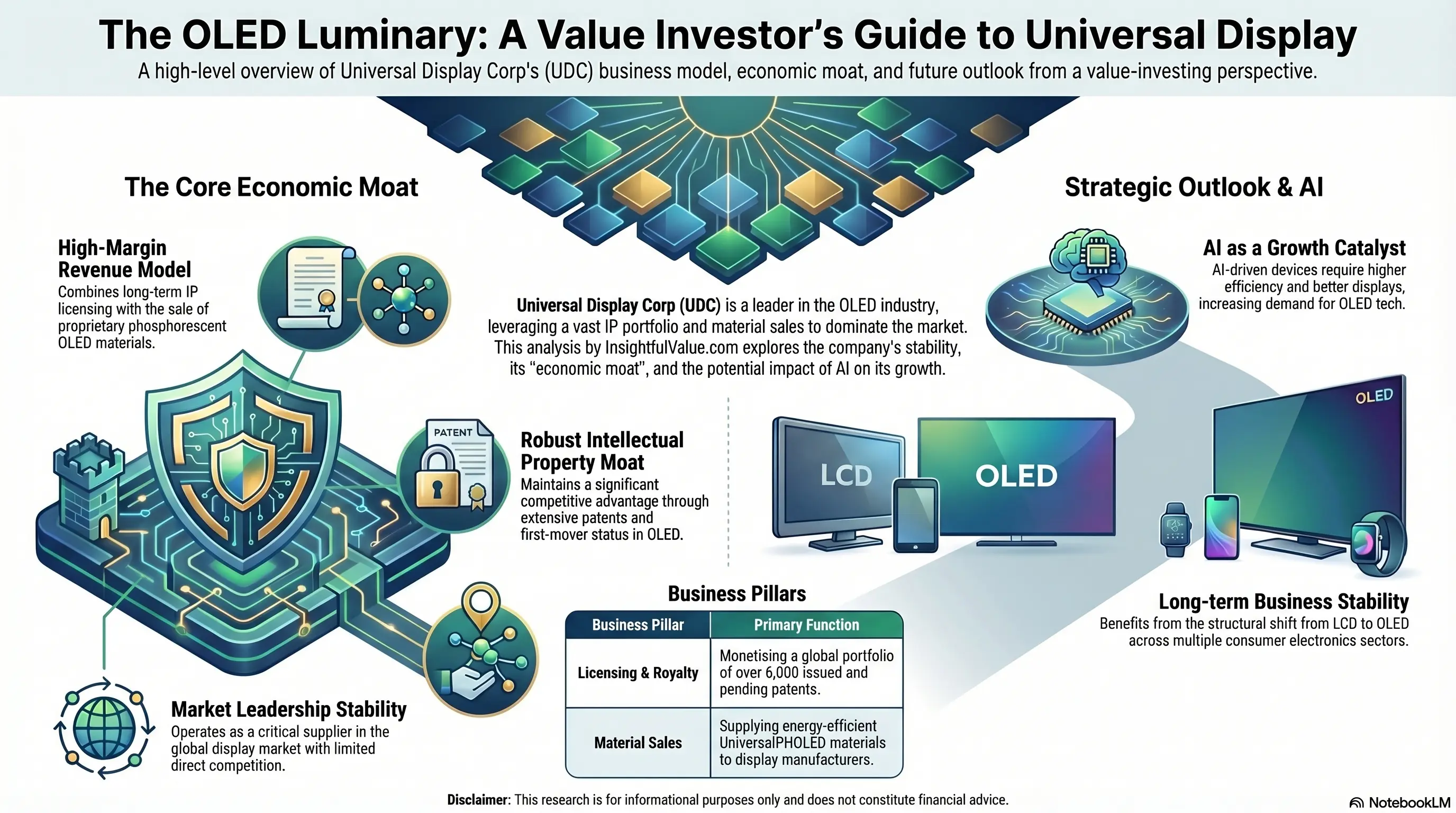
Infographic
Overview
Universal Display Corporation (UDC) is a leading developer of organic light-emitting diode (OLED) technologies for displays and lighting. Founded in 1994 and headquartered in Ewing, New Jersey, the company specializes in the research, commercialization, and licensing of OLED technology, including various phosphorescent materials that improve the efficiency and performance of OLED displays.
UDC’s OLED technology is widely used in various applications such as television screens, smartphones, tablets, and other electronic devices. The company is known for its innovative contributions to the OLED industry, including the development of advanced materials that enhance color performance and increase longevity.
In addition to its proprietary technologies, Universal Display Corporation engages in partnerships and collaborations with display manufacturers and other companies in the tech industry to promote the adoption of OLED technology. UDC’s business model includes licensing its technology to manufacturers, allowing them to incorporate high-quality OLED displays in their products.
The company is publicly traded on the NASDAQ under the ticker symbol OLED. As a strong player in the OLED market, UDC has positioned itself as a key contributor to the growing trend of using OLED technology in various electronic devices and is involved in ongoing research and development to advance this field even further.
How to explain to a 10 year old kid about the company?

📈 Want to read more about Universal Display Corp?
Sign up for free
or
log in
📥 Get our free eBook now: "The Checklist Value Investor — A Smarter Way to Pick Stocks"
VW5pdmVyc2 FsIERpc3Bs YXkgQ29ycG 9yYXRpb24g KFVEQykgaX MgYSBjb21w YW55IHRoYX QgbWFrZXMg c3BlY2lhbC BtYXRlcmlh bHMgdXNlZC BpbiBzY3Jl ZW5zLCBsaW tlIHRoZSBv bmVzIGluIH NtYXJ0cGhv bmVzLCBUVn MsIGFuZCB0 YWJsZXRzLi BUaGVzZSBt YXRlcmlhbH MgaGVscCBj cmVhdGUgYm VhdXRpZnVs IGNvbG9ycy BhbmQgbWFr ZSBzY3JlZW 5zIGxvb2sg cmVhbGx5IH NoYXJwIGFu ZCBicmlnaH QuIDxicj5V REMgbWFrZX MgbW9uZXkg Ynkgc2VsbG luZyB0aGVz ZSBzcGVjaW FsIG1hdGVy aWFscyB0by BvdGhlciBj b21wYW5pZX MgdGhhdCBt YWtlIHNjcm VlbnMuIFdo ZW4gYSBzbW FydHBob25l IG1ha2VyIG 9yIGEgVFYg Y29tcGFueS BuZWVkcyBn cmVhdCBkaX NwbGF5cywg dGhleSBidX kgdGhlc2Ug bWF0ZXJpYW xzIGZyb20g VURDLiA8Yn I+VGhlIHJl YXNvbiBVRE MgaXMgc3Vj Y2Vzc2Z1bC BpcyB0aGF0 IG1vcmUgYW 5kIG1vcmUg cGVvcGxlIH dhbnQgaGln aC1xdWFsaX R5IHNjcmVl bnMgZm9yIH RoZWlyIGRl dmljZXMuIE FzIHRlY2hu b2xvZ3kgZ2 V0cyBiZXR0 ZXIsIHBlb3 BsZSBhcmUg YWx3YXlzIG xvb2tpbmcg Zm9yIGNsZW FyZXIgYW5k IG1vcmUgY2 9sb3JmdWwg ZGlzcGxheX MgZm9yIHRo ZWlyIFRWcy BvciBwaG9u ZXMuIFVEQy BpcyBnb29k IGF0IGl0cy Bqb2IsIGFu ZCBtYW55IG NvbXBhbmll cyB0cnVzdC BpdCB0byBw cm92aWRlIH RoZSBiZXN0 IG1hdGVyaW Fscy48YnI+ SW4gdGhlIG Z1dHVyZSwg VURDIHdpbG wgcHJvYmFi bHkgc3RheS BzdWNjZXNz ZnVsIGJlY2 F1c2UgdGVj aG5vbG9neS BrZWVwcyBh ZHZhbmNpbm cuIE5ldyBr aW5kcyBvZi BzY3JlZW5z IGFyZSBiZW luZyBkZXZl bG9wZWQgYW xsIHRoZSB0 aW1lLCBhbm QgVURDIGlz IGF0IHRoZS Bmb3JlZnJv bnQgb2YgdG hpcyBpbm5v dmF0aW9uLi BBcyBtb3Jl IGRldmljZX MgY29tZSBv dXQgYW5kIH Blb3BsZSB3 YW50IGJldH RlciBzY3Jl ZW5zLCBVRE Mgd2lsbCBs aWtlbHkgY2 9udGludWUg dG8gYmUgYW 4gaW1wb3J0 YW50IHBsYX llciBpbiBt YWtpbmcgdG hvc2UgZGlz cGxheXMgc2 hpbmUhPGJy Pg==
What is special about the company?
📈 Want to read more about Universal Display Corp?
Sign up for free
or
log in
📘 Claim your free eBook: "The Checklist Value Investor — A Smarter Way to Pick Stocks"
VW5pdmVyc2 FsIERpc3Bs YXkgQ29ycG 9yYXRpb24g KFVEQykgaX Mgbm90YWJs ZSBmb3IgaX RzIHBpb25l ZXJpbmcgcm 9sZSBpbiB0 aGUgZGV2ZW xvcG1lbnQg YW5kIGNvbW 1lcmNpYWxp emF0aW9uIG 9mIG9yZ2Fu aWMgbGlnaH QtZW1pdHRp bmcgZGlvZG UgKE9MRUQp IHRlY2hub2 xvZ3kuIFRo ZSBjb21wYW 55IHBsYXlz IGEgY3J1Y2 lhbCByb2xl IGluIHRoZS BPTEVEIGVj b3N5c3RlbS BieSBwcm92 aWRpbmcgZX NzZW50aWFs IG1hdGVyaW FscyBhbmQg dGVjaG5vbG 9naWVzIHRo YXQgYXJlIH VzZWQgdG8g Y3JlYXRlIE 9MRUQgZGlz cGxheXMgYW 5kIGxpZ2h0 aW5nLiBIZX JlIGFyZSBz b21lIGtleS Bwb2ludHMg dGhhdCBoaW dobGlnaHQg d2hhdCBtYW tlcyBVREMg c3BlY2lhbD o8YnI+MS4g SW5ub3ZhdG lvbiBpbiBP TEVEIFRlY2 hub2xvZ3k6 IFVEQyBoYX MgYmVlbiBh dCB0aGUgZm 9yZWZyb250 IG9mIGFkdm FuY2VtZW50 cyBpbiBPTE VEIHRlY2hu b2xvZ3ksIG NvbnRyaWJ1 dGluZyB0by BpbXByb3Zl bWVudHMgaW 4gZWZmaWNp ZW5jeSwgY2 9sb3IgYWNj dXJhY3ksIG FuZCBsaWZl c3BhbiBvZi BPTEVEIGRp c3BsYXlzLj xicj4yLiBQ YXRlbnRzIG FuZCBJbnRl bGxlY3R1YW wgUHJvcGVy dHk6IFRoZS Bjb21wYW55 IGhvbGRzIG Egc2lnbmlm aWNhbnQgbn VtYmVyIG9m IHBhdGVudH MgcmVsYXRl ZCB0byBPTE VEIHRlY2hu b2xvZ3ksIG VzdGFibGlz aGluZyBpdH NlbGYgYXMg YSBsZWFkZX IgaW4gaW5u b3ZhdGlvbi BhbmQgcHJv dGVjdGluZy BpdHMgaW50 ZWxsZWN0dW FsIHByb3Bl cnR5IGluIH RoZSBjb21w ZXRpdGl2ZS BkaXNwbGF5 IG1hcmtldC 48YnI+My4g UGFydG5lcn NoaXBzIHdp dGggTWFqb3 IgTWFudWZh Y3R1cmVycz ogVURDIGNv bGxhYm9yYX RlcyB3aXRo IGxlYWRpbm cgZGlzcGxh eSBtYW51Zm FjdHVyZXJz IGFuZCB0ZW Nobm9sb2d5 IGNvbXBhbm llcywgaGVs cGluZyB0by Bkcml2ZSB0 aGUgYWRvcH Rpb24gb2Yg T0xFRCB0ZW Nobm9sb2d5 IGluIHZhcm lvdXMgYXBw bGljYXRpb2 5zLCBpbmNs dWRpbmcgc2 1hcnRwaG9u ZXMsIFRWcy wgYW5kIGxp Z2h0aW5nIH Byb2R1Y3Rz Ljxicj40Li BTdXN0YWlu YWJsZSBQcm FjdGljZXM6 IFVEQyBpcy BpbnZvbHZl ZCBpbiBkZX ZlbG9waW5n IG1vcmUgc3 VzdGFpbmFi bGUgYW5kIG VmZmljaWVu dCBtYXRlcm lhbHMgZm9y IE9MRUQgdG VjaG5vbG9n aWVzLCBhZG RyZXNzaW5n IGVudmlyb2 5tZW50YWwg Y29uY2Vybn MgYXNzb2Np YXRlZCB3aX RoIGVsZWN0 cm9uaWMgZG lzcGxheXMu PGJyPjUuIE 1hcmtldCBJ bXBhY3Q6IF RoZSBjb21w YW554oCZcy BtYXRlcmlh bHMgYXJlIG ludGVncmFs IHRvIHRoZS Bwcm9kdWN0 aW9uIG9mIE 9MRUQgcGFu ZWxzLCBjb2 50cmlidXRp bmcgdG8gdG hlIHdpZGVz cHJlYWQgYW RvcHRpb24g b2YgT0xFRC BkaXNwbGF5 cyBpbiBjb2 5zdW1lciBl bGVjdHJvbm ljcyBhbmQg b3RoZXIgaW 5kdXN0cmll cy48YnI+Ni 4gRmluYW5j aWFsIFBlcm Zvcm1hbmNl OiBVREMgaG FzIHNob3du IHN0cm9uZy BmaW5hbmNp YWwgZ3Jvd3 RoLCBkcml2 ZW4gYnkgdG hlIGluY3Jl YXNpbmcgZG VtYW5kIGZv ciBPTEVEIH RlY2hub2xv Z3ksIG1ha2 luZyBpdCBh biBpbXBvcn RhbnQgcGxh eWVyIGluIH RoZSBzZW1p Y29uZHVjdG 9yIGFuZCBk aXNwbGF5IG 1hcmtldHMu PGJyPk92ZX JhbGwsIFVu aXZlcnNhbC BEaXNwbGF5 IENvcnBvcm F0aW9uIGlz IGRpc3Rpbm d1aXNoZWQg YnkgaXRzIG NvbnRyaWJ1 dGlvbnMgdG 8gT0xFRCB0 ZWNobm9sb2 d5LCBpdHMg ZXh0ZW5zaX ZlIHBhdGVu dCBwb3J0Zm 9saW8sIHN0 cmF0ZWdpYy BwYXJ0bmVy c2hpcHMsIG FuZCBpdHMg aW1wYWN0IG 9uIHRoZSBk aXNwbGF5IG luZHVzdHJ5 Ljxicj4=
What the company's business model?
📈 Want to read more about Universal Display Corp?
Sign up for free
or
log in
📘 Claim your free eBook: "The Checklist Value Investor — A Smarter Way to Pick Stocks"
VW5pdmVyc2 FsIERpc3Bs YXkgQ29ycG 9yYXRpb24g KFVEQykgcH JpbWFyaWx5 IG9wZXJhdG VzIGluIHRo ZSBmaWVsZC BvZiBvcmdh bmljIGxpZ2 h0LWVtaXR0 aW5nIGRpb2 RlIChPTEVE KSB0ZWNobm 9sb2d5LiBU aGVpciBidX NpbmVzcyBt b2RlbCByZX ZvbHZlcyBh cm91bmQgc2 V2ZXJhbCBr ZXkgY29tcG 9uZW50czo8 YnI+MS4gPH N0cm9uZz5M aWNlbnNpbm cgVGVjaG5v bG9neTwvc3 Ryb25nPjog VURDIGRldm Vsb3BzIGFu ZCBwYXRlbn RzIE9MRUQg dGVjaG5vbG 9naWVzLCB3 aGljaCB0aG V5IHRoZW4g bGljZW5zZS B0byBkaXNw bGF5IG1hbn VmYWN0dXJl cnMgYW5kIG xpZ2h0aW5n IGNvbXBhbm llcy4gVGhp cyBsaWNlbn NpbmcgYWdy ZWVtZW50cy Bwcm92aWRl IHRoZW0gd2 l0aCBhIHN0 ZWFkeSBzdH JlYW0gb2Yg cmV2ZW51ZS 48YnI+Mi4g PHN0cm9uZz 5NYXRlcmlh bCBTYWxlcz wvc3Ryb25n PjogSW4gYW RkaXRpb24g dG8gbGljZW 5zaW5nLCBV REMgcHJvZH VjZXMgYW5k IHNlbGxzIH Bob3NwaG9y ZXNjZW50IE 9MRUQgbWF0 ZXJpYWxzIH RoYXQgYXJl IGVzc2VudG lhbCBmb3Ig dGhlIHByb2 R1Y3Rpb24g b2YgT0xFRC BkaXNwbGF5 cy4gVGhlc2 UgbWF0ZXJp YWxzIGFyZS Bjcml0aWNh bCBmb3IgYW NoaWV2aW5n IHRoZSBkZX NpcmVkIHBl cmZvcm1hbm NlIGFuZCBs b25nZXZpdH kgb2YgT0xF RCBwcm9kdW N0cy48YnI+ My4gPHN0cm 9uZz5SZXNl YXJjaCBhbm QgRGV2ZWxv cG1lbnQ8L3 N0cm9uZz46 IFVEQyBpbn Zlc3RzIHNp Z25pZmljYW 50bHkgaW4g UiZhbXA7RC B0byBhZHZh bmNlIE9MRU QgdGVjaG5v bG9neSBhbm QgZGV2ZWxv cCBuZXcgcH JvZHVjdHMu IFRoaXMgZm 9jdXMgb24g aW5ub3ZhdG lvbiBoZWxw cyB0aGVtIH N0YXkgY29t cGV0aXRpdm UgYW5kIGV4 cGFuZCB0aG VpciBtYXJr ZXQgc2hhcm UuPGJyPjQu IDxzdHJvbm c+Q29sbGFi b3JhdGlvbn MgYW5kIFBh cnRuZXJzaG lwczwvc3Ry b25nPjogVG hlIGNvbXBh bnkgb2Z0ZW 4gY29sbGFi b3JhdGVzIH dpdGggb3Ro ZXIgZmlybX MgYW5kIHJl c2VhcmNoIG luc3RpdHV0 aW9ucyB0by BlbmhhbmNl IGl0cyB0ZW Nobm9sb2d5 IGFuZCByZW FjaC4gU3Vj aCBwYXJ0bm Vyc2hpcHMg Y2FuIGxlYW QgdG8gam9p bnQgdmVudH VyZXMsIGNv LWRldmVsb3 BtZW50IGRl YWxzLCBhbm QgaW5jcmVh c2VkIG1hcm tldCBhY2Nl c3MuPGJyPj UuIDxzdHJv bmc+TWFya2 V0IERpdmVy c2lmaWNhdG lvbjwvc3Ry b25nPjogV2 hpbGUgVURD IGlzIGtub3 duIGZvciBp dHMgd29yay BpbiBkaXNw bGF5cywgaX QgYWxzbyBl eHBsb3Jlcy BhcHBsaWNh dGlvbnMgYm V5b25kIHNj cmVlbnPigJ RzdWNoIGFz IGluIHRoZS BsaWdodGlu ZyBzZWN0b3 LigJRicm9h ZGVuaW5nIH RoZWlyIHBv dGVudGlhbC BjdXN0b21l ciBiYXNlIG FuZCByZXZl bnVlIHNvdX JjZXMuPGJy Pk92ZXJhbG wsIFVEQ+KA mXMgYnVzaW 5lc3MgbW9k ZWwgaXMgY2 VudGVyZWQg YXJvdW5kIG xldmVyYWdp bmcgcHJvcH JpZXRhcnkg dGVjaG5vbG 9neSwgZXN0 YWJsaXNoaW 5nIHN0cm9u ZyBpbmR1c3 RyeSBwYXJ0 bmVyc2hpcH MsIGFuZCBm b2N1c2luZy BvbiBjb250 aW51b3VzIG lubm92YXRp b24gdG8gbW FpbnRhaW4g bGVhZGVyc2 hpcCBpbiB0 aGUgT0xFRC BtYXJrZXQu PGJyPg==
Is AI a threat?
AI has the potential to impact Universal Display Corp (UDC) in several ways across different dimensions of its business model. Here are some considerations regarding whether AI poses a material threat:
1. Substitution: AI can enhance the capabilities of existing display technologies by improving manufacturing processes, optimizing designs, and enabling new functionalities. If AI leads to the development of alternative technologies that can outperform organic light-emitting diodes (OLEDs), which UDC specializes in, this could pose a substitution threat. However, OLED technology remains highly regarded for its performance, so while AI could enhance competition, it may not directly replace UDC’s core products in the short term.
2. Disintermediation: AI could streamline supply chains and production processes within the display industry. If companies can use AI to innovate faster or reduce costs significantly, it could lead to disintermediation in certain aspects of UDC’s business. For example, if manufacturers adopt AI-driven solutions that reduce reliance on UDC’s materials or processes, that could affect UDC’s market position. However, UDC’s proprietary technology and patents might provide some level of protection against disintermediation.
3. Margin Pressure: The deployment of AI technologies can lead to increased competition, as more players may enter the display market with lower production costs or enhanced products. This could exert margin pressure on UDC, especially if other companies leverage AI to deliver similar or superior display performance at a reduced cost. UDC would need to continually innovate and potentially invest in AI-driven enhancements to maintain its competitive edge and protect its margins.
In summary, while AI poses potential threats through substitution, disintermediation, and margin pressure, the extent of these threats will depend on how the industry evolves and how UDC adapts to technological advancements. Continued innovation, maintaining a strong patent portfolio, and leveraging AI for its benefits can mitigate some of these risks for UDC.
Sensitivity to interest rates
The sensitivity of Universal Display Corp’s earnings, cash flow, and valuation to changes in interest rates can be assessed through several key factors:
1. Earnings Sensitivity: Higher interest rates can lead to increased borrowing costs for companies, potentially impacting their net income. For Universal Display, which is involved in the development of OLED technologies, if the cost of financing research and development or capital expenditures rises due to higher rates, it may compress profit margins. Additionally, consumers may respond to higher interest rates by reducing discretionary spending, which could affect sales of products utilizing OLED technology.
2. Cash Flow Impacts: Cash flows may also be affected similarly. Higher interest rates can increase the cost of servicing debt, reducing the cash available for operations and investment. If Universal Display has significant debt levels, rising interest rates could lead to tighter cash flows, impacting the company’s ability to fund operations, invest in new technologies, or return capital to shareholders.
3. Valuation Sensitivity: The valuation of Universal Display, like many companies, is influenced by the discount rate used in discounted cash flow (DCF) models. An increase in interest rates typically leads to a higher discount rate, which can reduce the present value of future cash flows. Thus, even if the company’s underlying business remains strong, a rise in interest rates can lead to a lower stock price based on valuation metrics.
4. Investment Decisions: As interest rates rise, investors may shift their preferences from riskier assets like tech stocks to fixed income securities that offer better returns. This shift could negatively impact Universal Display’s stock price and its perceived market value.
In summary, Universal Display’s earnings, cash flow, and valuation are sensitive to changes in interest rates due to potential increases in borrowing costs, impacts on consumer spending, and adjustments in investment sentiment. The overall effect depends on the magnitude of the rate change and the company’s financial position relative to its obligations and operational needs.
Resilience to the future changes
📈 Want to read more about Universal Display Corp?
Sign up for free
or
log in
📚 Your free copy of "The Checklist Value Investor — A Smarter Way to Pick Stocks" is waiting
QSByZWFsaX N0aWMgc2Nl bmFyaW8gdG hhdCBjb3Vs ZCBwZXJtYW 5lbnRseSBp bXBhaXIgVW 5pdmVyc2Fs IERpc3BsYX kgQ29ycCAo VURDKSBvdm VyIHRoZSBu ZXh0IDMtNS B5ZWFycyBj b3VsZCBpbn ZvbHZlIGEg c2lnbmlmaW NhbnQgdGVj aG5vbG9naW NhbCBzaGlm dCBpbiBkaX NwbGF5IHRl Y2hub2xvZ3 kgdGhhdCBk aW1pbmlzaG VzIHRoZSBk ZW1hbmQgZm 9yIG9yZ2Fu aWMgbGlnaH QtZW1pdHRp bmcgZGlvZG UgKE9MRUQp IHRlY2hub2 xvZ3kuIEZv ciBleGFtcG xlLCBpZiBh IG1vcmUgZW ZmaWNpZW50 IGFuZCBjb3 N0LWVmZmVj dGl2ZSBkaX NwbGF5IHRl Y2hub2xvZ3 ksIHN1Y2gg YXMgbWljcm 9MRUQgb3Ig ZXZlbiBhZH ZhbmNlZCBM Q0QgdGVjaG 5vbG9naWVz LCBnYWlucy B3aWRlc3By ZWFkIGFkb3 B0aW9uIGlu IGNvbnN1bW VyIGVsZWN0 cm9uaWNzLC B0aGlzIGNv dWxkIGxlYW QgdG8gYSBk cmFzdGljIH JlZHVjdGlv biBpbiB0aG UgZGVtYW5k IGZvciBVRE PigJlzIHBh dGVudGVkIE 9MRUQgbWF0 ZXJpYWxzLj xicj5JbiB0 aGlzIHNjZW 5hcmlvLCBV REPigJlzIH JldmVudWVz IHdvdWxkIH NpZ25pZmlj YW50bHkgZG VjbGluZSBk dWUgdG8gdG hlIHNocmlu a2luZyBtYX JrZXQgZm9y IE9MRUQgdG VjaG5vbG9n eS4gVGhlIG NvbXBhbnkg bWlnaHQgc3 RydWdnbGUg dG8gbWFpbn RhaW4gaXRz IGN1c3RvbW VyIGJhc2Ug YXMgbWFudW ZhY3R1cmVy cyB0cmFuc2 l0aW9uIHRv IHRoZXNlIG VtZXJnaW5n IHRlY2hub2 xvZ2llcy4g VGhpcyB3b3 VsZCBsZWFk IHRvIGEgZG VjcmVhc2Ug aW4gc2FsZX MgYW5kIHNp Z25pZmljYW 50bHkgcmVk dWNlIHByb2 ZpdCBtYXJn aW5zLCBhcy BmaXhlZCBj b3N0cyB3b3 VsZCByZW1h aW4gaGlnaC BidXQgcmV2 ZW51ZXMgd2 91bGQgZmFs bC48YnI+QX MgY2FzaCBm bG93IGRpbW luaXNoZXMs IFVEQyBtaW dodCBmYWNl IGNoYWxsZW 5nZXMgaW4g ZnVuZGluZy BpdHMgcmVz ZWFyY2ggYW 5kIGRldmVs b3BtZW50IG VmZm9ydHMs IHdoaWNoIG FyZSBjcnVj aWFsIGZvci BtYWludGFp bmluZyBpdH MgY29tcGV0 aXRpdmUgZW RnZS4gVGhl IHJlZHVjZW QgY2FzaCBm bG93IGNvdW xkIGFsc28g bGltaXQgdG hlIGNvbXBh bnnigJlzIG FiaWxpdHkg dG8gaW52ZX N0IGluIGV4 cGFuZGluZy BpdHMgbWFu dWZhY3R1cm luZyBjYXBh YmlsaXRpZX Mgb3IgZW50 ZXJpbmcgaW 50byBwYXJ0 bmVyc2hpcH MsIGZ1cnRo ZXIgc3R1bn RpbmcgZ3Jv d3RoIHBvdG VudGlhbC48 YnI+T24gdG hlIGJhbGFu Y2Ugc2hlZX QgZnJvbnQs IHdpdGggYS BkZWNsaW5l IGluIHJldm VudWVzIGFu ZCBjYXNoIG Zsb3csIFVE QyB3b3VsZC BsaWtlbHkg c2VlIGFuIG luY3JlYXNl IGluIGRlYn QgbGV2ZWxz IGlmIHRoZS Bjb21wYW55 IHJlc29ydG VkIHRvIGJv cnJvd2luZy B0byBtYWlu dGFpbiBvcG VyYXRpb25z IG9yIGludm VzdCBpbiBu ZXcgdGVjaG 5vbG9neS4g VGhpcyB3b3 VsZCB3ZWFr ZW4gaXRzIG ZpbmFuY2lh bCBwb3NpdG lvbiwgYXMg dGhlIGRlYn QtdG8tZXF1 aXR5IHJhdG lvIHdvdWxk IHdvcnNlbi wgYW5kIGxp cXVpZGl0eS ByYXRpb3Mg Y291bGQgZG VjbGluZSBh cyBjYXNoIH Jlc2VydmVz IHNocmluay 4gQSB3ZWFr ZXIgYmFsYW 5jZSBzaGVl dCBjb3VsZC BhbHNvIHJl ZHVjZSB0aG UgY29tcGFu eeKAmXMgY3 JlZGl0d29y dGhpbmVzcy wgbWFraW5n IGZpbmFuY2 luZyBtb3Jl IGNvc3RseS BvciBkaWZm aWN1bHQgdG 8gc2VjdXJl Ljxicj5Pdm VyYWxsLCBp ZiB0aGlzIH NjZW5hcmlv IHBsYXllZC BvdXQsIFVE Q+KAmXMgbW FyZ2lucyB3 b3VsZCBzaW duaWZpY2Fu dGx5IGRlY3 JlYXNlLCBj YXNoIGZsb3 cgd291bGQg dHVybiBuZW dhdGl2ZSBv ciByZW1haW 4gYXQgdmVy eSBsb3cgbG V2ZWxzLCBh bmQgdGhlIG JhbGFuY2Ug c2hlZXQgY2 91bGQgcmVm bGVjdCBpbm NyZWFzZWQg bGV2ZXJhZ2 UgYW5kIGRl Y2xpbmluZy BlcXVpdHks IHRoZXJlYn kgY29tcHJv bWlzaW5nIH RoZSBjb21w YW554oCZcy Bsb25nLXRl cm0gdmlhYm lsaXR5IGFu ZCBncm93dG ggcHJvc3Bl Y3RzLjxicj 4=
Interesting facts about the company
📈 Want to read more about Universal Display Corp?
Sign up for free
or
log in
✅ Download "The Checklist Value Investor — A Smarter Way to Pick Stocks" — totally free!
CiAgICAgIC AgICAgIDxk aXYgc3R5bG U9J3dpZHRo OiAxMDAlOy BkaXNwbGF5 OiBmbGV4Oy BqdXN0aWZ5 LWNvbnRlbn Q6IGNlbnRl cjsnPgogIC AgICAgICAg ICAgICAgPG RpdiBzdHls ZT0nCiAgIC AgICAgICAg ICAgICAgIC AgZGlzcGxh eTogZmxleD sKICAgICAg ICAgICAgIC AgICAgICBh bGlnbi1pdG VtczogY2Vu dGVyOwogIC AgICAgICAg ICAgICAgIC AgIGJhY2tn cm91bmQtY2 9sb3I6ICNm MGY0Zjg7Ci AgICAgICAg ICAgICAgIC AgICAgYm9y ZGVyOiAxcH ggc29saWQg I2QxZTNmMD sKICAgICAg ICAgICAgIC AgICAgICBi b3JkZXItcm FkaXVzOiAx MHB4OwogIC AgICAgICAg ICAgICAgIC AgIHBhZGRp bmc6IDEwcH g7CiAgICAg ICAgICAgIC AgICAgICAg bWFyZ2luOi AyMHB4IDA7 CiAgICAgIC AgICAgICAg ICAgICAgZm 9udC1mYW1p bHk6ICJTZW dvZSBVSSIs IFJvYm90by wgc2Fucy1z ZXJpZjsKIC AgICAgICAg ICAgICAgIC AgICBib3gt c2hhZG93Oi AwIDJweCA2 cHggcmdiYS gwLCAwLCAw LCAwLjA1KT sKICAgICAg ICAgICAgIC AgICAgICBt YXgtd2lkdG g6IDkwMHB4 OwogICAgIC AgICAgICAg ICAgICAgIH dpZHRoOiAx MDAlOyc+Cg ogICAgICAg ICAgICAgIC AgICAgIDxp bWcgc3JjPS Jhc3NldHMv bG9nb3Mvd2 lHeFVZZGlj a1Q4dVVDbl ZNT3Uud2Vi cCIgYWx0PS JVbml2ZXJz YWwgRGlzcG xheSBDb3Jw IiB0aXRsZT 0iVW5pdmVy c2FsIERpc3 BsYXkgQ29y cCIgIGNsYX NzPSJpbWct Zmx1aWQiIG hlaWdodD01 MCB3aWR0aD 01MCBsb2Fk aW5nPSdsYX p5JyBzdHls ZT0nYm9yZG VyLXJhZGl1 czogNnB4Oy c+CgogICAg ICAgICAgIC AgICAgICAg IDxkaXYgc3 R5bGU9J2Zs ZXg6IDE7IH RleHQtYWxp Z246IGNlbn RlcjsgbWFy Z2luLWxlZn Q6IDVweDsn PgogICAgIC AgICAgICAg ICAgICAgIC AgICA8cCBz dHlsZT0nZm 9udC1zaXpl OiAyNnB4Oy Bjb2xvcjog IzMzMzsgbW FyZ2luLWJv dHRvbTogMT VweDsnPgog ICAgICAgIC AgICAgICAg ICAgICAgIC AgICAg8J+T iCBXYW50IH RvIHJlYWQg bW9yZSBhYm 91dCBVbml2 ZXJzYWwgRG lzcGxheSBD b3JwPwogIC AgICAgICAg ICAgICAgIC AgICAgICA8 L3A+CgogIC AgICAgICAg ICAgICAgIC AgICAgICA8 YSBocmVmPS dpbmRleC5w aHA/cGFnZT 1zaWdudXAn IHN0eWxlPS cKICAgICAg ICAgICAgIC AgICAgICAg ICAgICAgIG JhY2tncm91 bmQtY29sb3 I6ICMwMDdC RkY7CiAgIC AgICAgICAg ICAgICAgIC AgICAgICAg ICBjb2xvcj ogI2ZmZjsK ICAgICAgIC AgICAgICAg ICAgICAgIC AgICAgIHBh ZGRpbmc6ID EwcHggMjBw eDsKICAgIC AgICAgICAg ICAgICAgIC AgICAgICAg IGJvcmRlci 1yYWRpdXM6 IDVweDsKIC AgICAgICAg ICAgICAgIC AgICAgICAg ICAgIHRleH QtZGVjb3Jh dGlvbjogbm 9uZTsKICAg ICAgICAgIC AgICAgICAg ICAgICAgIC AgIGZvbnQt d2VpZ2h0Oi Bib2xkOwog ICAgICAgIC AgICAgICAg ICAgICAgIC AgICAgbWFy Z2luLXJpZ2 h0OiAxMHB4 OwogICAgIC AgICAgICAg ICAgICAgIC AgICAgICAg dHJhbnNpdG lvbjogYmFj a2dyb3VuZC 1jb2xvciAw LjNzIGVhc2 U7JwogICAg ICAgICAgIC AgICAgICAg ICAgICAgIC Agb25tb3Vz ZW92ZXI9J3 RoaXMuc3R5 bGUuYmFja2 dyb3VuZENv bG9yPSIjMD A1NmIzIicK ICAgICAgIC AgICAgICAg ICAgICAgIC AgICAgIG9u bW91c2VvdX Q9J3RoaXMu c3R5bGUuYm Fja2dyb3Vu ZENvbG9yPS IjMDA3QkZG Iic+CiAgIC AgICAgICAg ICAgICAgIC AgICAgICAg ICBTaWduIH VwIGZvciBm cmVlCiAgIC AgICAgICAg ICAgICAgIC AgICAgIDwv YT4KCiAgIC AgICAgICAg ICAgICAgIC AgICAgIDxz cGFuIHN0eW xlPSdtYXJn aW46IDAgOH B4OyBjb2xv cjogIzU1NT snPm9yPC9z cGFuPgoKIC AgICAgICAg ICAgICAgIC AgICAgICAg PGEgaHJlZj 0naW5kZXgu cGhwP3BhZ2 U9bG9naW4n IHN0eWxlPS cKICAgICAg ICAgICAgIC AgICAgICAg ICAgICAgIG NvbG9yOiAj MDA3QkZGOw ogICAgICAg ICAgICAgIC AgICAgICAg ICAgICAgdG V4dC1kZWNv cmF0aW9uOi B1bmRlcmxp bmU7CiAgIC AgICAgICAg ICAgICAgIC AgICAgICAg ICBmb250LX dlaWdodDog NTAwOyc+Ci AgICAgICAg ICAgICAgIC AgICAgICAg ICAgICBsb2 cgaW4KICAg ICAgICAgIC AgICAgICAg ICAgICAgPC 9hPgoKCiAg ICAgICAgIC AgICAgICAg ICAgICAgID xwIHN0eWxl PSdtYXJnaW 4tdG9wOiAx NXB4OyBmb2 50LXNpemU6 IDEzcHg7IG ZvbnQtd2Vp Z2h0OiBib2 xkOyBjb2xv cjogI2QzMm YyZjsnPgog ICAgICAgIC AgICAgICAg ICAgICAgIC AgICAg8J+U kyBVbmxvY2 sgb3VyIGZy ZWUgZ3VpZG U6IDxpPiJU aGUgQ2hlY2 tsaXN0IFZh bHVlIEludm VzdG9yIOKA lCBBIFNtYX J0ZXIgV2F5 IHRvIFBpY2 sgU3RvY2tz IjwvaT4KIC AgICAgICAg ICAgICAgIC AgICAgICAg PC9wPgoKIC AgICAgICAg ICAgICAgIC AgICAgICAg PCEtLQogIC AgICAgICAg ICAgICAgIC AgICAgICA8 ZGl2IHN0eW xlPSdtYXJn aW4tdG9wOi AxMnB4OyBm b250LXNpem U6IDEzcHg7 IGNvbG9yOi AjNDQ0Oyc+ CiAgICAgIC AgICAgICAg ICAgICAgIC AgICAgICBT aWduIHVwIG 5vdyBhbmQg Z2V0IG91ci BmcmVlIGVC b29rIAogIC AgICAgICAg ICAgICAgIC AgICAgICAg ICAgPGI+VG hlIENoZWNr bGlzdCBWYW x1ZSBJbnZl c3RvciDigJ QgQSBTbWFy dGVyIFdheS B0byBQaWNr IFN0b2Nrcz wvYj4KICAg ICAgICAgIC AgICAgICAg ICAgICAgPC 9kaXY+CiAg ICAgICAgIC AgICAgICAg ICAgICAgIC 0tPgogICAg ICAgICAgIC AgICAgICAg ICAgICA8IS 0tCiAgICAg ICAgICAgIC AgICAgICAg ICAgIDxkaX Ygc3R5bGU9 J21hcmdpbi 10b3A6IDE2 cHg7IGZvbn Qtc2l6ZTog MTRweDsgY2 9sb3I6ICM0 NDQ7IGZvbn QtZmFtaWx5 OiAtYXBwbG Utc3lzdGVt LCBCbGlua0 1hY1N5c3Rl bUZvbnQsIF NlZ29lIFVJ LCBSb2JvdG 8sIEhlbHZl dGljYSBOZX VlLCBzYW5z LXNlcmlmOy BsaW5lLWhl aWdodDogMS 42Oyc+CiAg ICAgICAgIC AgICAgICAg ICAgICAgIC AgICBIYXZl IHlvdSBoZW FyZCBhYm91 dCBvdXIgc2 hvcnQgPHN0 cm9uZyBzdH lsZT0nZm9u dC13ZWlnaH Q6IDYwMDsn PkRhaWx5IF ZpZGVvIE5l d3NsZXR0ZX I8L3N0cm9u Zz4/CiAgIC AgICAgICAg ICAgICAgIC AgICAgICAg ICA8YSBocm VmPSdodHRw czovL3d3dy 5pbnNpZ2h0 ZnVsdmFsdW UuY29tL25l d3NsZXR0ZX IucGhwJyB0 YXJnZXQ9J1 9ibGFuaycg c3R5bGU9J2 NvbG9yOiAj MDA3QkZGOy B0ZXh0LWRl Y29yYXRpb2 46IG5vbmU7 IGZvbnQtd2 VpZ2h0OiA1 MDA7IG1hcm dpbi1sZWZ0 OiA2cHg7Jz 4KICAgICAg ICAgICAgIC AgICAgICAg ICAgICAgIC AgICBGaW5k IG91dCBtb3 JlCiAgICAg ICAgICAgIC AgICAgICAg ICAgICAgIC A8L2E+CiAg ICAgICAgIC AgICAgICAg ICAgICAgID wvZGl2Pgog ICAgICAgIC AgICAgICAg ICAgICAgIC AtLT4KICAg ICAgICAgIC AgICAgICAg ICA8L2Rpdj 4KICAgICAg ICAgICAgIC AgIDwvZGl2 PgogICAgIC AgICAgICA8 L2Rpdj4KIC AgICAgICAg ICAgCiAgIC AgICAgCiAg ICAgICAgPH NwYW4gY2xh c3M9J2JsdX JyZWQtdGV4 dCc+CiAgIC AgICAgICAg IFZXNXBkbV Z5YzIgRnNJ RVJwYzNCcy BZWGtnUTI5 eWNHIDl5WV hScGIyNGcg S0ZWRVF5a2 dhWCBNZ1lT QnNaV0ZrIG FXNW5JR2x1 Ym0gOTJZWF J2Y2lCcCBi aUIwYUdVZ1 ptIGxsYkdR Z2IyWWcgYj NKbllXNXBZ eSBCc2FXZG 9kQzFsIGJX bDBkR2x1Wn kgQmthVzlr WlNBbyBUMH hGUkNrZ2RH IFZqYUc1dm JHOW4gYVdW ekxpQklaWC BKbElHRnla U0J6IGIyMW xJR2x1ZEcg VnlaWE4wYV c1biBJR1po WTNSeklHIE ZpYjNWMElI Um8gWlNCam IyMXdZVyA1 NU9qeGljaj R4IExpQkdi M1Z1WkcgbH Vaem9nVlVS RCBJSGRoY3 lCbWIzIFZ1 WkdWa0lHbH UgSURFNU9U UWdZbiBrZ1 UyaGxjbmRw IGJpQlRMaU JXYjIgVm5a V3hwSUdGdS BaQ0JUZEdW MlpXIDRnVm k0Z1ZtRnUg SUZOc2VXdG xMaSBCVWFH VWdZMjl0IG NHRnVlU0Js YlcgVnlaMl ZrSUdaeSBi MjBnY21Wel pXIEZ5WTJn Z1kyOXUgWk hWamRHVmtJ RyBGMElGQn lhVzVqIFpY UnZiaUJWYm 0gbDJaWEp6 YVhSNSBMan hpY2o0eUxp IEJRYVc5dV pXVnkgYVc1 bklFOU1SVS BRZ1ZHVmph RzV2IGJHOW 5lVG9nVlUg UkRJR2hoY3 lCaSBaV1Z1 SUdFZ2NHIG x2Ym1WbGNp QnAgYmlCUF RFVkVJSCBS bFkyaHViMn h2IFoza3NJ SEJzWVggbH BibWNnWVNC aiBjblZqYV dGc0lIIEp2 YkdVZ2FXNG cgZEdobElH TnZiVyAxbG NtTnBZV3hw IGVtRjBhVz l1SUcgOW1J RTlNUlVRZy BaR2x6Y0d4 aGVYIE1nWV c1a0lHeHAg WjJoMGFXNW 5MaSBCVWFH VWdZMjl0IG NHRnVlZUtB bVggTWdjSE p2Y0hKcCBa WFJoY25rZ2 JXIEYwWlhK cFlXeHogSU dGdVpDQjBa VyBOb2JtOX NiMmRwIFpY TWdZWEpsSU ggVnpaV1Fn YVc0ZyBZU0 IyWVhKcFpY IFI1SUc5bU lIQnkgYjJS MVkzUnpMai B4aWNqNHpM aUJRIFlYSj BibVZ5YzIg aHBjQ0IzYV hSbyBJRTFo YW05eUlFID FoYm5WbVlX TjAgZFhKbG NuTTZJRiBW dWFYWmxjbk 5oIGJDQkVh WE53YkcgRj VJR052Ykd4 aCBZbTl5WV hSbGN5IEIz YVhSb0lITm wgZG1WeVlX d2diVyBGcW IzSWdZMjl0 IGNHRnVhV1 Z6SUcgbHVJ SFJvWlNCai BiMjV6ZFcx bGNpIEJsYk dWamRISnYg Ym1samN5Qm hibSBRZ1pH bHpjR3hoIG VTQnBibVIx YzMgUnllU3 dnYVc1aiBi SFZrYVc1bk lGIE5oYlhO MWJtY3MgSU V4SExDQmhi bSBRZ2IzUm 9aWEp6IExD Qm1iMk4xYz IgbHVaeUJ2 YmlCMCBhR1 VnWkdWMlpX IHh2Y0cxbG JuUWcgWVc1 a0lIQnliMi BSMVkzUnBi MjRnIGIyWW dUMHhGUkgg TWdabTl5SU dScCBjM0Jz WVhseklHIE Z1WkNCc2FX ZG8gZEdsdV p5NDhZbiBJ K05DNGdTVz UwIFpXeHNa V04wZFcgRn NJRkJ5YjNC bCBjblI1T2 lCVlJFIE1n YUc5c1pITW cgWVNCemFX ZHVhVyBacF kyRnVkQ0J3 IGIzSjBabT lzYVcgOGdi MllnY0dGMC BaVzUwY3lC eVpXIHhoZE dWa0lIUnYg SUU5TVJVUW dkRyBWamFH NXZiRzluIG VTd2dkMmhw WTIgZ2djSE p2ZG1sayBa WE1nYVhRZ2 QyIGwwYUNC aElHTnYgYl hCbGRHbDBh WCBabElHVm taMlVnIGFX NGdkR2hsSU cgMWhjbXRs ZEM0ZyBWR2 hsSUdOdmJY IEJoYm5rZ2 FHRnogSUhS b2IzVnpZVy A1a2N5QnZa aUJwIGMzTj FaV1FnWVcg NWtJSEJsYm 1ScCBibWNn Y0dGMFpXID UwY3lCM2Iz SnMgWkhkcF pHVXVQRyBK eVBqVXVJRT lNIFJVUWdR WEJ3YkcgbG pZWFJwYjI1 eiBPaUJVYU dVZ1kyIDl0 Y0dGdWVlS0 EgbVhNZ2RH VmphRyA1dm JHOW5hV1Z6 IElHRnlaU0 IxZEcgbHNh WHBsWkNCcC BiaUJoSUhK aGJtIGRsSU c5bUlHRncg Y0d4cFkyRj BhVyA5dWN5 d2dabkp2IG JTQnpiV0Z5 ZEggQm9iMj VsY3lCaCBi bVFnZEdWc1 pYIFpwYzJs dmJuTWcgZE c4Z1lYVjBi MiAxdmRHbD JaU0JrIGFY TndiR0Y1Y3 kgQmhibVFn YzI5cyBhV1 F0YzNSaGRH IFVnYkdsbm FIUnAgYm1j Z2MzbHpkRy BWdGN5NGdU MHhGIFJITW dZWEpsSUcg dHViM2R1SU dadiBjaUIw YUdWcGNpIE J6ZFhCbGNt bHYgY2lCam IyeHZjaSBC aFkyTjFjbU ZqIGVTd2da VzVsY20gZD VJR1ZtWm1s aiBhV1Z1WT Nrc0lHIEZ1 WkNCbWJHVj QgYVdKcGJH bDBlUyA0OF luSStOaTRn IFJtbHVZVz VqYVcgRnNJ RWR5YjNkMC BhRG9nVDNa bGNpIEIwYU dVZ2VXVmgg Y25Nc0lGVn VhWCBabGNu TmhiQ0JFIG FYTndiR0Y1 SUcgaGhjeU JsZUhCbCBj bWxsYm1ObF pDIEJ6ZFdK emRHRnUgZE dsaGJDQm5j bSA5M2RHZ2 dhVzRnIGNt VjJaVzUxWl MgQmhibVFn Y0hKdiBabW wwTENCeVpX IFpzWldOMG FXNW4gSUhS b1pTQnBibS BOeVpXRnph VzVuIElHUm xiV0Z1WkMg Qm1iM0lnVD B4RiBSQ0Iw WldOb2JtID lzYjJkNUlH bHUgSUdOdm JuTjFiVyBW eUlHUmxkbW xqIFpYTXVQ R0p5UGogY3 VJRVZ1ZG1s eSBiMjV0Wl c1MFlXIHdn UTI5dWMybG sgWlhKaGRH bHZibiBNNk lGVkVReUJs IGJYQm9ZWE 5wZW0gVnpJ SE4xYzNSaC BhVzVoWW1s c2FYIFI1SU dGdVpDQmwg Ym5acGNtOX ViVyBWdWRH RnNiSGtnIF puSnBaVzVr Ykgga2djSE poWTNScCBZ MlZ6SUdsdU lHIGwwY3lC dmNHVnkgWV hScGIyNXpJ RyBGdVpDQn djbTlrIGRX TjBjeXdnWT IgOXVkSEpw WW5WMCBhVz VuSUhSdklI IFJvWlNCa1 pYWmwgYkc5 d2JXVnVkQy BCdlppQmxi bVZ5IFoza3 RaV1ptYVcg TnBaVzUwSU d4cCBaMmgw YVc1bklIIE 52YkhWMGFX OXUgY3k0OF luSStPQyA0 Z1NXNWtkWE 4wIGNua2dV bVZqYjIgZH VhWFJwYjI0 NiBJRlJvWl NCamIyIDF3 WVc1NUlHaG ggY3lCeVpX TmxhWCBabF pDQnVkVzFs IGNtOTFjeU JoZDIgRnla SE1nWVc1ay BJSEpsWTI5 bmJtIGwwYV c5dWN5Qm0g YjNJZ2FYUn pJRyBOdmJu UnlhV0oxIG RHbHZibk1n ZEcgOGdkR2 hsSUU5TSBS VVFnYVc1a2 RYIE4wY25r Z1lXNWsgSU dseklHWnla WCBGMVpXNT BiSGtnIFky bDBaV1FnYV cgNGdhVzVr ZFhOMCBjbm tnY0hWaWJH IGxqWVhScG IyNXogSUda dmNpQnBkSC BNZ2FXNXVi M1poIGRHbH Zibk1nWVcg NWtJR0ZrZG 1GdSBZMlZ0 Wlc1MGN5ID Q4WW5JK09T NGcgVTNSdl kyc2dUVyBG eWEyVjBPaU JWIGJtbDJa WEp6WVcgd2 dSR2x6Y0d4 aCBlU0JEYj NKd2IzIEpo ZEdsdmJpQn AgY3lCd2RX SnNhVyBOc2 VTQjBjbUZr IFpXUWdiMj RnZEcgaGxJ RTVCVTBSQi BVU0IxYm1S bGNpIEIwYU dVZ2RHbGog YTJWeUlITj ViVyBKdmJD QlBURVZFIE xpQlVhR2x6 SUcgRnNiRz kzY3lCcCBi blpsYzNSdm NuIE1nZEc4 Z1pXNW4gWV dkbElIZHBk RyBnZ2RHaG xJR052IGJY Qmhibm5pZ0 ogbHpJR2R5 YjNkMCBhQ0 JoYm1RZ2Mz IFZqWTJWem N5QnAgYmlC MGFHVWdUMC B4RlJDQnRZ WEpyIFpYUX VQR0p5UGog RXdMaUJTWl hObCBZWEpq YUNCaGJtIF FnUkdWMlpX eHYgY0cxbG JuUTZJRiBW RVF5QnBibl psIGMzUnpJ R2hsWVggWn BiSGtnYVc0 ZyBjbVZ6Wl dGeVkyIGdn WVc1a0lHUm wgZG1Wc2Iz QnRaVyA1ME lIUnZJR0Zr IGRtRnVZMl VnVDAgeEZS Q0IwWldOby BibTlzYjJk NUlHIEZ1Wk NCbGVIQnMg YjNKbElHNW xkeSBCaGNI QnNhV05oIG RHbHZibk1z SUcgVnVjM1 Z5YVc1biBJ SFJvWVhRZ2 FYIFFnY21W dFlXbHUgY3 lCaGRDQjBh RyBVZ1ptOX laV1p5IGIy NTBJRzltSU cgbHVibTky WVhScCBiMj RnYVc0Z2RH IGhsSUdScG MzQnMgWVhr Z2FXNWtkWC BOMGNua3VQ R0p5IFBsUm 9aWE5sSUcg WmhZM1J6SU docCBaMmhz YVdkb2RDIE JWYm1sMlpY SnogWVd3Z1 JHbHpjRyB4 aGVTQkRiM0 p3IGIzSmhk R2x2YnUgS0 FtWE1nYzJs biBibWxtYV dOaGJuIFFn Y205c1pTQn AgYmlCMGFH VWdZVyBSMl lXNWpaVzFs IGJuUWdiMl lnVDAgeEZS Q0IwWldOby BibTlzYjJk NUlHIEZ1Wk NCcGRITWcg YVcxd1lXTj BJRyA5dUlI WmhjbWx2IG RYTWdhVzVr ZFggTjBjbW xsY3k0OCBZ bkkrCiAgIC AgICAgPC9z cGFuPgogIC AgICAgIAog ICAgICAgIA ==
See Company Q&A
📊 Get full analytics about Universal Display Corp
Sign up for free
or
log in
⚡ Instantly access "The Checklist Value Investor — A Smarter Way to Pick Stocks" — free!