The content provided in this video is for informational and educational purposes only. It does not constitute financial advice, investment recommendations, or an offer to buy or sell any securities. All views expressed are those of InsightfulValue and are based on publicly available information believed to be reliable, but no guarantee is made as to its accuracy or completeness. Always conduct your own research or consult a licensed financial advisor before making any investment decisions. Investing in the stock market involves risks, including the loss of principal.
Please be aware that the stock prices displayed on this website represent a curated selection of data. On desktop devices, you will see a wider range of stock prices, while on mobile devices, we provide a more streamlined view for better user experience and readability.
Our focus is on assessing a company's overall value and performance, rather than analyzing price fluctuations, even if we do watch prices in order to find companies trading below their intrinsic value. For more detailed charting and comprehensive market analysis, we recommend consulting a professional financial service or utilizing advanced charting tools.
We strive to provide accurate and timely information, but we encourage you to verify any financial data before making investment decisions.
Infographic
Overview
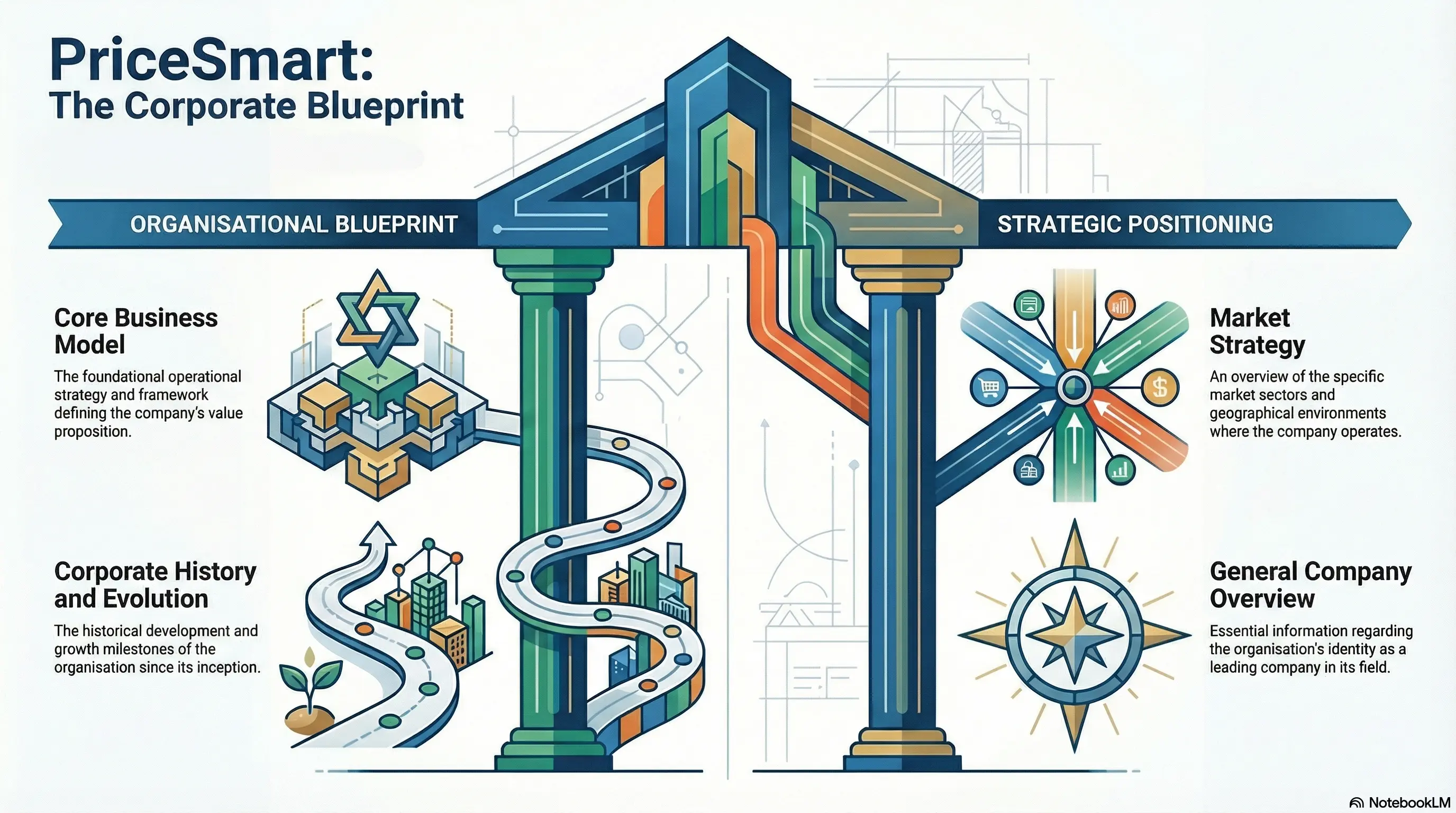
PriceSmart is a membership-based warehouse club that operates in several countries in Latin America and the Caribbean. It was founded in 1994 in San Diego, California and has since expanded to over 40 locations in 13 countries, including Costa Rica, Colombia, Jamaica, and Trinidad and Tobago. The company is known for its bulk products at discounted prices, similar to other warehouse clubs like Costco and Sam’s Club. However, PriceSmart differs in that it primarily caters to international customers, particularly in developing countries, and offers a wider variety of imported goods. PriceSmart’s business model focuses on providing high-quality products at low prices to its members. Its membership fees vary by country but typically range from $25-50 USD annually. Members have access to a range of products including groceries, electronics, household items, and clothing. In addition to its warehouse clubs, PriceSmart also operates ecommerce websites in select countries and offers delivery services. The company also has a focus on sustainability, implementing practices such as recycling, using solar energy, and actively supporting local communities in its operations. Overall, PriceSmart is a well-established and expanding company with a strong presence in the Latin American and Caribbean markets, catering to a diverse customer base and offering competitive prices on a variety of products.
How to explain to a 10 year old kid about the company?
PriceSmart is a company that runs special shopping clubs where people can buy a lot of things at cheaper prices. Imagine a big store that sells food, clothes, electronics, and many other items, but you can only shop there if you have a membership card, kind of like a VIP pass. People pay a small fee to become members and get access to these big savings. Because PriceSmart buys a lot of products at once, they can get them at lower prices from the manufacturers and then sell them to their members for less money than regular stores. PriceSmart is successful for a few reasons. First, many people love to save money, and by offering items at lower prices, it attracts a lot of shoppers. Second, the membership model creates a loyal customer base; once people pay for their card, they want to shop there often to get their money’s worth. Lastly, PriceSmart has a good selection of products, so members can find what they need all in one place. In the future, PriceSmart is likely to stay successful because more people are looking for ways to save money, especially during tough economic times. If PriceSmart keeps providing great deals and good quality, more people will want to join their shopping club. Plus, they can continue to expand to new areas and even have some online shopping options, making it easier for more people to shop with them.
AI can present several challenges to PriceSmart in various ways, including substitution, disintermediation, and margin pressure. 1. Substitution: AI-driven technologies can lead to the development of alternative shopping experiences, such as personalized online shopping assistants, which may change consumer preferences toward digital platforms over brick-and-mortar retail. If consumers find that they can order products more conveniently through AI-enhanced services, it could reduce foot traffic to PriceSmart stores, affecting sales and market share. 2. Disintermediation: The rise of AI could enable direct-to-consumer models that bypass traditional retailers like PriceSmart. AI can help manufacturers analyze consumer data and preferences more efficiently, allowing them to sell directly to customers through online platforms. This could reduce reliance on retailers, creating competitive pressures for PriceSmart and potentially diminishing customer loyalty. 3. Margin Pressure: AI technologies can optimize supply chains, reduce operational costs, and enhance inventory management for competitors. If rivals adopt advanced AI solutions to improve efficiency and reduce prices, PriceSmart may face increased pressure to lower its margins to remain competitive. This could impact profitability, particularly if PriceSmart is unable to match the cost efficiencies implemented by competitors. Overall, while AI offers opportunities for improvement and innovation, it also poses material threats through changes in consumer behavior, competitive dynamics, and operational efficiencies that could challenge PriceSmart’s business model. To navigate these threats, PriceSmart may need to invest in AI technologies themselves, adapt their strategies, and enhance customer value to maintain their competitive positioning.
Sensitivity to interest rates
PriceSmart’s earnings, cash flow, and valuation can be influenced by changes in interest rates in several ways: 1. Earnings Sensitivity: If interest rates rise, the cost of borrowing for the company may increase, leading to higher interest expenses. This can negatively impact net earnings, especially if the company has significant debt. Additionally, elevated interest rates can lead to reduced consumer spending, potentially affecting sales revenue and profit margins. 2. Cash Flow Sensitivity: Higher interest rates can increase the cost of financing for operations and expansion. This could strain cash flows, particularly if the company relies on debt for its growth initiatives. If consumers are impacted by higher borrowing costs, they may reduce discretionary spending, further affecting PriceSmart’s cash inflows. 3. Valuation Sensitivity: In terms of valuation, higher interest rates generally lead to an increase in the discount rate used in discounted cash flow (DCF) models. As the discount rate rises, the present value of future cash flows declines, which can result in a lower valuation. Investors may also re-evaluate the risk premium required for holding equities in a higher interest rate environment, potentially leading to a decrease in PriceSmart’s stock price. In summary, PriceSmart’s financial performance and valuation can be significantly affected by interest rate movements, impacting earnings directly through financing costs and consumer behavior, cash flow through operational financing, and valuation via changes in discount rates applied to future cash flows.
👉 InsightfulValue is a platform for public company analysis.
👉 We provide a database of public companies, with a focus on value investing principles.
👉 We carefully select every company in our database. With only 1873 listed, there's a reason for that.
👉 The reason is simple – we only select the best-performing public companies, true champions. And we know exactly what we mean by "champion."
👉 For us, a champion is a company with strong finances, a history of impressive dividends, great management, and standout products or services. We mean it.
👉 For each company, we have 574 questions and answers covering every aspect of their market position and operations. Everything.
👉 ... plus additional 121 Q&A about the industry each company operates in.
InsightfulValue is an independent platform dedicated to value investing research. The information provided on this website is for informational and educational purposes only and does not constitute financial, investment, tax, or legal advice. We are not financial advisors, investment consultants, or licensed consultants. Our analyses, insights, and criteria are based on principles learned from renowned value investors such as Benjamin Graham, Warren Buffett, and Charlie Munger, but they should not be considered personalized investment recommendations. Investing in financial markets carries risks, and past performance is not indicative of future results. Users of this website should conduct their own due diligence and consult with a qualified professional before making any financial or investment decisions. InsightfulValue assumes no liability for any financial losses or decisions made based on the information provided on this site. By using this website, you acknowledge and accept that all investments involve risk and that InsightfulValue does not guarantee any financial outcomes.