Company at a Glance
Price
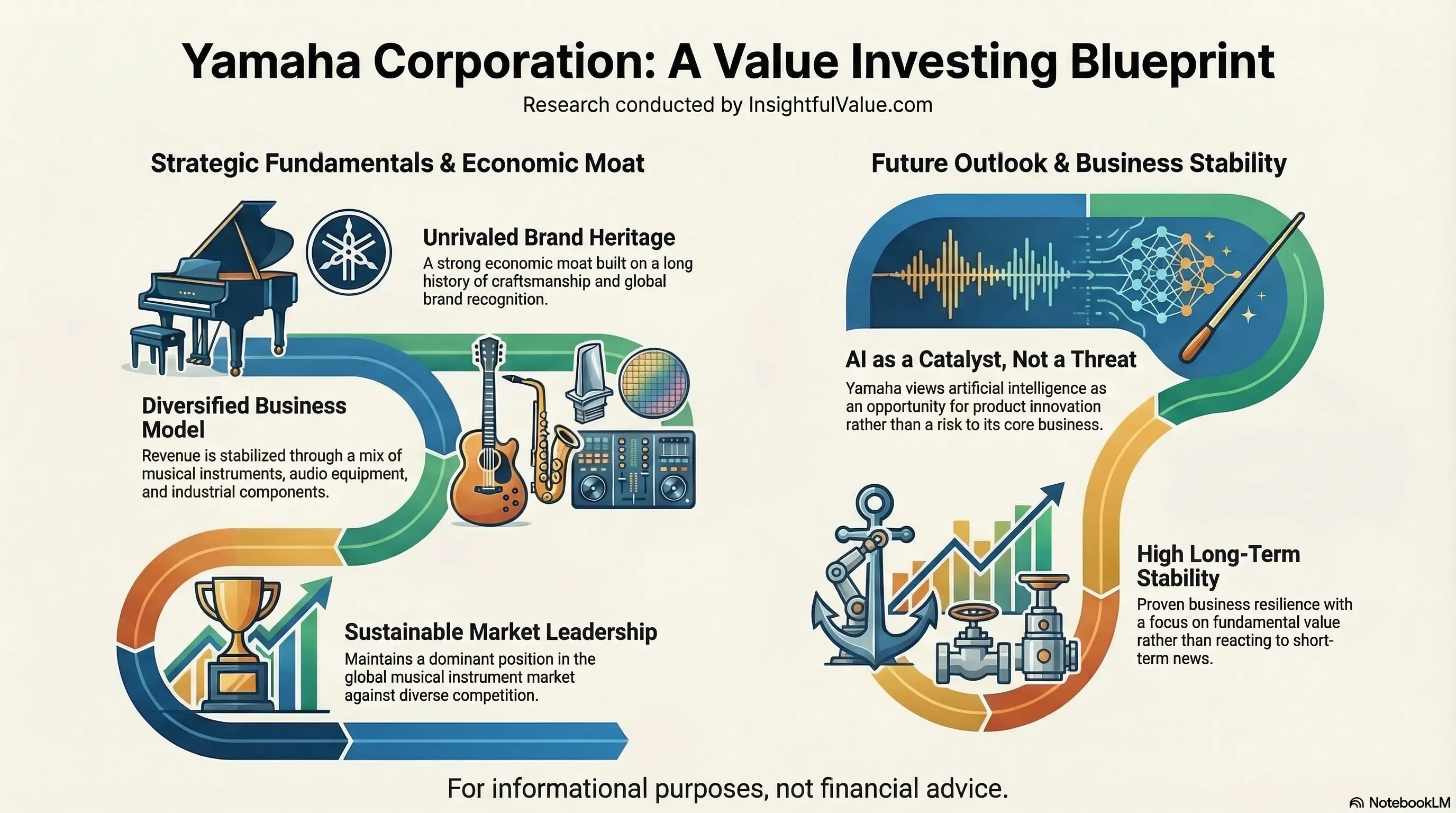
Infographic
Overview
Yamaha Corporation is a Japanese multinational corporation specializing in musical instruments, audio equipment, and other consumer electronics. It was founded in 1887 by Torakusu Yamaha as a piano and reed organ manufacturer. Over the years, Yamaha has expanded its product line to include a wide range of musical instruments such as guitars, drums, keyboards, and brass and woodwind instruments. They also produce professional audio equipment, home audio systems, and other consumer products such as motorcycles, golf carts, and snowmobiles.
In addition to its consumer products, Yamaha has also made significant contributions to the music industry through its research and development of musical technology. They were one of the first companies to incorporate electronic technology into their instruments, launching the world’s first digital piano in 1983. They also developed the world’s first portable electronic keyboard in 1984 and have since continued to innovate in the field of electronic musical instruments.
Today, Yamaha is a global brand with a presence in more than 200 countries and regions. They operate manufacturing facilities in Japan, the United States, China, Indonesia, India, and several other countries. They also have a strong commitment to sustainability and have implemented various initiatives to reduce their environmental impact.
In addition to their musical instruments and audio equipment, Yamaha also has a strong presence in the sports and leisure industry. They are the world’s largest producer of musical instruments and are also known for their line of motorsports products and golf equipment.
Overall, Yamaha Corporation is a well-respected and recognized brand known for its high-quality products, technological innovations, and commitment to sustainability.
How to explain to a 10 year old kid about the company?

📈 Want to read more about Yamaha Corp?
Sign up for free
or
log in
🙌 Join now to get "The Checklist Value Investor — A Smarter Way to Pick Stocks" at no cost
WWFtYWhhIE NvcnBvcmF0 aW9uIGlzIG EgY29tcGFu eSB0aGF0IG RvZXMgbWFu eSBleGNpdG luZyB0aGlu Z3MsIGJ1dC BpdCBpcyBi ZXN0IGtub3 duIGZvciBt YWtpbmcgbX VzaWNhbCBp bnN0cnVtZW 50cywgbGlr ZSBwaWFub3 MgYW5kIGd1 aXRhcnMuIF RoZXkgYWxz byBjcmVhdG UgYXVkaW8g ZXF1aXBtZW 50LCBsaWtl IHNwZWFrZX JzIGFuZCBo ZWFkcGhvbm VzLCBhbmQg ZXZlbiBtYW tlIHRoaW5n cyBsaWtlIG 1vdG9yY3lj bGVzIGFuZC Bib2F0cyEg U28sIHRoZX nigJlyZSBp bnZvbHZlZC BpbiBib3Ro IG11c2ljIG FuZCBmdW4g dmVoaWNsZX MuPGJyPllh bWFoYSBtYW tlcyBtb25l eSBieSBzZW xsaW5nIHRo ZXNlIHByb2 R1Y3RzIHRv IHBlb3BsZS BhbGwgYXJv dW5kIHRoZS B3b3JsZC4g V2hlbiBzb2 1lb25lIGJ1 eXMgYSBwaW FubywgYSBt b3RvcmN5Y2 xlLCBvciBh IHBhaXIgb2 YgaGVhZHBo b25lcywgdG hhdCBtb25l eSBnb2VzIH RvIFlhbWFo YS4gVGhlee KAmXJlIGdv b2QgYXQgbW FraW5nIGhp Z2gtcXVhbG l0eSBpdGVt cywgd2hpY2 ggbWVhbnMg d2hlbiBwZW 9wbGUgYnV5 IGEgWWFtYW hhIHByb2R1 Y3QsIHRoZX kgdXN1YWxs eSBsb3ZlIG l0IGFuZCBy ZWNvbW1lbm QgaXQgdG8g b3RoZXJzLi A8YnI+T25l IHJlYXNvbi BZYW1haGEg aXMgc3VjY2 Vzc2Z1bCBp cyB0aGF0IH RoZXkgaGF2 ZSBhIGxvbm cgaGlzdG9y eSBhbmQgYS ByZXB1dGF0 aW9uIGZvci BtYWtpbmcg Z3JlYXQgcH JvZHVjdHMu IFBlb3BsZS B0cnVzdCB0 aGUgWWFtYW hhIGJyYW5k IGJlY2F1c2 UgdGhleSBr bm93IGl0IH N0YW5kcyBm b3IgcXVhbG l0eS4gVGhl eSBhbHNvIG tlZXAgdHJ5 aW5nIG5ldy B0aGluZ3Ms IGxpa2UgdX NpbmcgdGVj aG5vbG9neS B0byBtYWtl IGJldHRlci BpbnN0cnVt ZW50cyBhbm QgYXVkaW8g ZXF1aXBtZW 50LCB3aGlj aCBoZWxwcy B0aGVtIGF0 dHJhY3QgbW 9yZSBjdXN0 b21lcnMuPG JyPkluIHRo ZSBmdXR1cm UsIFlhbWFo YSB3aWxsIG xpa2VseSBz dGF5IHN1Y2 Nlc3NmdWwg YmVjYXVzZS B0aGV5IGNv bnRpbnVlIH RvIGlubm92 YXRlIGFuZC BjcmVhdGUg cHJvZHVjdH MgdGhhdCBw ZW9wbGUgd2 FudC4gVGhl eSBhcmUgYW x3YXlzIGxv b2tpbmcgZm 9yIG5ldyBp ZGVhcyBhbm Qgd2F5cyB0 byBpbXByb3 ZlIHRoZWly IGl0ZW1zLi BQbHVzLCBh cyBtdXNpYy BhbmQgdGVj aG5vbG9neS BrZWVwIGdy b3dpbmcsIH RoZXJlIHdp bGwgYWx3YX lzIGJlIGEg ZGVtYW5kIG ZvciB0aGUg dGhpbmdzIH RoZXkgbWFr ZS4gU28sIH doZXRoZXIg aXTigJlzIG Egc3R1ZGVu dCBsZWFybm luZyBwaWFu byBvciBzb2 1lb25lIGVu am95aW5nIG EgcmlkZSBv biBhIFlhbW FoYSBtb3Rv cmN5Y2xlLC BwZW9wbGUg d2lsbCBrZW VwIGNvbWlu ZyBiYWNrIH RvIFlhbWFo YSBmb3IgcX VhbGl0eSBh bmQgZnVuIT xicj4=
What is special about the company?
📈 Want to read more about Yamaha Corp?
Sign up for free
or
log in
📘 Claim your free eBook: "The Checklist Value Investor — A Smarter Way to Pick Stocks"
MS4gUmljaC BIaXN0b3J5 OiBZYW1haG EgQ29ycG9y YXRpb24gaG FzIGEgbG9u ZyBoaXN0b3 J5IGFuZCBs ZWdhY3kgZG F0aW5nIGJh Y2sgdG8gMT g4NyB3aGVu IGl0IHdhcy BmaXJzdCBm b3VuZGVkIG FzIGEgcGlh bm8gYW5kIH JlZWQgb3Jn YW4gbWFudW ZhY3R1cmVy LiBPdmVyIH RoZSB5ZWFy cywgaXQgaG FzIGV4cGFu ZGVkIGl0cy BidXNpbmVz cyB0byBpbm NsdWRlIGEg d2lkZSByYW 5nZSBvZiBt dXNpY2FsIG luc3RydW1l bnRzLCBhdW RpbyBlcXVp cG1lbnQsIG FuZCB0ZWNo bm9sb2d5Lj xicj4yLiBJ bm5vdmF0aX ZlIFRlY2hu b2xvZ3k6IF lhbWFoYSBD b3Jwb3JhdG lvbiBpcyBr bm93biBmb3 IgaXRzIGlu bm92YXRpdm UgdGVjaG5v bG9neSBhbm QgaGFzIGJl ZW4gYXQgdG hlIGZvcmVm cm9udCBvZi BkZXZlbG9w aW5nIG5ldy BhbmQgYWR2 YW5jZWQgcH JvZHVjdHMg aW4gdGhlIG 11c2ljIGlu ZHVzdHJ5Li BJdCBoYXMg YSBkZWRpY2 F0ZWQgcmVz ZWFyY2ggYW 5kIGRldmVs b3BtZW50IH RlYW0gdGhh dCBjb25zdG FudGx5IHdv cmtzIHRvIG ltcHJvdmUg aXRzIGV4aX N0aW5nIHBy b2R1Y3RzIG FuZCBjcmVh dGUgbmV3IG 9uZXMuPGJy PjMuIERpdm Vyc2lmaWVk IEJ1c2luZX NzOiBXaGls ZSBZYW1haG EgaXMgcHJp bWFyaWx5IG tub3duIGZv ciBpdHMgbX VzaWNhbCBp bnN0cnVtZW 50cywgdGhl IGNvbXBhbn kgaGFzIGFs c28gZGl2ZX JzaWZpZWQg aXRzIGJ1c2 luZXNzIGlu dG8gb3RoZX IgYXJlYXMu IEl0IGhhcy BkaXZpc2lv bnMgdGhhdC Bwcm9kdWNl IHByb2Zlc3 Npb25hbCBh dWRpbyBlcX VpcG1lbnQs IGNvbXB1dG VyLXJlbGF0 ZWQgcHJvZH VjdHMsIHNw b3J0cyBlcX VpcG1lbnQs IGFuZCBtb3 JlLjxicj40 LiBHbG9iYW wgUHJlc2Vu Y2U6IFlhbW FoYSBDb3Jw b3JhdGlvbi BoYXMgYSBz dHJvbmcgZ2 xvYmFsIHBy ZXNlbmNlIH dpdGggc3Vi c2lkaWFyaW VzIGFuZCBh ZmZpbGlhdG VzIGluIG92 ZXIgOTAgY2 91bnRyaWVz LiBUaGlzIG FsbG93cyB0 aGUgY29tcG FueSB0byBy ZWFjaCBhIH dpZGUgcmFu Z2Ugb2YgY3 VzdG9tZXJz IGFuZCBjYX RlciB0byB0 aGVpciBzcG VjaWZpYyBu ZWVkcyBhbm QgcHJlZmVy ZW5jZXMuPG JyPjUuIFF1 YWxpdHkgUH JvZHVjdHM6 IFlhbWFoYS BoYXMgYSBy ZXB1dGF0aW 9uIGZvciBw cm9kdWNpbm cgaGlnaC1x dWFsaXR5IH Byb2R1Y3Rz IHRoYXQgYX JlIHJlbGlh YmxlIGFuZC BkdXJhYmxl LiBJdHMgY2 9tbWl0bWVu dCB0byBxdW FsaXR5IGlz IHJlZmxlY3 RlZCBpbiBp dHMgc2xvZ2 FuLCBRdWFs aXR5IGlzIG 91ciBkaXNh c3RlciBwcm V2ZW50aW9u Ljxicj42Li BTb2NpYWwg UmVzcG9uc2 liaWxpdHk6 IFlhbWFoYS BDb3Jwb3Jh dGlvbiBpcy Bjb21taXR0 ZWQgdG8gYm VpbmcgYSBz b2NpYWxseS ByZXNwb25z aWJsZSBjb2 1wYW55LiBJ dCBpbnZlc3 RzIGluIGVj b2xvZ2ljYW wgYW5kIGVu dmlyb25tZW 50YWwgaW5p dGlhdGl2ZX MsIHN1cHBv cnRzIGxvY2 FsIGNvbW11 bml0aWVzLC BhbmQgcHJv bW90ZXMgZG l2ZXJzaXR5 IGFuZCBpbm NsdXNpb24g d2l0aGluIG l0cyB3b3Jr Zm9yY2UuPG JyPjcuIE11 c2ljIEVkdW NhdGlvbjog SW4gYWRkaX Rpb24gdG8g bWFudWZhY3 R1cmluZyBt dXNpY2FsIG luc3RydW1l bnRzLCBZYW 1haGEgYWxz byBoYXMgYS BzdHJvbmcg Zm9jdXMgb2 4gbXVzaWMg ZWR1Y2F0aW 9uLiBJdCBv ZmZlcnMgbX VzaWMgZWR1 Y2F0aW9uIH Byb2dyYW1z IGFuZCBzdX Bwb3J0cyBt dXNpYyBzY2 hvb2xzIGFu ZCBvcmdhbm l6YXRpb25z IGFyb3VuZC B0aGUgd29y bGQuPGJyPj guIFN0cm9u ZyBCcmFuZC BJbWFnZTog WWFtYWhhIG lzIGEgd2Vs bC1yZXNwZW N0ZWQgYW5k IHJlY29nbm l6ZWQgYnJh bmQgaW4gdG hlIG11c2lj IGluZHVzdH J5LiBJdHMg bG9nbyBhbm QgYnJhbmQg aW1hZ2UgYX JlIGluc3Rh bnRseSByZW NvZ25pemFi bGUgYW5kIG Fzc29jaWF0 ZWQgd2l0aC BxdWFsaXR5 LCByZWxpYW JpbGl0eSwg YW5kIGlubm 92YXRpb24u PGJyPjkuIE VuZG9yc2Vt ZW50czogWW FtYWhhIGhh cyBhbiBpbX ByZXNzaXZl IGxpc3Qgb2 YgZW5kb3Jz ZW1lbnRzIG Zyb20gZmFt b3VzIG11c2 ljaWFucyBh bmQgYXJ0aX N0cywgZnVy dGhlciBib2 9zdGluZyBp dHMgYnJhbm QgaW1hZ2Ug YW5kIGNyZW RpYmlsaXR5 IGluIHRoZS BtdXNpYyBp bmR1c3RyeS 48YnI+MTAu IENvcnBvcm F0ZSBDdWx0 dXJlOiBZYW 1haGHigJlz IGNvcnBvcm F0ZSBjdWx0 dXJlIGlzIG 9uZSBvZiB0 aGUga2V5IH JlYXNvbnMg Zm9yIGl0cy BzdWNjZXNz LiBUaGUgY2 9tcGFueSB2 YWx1ZXMgY2 9sbGFib3Jh dGlvbiwgY3 JlYXRpdml0 eSwgYW5kIH Bhc3Npb24s IGFuZCBlbm NvdXJhZ2Vz IGl0cyBlbX Bsb3llZXMg dG8gY29uc3 RhbnRseSBz dHJpdmUgZm 9yIGV4Y2Vs bGVuY2Uu
What the company's business model?
📈 Want to read more about Yamaha Corp?
Sign up for free
or
log in
🔓 Unlock our free guide: "The Checklist Value Investor — A Smarter Way to Pick Stocks"
VGhlIFlhbW FoYSBDb3Jw IGNvbXBhbn nigJlzIGJ1 c2luZXNzIG 1vZGVsIGlz IGJhc2VkIG 9uIHRoZSBk ZXNpZ24sIG 1hbnVmYWN0 dXJlLCBhbm Qgc2FsZSBv ZiBhIHdpZG UgcmFuZ2Ug b2YgbXVzaW NhbCBpbnN0 cnVtZW50cy wgYXVkaW8g ZXF1aXBtZW 50LCBhbmQg bXVzaWMtcm VsYXRlZCBw cm9kdWN0cy BhbmQgc2Vy dmljZXMuPG JyPlRoZWly IG1haW4gc2 91cmNlIG9m IHJldmVudW UgaXMgZnJv bSB0aGUgc2 FsZSBvZiBp bnN0cnVtZW 50cywgaW5j bHVkaW5nIH BpYW5vcywg a2V5Ym9hcm RzLCBndWl0 YXJzLCBkcn Vtcywgd2lu ZCBhbmQgc3 RyaW5nIGlu c3RydW1lbn RzLCBhcyB3 ZWxsIGFzIG F1ZGlvIGVx dWlwbWVudC BzdWNoIGFz IHNwZWFrZX JzIGFuZCBk aWdpdGFsIG 1peGluZyBj b25zb2xlcy 48YnI+WWFt YWhhIGFsc2 8gZ2VuZXJh dGVzIHJldm VudWUgdGhy b3VnaCB0aG VpciBtdXNp YyBlZHVjYX Rpb24gcHJv Z3JhbXMsIG 11c2ljIHNv ZnR3YXJlIG FuZCBhcHBz LCBhbmQgbX VzaWMgcHVi bGljYXRpb2 4gYW5kIGRp c3RyaWJ1dG lvbi48YnI+ SW4gYWRkaX Rpb24gdG8g dGhlaXIgdH JhZGl0aW9u YWwgbXVzaW MtZm9jdXNl ZCBwcm9kdW N0cyBhbmQg c2VydmljZX MsIFlhbWFo YSBoYXMgYW xzbyBleHBh bmRlZCBpbn RvIG90aGVy IGFyZWFzIH N1Y2ggYXMg cmVjcmVhdG lvbmFsIHZl aGljbGVzIG FuZCBzcG9y dHMgZXF1aX BtZW50Ljxi cj5UaGVpci BidXNpbmVz cyBtb2RlbC BhbHNvIGlu Y2x1ZGVzIG Egc3Ryb25n IGZvY3VzIG 9uIHJlc2Vh cmNoIGFuZC BkZXZlbG9w bWVudCwgYX Mgd2VsbCBh cyBzdHJhdG VnaWMgcGFy dG5lcnNoaX BzIGFuZCBh Y3F1aXNpdG lvbnMgdG8g Y29udGludW FsbHkgaW5u b3ZhdGUgYW 5kIHN0YXkg Y29tcGV0aX RpdmUgaW4g dGhlIG1hcm tldC48YnI+ TGFzdGx5LC BZYW1haGEg cGxhY2VzIG Egc3Ryb25n IGVtcGhhc2 lzIG9uIGN1 c3RvbWVyIG xveWFsdHkg YW5kIHNhdG lzZmFjdGlv biBieSBwcm 92aWRpbmcg aGlnaC1xdW FsaXR5IHBy b2R1Y3RzIG FuZCBleGNl cHRpb25hbC BjdXN0b21l ciBzZXJ2aW NlIHRvIG1h aW50YWluIG EgbG95YWwg Y3VzdG9tZX IgYmFzZS4=
Is AI a threat?
AI does present certain challenges and opportunities for Yamaha Corporation, which operates in various sectors including musical instruments, audio equipment, and even robotics.
1. Substitution Threat: In the musical instruments sector, AI-generated music and digital instruments could potentially substitute traditional instruments. Software that can compose music or synthesize sounds may lead some musicians to opt for these AI solutions instead of investing in physical instruments. However, the unique tactile experience of playing a traditional instrument may still preserve a market for Yamaha’s products.
2. Disintermediation: AI can enable direct connection between creators and consumers, potentially reducing the need for intermediaries such as record labels or distributors. This could challenge Yamaha’s market positioning if artists and producers choose to rely on AI tools for production and distribution rather than traditional music industry pathways that could involve Yamaha’s offerings.
3. Margin Pressure: As AI technology becomes more advanced and accessible, competition could increase, driving down prices. For instance, cheaper AI-driven music software might attract budget-conscious musicians, placing pressure on Yamaha to either innovate or reduce prices on their products to maintain market share. This could affect profit margins if Yamaha fails to adapt to changing market demands and cost structures.
However, Yamaha could also leverage AI technology to enhance its products and services. Integrating AI features in their existing products, offering AI-driven music composition tools, or focusing on unique value propositions, such as craftsmanship and quality, could help mitigate these threats and maintain competitive positioning. Ultimately, how Yamaha navigates these challenges will depend on its strategic choices and ability to innovate in an evolving landscape.
Sensitivity to interest rates
The sensitivity of Yamaha Corporation’s earnings, cash flow, and valuation to changes in interest rates can be assessed through several factors.
1. Earnings Sensitivity: Interest rates can significantly affect Yamaha’s earnings, particularly if the company relies on borrowing for operations or expansion. Higher interest rates can lead to increased borrowing costs, thereby reducing net income. Additionally, if consumer demand for Yamaha’s products, such as musical instruments and audio equipment, is sensitive to credit conditions, rising rates could dampen consumer spending, negatively impacting sales and earnings.
2. Cash Flow Sensitivity: Cash flow is closely linked to both operations and financing activities. Higher interest rates can lead to increased interest expenses on any outstanding debt, reducing free cash flow. Conversely, if the company’s products are considered discretionary, higher rates might result in lower consumer purchasing power, leading to reduced cash inflows from sales.
3. Valuation Sensitivity: The valuation of Yamaha Corporation, like many companies, is affected by interest rates through the discount rate applied in valuation models. A higher interest rate increases the discount rate, which decreases the present value of future cash flows, potentially lowering the company’s market valuation. Furthermore, if interest rates rise, capital markets may offer more attractive yields, making equity investments relatively less appealing, which could negatively affect stock prices.
In summary, Yamaha Corp’s earnings, cash flow, and valuation are all sensitive to changes in interest rates due to factors such as debt financing costs, consumer spending behavior, and the impact on valuation through discounting cash flows.
Resilience to the future changes
📈 Want to read more about Yamaha Corp?
Sign up for free
or
log in
🙌 Join now to get "The Checklist Value Investor — A Smarter Way to Pick Stocks" at no cost
QSByZWFsaX N0aWMgc2Nl bmFyaW8gdG hhdCBjb3Vs ZCBwZXJtYW 5lbnRseSBp bXBhaXIgWW FtYWhhIENv cnBvcmF0aW 9u4oCZcyBl Y29ub21pY3 Mgb3ZlciB0 aGUgbmV4dC Az4oCTNSB5 ZWFycyBtaW dodCBpbnZv bHZlIGEgc2 lnbmlmaWNh bnQgZGVjbG luZSBpbiB0 aGUgZ2xvYm FsIGRlbWFu ZCBmb3IgbX VzaWNhbCBp bnN0cnVtZW 50cywgcGFy dGljdWxhcm x5IHRyYWRp dGlvbmFsIG Fjb3VzdGlj IGluc3RydW 1lbnRzLCBk dWUgdG8gc2 hpZnRpbmcg Y29uc3VtZX IgcHJlZmVy ZW5jZXMgdG 93YXJkcyBk aWdpdGFsIG VudGVydGFp bm1lbnQgYW 5kIHZpcnR1 YWwgbXVzaW MgZXhwZXJp ZW5jZXMuIF RoaXMgc2hp ZnQgY291bG QgYmUgZXhh Y2VyYmF0ZW QgYnkgdGhl IHJpc2Ugb2 YgQUktZ2Vu ZXJhdGVkIG 11c2ljIGFu ZCB2aXJ0dW FsIHJlYWxp dHkgbXVzaW MgZXhwZXJp ZW5jZXMsIH doaWNoIGF0 dHJhY3QgeW 91bmdlciBh dWRpZW5jZX MgYW5kIG1h a2UgdHJhZG l0aW9uYWwg aW5zdHJ1bW VudHMgbGVz cyBhcHBlYW xpbmcuPGJy PklmIHRoaX Mgc2NlbmFy aW8gcGxheX Mgb3V0LCBz ZXZlcmFsIG ZpbmFuY2lh bCBpbXBsaW NhdGlvbnMg Y291bGQgYX Jpc2UgZm9y IFlhbWFoYT o8YnI+MS4g PHN0cm9uZz 5NYXJnaW5z PC9zdHJvbm c+OiBZYW1h aGHigJlzIH Byb2ZpdCBt YXJnaW5zIH dvdWxkIGxp a2VseSBkZW NsaW5lIGR1 ZSB0byBhIG NvbWJpbmF0 aW9uIG9mIH JlZHVjZWQg c2FsZXMgdm 9sdW1lcyBh bmQgdGhlIH BvdGVudGlh bCBuZWNlc3 NpdHkgdG8g b2ZmZXIgZG lzY291bnRz IG9yIGluY2 VudGl2ZXMg dG8gc2VsbC B0cmFkaXRp b25hbCBpbn N0cnVtZW50 cy4gRml4ZW QgY29zdHMs IHN1Y2ggYX MgbWFudWZh Y3R1cmluZy BhbmQgUiZh bXA7RCwgd2 91bGQgbmVl ZCB0byBiZS BzcHJlYWQg b3ZlciBhIH NtYWxsZXIg c2FsZXMgYm FzZSwgZnVy dGhlciBleG VydGluZyBw cmVzc3VyZS BvbiBtYXJn aW5zLjxicj 4yLiA8c3Ry b25nPkNhc2 ggRmxvdzwv c3Ryb25nPj ogV2l0aCBm YWxsaW5nIH NhbGVzLCBZ YW1haGEgY2 91bGQgZXhw ZXJpZW5jZS B0aWdodGVy IGNhc2ggZm xvdy4gUmVk dWNlZCByZX ZlbnVlcyB3 b3VsZCBpbX BhY3QgaXRz IGFiaWxpdH kgdG8gZ2Vu ZXJhdGUgY2 FzaCBmcm9t IG9wZXJhdG lvbnMuIElm IHRoZSBjb2 1wYW55IGRv ZXMgbm90IG FkYXB0IGl0 cyBwcm9kdW N0IGxpbmUg dG8gY2FwdH VyZSBlbWVy Z2luZyBtYX JrZXRzIGFu ZCBjb25zdW 1lciBpbnRl cmVzdHMsIG l0IG1pZ2h0 IGFsc28gZm FjZSBoaWdo ZXIgaW52ZW 50b3J5IGNv c3RzIGFuZC Bwb3RlbnRp YWwgd3JpdG UtZG93bnMg b2YgdW5zb2 xkIGluc3Ry dW1lbnRzLC B3b3JzZW5p bmcgY2FzaC BmbG93IHBy b2JsZW1zLj xicj4zLiA8 c3Ryb25nPk JhbGFuY2Ug U2hlZXQ8L3 N0cm9uZz46 IEluIHRoZS Bsb25nIHRl cm0sIHRoZS BjaGFsbGVu Z2VzIGluIG Nhc2ggZmxv dyB3b3VsZC BsaWtlbHkg bGVhZCBZYW 1haGEgdG8g cmUtZXZhbH VhdGUgaXRz IGNhcGl0YW wgc3RydWN0 dXJlLiBUaG UgY29tcGFu eSBtYXkgbm VlZCB0byBp bmNyZWFzZS BkZWJ0IGxl dmVscyB0by BtYWludGFp biBvcGVyYX Rpb25zIG9y IGZ1bmQgaW 5ub3ZhdGlv biwgYWZmZW N0aW5nIGl0 cyBsZXZlcm FnZSByYXRp b3MuIElmIH RoZSBkb3du dHVybiBpcy BzZXZlcmUs IFlhbWFoYS Bjb3VsZCBm YWNlIGltcG Fpcm1lbnRz IG9uIGl0cy B0YW5naWJs ZSBhbmQgaW 50YW5naWJs ZSBhc3NldH MgcmVsYXRl ZCB0byB0cm FkaXRpb25h bCBpbnN0cn VtZW50IG1h bnVmYWN0dX JpbmcsIGZ1 cnRoZXIgd2 Vha2VuaW5n IGl0cyBiYW xhbmNlIHNo ZWV0Ljxicj 5JbiBzdW1t YXJ5LCBpZi BZYW1haGEg ZmFpbHMgdG 8gYWRhcHQg dG8gY2hhbm dpbmcgY29u c3VtZXIgcH JlZmVyZW5j ZXMgYW5kIG 1hcmtldCB0 cmVuZHMsIG l0IGNvdWxk IGZhY2Ugc3 VzdGFpbmVk IHByZXNzdX JlIG9uIGl0 cyBtYXJnaW 5zLCB0aWdo dGVuaW5nIG Nhc2ggZmxv dywgYW5kIG EgbmVnYXRp dmVseSBpbX BhY3RlZCBi YWxhbmNlIH NoZWV0LCBw b3RlbnRpYW xseSBsZWFk aW5nIHRvIG EgbG9uZy10 ZXJtIHJlc2 hhcGluZyBv ZiBpdHMgYn VzaW5lc3Mg bW9kZWwuPG JyPg==
Interesting facts about the company
📈 Want to read more about Yamaha Corp?
Sign up for free
or
log in
💡 Learn smarter stock picks with "The Checklist Value Investor — A Smarter Way to Pick Stocks"
CiAgICAgIC AgICAgIDxk aXYgc3R5bG U9J3dpZHRo OiAxMDAlOy BkaXNwbGF5 OiBmbGV4Oy BqdXN0aWZ5 LWNvbnRlbn Q6IGNlbnRl cjsnPgogIC AgICAgICAg ICAgICAgPG RpdiBzdHls ZT0nCiAgIC AgICAgICAg ICAgICAgIC AgZGlzcGxh eTogZmxleD sKICAgICAg ICAgICAgIC AgICAgICBh bGlnbi1pdG VtczogY2Vu dGVyOwogIC AgICAgICAg ICAgICAgIC AgIGJhY2tn cm91bmQtY2 9sb3I6ICNm MGY0Zjg7Ci AgICAgICAg ICAgICAgIC AgICAgYm9y ZGVyOiAxcH ggc29saWQg I2QxZTNmMD sKICAgICAg ICAgICAgIC AgICAgICBi b3JkZXItcm FkaXVzOiAx MHB4OwogIC AgICAgICAg ICAgICAgIC AgIHBhZGRp bmc6IDEwcH g7CiAgICAg ICAgICAgIC AgICAgICAg bWFyZ2luOi AyMHB4IDA7 CiAgICAgIC AgICAgICAg ICAgICAgZm 9udC1mYW1p bHk6ICJTZW dvZSBVSSIs IFJvYm90by wgc2Fucy1z ZXJpZjsKIC AgICAgICAg ICAgICAgIC AgICBib3gt c2hhZG93Oi AwIDJweCA2 cHggcmdiYS gwLCAwLCAw LCAwLjA1KT sKICAgICAg ICAgICAgIC AgICAgICBt YXgtd2lkdG g6IDkwMHB4 OwogICAgIC AgICAgICAg ICAgICAgIH dpZHRoOiAx MDAlOyc+Cg ogICAgICAg ICAgICAgIC AgICAgIDxp bWcgc3JjPS Jhc3NldHMv bG9nb3Mvcm 83dEkyVnox dkRkTkF5dF d4aGIud2Vi cCIgYWx0PS JZYW1haGEg Q29ycCIgdG l0bGU9Illh bWFoYSBDb3 JwIiAgY2xh c3M9ImltZy 1mbHVpZCIg aGVpZ2h0PT UwIHdpZHRo PTUwIGxvYW Rpbmc9J2xh enknIHN0eW xlPSdib3Jk ZXItcmFkaX VzOiA2cHg7 Jz4KCiAgIC AgICAgICAg ICAgICAgIC AgPGRpdiBz dHlsZT0nZm xleDogMTsg dGV4dC1hbG lnbjogY2Vu dGVyOyBtYX JnaW4tbGVm dDogNXB4Oy c+CiAgICAg ICAgICAgIC AgICAgICAg ICAgIDxwIH N0eWxlPSdm b250LXNpem U6IDI2cHg7 IGNvbG9yOi AjMzMzOyBt YXJnaW4tYm 90dG9tOiAx NXB4Oyc+Ci AgICAgICAg ICAgICAgIC AgICAgICAg ICAgICDwn5 OIIFdhbnQg dG8gcmVhZC Btb3JlIGFi b3V0IFlhbW FoYSBDb3Jw PwogICAgIC AgICAgICAg ICAgICAgIC AgICA8L3A+ CgogICAgIC AgICAgICAg ICAgICAgIC AgICA8YSBo cmVmPSdpbm RleC5waHA/ cGFnZT1zaW dudXAnIHN0 eWxlPScKIC AgICAgICAg ICAgICAgIC AgICAgICAg ICAgIGJhY2 tncm91bmQt Y29sb3I6IC MwMDdCRkY7 CiAgICAgIC AgICAgICAg ICAgICAgIC AgICAgICBj b2xvcjogI2 ZmZjsKICAg ICAgICAgIC AgICAgICAg ICAgICAgIC AgIHBhZGRp bmc6IDEwcH ggMjBweDsK ICAgICAgIC AgICAgICAg ICAgICAgIC AgICAgIGJv cmRlci1yYW RpdXM6IDVw eDsKICAgIC AgICAgICAg ICAgICAgIC AgICAgICAg IHRleHQtZG Vjb3JhdGlv bjogbm9uZT sKICAgICAg ICAgICAgIC AgICAgICAg ICAgICAgIG ZvbnQtd2Vp Z2h0OiBib2 xkOwogICAg ICAgICAgIC AgICAgICAg ICAgICAgIC AgbWFyZ2lu LXJpZ2h0Oi AxMHB4Owog ICAgICAgIC AgICAgICAg ICAgICAgIC AgICAgdHJh bnNpdGlvbj ogYmFja2dy b3VuZC1jb2 xvciAwLjNz IGVhc2U7Jw ogICAgICAg ICAgICAgIC AgICAgICAg ICAgICAgb2 5tb3VzZW92 ZXI9J3RoaX Muc3R5bGUu YmFja2dyb3 VuZENvbG9y PSIjMDA1Nm IzIicKICAg ICAgICAgIC AgICAgICAg ICAgICAgIC AgIG9ubW91 c2VvdXQ9J3 RoaXMuc3R5 bGUuYmFja2 dyb3VuZENv bG9yPSIjMD A3QkZGIic+ CiAgICAgIC AgICAgICAg ICAgICAgIC AgICAgICBT aWduIHVwIG ZvciBmcmVl CiAgICAgIC AgICAgICAg ICAgICAgIC AgIDwvYT4K CiAgICAgIC AgICAgICAg ICAgICAgIC AgIDxzcGFu IHN0eWxlPS dtYXJnaW46 IDAgOHB4Oy Bjb2xvcjog IzU1NTsnPm 9yPC9zcGFu PgoKICAgIC AgICAgICAg ICAgICAgIC AgICAgPGEg aHJlZj0naW 5kZXgucGhw P3BhZ2U9bG 9naW4nIHN0 eWxlPScKIC AgICAgICAg ICAgICAgIC AgICAgICAg ICAgIGNvbG 9yOiAjMDA3 QkZGOwogIC AgICAgICAg ICAgICAgIC AgICAgICAg ICAgdGV4dC 1kZWNvcmF0 aW9uOiB1bm RlcmxpbmU7 CiAgICAgIC AgICAgICAg ICAgICAgIC AgICAgICBm b250LXdlaW dodDogNTAw Oyc+CiAgIC AgICAgICAg ICAgICAgIC AgICAgICAg ICBsb2cgaW 4KICAgICAg ICAgICAgIC AgICAgICAg ICAgPC9hPg oKCiAgICAg ICAgICAgIC AgICAgICAg ICAgIDxwIH N0eWxlPSdt YXJnaW4tdG 9wOiAxNXB4 OyBmb250LX NpemU6IDEz cHg7IGZvbn Qtd2VpZ2h0 OiBib2xkOy Bjb2xvcjog I2QzMmYyZj snPgogICAg ICAgICAgIC AgICAgICAg ICAgICAgIC Ag8J+UkyBV bmxvY2sgb3 VyIGZyZWUg Z3VpZGU6ID xpPiJUaGUg Q2hlY2tsaX N0IFZhbHVl IEludmVzdG 9yIOKAlCBB IFNtYXJ0ZX IgV2F5IHRv IFBpY2sgU3 RvY2tzIjwv aT4KICAgIC AgICAgICAg ICAgICAgIC AgICAgPC9w PgoKICAgIC AgICAgICAg ICAgICAgIC AgICAgPCEt LQogICAgIC AgICAgICAg ICAgICAgIC AgICA8ZGl2 IHN0eWxlPS dtYXJnaW4t dG9wOiAxMn B4OyBmb250 LXNpemU6ID EzcHg7IGNv bG9yOiAjND Q0Oyc+CiAg ICAgICAgIC AgICAgICAg ICAgICAgIC AgICBTaWdu IHVwIG5vdy BhbmQgZ2V0 IG91ciBmcm VlIGVCb29r IAogICAgIC AgICAgICAg ICAgICAgIC AgICAgICAg PGI+VGhlIE NoZWNrbGlz dCBWYWx1ZS BJbnZlc3Rv ciDigJQgQS BTbWFydGVy IFdheSB0by BQaWNrIFN0 b2NrczwvYj 4KICAgICAg ICAgICAgIC AgICAgICAg ICAgPC9kaX Y+CiAgICAg ICAgICAgIC AgICAgICAg ICAgIC0tPg ogICAgICAg ICAgICAgIC AgICAgICAg ICA8IS0tCi AgICAgICAg ICAgICAgIC AgICAgICAg IDxkaXYgc3 R5bGU9J21h cmdpbi10b3 A6IDE2cHg7 IGZvbnQtc2 l6ZTogMTRw eDsgY29sb3 I6ICM0NDQ7 IGZvbnQtZm FtaWx5OiAt YXBwbGUtc3 lzdGVtLCBC bGlua01hY1 N5c3RlbUZv bnQsIFNlZ2 9lIFVJLCBS b2JvdG8sIE hlbHZldGlj YSBOZXVlLC BzYW5zLXNl cmlmOyBsaW 5lLWhlaWdo dDogMS42Oy c+CiAgICAg ICAgICAgIC AgICAgICAg ICAgICAgIC BIYXZlIHlv dSBoZWFyZC BhYm91dCBv dXIgc2hvcn QgPHN0cm9u ZyBzdHlsZT 0nZm9udC13 ZWlnaHQ6ID YwMDsnPkRh aWx5IFZpZG VvIE5ld3Ns ZXR0ZXI8L3 N0cm9uZz4/ CiAgICAgIC AgICAgICAg ICAgICAgIC AgICAgICA8 YSBocmVmPS dodHRwczov L3d3dy5pbn NpZ2h0ZnVs dmFsdWUuY2 9tL25ld3Ns ZXR0ZXIucG hwJyB0YXJn ZXQ9J19ibG Fuaycgc3R5 bGU9J2NvbG 9yOiAjMDA3 QkZGOyB0ZX h0LWRlY29y YXRpb246IG 5vbmU7IGZv bnQtd2VpZ2 h0OiA1MDA7 IG1hcmdpbi 1sZWZ0OiA2 cHg7Jz4KIC AgICAgICAg ICAgICAgIC AgICAgICAg ICAgICAgIC BGaW5kIG91 dCBtb3JlCi AgICAgICAg ICAgICAgIC AgICAgICAg ICAgICA8L2 E+CiAgICAg ICAgICAgIC AgICAgICAg ICAgIDwvZG l2PgogICAg ICAgICAgIC AgICAgICAg ICAgICAtLT 4KICAgICAg ICAgICAgIC AgICAgICA8 L2Rpdj4KIC AgICAgICAg ICAgICAgID wvZGl2Pgog ICAgICAgIC AgICA8L2Rp dj4KICAgIC AgICAgICAg CiAgICAgIC AgCiAgICAg ICAgPHNwYW 4gY2xhc3M9 J2JsdXJyZW QtdGV4dCc+ CiAgICAgIC AgICAgIE1T NGdXV0Z0WV cgaGhJRU52 Y25CdiBjbU YwYVc5dUlI IGRoY3lCbW IzVnUgWkdW a0lHbHVJRC BFNE9EY2dZ bmtnIFZHOX lZV3QxYzMg VWdXV0Z0WV doaCBJR0Z6 SUdFZ2NHIG xoYm04Z1lX NWsgSUhKbF pXUWdiMyBK bllXNGdiV0 Z1IGRXWmhZ M1IxY20gVn lManhpY2o0 eSBMaUJKYm lBeE9UIFUx TENCWllXMW ggYUdFZ1lt VmpZVyAxbE lIUm9aU0Jt IGFYSnpkQ0 JLWVggQmhi bVZ6WlNCai BiMjF3WVc1 NUlIIFJ2SU hCeWIyUjEg WTJVZ1lTQn RiMyBSdmNt TjVZMnhsIE xDQjBhR1Vn V1UgRXRNUz Q4WW5JKyBN eTRnVkdobE lHIE52YlhC aGJubmkgZ0 pseklHaGxZ VyBSeGRXRn lkR1Z5IGN5 QnBjeUJzYj IgTmhkR1Zr SUdsdSBJRW hoYldGdFlY IFJ6ZFN3Z1 NtRncgWVc0 c0lHRnVaQy BCcGN5Qnpk R2xzIGJDQn lkVzRnWW4g a2dkR2hsSU ZsaCBiV0Zv WVNCbVlXID FwYkhrdVBH SnkgUGpRdU lFbHVJRyBG a1pHbDBhVz l1IElIUnZJ RzExYzIgbG pZV3dnYVc1 eiBkSEoxYl dWdWRIIE1z SUZsaGJXRm 8gWVNCaGJI TnZJSCBCeW IyUjFZMlZ6 IElHRWdkMm xrWlMgQnlZ VzVuWlNCdi BaaUJ3Y205 a2RXIE4wY3 lCcGJtTnMg ZFdScGJtY2 diVyA5MGIz SmplV05zIF pYTXNJR0p2 WVggUnpMQ0 JoZFdScCBi eUJsY1hWcG NHIDFsYm5R c0lHRnUgWk NCemNHOXlk SCBNZ1pYRj FhWEJ0IFpX NTBManhpY2 ogNDFMaUJV YUdVZyBhV0 52Ym1saklP IEtBbkhSMW JtbHUgWnlC bWIzSnJJRy B4dloyOGdi MllnIFdXRn RZV2hoSUgg SmxjSEpsYz JWdSBkSE1n ZEdobElHIE 52YlhCaGJu bmkgZ0psek lHZHZZVyB3 Z2IyWWdZM0 psIFlYUnBi bWNnWVMgQj NhV1JsSUhK aCBibWRsSU c5bUlIIEJ5 YjJSMVkzUn ogSUhSb1lY UWdjbSBWem IyNWhkR1Vn IGQybDBhQ0 JqZFggTjBi MjFsY25NdS BQR0p5UGpZ dUlGIGxoYl dGb1lTQm8g WVhNZ1lTQn pkVyBKemFX UnBZWEo1IE lHTnZiWEJo Ym4ga2dZMk ZzYkdWayBJ RmxoYldGb1 lTIEJOYjNS dmNpQkQgYj NKd2IzSmhk RyBsdmJpd2 dkMmhwIFky Z2diV0Z1ZF cgWmhZM1Ix Y21WeiBJRz F2ZEc5eVkz IGxqYkdWek xDQnQgWVhK cGJtVWdaWC BGMWFYQnRa VzUwIExDQn diM2RsY2kg QndjbTlrZF dOMCBjeXdn WVc1a0lHID kwYUdWeUlH MXYgZEc5eW FYcGxaQyBC d2NtOWtkV0 4wIGN5NDhZ bkkrTnkgNG dWR2hsSUdO diBiWEJoYm 5uaWdKIGx6 SUcxMWMybG ogWVd3Z2FX NXpkSCBKMW JXVnVkQ0Jr IGFYWnBjMm x2Ymkgd2dX V0Z0WVdoaC BJRTExYzJs akxDIEJwY3 lCcmJtOTMg YmlCbWIzSW djSCBKdlpI VmphVzVuIE lHaHBaMmd0 Y1ggVmhiR2 wwZVNCcCBi bk4wY25WdF pXIDUwY3lC MWMyVmsgSU dKNUlHWmhi VyA5MWN5Qm hjblJwIGMz UnpJR0Z1Wk MgQnRkWE5w WTJsaCBibk 1nWVd4c0lH IDkyWlhJZ2 RHaGwgSUhk dmNteGtMai B4aWNqNDRM aUJKIGJpQj BhR1VnTVQg azNNSE1zSU ZsaCBiV0Zv WVNCd2NtID lrZFdObFpD QjAgYUdVZ1 ExTXRPRCBB c0lIZG9hV0 5vIElHbHpJ R052Ym4gTn BaR1Z5WldR ZyBiMjVsSU c5bUlIIFJv WlNCdGIzTj AgSUdaaGJX OTFjeSBCaG JtUWdhVzV1 IGIzWmhkR2 wyWlMgQnpl VzUwYUdWei BhWHBsY25N Z2IyIFlnWV d4c0lIUnAg YldVdVBHSn lQaiBrdUlF bHVJREU1IE 9ETXNJRmxo YlcgRm9ZU0 J5Wld4bCBZ WE5sWkNCMG FHIFVnUkZn M0xDQjAgYU dVZ1ptbHlj MyBRZ2JXRn pjeTF3IGNt OWtkV05sWk MgQmthV2Rw ZEdGcyBJSE 41Ym5Sb1pY IE5wZW1WeU xDQjMgYUds amFDQnlaWC BadmJIVjBh Vzl1IGFYcG xaQ0IwYUcg VWdjM2x1ZE dobCBjMmw2 WlhJZ2FXID VrZFhOMGNu a3UgUEdKeV BqRXdMaSBC WllXMWhhR0 VnIGFHRnpJ SE53YjIgNX piM0psWkNC MiBZWEpwYj NWeklIIE53 YjNKMGN5Qj AgWldGdGN5 d2daWCBabG JuUnpMQ0Jo IGJtUWdZWF JvYkcgVjBa WE1zSUdsdS BZMngxWkds dVp5IEIwYU dVZ1dXRnQg WVdoaElFWm hZMyBSdmNu a2dVbUZqIG FXNW5JRlJs WVcgMGdhVz RnVFc5MCBi MGRRSUdGdV pDIEIwYUdV Z1dXRnQgWV doaElFTnZi bSBObGNuUW dRWEowIGFY TjBjeUJ3Y2 0gOW5jbUZ0 SUhkbyBhV0 5vSUhOMWNI IEJ2Y25Sek lIbHYgZFc1 bklHRnVaQy BCMFlXeGxi blJsIFpDQm piR0Z6YzIg bGpZV3dnYl hWeiBhV05w WVc1ekxqIH hpY2o0eE1T NGcgV1dGdF lXaGhJRyBo aGN5QmhJR3 h2IGJtY3Rj M1JoYm0gUn BibWNnY21W cyBZWFJwYj I1emFHIGx3 SUhkcGRHZ2 cgYldGdWVT Qm1ZVyAxdm RYTWdiWFZ6 IGFXTnBZVz V6TEMgQnBi bU5zZFdScC BibWNnUld4 MGIyIDRnU2 05b2Jpd2cg VTNSbGRtbG xJRiBkdmJt UmxjaXdnIF lXNWtJRXB2 YUcgNGdUR1 Z1Ym05dSBM Q0IzYUc4Z1 lXIHhzSUhC c1lYbGwgWk NCWllXMWhh RyBFZ2NHbG hibTl6IExq eGljajR4TW kgNGdTVzRn WVdSayBhWF JwYjI0Z2RH IDhnZEdobG FYSWcgWTI5 eWNHOXlZWC BSbElITnZZ MmxoIGJDQn laWE53YjIg NXphV0pwYk dsMCBlU0J3 Y205bmNtIE Z0Y3l3Z1dX RnQgWVdoaE lHbHpJRyB0 dWIzZHVJR1 p2IGNpQnBk SE1nWlcgNT JhWEp2Ym0x bCBiblJoYk NCcGJtIGww YVdGMGFYWm wgY3l3Z2FX NWpiSCBWa2 FXNW5JR0Vn IFoyOWhiQ0 IwYnkgQnla V1IxWTJVZy BRMDh5SUdW dGFYIE56YV c5dWN5Qmkg ZVNBek1DVW dZbiBrZ01q QXlNQzQ4IF luSStNVE11 SUYgUm9aU0 JqYjIxdyBZ VzU1SUhaaG JIIFZsY3lC cGJtNXYgZG 1GMGFXOXVJ RyBGdVpDQm pjbVZoIGRH bDJhWFI1TE MgQmhibVFn YVhSeiBJR1 Z0Y0d4dmVX IFZsY3lCaG NtVWcgWlc1 amIzVnlZVy BkbFpDQjBi eUIwIGFHbH VheUJ2ZFgg UnphV1JsSU hSbyBaU0Jp YjNnZ1lXID VrSUdOdmJX VWcgZFhBZ2 QybDBhQyBC dVpYY2dhV1 JsIFlYTWdk RzhnYVcgMX djbTkyWlNC dyBjbTlrZF dOMGN5IEJo Ym1RZ2NISn YgWTJWemMy VnpMaiB4aW NqNHhOQzRn IFNXNGdNak F4T1Mgd2dX V0Z0WVdoaC BJSGRoY3lC eVlXIDVyWl dRZ05UTnkg WkNCcGJpQj BhRyBVZ1Jt OXlZbVZ6IE lFZHNiMkpo YkMgQXlNRE F3SUd4cCBj M1FnYjJZZ2 RHIGhsSUhk dmNteGsgNG 9DWmN5QnNZ WCBKblpYTj BJSEIxIFlt eHBZeUJqYj IgMXdZVzVw WlhNdSBQR0 p5UGpFMUxp IEJaWVcxaG FHRWcgYVhN Z1lXeHpieS BCcGJuWnZi SFpsIFpDQn BiaUIyWVgg SnBiM1Z6SU hCbyBhV3ho Ym5Sb2NtID l3YVdNZ1pX Wm0gYjNKMG N5d2dhVyA1 amJIVmthVz VuIElITjFj SEJ2Y24gUn BibWNnYlhW eiBhV01nWl dSMVkyIEYw YVc5dUlIQn kgYjJkeVlX MXpJRyBsdU lITmphRzl2 IGJITWdZVz VrSUcgUnZi bUYwYVc1bi BJR2x1YzNS eWRXIDFsYm 5SeklIUnYg SUhWdVpHVn ljMiBWeWRt VmtJR052IG JXMTFibWww YVcgVnpMZz 09CiAgICAg ICAgPC9zcG FuPgogICAg ICAgIAogIC AgICAgIA==
See Company Q&A
📊 Get full analytics about Yamaha Corp
Sign up for free
or
log in
📝 Join us and grab your copy of "The Checklist Value Investor — A Smarter Way to Pick Stocks"