Company at a Glance
Price
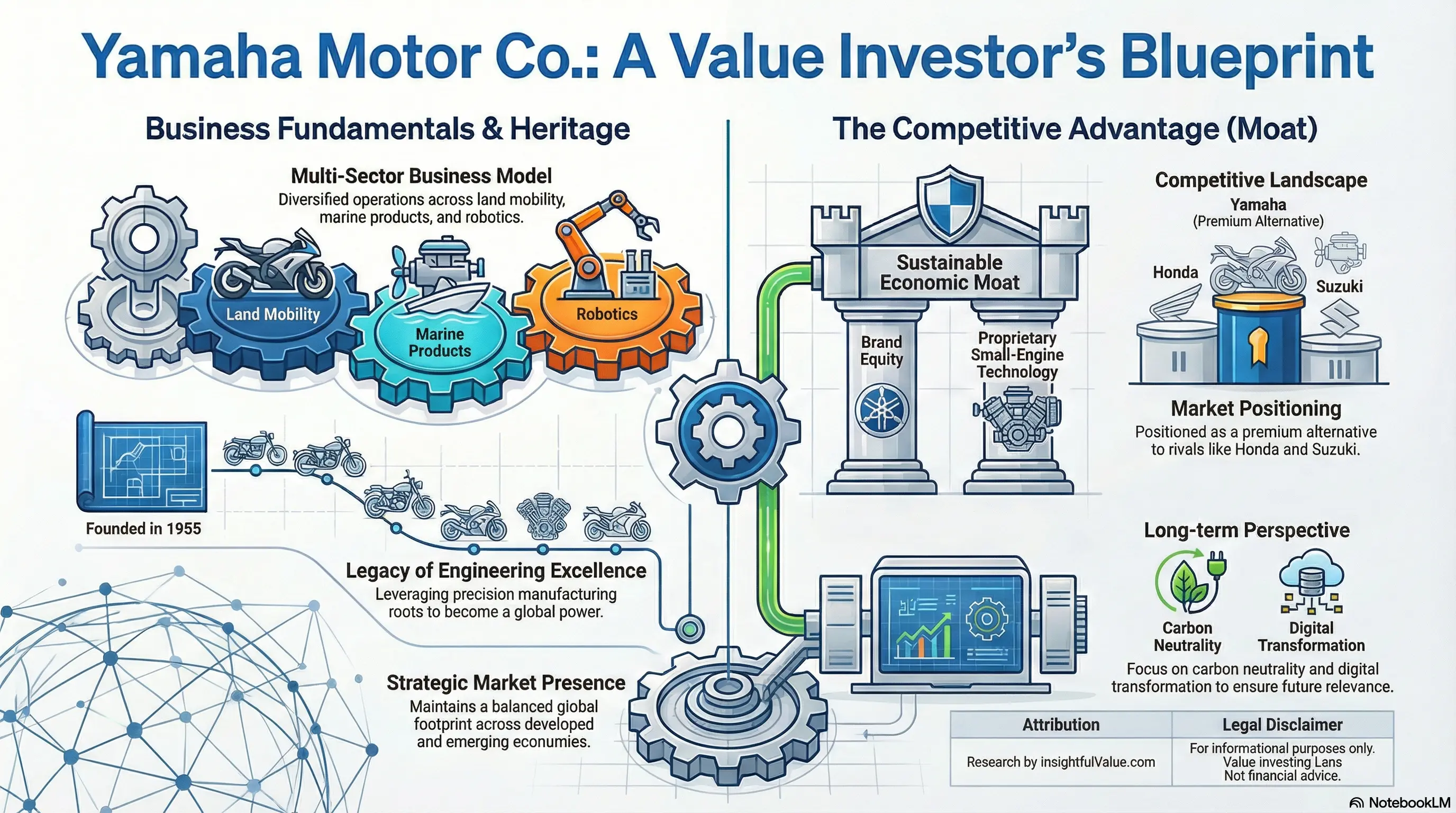
Infographic
Overview
Yamaha Motor Company is a Japanese multinational corporation that produces motorcycles, motorized vehicles, marine products, and other products. It was founded in 1955 by Genichi Kawakami and currently has its headquarters in Iwata, Shizuoka, Japan.
The company's main business is the production and sale of motorcycles, which account for over 80% of its total sales. Yamaha also produces other motorized products such as all-terrain vehicles, snowmobiles, outboard motors, and personal watercraft.
In addition, the company also produces musical instruments, sports equipment, and other products.
Yamaha has a strong presence in the global market, with manufacturing plants and sales offices in various countries including the United States, India, China, and Indonesia. The company's products are sold in over 180 countries worldwide.
Apart from its business operations, Yamaha also has a strong commitment to environmental sustainability and has implemented various initiatives to reduce its carbon footprint and promote a greener society.
The company is also known for its successful racing history, having won numerous championships in motorcycle racing, including the MotoGP World Championship. This racing heritage is reflected in the high-performance and innovative designs of its motorcycles.
In recent years, Yamaha has also been focusing on the development of electric vehicles and advanced robotics technology, showcasing its dedication to continually evolving and adapting to changing market demands.
Overall, Yamaha Motor Company is a renowned global brand known for its high-quality products, technological innovation, and commitment to sustainability and customer satisfaction.
How to explain to a 10 year old kid about the company?

📈 Want to read more about Yamaha Motor?
Sign up for free
or
log in
✍️ Sign up to get "The Checklist Value Investor — A Smarter Way to Pick Stocks" for free
WWFtYWhhIE 1vdG9yIENv bXBhbnkgaX MgYSBiaWcg YnVzaW5lc3 MgdGhhdCBt YWtlcyBhIG xvdCBvZiBj b29sIHRoaW 5ncywgbWFp bmx5IHZlaG ljbGVzIGFu ZCBlbmdpbm VzLiBUaGlu ayBvZiBZYW 1haGEgYXMg YSBmcmllbm QgdGhhdCBo ZWxwcyB5b3 UgZ28gZmFz dCBhbmQgaG F2ZSBmdW4h IFRoZXkgY3 JlYXRlIG1v dG9yY3ljbG VzLCBzY29v dGVycywgYW 5kIGV2ZW4g dGhpbmdzIG xpa2UgYm9h dHMgYW5kIH BlcnNvbmFs IHdhdGVyY3 JhZnQsIHdo aWNoIHlvdS BtaWdodCBr bm93IGFzIG pldCBza2lz LiBUaGV5IG Fsc28gbWFr ZSBBVFZzIC h0aG9zZSBm b3VyLXdoZW VsZWQgdmVo aWNsZXMgeW 91IG1pZ2h0 IHJpZGUgb2 4gdHJhaWxz KSBhbmQgcG FydHMgZm9y IGFsbCB0aG VzZSBtYWNo aW5lcy48Yn I+Tm93LCBo b3cgZG9lcy BZYW1haGEg bWFrZSBtb2 5leT8gV2Vs bCwgd2hlbm V2ZXIgc29t ZW9uZSBidX lzIGEgbW90 b3JjeWNsZS wgYSBib2F0 LCBvciBhbn kgb3RoZXIg cHJvZHVjdC B0aGV5IG1h a2UsIFlhbW FoYSBlYXJu cyBtb25leS Bmcm9tIHRo YXQgc2FsZS 4gVGhleSBh bHNvIHNlbG wgcGFydHMg YW5kIGFjY2 Vzc29yaWVz IGZvciB0aG VpciB2ZWhp Y2xlcywgd2 hpY2ggY2Fu IGhlbHAgdG hlbSBlYXJu IG1vcmUuIF BsdXMsIHRo ZXkgd29yay BoYXJkIHRv IGNyZWF0ZS Bpbm5vdmF0 aXZlIGFuZC BleGNpdGlu ZyBuZXcgcH JvZHVjdHMs IHdoaWNoIG F0dHJhY3Rz IG1vcmUgY3 VzdG9tZXJz Ljxicj5ZYW 1haGEgaXMg c3VjY2Vzc2 Z1bCBmb3Ig YSBmZXcgcm Vhc29ucy4g Rmlyc3QsIH RoZXkgZm9j dXMgb24gcX VhbGl0eS4g UGVvcGxlIH RydXN0IFlh bWFoYSBiZW NhdXNlIHRo ZWlyIHByb2 R1Y3RzIGFy ZSB3ZWxsLW 1hZGUgYW5k IGNhbiBsYX N0IGEgbG9u ZyB0aW1lLC B3aGljaCBt YWtlcyBjdX N0b21lcnMg Y29tZSBiYW NrIGZvciBt b3JlLiBTZW NvbmQsIHRo ZXkgYXJlIG Fsd2F5cyBs b29raW5nIG ZvciBuZXcg aWRlYXMuIF lhbWFoYSBp bnZlc3RzIG luIHJlc2Vh cmNoIGFuZC BkZXZlbG9w bWVudCB0by BmaW5kIGJl dHRlciB3YX lzIHRvIG1h a2UgdGhlaX IgdmVoaWNs ZXMgZmFzdG VyLCBzYWZl ciwgYW5kIG 1vcmUgZnVu IHRvIHVzZS 4gPGJyPkxv b2tpbmcgdG 8gdGhlIGZ1 dHVyZSwgWW FtYWhhIHdp bGwgbGlrZW x5IGtlZXAg YmVpbmcgc3 VjY2Vzc2Z1 bCBiZWNhdX NlIHRoZXkg YXJlIGFkYX B0aW5nIHRv IGNoYW5nZX MuIE1vcmUg cGVvcGxlIG FyZSBpbnRl cmVzdGVkIG luIGVudmly b25tZW50YW xseSBmcmll bmRseSBvcH Rpb25zLCBh bmQgWWFtYW hhIGlzIGNy ZWF0aW5nIG VsZWN0cmlj IHZlaGljbG VzIGFuZCBl bmdpbmVzIH RoYXQgYXJl IGJldHRlci Bmb3Igb3Vy IHBsYW5ldC 4gQWxzbywg dGhleSBoYX ZlIGEgc3Ry b25nIGJyYW 5kIGFuZCBs b3lhbCBjdX N0b21lcnMs IHdoaWNoIG 1lYW5zIG1h bnkgcGVvcG xlIHdpbGwg Y29udGludW UgdG8gYnV5 IGZyb20gdG hlbS4gV2l0 aCB0aGVpci Bmb2N1cyBv biBxdWFsaX R5LCBpbm5v dmF0aW9uLC BhbmQgbWFr aW5nIHByb2 R1Y3RzIHRo YXQgcGVvcG xlIGxvdmUs IFlhbWFoYS BpcyBzZXQg dG8gc3RheS BhIGZhdm9y aXRlIGZvci BtYW55IHll YXJzIHRvIG NvbWUhPGJy Pg==
What is special about the company?
📈 Want to read more about Yamaha Motor?
Sign up for free
or
log in
📥 Get our free eBook now: "The Checklist Value Investor — A Smarter Way to Pick Stocks"
MS4gSW5ub3 ZhdGl2ZSBU ZWNobm9sb2 d5OiBZYW1h aGEgTW90b3 IgQ29tcGFu eSBpcyBrbm 93biBmb3Ig aXRzIGlubm 92YXRpdmUg dGVjaG5vbG 9neSBhbmQg ZW5naW5lZX JpbmcuIFRo ZXkgY29udG ludW91c2x5 IGludmVzdC BpbiByZXNl YXJjaCBhbm QgZGV2ZWxv cG1lbnQgdG 8gaW1wcm92 ZSB0aGVpci Bwcm9kdWN0 cyBhbmQgc3 RheSBhdCB0 aGUgZm9yZW Zyb250IG9m IHRoZSBpbm R1c3RyeS48 YnI+Mi4gRG l2ZXJzZSBQ cm9kdWN0IF JhbmdlOiBZ YW1haGEgb2 ZmZXJzIGEg ZGl2ZXJzZS ByYW5nZSBv ZiBwcm9kdW N0cyBpbmNs dWRpbmcgbW 90b3JjeWNs ZXMsIG1hcm luZSBwcm9k dWN0cywgb3 V0Ym9hcmQg bW90b3JzLC BpbmR1c3Ry aWFsIHJvYm 90cywgcG93 ZXIgcHJvZH VjdHMsIGdl bmVyYXRvcn MsIGFuZCBt b3JlLiBUaG lzIGRpdmVy c2lmaWNhdG lvbiBoZWxw cyB0aGUgY2 9tcGFueSB0 byByZWFjaC BhIHdpZGVy IGN1c3RvbW VyIGJhc2Ug YW5kIHJlZH VjZSByaXNr cyBpbiBjYX NlIG9mIGEg ZG93bnR1cm 4gaW4gb25l IG1hcmtldC BzZWdtZW50 Ljxicj4zLi BMZWdhY3kg b2YgUmFjaW 5nOiBZYW1h aGEgaGFzIG EgcmljaCBo aXN0b3J5IG luIHJhY2lu ZywgcGFydG ljdWxhcmx5 IGluIHRoZS Btb3RvcmN5 Y2xlIGFuZC BtYXJpbmUg aW5kdXN0cm llcy4gVGhl IGtub3dsZW RnZSBhbmQg ZXhwZXJpZW 5jZSBnYWlu ZWQgZnJvbS BwYXJ0aWNp cGF0aW5nIG luIGhpZ2gt bGV2ZWwgY2 9tcGV0aXRp b25zIGhhdm UgdHJhbnNs YXRlZCBpbn RvIHRoZWly IHByb2R1Y3 RzLCBtYWtp bmcgdGhlbS BoaWdoLXBl cmZvcm1hbm NlIGFuZCBy ZWxpYWJsZS 48YnI+NC4g UXVhbGl0eS BhbmQgUmVs aWFiaWxpdH k6IFRoZSBj b21wYW55IG lzIHJlbm93 bmVkIGZvci BpdHMgaGln aC1xdWFsaX R5IGFuZCBy ZWxpYWJsZS Bwcm9kdWN0 cy4gVGhleS BzdHJpdmUg dG8gbWFpbn RhaW4gYSBj b25zaXN0ZW 50IGxldmVs IG9mIHF1YW xpdHkgaW4g YWxsIHRoZW lyIHByb2R1 Y3RzLCByZX N1bHRpbmcg aW4gYSBzdH JvbmcgcmVw dXRhdGlvbi Bmb3IgZHVy YWJpbGl0eS BhbmQgbG9u Zy10ZXJtIH VzZS48YnI+ NS4gRW52aX Jvbm1lbnRh bCBTdXN0YW luYWJpbGl0 eTogWWFtYW hhIGlzIGNv bW1pdHRlZC B0byBwcm9k dWNpbmcgZW 52aXJvbm1l bnRhbGx5IG ZyaWVuZGx5 IHByb2R1Y3 RzIGFuZCBo YXMgaW1wbG VtZW50ZWQg dmFyaW91cy Bpbml0aWF0 aXZlcyB0by ByZWR1Y2Ug Y2FyYm9uIG VtaXNzaW9u cywgaW1wcm 92ZSBmdWVs IGVmZmljaW VuY3ksIGFu ZCB1c2Ugc3 VzdGFpbmFi bGUgbWF0ZX JpYWxzIGlu IG1hbnVmYW N0dXJpbmcu PGJyPjYuIE dsb2JhbCBQ cmVzZW5jZT ogWWFtYWhh IGhhcyBhIH N0cm9uZyBn bG9iYWwgcH Jlc2VuY2Us IHdpdGggbW FudWZhY3R1 cmluZyBmYW NpbGl0aWVz IGFuZCBvZm ZpY2VzIGlu IG92ZXIgMz AgY291bnRy aWVzLiBUaG lzIGFsbG93 cyB0aGUgY2 9tcGFueSB0 byBjYXRlci B0byBkaWZm ZXJlbnQgbW Fya2V0cyBh bmQgYWRhcH QgdG8gbG9j YWwgbmVlZH MgYW5kIHBy ZWZlcmVuY2 VzLjxicj43 LiBDdXN0b2 1lci1DZW50 cmljIEFwcH JvYWNoOiBZ YW1haGEgdm FsdWVzIGl0 cyBjdXN0b2 1lcnMgYW5k IGlzIGNvbW 1pdHRlZCB0 byBwcm92aW RpbmcgdGhl bSB3aXRoIH RoZSBiZXN0 IHByb2R1Y3 RzIGFuZCBz ZXJ2aWNlcy 4gVGhleSBj b25zdGFudG x5IGxpc3Rl biB0byBjdX N0b21lciBm ZWVkYmFjay BhbmQgaW5j b3Jwb3JhdG UgaXQgaW50 byB0aGVpci Bwcm9kdWN0 IGRldmVsb3 BtZW50IHBy b2Nlc3MuPG JyPjguIFN0 cm9uZyBCcm FuZCBJbWFn ZTogWWFtYW hhIGhhcyBl c3RhYmxpc2 hlZCBhIHN0 cm9uZyBicm FuZCBpbWFn ZSwga25vd2 4gZm9yIGl0 cyByZWxpYW JpbGl0eSwg cGVyZm9ybW FuY2UsIGFu ZCBjdXR0aW 5nLWVkZ2Ug dGVjaG5vbG 9neS4gVGhp cyBoYXMgaG VscGVkIHRo ZSBjb21wYW 55IG1haW50 YWluIGEgbG 95YWwgY3Vz dG9tZXIgYm FzZSBhbmQg YXR0cmFjdC BuZXcgY3Vz dG9tZXJzLj xicj45LiBD b3Jwb3JhdG UgU29jaWFs IFJlc3Bvbn NpYmlsaXR5 OiBZYW1haG EgaGFzIGEg c3Ryb25nIG NvbW1pdG1l bnQgdG8gY2 9ycG9yYXRl IHNvY2lhbC ByZXNwb25z aWJpbGl0eS wgc3VwcG9y dGluZyB2YX Jpb3VzIHNv Y2lhbCBhbm QgZW52aXJv bm1lbnRhbC Bpbml0aWF0 aXZlcyBhbm QgcHJvbW90 aW5nIGVkdW NhdGlvbiBh bmQgY29tbX VuaXR5IGRl dmVsb3BtZW 50Ljxicj4x MC4gSW5kdX N0cnkgTGVh ZGVyOiBZYW 1haGEgaXMg YSBsZWFkZX IgaW4gdGhl IGluZHVzdH JpZXMgaXQg b3BlcmF0ZX MgaW4gYW5k IGlzIGNvbn N0YW50bHkg cHVzaGluZy B0aGUgYm91 bmRhcmllcy B3aXRoIGl0 cyBpbm5vdm F0aXZlIHBy b2R1Y3RzIG FuZCB0ZWNo bm9sb2d5Li BUaGUgY29t cGFueSBoYX Mgd29uIG51 bWVyb3VzIG F3YXJkcyBh bmQgYWNjb2 xhZGVzIGZv ciBpdHMgcH JvZHVjdHMs IGZ1cnRoZX Igc29saWRp ZnlpbmcgaX RzIHBvc2l0 aW9uIGFzIG FuIGluZHVz dHJ5IGxlYW Rlci4=
What the company's business model?
📈 Want to read more about Yamaha Motor?
Sign up for free
or
log in
🚀 Don’t miss "The Checklist Value Investor — A Smarter Way to Pick Stocks" — free!
WWFtYWhhIE 1vdG9yIENv bXBhbnkncy BidXNpbmVz cyBtb2RlbC Bmb2N1c2Vz IG9uIHByb2 R1Y2luZyBh IHdpZGUgcm FuZ2Ugb2Yg bW90b3Jpem VkIHByb2R1 Y3RzIGFuZC BzZXJ2aWNl cyBmb3IgY3 VzdG9tZXJz IGFjcm9zcy B0aGUgZ2xv YmUuIFRoaX MgaW5jbHVk ZXMgbWFudW ZhY3R1cmlu ZyBhbmQgc2 VsbGluZyBt b3RvcmN5Y2 xlcywgbWFy aW5lIHByb2 R1Y3RzLCBw b3dlciBwcm 9kdWN0cywg YW5kIG90aG VyIG1vdG9y aXplZCB2ZW hpY2xlcyBz dWNoIGFzIE FUVnMgYW5k IHNub3dtb2 JpbGVzLiA8 YnI+VGhlaX IgYnVzaW5l c3MgbW9kZW wgYWxzbyBp bmNsdWRlcy Bwcm92aWRp bmcgYWZ0ZX Itc2FsZXMg c2VydmljZX MsIHN1Y2gg YXMgbWFpbn RlbmFuY2Ug YW5kIHJlcG FpciBzZXJ2 aWNlcywgYW 5kIHNlbGxp bmcgc3Bhcm UgcGFydHMg YW5kIGFjY2 Vzc29yaWVz IGZvciB0aG VpciBwcm9k dWN0cy4gQW RkaXRpb25h bGx5LCBZYW 1haGEgTW90 b3IgQ29tcG FueSBhbHNv IG9wZXJhdG VzIGEgZmlu YW5jaWFsIH NlcnZpY2Vz IGRpdmlzaW 9uIHRoYXQg cHJvdmlkZX MgZmluYW5j aW5nIGZvci B0aGVpciBw cm9kdWN0cy wgYXMgd2Vs bCBhcyBpbn N1cmFuY2Ug YW5kIGxlYX Npbmcgc2Vy dmljZXMuPG JyPlRoZSBj b21wYW55J3 MgY29yZSB2 YWx1ZXMgYW 5kIGJ1c2lu ZXNzIG9iam VjdGl2ZXMg cmV2b2x2ZS Bhcm91bmQg aW5ub3ZhdG lvbiwgcXVh bGl0eSwgYW 5kIGN1c3Rv bWVyIHNhdG lzZmFjdGlv bi4gVGhleS BzdHJpdmUg dG8gY29udG ludW91c2x5 IGltcHJvdm UgdGhlaXIg cHJvZHVjdH MsIGRldmVs b3AgY3V0dG luZy1lZGdl IHRlY2hub2 xvZ2llcywg YW5kIG9mZm VyIHN1cGVy aW9yIGN1c3 RvbWVyIHNl cnZpY2UgdG 8gbWFpbnRh aW4gdGhlaX IgY29tcGV0 aXRpdmUgZW RnZSBpbiB0 aGUgbWFya2 V0Ljxicj5J biByZWNlbn QgeWVhcnMs IFlhbWFoYS BNb3RvciBD b21wYW55IG hhcyBhbHNv IGV4cGFuZG VkIGl0cyBi dXNpbmVzcy Btb2RlbCB0 byBpbmNsdW RlIHN1c3Rh aW5hYmlsaX R5IGFuZCBl bnZpcm9ubW VudGFsIHJl c3BvbnNpYm lsaXR5LiBU aGUgY29tcG FueSBoYXMg c2V0IGVudm lyb25tZW50 YWwgZ29hbH MgYW5kIGlu aXRpYXRpdm VzLCBzdWNo IGFzIHJlZH VjaW5nIGNh cmJvbiBlbW lzc2lvbnMg YW5kIGltcG xlbWVudGlu ZyBzdXN0YW luYWJsZSBt YW51ZmFjdH VyaW5nIHBy YWN0aWNlcy wgdG8gY29u dHJpYnV0ZS B0byBhIGJl dHRlciBmdX R1cmUgZm9y IHRoZSBwbG FuZXQu
Is AI a threat?
AI has the potential to impact Yamaha Motor Company’s products, services, and competitive positioning in several ways:
1. Substitution: AI-driven technologies may lead to the development of alternative modes of transportation or recreational activities that could compete with Yamaha’s products like motorcycles, marine products, and power sports equipment. For example, advancements in electric vehicles (EVs) and autonomous driving technology could shift consumer preferences away from traditional motorized vehicles. However, Yamaha’s strong brand and diverse product lines may provide a buffer against immediate substitution threats.
2. Disintermediation: In the context of selling motorcycles, marine products, or power sports vehicles, AI can facilitate new channels for direct-to-consumer sales, bypassing traditional dealerships. Online platforms and AI-infused e-commerce solutions could allow manufacturers to engage directly with consumers, which might alter the traditional dealer network. This change could create challenges for Yamaha in terms of managing relationships with existing dealers and ensuring they remain competitive in an evolving marketplace.
3. Margin Pressure: The integration of AI in manufacturing and supply chain management can lead to cost reductions and improved efficiencies. However, competitors that effectively implement AI technologies could gain a significant cost advantage, leading to margin pressure for Yamaha. If competitors offer similar or superior products at lower prices due to enhanced efficiencies, Yamaha may need to invest more in R&D and marketing to maintain its market position, which could stress margins.
Overall, while AI does pose certain threats, Yamaha’s established brand, product innovation, and adaptability will play crucial roles in mitigating these risks. The effectiveness of AI integration in enhancing their competitiveness will determine how well they navigate these challenges.
Sensitivity to interest rates
The sensitivity of Yamaha Motor Company’s earnings, cash flow, and valuation to changes in interest rates can be analyzed from several perspectives:
1. Earnings Sensitivity: Higher interest rates can increase borrowing costs for Yamaha, particularly if the company relies on debt to finance operations or expansion. Increased costs could lead to reduced margins, particularly if Yamaha cannot pass these costs onto consumers through higher prices. Conversely, lower interest rates can lead to lower borrowing costs, potentially boosting earnings.
2. Cash Flow Implications: Cash flow is closely tied to interest expenses. As interest rates rise, the cash outflow related to interest payments increases, which can affect Yamaha’s operational cash flow. This might limit the company’s ability to reinvest in growth opportunities or pay dividends. On the other hand, lower interest rates can enhance cash flow by reducing interest expenses.
3. Valuation Impact: Valuation methods, such as discounted cash flow (DCF) analysis, are sensitive to interest rates through the discount rate applied to future cash flows. Higher interest rates typically lead to a higher discount rate, which reduces the present value of future cash flows and can lead to a lower valuation. Conversely, declining interest rates decrease the discount rate, generally resulting in a higher present valuation of the company’s future cash flows.
4. Consumer Demand: Interest rates also impact consumer behavior. Higher rates can deter consumers from making large purchases, such as motorcycles and recreational vehicles, which can negatively affect Yamaha’s sales. Conversely, lower rates can stimulate demand, enhancing revenue potential.
5. Investment and Expansion: Interest rates influence investment decisions. When rates are low, Yamaha may be more inclined to invest in new projects or technologies, while high rates can lead to a more conservative approach to capital expenditure.
Overall, while Yamaha Motor Company’s earnings, cash flow, and valuation are sensitive to changes in interest rates, the actual impact also depends on market conditions, competitive dynamics, and the specific strategies adopted by the company in response to these changes.
Resilience to the future changes
📈 Want to read more about Yamaha Motor?
Sign up for free
or
log in
👥 Free eBook for new users: "The Checklist Value Investor — A Smarter Way to Pick Stocks"
T25lIHJlYW xpc3RpYyBz Y2VuYXJpby B0aGF0IGNv dWxkIHBlcm 1hbmVudGx5 IGltcGFpci BZYW1haGEg TW90b3IgQ2 9tcGFueeKA mXMgZWNvbm 9taWNzIG92 ZXIgdGhlIG 5leHQgM+KA kzUgeWVhcn MgaXMgYSBz aWduaWZpY2 FudCBzaGlm dCBpbiBjb2 5zdW1lciBw cmVmZXJlbm NlcyB0b3dh cmRzIHN1c3 RhaW5hYmxl IHRyYW5zcG 9ydGF0aW9u IHNvbHV0aW 9ucywgY291 cGxlZCB3aX RoIHN0cmlu Z2VudCBlbn Zpcm9ubWVu dGFsIHJlZ3 VsYXRpb25z IGFjcm9zcy BrZXkgbWFy a2V0cy4gSW YgZWxlY3Ry aWMgdmVoaW NsZXMgKEVW cykgYW5kIG dyZWVuZXIg bW9kZXMgb2 YgdHJhbnNw b3J0IGdhaW 4gb3Zlcndo ZWxtaW5nIH BvcHVsYXJp dHksIFlhbW FoYSwgd2hp Y2ggaGFzIG EgZGl2ZXJz aWZpZWQgcG 9ydGZvbGlv IGluY2x1ZG luZyBtb3Rv cmN5Y2xlcy wgbWFyaW5l IHByb2R1Y3 RzLCBhbmQg cG93ZXIgZX F1aXBtZW50 LCBjb3VsZC BmYWNlIGNo YWxsZW5nZX MgaW4gYWRh cHRpbmcgaX RzIGV4aXN0 aW5nIHByb2 R1Y3QgbGlu ZXMgcXVpY2 tseSBlbm91 Z2guPGJyPk luIHRoaXMg c2NlbmFyaW 8sIGlmIFlh bWFoYSBmYW lscyB0byBw aXZvdCBlZm ZlY3RpdmVs eSB0b3dhcm RzIGVsZWN0 cmljIGFuZC BlbnZpcm9u bWVudGFsbH kgZnJpZW5k bHkgb3B0aW 9ucywgdGhl IGZvbGxvd2 luZyBpbXBh Y3RzIGNvdW xkIGJlIGV4 cGVjdGVkOj xicj4xLiA8 c3Ryb25nPk 1hcmdpbnM8 L3N0cm9uZz 46IFRoZSBj b21wYW554o CZcyBncm9z cyBtYXJnaW 5zIGNvdWxk IHNocmluay BzaWduaWZp Y2FudGx5IG FzIHNhbGVz IG9mIHRyYW RpdGlvbmFs IGdhcy1wb3 dlcmVkIHZl aGljbGVzIG RlY2xpbmUu IFlhbWFoYS BtaWdodCBm aW5kIGl0c2 VsZiB3aXRo IGV4Y2Vzcy BpbnZlbnRv cnkgb2YgZX hpc3Rpbmcg cHJvZHVjdH Mgd2hpbGUg ZmFjaW5nIG luY3JlYXNl ZCBwcmVzc3 VyZSB0byBp bnZlc3QgaW 4gUiZhbXA7 RCBmb3IgZW xlY3RyaWMg dmVoaWNsZX MuIFRoZSB0 cmFuc2l0aW 9uIGNvc3Rz IGNvdWxkIG Z1cnRoZXIg Y29tcHJlc3 Mgb3BlcmF0 aW5nIG1hcm dpbnMgYXMg dGhlIGNvbX BhbnkgcmVh bGxvY2F0ZX MgcmVzb3Vy Y2VzLjxicj 4yLiA8c3Ry b25nPkNhc2 ggRmxvdzwv c3Ryb25nPj ogQ2FzaCBm bG93IGZyb2 0gb3BlcmF0 aW9ucyB3b3 VsZCBsaWtl bHkgZGVjbG luZSBhcyBy ZXZlbnVlIG RlY3JlYXNl cyBmcm9tIH RyYWRpdGlv bmFsIHNlZ2 1lbnRzLiBJ ZiB0aGUgY2 9tcGFueSBh bHNvIHN0cn VnZ2xlcyB0 byBtYWtlIH RpbWVseSBp bnZlc3RtZW 50cyBpbnRv IEVWIHRlY2 hub2xvZ2ll cywgaXQgY2 91bGQgZmFj ZSBjYXNoIG Zsb3cgY29u c3RyYWludH MsIGltcGFj dGluZyBpdH MgYWJpbGl0 eSB0byBmdW 5kIG9uZ29p bmcgb3Blcm F0aW9ucywg ZGl2aWRlbm RzLCBvciBu ZXcgcHJvZH VjdCBkZXZl bG9wbWVudC 48YnI+My4g PHN0cm9uZz 5CYWxhbmNl IFNoZWV0PC 9zdHJvbmc+ OiBZYW1haG HigJlzIGJh bGFuY2Ugc2 hlZXQgbWF5 IHdlYWtlbi BhcyBhc3Nl dHMgcmVsYX RlZCB0byB0 cmFkaXRpb2 5hbCBnYXNv bGluZSB2ZW hpY2xlcyBk ZWNyZWFzZS BpbiB2YWx1 ZS4gSWYgc2 FsZXMgYXJl IHNpZ25pZm ljYW50bHkg aW1wYWN0ZW QgYW5kIHRo ZSBjb21wYW 55IGluY3Vy cyBzdWJzdG FudGlhbCBs b3NzZXMsIH RoaXMgY291 bGQgbGVhZC B0byBhIGRl dGVyaW9yYX Rpb24gb2Yg ZXF1aXR5Li BJbmNyZWFz ZWQgYm9ycm 93aW5nIHRv IGZ1bmQgdG hlIHRyYW5z aXRpb24gdG 8gZWxlY3Ry aWMgY291bG QgcmFpc2Ug ZGVidCBsZX ZlbHMsIGZ1 cnRoZXIgc3 RyZXNzaW5n IHRoZSBiYW xhbmNlIHNo ZWV0Ljxicj 5PdmVyYWxs LCBpbiB0aG lzIHNjZW5h cmlvLCBZYW 1haGEgTW90 b3IgQ29tcG FueSBjb3Vs ZCBzZWUgYS BkZWNsaW5l IGluIHByb2 ZpdGFiaWxp dHkgYW5kIG 1hcmtldCBz aGFyZSwgcm VzdWx0aW5n IGluIGEgY2 hhbGxlbmdp bmcgZmluYW 5jaWFsIGxh bmRzY2FwZS B0aGF0IG1h eSB0YWtlIH llYXJzIHRv IHJlY292ZX IgZnJvbSBp ZiBpdCBjYW 5ub3QgYWRh cHQgdG8gdG hlIG5ldyBt YXJrZXQgZG VtYW5kcyBl ZmZlY3Rpdm VseS48YnI+
Interesting facts about the company
📈 Want to read more about Yamaha Motor?
Sign up for free
or
log in
🎁 Free download! "The Checklist Value Investor — A Smarter Way to Pick Stocks"
CiAgICAgIC AgICAgIDxk aXYgc3R5bG U9J3dpZHRo OiAxMDAlOy BkaXNwbGF5 OiBmbGV4Oy BqdXN0aWZ5 LWNvbnRlbn Q6IGNlbnRl cjsnPgogIC AgICAgICAg ICAgICAgPG RpdiBzdHls ZT0nCiAgIC AgICAgICAg ICAgICAgIC AgZGlzcGxh eTogZmxleD sKICAgICAg ICAgICAgIC AgICAgICBh bGlnbi1pdG VtczogY2Vu dGVyOwogIC AgICAgICAg ICAgICAgIC AgIGJhY2tn cm91bmQtY2 9sb3I6ICNm MGY0Zjg7Ci AgICAgICAg ICAgICAgIC AgICAgYm9y ZGVyOiAxcH ggc29saWQg I2QxZTNmMD sKICAgICAg ICAgICAgIC AgICAgICBi b3JkZXItcm FkaXVzOiAx MHB4OwogIC AgICAgICAg ICAgICAgIC AgIHBhZGRp bmc6IDEwcH g7CiAgICAg ICAgICAgIC AgICAgICAg bWFyZ2luOi AyMHB4IDA7 CiAgICAgIC AgICAgICAg ICAgICAgZm 9udC1mYW1p bHk6ICJTZW dvZSBVSSIs IFJvYm90by wgc2Fucy1z ZXJpZjsKIC AgICAgICAg ICAgICAgIC AgICBib3gt c2hhZG93Oi AwIDJweCA2 cHggcmdiYS gwLCAwLCAw LCAwLjA1KT sKICAgICAg ICAgICAgIC AgICAgICBt YXgtd2lkdG g6IDkwMHB4 OwogICAgIC AgICAgICAg ICAgICAgIH dpZHRoOiAx MDAlOyc+Cg ogICAgICAg ICAgICAgIC AgICAgIDxp bWcgc3JjPS Jhc3NldHMv bG9nb3Mvbz M0amVwbDRj OG9yT0JJek RFMTUud2Vi cCIgYWx0PS JZYW1haGEg TW90b3IiIH RpdGxlPSJZ YW1haGEgTW 90b3IiICBj bGFzcz0iaW 1nLWZsdWlk IiBoZWlnaH Q9NTAgd2lk dGg9NTAgbG 9hZGluZz0n bGF6eScgc3 R5bGU9J2Jv cmRlci1yYW RpdXM6IDZw eDsnPgoKIC AgICAgICAg ICAgICAgIC AgICA8ZGl2 IHN0eWxlPS dmbGV4OiAx OyB0ZXh0LW FsaWduOiBj ZW50ZXI7IG 1hcmdpbi1s ZWZ0OiA1cH g7Jz4KICAg ICAgICAgIC AgICAgICAg ICAgICAgPH Agc3R5bGU9 J2ZvbnQtc2 l6ZTogMjZw eDsgY29sb3 I6ICMzMzM7 IG1hcmdpbi 1ib3R0b206 IDE1cHg7Jz 4KICAgICAg ICAgICAgIC AgICAgICAg ICAgICAgIP Cfk4ggV2Fu dCB0byByZW FkIG1vcmUg YWJvdXQgWW FtYWhhIE1v dG9yPwogIC AgICAgICAg ICAgICAgIC AgICAgICA8 L3A+CgogIC AgICAgICAg ICAgICAgIC AgICAgICA8 YSBocmVmPS dpbmRleC5w aHA/cGFnZT 1zaWdudXAn IHN0eWxlPS cKICAgICAg ICAgICAgIC AgICAgICAg ICAgICAgIG JhY2tncm91 bmQtY29sb3 I6ICMwMDdC RkY7CiAgIC AgICAgICAg ICAgICAgIC AgICAgICAg ICBjb2xvcj ogI2ZmZjsK ICAgICAgIC AgICAgICAg ICAgICAgIC AgICAgIHBh ZGRpbmc6ID EwcHggMjBw eDsKICAgIC AgICAgICAg ICAgICAgIC AgICAgICAg IGJvcmRlci 1yYWRpdXM6 IDVweDsKIC AgICAgICAg ICAgICAgIC AgICAgICAg ICAgIHRleH QtZGVjb3Jh dGlvbjogbm 9uZTsKICAg ICAgICAgIC AgICAgICAg ICAgICAgIC AgIGZvbnQt d2VpZ2h0Oi Bib2xkOwog ICAgICAgIC AgICAgICAg ICAgICAgIC AgICAgbWFy Z2luLXJpZ2 h0OiAxMHB4 OwogICAgIC AgICAgICAg ICAgICAgIC AgICAgICAg dHJhbnNpdG lvbjogYmFj a2dyb3VuZC 1jb2xvciAw LjNzIGVhc2 U7JwogICAg ICAgICAgIC AgICAgICAg ICAgICAgIC Agb25tb3Vz ZW92ZXI9J3 RoaXMuc3R5 bGUuYmFja2 dyb3VuZENv bG9yPSIjMD A1NmIzIicK ICAgICAgIC AgICAgICAg ICAgICAgIC AgICAgIG9u bW91c2VvdX Q9J3RoaXMu c3R5bGUuYm Fja2dyb3Vu ZENvbG9yPS IjMDA3QkZG Iic+CiAgIC AgICAgICAg ICAgICAgIC AgICAgICAg ICBTaWduIH VwIGZvciBm cmVlCiAgIC AgICAgICAg ICAgICAgIC AgICAgIDwv YT4KCiAgIC AgICAgICAg ICAgICAgIC AgICAgIDxz cGFuIHN0eW xlPSdtYXJn aW46IDAgOH B4OyBjb2xv cjogIzU1NT snPm9yPC9z cGFuPgoKIC AgICAgICAg ICAgICAgIC AgICAgICAg PGEgaHJlZj 0naW5kZXgu cGhwP3BhZ2 U9bG9naW4n IHN0eWxlPS cKICAgICAg ICAgICAgIC AgICAgICAg ICAgICAgIG NvbG9yOiAj MDA3QkZGOw ogICAgICAg ICAgICAgIC AgICAgICAg ICAgICAgdG V4dC1kZWNv cmF0aW9uOi B1bmRlcmxp bmU7CiAgIC AgICAgICAg ICAgICAgIC AgICAgICAg ICBmb250LX dlaWdodDog NTAwOyc+Ci AgICAgICAg ICAgICAgIC AgICAgICAg ICAgICBsb2 cgaW4KICAg ICAgICAgIC AgICAgICAg ICAgICAgPC 9hPgoKCiAg ICAgICAgIC AgICAgICAg ICAgICAgID xwIHN0eWxl PSdtYXJnaW 4tdG9wOiAx NXB4OyBmb2 50LXNpemU6 IDEzcHg7IG ZvbnQtd2Vp Z2h0OiBib2 xkOyBjb2xv cjogI2QzMm YyZjsnPgog ICAgICAgIC AgICAgICAg ICAgICAgIC AgICAg8J+R pSBGcmVlIG VCb29rIGZv ciBuZXcgdX NlcnM6IDxp PiJUaGUgQ2 hlY2tsaXN0 IFZhbHVlIE ludmVzdG9y IOKAlCBBIF NtYXJ0ZXIg V2F5IHRvIF BpY2sgU3Rv Y2tzIjwvaT 4KICAgICAg ICAgICAgIC AgICAgICAg ICAgPC9wPg oKICAgICAg ICAgICAgIC AgICAgICAg ICAgPCEtLQ ogICAgICAg ICAgICAgIC AgICAgICAg ICA8ZGl2IH N0eWxlPSdt YXJnaW4tdG 9wOiAxMnB4 OyBmb250LX NpemU6IDEz cHg7IGNvbG 9yOiAjNDQ0 Oyc+CiAgIC AgICAgICAg ICAgICAgIC AgICAgICAg ICBTaWduIH VwIG5vdyBh bmQgZ2V0IG 91ciBmcmVl IGVCb29rIA ogICAgICAg ICAgICAgIC AgICAgICAg ICAgICAgPG I+VGhlIENo ZWNrbGlzdC BWYWx1ZSBJ bnZlc3Rvci DigJQgQSBT bWFydGVyIF dheSB0byBQ aWNrIFN0b2 NrczwvYj4K ICAgICAgIC AgICAgICAg ICAgICAgIC AgPC9kaXY+ CiAgICAgIC AgICAgICAg ICAgICAgIC AgIC0tPgog ICAgICAgIC AgICAgICAg ICAgICAgIC A8IS0tCiAg ICAgICAgIC AgICAgICAg ICAgICAgID xkaXYgc3R5 bGU9J21hcm dpbi10b3A6 IDE2cHg7IG ZvbnQtc2l6 ZTogMTRweD sgY29sb3I6 ICM0NDQ7IG ZvbnQtZmFt aWx5OiAtYX BwbGUtc3lz dGVtLCBCbG lua01hY1N5 c3RlbUZvbn QsIFNlZ29l IFVJLCBSb2 JvdG8sIEhl bHZldGljYS BOZXVlLCBz YW5zLXNlcm lmOyBsaW5l LWhlaWdodD ogMS42Oyc+ CiAgICAgIC AgICAgICAg ICAgICAgIC AgICAgICBI YXZlIHlvdS BoZWFyZCBh Ym91dCBvdX Igc2hvcnQg PHN0cm9uZy BzdHlsZT0n Zm9udC13ZW lnaHQ6IDYw MDsnPkRhaW x5IFZpZGVv IE5ld3NsZX R0ZXI8L3N0 cm9uZz4/Ci AgICAgICAg ICAgICAgIC AgICAgICAg ICAgICA8YS BocmVmPSdo dHRwczovL3 d3dy5pbnNp Z2h0ZnVsdm FsdWUuY29t L25ld3NsZX R0ZXIucGhw JyB0YXJnZX Q9J19ibGFu aycgc3R5bG U9J2NvbG9y OiAjMDA3Qk ZGOyB0ZXh0 LWRlY29yYX Rpb246IG5v bmU7IGZvbn Qtd2VpZ2h0 OiA1MDA7IG 1hcmdpbi1s ZWZ0OiA2cH g7Jz4KICAg ICAgICAgIC AgICAgICAg ICAgICAgIC AgICAgICBG aW5kIG91dC Btb3JlCiAg ICAgICAgIC AgICAgICAg ICAgICAgIC AgICA8L2E+ CiAgICAgIC AgICAgICAg ICAgICAgIC AgIDwvZGl2 PgogICAgIC AgICAgICAg ICAgICAgIC AgICAtLT4K ICAgICAgIC AgICAgICAg ICAgICA8L2 Rpdj4KICAg ICAgICAgIC AgICAgIDwv ZGl2PgogIC AgICAgICAg ICA8L2Rpdj 4KICAgICAg ICAgICAgCi AgICAgICAg CiAgICAgIC AgPHNwYW4g Y2xhc3M9J2 JsdXJyZWQt dGV4dCc+Ci AgICAgICAg ICAgIE1TNG dXV0Z0WVcg aGhJSGRoY3 lCbSBiM1Z1 WkdWa0lHIG x1SURFNU5U VWcgWW5rZ1 ZHOXlZVyB0 MWMzVWdXV0 Z0IFlXaGhJ R0Z6SUcgRW diWFZ6YVdO aCBiQ0JwYm 5OMGNuIFZ0 Wlc1MElHMW ggYm5WbVlX TjBkWCBKbG NpNDhZbkkr IE1pNGdWR2 hsSUcgTnZi WEJoYm5uaS BnSmx6SUda cGNuIE4wSU hCeWIyUjEg WTNRZ2QyRn pJRyBFZ2Nt VmxaQ0J2IG NtZGhiaXdn ZDIgaHBZMm dnZDJGeiBJ R0ZrWVhCMF pXIFFnWm5K dmJTQmggSU hCdmNIVnNZ WCBJZ2FXMX diM0owIFpX UWdiVzlrWl cgd3VQR0p5 UGpNdSBJRW x1SURFNU5U IFlzSUZsaG JXRm8gWVNC bGVIQmhibS BSbFpDQnBi blJ2IElIUm 9aU0J0YjMg UnZjbU41WT J4bCBJRzFo Y210bGRDIE JoYm1RZ2NI SnYgWkhWal pXUWdhWCBS eklHWnBjbk 4wIElHMXZk Rzl5WTMgbG piR1VzSUhS byBaU0JaUV MweExqIHhp Y2o0MExpQl UgYUdVZ1ky OXRjRyBGdW VlS0FtWE1n IGJXOTBiM0 pqZVcgTnNa U0JrYVhacC BjMmx2YmlC eGRXIGxqYT J4NUlHZGgg YVc1bFpDQm hkSCBSbGJu UnBiMjRnIF ptOXlJR2ww Y3kgQnlZV0 5wYm1jZyBj M1ZqWTJWem N5IHdnZDJs dWJtbHUgWn lCdWRXMWxj bSA5MWN5Qm phR0Z0IGNH bHZibk5vYV ggQnpJR2x1 SUhSbyBaU0 F4T1RZd2N5 IDQ4WW5JK0 5TNGcgU1c0 Z01UazNNeS B3Z1dXRnRZ V2hoIElHbH VkSEp2Wkgg VmpaV1FnZE dobCBJSGR2 Y214azRvIE NaY3lCbWFY SnogZENCbW RXeHNlUyBC a2FXZHBkR0 ZzIElITjVi blJvWlggTn BlbVZ5TENC MCBhR1VnV1 dGdFlXIGho SUVOVExUZ3 cgTGp4aWNq NDJMaSBCWl lXMWhhR0Vn IFpXNTBaWE psWkMgQjBh R1VnWVhWMC BiMjF2WW1s c1pTIEJ0WV hKclpYUWcg YVc0Z2RHaG xJRCBFNU9E QnpMQ0J3IG NtOWtkV05w Ym0gY2daVz VuYVc1bCBj eUJtYjNJZ1 JtIDl5YlhW c1lTQlAgYm 1VZ2NtRmph VyA1bklIUm xZVzF6IElH RnVaQ0JzWV ggUmxjaUJ5 Wld4bCBZWE 5wYm1jZ2FY IFJ6SUc5M2 JpQnMgYVc1 bElHOW1JSC BOMGNtVmxk Q0JqIFlYSn pManhpY2og NDNMaUJVYU dVZyBZMjl0 Y0dGdWVTIE JvWVhNZ1lT QnMgYjI1bk lHaHBjMyBS dmNua2diMl lnIGFXNXVi M1poZEcgbH ZiaXdnYVc1 MCBjbTlrZF dOcGJtIGNn ZEdobElIZH YgY214azRv Q1pjeSBCbW FYSnpkQ0J0 IGFXNXBJR0 pwYTIgVWdh VzRnTVRrMi BOeXdnZEdo bElHIFpwY2 5OMElFRlUg VmlCcGJpQX hPVCBnd0xD QmhibVFnIG RHaGxJR1pw Y24gTjBJSE JsY25OdiBi bUZzSUhkaG RHIFZ5WTNK aFpuUWcgYV c0Z01UazRO aSA0OFluSS tPQzRnIFNX NGdZV1JrYV ggUnBiMjRn ZEc4ZyBiWF Z6YVdOaGJD IEJwYm5OMG NuVnQgWlc1 MGN5QmhibS BRZ2JXOTBi M0pqIGVXTn NaWE1zSUYg bGhiV0ZvWV NCaCBiSE52 SUhCeWIyIF IxWTJWeklI QnkgYjJSMV kzUnpJRyBs dUlIUm9aU0 JtIGFXVnNa SE1nYjIgWW dZWFZrYVc4 ZyBaWEYxYV hCdFpXIDUw TENCbGJHVm ogZEhKdmJt bGpjeSB3Z2 MzQnZjblJ6 IElHVnhkV2 x3YlcgVnVk Q3dnYldGeS BhVzVsSUhC eWIyIFIxWT NSekxDQmgg Ym1RZ2JXOX laUyA0OFlu SStPUzRnIF ZHaGxJR052 YlggQmhibm tnYUdGeiBJ R0VnYzNSeW IyIDVuSUdO dmJXMXAgZE cxbGJuUWdk RyA4Z1pXNT JhWEp2IGJt MWxiblJoYk MgQnpkWE4w WVdsdSBZV0 pwYkdsMGVT IEJoYm1RZ2 FHRnogSUds dWRtVnpkRy BWa0lHbHVJ SFJsIFkyaH ViMnh2WjIg bGxjeUJtYj NJZyBjbVZr ZFdOcGJtIG NnWlcxcGMz TnAgYjI1ek lHRnVaQyBC a1pYWmxiRz l3IGFXNW5J R1ZqYnkgMW 1jbWxsYm1S cyBlU0J3Y2 05a2RXIE4w Y3k0OFluSS sgTVRBdUlF RnpJRyA5bU lESXdNakVz IElGbGhiV0 ZvWVMgQnBj eUIwYUdVZy BkMjl5YkdU aWdKIGx6SU d4aGNtZGwg YzNRZ2JXRn VkVyBaaFkz UjFjbVZ5IE lHOW1JRzEx YzIgbGpZV3 dnYVc1eiBk SEoxYldWdW RIIE1nWVc1 a0lHRWcgYk dWaFpHbHVa eSBCaWNtRn VaQ0JwIGJp QjBhR1VnYl cgOTBiM0pq ZVdOcyBaU0 JoYm1RZ2JX IEZ5YVc1bE lHbHUgWkhW emRISnBaWC BNdQogICAg ICAgIDwvc3 Bhbj4KICAg ICAgICAKIC AgICAgICA=
See Company Q&A
📊 Get full analytics about Yamaha Motor
Sign up for free
or
log in
🚀 Don’t miss "The Checklist Value Investor — A Smarter Way to Pick Stocks" — free!