Company at a Glance
Price
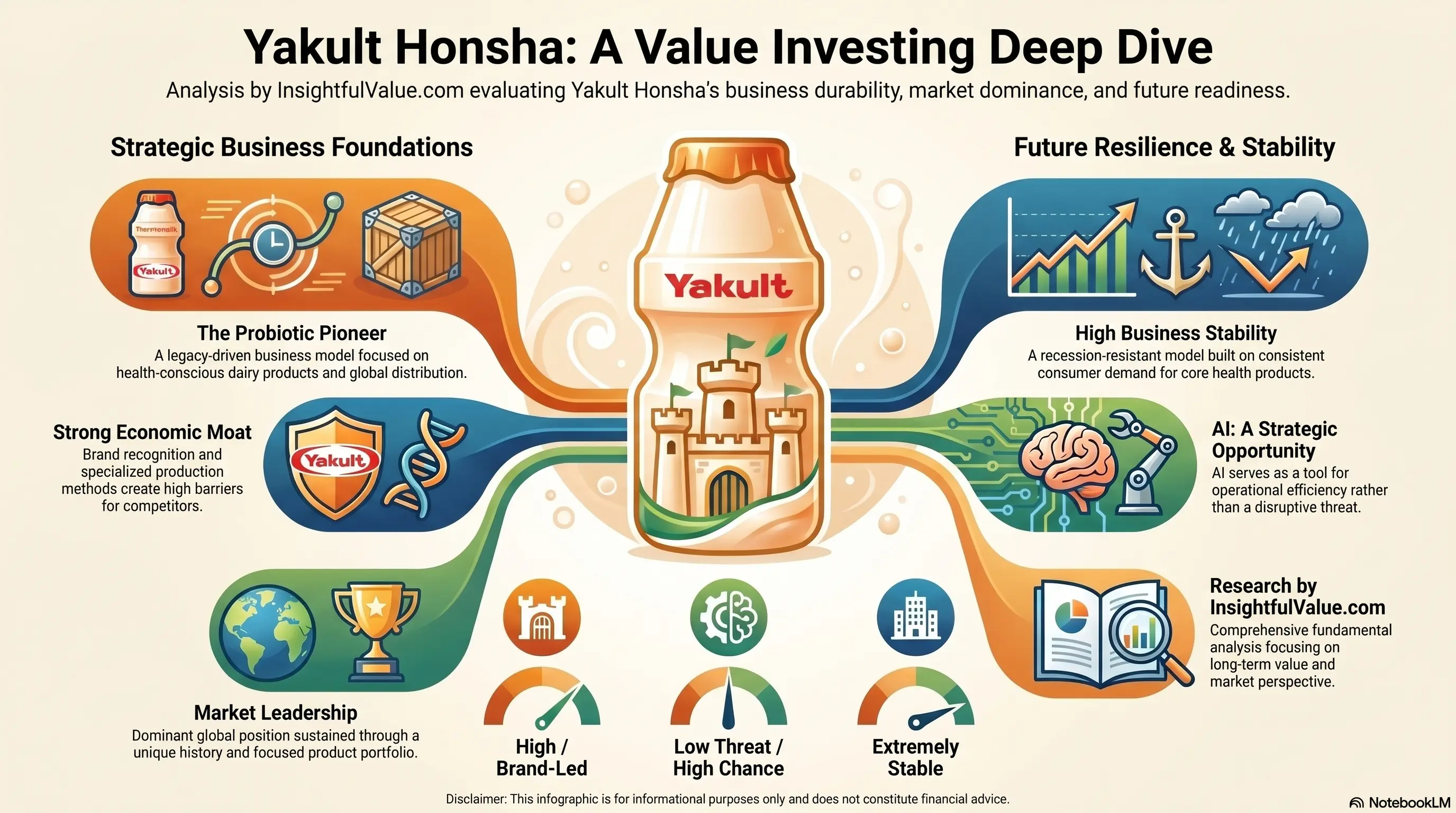
Infographic
Overview
Yakult Honsha Co., Ltd. is a Japanese company that specializes in the production and distribution of probiotic beverages and related products. The company was founded in 1935 by microbiologist Dr. Minoru Shirota, who discovered a strain of bacteria called Lactobacillus casei Shirota which he believed had health benefits.
The company's flagship product is Yakult, a probiotic drink containing the strain of bacteria discovered by Dr. Shirota. Yakult is sold in over 40 countries and regions around the world and is known for its small, iconic bottle.
In addition to Yakult, Yakult Honsha also produces and sells a range of other probiotic drinks and food products, including Yakult Ace, Yakult 400, and Yakult Light. The company also offers skincare and cosmetic products under the brand name Lactis.
Yakult Honsha has expanded its business globally, with operations in Asia, Europe, North America, and Latin America. The company is committed to promoting health and wellness through its products, and conducts research and development in the field of probiotics.
The company also has a strong commitment to sustainability, with initiatives such as using renewable energy sources and implementing waste reduction measures in its production processes.
Overall, Yakult Honsha is a well-established company with a strong presence in the global market, known for its distinctive product and commitment to promoting health and sustainability.
How to explain to a 10 year old kid about the company?

📈 Want to read more about Yakult Honsha?
Sign up for free
or
log in
📚 Your free copy of "The Checklist Value Investor — A Smarter Way to Pick Stocks" is waiting
WWFrdWx0IE hvbnNoYSBp cyBhIGNvbX BhbnkgdGhh dCBtYWtlcy BhIHBvcHVs YXIgZHJpbm sgY2FsbGVk IFlha3VsdC 4gVGhpcyBk cmluayBpcy BhIGtpbmQg b2YgeW9ndX J0IGRyaW5r IHRoYXQgaX MgZ29vZCBm b3Igb3VyIH R1bW1pZXMg YmVjYXVzZS BpdCBoYXMg ZnJpZW5kbH kgYmFjdGVy aWEgaW4gaX QuIFRoZXNl IGJhY3Rlcm lhIGhlbHAg a2VlcCBvdX Igc3RvbWFj aHMgaGVhbH RoeSBhbmQg aGFwcHkuPG JyPlRoZSB3 YXkgWWFrdW x0IG1ha2Vz IG1vbmV5IG lzIGJ5IHNl bGxpbmcgdG hlc2UgdGFz dHkgZHJpbm tzIHRvIHBl b3BsZSBhbG wgb3ZlciB0 aGUgd29ybG QuIFRoZXkg aGF2ZSBtYW 55IGRpZmZl cmVudCB0eX BlcyBvZiBZ YWt1bHQgZH JpbmtzLCBh bmQgdGhleS BhbHNvIHNl bGwgb3RoZX IgcHJvZHVj dHMgbGlrZS Bwcm9iaW90 aWNzLCB3aG ljaCBhcmUg Z29vZCBmb3 IgaGVhbHRo LCB0b28uIF Blb3BsZSBs aWtlIHRvIG J1eSBZYWt1 bHQgYmVjYX VzZSBpdCB0 YXN0ZXMgZ2 9vZCBhbmQg aGVscHMgd2 l0aCBkaWdl c3Rpb24sIH NvIHRoZXkg a2VlcCBhc2 tpbmcgZm9y IG1vcmUuPG JyPllha3Vs dCBpcyBzdW NjZXNzZnVs IGZvciBhIG ZldyByZWFz b25zLiBGaX JzdCwgaXQg aGFzIGJlZW 4gYXJvdW5k IGZvciBhIG xvbmcgdGlt ZSwgc2luY2 UgMTkzNSEg UGVvcGxlIH RydXN0IHRo ZSBicmFuZC BiZWNhdXNl IHRoZXkga2 5vdyBpdCBo YXMgaGVscG VkIG1hbnkg cGVvcGxlIG ZlZWwgYmV0 dGVyLiBTZW NvbmQsIHRo ZSBjb21wYW 55IHdvcmtz IHJlYWxseS BoYXJkIHRv IGNyZWF0ZS Bnb29kIHF1 YWxpdHkgcH JvZHVjdHMg dGhhdCBhcm UgaGVhbHRo eS4gTGFzdG x5LCB0aGV5 IGRvIGEgbG 90IG9mIGFk dmVydGlzaW 5nIGFuZCBt YXJrZXRpbm cgdG8gbGV0 IHBlb3BsZS Brbm93IGFi b3V0IHRoZW lyIGRyaW5r cy48YnI+VG 8gc3RheSBz dWNjZXNzZn VsIGluIHRo ZSBmdXR1cm UsIFlha3Vs dCBpcyBsaW tlbHkgdG8g a2VlcCBtYW tpbmcgbmV3 IGFuZCBleG NpdGluZyBw cm9kdWN0cy 4gVGhleSBh bHNvIHBheS BhdHRlbnRp b24gdG8gd2 hhdCBwZW9w bGUgd2FudC wgbGlrZSBo ZWFsdGhpZX Igb3B0aW9u cyBvciBkaW ZmZXJlbnQg Zmxhdm9ycy 4gQXMgbW9y ZSBhbmQgbW 9yZSBwZW9w bGUgYXJvdW 5kIHRoZSB3 b3JsZCBsZW FybiBob3cg aW1wb3J0YW 50IGl0IGlz IHRvIHRha2 UgY2FyZSBv ZiB0aGVpci BoZWFsdGgs IFlha3VsdC B3aWxsIGNv bnRpbnVlIH RvIGJlIGEg ZmF2b3JpdG UgY2hvaWNl IGZvciBtYW 55Ljxicj4=
What is special about the company?
📈 Want to read more about Yakult Honsha?
Sign up for free
or
log in
📥 Get our free eBook now: "The Checklist Value Investor — A Smarter Way to Pick Stocks"
MS4gT3JpZ2 luIGFuZCBG b3VuZGVyOi BZYWt1bHQg SG9uc2hhIH dhcyBmb3Vu ZGVkIGluID E5MzUgYnkg bWljcm9iaW 9sb2dpc3Qg TWlub3J1IF NoaXJvdGEg aW4gSmFwYW 4uIEhlIHdh cyB0aGUgZm lyc3QgcGVy c29uIHRvIG lzb2xhdGUg YW5kIGN1bH R1cmUgYSBz dHJhaW4gb2 YgYmVuZWZp Y2lhbCBiYW N0ZXJpYSBj YWxsZWQgTG FjdG9iYWNp bGx1cyBjYX NlaSBTaGly b3RhLCB3aG ljaCBpcyB1 c2VkIGluIF lha3VsdCBw cm9kdWN0cy 48YnI+Mi4g UGlvbmVlcn MgaW4gUHJv YmlvdGljcz ogWWFrdWx0 IHdhcyBvbm Ugb2YgdGhl IGZpcnN0IG NvbXBhbmll cyB0byBpbn Ryb2R1Y2Ug cHJvYmlvdG ljIGRhaXJ5 IHByb2R1Y3 RzIHRvIHRo ZSBtYXJrZX QuIEl0cyBm bGFnc2hpcC Bwcm9kdWN0 LCBZYWt1bH QsIGlzIGEg ZmVybWVudG VkIG1pbGsg ZHJpbmsgY2 9udGFpbmlu ZyBMYWN0b2 JhY2lsbHVz IGNhc2VpIF NoaXJvdGEs IHdoaWNoIG lzIGtub3du IGZvciBpdH MgZGlnZXN0 aXZlIGFuZC BpbW11bmUg aGVhbHRoIG JlbmVmaXRz Ljxicj4zLi BTdHJvbmcg UmVzZWFyY2 ggYW5kIERl dmVsb3BtZW 50OiBUaGUg Y29tcGFueS BoYXMgYSBk ZWRpY2F0ZW QgcmVzZWFy Y2ggYW5kIG RldmVsb3Bt ZW50IGRpdm lzaW9uIHRo YXQgZm9jdX NlcyBvbiBk ZXZlbG9waW 5nIGFuZCBp bXByb3Zpbm cgcHJvYmlv dGljIHByb2 R1Y3RzLiBJ dCBoYXMgY2 9sbGFib3Jh dGVkIHdpdG ggc2V2ZXJh bCByZXNlYX JjaCBpbnN0 aXR1dGlvbn MgYW5kIHVu aXZlcnNpdG llcyB0byBj b25kdWN0IH N0dWRpZXMg b24gdGhlIG hlYWx0aCBi ZW5lZml0cy BvZiBwcm9i aW90aWNzLj xicj40LiBH bG9iYWwgUH Jlc2VuY2U6 IFlha3VsdC BIb25zaGEg b3BlcmF0ZX MgaW4gbW9y ZSB0aGFuID QwIGNvdW50 cmllcyBhbm QgcmVnaW9u cyB3b3JsZH dpZGUgYW5k IGhhcyBmYW N0b3JpZXMg aW4gMzggY2 91bnRyaWVz LiBJdCBoYX MgYSBzdHJv bmcgcHJlc2 VuY2UgaW4g QXNpYSwgRX Vyb3BlLCBh bmQgdGhlIE FtZXJpY2Fz LCBtYWtpbm cgaXQgYSB0 cnVseSBnbG 9iYWwgY29t cGFueS48Yn I+NS4gU29j aWFsIFJlc3 BvbnNpYmls aXR5OiBUaG UgY29tcGFu eSBoYXMgYS BzdHJvbmcg Y29tbWl0bW VudCB0byBz b2NpYWwgcm VzcG9uc2li aWxpdHkgYW 5kIHN1c3Rh aW5hYmlsaX R5LiBJdCBo YXMgaW1wbG VtZW50ZWQg dmFyaW91cy Bpbml0aWF0 aXZlcyB0by ByZWR1Y2Ug aXRzIGVudm lyb25tZW50 YWwgaW1wYW N0LCBzdWNo IGFzIHVzaW 5nIGVjby1m cmllbmRseS BwYWNrYWdp bmcgYW5kIH Byb21vdGlu ZyBzdXN0YW luYWJsZSBm YXJtaW5nIH ByYWN0aWNl cy48YnI+Ni 4gRW1wbG95 ZWUgV2VsZm FyZTogWWFr dWx0IHByaW 9yaXRpemVz IHRoZSB3ZW xsLWJlaW5n IG9mIGl0cy BlbXBsb3ll ZXMgYW5kIH Byb3ZpZGVz IGEgaGVhbH RoeSBhbmQg c2FmZSB3b3 JraW5nIGVu dmlyb25tZW 50LiBJdCBh bHNvIG9mZm VycyB0cmFp bmluZyBhbm QgZGV2ZWxv cG1lbnQgcH JvZ3JhbXMg dG8gZW5oYW 5jZSB0aGUg c2tpbGxzIG 9mIGl0cyBl bXBsb3llZX MuPGJyPjcu IENvbW11bm l0eSBJbnZv bHZlbWVudD ogVGhlIGNv bXBhbnkgYW N0aXZlbHkg cGFydGljaX BhdGVzIGlu IHZhcmlvdX MgY29tbXVu aXR5IHNlcn ZpY2UgYWN0 aXZpdGllcy wgc3VjaCBh cyBwcm9tb3 RpbmcgaGVh bHRoeSBsaW Zlc3R5bGVz LCBzdXBwb3 J0aW5nIGRp c2FzdGVyIH JlbGllZiBl ZmZvcnRzLC BhbmQgc3Bv bnNvcmluZy BzcG9ydHMg ZXZlbnRzLj xicj44LiBJ bm5vdmF0aX ZlIFByb2R1 Y3RzOiBZYW t1bHQgSG9u c2hhIGlzIG NvbnN0YW50 bHkgaW5ub3 ZhdGluZyBh bmQgaW50cm 9kdWNpbmcg bmV3IHByb2 Jpb3RpYyBw cm9kdWN0cy B0byBtZWV0 IHRoZSBjaG FuZ2luZyBu ZWVkcyBvZi Bjb25zdW1l cnMuIEl0IG hhcyBleHBh bmRlZCBpdH MgcHJvZHVj dCBsaW5lIH RvIGluY2x1 ZGUgZGlmZm VyZW50IHZh cmlhdGlvbn Mgb2YgWWFr dWx0LCBhcy B3ZWxsIGFz IG90aGVyIH Byb2Jpb3Rp YyBiZXZlcm FnZXMsIHNu YWNrcywgYW 5kIHN1cHBs ZW1lbnRzLj xicj45LiBR dWFsaXR5IE NvbnRyb2w6 IFRoZSBjb2 1wYW55IHN0 cmljdGx5IG FkaGVyZXMg dG8gcXVhbG l0eSBjb250 cm9sIG1lYX N1cmVzIHRv IGVuc3VyZS B0aGUgc2Fm ZXR5IGFuZC BlZmZlY3Rp dmVuZXNzIG 9mIGl0cyBw cm9kdWN0cy 4gSXRzIGZh Y3Rvcmllcy BhbmQgcHJv ZHVjdGlvbi Bwcm9jZXNz ZXMgYXJlIG NlcnRpZmll ZCBieSBpbn Rlcm5hdGlv bmFsIHF1YW xpdHkgc3Rh bmRhcmRzLj xicj4xMC4g TG9uZ2V2aX R5IFRoZW1l OiBUaGUgY2 9tcGFueSBm b2xsb3dzIG EgdW5pcXVl IGxvbmdldm l0eSB0aGVt ZSwgcHJvbW 90aW5nIHRo ZSBpbXBvcn RhbmNlIG9m IGEgaGVhbH RoeSBndXQg aW4gbWFpbn RhaW5pbmcg b3ZlcmFsbC BoZWFsdGgg YW5kIHdlbG wtYmVpbmcu IFRoaXMgbW Vzc2FnZSBp cyByZWZsZW N0ZWQgaW4g aXRzIHByb2 R1Y3RzIGFu ZCBtYXJrZX RpbmcgY2Ft cGFpZ25zLC BtYWtpbmcg aXQgc3Rhbm Qgb3V0IGZy b20gb3RoZX IgZm9vZCBh bmQgYmV2ZX JhZ2UgY29t cGFuaWVzLg ==
What the company's business model?
📈 Want to read more about Yakult Honsha?
Sign up for free
or
log in
🔓 Unlock our free guide: "The Checklist Value Investor — A Smarter Way to Pick Stocks"
VGhlIFlha3 VsdCBIb25z aGEgY29tcG FueSdzIGJ1 c2luZXNzIG 1vZGVsIGlz IGZvY3VzZW Qgb24gcHJv ZHVjaW5nIG FuZCBzZWxs aW5nIHByb2 Jpb3RpYyBk YWlyeSBwcm 9kdWN0cywg cHJpbWFyaW x5IGl0cyBz aWduYXR1cm UgcHJvZHVj dCwgWWFrdW x0LiBUaGUg Y29tcGFueS B1c2VzIGEg ZGlyZWN0IH NhbGVzIHN0 cmF0ZWd5LC B3aGVyZSBz YWxlcyByZX ByZXNlbnRh dGl2ZXMgdm lzaXQgY3Vz dG9tZXJzIG RpcmVjdGx5 IHRvIHNlbG wgdGhlIHBy b2R1Y3RzIG luIHRoZWly IGhvbWVzLC BvZmZpY2Vz LCBvciBvdG hlciBsb2Nh dGlvbnMuPG JyPllha3Vs dCBIb25zaG EgYWxzbyBl bXBsb3lzIG EgbXVsdGlu YXRpb25hbC BidXNpbmVz cyBzdHJhdG VneSwgd2l0 aCBhIHByZX NlbmNlIGlu IG92ZXIgND AgY291bnRy aWVzIGFuZC ByZWdpb25z IHdvcmxkd2 lkZS4gVGhl IGNvbXBhbn kgY29udGlu dW91c2x5IG NvbmR1Y3Rz IHJlc2Vhcm NoIGFuZCBk ZXZlbG9wbW VudCB0byBp bXByb3ZlIG l0cyBwcm9k dWN0cyBhbm QgZXhwYW5k IGl0cyBwcm 9kdWN0IGxp bmUsIHdoaW xlIGFsc28g cHJvbW90aW 5nIHRoZSBo ZWFsdGggYm VuZWZpdHMg b2YgaXRzIH Byb2Jpb3Rp YyBwcm9kdW N0cyB0aHJv dWdoIHZhcm lvdXMgbWFy a2V0aW5nIG FuZCBhZHZl cnRpc2luZy BlZmZvcnRz Ljxicj5BZG RpdGlvbmFs bHksIFlha3 VsdCBIb25z aGEgaGFzIG ltcGxlbWVu dGVkIHN1c3 RhaW5hYmls aXR5IGluaX RpYXRpdmVz IGluIGl0cy BidXNpbmVz cyBtb2RlbC wgc3VjaCBh cyByZWR1Y2 luZyBpdHMg ZW52aXJvbm 1lbnRhbCBp bXBhY3QgdG hyb3VnaCBl Y28tZnJpZW 5kbHkgcGFj a2FnaW5nIG FuZCBpbXBs ZW1lbnRpbm cgc29jaWFs bHkgcmVzcG 9uc2libGUg cHJhY3RpY2 VzIGluIGl0 cyBvcGVyYX Rpb25zLjxi cj5PdmVyYW xsLCB0aGUg Y29tcGFueS dzIGJ1c2lu ZXNzIG1vZG VsIGlzIGJh c2VkIG9uIG RlbGl2ZXJp bmcgaGlnaC 1xdWFsaXR5 IGFuZCBjb2 52ZW5pZW50 IHByb2Jpb3 RpYyBwcm9k dWN0cyBkaX JlY3RseSB0 byBjb25zdW 1lcnMgd2hp bGUgcHJvbW 90aW5nIGEg aGVhbHRoeS BsaWZlc3R5 bGUgYW5kIG 1haW50YWlu aW5nIGEgc3 Ryb25nIGds b2JhbCBwcm VzZW5jZS4=
Is AI a threat?
AI can present material threats to the Yakult Honsha company in several ways, particularly in terms of substitution, disintermediation, and margin pressure.
1. Substitution: AI-driven health and wellness products, such as personalized nutrition apps and supplements, could potentially substitute traditional probiotic offerings. These alternatives might leverage AI to tailor recommendations based on individual health data, dietary preferences, and genomic information, which could attract consumers looking for more customized solutions.
2. Disintermediation: The rise of direct-to-consumer platforms powered by AI could disrupt Yakult’s distribution channels. Online retailers and subscription services equipped with advanced algorithms may offer probiotic products directly to customers, bypassing traditional retail networks. This could threaten Yakult’s market share and customer relationships with retailers.
3. Margin Pressure: AI can drive operational efficiencies and reduce costs in production and supply chain management. If competitors adopt AI technologies to streamline operations, they may reduce their prices, thereby putting pressure on Yakult to lower its margins to remain competitive. Additionally, consumers may become more price-sensitive as they compare options available in a more digitally connected marketplace.
Overall, Yakult needs to proactively integrate AI into its strategy to enhance its product offerings, optimize its operations, and maintain its competitive edge in an evolving market landscape.
Sensitivity to interest rates
The sensitivity of Yakult Honsha company’s earnings, cash flow, and valuation to changes in interest rates can vary based on several factors.
1. Earnings: Interest rates can influence consumer spending, and higher rates may lead to reduced disposable income. This could negatively affect sales of Yakult products, impacting earnings. Additionally, if Yakult has debt, higher interest rates could increase the cost of servicing that debt, further affecting profitability.
2. Cash Flow: Yakult’s cash flow may be sensitive to interest rate changes due to potential increases in interest expenses related to any variable-rate debt. If the company relies on borrowed funds for expansion or operational needs, a rise in interest rates could lead to reduced cash flow, as more cash would be allocated to interest payments instead of growth initiatives.
3. Valuation: The valuation of Yakult viewed through a discounted cash flow model would be particularly sensitive to interest rates. Higher rates increase the discount rate used in valuation models, which may result in a lower present value of future cash flows. This could lead to a decrease in the company’s market valuation if investors view the future cash flows as less valuable.
In summary, the sensitivity of Yakult Honsha’s earnings, cash flow, and valuation to interest rate changes is interconnected and can be significant, primarily influenced by consumer behavior, cost of capital, and discount rate adjustments in valuation models.
Resilience to the future changes
📈 Want to read more about Yakult Honsha?
Sign up for free
or
log in
💡 Learn smarter stock picks with "The Checklist Value Investor — A Smarter Way to Pick Stocks"
QSByZWFsaX N0aWMgc2Nl bmFyaW8gdG hhdCBjb3Vs ZCBwZXJtYW 5lbnRseSBp bXBhaXIgWW FrdWx0IEhv bnNoYeKAmX MgZWNvbm9t aWNzIG92ZX IgdGhlIG5l eHQgMy01IH llYXJzIHdv dWxkIGJlIG Egc2lnbmlm aWNhbnQgZG VjbGluZSBp biBjb25zdW 1lciBoZWFs dGggYXdhcm VuZXNzIGFu ZCBwcm9iaW 90aWMgZGVt YW5kLCB0cm lnZ2VyZWQg YnkgYSBjb2 1iaW5hdGlv biBvZiByZW d1bGF0b3J5 IGNoYW5nZX MsIGFkdmVy c2Ugc2NpZW 50aWZpYyBm aW5kaW5ncy wgYW5kIHNo aWZ0cyBpbi Bjb25zdW1l ciBwcmVmZX JlbmNlcy48 YnI+MS4gPH N0cm9uZz5S ZWd1bGF0b3 J5IENoYW5n ZXM8L3N0cm 9uZz46IElm IGhlYWx0aC ByZWd1bGF0 b3JzIGluIG tleSBtYXJr ZXRzIHN1Y2 ggYXMgSmFw YW4sIHRoZS BVbml0ZWQg U3RhdGVzLC BhbmQgRXVy b3BlIGltcG 9zZSBzdHJp Y3RlciByZW d1bGF0aW9u cyBvbiBwcm 9iaW90aWMg Y2xhaW1zIG 9yIGNsYXNz aWZpY2F0aW 9ucywgaXQg Y291bGQgbG ltaXQgWWFr dWx04oCZcy BtYXJrZXRp bmcgY2FwYW JpbGl0aWVz LiBUaGlzIG NvdWxkIGxl YWQgdG8gcm VkdWNlZCBj b25zdW1lci B0cnVzdCBh bmQgYSBkZW NsaW5lIGlu IG1hcmtldC BzaGFyZS4g PGJyPjIuID xzdHJvbmc+ QWR2ZXJzZS BTY2llbnRp ZmljIEZpbm RpbmdzPC9z dHJvbmc+Oi BTaWduaWZp Y2FudCBzdH VkaWVzIGlu ZGljYXRpbm cgdGhhdCBw cm9iaW90aW NzIGRvIG5v dCBvZmZlci B0aGUgY2xh aW1lZCBoZW FsdGggYmVu ZWZpdHMgY2 91bGQgdGFy bmlzaCB0aG UgY3JlZGli aWxpdHkgb2 YgcHJvYmlv dGljIHByb2 R1Y3RzLCBp bmNsdWRpbm cgWWFrdWx0 4oCZcyBvZm ZlcmluZ3Mu IFRoaXMgZG VjbGluZSBp biBoZWFsdG ggYXdhcmVu ZXNzIGNvdW xkIGxlYWQg dG8gbG93ZX Igc2FsZXMg dm9sdW1lcy 48YnI+My4g PHN0cm9uZz 5TaGlmdHMg aW4gQ29uc3 VtZXIgUHJl ZmVyZW5jZX M8L3N0cm9u Zz46IElmIG NvbnN1bWVy cyBzdGFydC BmYXZvcmlu ZyBhbHRlcm 5hdGl2ZSBo ZWFsdGggcH JvZHVjdHMs IHN1Y2ggYX MgcGxhbnQt YmFzZWQgb3 IgY2xlYWxh YmVsIG9wdG lvbnMgdGhh dCBwcm9taX NlIHNpbWls YXIgb3Igc3 VwZXJpb3Ig YmVuZWZpdH Mgd2l0aG91 dCB0aGUgcG VyY2VpdmVk IGFydGlmaW NpYWxpdHkg b2YgZmVybW VudGVkIHBy b2R1Y3RzLC BZYWt1bHQg Y291bGQgbG 9zZSBpdHMg Y29tcGV0aX RpdmUgZWRn ZS48YnI+SW YgdGhpcyBz Y2VuYXJpby BtYXRlcmlh bGl6ZXMsIH RoZSBmb2xs b3dpbmcgaW 1wYWN0cyBv biBZYWt1bH TigJlzIGZp bmFuY2lhbC BtZXRyaWNz IGNvdWxkIG 9jY3VyOjxi cj4tIDxzdH Jvbmc+TWFy Z2luczwvc3 Ryb25nPjog R3Jvc3MgbW FyZ2lucyB3 b3VsZCBsaW tlbHkgZGVj bGluZSBzaG FycGx5IGFz IHNhbGVzIH ZvbHVtZXMg ZHJvcCBhbm QgbWFya2V0 IGNvbXBldG l0aW9uIGlu dGVuc2lmaW VzLiBUaGUg Y29tcGFueS BtYXkgcmVz b3J0IHRvIH ByaWNlIGRp c2NvdW50cy B0byBtYWlu dGFpbiBtYX JrZXQgc2hh cmUsIGZ1cn RoZXIgc3F1 ZWV6aW5nIG 1hcmdpbnMu IE9wZXJhdG luZyBtYXJn aW5zIHdvdW xkIGFsc28g ZXhwZXJpZW 5jZSBjb21w cmVzc2lvbi BkdWUgdG8g Zml4ZWQgY2 9zdHMgcmVt YWluaW5nIH VuY2hhbmdl ZCB3aGlsZS ByZXZlbnVl cyBkcm9wLj xicj4tIDxz dHJvbmc+Q2 FzaCBGbG93 PC9zdHJvbm c+OiBUaGUg ZGVjbGluZS BpbiByZXZl bnVlcyB3b3 VsZCBkaXJl Y3RseSBpbX BhY3Qgb3Bl cmF0aW5nIG Nhc2ggZmxv dywgbGVhZG luZyB0byBw b3RlbnRpYW wgY2FzaCBm bG93IGRlZm ljaXRzLiBJ ZiBZYWt1bH TigJlzIHNh bGVzIGRlY3 JlYXNlIHNp Z25pZmljYW 50bHksIGl0 IG1heSBuZW VkIHRvIGRy YXcgb24gcm VzZXJ2ZXMg b3IgaW5jcm Vhc2UgZGVi dCB0byBtYW ludGFpbiBv cGVyYXRpb2 5zIG9yIGZ1 bmQgaW5pdG lhdGl2ZXMg YWltZWQgYX QgcmV2aXRh bGl6aW5nIG JyYW5kIHBl cmNlcHRpb2 4gYW5kIHBy b2R1Y3QgbG luZXMuPGJy Pi0gPHN0cm 9uZz5CYWxh bmNlIFNoZW V0PC9zdHJv bmc+OiBUaG UgYmFsYW5j ZSBzaGVldC Bjb3VsZCBy ZWZsZWN0IG dyb3dpbmcg bGlhYmlsaX RpZXMgYXMg c2hvcnQtdG VybSBib3Jy b3dpbmdzIG luY3JlYXNl IHRvIGNvdm VyIG9wZXJh dGluZyBjb3 N0cyBhbmQg c3VwcG9ydC BjYXNoIGZs b3cuIElmIH RoZSBkZWNs aW5lIHBlcn Npc3RzLCBh c3NldHMgYX Nzb2NpYXRl ZCB3aXRoIG 92ZXJ2YWx1 ZWQgaW52ZW 50b3JpZXMg bWF5IG5lZW QgdG8gYmUg d3JpdHRlbi Bkb3duLCBp bXBhY3Rpbm cgdG90YWwg YXNzZXQgdm FsdWUuIENv bnZlcnNlbH ksIHRoZSBl cXVpdHkgc2 VjdGlvbiBt aWdodCBzaH JpbmssIGxl YWRpbmcgdG 8gYSBoaWdo ZXIgZGVidC 10by1lcXVp dHkgcmF0aW 8gYW5kIHJh aXNpbmcgY2 9uY2VybnMg YW1vbmcgaW 52ZXN0b3Jz IHJlZ2FyZG luZyBmaW5h bmNpYWwgc3 RhYmlsaXR5 Ljxicj5Jbi BzdW1tYXJ5 LCBhIHByb2 xvbmdlZCBk ZWNsaW5lIG luIHByb2Jp b3RpYyBkZW 1hbmQgZHVl IHRvIHJlZ3 VsYXRvcnks IHNjaWVudG lmaWMsIGFu ZCBjb25zdW 1lciBwcmVm ZXJlbmNlIH NoaWZ0cyBj b3VsZCBsZW FkIHRvIHNo cmlua2luZy BtYXJnaW5z LCBkZXRlcm lvcmF0aW5n IGNhc2ggZm xvdywgYW5k IGEgd2Vha2 VuZWQgYmFs YW5jZSBzaG VldCBmb3Ig WWFrdWx0IE hvbnNoYS48 YnI+
Interesting facts about the company
📈 Want to read more about Yakult Honsha?
Sign up for free
or
log in
✍️ Sign up to get "The Checklist Value Investor — A Smarter Way to Pick Stocks" for free
CiAgICAgIC AgICAgIDxk aXYgc3R5bG U9J3dpZHRo OiAxMDAlOy BkaXNwbGF5 OiBmbGV4Oy BqdXN0aWZ5 LWNvbnRlbn Q6IGNlbnRl cjsnPgogIC AgICAgICAg ICAgICAgPG RpdiBzdHls ZT0nCiAgIC AgICAgICAg ICAgICAgIC AgZGlzcGxh eTogZmxleD sKICAgICAg ICAgICAgIC AgICAgICBh bGlnbi1pdG VtczogY2Vu dGVyOwogIC AgICAgICAg ICAgICAgIC AgIGJhY2tn cm91bmQtY2 9sb3I6ICNm MGY0Zjg7Ci AgICAgICAg ICAgICAgIC AgICAgYm9y ZGVyOiAxcH ggc29saWQg I2QxZTNmMD sKICAgICAg ICAgICAgIC AgICAgICBi b3JkZXItcm FkaXVzOiAx MHB4OwogIC AgICAgICAg ICAgICAgIC AgIHBhZGRp bmc6IDEwcH g7CiAgICAg ICAgICAgIC AgICAgICAg bWFyZ2luOi AyMHB4IDA7 CiAgICAgIC AgICAgICAg ICAgICAgZm 9udC1mYW1p bHk6ICJTZW dvZSBVSSIs IFJvYm90by wgc2Fucy1z ZXJpZjsKIC AgICAgICAg ICAgICAgIC AgICBib3gt c2hhZG93Oi AwIDJweCA2 cHggcmdiYS gwLCAwLCAw LCAwLjA1KT sKICAgICAg ICAgICAgIC AgICAgICBt YXgtd2lkdG g6IDkwMHB4 OwogICAgIC AgICAgICAg ICAgICAgIH dpZHRoOiAx MDAlOyc+Cg ogICAgICAg ICAgICAgIC AgICAgIDxp bWcgc3JjPS Jhc3NldHMv bG9nb3MvbG 1jdHhXckJx REtIWkNaM1 N3UUMud2Vi cCIgYWx0PS JZYWt1bHQg SG9uc2hhIi B0aXRsZT0i WWFrdWx0IE hvbnNoYSIg IGNsYXNzPS JpbWctZmx1 aWQiIGhlaW dodD01MCB3 aWR0aD01MC Bsb2FkaW5n PSdsYXp5Jy BzdHlsZT0n Ym9yZGVyLX JhZGl1czog NnB4Oyc+Cg ogICAgICAg ICAgICAgIC AgICAgIDxk aXYgc3R5bG U9J2ZsZXg6 IDE7IHRleH QtYWxpZ246 IGNlbnRlcj sgbWFyZ2lu LWxlZnQ6ID VweDsnPgog ICAgICAgIC AgICAgICAg ICAgICAgIC A8cCBzdHls ZT0nZm9udC 1zaXplOiAy NnB4OyBjb2 xvcjogIzMz MzsgbWFyZ2 luLWJvdHRv bTogMTVweD snPgogICAg ICAgICAgIC AgICAgICAg ICAgICAgIC Ag8J+TiCBX YW50IHRvIH JlYWQgbW9y ZSBhYm91dC BZYWt1bHQg SG9uc2hhPw ogICAgICAg ICAgICAgIC AgICAgICAg ICA8L3A+Cg ogICAgICAg ICAgICAgIC AgICAgICAg ICA8YSBocm VmPSdpbmRl eC5waHA/cG FnZT1zaWdu dXAnIHN0eW xlPScKICAg ICAgICAgIC AgICAgICAg ICAgICAgIC AgIGJhY2tn cm91bmQtY2 9sb3I6ICMw MDdCRkY7Ci AgICAgICAg ICAgICAgIC AgICAgICAg ICAgICBjb2 xvcjogI2Zm ZjsKICAgIC AgICAgICAg ICAgICAgIC AgICAgICAg IHBhZGRpbm c6IDEwcHgg MjBweDsKIC AgICAgICAg ICAgICAgIC AgICAgICAg ICAgIGJvcm Rlci1yYWRp dXM6IDVweD sKICAgICAg ICAgICAgIC AgICAgICAg ICAgICAgIH RleHQtZGVj b3JhdGlvbj ogbm9uZTsK ICAgICAgIC AgICAgICAg ICAgICAgIC AgICAgIGZv bnQtd2VpZ2 h0OiBib2xk OwogICAgIC AgICAgICAg ICAgICAgIC AgICAgICAg bWFyZ2luLX JpZ2h0OiAx MHB4OwogIC AgICAgICAg ICAgICAgIC AgICAgICAg ICAgdHJhbn NpdGlvbjog YmFja2dyb3 VuZC1jb2xv ciAwLjNzIG Vhc2U7Jwog ICAgICAgIC AgICAgICAg ICAgICAgIC AgICAgb25t b3VzZW92ZX I9J3RoaXMu c3R5bGUuYm Fja2dyb3Vu ZENvbG9yPS IjMDA1NmIz IicKICAgIC AgICAgICAg ICAgICAgIC AgICAgICAg IG9ubW91c2 VvdXQ9J3Ro aXMuc3R5bG UuYmFja2dy b3VuZENvbG 9yPSIjMDA3 QkZGIic+Ci AgICAgICAg ICAgICAgIC AgICAgICAg ICAgICBTaW duIHVwIGZv ciBmcmVlCi AgICAgICAg ICAgICAgIC AgICAgICAg IDwvYT4KCi AgICAgICAg ICAgICAgIC AgICAgICAg IDxzcGFuIH N0eWxlPSdt YXJnaW46ID AgOHB4OyBj b2xvcjogIz U1NTsnPm9y PC9zcGFuPg oKICAgICAg ICAgICAgIC AgICAgICAg ICAgPGEgaH JlZj0naW5k ZXgucGhwP3 BhZ2U9bG9n aW4nIHN0eW xlPScKICAg ICAgICAgIC AgICAgICAg ICAgICAgIC AgIGNvbG9y OiAjMDA3Qk ZGOwogICAg ICAgICAgIC AgICAgICAg ICAgICAgIC AgdGV4dC1k ZWNvcmF0aW 9uOiB1bmRl cmxpbmU7Ci AgICAgICAg ICAgICAgIC AgICAgICAg ICAgICBmb2 50LXdlaWdo dDogNTAwOy c+CiAgICAg ICAgICAgIC AgICAgICAg ICAgICAgIC Bsb2cgaW4K ICAgICAgIC AgICAgICAg ICAgICAgIC AgPC9hPgoK CiAgICAgIC AgICAgICAg ICAgICAgIC AgIDxwIHN0 eWxlPSdtYX JnaW4tdG9w OiAxNXB4Oy Bmb250LXNp emU6IDEzcH g7IGZvbnQt d2VpZ2h0Oi Bib2xkOyBj b2xvcjogI2 QzMmYyZjsn PgogICAgIC AgICAgICAg ICAgICAgIC AgICAgICAg 8J+UkyBVbm xvY2sgb3Vy IGZyZWUgZ3 VpZGU6IDxp PiJUaGUgQ2 hlY2tsaXN0 IFZhbHVlIE ludmVzdG9y IOKAlCBBIF NtYXJ0ZXIg V2F5IHRvIF BpY2sgU3Rv Y2tzIjwvaT 4KICAgICAg ICAgICAgIC AgICAgICAg ICAgPC9wPg oKICAgICAg ICAgICAgIC AgICAgICAg ICAgPCEtLQ ogICAgICAg ICAgICAgIC AgICAgICAg ICA8ZGl2IH N0eWxlPSdt YXJnaW4tdG 9wOiAxMnB4 OyBmb250LX NpemU6IDEz cHg7IGNvbG 9yOiAjNDQ0 Oyc+CiAgIC AgICAgICAg ICAgICAgIC AgICAgICAg ICBTaWduIH VwIG5vdyBh bmQgZ2V0IG 91ciBmcmVl IGVCb29rIA ogICAgICAg ICAgICAgIC AgICAgICAg ICAgICAgPG I+VGhlIENo ZWNrbGlzdC BWYWx1ZSBJ bnZlc3Rvci DigJQgQSBT bWFydGVyIF dheSB0byBQ aWNrIFN0b2 NrczwvYj4K ICAgICAgIC AgICAgICAg ICAgICAgIC AgPC9kaXY+ CiAgICAgIC AgICAgICAg ICAgICAgIC AgIC0tPgog ICAgICAgIC AgICAgICAg ICAgICAgIC A8IS0tCiAg ICAgICAgIC AgICAgICAg ICAgICAgID xkaXYgc3R5 bGU9J21hcm dpbi10b3A6 IDE2cHg7IG ZvbnQtc2l6 ZTogMTRweD sgY29sb3I6 ICM0NDQ7IG ZvbnQtZmFt aWx5OiAtYX BwbGUtc3lz dGVtLCBCbG lua01hY1N5 c3RlbUZvbn QsIFNlZ29l IFVJLCBSb2 JvdG8sIEhl bHZldGljYS BOZXVlLCBz YW5zLXNlcm lmOyBsaW5l LWhlaWdodD ogMS42Oyc+ CiAgICAgIC AgICAgICAg ICAgICAgIC AgICAgICBI YXZlIHlvdS BoZWFyZCBh Ym91dCBvdX Igc2hvcnQg PHN0cm9uZy BzdHlsZT0n Zm9udC13ZW lnaHQ6IDYw MDsnPkRhaW x5IFZpZGVv IE5ld3NsZX R0ZXI8L3N0 cm9uZz4/Ci AgICAgICAg ICAgICAgIC AgICAgICAg ICAgICA8YS BocmVmPSdo dHRwczovL3 d3dy5pbnNp Z2h0ZnVsdm FsdWUuY29t L25ld3NsZX R0ZXIucGhw JyB0YXJnZX Q9J19ibGFu aycgc3R5bG U9J2NvbG9y OiAjMDA3Qk ZGOyB0ZXh0 LWRlY29yYX Rpb246IG5v bmU7IGZvbn Qtd2VpZ2h0 OiA1MDA7IG 1hcmdpbi1s ZWZ0OiA2cH g7Jz4KICAg ICAgICAgIC AgICAgICAg ICAgICAgIC AgICAgICBG aW5kIG91dC Btb3JlCiAg ICAgICAgIC AgICAgICAg ICAgICAgIC AgICA8L2E+ CiAgICAgIC AgICAgICAg ICAgICAgIC AgIDwvZGl2 PgogICAgIC AgICAgICAg ICAgICAgIC AgICAtLT4K ICAgICAgIC AgICAgICAg ICAgICA8L2 Rpdj4KICAg ICAgICAgIC AgICAgIDwv ZGl2PgogIC AgICAgICAg ICA8L2Rpdj 4KICAgICAg ICAgICAgCi AgICAgICAg CiAgICAgIC AgPHNwYW4g Y2xhc3M9J2 JsdXJyZWQt dGV4dCc+Ci AgICAgICAg ICAgIE1TNG dXV0ZyZFcg eDBJRWh2Ym 5ObyBZU0JE Ynk0c0lFIH gwWkM0Z2Qy RnogSUdadm RXNWtaVyBR Z2FXNGdNVG t6IE5TQmll U0JLWVggQm hibVZ6WlNC eiBZMmxsYm 5ScGMzIFFz SUUxcGJtOX kgZFNCVGFH bHliMyBSaE xpQkpkQ0Jw IGN5Qm9aV0 ZrY1ggVmhj blJsY21Way BJR2x1SUZS dmEzIGx2TE NCS1lYQmgg Ymk0OFluSS tNaSA0Z1ZH aGxJR052IG JYQmhibm5p Z0ogbHpJR1 pzWVdkeiBh R2x3SUhCeW IyIFIxWTNR c0lGbGggYT NWc2RDd2dh WCBNZ1lTQn djbTlpIGFX OTBhV01nWk ggSnBibXNn WTI5dSBkR0 ZwYm1sdVp5 IEJoSUhOd1 pXTnAgWVd4 c2VTQmpkVy B4MGFYWmhk R1ZrIElITj BjbUZwYmkg QnZaaUIwYU dVZyBZbUZq ZEdWeWFXIE VnVEdGamRH OWkgWVdOcG JHeDFjeSBC allYTmxhU0 JUIGFHbHli M1JoTGkgQk pkQ0IzWVhN ZyBhVzUyWl c1MFpXIFFn WW5rZ1UyaH AgY205MFlT QnBiaSBBeE 9UTTFJR0Z1 IFpDQjBhR1 VnWW4gSmhi bVFnYm1GdC BaU0JaWVd0 MWJIIFFnYV hNZ1pHVnkg YVhabFpDQm 1jbSA5dElH aHBjeUJ1IF lXMWxManhp Y2ogNHpMaU JaWVd0MSBi SFFnU0c5dW MyIGhoSUdo aGN5QmggSU dkc2IySmhi QyBCd2NtVn paVzVqIFpT QnBiaUJ2ZG 0gVnlJRFF3 SUdOdiBkVz UwY21sbGN5 IEJoYm1RZ2 NtVm4gYVc5 dWN5d2dhVy A1amJIVmth VzVuIElIUm 9aU0JWYm0g bDBaV1FnVT NSaCBkR1Z6 TENCRmRYIE p2Y0dVc0lH RnUgWkNCQm MybGhMaSBC SmRDQjNZWE 1nIFptbHlj M1FnYVcgNT BjbTlrZFdO bCBaQ0IwYn lCMGFHIFVn Vlc1cGRHVm sgSUZOMFlY UmxjeSBCcG JpQXhPVGs1 IElHRnVaQ0 IwYnkgQkpi bVJwWVNCcC BiaUF5TURB M0xqIHhpY2 o0MExpQlUg YUdVZ1kyOX RjRyBGdWVT QnZjR1Z5IF lYUmxjeUIx Ym0gUmxjaU IwYUdVZyBj R2hwYkc5em IzIEJvZVNC dlppQnogYU c5cmFTQnZJ RyBoaGVXRn RaU0J1IGFT QW9kR0ZyWl MgQmpZWEps SUc5bSBJSG x2ZFhJZ2FX IDUwWlhOMG FXNWwgY3lC aGN5QnpiMi A5dUlHRnpJ SEJ2IGMzTn BZbXhsS1Mg QmhibVFnWW 1WcyBhV1Yy WlhNZ2FXID RnZEdobElH bHQgY0c5eW RHRnVZMiBV Z2IyWWdiV0 ZwIGJuUmhh VzVwYm0gY2 dZU0JvWldG cyBkR2g1SU dsdWRHIFZ6 ZEdsdVlXd2 cgWW1Gc1lX NWpaUyBCbW IzSWdiM1ps IGNtRnNiQ0 JvWlcgRnNk R2dnWVc1ay BJSGRsYkd3 dFltIFZwYm 1jdVBHSnkg UGpVdUlFbH VJRyBGa1pH bDBhVzl1IE lIUnZJRmxo YTMgVnNkQ3 dnZEdobCBJ R052YlhCaG JuIGtnWVd4 emJ5QncgY2 05a2RXTmxj eSBCdmRHaG xjaUJ3IGNt OWlhVzkwYV cgTWdaSEpw Ym10eiBMQ0 J6ZFhCd2JH IFZ0Wlc1ME lHTmggY0hO MWJHVnpMQy BCaGJtUWdj MnRwIGJtTm hjbVVnY0gg SnZaSFZqZE hNZyBkVzVr WlhJZ2RHIG hsSUZsaGEz VnMgZENCdV lXMWxMaiB4 aWNqNDJMaU JaIFlXdDFi SFFnU0cgOX VjMmhoSUdo aCBjeUJwZE hNZ2IzIGR1 SUhKbGMyVm ggY21Ob0lH bHVjMyBScG RIVjBaU0Jq IFlXeHNaV1 FnNG8gQ2NW R2hsSUZsaC BhM1ZzZENC RFpXIDUwY2 1Gc0lFbHUg YzNScGRIVj BaUyBCbWIz SWdUV2xqIG NtOWlhVzlz YjIgZHBZMk ZzSUZKbCBj MlZoY21Ob0 xPIEtBblNC M2FHbGogYU NCamIyNWtk VyBOMGN5Qn pZMmxsIGJu UnBabWxqSU ggSmxjMlZo Y21ObyBJRz l1SUhCeWIy IEpwYjNScF kzTWcgWVc1 a0lIUm9aVy BseUlHbHRj R0ZqIGRDQn ZiaUJvZFcg MWhiaUJvWl dGcyBkR2d1 UEdKeVBqIG N1SUZSb1pT QmogYjIxd1 lXNTVJRyBG c2MyOGdhR0 Z6IElHRWda R1ZrYVcgTm hkR1ZrSUhS bCBZVzBnYj JZZ2MyIE5w Wlc1MGFYTj AgY3lCM2FH OGdZWCBKbE lHTnZibk4w IFlXNTBiSG tnY20gVnpa V0Z5WTJocC BibWNnYm1W M0lHIEZ1Wk NCcGJYQnkg YjNabFpDQn pkSCBKaGFX NXpJRzltIE lIQnliMkpw YjMgUnBZM0 1nWVc1ayBJ SFJvWldseU lIIEJ2ZEdW dWRHbGggYk NCb1pXRnNk RyBnZ1ltVn VaV1pwIGRI TXVQR0p5UG ogZ3VJRmxo YTNWcyBkQ0 JJYjI1emFH IEVnYVhNZ1 kyOXQgYlds MGRHVmtJSC BSdklITjFj M1JoIGFXNW hZbXhsSUgg QnlZV04wYV dObCBjeUJo Ym1RZ2FHIE Z6SUhObGRD QmggSUdkdl lXd2dkRyA4 Z1lXTm9hV1 YyIFpTQjZa WEp2SUUgTl BNaUJsYlds eiBjMmx2Ym 5NZ1luIGtn TWpBMU1DQj AgYUhKdmRX ZG9JSCBaaG NtbHZkWE1n IFpXTnZMV1 p5YVcgVnVa R3g1SUdsdS BhWFJwWVhS cGRtIFZ6TG p4aWNqNDUg TGlCSmJpQm haRyBScGRH bHZiaUIwIG J5QnBkSE1n Y0ggSnZaSF ZqZEhNcyBJ SFJvWlNCam IyIDF3WVc1 NUlHbHogSU dGc2MyOGdh VyA1MmIyeD JaV1FnIGFX NGdkbUZ5YV cgOTFjeUJq YjIxdCBkVz VwZEhrZ1lX IDVrSUhOdl kybGggYkNC eVpYTndiMi A1emFXSnBi R2wwIGVTQn djbTluY20g RnRjeXdnYV c1aiBiSFZr YVc1bklIIE 4xY0hCdmNu UnAgYm1jZ2 MzQnZjbiBS eklHVjJaVz UwIGN5Qmhi bVFnY0ggSn ZiVzkwYVc1 biBJR2hsWV d4MGFDIEJo Ym1RZ2JuVj AgY21sMGFX OXVJRyBWa2 RXTmhkR2x2 IGJpNDhZbk krTVQgQXVJ RUZ6SUc5bS BJRTFoY21O b0lEIEl3TW pBc0lGbGgg YTNWc2RDQk liMiA1emFH RWdhR0ZrIE lHRWdkMjl5 YTIgWnZjbU 5sSUc5bSBJ RzkyWlhJZ0 5EIFVzTURB d0lHVnQgY0 d4dmVXVmxj eSBCM2IzSn NaSGRwIFpH VXNJSGRwZE cgZ2dZVzRn WVc1dSBkV0 ZzSUhKbGRt IFZ1ZFdVZ2 IyWWcgTkRB eklHSnBiRy B4cGIyNGdl V1Z1IElDaG hjSEJ5YjMg aHBiV0YwWl d4NSBJQ1F6 TGpZNElHIE pwYkd4cGIy NGcgVlZORU tTND0KICAg ICAgICA8L3 NwYW4+CiAg ICAgICAgCi AgICAgICAg
See Company Q&A
📊 Get full analytics about Yakult Honsha
Sign up for free
or
log in
✍️ Sign up to get "The Checklist Value Investor — A Smarter Way to Pick Stocks" for free