Company at a Glance
Price
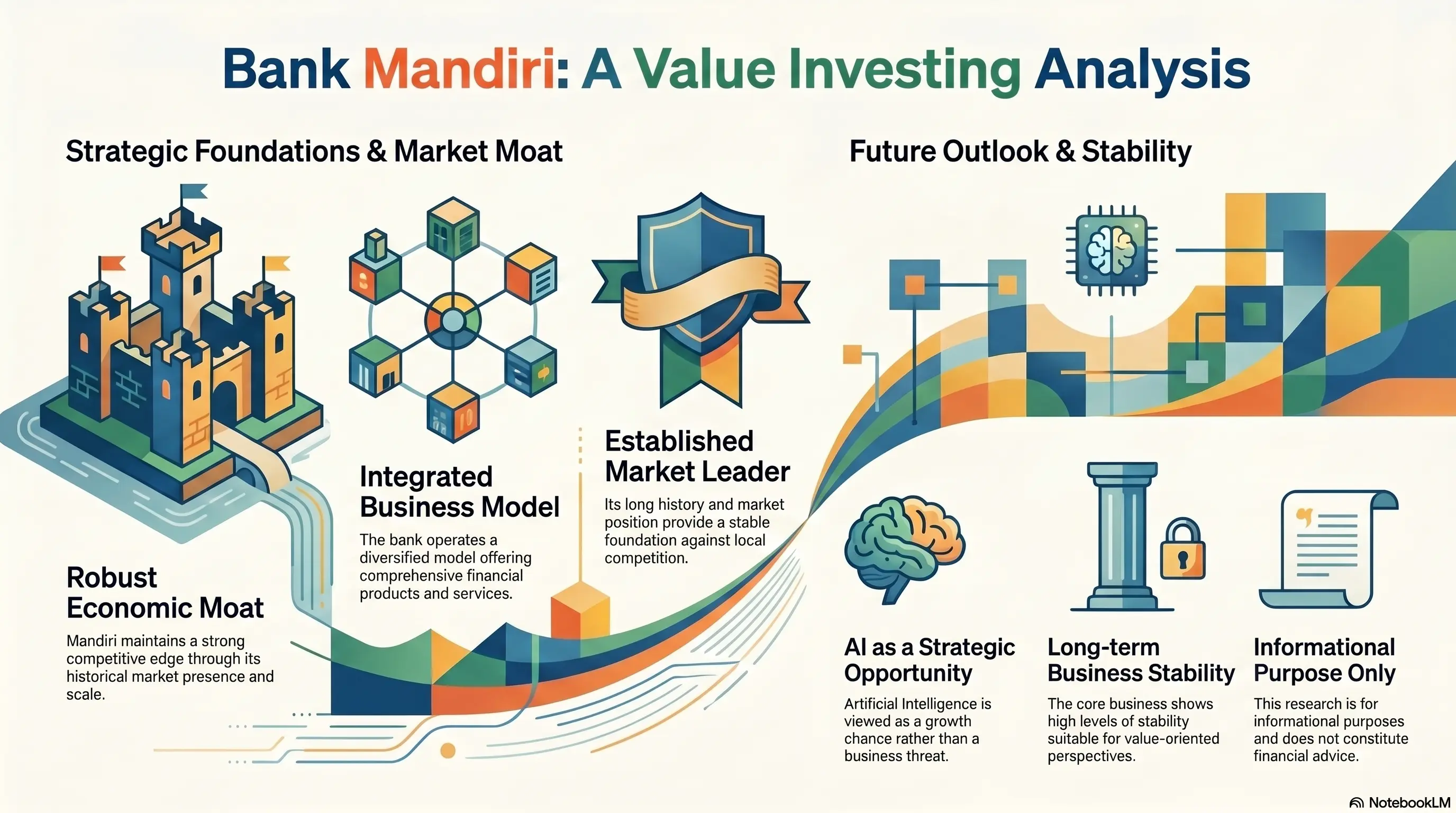
Infographic
Overview
Bank Mandiri is the largest bank in Indonesia, and is considered a state-owned enterprise (SOE). It was established in 1998 after the merger of four government-owned banks and is headquartered in Jakarta.
The bank provides a wide range of financial services, including commercial and retail banking, investment banking, as well as Shariah-compliant Islamic banking. It has a network of over 2,600 branches, including overseas branches in Singapore, Hong Kong, and New York.
Bank Mandiri is also known for its strong commitment to corporate social responsibility, with programs aimed at promoting financial literacy, education, and environmental sustainability.
Some notable achievements of Bank Mandiri include being named the Best Bank in Indonesia by Forbes for several years, and being recognized as one of the world's most sustainable banks by the Dow Jones Sustainability Index and the FTSE4Good Index.
The bank's mission is to be the leading financial services institution in Indonesia, providing excellent services and contributing to the country's economic growth and development.
How to explain to a 10 year old kid about the company?

📈 Want to read more about Bank Mandiri?
Sign up for free
or
log in
📚 Your free copy of "The Checklist Value Investor — A Smarter Way to Pick Stocks" is waiting
QmFuayBNYW 5kaXJpIGlz IGxpa2UgYS BiaWcgbW9u ZXkgaGVscG VyIGluIElu ZG9uZXNpYS 4gSXTigJlz IGEgYmFuay wgd2hpY2gg bWVhbnMgaX QgaGVscHMg cGVvcGxlIG FuZCBidXNp bmVzc2VzIH Rha2UgY2Fy ZSBvZiB0aG VpciBtb25l eS4gUGVvcG xlIGNhbiBz YXZlIG1vbm V5IGluIHRo ZSBiYW5rLC Bib3Jyb3cg bW9uZXkgd2 hlbiB0aGV5 IG5lZWQgaX QgZm9yIHRo aW5ncyBsaW tlIGJ1eWlu ZyBhIGhvdX NlIG9yIGEg Y2FyLCBhbm QgZXZlbiB1 c2Ugb3RoZX Igc2Vydmlj ZXMgbGlrZS BwYXlpbmcg Zm9yIGJpbG xzLjxicj5T bywgaG93IG RvZXMgQmFu ayBNYW5kaX JpIG1ha2Ug bW9uZXk/IF dlbGwsIHdo ZW4gcGVvcG xlIHNhdmUg dGhlaXIgbW 9uZXkgaW4g dGhlIGJhbm ssIHRoZSBi YW5rIHBheX MgdGhlbSBh IGxpdHRsZS BiaXQgZm9y IGtlZXBpbm cgdGhlaXIg bW9uZXkgdG hlcmUuIEJ1 dCB3aGVuIG 90aGVyIHBl b3BsZSBib3 Jyb3cgbW9u ZXkgZnJvbS B0aGUgYmFu aywgdGhleS BwYXkgYmFj ayBtb3JlIH RoYW4gd2hh dCB0aGV5IG JvcnJvd2Vk LiBUaGUgZG lmZmVyZW5j ZSBpcyBob3 cgdGhlIGJh bmsgZWFybn MgbW9uZXku IFRoaXMgaX MgY2FsbGVk IGludGVyZX N0LiBUaGUg YmFuayBhbH NvIGNoYXJn ZXMgZm9yIG 90aGVyIHNl cnZpY2VzLC BsaWtlIGhl bHBpbmcgcG VvcGxlIHRy YW5zZmVyIG 1vbmV5IG9y IG1ha2UgcG F5bWVudHMu PGJyPkJhbm sgTWFuZGly aSBpcyBzdW NjZXNzZnVs IGZvciBzZX ZlcmFsIHJl YXNvbnMuIE ZpcnN0LCBp dCBoYXMgYm VlbiBhcm91 bmQgZm9yIG EgbG9uZyB0 aW1lLCBzby BtYW55IHBl b3BsZSB0cn VzdCBpdC4g SXQgaGFzIG 1hbnkgYnJh bmNoZXMgYW 5kIEFUTXMs IG1ha2luZy BpdCBlYXN5 IGZvciBwZW 9wbGUgdG8g dXNlIHRoZW lyIHNlcnZp Y2VzLiBUaG UgYmFuayBh bHNvIG9mZm VycyBhIHZh cmlldHkgb2 YgcHJvZHVj dHMgYW5kIH NlcnZpY2Vz IHRoYXQgbW VldCB0aGUg bmVlZHMgb2 YgYm90aCBp bmRpdmlkdW FscyBhbmQg YnVzaW5lc3 Nlcy48YnI+ SW4gdGhlIG Z1dHVyZSwg QmFuayBNYW 5kaXJpIGlz IGxpa2VseS B0byBzdGF5 IHN1Y2Nlc3 NmdWwgYmVj YXVzZSBpdC BrZWVwcyB0 cnlpbmcgdG 8gaW1wcm92 ZSBhbmQgb2 ZmZXJzIG1v cmUgdGVjaG 5vbG9neSwg bGlrZSBvbm xpbmUgYmFu a2luZyBhbm QgbW9iaWxl IGFwcHMuIF RoaXMgbWFr ZXMgbWFuYW dpbmcgbW9u ZXkgZWFzaW VyIGZvciBj dXN0b21lcn MuIFBsdXMs IGFzIHRoZS BlY29ub215 IGdyb3dzIG FuZCBtb3Jl IHBlb3BsZS BuZWVkIGJh bmtpbmcgc2 VydmljZXMs IEJhbmsgTW FuZGlyaSB3 aWxsIGJlIH RoZXJlIHRv IGhlbHAgdG hlbS4gT3Zl cmFsbCwgaX TigJlzIGEg c3Ryb25nIG JhbmsgdGhh dCBrbm93cy Bob3cgdG8g c3VwcG9ydC BpdHMgY3Vz dG9tZXJzIH doaWxlIG1h a2luZyBtb2 5leSE8YnI+
What is special about the company?
📈 Want to read more about Bank Mandiri?
Sign up for free
or
log in
👥 Free eBook for new users: "The Checklist Value Investor — A Smarter Way to Pick Stocks"
QmFuayBNYW 5kaXJpIGlz IHRoZSBsYX JnZXN0IGJh bmsgaW4gSW 5kb25lc2lh LCB3aXRoIG 92ZXIgMTgg bWlsbGlvbi BjdXN0b21l cnMgYW5kIG 1vcmUgdGhh biAyLDUwMC BicmFuY2hl cyBhbmQgMT csMDAwIEFU TXMuIFRoZS Bjb21wYW55 IGlzIG1ham 9yaXR5LW93 bmVkIGJ5IH RoZSBJbmRv bmVzaWFuIG dvdmVybm1l bnQgYW5kIH BsYXlzIGEg Y3J1Y2lhbC Byb2xlIGlu IHRoZSBjb3 VudHJ5J3Mg YmFua2luZy BhbmQgZmlu YW5jaWFsIH NlY3Rvci48 YnI+U29tZS BvZiB0aGUg a2V5IGZlYX R1cmVzIHRo YXQgbWFrZS BCYW5rIE1h bmRpcmkgYS B1bmlxdWUg YW5kIHNwZW NpYWwgY29t cGFueSBpbm NsdWRlOjxi cj4xLiBTdH JvbmcgZmlu YW5jaWFsIH BlcmZvcm1h bmNlOiBCYW 5rIE1hbmRp cmkgaGFzIG NvbnNpc3Rl bnRseSBtYW ludGFpbmVk IGEgc3Ryb2 5nIGZpbmFu Y2lhbCBwZX Jmb3JtYW5j ZSwgd2l0aC BhIHN0ZWFk eSBpbmNyZW FzZSBpbiBw cm9maXRzIG FuZCBhc3Nl dHMgb3Zlci B0aGUgeWVh cnMuIEluID IwMjAsIHRo ZSBjb21wYW 55J3MgbmV0 IGluY29tZS ByZWFjaGVk IFVTRCAxLj kgYmlsbGlv biwgbWFraW 5nIGl0IG9u ZSBvZiB0aG UgbW9zdCBw cm9maXRhYm xlIGJhbmtz IGluIEluZG 9uZXNpYS48 YnI+Mi4gV2 lkZSByYW5n ZSBvZiBwcm 9kdWN0cyBh bmQgc2Vydm ljZXM6IEJh bmsgTWFuZG lyaSBvZmZl cnMgYSBjb2 1wcmVoZW5z aXZlIHJhbm dlIG9mIGJh bmtpbmcgcH JvZHVjdHMg YW5kIHNlcn ZpY2VzLCBp bmNsdWRpbm cgcmV0YWls IGJhbmtpbm csIGNvcnBv cmF0ZSBiYW 5raW5nLCB0 cmVhc3VyeS wgaW52ZXN0 bWVudCwgYW 5kIG1pY3Jv ZmluYW5jZS 4gVGhpcyBk aXZlcnNpdH kgYWxsb3dz IHRoZSBjb2 1wYW55IHRv IGNhdGVyIH RvIHRoZSBi YW5raW5nIG 5lZWRzIG9m IGEgZGl2ZX JzZSBjdXN0 b21lciBiYX NlLjxicj4z LiBGb2N1cy BvbiBkaWdp dGFsIGlubm 92YXRpb246 IEJhbmsgTW FuZGlyaSBo YXMgYSBzdH JvbmcgZm9j dXMgb24gZG lnaXRhbCB0 cmFuc2Zvcm 1hdGlvbiBh bmQgaGFzIG ludmVzdGVk IHNpZ25pZm ljYW50bHkg aW4gdGVjaG 5vbG9neSB0 byBlbmhhbm NlIGl0cyBz ZXJ2aWNlIG RlbGl2ZXJ5 LiBJdCBoYX MgYSByb2J1 c3Qgb25saW 5lIGFuZCBt b2JpbGUgYm Fua2luZyBw bGF0Zm9ybS wgZW5hYmxp bmcgY3VzdG 9tZXJzIHRv IGFjY2Vzcy B0aGVpciBh Y2NvdW50cy BhbmQgcGVy Zm9ybSB0cm Fuc2FjdGlv bnMgY29udm VuaWVudGx5 Ljxicj40Li BTdHJvbmcg Y3VzdG9tZX IgYmFzZTog V2l0aCBvdm VyIDE4IG1p bGxpb24gY3 VzdG9tZXJz LCBCYW5rIE 1hbmRpcmkg aGFzIGVzdG FibGlzaGVk IGl0c2VsZi BhcyBhIHRy dXN0ZWQgYW 5kIHByZWZl cnJlZCBiYW 5rIGluIElu ZG9uZXNpYS 4gSXQgc2Vy dmVzIGEgZG l2ZXJzZSBj dXN0b21lci BiYXNlLCBp bmNsdWRpbm cgaW5kaXZp ZHVhbHMsIH NtYWxsIGFu ZCBtZWRpdW 0tc2l6ZWQg ZW50ZXJwcm lzZXMsIGFu ZCBsYXJnZS Bjb3Jwb3Jh dGlvbnMuPG JyPjUuIENv bW1pdG1lbn QgdG8gc3Vz dGFpbmFiaW xpdHk6IEJh bmsgTWFuZG lyaSBwbGFj ZXMgYSBzdH JvbmcgZW1w aGFzaXMgb2 4gc3VzdGFp bmFibGUgZG V2ZWxvcG1l bnQgYW5kIG hhcyBpbnRl Z3JhdGVkIG Vudmlyb25t ZW50YWwsIH NvY2lhbCwg YW5kIGdvdm VybmFuY2Ug KEVTRykgcH JpbmNpcGxl cyBpbnRvIG l0cyBidXNp bmVzcyBvcG VyYXRpb25z LiBUaGUgY2 9tcGFueSBo YXMgaW1wbG VtZW50ZWQg dmFyaW91cy Bpbml0aWF0 aXZlcyB0by Bwcm9tb3Rl IGZpbmFuY2 lhbCBpbmNs dXNpb24sIH N1cHBvcnQg bG9jYWwgY2 9tbXVuaXRp ZXMsIGFuZC ByZWR1Y2Ug aXRzIGNhcm JvbiBmb290 cHJpbnQuPG JyPjYuIFN0 cm9uZyByZX B1dGF0aW9u IGFuZCByZW NvZ25pdGlv bjogVGhlIG NvbXBhbnkg aGFzIGEgc3 Ryb25nIHJl cHV0YXRpb2 4gYW5kIGlz IHJlY29nbm l6ZWQgYXMg YSBsZWFkZX IgaW4gdGhl IEluZG9uZX NpYW4gYmFu a2luZyBzZW N0b3IuIEl0 IGhhcyByZW NlaXZlZCBu dW1lcm91cy Bhd2FyZHMg YW5kIGFjY2 9sYWRlcyBm b3IgaXRzIG ZpbmFuY2lh bCBwZXJmb3 JtYW5jZSwg aW5ub3ZhdG lvbiwgYW5k IHN1c3RhaW 5hYmlsaXR5 IGVmZm9ydH MuPGJyPk92 ZXJhbGwsIE JhbmsgTWFu ZGlyaSdzIH NpemUsIGZp bmFuY2lhbC BzdHJlbmd0 aCwgZGl2ZX JzZSByYW5n ZSBvZiBwcm 9kdWN0cyBh bmQgc2Vydm ljZXMsIGZv Y3VzIG9uIG RpZ2l0YWwg aW5ub3ZhdG lvbiwgY29t bWl0bWVudC B0byBzdXN0 YWluYWJpbG l0eSwgYW5k IHN0cm9uZy ByZXB1dGF0 aW9uIG1ha2 UgaXQgYSBz cGVjaWFsIG FuZCBoaWdo bHkgcmVzcG VjdGVkIGNv bXBhbnkgaW 4gdGhlIElu ZG9uZXNpYW 4gYmFua2lu ZyBpbmR1c3 RyeS4=
What the company's business model?
📈 Want to read more about Bank Mandiri?
Sign up for free
or
log in
🙌 Join now to get "The Checklist Value Investor — A Smarter Way to Pick Stocks" at no cost
VGhlIEJhbm sgTWFuZGly aSBjb21wYW 55IGlzIGEg ZmluYW5jaW FsIGluc3Rp dHV0aW9uIH RoYXQgcHJp bWFyaWx5IG 9wZXJhdGVz IGFzIGEgY2 9tbWVyY2lh bCBiYW5rLC BvZmZlcmlu ZyBhIHdpZG UgcmFuZ2Ug b2YgYmFua2 luZyBhbmQg ZmluYW5jaW FsIHNlcnZp Y2VzIHRvIG l0cyBjdXN0 b21lcnMuIE l0cyBidXNp bmVzcyBtb2 RlbCBpcyBi YXNlZCBvbi BnZW5lcmF0 aW5nIHByb2 ZpdHMgdGhy b3VnaCB0aG UgZm9sbG93 aW5nIGtleS BhY3Rpdml0 aWVzOjxicj 4xLiBSZXRh aWwgQmFua2 luZzogVGhp cyBpbmNsdW RlcyBwcm92 aWRpbmcgdm FyaW91cyBy ZXRhaWwgYm Fua2luZyBz ZXJ2aWNlcy BzdWNoIGFz IGRlcG9zaX RzLCBsb2Fu cywgY3JlZG l0IGNhcmRz LCBhbmQgd2 VhbHRoIG1h bmFnZW1lbn Qgc29sdXRp b25zIHRvIG luZGl2aWR1 YWwgYW5kIH NtYWxsIGJ1 c2luZXNzIG N1c3RvbWVy cy48YnI+Mi 4gQ29ycG9y YXRlIGFuZC BDb21tZXJj aWFsIEJhbm tpbmc6IFRo ZSBiYW5rIG Fsc28gb2Zm ZXJzIGNvcn BvcmF0ZSBh bmQgY29tbW VyY2lhbCBi YW5raW5nIH NlcnZpY2Vz LCBpbmNsdW RpbmcgdHJh ZGUgZmluYW 5jaW5nLCBj YXNoIG1hbm FnZW1lbnQs IGFuZCBvdG hlciBmaW5h bmNpYWwgc2 VydmljZXMg dG8gY29ycG 9yYXRlIGNs aWVudHMuPG JyPjMuIFRy ZWFzdXJ5IG FuZCBDYXBp dGFsIE1hcm tldHM6IEJh bmsgTWFuZG lyaSBhbHNv IGhhcyBhIH N0cm9uZyBw cmVzZW5jZS BpbiB0aGUg dHJlYXN1cn kgYW5kIGNh cGl0YWwgbW Fya2V0cywg b2ZmZXJpbm cgc2Vydmlj ZXMgbGlrZS Bmb3JlaWdu IGV4Y2hhbm dlLCBkZXJp dmF0aXZlcy wgYW5kIGlu dmVzdG1lbn QgYmFua2lu ZyBzb2x1dG lvbnMgdG8g aXRzIGNsaW VudHMuPGJy PjQuIEluc3 VyYW5jZSBh bmQgUGVuc2 lvbiBGdW5k czogVGhlIG JhbmsgYWxz byBoYXMgYS BzdWJzaWRp YXJ5IHRoYX Qgb2ZmZXJz IGluc3VyYW 5jZSBhbmQg cGVuc2lvbi BmdW5kIG1h bmFnZW1lbn Qgc2Vydmlj ZXMgdG8gaX RzIGN1c3Rv bWVycy48Yn I+NS4gRGln aXRhbCBCYW 5raW5nOiBJ biByZWNlbn QgeWVhcnMs IEJhbmsgTW FuZGlyaSBo YXMgZm9jdX NlZCBvbiBl eHBhbmRpbm cgaXRzIGRp Z2l0YWwgYm Fua2luZyBz ZXJ2aWNlcy wgaW5jbHVk aW5nIG9ubG luZSBhbmQg bW9iaWxlIG Jhbmtpbmcs IHRvIGltcH JvdmUgY3Vz dG9tZXIgY2 9udmVuaWVu Y2UgYW5kIG VuaGFuY2Ug aXRzIG1hcm tldCBwcmVz ZW5jZS48Yn I+Ni4gSW50 ZXJuYXRpb2 5hbCBQcmVz ZW5jZTogVG hlIGJhbmsg aGFzIGEgc3 Ryb25nIGlu dGVybmF0aW 9uYWwgcHJl c2VuY2UsIH dpdGggYnJh bmNoZXMgYW 5kIHJlcHJl c2VudGF0aX ZlIG9mZmlj ZXMgaW4gdm FyaW91cyBj b3VudHJpZX MsIHByb3Zp ZGluZyBjcm 9zcy1ib3Jk ZXIgYmFua2 luZyBzZXJ2 aWNlcyBhbm Qgc2Vydmlu ZyBhcyBhIG dhdGV3YXkg Zm9yIGZvcm VpZ24gaW52 ZXN0bWVudC BpbiBJbmRv bmVzaWEuPG JyPjcuIERp dmVyc2lmaW NhdGlvbiBv ZiBSZXZlbn VlOiBCYW5r IE1hbmRpcm kgaGFzIGRp dmVyc2lmaW VkIGl0cyBy ZXZlbnVlIH N0cmVhbXMg YnkgZXhwYW 5kaW5nIGl0 cyBub24taW 50ZXJlc3Qg aW5jb21lIH NvdXJjZXMs IHN1Y2ggYX MgZmVlcyBh bmQgY29tbW lzc2lvbnMs IHRvIHJlZH VjZSBkZXBl bmRlbmNlIG 9uIGludGVy ZXN0IGluY2 9tZS48YnI+ T3ZlcmFsbC wgdGhlIGJh bmsncyBidX NpbmVzcyBt b2RlbCBpcy Bmb2N1c2Vk IG9uIHByb3 ZpZGluZyBh IHdpZGUgcm FuZ2Ugb2Yg ZmluYW5jaW FsIHNlcnZp Y2VzIHRvIG RpdmVyc2Ug Y3VzdG9tZX Igc2VnbWVu dHMsIG1haW 50YWluaW5n IGEgc3Ryb2 5nIGRvbWVz dGljIGFuZC BpbnRlcm5h dGlvbmFsIH ByZXNlbmNl LCBhbmQgY2 9udGludW91 c2x5IGRpdm Vyc2lmeWlu ZyBpdHMgcm V2ZW51ZSBz dHJlYW1zIH RvIGFjaGll dmUgc3VzdG FpbmFibGUg Z3Jvd3RoIG FuZCBwcm9m aXRhYmlsaX R5Lg==
Is AI a threat?
AI can indeed pose a material threat to Bank Mandiri’s products, services, and competitive positioning in several ways:
1. Substitution: AI-driven financial technologies, such as robo-advisors and automated lending platforms, could substitute traditional banking services offered by Bank Mandiri. The rise of fintech startups leveraging AI allows them to provide similar services with enhanced efficiency and customer experience, potentially attracting customers away from established banks.
2. Disintermediation: AI can facilitate direct transactions between consumers and service providers, reducing the need for traditional banks as intermediaries. For instance, decentralized finance (DeFi) applications using AI algorithms can enable peer-to-peer lending and investment, bypassing traditional banking services altogether. This can lead to a loss of business for Bank Mandiri as customers seek more streamlined and cost-effective options.
3. Margin Pressure: AI technologies can lower operational costs by automating routine tasks such as customer service, compliance, and risk assessment. If Bank Mandiri does not adopt similar AI technologies, it may face increased margin pressure. Competitors who efficiently leverage AI could offer lower fees and better interest rates, putting Bank Mandiri at a disadvantage in terms of pricing and competitiveness.
4. Enhanced Customer Experience: AI can improve personalization in financial services through data analytics and machine learning, allowing competitors to tailor their offerings based on consumer behavior. If Bank Mandiri fails to enhance its customer experience with AI, it risks losing clientele to more customer-centric fintech firms.
5. Evolving Regulatory Landscape: The integration of AI in the financial sector may also lead to changes in regulation. Bank Mandiri may need to rapidly adapt to these changes to remain compliant, which could incur costs and affect its competitive position if it lags behind.
In summary, while AI presents opportunities for enhancement, it also introduces significant challenges that could affect Bank Mandiri’s business model, competitive positioning, and overall market share if not strategically addressed.
Sensitivity to interest rates
The sensitivity of Bank Mandiri’s earnings, cash flow, and valuation to changes in interest rates can be analyzed from several perspectives:
1. Earnings Sensitivity: Bank Mandiri earns a significant portion of its income from interest on loans and financial products. An increase in interest rates typically leads to higher interest income from loans, which can boost earnings in the short term. However, higher rates can also lead to increased borrowing costs for consumers and businesses, potentially resulting in lower loan demand and higher default rates. Therefore, while rising interest rates may enhance margins on existing loans, they can also heighten credit risk and pressure overall earnings if defaults increase.
2. Cash Flow Sensitivity: The cash flow profile of Bank Mandiri is closely related to its interest margin and the volume of loans. Changes in interest rates can affect both revenues from interest income and the costs associated with funding those loans. If rates rise, the bank may see improved cash inflows from higher interest income, but if rates push up funding costs (for example, through deposit rates), this could compress net interest margins. Moreover, fluctuating rates can influence the bank’s ability to manage liquidity and cash flows from its assets and liabilities.
3. Valuation Sensitivity: The valuation of Bank Mandiri, like many financial institutions, is often derived from discounted cash flow (DCF) models that take into account expected future earnings and cash flows. Changes in interest rates can impact the discount rate used in these models, typically the bank’s cost of capital. Rising rates may lead to a higher discount rate, which can reduce the present value of future cash flows and negatively affect the bank’s valuation. Additionally, the overall market sentiment regarding interest rate changes can impact investor perceptions of the bank’s stability and growth prospects, further influencing its market valuation.
In summary, while increases in interest rates can enhance earnings and cash flows in certain ways, they can also introduce risks related to credit quality, funding costs, and overall market perception, thereby affecting Bank Mandiri’s financial performance and valuation.
Resilience to the future changes
📈 Want to read more about Bank Mandiri?
Sign up for free
or
log in
📝 Join us and grab your copy of "The Checklist Value Investor — A Smarter Way to Pick Stocks"
QSByZWFsaX N0aWMgc2Nl bmFyaW8gdG hhdCBjb3Vs ZCBwZXJtYW 5lbnRseSBp bXBhaXIgQm FuayBNYW5k aXJp4oCZcy BlY29ub21p Y3Mgb3Zlci B0aGUgbmV4 dCAzLTUgeW VhcnMgbWln aHQgaW52b2 x2ZSBhIHNp Z25pZmljYW 50IGVjb25v bWljIHJlY2 Vzc2lvbiBp biBJbmRvbm VzaWEsIHRy aWdnZXJlZC BieSBzZXZl cmFsIGZhY3 RvcnMgc3Vj aCBhcyBhIG dsb2JhbCBl Y29ub21pYy BzbG93ZG93 biwgZ2VvcG 9saXRpY2Fs IHRlbnNpb2 5zLCBvciBh IHNoYXJwIH Jpc2UgaW4g aW5mbGF0aW 9uLiBUaGlz IHNjZW5hcm lvIGNvdWxk IGxlYWQgdG 8gaW5jcmVh c2VkIGRlZm F1bHQgcmF0 ZXMgb24gbG 9hbnMsIGEg ZGVjbGluZS BpbiBjb25z dW1lciBhbm QgYnVzaW5l c3MgY29uZm lkZW5jZSwg YW5kIGEgZG VjcmVhc2Ug aW4gZGVtYW 5kIGZvciBi YW5raW5nIH NlcnZpY2Vz Ljxicj5Jbi B0aGlzIGNv bnRleHQsIE JhbmsgTWFu ZGlyaeKAmX MgbWFyZ2lu cyB3b3VsZC BsaWtlbHkg YmUgYWZmZW N0ZWQgbmVn YXRpdmVseS 4gVGhlIGlu Y3JlYXNlZC Bsb2FuIGRl ZmF1bHRzIH dvdWxkIGVs ZXZhdGUgdG hlIGJhbmvi gJlzIHByb3 Zpc2lvbnMg Zm9yIGNyZW RpdCBsb3Nz ZXMsIHJlc3 VsdGluZyBp biBhIGhpZ2 hlciBjb3N0 IHN0cnVjdH VyZS4gQXMg aW50ZXJlc3 QgcmF0ZXMg cmlzZSB0by Bjb21iYXQg aW5mbGF0aW 9uLCB0aGUg YmFuayBtYX kgZmluZCBp dHNlbGYgc3 F1ZWV6ZWQg YmV0d2Vlbi BhIG5hcnJv d2luZyBuZX QgaW50ZXJl c3QgbWFyZ2 luIGFuZCBy aXNpbmcgZn VuZGluZyBj b3N0cy4gTW 9yZW92ZXIs IHJlZHVjZW QgbGVuZGlu ZyBhY3Rpdm l0eSB3b3Vs ZCBtZWFuIG xvd2VyIGlu dGVyZXN0IG luY29tZSwg ZnVydGhlci BzcXVlZXpp bmcgbWFyZ2 lucyBpbiBh IHdlYWsgZW Nvbm9taWMg ZW52aXJvbm 1lbnQuPGJy PkNhc2ggZm xvdyB3b3Vs ZCBkZWNsaW 5lIGFzIHdl bGwuIFdpdG ggY3VzdG9t ZXJzIHN0cn VnZ2xpbmcg dG8gbWFrZS BwYXltZW50 cywgdGhlIG JhbmsgY291 bGQgZXhwZX JpZW5jZSBh IHJpc2UgaW 4gbm9wZXJm b3JtaW5nIG xvYW5zLCB3 aGljaCB3b3 VsZCBsZWFk IHRvIHRpZ2 h0ZXIgbGlx dWlkaXR5Li BUaGUgY2Fz aCBmbG93IG Zyb20gb3Bl cmF0aW5nIG FjdGl2aXRp ZXMgY291bG QgdGFrZSBh IGhpdCBkdW UgdG8gaGln aGVyIHByb3 Zpc2lvbnMg YW5kIHJlZH VjZWQgdHJh bnNhY3Rpb2 5hbCBzZXJ2 aWNlcyBhcy BidXNpbmVz cyBhY3Rpdm l0eSBzbG93 cy4gVGhlIG JhbmsgbWF5 IGFsc28gZm FjZSBhIHJl ZHVjdGlvbi BpbiBmZWUg aW5jb21lLC BmdXJ0aGVy IHdvcnNlbm luZyBpdHMg Y2FzaCBmbG 93IHNpdHVh dGlvbi48Yn I+T24gdGhl IGJhbGFuY2 Ugc2hlZXQs IHRoZSBpbX BsaWNhdGlv bnMgd291bG QgYmUgc2ln bmlmaWNhbn QuIEFuIGlu Y3JlYXNlIG luIG5vcGVy Zm9ybWluZy Bhc3NldHMg d291bGQgd2 Vha2VuIHRo ZSBvdmVyYW xsIGFzc2V0 IHF1YWxpdH ksIGxlYWRp bmcgdG8gYS Bwb3RlbnRp YWwgZG93bm dyYWRpbmcg b2YgdGhlIG JhbmvigJlz IGNyZWRpdC ByYXRpbmcu IFRoaXMgd2 91bGQgZnVy dGhlciBhZm ZlY3QgaXRz IGFiaWxpdH kgdG8gcmFp c2UgY2FwaX RhbCBhbmQg bWFuYWdlIG xpcXVpZGl0 eSBsZXZlbH MuIEFkZGl0 aW9uYWxseS wgdGhlIGlu Y3JlYXNlIG luIHByb3Zp c2lvbmluZy Bmb3IgYmFk IGxvYW5zIH dvdWxkIGVy b2RlIHJldG FpbmVkIGVh cm5pbmdzLC B0aHVzIGFm ZmVjdGluZy BlcXVpdHku IElmIHRoZS BiYW5rIHN0 cnVnZ2xlcy B0byBtYWlu dGFpbiBhIH N0cm9uZyBj YXBpdGFsIH Bvc2l0aW9u LCBpdCBtYX kgYWxzbyBm YWNlIHJlZ3 VsYXRvcnkg cHJlc3N1cm VzIHJlZ2Fy ZGluZyBjYX BpdGFsIGFk ZXF1YWN5IH JhdGlvcy48 YnI+SW4gc3 VtbWFyeSwg aWYgYSBzZX ZlcmUgZWNv bm9taWMgcm VjZXNzaW9u IHdlcmUgdG 8gaW1wYWN0 IEJhbmsgTW FuZGlyaSBv dmVyIHRoZS BuZXh0IDMt NSB5ZWFycy wgaXQgY291 bGQgZmFjZS ByZWR1Y2Vk IG1hcmdpbn MsIGRlY2xp bmluZyBjYX NoIGZsb3cs IGFuZCBhIH dlYWtlbmVk IGJhbGFuY2 Ugc2hlZXQg Y2hhcmFjdG VyaXplZCBi eSBpbmNyZW FzZWQgbm9w ZXJmb3JtaW 5nIGxvYW5z IGFuZCB0aG UgY29uc2Vx dWVudCBuZW VkIGZvciBo aWdoZXIgcH JvdmlzaW9u cywgd2hpY2 ggY291bGQg dWx0aW1hdG VseSBpbXBh aXIgaXRzIG ZpbmFuY2lh bCBzdGFiaW xpdHkgYW5k IGdyb3d0aC Bwcm9zcGVj dHMuPGJyPg ==
Interesting facts about the company
📈 Want to read more about Bank Mandiri?
Sign up for free
or
log in
📖 Get insights from "The Checklist Value Investor — A Smarter Way to Pick Stocks" now!
CiAgICAgIC AgICAgIDxk aXYgc3R5bG U9J3dpZHRo OiAxMDAlOy BkaXNwbGF5 OiBmbGV4Oy BqdXN0aWZ5 LWNvbnRlbn Q6IGNlbnRl cjsnPgogIC AgICAgICAg ICAgICAgPG RpdiBzdHls ZT0nCiAgIC AgICAgICAg ICAgICAgIC AgZGlzcGxh eTogZmxleD sKICAgICAg ICAgICAgIC AgICAgICBh bGlnbi1pdG VtczogY2Vu dGVyOwogIC AgICAgICAg ICAgICAgIC AgIGJhY2tn cm91bmQtY2 9sb3I6ICNm MGY0Zjg7Ci AgICAgICAg ICAgICAgIC AgICAgYm9y ZGVyOiAxcH ggc29saWQg I2QxZTNmMD sKICAgICAg ICAgICAgIC AgICAgICBi b3JkZXItcm FkaXVzOiAx MHB4OwogIC AgICAgICAg ICAgICAgIC AgIHBhZGRp bmc6IDEwcH g7CiAgICAg ICAgICAgIC AgICAgICAg bWFyZ2luOi AyMHB4IDA7 CiAgICAgIC AgICAgICAg ICAgICAgZm 9udC1mYW1p bHk6ICJTZW dvZSBVSSIs IFJvYm90by wgc2Fucy1z ZXJpZjsKIC AgICAgICAg ICAgICAgIC AgICBib3gt c2hhZG93Oi AwIDJweCA2 cHggcmdiYS gwLCAwLCAw LCAwLjA1KT sKICAgICAg ICAgICAgIC AgICAgICBt YXgtd2lkdG g6IDkwMHB4 OwogICAgIC AgICAgICAg ICAgICAgIH dpZHRoOiAx MDAlOyc+Cg ogICAgICAg ICAgICAgIC AgICAgIDxp bWcgc3JjPS Jhc3NldHMv bG9nb3Mva1 d0ZkszV3RO Z25wWHhzNk lYZnAud2Vi cCIgYWx0PS JCYW5rIE1h bmRpcmkiIH RpdGxlPSJC YW5rIE1hbm RpcmkiICBj bGFzcz0iaW 1nLWZsdWlk IiBoZWlnaH Q9NTAgd2lk dGg9NTAgbG 9hZGluZz0n bGF6eScgc3 R5bGU9J2Jv cmRlci1yYW RpdXM6IDZw eDsnPgoKIC AgICAgICAg ICAgICAgIC AgICA8ZGl2 IHN0eWxlPS dmbGV4OiAx OyB0ZXh0LW FsaWduOiBj ZW50ZXI7IG 1hcmdpbi1s ZWZ0OiA1cH g7Jz4KICAg ICAgICAgIC AgICAgICAg ICAgICAgPH Agc3R5bGU9 J2ZvbnQtc2 l6ZTogMjZw eDsgY29sb3 I6ICMzMzM7 IG1hcmdpbi 1ib3R0b206 IDE1cHg7Jz 4KICAgICAg ICAgICAgIC AgICAgICAg ICAgICAgIP Cfk4ggV2Fu dCB0byByZW FkIG1vcmUg YWJvdXQgQm FuayBNYW5k aXJpPwogIC AgICAgICAg ICAgICAgIC AgICAgICA8 L3A+CgogIC AgICAgICAg ICAgICAgIC AgICAgICA8 YSBocmVmPS dpbmRleC5w aHA/cGFnZT 1zaWdudXAn IHN0eWxlPS cKICAgICAg ICAgICAgIC AgICAgICAg ICAgICAgIG JhY2tncm91 bmQtY29sb3 I6ICMwMDdC RkY7CiAgIC AgICAgICAg ICAgICAgIC AgICAgICAg ICBjb2xvcj ogI2ZmZjsK ICAgICAgIC AgICAgICAg ICAgICAgIC AgICAgIHBh ZGRpbmc6ID EwcHggMjBw eDsKICAgIC AgICAgICAg ICAgICAgIC AgICAgICAg IGJvcmRlci 1yYWRpdXM6 IDVweDsKIC AgICAgICAg ICAgICAgIC AgICAgICAg ICAgIHRleH QtZGVjb3Jh dGlvbjogbm 9uZTsKICAg ICAgICAgIC AgICAgICAg ICAgICAgIC AgIGZvbnQt d2VpZ2h0Oi Bib2xkOwog ICAgICAgIC AgICAgICAg ICAgICAgIC AgICAgbWFy Z2luLXJpZ2 h0OiAxMHB4 OwogICAgIC AgICAgICAg ICAgICAgIC AgICAgICAg dHJhbnNpdG lvbjogYmFj a2dyb3VuZC 1jb2xvciAw LjNzIGVhc2 U7JwogICAg ICAgICAgIC AgICAgICAg ICAgICAgIC Agb25tb3Vz ZW92ZXI9J3 RoaXMuc3R5 bGUuYmFja2 dyb3VuZENv bG9yPSIjMD A1NmIzIicK ICAgICAgIC AgICAgICAg ICAgICAgIC AgICAgIG9u bW91c2VvdX Q9J3RoaXMu c3R5bGUuYm Fja2dyb3Vu ZENvbG9yPS IjMDA3QkZG Iic+CiAgIC AgICAgICAg ICAgICAgIC AgICAgICAg ICBTaWduIH VwIGZvciBm cmVlCiAgIC AgICAgICAg ICAgICAgIC AgICAgIDwv YT4KCiAgIC AgICAgICAg ICAgICAgIC AgICAgIDxz cGFuIHN0eW xlPSdtYXJn aW46IDAgOH B4OyBjb2xv cjogIzU1NT snPm9yPC9z cGFuPgoKIC AgICAgICAg ICAgICAgIC AgICAgICAg PGEgaHJlZj 0naW5kZXgu cGhwP3BhZ2 U9bG9naW4n IHN0eWxlPS cKICAgICAg ICAgICAgIC AgICAgICAg ICAgICAgIG NvbG9yOiAj MDA3QkZGOw ogICAgICAg ICAgICAgIC AgICAgICAg ICAgICAgdG V4dC1kZWNv cmF0aW9uOi B1bmRlcmxp bmU7CiAgIC AgICAgICAg ICAgICAgIC AgICAgICAg ICBmb250LX dlaWdodDog NTAwOyc+Ci AgICAgICAg ICAgICAgIC AgICAgICAg ICAgICBsb2 cgaW4KICAg ICAgICAgIC AgICAgICAg ICAgICAgPC 9hPgoKCiAg ICAgICAgIC AgICAgICAg ICAgICAgID xwIHN0eWxl PSdtYXJnaW 4tdG9wOiAx NXB4OyBmb2 50LXNpemU6 IDEzcHg7IG ZvbnQtd2Vp Z2h0OiBib2 xkOyBjb2xv cjogI2QzMm YyZjsnPgog ICAgICAgIC AgICAgICAg ICAgICAgIC AgICAg8J+S oSBMZWFybi BzbWFydGVy IHN0b2NrIH BpY2tzIHdp dGggPGk+Il RoZSBDaGVj a2xpc3QgVm FsdWUgSW52 ZXN0b3Ig4o CUIEEgU21h cnRlciBXYX kgdG8gUGlj ayBTdG9ja3 MiPC9pPgog ICAgICAgIC AgICAgICAg ICAgICAgIC A8L3A+Cgog ICAgICAgIC AgICAgICAg ICAgICAgIC A8IS0tCiAg ICAgICAgIC AgICAgICAg ICAgICAgID xkaXYgc3R5 bGU9J21hcm dpbi10b3A6 IDEycHg7IG ZvbnQtc2l6 ZTogMTNweD sgY29sb3I6 ICM0NDQ7Jz 4KICAgICAg ICAgICAgIC AgICAgICAg ICAgICAgIF NpZ24gdXAg bm93IGFuZC BnZXQgb3Vy IGZyZWUgZU Jvb2sgCiAg ICAgICAgIC AgICAgICAg ICAgICAgIC AgICA8Yj5U aGUgQ2hlY2 tsaXN0IFZh bHVlIEludm VzdG9yIOKA lCBBIFNtYX J0ZXIgV2F5 IHRvIFBpY2 sgU3RvY2tz PC9iPgogIC AgICAgICAg ICAgICAgIC AgICAgICA8 L2Rpdj4KIC AgICAgICAg ICAgICAgIC AgICAgICAg LS0+CiAgIC AgICAgICAg ICAgICAgIC AgICAgIDwh LS0KICAgIC AgICAgICAg ICAgICAgIC AgICAgPGRp diBzdHlsZT 0nbWFyZ2lu LXRvcDogMT ZweDsgZm9u dC1zaXplOi AxNHB4OyBj b2xvcjogIz Q0NDsgZm9u dC1mYW1pbH k6IC1hcHBs ZS1zeXN0ZW 0sIEJsaW5r TWFjU3lzdG VtRm9udCwg U2Vnb2UgVU ksIFJvYm90 bywgSGVsdm V0aWNhIE5l dWUsIHNhbn Mtc2VyaWY7 IGxpbmUtaG VpZ2h0OiAx LjY7Jz4KIC AgICAgICAg ICAgICAgIC AgICAgICAg ICAgIEhhdm UgeW91IGhl YXJkIGFib3 V0IG91ciBz aG9ydCA8c3 Ryb25nIHN0 eWxlPSdmb2 50LXdlaWdo dDogNjAwOy c+RGFpbHkg VmlkZW8gTm V3c2xldHRl cjwvc3Ryb2 5nPj8KICAg ICAgICAgIC AgICAgICAg ICAgICAgIC AgIDxhIGhy ZWY9J2h0dH BzOi8vd3d3 Lmluc2lnaH RmdWx2YWx1 ZS5jb20vbm V3c2xldHRl ci5waHAnIH RhcmdldD0n X2JsYW5rJy BzdHlsZT0n Y29sb3I6IC MwMDdCRkY7 IHRleHQtZG Vjb3JhdGlv bjogbm9uZT sgZm9udC13 ZWlnaHQ6ID UwMDsgbWFy Z2luLWxlZn Q6IDZweDsn PgogICAgIC AgICAgICAg ICAgICAgIC AgICAgICAg ICAgIEZpbm Qgb3V0IG1v cmUKICAgIC AgICAgICAg ICAgICAgIC AgICAgICAg IDwvYT4KIC AgICAgICAg ICAgICAgIC AgICAgICAg PC9kaXY+Ci AgICAgICAg ICAgICAgIC AgICAgICAg IC0tPgogIC AgICAgICAg ICAgICAgIC AgIDwvZGl2 PgogICAgIC AgICAgICAg ICAgPC9kaX Y+CiAgICAg ICAgICAgID wvZGl2Pgog ICAgICAgIC AgICAKICAg ICAgICAKIC AgICAgICA8 c3BhbiBjbG Fzcz0nYmx1 cnJlZC10ZX h0Jz4KICAg ICAgICAgIC AgTVM0Z1Ft RnVheSBCTl lXNWthWEpw IElHbHpJSF JvWlMgQnNZ WEpuWlhOMC BJR0poYm1z Z2FXIDRnU1 c1a2IyNWwg YzJsaExDQm liMyBSb0lH bHVJSFJsIG NtMXpJRzlt SUcgRnpjMl YwY3lCaCBi bVFnYldGeW EyIFYwSUdO aGNHbDAgWV d4cGVtRjBh VyA5dUxqeG ljajR5IExp QlVhR1VnWW 0gRnVheUIz WVhNZyBZM0 psWVhSbFpD IEJwYmlBeE 9UazQgSUhS b2NtOTFaMi BnZ1lTQm5i M1psIGNtNX RaVzUwSUcg MWxjbWRsY2 lCdiBaaUJt YjNWeUlIIE 4wWVhSbExX OTMgYm1Wa0 lHSmhibSB0 ek9pQkNZVz VyIElFSjFi V2tnUkcgRj VZU3dnUW1G dSBheUJFWV dkaGJtIGNn VG1WbllYSm ggTENCQ1lX NXJJRSBWcm MzQnZjaUJK IGJYQnZjaU JKYm0gUnZi bVZ6YVdFcy BJR0Z1WkNC Q1lXIDVySU ZCbGJXSmgg Ym1kMWJtRn VJRSBsdVpH OXVaWE5wIF lTNDhZbkkr TXkgNGdRbU Z1YXlCTiBZ VzVrYVhKcE lHIGhoY3lC aElHUnYgYl dsdVlXNTBJ SCBCeVpYTm xibU5sIElH bHVJSFJvWl MgQkpibVJ2 Ym1WeiBhV0 Z1SUdacGJt IEZ1WTJsaG JDQnQgWVhK clpYUXNJSC BkcGRHZ2di M1psIGNpQX lMRFV3TUMg QmljbUZ1WT JnZyBiMlpt YVdObGN5IE JoYm1RZ2JX OXkgWlNCMG FHRnVJRCBN d0xEQXdNQ0 JCIFZFMXpJ R0ZqY20gOX pjeUIwYUdV ZyBZMjkxYm 5SeWVTIDQ4 WW5JK05DNG cgVkdobElH SmhibSBzZ2 IyWm1aWEp6 IElHRWdkMm xrWlMgQnlZ VzVuWlNCdi BaaUJ6WlhK MmFXIE5sY3 l3Z2FXNWog YkhWa2FXNW 5JRyBOdmNu QnZjbUYwIF pTQmhibVFn Y20gVjBZV2 xzSUdKaCBi bXRwYm1jc0 lFIGx6YkdG dGFXTWcgWW 1GdWEybHVa eSB3Z2FXNT JaWE4wIGJX VnVkQ0JpWV cgNXJhVzVu TENCaCBibV FnYVc1emRY IEpoYm1ObE xqeGkgY2o0 MUxpQkpiaS BCaFpHUnBk R2x2IGJpQj BieUJKYm0g UnZibVZ6YV dFcyBJRUpo Ym1zZ1RXIE Z1WkdseWFT Qm8gWVhNZ1 lTQndjbSBW elpXNWpaU0 JwIGJpQnpa WFpsY20gRn NJRzkwYUdW eSBJR052ZF c1MGNtIGxs Y3l3Z2FXNW ogYkhWa2FX NW5JRiBOcG JtZGhjRzl5 IFpTd2dTRz l1WnkgQkxi MjVuTENCTS BiMjVrYjI0 c0lHIEZ1Wk NCVGFHRnUg WjJoaGFTND hZbiBJK05p NGdRbUZ1IG F5Qk5ZVzVr YVggSnBJR2 x6SUd0dSBi M2R1SUdadm NpIEJwZEhN Z2FXNXUgYj NaaGRHbDJa UyBCaGJtUW dkR1ZqIGFH NXZiRzluYV cgTmhiR3g1 SUdGayBkbU Z1WTJWa0lI IE5sY25acF kyVnogTENC emRXTm9JRy BGeklIUm9a U0JOIFlXNW thWEpwSUUg MXZZbWxzWl NCaCBjSEFz SUhkb2FXIE 5vSUdGc2JH OTMgY3lCam RYTjBiMiAx bGNuTWdkRz hnIFkyOXVa SFZqZEMgQj JZWEpwYjNW eiBJR0poYm 10cGJtIGNn WVdOMGFYWn AgZEdsbGN5 QnZiaSBCMG FHVnBjaUJ0 IGIySnBiR1 VnWkcgVjJh V05sY3k0OC BZbkkrTnk0 Z1ZHIGhsSU dKaGJtc2cg YUdGeklISm xZMiBWcGRt VmtJRzUxIG JXVnliM1Z6 SUcgRjNZWE prY3lCaCBi bVFnY21Wam IyIGR1YVhS cGIyNGcgWm 05eUlHbDBj eSBCd1pYSm 1iM0p0IFlX NWpaU0JoYm 0gUWdjMlZ5 ZG1saiBaWE 1zSUdsdVky IHgxWkdsdV p5QkMgWlhO MElFSmhibS BzZ2FXNGdT VzVrIGIyNW xjMmxoSUcg SjVJRWRzYj JKaCBiQ0JH YVc1aGJtIE 5sSUdsdUlE SXcgTWpBdV BHSnlQaiBn dUlFSmhibX NnIFRXRnVa R2x5YVMgQn BjeUJqYjIx dCBhWFIwWl dRZ2RHIDhn YzI5amFXRn MgSUdGdVpD QmxibiBacG NtOXViV1Z1 IGRHRnNJSE psYzMgQnZi bk5wWW1scy BhWFI1TENC M2FYIFJvSU dsdWFYUnAg WVhScGRtVn pJRyBsdUlI QnNZV05sIE lIUnZJSE4x Y0ggQnZjbl FnWm1sdSBZ VzVqYVdGc0 lHIGx1WTJ4 MWMybHYgYm l3Z1pXUjFZ MiBGMGFXOX VMQ0JoIGJt UWdaVzUyYV ggSnZibTFs Ym5SaCBiQ0 J6ZFhOMFlX IGx1WVdKcG JHbDAgZVM0 OFluSStPUy A0Z1FYTWdi MllnIE1qQX lNQ3dnZEcg aGxJRWx1Wk c5dSBaWE5w WVc0Z1oyID kyWlhKdWJX VnUgZENCdm QyNWxaQyBC aElEWXdMal kzIEpTQnpk R0ZyWlMgQn BiaUJDWVc1 ciBJRTFoYm 1ScGNtIGtz SUhkcGRHZ2 cgZEdobElI SmxiVyBGcG JtbHVaeUJ6 IGFHRnlaWE 1nY0ggVmli R2xqYkhrZy BiR2x6ZEdW a0lHIDl1SU hSb1pTQkog Ym1SdmJtVn phVyBGdUlG TjBiMk5yIE lFVjRZMmho Ym0gZGxMan hpY2o0eCBN QzRnUW1GdW F5IEJOWVc1 a2FYSnAgSU doaGN5QmhJ SCBOMGNtOX VaeUJtIGFX NWhibU5wWV cgd2djM1Jo Ym1ScCBibW NzSUhkcGRH IGdnZEc5MF lXd2cgWVhO elpYUnpJRy A5bUlGVlRK RGt4IExqUW dZbWxzYkcg bHZiaUJoYm 1RZyBZU0J1 WlhRZ2FXID VqYjIxbElH OW0gSUZWVE pERXVOUyBC aWFXeHNhVz l1IElHbHVJ REl3TWogQX UKICAgICAg ICA8L3NwYW 4+CiAgICAg ICAgCiAgIC AgICAg
See Company Q&A
📊 Get full analytics about Bank Mandiri
Sign up for free
or
log in
📝 Join us and grab your copy of "The Checklist Value Investor — A Smarter Way to Pick Stocks"