Company at a Glance
Price
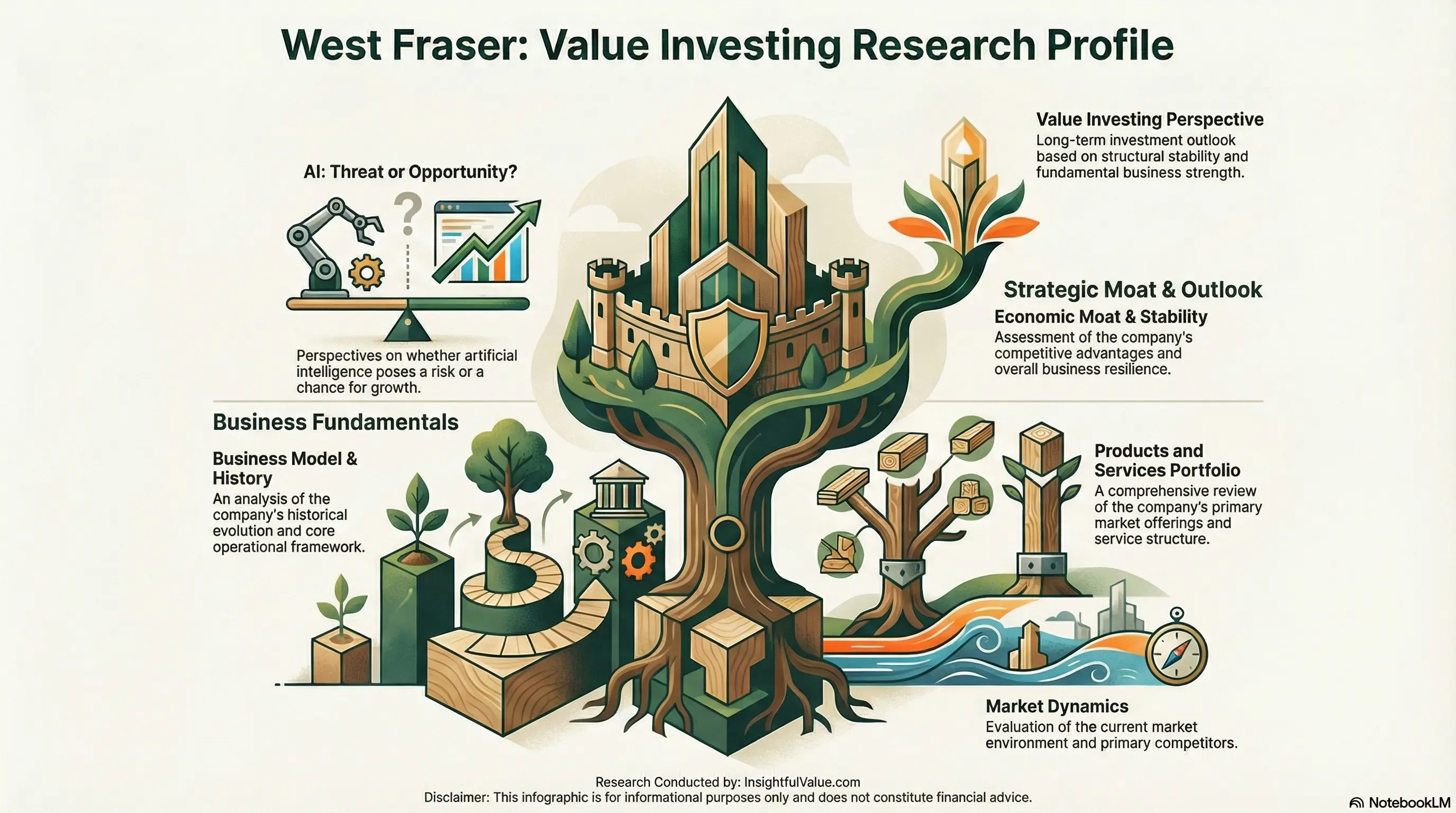
Infographic
Overview
West Fraser is a Canadian wood products company with operations in Canada and the United States. It was founded in 1955 by Pete Coors, and is headquartered in Vancouver, British Columbia. The company’s primary products are lumber, wood chips, and pulp, which are used in the construction, packaging, and paper industries.
West Fraser is one of the largest lumber producers in North America, with annual capacity of approximately 6.1 billion board feet. The company also operates several pulp mills, with a combined annual production capacity of over 1.1 million tonnes.
West Fraser’s operations are focused on sustainable forestry practices. The company is committed to responsible forest management, and has received several certifications for its environmental and social responsibility programs.
In addition to its wood products division, West Fraser also has a successful energy and wood pellet business, producing renewable energy from residual forestry materials.
Today, West Fraser employs over 9,000 employees and operates more than 45 manufacturing facilities in Canada and the United States. The company’s annual sales exceed $6 billion, making it one of the largest forest products companies in the world. West Fraser is also publicly traded on the Toronto Stock Exchange under the symbol WFT.
How to explain to a 10 year old kid about the company?

📈 Want to read more about West Fraser?
Sign up for free
or
log in
🙌 Join now to get "The Checklist Value Investor — A Smarter Way to Pick Stocks" at no cost
V2VzdCBGcm FzZXIgaXMg YSBjb21wYW 55IHRoYXQg bWFrZXMgd2 9vZCBwcm9k dWN0cy4gSW 1hZ2luZSBh IGJpZyBmYW N0b3J5IHdo ZXJlIHBlb3 BsZSB0YWtl IGxvZ3MgZn JvbSB0cmVl cyBhbmQgdH VybiB0aGVt IGludG8gdG hpbmdzIGxp a2UgbHVtYm VyLCB3aGlj aCBpcyB0aG Ugd29vZCB5 b3Ugc2VlIH VzZWQgaW4g aG91c2VzIG FuZCBmdXJu aXR1cmUsIG 9yIGV2ZW4g cGx5d29vZC wgd2hpY2gg aXMgdXNlZC BpbiBidWls ZGluZyBhbm QgY29uc3Ry dWN0aW9uLi A8YnI+VGhl IGNvbXBhbn kgbWFrZXMg bW9uZXkgYn kgc2VsbGlu ZyB0aGVzZS B3b29kIHBy b2R1Y3RzIH RvIGJ1aWxk ZXJzIGFuZC Bjb21wYW5p ZXMgdGhhdC BuZWVkIHdv b2QgZm9yIH RoZWlyIHBy b2plY3RzLi BXaGVuIHNv bWVvbmUgYn VpbGRzIGEg aG91c2Ugb3 IgbWFrZXMg ZnVybml0dX JlLCB0aGV5 IG5lZWQgYS Bsb3Qgb2Yg d29vZCwgYW 5kIHRoZXkg YnV5IGl0IG Zyb20gV2Vz dCBGcmFzZX IuIFRoZSBj b21wYW55IG Fsc28gZ3Jv d3MgYW5kIG 1hbmFnZXMg Zm9yZXN0cy wgd2hpY2gg aXMgaW1wb3 J0YW50IGJl Y2F1c2UgaX QgaGVscHMg ZW5zdXJlIH RoZXJlIGFy ZSBlbm91Z2 ggdHJlZXMg Zm9yIHRoZS BmdXR1cmUg YW5kIHRoYX QgdGhleSBh cmUgYmVpbm cgdGFrZW4g Y2FyZSBvZi ByZXNwb25z aWJseS48Yn I+V2VzdCBG cmFzZXIgaX Mgc3VjY2Vz c2Z1bCBmb3 Igc2V2ZXJh bCByZWFzb2 5zLiBGaXJz dCwgdGhleS Bwcm9kdWNl IGhpZ2gtcX VhbGl0eSB3 b29kIHByb2 R1Y3RzIHRo YXQgcGVvcG xlIGFuZCBj b21wYW5pZX MgdHJ1c3Qg YW5kIHdhbn QgdG8gdXNl LiBUaGV5IG hhdmUgYmVl biBhcm91bm QgZm9yIGEg bG9uZyB0aW 1lLCB3aGlj aCBoZWxwcy B0aGVtIGtu b3cgaG93IH RvIGRvIHRo aW5ncyB3ZW xsLiBBZGRp dGlvbmFsbH ksIHRoZSBu ZWVkIGZvci B3b29kIHBy b2R1Y3RzIG lzIHN0cm9u ZyBhcyBsb2 5nIGFzIHBl b3BsZSBjb2 50aW51ZSB0 byBidWlsZC Bob3VzZXMg YW5kIG1ha2 UgdGhpbmdz LCBzbyBXZX N0IEZyYXNl ciBoYXMgYS BzdGVhZHkg bWFya2V0Lj xicj5Mb29r aW5nIGFoZW FkLCB0aGV5 IGhhdmUgcG xhbnMgdG8g a2VlcCBncm 93aW5nIGFu ZCBmaW5kaW 5nIG5ldyB3 YXlzIHRvIG 1ha2UgYmV0 dGVyIHByb2 R1Y3RzLiBB bHNvLCBtb3 JlIHBlb3Bs ZSBjYXJlIG Fib3V0IHRo ZSBlbnZpcm 9ubWVudCwg YW5kIFdlc3 QgRnJhc2Vy IGlzIHRha2 luZyBzdGVw cyB0byBiZS ByZXNwb25z aWJsZSBhYm 91dCB0aGUg Zm9yZXN0cy B0aGV5IG1h bmFnZS4gQn kgZG9pbmcg dGhpcywgdG hleSBjYW4g a2VlcCBzZW xsaW5nIHRo ZWlyIHdvb2 QgcHJvZHVj dHMgZm9yIG EgbG9uZyB0 aW1lIGFuZC Bjb250aW51 ZSB0byBiZS BzdWNjZXNz ZnVsIGluIH RoZSBmdXR1 cmUuPGJyPg ==
What is special about the company?
📈 Want to read more about West Fraser?
Sign up for free
or
log in
✍️ Sign up to get "The Checklist Value Investor — A Smarter Way to Pick Stocks" for free
MS4gU3VjY2 VzcyBpbiB0 aGUgRm9yZX N0IEluZHVz dHJ5OiBXZX N0IEZyYXNl ciB3YXMgZm 91bmRlZCBp biB0aGUgbW lkLTE5NTBz IGFuZCBoYX MgZXN0YWJs aXNoZWQgaX RzZWxmIGFz IG9uZSBvZi B0aGUgbGVh ZGluZyBjb2 1wYW5pZXMg aW4gdGhlIG ZvcmVzdCBp bmR1c3RyeS wgd2l0aCBv cGVyYXRpb2 5zIGluIGJv dGggQ2FuYW RhIGFuZCB0 aGUgVW5pdG VkIFN0YXRl cy4gVGhlIG NvbXBhbnkg aGFzIGEgc3 Ryb25nIHRy YWNrIHJlY2 9yZCBvZiBz dWNjZXNzLC Bwcm92aW5n IGl0cyBhYm lsaXR5IHRv IG5hdmlnYX RlIHRocm91 Z2ggY2hhbG xlbmdpbmcg bWFya2V0IG NvbmRpdGlv bnMgYW5kIG 1haW50YWlu IHByb2ZpdG FiaWxpdHku PGJyPjIuIE RpdmVyc2Ug UHJvZHVjdC BQb3J0Zm9s aW86IFdlc3 QgRnJhc2Vy IG9wZXJhdG VzIGFjcm9z cyBhbGwgc2 VjdG9ycyBv ZiB0aGUgZm 9yZXN0IGlu ZHVzdHJ5LC BpbmNsdWRp bmcgbHVtYm VyLCBwYW5l bHMsIHB1bH AgJiBwYXBl ciwgYW5kIG VuZXJneS4g VGhpcyBkaX ZlcnNlIHBy b2R1Y3QgcG 9ydGZvbGlv IGFsbG93cy B0aGUgY29t cGFueSB0by BiZSBsZXNz IHJlbGlhbn Qgb24gYW55 IG9uZSBwcm 9kdWN0LCBt YWtpbmcgaX QgbW9yZSBy ZXNpbGllbn QgdG8gbWFy a2V0IGZsdW N0dWF0aW9u cy48YnI+My 4gU3VzdGFp bmFibGUgUH JhY3RpY2Vz OiBXZXN0IE ZyYXNlciBp cyBjb21taX R0ZWQgdG8g c3VzdGFpbm FibGUgZm9y ZXN0cnkgcH JhY3RpY2Vz IGFuZCBpcy BhIGxlYWRl ciBpbiByZX Nwb25zaWJs ZSBmb3Jlc3 QgbWFuYWdl bWVudC4gVG hlIGNvbXBh bnkgaGFzIH JlY2VpdmVk IG51bWVyb3 VzIGF3YXJk cyBmb3IgaX RzIGNvbW1p dG1lbnQgdG 8gdGhlIGVu dmlyb25tZW 50IGFuZCBo YXMgaW1wbG VtZW50ZWQg aW5ub3ZhdG l2ZSBwcmFj dGljZXMgdG 8gcmVkdWNl IHdhc3RlIG FuZCBlbWlz c2lvbnMuPG JyPjQuIElu dmVzdG1lbn QgaW4gVGVj aG5vbG9neS BhbmQgSW5u b3ZhdGlvbj ogV2VzdCBG cmFzZXIgaW 52ZXN0cyBp biBjdXR0aW 5nLWVkZ2Ug dGVjaG5vbG 9neSBhbmQg aXMgY29tbW l0dGVkIHRv IGNvbnRpbn VvdXMgaW1w cm92ZW1lbn QgYW5kIGlu bm92YXRpb2 4gaW4gaXRz IG9wZXJhdG lvbnMuIFRo aXMgaGFzIG FsbG93ZWQg dGhlIGNvbX BhbnkgdG8g aW5jcmVhc2 UgZWZmaWNp ZW5jeSwgcm VkdWNlIGNv c3RzLCBhbm QgcmVtYWlu IGNvbXBldG l0aXZlIGlu IHRoZSBpbm R1c3RyeS48 YnI+NS4gU3 Ryb25nIEZp bmFuY2lhbC BQZXJmb3Jt YW5jZTogV2 VzdCBGcmFz ZXIgaGFzIG EgaGlzdG9y eSBvZiBzdH JvbmcgZmlu YW5jaWFsIH BlcmZvcm1h bmNlLCB3aX RoIGNvbnNp c3RlbnQgZ3 Jvd3RoIGlu IHJldmVudW UgYW5kIHBy b2ZpdHMuIF RoZSBjb21w YW55IGhhcy BhIHNvbGlk IGJhbGFuY2 Ugc2hlZXQg YW5kIGhhcy BhIHRyYWNr IHJlY29yZC BvZiByZXR1 cm5pbmcgdm FsdWUgdG8g aXRzIHNoYX JlaG9sZGVy cyB0aHJvdW doIGRpdmlk ZW5kcyBhbm Qgc2hhcmUg YnV5YmFja3 MuPGJyPjYu IEZvY3VzIG 9uIEVtcGxv eWVlIERldm Vsb3BtZW50 IGFuZCBTYW ZldHk6IFdl c3QgRnJhc2 VyIHZhbHVl cyBpdHMgZW 1wbG95ZWVz IGFuZCBpcy Bjb21taXR0 ZWQgdG8gdG hlaXIgZGV2 ZWxvcG1lbn QgYW5kIHNh ZmV0eS4gVG hlIGNvbXBh bnkgaW52ZX N0cyBpbiB0 cmFpbmluZy Bwcm9ncmFt cyBhbmQgcH JvdmlkZXMg YSBzYWZlIH dvcmsgZW52 aXJvbm1lbn QsIHJlc3Vs dGluZyBpbi BhIGhpZ2gg cmV0ZW50aW 9uIHJhdGUg YW5kIGEgbW 90aXZhdGVk IHdvcmtmb3 JjZS48YnI+ Ny4gU3Ryb2 5nIENvcnBv cmF0ZSBWYW x1ZXM6IFdl c3QgRnJhc2 Vy4oCZcyBj b3JlIHZhbH VlcyBpbmNs dWRlIGludG Vncml0eSwg cmVzcGVjdC wgZXhjZWxs ZW5jZSwgYW 5kIHN1c3Rh aW5hYmlsaX R5LiBUaGVz ZSB2YWx1ZX MgZ3VpZGUg dGhlIGNvbX BhbnnigJlz IGRlY2lzaW 9ucyBhbmQg YWN0aW9ucy wgZW5zdXJp bmcgZXRoaW NhbCBhbmQg cmVzcG9uc2 libGUgcHJh Y3RpY2VzIG luIGFsbCBh c3BlY3RzIG 9mIGl0cyBv cGVyYXRpb2 5zLjxicj44 LiBDb21tdW 5pdHkgRW5n YWdlbWVudD ogV2VzdCBG cmFzZXIgaX MgY29tbWl0 dGVkIHRvIG JlaW5nIGEg cmVzcG9uc2 libGUgY29y cG9yYXRlIG NpdGl6ZW4g YW5kIGdpdm luZyBiYWNr IHRvIHRoZS Bjb21tdW5p dGllcyB3aG VyZSBpdCBv cGVyYXRlcy 4gVGhlIGNv bXBhbnkgc3 VwcG9ydHMg dmFyaW91cy Bjb21tdW5p dHkgaW5pdG lhdGl2ZXMs IGluY2x1ZG luZyBlZHVj YXRpb24sIG hlYWx0aGNh cmUsIGFuZC BlbnZpcm9u bWVudGFsIH Byb2plY3Rz Ljxicj45Li BTdHJvbmcg TGVhZGVyc2 hpcDogVGhl IGNvbXBhbn kgaXMgbGVk IGJ5IGEgdG VhbSBvZiBl eHBlcmllbm NlZCBhbmQg c2tpbGxlZC BsZWFkZXJz IHdobyBoYX ZlIGEgZGVl cCB1bmRlcn N0YW5kaW5n IG9mIHRoZS Bmb3Jlc3Qg aW5kdXN0cn kuIFRoZWly IGxlYWRlcn NoaXAgYW5k IHN0cmF0ZW dpYyB2aXNp b24gaGF2ZS BiZWVuIHZp dGFsIHRvIH RoZSBjb21w YW554oCZcy BzdWNjZXNz IGFuZCBncm 93dGguPGJy PjEwLiBDb2 1taXRtZW50 IHRvIEN1c3 RvbWVyIFNh dGlzZmFjdG lvbjogV2Vz dCBGcmFzZX IgcHV0cyBh IHN0cm9uZy BlbXBoYXNp cyBvbiBjdX N0b21lciBz YXRpc2ZhY3 Rpb24gYW5k IGhhcyBidW lsdCBsb25n LXN0YW5kaW 5nIHJlbGF0 aW9uc2hpcH Mgd2l0aCBp dHMgY3VzdG 9tZXJzLiBU aGUgY29tcG FueeKAmXMg Y29tbWl0bW VudCB0byBw cm92aWRpbm cgaGlnaC1x dWFsaXR5IH Byb2R1Y3Rz IGFuZCBleG NlbGxlbnQg Y3VzdG9tZX Igc2Vydmlj ZSBoYXMgaG VscGVkIGl0 IG1haW50YW luIGEgbG95 YWwgY3VzdG 9tZXIgYmFz ZS4=
What the company's business model?
📈 Want to read more about West Fraser?
Sign up for free
or
log in
📥 Get our free eBook now: "The Checklist Value Investor — A Smarter Way to Pick Stocks"
VGhlIFdlc3 QgRnJhc2Vy IGNvbXBhbn kgaXMgYSBk aXZlcnNpZm llZCB3b29k IHByb2R1Y3 RzIGNvbXBh bnkuIEl0cy Bjb3JlIGJ1 c2luZXNzIG lzIGx1bWJl ciBwcm9kdW N0aW9uLCB3 aGljaCBpcy B0aGVuIHVz ZWQgZm9yIG EgdmFyaWV0 eSBvZiBidW lsZGluZyBt YXRlcmlhbH Mgc3VjaCBh cyByZXNpZG VudGlhbCBm cmFtaW5nLC BpbmR1c3Ry aWFsIHBhY2 thZ2luZywg YW5kIGhvbW UgcmVub3Zh dGlvbi4gVG hlIGNvbXBh bnkgYWxzby BlbmdhZ2Vz IGluIHRoZS Bwcm9kdWN0 aW9uIG9mIH B1bHAgYW5k IHBhcGVyLC B3b29kIGNo aXBzLCBhbm QgZW5lcmd5 IHRocm91Z2 ggaXRzIG9w ZXJhdGlvbn MuPGJyPldl c3QgRnJhc2 Vy4oCZcyBi dXNpbmVzcy Btb2RlbCBm b2N1c2VzIG 9uIGFjcXVp cmluZyBhbm Qgb3BlcmF0 aW5nIGhpZ2 gtcXVhbGl0 eSwgbG93LW Nvc3QgYXNz ZXRzIGluIH N0cmF0ZWdp YyBsb2NhdG lvbnMgdG8g ZW5zdXJlIG EgY29uc2lz dGVudCBhbm QgcmVsaWFi bGUgc3VwcG x5IG9mIHdv b2QgcHJvZH VjdHMuIFRo ZSBjb21wYW 55IGFsc28g cGxhY2VzIG Egc3Ryb25n IGVtcGhhc2 lzIG9uIHN1 c3RhaW5hYm xlIGZvcmVz dCBtYW5hZ2 VtZW50IHBy YWN0aWNlcy B0byBlbnN1 cmUgdGhlIG xvbmctdGVy bSBoZWFsdG ggYW5kIHBy b2R1Y3Rpdm l0eSBvZiBp dHMgdGltYm VybGFuZHMu PGJyPkluIG FkZGl0aW9u LCBXZXN0IE ZyYXNlciBh bHNvIHByaW 9yaXRpemVz IG9wZXJhdG lvbmFsIGV4 Y2VsbGVuY2 UsIGNvbnRp bnVvdXMgaW 1wcm92ZW1l bnQsIGFuZC Bpbm5vdmF0 aW9uIHRvIH N0YXkgY29t cGV0aXRpdm UgaW4gYSBj b25zdGFudG x5IGV2b2x2 aW5nIG1hcm tldC4gVGhl IGNvbXBhbn kgYWxzbyBo YXMgYSBzdH JvbmcgZm9j dXMgb24gY3 VzdG9tZXIg cmVsYXRpb2 5zaGlwcyBh bmQgY29sbG Fib3JhdGlv biB0byBtZW V0IHRoZSBj aGFuZ2luZy BuZWVkcyBh bmQgZGVtYW 5kcyBvZiBp dHMgY3VzdG 9tZXJzLjxi cj5PdmVyYW xsLCBXZXN0 IEZyYXNlcu KAmXMgYnVz aW5lc3MgbW 9kZWwgcmV2 b2x2ZXMgYX JvdW5kIHN1 c3RhaW5hYm xlIGFuZCBl ZmZpY2llbn QgcHJvZHVj dGlvbiBvZi BoaWdoLXF1 YWxpdHkgd2 9vZCBwcm9k dWN0cywgdG hyb3VnaCBz dHJhdGVnaW MgaW52ZXN0 bWVudHMsIH N1c3RhaW5h YmxlIGZvcm VzdCBtYW5h Z2VtZW50LC BvcGVyYXRp b25hbCBleG NlbGxlbmNl LCBhbmQgY3 VzdG9tZXIt Y2VudHJpYy BhcHByb2Fj aC4=
Is AI a threat?
AI has the potential to impact various industries, including those related to West Fraser, which is known for its wood products and forestry operations. Here are some considerations regarding how AI might pose a threat to the company’s products, services, or competitive positioning:
1. Substitution: AI technologies could lead to the development of alternative materials that could replace wood products. For instance, advancements in synthetic materials or bioplastics may provide more sustainable or cost-effective options for certain applications traditionally served by wood. This could impact demand for West Fraser’s products.
2. Disintermediation: AI could streamline supply chains and reduce the need for intermediaries in the procurement of wood products. For example, AI-driven platforms might enable direct transactions between manufacturers and consumers, reducing costs associated with traditional distribution channels. This could challenge West Fraser’s market position if it relies heavily on intermediaries for sales.
3. Margin Pressure: The integration of AI in production processes could enhance efficiency and reduce operational costs for competitors. If rivals adopt advanced AI technologies that allow them to produce similar products at lower costs, West Fraser may face pressure to reduce its prices to remain competitive, potentially squeezing profit margins.
4. Operational Efficiency: On the other hand, AI can also benefit West Fraser by improving operational efficiencies. Utilizing AI for predictive maintenance, inventory management, and demand forecasting could help the company optimize its operations and remain competitive.
In summary, while AI poses potential threats through substitution, disintermediation, and margin pressure, it also offers opportunities for operational improvements. West Fraser would need to be proactive in adopting AI technologies to enhance its competitive positioning while addressing the risks associated with these emerging challenges.
Sensitivity to interest rates
West Fraser Timber Co. Ltd. is a major player in the forestry and lumber industry, and its financial performance can indeed be sensitive to changes in interest rates for several reasons:
1. Debt Financing: If West Fraser carries any debt, its interest expenses will be directly influenced by changes in interest rates. An increase in rates could lead to higher borrowing costs, which would negatively impact earnings and cash flow. Conversely, if interest rates decrease, West Fraser could benefit from lower costs of servicing debt.
2. Housing Market Dynamics: The company’s earnings are closely tied to the construction and housing market, which is sensitive to interest rate changes. Higher interest rates can lead to increased mortgage costs, potentially slowing down new home construction and reducing demand for lumber products. This can impact sales volumes and pricing power, thereby affecting revenues and profitability.
3. Valuation Impact: Interest rates significantly influence the discount rate used in valuation models. Higher rates usually mean a higher discount rate, which can lead to a lower present value of future cash flows. As a result, an increase in interest rates could negatively affect West Fraser’s stock valuation.
4. Cost of Capital: Changes in interest rates can also affect the company’s weighted average cost of capital (WACC). A higher WACC can reduce the net present value of projects, making new investments less attractive. This, in turn, could restrain growth opportunities and impact longer-term cash flows.
5. Economic Environment: Interest rates can reflect broader economic conditions. A significant rise in rates could indicate tightening monetary policy, which may lead to slower economic growth. This could adversely affect both housing starts and industrial demand for lumber, thereby impacting overall business performance.
In conclusion, West Fraser’s earnings, cash flow, and valuation are highly sensitive to interest rate changes due to their effects on debt costs, housing market demand, cost of capital, and overall economic conditions. As with any company in the capital goods sector, these dynamics are crucial for assessing financial health and operational strategy.
Resilience to the future changes
📈 Want to read more about West Fraser?
Sign up for free
or
log in
✍️ Sign up to get "The Checklist Value Investor — A Smarter Way to Pick Stocks" for free
QSByZWFsaX N0aWMgc2Nl bmFyaW8gdG hhdCBjb3Vs ZCBwZXJtYW 5lbnRseSBp bXBhaXIgV2 VzdCBGcmFz ZXLigJlzIG Vjb25vbWlj cyBvdmVyIH RoZSBuZXh0 IDMtNSB5ZW FycyBpcyBh IHNpZ25pZm ljYW50IGRl Y2xpbmUgaW 4gZGVtYW5k IGZvciBsdW 1iZXIgYW5k IHdvb2QgcH JvZHVjdHMs IGRyaXZlbi BieSBhIHBy b2xvbmdlZC Bkb3dudHVy biBpbiB0aG UgaG91c2lu ZyBtYXJrZX QuIFRoaXMg ZG93bnR1cm 4gY291bGQg YmUgY2F1c2 VkIGJ5IGZh Y3RvcnMgc3 VjaCBhcyBy aXNpbmcgaW 50ZXJlc3Qg cmF0ZXMsIH doaWNoIG1h a2UgbW9ydG dhZ2VzIG1v cmUgZXhwZW 5zaXZlIGFu ZCByZWR1Y2 UgaG9tZWJ1 eWluZyBhY3 Rpdml0eSwg b3IgYSBicm 9hZGVyIGVj b25vbWljIH JlY2Vzc2lv biB0aGF0IG xlYWRzIHRv IGxvd2VyIG NvbnN1bWVy IHNwZW5kaW 5nLiBJZiBo b3VzaW5nIH N0YXJ0cyBh bmQgaG9tZS ByZW5vdmF0 aW9ucyBkZW NyZWFzZSBz dWJzdGFudG lhbGx5LCBX ZXN0IEZyYX NlciB3b3Vs ZCBmYWNlIH JlZHVjZWQg c2FsZXMgdm 9sdW1lcyBh bmQgZG93bn dhcmQgcHJl c3N1cmUgb2 4gbHVtYmVy IHByaWNlcy 48YnI+SW4g dGhpcyBzY2 VuYXJpbywg V2VzdCBGcm FzZXLigJlz IG1hcmdpbn Mgd291bGQg bGlrZWx5IG JlIGltcGFj dGVkIG5lZ2 F0aXZlbHkg YXMgcmV2ZW 51ZXMgZHJv cCBkdWUgdG 8gbG93ZXIg cHJpY2VzIG FuZCByZWR1 Y2VkIHNhbG VzIHZvbHVt ZXMuIFRoZS Bjb3N0IHN0 cnVjdHVyZS BtYXkgcmVt YWluIHJlbG F0aXZlbHkg Zml4ZWQgaW 4gdGhlIHNo b3J0IHRlcm 0sIGxlYWRp bmcgdG8gc3 F1ZWV6ZWQg cHJvZml0IG 1hcmdpbnMu IElmIHRoZS Bjb21wYW55 IGlzIHVuYW JsZSB0byBy ZWR1Y2UgY2 9zdHMgaW4g bGluZSB3aX RoIGRlY2xp bmluZyByZX ZlbnVlcywg aXQgbWF5IG V4cGVyaWVu Y2Ugc2lnbm lmaWNhbnQg bG9zc2VzLj xicj5DYXNo IGZsb3cgd2 91bGQgYWxz byBkZXRlcm lvcmF0ZSBz aWduaWZpY2 FudGx5LiBX aXRoIGRlY3 JlYXNpbmcg c2FsZXMgYW 5kIHBvdGVu dGlhbCBsb3 NzZXMsIG9w ZXJhdGluZy BjYXNoIGZs b3cgY291bG QgdHVybiBu ZWdhdGl2ZS wgY2F1c2lu ZyBsaXF1aW RpdHkgY29u Y2VybnMuIF RoZSBjb21w YW55IG1pZ2 h0IG5lZWQg dG8gcmVseS BvbiBleGlz dGluZyBjYX NoIHJlc2Vy dmVzIG9yIG NyZWRpdCBm YWNpbGl0aW VzIHRvIG1h aW50YWluIG 9wZXJhdGlv bnMsIGxlYW RpbmcgdG8g aW5jcmVhc2 VkIGZpbmFu Y2lhbCBzdH JhaW4uPGJy PlJlZ2FyZG luZyB0aGUg YmFsYW5jZS BzaGVldCwg aWYgdGhlIH NjZW5hcmlv IHBlcnNpc3 RzLCBXZXN0 IEZyYXNlci B3b3VsZCBz ZWUgcmlzaW 5nIGRlYnQg bGV2ZWxzIG lmIGl0IGlz IGZvcmNlZC B0byBib3Jy b3cgdG8gc3 VzdGFpbiBv cGVyYXRpb2 5zLiBUaGlz IGNvdWxkIG luY3JlYXNl IHRoZSBjb2 1wYW554oCZ cyBsZXZlcm FnZSByYXRp b3MsIG1ha2 luZyBpdCBt b3JlIHZ1bG 5lcmFibGUg dG8gZnVydG hlciBlY29u b21pYyBmbH VjdHVhdGlv bnMuIEFkZG l0aW9uYWxs eSwgaW52ZW 50b3J5IGxl dmVscyBtaW dodCByaXNl IGFzIHNhbG VzIHNsb3cs IHR5aW5nIH VwIGNhcGl0 YWwgYW5kIG Z1cnRoZXIg c3RyZXNzaW 5nIGNhc2gg Zmxvdy48Yn I+SW4gc3Vt bWFyeSwgaW YgdGhlIGhv dXNpbmcgbW Fya2V0IHJl bWFpbnMgZG VwcmVzc2Vk IGZvciBhbi BleHRlbmRl ZCBwZXJpb2 QsIFdlc3Qg RnJhc2VyIG NvdWxkIGV4 cGVyaWVuY2 UgcmVkdWNl ZCBtYXJnaW 5zIGR1ZSB0 byBmYWxsaW 5nIHByaWNl cyBhbmQgbG 93ZXIgc2Fs ZXMgdm9sdW 1lcywgbmVn YXRpdmUgY2 FzaCBmbG93 IGxlYWRpbm cgdG8gbGlx dWlkaXR5IG lzc3Vlcywg YW5kIGEgd2 Vha2VuZWQg YmFsYW5jZS BzaGVldCBj aGFyYWN0ZX JpemVkIGJ5 IGluY3JlYX NlZCBkZWJ0 IGFuZCBoaW doZXIgbGV2 ZXJhZ2Ugcm F0aW9zLjxi cj4=
Interesting facts about the company
📈 Want to read more about West Fraser?
Sign up for free
or
log in
👥 Free eBook for new users: "The Checklist Value Investor — A Smarter Way to Pick Stocks"
CiAgICAgIC AgICAgIDxk aXYgc3R5bG U9J3dpZHRo OiAxMDAlOy BkaXNwbGF5 OiBmbGV4Oy BqdXN0aWZ5 LWNvbnRlbn Q6IGNlbnRl cjsnPgogIC AgICAgICAg ICAgICAgPG RpdiBzdHls ZT0nCiAgIC AgICAgICAg ICAgICAgIC AgZGlzcGxh eTogZmxleD sKICAgICAg ICAgICAgIC AgICAgICBh bGlnbi1pdG VtczogY2Vu dGVyOwogIC AgICAgICAg ICAgICAgIC AgIGJhY2tn cm91bmQtY2 9sb3I6ICNm MGY0Zjg7Ci AgICAgICAg ICAgICAgIC AgICAgYm9y ZGVyOiAxcH ggc29saWQg I2QxZTNmMD sKICAgICAg ICAgICAgIC AgICAgICBi b3JkZXItcm FkaXVzOiAx MHB4OwogIC AgICAgICAg ICAgICAgIC AgIHBhZGRp bmc6IDEwcH g7CiAgICAg ICAgICAgIC AgICAgICAg bWFyZ2luOi AyMHB4IDA7 CiAgICAgIC AgICAgICAg ICAgICAgZm 9udC1mYW1p bHk6ICJTZW dvZSBVSSIs IFJvYm90by wgc2Fucy1z ZXJpZjsKIC AgICAgICAg ICAgICAgIC AgICBib3gt c2hhZG93Oi AwIDJweCA2 cHggcmdiYS gwLCAwLCAw LCAwLjA1KT sKICAgICAg ICAgICAgIC AgICAgICBt YXgtd2lkdG g6IDkwMHB4 OwogICAgIC AgICAgICAg ICAgICAgIH dpZHRoOiAx MDAlOyc+Cg ogICAgICAg ICAgICAgIC AgICAgIDxp bWcgc3JjPS Jhc3NldHMv bG9nb3Mvak R3MnE4S2pz Nm1MaHNCa2 ZhN1Uud2Vi cCIgYWx0PS JXZXN0IEZy YXNlciIgdG l0bGU9Ildl c3QgRnJhc2 VyIiAgY2xh c3M9ImltZy 1mbHVpZCIg aGVpZ2h0PT UwIHdpZHRo PTUwIGxvYW Rpbmc9J2xh enknIHN0eW xlPSdib3Jk ZXItcmFkaX VzOiA2cHg7 Jz4KCiAgIC AgICAgICAg ICAgICAgIC AgPGRpdiBz dHlsZT0nZm xleDogMTsg dGV4dC1hbG lnbjogY2Vu dGVyOyBtYX JnaW4tbGVm dDogNXB4Oy c+CiAgICAg ICAgICAgIC AgICAgICAg ICAgIDxwIH N0eWxlPSdm b250LXNpem U6IDI2cHg7 IGNvbG9yOi AjMzMzOyBt YXJnaW4tYm 90dG9tOiAx NXB4Oyc+Ci AgICAgICAg ICAgICAgIC AgICAgICAg ICAgICDwn5 OIIFdhbnQg dG8gcmVhZC Btb3JlIGFi b3V0IFdlc3 QgRnJhc2Vy PwogICAgIC AgICAgICAg ICAgICAgIC AgICA8L3A+ CgogICAgIC AgICAgICAg ICAgICAgIC AgICA8YSBo cmVmPSdpbm RleC5waHA/ cGFnZT1zaW dudXAnIHN0 eWxlPScKIC AgICAgICAg ICAgICAgIC AgICAgICAg ICAgIGJhY2 tncm91bmQt Y29sb3I6IC MwMDdCRkY7 CiAgICAgIC AgICAgICAg ICAgICAgIC AgICAgICBj b2xvcjogI2 ZmZjsKICAg ICAgICAgIC AgICAgICAg ICAgICAgIC AgIHBhZGRp bmc6IDEwcH ggMjBweDsK ICAgICAgIC AgICAgICAg ICAgICAgIC AgICAgIGJv cmRlci1yYW RpdXM6IDVw eDsKICAgIC AgICAgICAg ICAgICAgIC AgICAgICAg IHRleHQtZG Vjb3JhdGlv bjogbm9uZT sKICAgICAg ICAgICAgIC AgICAgICAg ICAgICAgIG ZvbnQtd2Vp Z2h0OiBib2 xkOwogICAg ICAgICAgIC AgICAgICAg ICAgICAgIC AgbWFyZ2lu LXJpZ2h0Oi AxMHB4Owog ICAgICAgIC AgICAgICAg ICAgICAgIC AgICAgdHJh bnNpdGlvbj ogYmFja2dy b3VuZC1jb2 xvciAwLjNz IGVhc2U7Jw ogICAgICAg ICAgICAgIC AgICAgICAg ICAgICAgb2 5tb3VzZW92 ZXI9J3RoaX Muc3R5bGUu YmFja2dyb3 VuZENvbG9y PSIjMDA1Nm IzIicKICAg ICAgICAgIC AgICAgICAg ICAgICAgIC AgIG9ubW91 c2VvdXQ9J3 RoaXMuc3R5 bGUuYmFja2 dyb3VuZENv bG9yPSIjMD A3QkZGIic+ CiAgICAgIC AgICAgICAg ICAgICAgIC AgICAgICBT aWduIHVwIG ZvciBmcmVl CiAgICAgIC AgICAgICAg ICAgICAgIC AgIDwvYT4K CiAgICAgIC AgICAgICAg ICAgICAgIC AgIDxzcGFu IHN0eWxlPS dtYXJnaW46 IDAgOHB4Oy Bjb2xvcjog IzU1NTsnPm 9yPC9zcGFu PgoKICAgIC AgICAgICAg ICAgICAgIC AgICAgPGEg aHJlZj0naW 5kZXgucGhw P3BhZ2U9bG 9naW4nIHN0 eWxlPScKIC AgICAgICAg ICAgICAgIC AgICAgICAg ICAgIGNvbG 9yOiAjMDA3 QkZGOwogIC AgICAgICAg ICAgICAgIC AgICAgICAg ICAgdGV4dC 1kZWNvcmF0 aW9uOiB1bm RlcmxpbmU7 CiAgICAgIC AgICAgICAg ICAgICAgIC AgICAgICBm b250LXdlaW dodDogNTAw Oyc+CiAgIC AgICAgICAg ICAgICAgIC AgICAgICAg ICBsb2cgaW 4KICAgICAg ICAgICAgIC AgICAgICAg ICAgPC9hPg oKCiAgICAg ICAgICAgIC AgICAgICAg ICAgIDxwIH N0eWxlPSdt YXJnaW4tdG 9wOiAxNXB4 OyBmb250LX NpemU6IDEz cHg7IGZvbn Qtd2VpZ2h0 OiBib2xkOy Bjb2xvcjog I2QzMmYyZj snPgogICAg ICAgICAgIC AgICAgICAg ICAgICAgIC Ag8J+TliBH ZXQgaW5zaW dodHMgZnJv bSA8aT4iVG hlIENoZWNr bGlzdCBWYW x1ZSBJbnZl c3RvciDigJ QgQSBTbWFy dGVyIFdheS B0byBQaWNr IFN0b2Nrcy I8L2k+IG5v dyEKICAgIC AgICAgICAg ICAgICAgIC AgICAgPC9w PgoKICAgIC AgICAgICAg ICAgICAgIC AgICAgPCEt LQogICAgIC AgICAgICAg ICAgICAgIC AgICA8ZGl2 IHN0eWxlPS dtYXJnaW4t dG9wOiAxMn B4OyBmb250 LXNpemU6ID EzcHg7IGNv bG9yOiAjND Q0Oyc+CiAg ICAgICAgIC AgICAgICAg ICAgICAgIC AgICBTaWdu IHVwIG5vdy BhbmQgZ2V0 IG91ciBmcm VlIGVCb29r IAogICAgIC AgICAgICAg ICAgICAgIC AgICAgICAg PGI+VGhlIE NoZWNrbGlz dCBWYWx1ZS BJbnZlc3Rv ciDigJQgQS BTbWFydGVy IFdheSB0by BQaWNrIFN0 b2NrczwvYj 4KICAgICAg ICAgICAgIC AgICAgICAg ICAgPC9kaX Y+CiAgICAg ICAgICAgIC AgICAgICAg ICAgIC0tPg ogICAgICAg ICAgICAgIC AgICAgICAg ICA8IS0tCi AgICAgICAg ICAgICAgIC AgICAgICAg IDxkaXYgc3 R5bGU9J21h cmdpbi10b3 A6IDE2cHg7 IGZvbnQtc2 l6ZTogMTRw eDsgY29sb3 I6ICM0NDQ7 IGZvbnQtZm FtaWx5OiAt YXBwbGUtc3 lzdGVtLCBC bGlua01hY1 N5c3RlbUZv bnQsIFNlZ2 9lIFVJLCBS b2JvdG8sIE hlbHZldGlj YSBOZXVlLC BzYW5zLXNl cmlmOyBsaW 5lLWhlaWdo dDogMS42Oy c+CiAgICAg ICAgICAgIC AgICAgICAg ICAgICAgIC BIYXZlIHlv dSBoZWFyZC BhYm91dCBv dXIgc2hvcn QgPHN0cm9u ZyBzdHlsZT 0nZm9udC13 ZWlnaHQ6ID YwMDsnPkRh aWx5IFZpZG VvIE5ld3Ns ZXR0ZXI8L3 N0cm9uZz4/ CiAgICAgIC AgICAgICAg ICAgICAgIC AgICAgICA8 YSBocmVmPS dodHRwczov L3d3dy5pbn NpZ2h0ZnVs dmFsdWUuY2 9tL25ld3Ns ZXR0ZXIucG hwJyB0YXJn ZXQ9J19ibG Fuaycgc3R5 bGU9J2NvbG 9yOiAjMDA3 QkZGOyB0ZX h0LWRlY29y YXRpb246IG 5vbmU7IGZv bnQtd2VpZ2 h0OiA1MDA7 IG1hcmdpbi 1sZWZ0OiA2 cHg7Jz4KIC AgICAgICAg ICAgICAgIC AgICAgICAg ICAgICAgIC BGaW5kIG91 dCBtb3JlCi AgICAgICAg ICAgICAgIC AgICAgICAg ICAgICA8L2 E+CiAgICAg ICAgICAgIC AgICAgICAg ICAgIDwvZG l2PgogICAg ICAgICAgIC AgICAgICAg ICAgICAtLT 4KICAgICAg ICAgICAgIC AgICAgICA8 L2Rpdj4KIC AgICAgICAg ICAgICAgID wvZGl2Pgog ICAgICAgIC AgICA8L2Rp dj4KICAgIC AgICAgICAg CiAgICAgIC AgCiAgICAg ICAgPHNwYW 4gY2xhc3M9 J2JsdXJyZW QtdGV4dCc+ CiAgICAgIC AgICAgIExT QlVhR1VnWT IgOXRjR0Z1 ZVNCMyBZWE 1nWm05MWJt IFJsWkNCcG JpQXggT1RV MUlHbHVJRi BGMVpYTnVa V3dzIElFSn lhWFJwYzIg Z2dRMjlzZF cxaSBhV0Vn WW5rZ2RHIG h5WldVZ1lu SnYgZEdobG NuTXNJRiBO aGJTd2dRbW xzIGJDd2dZ VzVrSUYgQm xkR1VnUzJW MCBZMmhoYl M0Z1BHIEp5 UGkwZ1ZHaG wgSUdOdmJY QmhibiBuaW dKbHpJR2x1 IGFYUnBZV3 dnWm0gOWpk WE1nZDJGei BJRzl1SUd4 dloyIGRwYm 1jZ1lXNWsg SUhOaGQyMX BiRyB3Z2Iz QmxjbUYwIG FXOXVjeXdn WW4gVjBJR2 wwSUdoaCBj eUJ6YVc1al pTIEJsZUhC aGJtUmwgWk NCMGJ5QnBi bSBOc2RXUm xJSEIxIGJI QWdZVzVrSU ggQmhjR1Z5 SUhCeSBiMl IxWTNScGIy IDRzSUd4MW JXSmwgY2lC eVpXMWhibi BWbVlXTjBk WEpwIGJtY3 NJR0Z1WkMg QjNiMjlrSU hCeSBiMlIx WTNSeklHID FoYm5WbVlX TjAgZFhKcG JtY3VJRCB4 aWNqNHRJRm RsIGMzUWdS bkpoYzIgVn lJR2x6SUc5 dSBaU0J2Wm lCMGFHIFVn YkdGeVoyVn ogZENCc2RX MWlaWCBJZ2 NISnZaSFZq IFpYSnpJR2 x1SUUgNXZj blJvSUVGdC BaWEpwWTJF c0lIIGRwZE dnZ2IzWmwg Y2lBMU1DQm 1ZVyBOcGJH bDBhV1Z6IE lHRmpjbTl6 Y3kgQjNaWE 4wWlhKdSBJ RU5oYm1Ga1 lTIEJoYm1R Z2RHaGwgSU hOdmRYUm9a WCBKdUlGVn VhWFJsIFpD QlRkR0YwWl ggTXVJRHhp Y2o0dCBJRl JvWlNCamIy IDF3WVc1NT RvQ1ogY3lC dmNHVnlZWC BScGIyNXpJ R0Z5IFpTQm hiR3dnYkcg OWpZWFJsWk NCdSBaV0Z5 SUhOMWMzIF JoYVc1aFlt eGwgTENCM1 pXeHNMVyAx aGJtRm5aV1 FnIFptOXla WE4wY3kgNG dQR0p5UGkw ZyBWMlZ6ZE NCR2NtIEZ6 WlhJZ2FHRn ogSUdKbFpX NGdjbSBWam IyZHVhWHBs IFpDQm1iM0 lnYVggUnpJ SE4xYzNSaC BhVzVoWW1s c2FYIFI1SU dWbVptOXkg ZEhNc0lHbH VZMiB4MVpH bHVaeUJpIF pXbHVaeUJ1 WVcgMWxaQ0 J2Ym1VZyBi MllnUTJGdV lXIFJoNG9D WmN5QkggY2 1WbGJtVnpk QyBCRmJYQn NiM2xsIGNu TWdhVzRnTW ogQXhPQzRn UEdKeSBQaT BnU1c0Z01q IEF3Tml3Z2 RHaGwgSUdO dmJYQmhibi BrZ1lXTnhk V2x5IFpXUW dRMkZ1WVcg UnBZVzRnUm 05eSBaWE4w SUZCeWIyIF IxWTNSeklF eDAgWkM0c0 lIZG9hVyBO b0lIZGhjeU J2IGJtVWdi MllnUTIgRn VZV1JoNG9D WiBjeUJzWV hKblpYIE4w SUdadmNtVn ogZENCd2Nt OWtkVyBOMG N5QmpiMjF3 IFlXNXBaWE 1nWVggUWdk R2hsSUhScC BiV1V1SUR4 aWNqIDR0SU VsdUlESXcg TVRjc0lGZG xjMyBRZ1Ju SmhjMlZ5IE lHRmphR2xs ZG0gVmtJSE psWTI5eSBa Q0J6WVd4bG N5IEJoYm1R Z1pXRnkgYm 1sdVozTXNJ SCBkcGRHZ2 dZU0J1IFpY UWdhVzVqYj IgMWxJRzlt SUNRNCBPRF FnYldsc2JH IGx2Ymk0Z1 BHSnkgUGkw Z1ZHaGxJRy BOdmJYQmhi bm5pIGdKbH pJSEJ5YjIg UjFZM1J6SU dGeSBaU0Ix YzJWa0lHIG x1SUdOdmJu TjAgY25Wam RHbHZiaSB3 Z2FHOXRaU0 JpIGRXbHNa R2x1Wnkgd2 dZVzVrSUhK bCBibTkyWV hScGIyIDV6 TENCdFlXdH AgYm1jZ2FY UWdZUyBCdF lXcHZjaUJ3 IGJHRjVaWE lnYVcgNGdk R2hsSUdodi BkWE5wYm1j Z2FXIDVrZF hOMGNua3Ug SUR4aWNqNH RJRiBkbGMz UWdSbkpoIG MyVnlJR2x6 SUcgRWdjSF ZpYkdsaiBi SGtnZEhKaF pHIFZrSUdO dmJYQmggYm 5rZ2IyNGdk RyBobElGUn ZjbTl1IGRH OGdVM1J2WT Igc2dSWGhq YUdGdSBaMl VnS0ZSVFdD IGtnZFc1a1 pYSWcgZEdo bElITjViVy BKdmJDQlhS bFF1IElEeG ljajR0SUYg Um9aU0JqYj IxdyBZVzU1 SUdoaGN5IE J5WldObGFY WmwgWkNCdW RXMWxjbSA5 MWN5QmhkMk Z5IFpITWdZ VzVrSUggSm xZMjluYm1s MCBhVzl1Y3 l3Z2FXIDVq YkhWa2FXNW 4gSUdKbGFX NW5JRyA1aG JXVmtJRzl1 IFpTQnZaaU JEWVcgNWha R0hpZ0psei BJRTF2YzNR Z1FXIFJ0YV hKbFpDQkQg YjNKd2IzSm hkRyBVZ1Ez VnNkSFZ5IF pYTWdZbmtn VjIgRjBaWE p6ZEc5dSBa U0JJZFcxaG JpIEJEWVhC cGRHRnMgSU dsdUlESXdN VCBZdQogIC AgICAgIDwv c3Bhbj4KIC AgICAgICAK ICAgICAgIC A=
See Company Q&A
📊 Get full analytics about West Fraser
Sign up for free
or
log in
🚀 Don’t miss "The Checklist Value Investor — A Smarter Way to Pick Stocks" — free!