Company at a Glance
Price
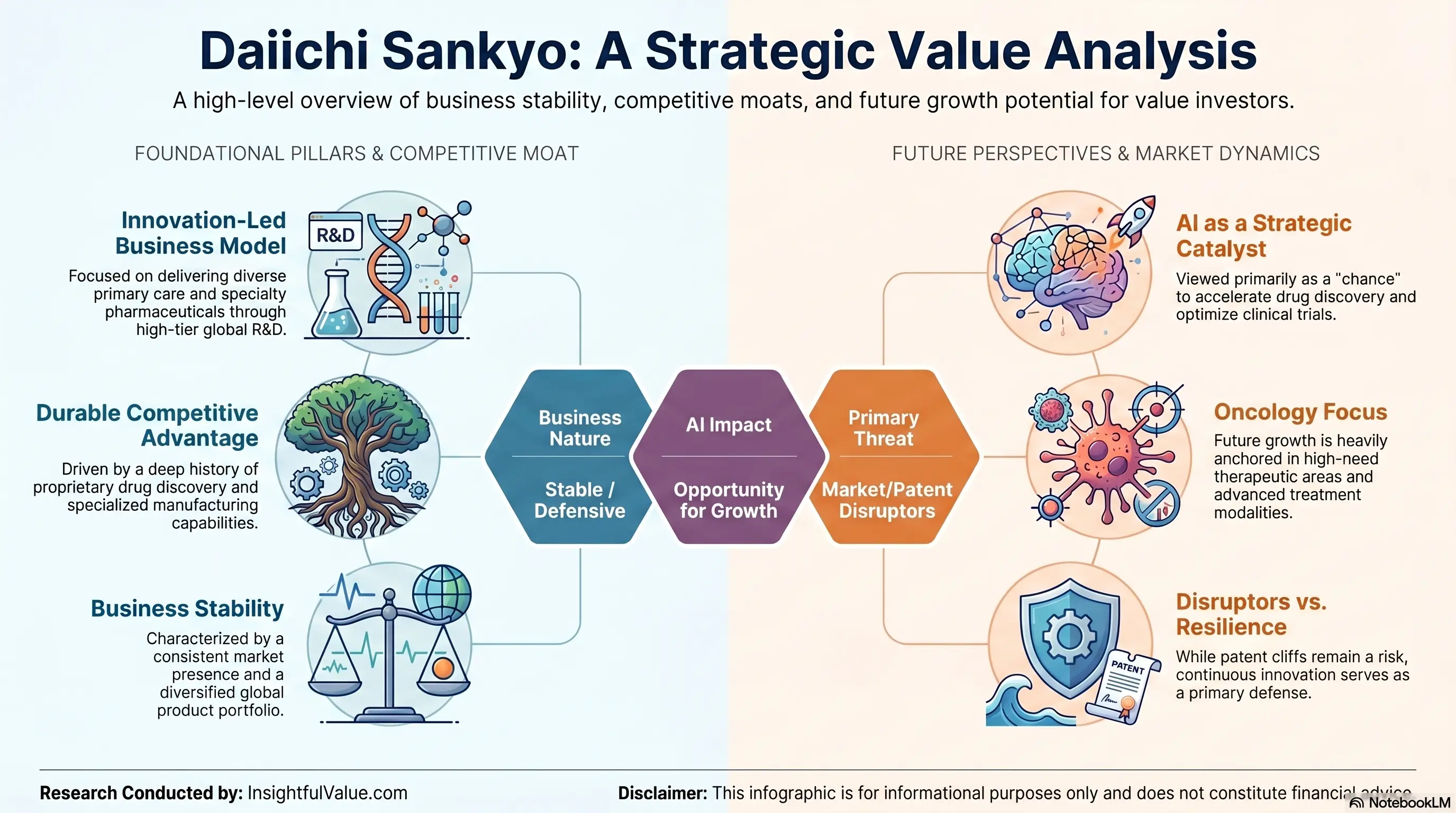
Infographic
Overview
Daiichi Sankyo is a global pharmaceutical company based in Japan. It was founded in 2005 through the merger of two Japanese pharmaceutical companies, Daiichi Pharmaceutical and Sankyo Co., Ltd. The company's global headquarters is located in Tokyo, Japan, and it has several research and development sites in Japan, Germany, and the United States.
Daiichi Sankyo is primarily focused on the development of innovative medicines for the treatment of cardiovascular, metabolic, and infectious diseases, as well as oncology. The company also has a strong presence in the over-the-counter and generic drug markets.
Daiichi Sankyo operates in more than 20 countries worldwide and has a diverse portfolio of drugs marketed in over 60 countries. The company's global sales in the fiscal year 2020 were approximately 950 billion yen (about $8.8 billion USD).
In addition to developing and marketing drugs, Daiichi Sankyo is also actively engaged in research and development collaborations with academic institutions and other pharmaceutical companies. The company's goal is to continue expanding its portfolio and delivering innovative treatment options to patients around the world.
Some of Daiichi Sankyo's notable drugs include:
- LIXIANA (rivaroxaban), an oral anticoagulant used to prevent and treat blood clots
- Thromboreductin (tenecteplase), a clot-dissolving enzyme used to treat heart attacks
- EVISTA (raloxifene), a selective estrogen receptor modulator used to treat osteoporosis and reduce the risk of developing breast cancer
- RECLAST (zoledronic acid), an intravenous medication used to treat osteoporosis and prevent bone fractures
- Benicar (olmesartan medoxomil), a blood pressure medication used to treat hypertension
- Oncology drugs, including ENHERTU (trastuzumab deruxtecan), for the treatment of HER2-positive breast and gastric cancer, and pexidartinib, for the treatment of certain types of tumors.
How to explain to a 10 year old kid about the company?

📈 Want to read more about Daiichi Sankyo?
Sign up for free
or
log in
🎁 Free download! "The Checklist Value Investor — A Smarter Way to Pick Stocks"
RGFpaWNoaS BTYW5reW8g aXMgYSBjb2 1wYW55IHRo YXQgbWFrZX MgbWVkaWNp bmVzIGFuZC BkcnVncyB0 byBoZWxwIH Blb3BsZSBm ZWVsIGJldH RlciB3aGVu IHRoZXkgYX JlIHNpY2su IFRoaW5rIG 9mIGl0IGFz IGEgYmlnIH RlYW0gb2Yg c2NpZW50aX N0cyBhbmQg ZG9jdG9ycy B3aG8gd29y ayBoYXJkIH RvIGludmVu dCBuZXcgbW VkaWNpbmVz IHRoYXQgY2 FuIHRyZWF0 IGRpc2Vhc2 VzIGFuZCBo ZWxwIHBlb3 BsZSBsaXZl IGhlYWx0aG llciBsaXZl cy48YnI+VG hlIHdheSBE YWlpY2hpIF Nhbmt5byBt YWtlcyBtb2 5leSBpcyBi eSBjcmVhdG luZyB0aGVz ZSBtZWRpY2 luZXMgYW5k IHNlbGxpbm cgdGhlbSB0 byBob3NwaX RhbHMsIHBo YXJtYWNpZX MsIGFuZCBk b2N0b3JzLi BXaGVuIHNv bWVvbmUgbm VlZHMgYSBt ZWRpY2luZS B0byBnZXQg YmV0dGVyLC B0aGVpciBk b2N0b3IgbW lnaHQgZ2l2 ZSB0aGVtIG EgcHJlc2Ny aXB0aW9uLC BhbmQgdGhl biB0aGUgcG hhcm1hY3kg cHJvdmlkZX MgdGhhdCBt ZWRpY2luZS 4gRm9yIGV2 ZXJ5IHBpbG wgb3IgYm90 dGxlIHNvbG QsIHRoZSBj b21wYW55IG Vhcm5zIG1v bmV5LiBTb2 1ldGltZXMg dGhleSBhbH NvIHBhcnRu ZXIgd2l0aC BvdGhlciBj b21wYW5pZX MgdG8gZGV2 ZWxvcCBhbm Qgc2VsbCBt ZWRpY2luZX MgdG9nZXRo ZXIsIHdoaW NoIGNhbiBo ZWxwIHRoZW 0gbWFrZSBl dmVuIG1vcm UgbW9uZXku PGJyPkRhaW ljaGkgU2Fu a3lvIGlzIH N1Y2Nlc3Nm dWwgZm9yIG EgZmV3IHJl YXNvbnMuIE ZpcnN0LCB0 aGV5IGludm VzdCBhIGxv dCBvZiB0aW 1lIGFuZCBt b25leSBpbn RvIHJlc2Vh cmNoIHRvIG NvbWUgdXAg d2l0aCBuZX cgYW5kIGJl dHRlciBtZW RpY2luZXMu IEdvb2QgbW VkaWNpbmVz IGNhbiByZW FsbHkgY2hh bmdlIHBlb3 BsZeKAmXMg bGl2ZXMsIH doaWNoIG1h a2VzIGRvY3 RvcnMgd2Fu dCB0byB1c2 UgdGhlbS4g VGhleSBhbH NvIGhhdmUg YSBzdHJvbm cgdGVhbSBv ZiBleHBlcn RzIHdobyBr bm93IGhvdy B0byBtYWtl IHRoZWlyIG 1lZGljaW5l cyBzYWZlIG FuZCBlZmZl Y3RpdmUuPG JyPkluIHRo ZSBmdXR1cm UsIERhaWlj aGkgU2Fua3 lvIGlzIGxp a2VseSB0by BrZWVwIGRv aW5nIHdlbG wgYmVjYXVz ZSB0aGVyZS B3aWxsIGFs d2F5cyBiZS BhIG5lZWQg Zm9yIG5ldy BtZWRpY2lu ZXMsIGVzcG VjaWFsbHkg YXMgcGVvcG xlIGZhY2Ug bmV3IGhlYW x0aCBjaGFs bGVuZ2VzLi BUaGV54oCZ cmUgd29ya2 luZyBvbiBu ZXcgdGVjaG 5vbG9naWVz IGFuZCB0cm VhdG1lbnRz IHRoYXQgY2 FuIGhlbHAg d2l0aCBkaX NlYXNlcyB0 aGF0IGFyZS BoYXJkIHRv IHRyZWF0IH RvZGF5LiBB cyBsb25nIG FzIHRoZXkg a2VlcCBpbm 5vdmF0aW5n IGFuZCBoZW xwaW5nIHBl b3BsZSBzdG F5IGhlYWx0 aHksIHRoZX kgc2hvdWxk IGNvbnRpbn VlIHRvIGJl IHN1Y2Nlc3 NmdWwuPGJy Pg==
What is special about the company?
📈 Want to read more about Daiichi Sankyo?
Sign up for free
or
log in
💡 Learn smarter stock picks with "The Checklist Value Investor — A Smarter Way to Pick Stocks"
MS4gUGlvbm VlcmluZyBQ aGFybWFjZX V0aWNhbCBD b21wYW55Oi BEYWlpY2hp IFNhbmt5by BpcyBhIGds b2JhbCBwaG FybWFjZXV0 aWNhbCBjb2 1wYW55IHRo YXQgaGFzIG JlZW4gaW4g b3BlcmF0aW 9uIGZvciBv dmVyIDEwMC B5ZWFycy4g SXQgaGFzIG Egc3Ryb25n IHRyYWNrIH JlY29yZCBv ZiBkZXZlbG 9waW5nIGlu bm92YXRpdm UgbWVkaWNp bmVzIGFuZC B0cmVhdG1l bnRzIGZvci B2YXJpb3Vz IGRpc2Vhc2 VzIGFuZCBj b25kaXRpb2 5zLjxicj4y LiBHbG9iYW wgUHJlc2Vu Y2U6IFRoZS Bjb21wYW55 IGhhcyBhIH N0cm9uZyBp bnRlcm5hdG lvbmFsIHBy ZXNlbmNlLC B3aXRoIG9w ZXJhdGlvbn MgaW4gbW9y ZSB0aGFuID UwIGNvdW50 cmllcyB3b3 JsZHdpZGUu IEl0IGhhcy BhIHdpZGUg bmV0d29yay BvZiByZXNl YXJjaCwgZG V2ZWxvcG1l bnQsIGFuZC BtYW51ZmFj dHVyaW5nIG ZhY2lsaXRp ZXMgaW4gQX NpYSwgRXVy b3BlLCBhbm QgTm9ydGgg QW1lcmljYS 48YnI+My4g Rm9jdXNlZC BvbiBLZXkg VGhlcmFwZX V0aWMgQXJl YXM6IERhaW ljaGkgU2Fu a3lvIGlzIG ZvY3VzZWQg b24gZGV2ZW xvcGluZyB0 cmVhdG1lbn RzIGluIGEg ZmV3IGtleS B0aGVyYXBl dXRpYyBhcm VhcywgbmFt ZWx5IGNhcm Rpb3Zhc2N1 bGFyIGRpc2 Vhc2UsIG9u Y29sb2d5LC BwYWluIG1h bmFnZW1lbn QsIGFuZCBp bW11bmUgZG lzb3JkZXJz LiBUaGlzIG FsbG93cyB0 aGUgY29tcG FueSB0byBj b25jZW50cm F0ZSBpdHMg cmVzb3VyY2 VzIGFuZCBl eHBlcnRpc2 Ugb24gZGV2 ZWxvcGluZy BlZmZlY3Rp dmUgdHJlYX RtZW50cyBp biB0aGVzZS BhcmVhcy48 YnI+NC4gQ2 9tbWl0bWVu dCB0byBSZX NlYXJjaCBh bmQgRGV2ZW xvcG1lbnQ6 IFRoZSBjb2 1wYW55IGlu dmVzdHMgYS BzaWduaWZp Y2FudCBwb3 J0aW9uIG9m IGl0cyByZX ZlbnVlIGlu dG8gcmVzZW FyY2ggYW5k IGRldmVsb3 BtZW50LCB3 aXRoIGEgc3 Ryb25nIGZv Y3VzIG9uIG RldmVsb3Bp bmcgaW5ub3 ZhdGl2ZSB0 cmVhdG1lbn RzLiBUaGlz IGNvbW1pdG 1lbnQgdG8g UiZEIGhhcy BoZWxwZWQg dGhlbSB0by BicmluZyBt YW55IGxpZm Utc2F2aW5n IGFuZCBsaW ZlLWVuaGFu Y2luZyBtZW RpY2luZXMg dG8gcGF0aW VudHMgd29y bGR3aWRlLj xicj41LiBD b2xsYWJvcm F0aXZlIEFw cHJvYWNoOi BEYWlpY2hp IFNhbmt5by BlbWJyYWNl cyBhIGNvbG xhYm9yYXRp dmUgYXBwcm 9hY2ggdG8g cmVzZWFyY2 ggYW5kIGRl dmVsb3BtZW 50LCBwYXJ0 bmVyaW5nIH dpdGggb3Ro ZXIgY29tcG FuaWVzLCBy ZXNlYXJjaC BpbnN0aXR1 dGlvbnMsIG FuZCBhY2Fk ZW1pYyBjZW 50ZXJzIHRv IGJyaW5nIG l0cyBtZWRp Y2luZXMgdG 8gbWFya2V0 LiBUaGlzIG NvbGxhYm9y YXRpb24gaG VscHMgdG8g YWNjZWxlcm F0ZSB0aGUg ZGV2ZWxvcG 1lbnQgb2Yg bmV3IGRydW dzIGFuZCB0 cmVhdG1lbn RzLjxicj42 LiBTdHJvbm cgUGlwZWxp bmU6IFRoZS Bjb21wYW55 IGhhcyBhIH JvYnVzdCBw aXBlbGluZS BvZiBpbm5v dmF0aXZlIG 1lZGljaW5l cyBpbiB2YX Jpb3VzIHN0 YWdlcyBvZi BkZXZlbG9w bWVudCwgcH JvdmlkaW5n IGEgc3Ryb2 5nIGZvdW5k YXRpb24gZm 9yIGZ1dHVy ZSBncm93dG ggYW5kIGV4 cGFuc2lvbi 48YnI+Ny4g Q29ycG9yYX RlIFNvY2lh bCBSZXNwb2 5zaWJpbGl0 eTogRGFpaW NoaSBTYW5r eW8gaXMgY2 9tbWl0dGVk IHRvIGNvcn BvcmF0ZSBz b2NpYWwgcm VzcG9uc2li aWxpdHkgYW 5kIHN1c3Rh aW5hYmlsaX R5LCB3aXRo IGEgZm9jdX Mgb24gZXRo aWNhbCBidX NpbmVzcyBw cmFjdGljZX MsIGVtcGxv eWVlIHdlbG wtYmVpbmcs IGFuZCBzb2 NpYWwgYW5k IGVudmlyb2 5tZW50YWwg aW5pdGlhdG l2ZXMuPGJy PjguIFBhdG llbnQtQ2Vu dGVyZWQgQX Bwcm9hY2g6 IFRoZSBjb2 1wYW55J3Mg bWlzc2lvbi BpcyB0byBz dHJpdmUgZm 9yIHRoZSAi Y3JlYXRpb2 4gb2YgbmV3 IGhlYWx0aG NhcmUgZnJv bnRpZXJzIi B0aHJvdWdo IHRoZSBkZX ZlbG9wbWVu dCBvZiBpbm 5vdmF0aXZl IG1lZGljaW 5lcyB0aGF0 IG1lZXQgdG hlIG5lZWRz IGFuZCBpbX Byb3ZlIHRo ZSBxdWFsaX R5IG9mIGxp ZmUgb2YgcG F0aWVudHMg d29ybGR3aW RlLjxicj45 LiBEaXZlcn NpZmllZCBQ b3J0Zm9saW 86IEluIGFk ZGl0aW9uIH RvIGl0cyBw aGFybWFjZX V0aWNhbCBi dXNpbmVzcy wgRGFpaWNo aSBTYW5reW 8gYWxzbyBo YXMgYSBwcm VzZW5jZSBp biBvdGhlci BoZWFsdGhj YXJlIHNlY3 RvcnMsIGlu Y2x1ZGluZy BvdmVyLXRo ZS1jb3VudG VyIG1lZGlj YXRpb25zLC BtZWRpY2Fs IGRldmljZX MsIGFuZCBk aWFnbm9zdG ljcywgcHJv dmlkaW5nIG EgZGl2ZXJz aWZpZWQgcG 9ydGZvbGlv IG9mIHByb2 R1Y3RzIGFu ZCBzZXJ2aW Nlcy48YnI+ MTAuIFN0cm 9uZyBNYW5h Z2VtZW50IF RlYW06IFRo ZSBjb21wYW 55IGhhcyBh IHN0cm9uZy BhbmQgZXhw ZXJpZW5jZW QgbWFuYWdl bWVudCB0ZW FtIHdpdGgg YSBwcm92ZW 4gdHJhY2sg cmVjb3JkIG 9mIHN1Y2Nl c3MgaW4gdG hlIHBoYXJt YWNldXRpY2 FsIGluZHVz dHJ5LCBlbn N1cmluZyB0 aGUgY29tcG FueSdzIHN0 cm9uZyBwZX Jmb3JtYW5j ZSBhbmQgbG 9uZy10ZXJt IHN1c3RhaW 5hYmlsaXR5 Lg==
What the company's business model?
📈 Want to read more about Daiichi Sankyo?
Sign up for free
or
log in
🆓 Discover "The Checklist Value Investor — A Smarter Way to Pick Stocks" — free eBook!
RGFpaWNoaS BTYW5reW8g aXMgYSBnbG 9iYWwgcGhh cm1hY2V1dG ljYWwgY29t cGFueSB0aG F0IGZvY3Vz ZXMgb24gdG hlIHJlc2Vh cmNoLCBkZX ZlbG9wbWVu dCwgYW5kIG 1hbnVmYWN0 dXJlIG9mIG lubm92YXRp dmUgbWVkaW NpbmVzLiBU aGVpciBidX NpbmVzcyBt b2RlbCByZX ZvbHZlcyBh cm91bmQgZG V2ZWxvcGlu ZyBhbmQgY2 9tbWVyY2lh bGl6aW5nIG 5ldyBhbmQg aW1wcm92ZW QgdHJlYXRt ZW50cyB0by BhZGRyZXNz IHVubWV0IG 1lZGljYWwg bmVlZHMuPG JyPlRoZSBj b21wYW55J3 MgY29yZSBi dXNpbmVzcy BzdHJhdGVn eSBpcyBidW lsdCBvbiB0 aHJlZSBrZX kgcGlsbGFy czogPGJyPj EuIElubm92 YXRpb246IE RhaWljaGkg U2Fua3lvIG ludmVzdHMg aGVhdmlseS BpbiByZXNl YXJjaCBhbm QgZGV2ZWxv cG1lbnQgKF ImRCkgdG8g ZGlzY292ZX IgYW5kIGRl dmVsb3Agbm V3IG1lZGlj aW5lcyBhY3 Jvc3MgYSBy YW5nZSBvZi B0aGVyYXBl dXRpYyBhcm VhcywgaW5j bHVkaW5nIG NhcmRpb3Zh c2N1bGFyLC BvbmNvbG9n eSwgYW5kIH JhcmUgZGlz ZWFzZXMuIF RoZSBjb21w YW55IGhhcy BhIGxhcmdl IGdsb2JhbC BSJkQgbmV0 d29yaywgaW 5jbHVkaW5n IHBhcnRuZX JzaGlwcyBh bmQgY29sbG Fib3JhdGlv bnMgd2l0aC BsZWFkaW5n IHVuaXZlcn NpdGllcyBh bmQgcmVzZW FyY2ggaW5z dGl0dXRpb2 5zLjxicj4y LiBHcm93dG g6IFRoZSBj b21wYW554o CZcyBncm93 dGggc3RyYX RlZ3kgaXMg Y2VudGVyZW Qgb24gZXhw YW5kaW5nIG l0cyBnbG9i YWwgcHJlc2 VuY2UgYW5k IHBvcnRmb2 xpbyB0aHJv dWdoIHN0cm F0ZWdpYyBw YXJ0bmVyc2 hpcHMsIGFs bGlhbmNlcy wgYW5kIGFj cXVpc2l0aW 9ucy4gVGhp cyBhbGxvd3 MgRGFpaWNo aSBTYW5reW 8gdG8gYWNj ZXNzIG5ldy BtYXJrZXRz LCB0ZWNobm 9sb2dpZXMs IGFuZCB0aG VyYXBpZXMs IGFzIHdlbG wgYXMgZGl2 ZXJzaWZ5IG l0cyBwcm9k dWN0IG9mZm VyaW5ncy48 YnI+My4gUm VzcG9uc2li aWxpdHk6IE RhaWljaGkg U2Fua3lvIG hhcyBhIHN0 cm9uZyBjb2 1taXRtZW50 IHRvIGV0aG ljYWwgYW5k IHNvY2lhbG x5IHJlc3Bv bnNpYmxlIG J1c2luZXNz IHByYWN0aW Nlcy4gVGhp cyBpbmNsdW RlcyBjb25k dWN0aW5nIG FsbCBidXNp bmVzcyBhY3 Rpdml0aWVz IHdpdGggaW 50ZWdyaXR5 IGFuZCB0cm Fuc3BhcmVu Y3ksIGFzIH dlbGwgYXMg c3VwcG9ydG luZyBpbml0 aWF0aXZlcy B0byBpbXBy b3ZlIGFjY2 VzcyB0byBo ZWFsdGhjYX JlIGFuZCBh ZGRyZXNzIG dsb2JhbCBo ZWFsdGggY2 hhbGxlbmdl cy48YnI+T3 ZlcmFsbCwg RGFpaWNoaS BTYW5reW8n cyBidXNpbm VzcyBtb2Rl bCBmb2N1c2 VzIG9uIGNv bnRpbnVhbG x5IGludmVz dGluZyBpbi BSJkQgYW5k IHN0cmF0ZW dpYyBncm93 dGggb3Bwb3 J0dW5pdGll cyB0byBkcm l2ZSBpbm5v dmF0aW9uIG FuZCBicmlu ZyBhZHZhbm NlZCBtZWRp Y2luZXMgdG 8gcGF0aWVu dHMgd29ybG R3aWRlLg==
Is AI a threat?
AI does pose potential threats to companies like Daiichi Sankyo, primarily through the following mechanisms:
1. Substitution: AI technologies can lead to the development of alternative treatments or therapies that may reduce the demand for specific pharmaceutical products. As AI-driven research speeds up drug discovery processes, competitors may introduce innovative therapies more quickly, potentially displacing some of Daiichi Sankyo’s offerings.
2. Disintermediation: The rise of AI in healthcare may change how patients access medications or therapies. For example, telemedicine and AI-driven diagnostic tools could enable patients to receive treatments without going through traditional channels, potentially affecting sales through established distribution networks.
3. Margin Pressure: The integration of AI in healthcare can lead to cost reductions in drug development and distribution, which could result in increased competition. If competitors leverage AI to produce drugs more efficiently and at lower costs, Daiichi Sankyo might face pressure to lower prices or increase investment in R&D to maintain its market position, impacting profit margins.
While AI can also create opportunities for pharmaceutical companies in terms of improving research and enhancing patient care, it is essential for Daiichi Sankyo to be proactive in addressing these potential threats by investing in AI capabilities and exploring collaborations with tech firms to stay competitive.
Sensitivity to interest rates
The sensitivity of Daiichi Sankyo’s earnings, cash flow, and valuation to changes in interest rates can be analyzed through several key factors.
1. Cost of Capital: Changes in interest rates affect the company’s cost of debt. If interest rates rise, borrowing costs increase, which can reduce net income and cash flow if the company relies on debt financing for operations or expansion. Conversely, lower interest rates can decrease costs, potentially boosting profitability.
2. Discount Rate and Valuation: The valuation of a company often relies on discounted cash flow (DCF) analysis, where future cash flows are discounted back to present value using a discount rate that typically includes the risk-free rate (often tied to interest rates) plus a risk premium. An increase in interest rates raises the discount rate, leading to a reduction in the present value of future cash flows, hence lowering the company’s valuation.
3. Investment Decisions: Higher interest rates can dampen investment in research and development or other growth initiatives, especially in the pharmaceutical industry, where substantial investment is required for drug development. This could affect future revenue growth prospects and overall financial health.
4. Consumer Demand and Pricing Power: Rising interest rates can slow economic growth, potentially impacting consumer spending and demand for pharmaceutical products. If consumers are more financially constrained due to higher interest payments on loans, it may reduce demand for medications and other health products, thereby affecting earnings.
5. Currency Fluctuations: Interest rate changes can affect exchange rates. For a global company like Daiichi Sankyo, currency fluctuations can impact revenue generated in international markets. A stronger Japanese yen, driven by higher domestic interest rates, could reduce the value of overseas revenue when converted back into yen.
In summary, Daiichi Sankyo’s earnings, cash flow, and valuation are moderately sensitive to changes in interest rates due to impacts on cost of capital, investment decisions, discount rates affecting valuation, consumer behavior, and currency fluctuations. Monitoring interest rate trends is critical for evaluating the company’s financial outlook and market position.
Resilience to the future changes
📈 Want to read more about Daiichi Sankyo?
Sign up for free
or
log in
📚 Your free copy of "The Checklist Value Investor — A Smarter Way to Pick Stocks" is waiting
QSByZWFsaX N0aWMgc2Nl bmFyaW8gdG hhdCBjb3Vs ZCBwZXJtYW 5lbnRseSBp bXBhaXIgRG FpaWNoaSBT YW5reW/igJ lzIGVjb25v bWljcyBvdm VyIHRoZSBu ZXh0IDPigJ M1IHllYXJz IHdvdWxkIG JlIGEgc2ln bmlmaWNhbn QgYW5kIHBy b2xvbmdlZC BmYWlsdXJl IG9mIGtleS BkcnVnIHBp cGVsaW5lcy wgcGFydGlj dWxhcmx5IG luIG9uY29s b2d5LCB3aG ljaCBpcyBh IG1ham9yIG ZvY3VzIGZv ciB0aGUgY2 9tcGFueS4g SWYgc2V2ZX JhbCBjbGlu aWNhbCB0cm lhbHMgZm9y IHByb21pc2 luZyBjYW5k aWRhdGVzIG ZhaWwgdG8g c2hvdyBlZm ZpY2FjeSBv ciBpZiByZW d1bGF0b3J5 IGJvZGllcy BkbyBub3Qg Z3JhbnQgYX Bwcm92YWxz LCBpdCBjb3 VsZCBsZWFk IHRvIHN1Yn N0YW50aWFs IHJldmVudW UgbG9zcy48 YnI+SW4gdG hpcyBzY2Vu YXJpbywgRG FpaWNoaSBT YW5reW8gbW lnaHQgZXhw ZXJpZW5jZS B0aGUgZm9s bG93aW5nIG ZpbmFuY2lh bCBpbXBhY3 RzOjxicj4x LiBNYXJnaW 5zOiBUaGUg Y29tcGFuee KAmXMgZ3Jv c3MgYW5kIG 9wZXJhdGlu ZyBtYXJnaW 5zIHdvdWxk IGxpa2VseS BkZWNsaW5l IHNoYXJwbH kuIFdpdGgg bG93ZXIgcm V2ZW51ZSBm cm9tIHByb2 R1Y3Qgc2Fs ZXMsIGZpeG VkIGNvc3Rz IHdvdWxkIG NvbnN1bWUg YSBsYXJnZX IgcG9ydGlv biBvZiByZW 1haW5pbmcg aW5jb21lLi BUaGlzIGNv dWxkIGxlYW QgdG8gb3Bl cmF0aW5nIG xvc3Nlcywg c2lnbmlmaW NhbnRseSBy ZWR1Y2luZy B0aGUgb3Zl cmFsbCBwcm 9maXRhYmls aXR5IGFuZC Bwb3NzaWJs eSBwdXNoaW 5nIHRoZSBj b21wYW55IG ludG8gYSBu ZWdhdGl2ZS BtYXJnaW4g c2NlbmFyaW 8uPGJyPjIu IENhc2ggRm xvdzogVGhl IGZhaWx1cm Ugb2Yga2V5 IGRydWcgY2 FuZGlkYXRl cyBjb3VsZC BsZWFkIHRv IGFuIGltbW VkaWF0ZSBj YXNoIGZsb3 cgY3Jpc2lz LiBBIGRyb3 AgaW4gcmV2 ZW51ZSB3b3 VsZCByZXN1 bHQgaW4gZG VjcmVhc2Vk IGNhc2ggaW 5mbG93cyBm cm9tIHByb2 R1Y3Qgc2Fs ZXMuIFRoZS Bjb21wYW55 IG1heSBuZW VkIHRvIGN1 dCBiYWNrIG 9uIFImYW1w O0Qgc3Blbm RpbmcsIGFm ZmVjdGluZy BpdHMgYWJp bGl0eSB0by Bpbm5vdmF0 ZS4gRnVydG hlcm1vcmUs IGlmIHRoZS Bjb21wYW55 IGhhcyBzaW duaWZpY2Fu dCBkZWJ0IG 9ibGlnYXRp b25zLCBzZX J2aWNpbmcg dGhpcyBkZW J0IG1pZ2h0 IGNvbnN1bW UgYSBoaWdo IHBlcmNlbn RhZ2Ugb2Yg Y2FzaCBmbG 93LCByZXN1 bHRpbmcgaW 4gbmVnYXRp dmUgY2FzaC BmbG93IHBh dHRlcm5zLj xicj4zLiBC YWxhbmNlIF NoZWV0OiBU aGUgYmFsYW 5jZSBzaGVl dCB3b3VsZC BiZSBhZHZl cnNlbHkgYW ZmZWN0ZWQg YXMgd2VsbC 4gV2l0aCBk ZWNsaW5pbm cgcmV2ZW51 ZXMgYW5kIH BvdGVudGlh bCBvcGVyYX RpbmcgbG9z c2VzLCB0aG VyZSBjb3Vs ZCBiZSBhIG Ryb3AgaW4g YXNzZXQgdm FsdWVzLCBw YXJ0aWN1bG FybHkgaWYg Z29vZHdpbG wgbGlua2Vk IHRvIGFjcX VpcmVkIGNv bXBhbmllcy BvciB0ZWNo bm9sb2dpZX MgaXMgaW1w YWlyZWQuIE lmIGNhc2gg cmVzZXJ2ZX MgZHdpbmRs ZSBkdWUgdG 8gb3BlcmF0 aW9uYWwgbG 9zc2VzLCB0 aGUgY29tcG FueSBjb3Vs ZCBmYWNlIG luY3JlYXNl ZCBsZXZlcm FnZSwgcmFp c2luZyBkZW J0LXRvLWVx dWl0eSByYX Rpb3MuIFRo aXMgc2l0dW F0aW9uIHdv dWxkIHdlYW tlbiBmaW5h bmNpYWwgc3 RhYmlsaXR5 IGFuZCBwb3 RlbnRpYWxs eSBsZWFkIH RvIGNyZWRp dCByYXRpbm cgZG93bmdy YWRlcy48Yn I+SW4gc3Vt bWFyeSwgYS Bwcm9sb25n ZWQgZmFpbH VyZSBpbiBE YWlpY2hpIF Nhbmt5b+KA mXMgZHJ1Zy BwaXBlbGlu ZSBjb3VsZC ByZXN1bHQg aW4gcHJlY2 FyaW91cyBm aW5hbmNpYW wgaGVhbHRo LCBjaGFyYW N0ZXJpemVk IGJ5IHNpZ2 5pZmljYW50 bHkgcmVkdW NlZCBtYXJn aW5zLCBuZW dhdGl2ZSBj YXNoIGZsb3 csIGFuZCBh IGNvbXByb2 1pc2VkIGJh bGFuY2Ugc2 hlZXQsIHdo aWNoIG1heS BoaW5kZXIg dGhlIGNvbX BhbnnigJlz IGFiaWxpdH kgdG8gaW52 ZXN0IGluIG Z1dHVyZSBn cm93dGggb3 IgdG8gbmF2 aWdhdGUgdW 5mb3Jlc2Vl biBjaGFsbG VuZ2VzLjxi cj4=
Interesting facts about the company
📈 Want to read more about Daiichi Sankyo?
Sign up for free
or
log in
⚡ Instantly access "The Checklist Value Investor — A Smarter Way to Pick Stocks" — free!
CiAgICAgIC AgICAgIDxk aXYgc3R5bG U9J3dpZHRo OiAxMDAlOy BkaXNwbGF5 OiBmbGV4Oy BqdXN0aWZ5 LWNvbnRlbn Q6IGNlbnRl cjsnPgogIC AgICAgICAg ICAgICAgPG RpdiBzdHls ZT0nCiAgIC AgICAgICAg ICAgICAgIC AgZGlzcGxh eTogZmxleD sKICAgICAg ICAgICAgIC AgICAgICBh bGlnbi1pdG VtczogY2Vu dGVyOwogIC AgICAgICAg ICAgICAgIC AgIGJhY2tn cm91bmQtY2 9sb3I6ICNm MGY0Zjg7Ci AgICAgICAg ICAgICAgIC AgICAgYm9y ZGVyOiAxcH ggc29saWQg I2QxZTNmMD sKICAgICAg ICAgICAgIC AgICAgICBi b3JkZXItcm FkaXVzOiAx MHB4OwogIC AgICAgICAg ICAgICAgIC AgIHBhZGRp bmc6IDEwcH g7CiAgICAg ICAgICAgIC AgICAgICAg bWFyZ2luOi AyMHB4IDA7 CiAgICAgIC AgICAgICAg ICAgICAgZm 9udC1mYW1p bHk6ICJTZW dvZSBVSSIs IFJvYm90by wgc2Fucy1z ZXJpZjsKIC AgICAgICAg ICAgICAgIC AgICBib3gt c2hhZG93Oi AwIDJweCA2 cHggcmdiYS gwLCAwLCAw LCAwLjA1KT sKICAgICAg ICAgICAgIC AgICAgICBt YXgtd2lkdG g6IDkwMHB4 OwogICAgIC AgICAgICAg ICAgICAgIH dpZHRoOiAx MDAlOyc+Cg ogICAgICAg ICAgICAgIC AgICAgIDxp bWcgc3JjPS Jhc3NldHMv bG9nb3MvZk pCNEZmczRM QUU1cG1TQ2 pkZ3Mud2Vi cCIgYWx0PS JEYWlpY2hp IFNhbmt5by IgdGl0bGU9 IkRhaWljaG kgU2Fua3lv IiAgY2xhc3 M9ImltZy1m bHVpZCIgaG VpZ2h0PTUw IHdpZHRoPT UwIGxvYWRp bmc9J2xhen knIHN0eWxl PSdib3JkZX ItcmFkaXVz OiA2cHg7Jz 4KCiAgICAg ICAgICAgIC AgICAgICAg PGRpdiBzdH lsZT0nZmxl eDogMTsgdG V4dC1hbGln bjogY2VudG VyOyBtYXJn aW4tbGVmdD ogNXB4Oyc+ CiAgICAgIC AgICAgICAg ICAgICAgIC AgIDxwIHN0 eWxlPSdmb2 50LXNpemU6 IDI2cHg7IG NvbG9yOiAj MzMzOyBtYX JnaW4tYm90 dG9tOiAxNX B4Oyc+CiAg ICAgICAgIC AgICAgICAg ICAgICAgIC AgICDwn5OI IFdhbnQgdG 8gcmVhZCBt b3JlIGFib3 V0IERhaWlj aGkgU2Fua3 lvPwogICAg ICAgICAgIC AgICAgICAg ICAgICA8L3 A+CgogICAg ICAgICAgIC AgICAgICAg ICAgICA8YS BocmVmPSdp bmRleC5waH A/cGFnZT1z aWdudXAnIH N0eWxlPScK ICAgICAgIC AgICAgICAg ICAgICAgIC AgICAgIGJh Y2tncm91bm QtY29sb3I6 ICMwMDdCRk Y7CiAgICAg ICAgICAgIC AgICAgICAg ICAgICAgIC Bjb2xvcjog I2ZmZjsKIC AgICAgICAg ICAgICAgIC AgICAgICAg ICAgIHBhZG Rpbmc6IDEw cHggMjBweD sKICAgICAg ICAgICAgIC AgICAgICAg ICAgICAgIG JvcmRlci1y YWRpdXM6ID VweDsKICAg ICAgICAgIC AgICAgICAg ICAgICAgIC AgIHRleHQt ZGVjb3JhdG lvbjogbm9u ZTsKICAgIC AgICAgICAg ICAgICAgIC AgICAgICAg IGZvbnQtd2 VpZ2h0OiBi b2xkOwogIC AgICAgICAg ICAgICAgIC AgICAgICAg ICAgbWFyZ2 luLXJpZ2h0 OiAxMHB4Ow ogICAgICAg ICAgICAgIC AgICAgICAg ICAgICAgdH JhbnNpdGlv bjogYmFja2 dyb3VuZC1j b2xvciAwLj NzIGVhc2U7 JwogICAgIC AgICAgICAg ICAgICAgIC AgICAgICAg b25tb3VzZW 92ZXI9J3Ro aXMuc3R5bG UuYmFja2dy b3VuZENvbG 9yPSIjMDA1 NmIzIicKIC AgICAgICAg ICAgICAgIC AgICAgICAg ICAgIG9ubW 91c2VvdXQ9 J3RoaXMuc3 R5bGUuYmFj a2dyb3VuZE NvbG9yPSIj MDA3QkZGIi c+CiAgICAg ICAgICAgIC AgICAgICAg ICAgICAgIC BTaWduIHVw IGZvciBmcm VlCiAgICAg ICAgICAgIC AgICAgICAg ICAgIDwvYT 4KCiAgICAg ICAgICAgIC AgICAgICAg ICAgIDxzcG FuIHN0eWxl PSdtYXJnaW 46IDAgOHB4 OyBjb2xvcj ogIzU1NTsn Pm9yPC9zcG FuPgoKICAg ICAgICAgIC AgICAgICAg ICAgICAgPG EgaHJlZj0n aW5kZXgucG hwP3BhZ2U9 bG9naW4nIH N0eWxlPScK ICAgICAgIC AgICAgICAg ICAgICAgIC AgICAgIGNv bG9yOiAjMD A3QkZGOwog ICAgICAgIC AgICAgICAg ICAgICAgIC AgICAgdGV4 dC1kZWNvcm F0aW9uOiB1 bmRlcmxpbm U7CiAgICAg ICAgICAgIC AgICAgICAg ICAgICAgIC Bmb250LXdl aWdodDogNT AwOyc+CiAg ICAgICAgIC AgICAgICAg ICAgICAgIC AgICBsb2cg aW4KICAgIC AgICAgICAg ICAgICAgIC AgICAgPC9h PgoKCiAgIC AgICAgICAg ICAgICAgIC AgICAgIDxw IHN0eWxlPS dtYXJnaW4t dG9wOiAxNX B4OyBmb250 LXNpemU6ID EzcHg7IGZv bnQtd2VpZ2 h0OiBib2xk OyBjb2xvcj ogI2QzMmYy ZjsnPgogIC AgICAgICAg ICAgICAgIC AgICAgICAg ICAg8J+Gky BEaXNjb3Zl ciA8aT4iVG hlIENoZWNr bGlzdCBWYW x1ZSBJbnZl c3RvciDigJ QgQSBTbWFy dGVyIFdheS B0byBQaWNr IFN0b2Nrcy I8L2k+IOKA lCBmcmVlIG VCb29rIQog ICAgICAgIC AgICAgICAg ICAgICAgIC A8L3A+Cgog ICAgICAgIC AgICAgICAg ICAgICAgIC A8IS0tCiAg ICAgICAgIC AgICAgICAg ICAgICAgID xkaXYgc3R5 bGU9J21hcm dpbi10b3A6 IDEycHg7IG ZvbnQtc2l6 ZTogMTNweD sgY29sb3I6 ICM0NDQ7Jz 4KICAgICAg ICAgICAgIC AgICAgICAg ICAgICAgIF NpZ24gdXAg bm93IGFuZC BnZXQgb3Vy IGZyZWUgZU Jvb2sgCiAg ICAgICAgIC AgICAgICAg ICAgICAgIC AgICA8Yj5U aGUgQ2hlY2 tsaXN0IFZh bHVlIEludm VzdG9yIOKA lCBBIFNtYX J0ZXIgV2F5 IHRvIFBpY2 sgU3RvY2tz PC9iPgogIC AgICAgICAg ICAgICAgIC AgICAgICA8 L2Rpdj4KIC AgICAgICAg ICAgICAgIC AgICAgICAg LS0+CiAgIC AgICAgICAg ICAgICAgIC AgICAgIDwh LS0KICAgIC AgICAgICAg ICAgICAgIC AgICAgPGRp diBzdHlsZT 0nbWFyZ2lu LXRvcDogMT ZweDsgZm9u dC1zaXplOi AxNHB4OyBj b2xvcjogIz Q0NDsgZm9u dC1mYW1pbH k6IC1hcHBs ZS1zeXN0ZW 0sIEJsaW5r TWFjU3lzdG VtRm9udCwg U2Vnb2UgVU ksIFJvYm90 bywgSGVsdm V0aWNhIE5l dWUsIHNhbn Mtc2VyaWY7 IGxpbmUtaG VpZ2h0OiAx LjY7Jz4KIC AgICAgICAg ICAgICAgIC AgICAgICAg ICAgIEhhdm UgeW91IGhl YXJkIGFib3 V0IG91ciBz aG9ydCA8c3 Ryb25nIHN0 eWxlPSdmb2 50LXdlaWdo dDogNjAwOy c+RGFpbHkg VmlkZW8gTm V3c2xldHRl cjwvc3Ryb2 5nPj8KICAg ICAgICAgIC AgICAgICAg ICAgICAgIC AgIDxhIGhy ZWY9J2h0dH BzOi8vd3d3 Lmluc2lnaH RmdWx2YWx1 ZS5jb20vbm V3c2xldHRl ci5waHAnIH RhcmdldD0n X2JsYW5rJy BzdHlsZT0n Y29sb3I6IC MwMDdCRkY7 IHRleHQtZG Vjb3JhdGlv bjogbm9uZT sgZm9udC13 ZWlnaHQ6ID UwMDsgbWFy Z2luLWxlZn Q6IDZweDsn PgogICAgIC AgICAgICAg ICAgICAgIC AgICAgICAg ICAgIEZpbm Qgb3V0IG1v cmUKICAgIC AgICAgICAg ICAgICAgIC AgICAgICAg IDwvYT4KIC AgICAgICAg ICAgICAgIC AgICAgICAg PC9kaXY+Ci AgICAgICAg ICAgICAgIC AgICAgICAg IC0tPgogIC AgICAgICAg ICAgICAgIC AgIDwvZGl2 PgogICAgIC AgICAgICAg ICAgPC9kaX Y+CiAgICAg ICAgICAgID wvZGl2Pgog ICAgICAgIC AgICAKICAg ICAgICAKIC AgICAgICA8 c3BhbiBjbG Fzcz0nYmx1 cnJlZC10ZX h0Jz4KICAg ICAgICAgIC AgTVM0Z1JH RnBhVyBOb2 FTQlRZVzVy IGVXOGdRMj l0Y0cgRnVl U3dnVEdsdC BhWFJsWkNC cGN5IEJoSU dkc2IySmgg YkNCd2FHRn liVyBGalpY VjBhV05oIG JDQmpiMjF3 WVcgNTVJSG RwZEdnZyBh WFJ6SUdobF lXIFJ4ZFdG eWRHVnkgY3 lCc2IyTmhk RyBWa0lHbH VJRlJ2IGEz bHZMQ0JLWV ggQmhiaTRn U1hRZyBkMk Z6SUdadmRX IDVrWldRZ2 FXNGcgTWpB d05TQjBhSC BKdmRXZG9J SFJvIFpTQn RaWEpuWlgg SWdiMllnZE hkdiBJRXBo Y0dGdVpYIE 5sSUhCb1lY SnQgWVdObG RYUnBZMiBG c0lHTnZiWE JoIGJtbGxj eXdnUkcgRn BhV05vYVNC USBhR0Z5Yl dGalpYIFYw YVdOaGJDQm ggYm1RZ1Uy RnVhMyBsdk lFTnZMaXdn IFRIUmtMan hpY2ogNHlM aUJVYUdVZy BibUZ0WlNC RVlXIGxwWT JocElGTmgg Ym10NWJ5Qj BjbSBGdWMy eGhkR1Z6IE lIUnZJSFJv WlMgQm1hWE p6ZENCMCBh SEpsWlNCMm FYIEowZFdW eklHbHUgSU VWdVoyeHBj MiBnc0lIZG 9hV05vIElI TjViV0p2Yk cgbDZaWE1n ZEdobCBJR0 52YlhCaGJu IG5pZ0psek lHTnYgYlcx cGRHMWxibi BRZ2RHOGda Mjl2IFpDQm 9aV0ZzZEcg Z3NJR2x1Ym 05MiBZWFJw ZG1VZ2FXIF JsWVhNc0lH RnUgWkNCem IyTnBZVyB3 Z1kyOXVjMk 5wIGIzVnpi bVZ6Y3kgND hZbkkrTXk0 ZyBSR0ZwYV dOb2FTIEJU WVc1cmVXOG cgYUdGeklH RWdaRyBsMl pYSnpaU0J3 IGIzSjBabT lzYVcgOGdi MllnY0hKbC BjMk55YVhC MGFXIDl1SU cxbFpHbGog YVc1bGN5d2 dabSA5amRY TnBibWNnIG IyNGdZWEps WVggTWdjM1 ZqYUNCaCBj eUJqWVhKa2 FXIDkyWVhO amRXeGggY2 l3Z2IyNWpi MiB4dloza3 NJR0Z1IFpD QndZV2x1SU cgMWhibUZu WlcxbCBibl F1SUZSb1pY IGtnWVhKbE lHRnMgYzI4 Z2FXNTJiMi B4MlpXUWdh VzRnIGRHaG xJR1JsZG0g VnNiM0J0Wl c1MCBJRzlt SUhaaFkyIE 5wYm1WeklH RnUgWkNCaW FXOXNiMiBk cFkzTXVQR0 p5IFBqUXVJ RVJoYVcgbG phR2tnVTJG dSBhM2x2SU doaGN5IEJo SUhOMGNtOX UgWnlCd2Nt VnpaVyA1al pTQnBiaUJC IGMybGhMQ0 IzYVggUm9J RzkyWlhJZy BNallsSUc5 bUlHIGwwY3 lCellXeGwg Y3lCamIyMX BibSBjZ1pu SnZiU0IwIG FHbHpJSEps WjIgbHZiaT RnU1hRZyBZ V3h6YnlCb1 lYIE1nYjNC bGNtRjAgYV c5dWN5QnBi aSBCT2IzSj BhQ0JCIGJX VnlhV05oTE MgQkZkWEp2 Y0dVcyBJR0 Z1WkNCdmRH IGhsY2lCd1 lYSjAgY3lC dlppQjBhRy BVZ2QyOXli R1F1IFBHSn lQalV1SUUg bHVJREl3TU RZcyBJRVJo YVdsamFHIG tnVTJGdWEz bHYgSUdGam NYVnBjbSBW a0lHRWdiV0 ZxIGIzSnBk SGtnYzMgUm hhMlVnS0RZ MCBKU2tnYV c0Z1NXIDVr YVdGdUlHZG wgYm1WeWFX TWdjRyBoaG NtMWhZMlYx IGRHbGpZV3 dnWTIgOXRj R0Z1ZVNCUy BZVzVpWVho NUlFIHhoWW 05eVlYUnYg Y21sbGN5NG dWRyBobElH RmpjWFZwIG MybDBhVzl1 SUcgRnNiRz kzWldRZyBS R0ZwYVdOb2 FTIEJUWVc1 cmVXOGcgZE c4Z1pYaHdZ VyA1a0lHbD BjeUJ5IFpX RmphQ0JwYm kgQmxiV1Z5 WjJsdSBaeU J0WVhKclpY IFJ6TGp4aW NqNDIgTGlC VWFHVWdZMi A5dGNHRnVl U0JwIGN5Qm piMjF0YVgg UjBaV1FnZE c4ZyBjM1Z6 ZEdGcGJtIE ZpYVd4cGRI a2cgWVc1a0 lHaGhjeSBC cGJYQnNaVz FsIGJuUmxa Q0IyWVggSn BiM1Z6SUds dSBhWFJwWV hScGRtIFZ6 SUhSdklISm wgWkhWalpT QnBkSCBNZ1 pXNTJhWEp2 IGJtMWxibl JoYkMgQnBi WEJoWTNRcy BJSE4xWTJn Z1lYIE1nY2 1Wa2RXTnAg Ym1jZ1kyRn lZbSA5dUlH VnRhWE56IG FXOXVjeUJo Ym0gUWdjSE p2Ylc5MCBh VzVuSUdkeV pXIFZ1SUhC eWIyTjEgY2 1WdFpXNTBM aiB4aWNqND NMaUJFIFlX bHBZMmhwSU YgTmhibXQ1 YnlCbyBZWE 1nWVNCemRI IEp2Ym1jZ1 ptOWogZFhN Z2IyNGdjbS BWelpXRnlZ MmdnIFlXNW tJR1JsZG0g VnNiM0J0Wl c1MCBJQ2hT SmtRcExDIE IzYVhSb0lH OTIgWlhJZ1 lTQnhkVyBG eWRHVnlJRz ltIElHbDBj eUJsYlggQn NiM2xsWlhN ZyBaR1ZrYV dOaGRHIFZr SUhSdklIUm 8gYVhNZ1lY SmxZUyA0Z1 ZHaGxlU0Jv IFlYWmxJRk ltUkMgQm1Z V05wYkdsMC BhV1Z6SUds dUlFIHBoY0 dGdUxDQkgg WlhKdFlXNT VMQyBCaGJt UWdkR2hsIE lGVnVhWFJs WkMgQlRkR0 YwWlhNcyBJ R0Z0YjI1bk lHIDkwYUdW eUlHTnYgZF c1MGNtbGxj eSA0OFluSS tPQzRnIFNX NGdNakF4TX kgd2dSR0Zw YVdObyBhU0 JUWVc1cmVX IDhnY21Wal pXbDIgWldR Z1lYQndjbS A5MllXd2da bTl5IElHbD BjeUJtYVgg SnpkQ0JoYm 5ScCBZbTlr ZVMxa2NuIF ZuSUdOdmJt cDEgWjJGMF pTQW9RVSBS REtTQndjbT lrIGRXTjBM Q0IzYUcgbG phQ0JqYjIx aSBhVzVsY3 lCaGJpIEJo Ym5ScFltOW sgZVNCaGJt UWdZUyBCam FHVnRiM1Jv IFpYSmhjSG tnWkggSjFa eUIwYnlCMC BZWEpuWlhS bFpDIEJqWV c1alpYSWcg WTJWc2JITW dZVyA1a0lH MXBibWx0IG FYcGxJR1Jo YlcgRm5aU0 IwYnlCbyBa V0ZzZEdoNU lHIE5sYkd4 ekxqeGkgY2 o0NUxpQlVh RyBVZ1kyOX RjR0Z1IGVT Qm9ZWE1nWV MgQnpkSEp2 Ym1jZyBZMj l0YldsMGJX IFZ1ZENCMG J5QncgYUds c1lXNTBhSC BKdmNIa2dZ VzVrIElHaG hjeUJ6Wlgg UWdkWEFnZE dobCBJRVJo YVdsamFHIG tnVTJGdWEz bHYgSUVadm RXNWtZWCBS cGIyNGdiMl lnIFRHbG1a U0JUWTIgbG xibU5sSUhS diBJSE4xY0 hCdmNuIFFn Y21WelpXRn kgWTJnZ1lX NWtJRyBWa2 RXTmhkR2x2 IGJpQnBiaU IwYUcgVWdi R2xtWlNCei BZMmxsYm1O bGN5IEJtYV dWc1pDNDgg WW5JK01UQX VJRSBGeklH OW1JREl3IE 1qRXNJRVJo YVcgbGphR2 tnVTJGdSBh M2x2SUdoaF pDIEJ2ZG1W eUlERTIgTE RBd01DQmxi WCBCc2IzbG xaWE1nIGQy OXliR1IzYV cgUmxJR0Z1 WkNCbiBaVz VsY21GMFpX IFFnYjNabG NpQWsgT0NC aWFXeHNhVy A5dUlHbHVJ SEpsIGRtVn VkV1V1SUUg bDBJR2x6SU hKaCBibXRs WkNCaGJXID l1WnlCMGFH VWcgZEc5d0 lESXdJSCBC b1lYSnRZV0 5sIGRYUnBZ MkZzSUcgTn ZiWEJoYm1s bCBjeUJuYk c5aVlXIHhz ZVM0PQogIC AgICAgIDwv c3Bhbj4KIC AgICAgICAK ICAgICAgIC A=
See Company Q&A
📊 Get full analytics about Daiichi Sankyo
Sign up for free
or
log in
✅ Download "The Checklist Value Investor — A Smarter Way to Pick Stocks" — totally free!