Company at a Glance
Price
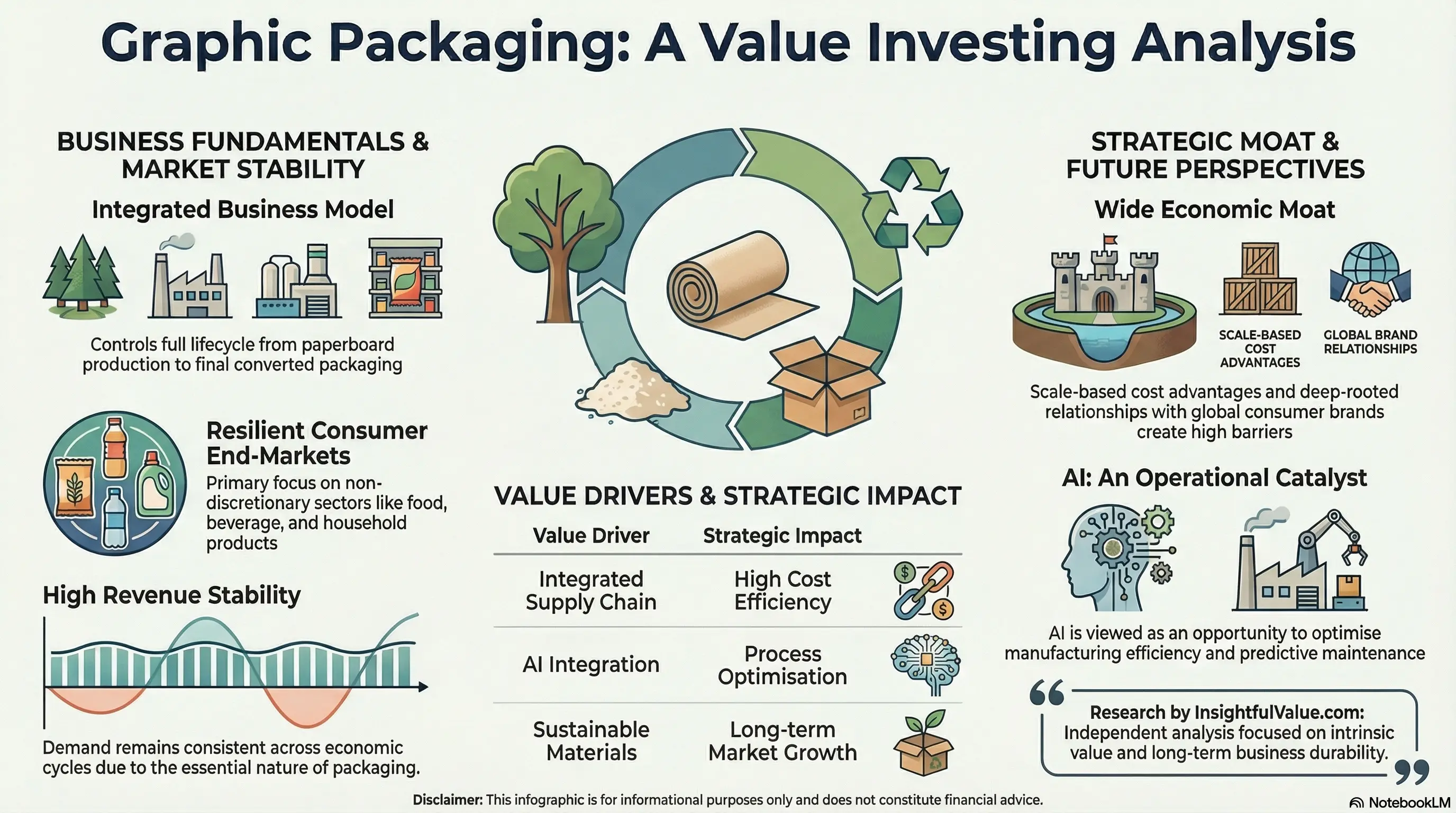
Infographic
Overview
Graphic Packaging is a global leader in the design and manufacturing of packaging for consumer goods. The company was founded in 1881 and is headquartered in Atlanta, Georgia. Graphic Packaging has over 80 manufacturing facilities worldwide and employs approximately 18,000 people.
The company offers a wide range of packaging solutions for the food, beverage, and consumer products industries. Some of its packaging products include paperboard cartons, flexible packaging, labels, and specialty packaging.
Graphic Packaging is committed to sustainability and has implemented initiatives to reduce its environmental impact. This includes using renewable materials in its packaging, increasing energy efficiency, and reducing waste.
In addition to its products, Graphic Packaging provides design, printing, and converting services to help customers create eye-catching packaging that stands out on store shelves.
The company has a strong focus on innovation and invests in research and development to continuously improve its products and processes. This has led to the development of new packaging solutions, such as the KeelClip™ packaging for cans, which uses less materials and eliminates the need for plastic rings.
Graphic Packaging is also dedicated to corporate social responsibility and is involved in various community and charitable initiatives. The company has been recognized for its efforts in sustainability, innovation, and corporate responsibility by organizations such as the Dow Jones Sustainability Index, the Packaging Innovation Awards, and the FTSE4Good Index.
In summary, Graphic Packaging is a leading packaging company with a global presence and a commitment to sustainability, innovation, and social responsibility. Its high-quality packaging solutions have made it a trusted partner for many of the world’s largest consumer goods companies.
How to explain to a 10 year old kid about the company?

📈 Want to read more about Graphic Packaging?
Sign up for free
or
log in
✍️ Sign up to get "The Checklist Value Investor — A Smarter Way to Pick Stocks" for free
R3JhcGhpYy BQYWNrYWdp bmcgaXMgYS Bjb21wYW55 IHRoYXQgaG VscHMgb3Ro ZXIgYnVzaW 5lc3NlcyBw YWNrYWdlIH RoZWlyIHBy b2R1Y3RzLi BJbWFnaW5l IGlmIHlvdS BidXkgY2Vy ZWFsIG9yIH NuYWNrcyBh dCB0aGUgc3 RvcmU7IHRo ZXkgYWxsIG hhdmUgc3Bl Y2lhbCBib3 hlcyBvciB3 cmFwcGVycy B0byBrZWVw IHRoZSBmb2 9kIHNhZmUg YW5kIHRvIG 1ha2UgaXQg bG9vayBuaW NlLiBUaGF0 4oCZcyB3aG F0IEdyYXBo aWMgUGFja2 FnaW5nIGRv ZXMhIFRoZX kgY3JlYXRl IGFuZCBtYW tlIGNhcnRv bnMgYW5kIG JveGVzIG91 dCBvZiBwYX BlcmJvYXJk IGFuZCBvdG hlciBtYXRl cmlhbHMgZm 9yIGZvb2Qs IGRyaW5rcy wgYW5kIGV2 ZW4gdGhpbm dzIGxpa2Ug bWVkaWNpbm UuPGJyPk5v dywgaG93IG RvZXMgdGhl IGNvbXBhbn kgbWFrZSBt b25leT8gV2 VsbCwgdGhl eSBlYXJuIG 1vbmV5IGJ5 IHNlbGxpbm cgdGhlc2Ug cGFja2FnaW 5nIG1hdGVy aWFscyB0by BkaWZmZXJl bnQgY29tcG FuaWVzIHRo YXQgbmVlZC B0aGVtIGZv ciB0aGVpci Bwcm9kdWN0 cy4gV2hlbi BhIGNvbXBh bnkgd2FudH MgdG8gc2Vs bCBzb21ldG hpbmcsIGl0 IGhhcyB0by BtYWtlIGl0 IGxvb2sgZ2 9vZCBhbmQg cHJvdGVjdC BpdCB3aGls ZSBpdOKAmX MgYmVpbmcg ZGVsaXZlcm VkIHRvIHN0 b3Jlcy4gU2 8sIHRoZXNl IGNvbXBhbm llcyBwYXkg R3JhcGhpYy BQYWNrYWdp bmcgZm9yIH RoZWlyIHBh Y2thZ2luZy BkZXNpZ25z IGFuZCBtYX RlcmlhbHMu PGJyPkdyYX BoaWMgUGFj a2FnaW5nIG lzIHN1Y2Nl c3NmdWwgYm VjYXVzZSBw YWNrYWdpbm cgaXMgYWx3 YXlzIG5lZW RlZC4gQXMg bG9uZyBhcy B0aGVyZSBh cmUgcHJvZH VjdHMgdG8g c2VsbCwgdG hlcmUgd2ls bCBiZSBhIG 5lZWQgZm9y IHBhY2thZ2 VzLiBUaGV5 IGFyZSBhbH NvIHNtYXJ0 IGFib3V0IH VzaW5nIG1h dGVyaWFscy B0aGF0IGFy ZSBnb29kIG ZvciB0aGUg ZW52aXJvbm 1lbnQsIGxp a2UgcmVjeW NsaW5nIHBh cGVyLiBNYW 55IGNvbXBh bmllcyBhbm QgcGVvcGxl IHByZWZlci B0byBidXkg ZnJvbSBidX NpbmVzc2Vz IHRoYXQgY2 FyZSBhYm91 dCB0aGUgcG xhbmV0LCBz byB0aGlzIG hlbHBzIEdy YXBoaWMgUG Fja2FnaW5n IGF0dHJhY3 QgbW9yZSBj dXN0b21lcn MuPGJyPklu IHRoZSBmdX R1cmUsIEdy YXBoaWMgUG Fja2FnaW5n IGlzIGxpa2 VseSB0byBr ZWVwIGRvaW 5nIHdlbGwu IE1vcmUgY2 9tcGFuaWVz IGFyZSBsb2 9raW5nIGZv ciB3YXlzIH RvIGJlIGVj by1mcmllbm RseSwgYW5k IEdyYXBoaW MgUGFja2Fn aW5nIGlzIG FscmVhZHkg Zm9jdXNlZC BvbiB0aGF0 LiBQbHVzLC BhcyBuZXcg cHJvZHVjdH MgYXJlIGlu dmVudGVkLC B0aGV5IHdp bGwgbmVlZC BuZXcgdHlw ZXMgb2YgcG Fja2FnaW5n LiBTbywgYm VjYXVzZSB0 aGV5IGhlbH Agb3RoZXIg Y29tcGFuaW VzIGFuZCBo YXZlIGEgZ3 JlYXQgZm9j dXMgb24gdG hlIGVudmly b25tZW50LC B0aGV5IGFy ZSBzZXQgdG 8gYmUgc3Vj Y2Vzc2Z1bC Bmb3IgYSBs b25nIHRpbW UhPGJyPg==
What is special about the company?
📈 Want to read more about Graphic Packaging?
Sign up for free
or
log in
⚡ Instantly access "The Checklist Value Investor — A Smarter Way to Pick Stocks" — free!
MS4gQSBMZW FkZXIgaW4g UGFja2FnaW 5nIElubm92 YXRpb246IE dyYXBoaWMg UGFja2FnaW 5nIGlzIGtu b3duIGZvci BpdHMgaW5u b3ZhdGl2ZS Bzb2x1dGlv bnMgaW4gcG Fja2FnaW5n IGRlc2lnbi BhbmQgbWFu dWZhY3R1cm luZy4gVGhl IGNvbXBhbn kgY29uc3Rh bnRseSBpbn Zlc3RzIGlu IHJlc2Vhcm NoIGFuZCBk ZXZlbG9wbW VudCB0byBp bXByb3ZlIG FuZCBpbnRy b2R1Y2Ugbm V3IHBhY2th Z2luZyBtYX RlcmlhbHMs IGRlc2lnbn MsIGFuZCBw cm9jZXNzZX MuPGJyPjIu IFdpZGUgUm FuZ2Ugb2Yg UHJvZHVjdH M6IFRoZSBj b21wYW55IG 9mZmVycyBh IGRpdmVyc2 UgcmFuZ2Ug b2YgcGFja2 FnaW5nIHNv bHV0aW9ucy wgaW5jbHVk aW5nIGZvbG RpbmcgY2Fy dG9ucywgcG FwZXJib2Fy ZCBwYWNrYW dpbmcsIGFu ZCBiZXZlcm FnZSBwYWNr YWdpbmcuIF RoaXMgYWxs b3dzIHRoZW 0gdG8gY2F0 ZXIgdG8gZG lmZmVyZW50 IGluZHVzdH JpZXMgYW5k IGN1c3RvbW VyIG5lZWRz Ljxicj4zLi BTdXN0YWlu YWJpbGl0eT ogR3JhcGhp YyBQYWNrYW dpbmcgaXMg Y29tbWl0dG VkIHRvIHN1 c3RhaW5hYm lsaXR5IGFu ZCBoYXMgYS BzdHJvbmcg Zm9jdXMgb2 4gdXNpbmcg cmVuZXdhYm xlIG1hdGVy aWFscyBhbm QgcmVkdWNp bmcgaXRzIG Vudmlyb25t ZW50YWwgaW 1wYWN0LiBU aGUgY29tcG FueSBoYXMg c2V0IGFtYm l0aW91cyBn b2FscyB0by ByZWR1Y2Ug Z3JlZW5ob3 VzZSBnYXMg ZW1pc3Npb2 5zLCB3YXRl ciBhbmQgZW 5lcmd5IGNv bnN1bXB0aW 9uLCBhbmQg d2FzdGUgZ2 VuZXJhdGlv bi48YnI+NC 4gR2xvYmFs IFByZXNlbm NlOiBXaXRo IG9wZXJhdG lvbnMgaW4g Tm9ydGggQW 1lcmljYSwg RXVyb3BlLC BBc2lhLCBh bmQgTGF0aW 4gQW1lcmlj YSwgR3JhcG hpYyBQYWNr YWdpbmcgaG FzIGEgc3Ry b25nIGdsb2 JhbCBwcmVz ZW5jZS4gVG hpcyBlbmFi bGVzIHRoZS Bjb21wYW55 IHRvIHNlcn ZlIGN1c3Rv bWVycyBpbi BkaWZmZXJl bnQgcmVnaW 9ucyBhbmQg dGFwIGludG 8gbmV3IG1h cmtldHMuPG JyPjUuIEN1 c3RvbWVyIE ZvY3VzOiBH cmFwaGljIF BhY2thZ2lu ZyBoYXMgYS BjdXN0b21l ci1jZW50cm ljIGFwcHJv YWNoIGFuZC Bwcmlvcml0 aXplcyB1bm RlcnN0YW5k aW5nIGFuZC BmdWxmaWxs aW5nIHRoZW lyIGN1c3Rv bWVyc+KAmS BuZWVkcy4g VGhlaXIgZG VlcCB1bmRl cnN0YW5kaW 5nIG9mIG1h cmtldCB0cm VuZHMgYW5k IGNvbnN1bW VyIGJlaGF2 aW9yIGhlbH BzIHRoZW0g cHJvdmlkZS BjdXN0b21p emVkIHBhY2 thZ2luZyBz b2x1dGlvbn MgdG8gdGhl aXIgY2xpZW 50cy48YnI+ Ni4gQ29tbW l0bWVudCB0 byBRdWFsaX R5OiBHcmFw aGljIFBhY2 thZ2luZyBo YXMgYSBzdH JvbmcgY29t bWl0bWVudC B0byBxdWFs aXR5IGFuZC Bjb25zaXN0 ZW50bHkgZG VsaXZlcnMg aGlnaC1xdW FsaXR5IHBy b2R1Y3RzIG FuZCBzZXJ2 aWNlcy4gVG hleSBoYXZl IGEgcmlnb3 JvdXMgcXVh bGl0eSBjb2 50cm9sIHBy b2Nlc3MgaW 4gcGxhY2Ug dG8gZW5zdX JlIHRoYXQg dGhlaXIgcG Fja2FnaW5n IG1lZXRzIH RoZSBoaWdo ZXN0IHN0YW 5kYXJkcy48 YnI+Ny4gU3 Ryb25nIElu ZHVzdHJ5IF JlcHV0YXRp b246IFRoZS Bjb21wYW55 IGhhcyBhIG xvbmctc3Rh bmRpbmcgcm VwdXRhdGlv biBmb3IgcX VhbGl0eSwg cmVsaWFiaW xpdHksIGFu ZCBpbm5vdm F0aW9uIGlu IHRoZSBwYW NrYWdpbmcg aW5kdXN0cn kuIFRoZXkg aGF2ZSB3b2 4gbnVtZXJv dXMgYXdhcm RzIGFuZCBy ZWNvZ25pdG lvbiBmb3Ig dGhlaXIgcH JvZHVjdHMg YW5kIHNlcn ZpY2VzLCBm dXJ0aGVyIH NvbGlkaWZ5 aW5nIHRoZW lyIHBvc2l0 aW9uIGFzIG EgbGVhZGVy IGluIHRoZS BpbmR1c3Ry eS48YnI+OC 4gSW52ZXN0 bWVudHMgaW 4gVGVjaG5v bG9neTogR3 JhcGhpYyBQ YWNrYWdpbm cgaW52ZXN0 cyBoZWF2aW x5IGluIHN0 YXRlLW9mLX RoZS1hcnQg dGVjaG5vbG 9neSBhbmQg ZXF1aXBtZW 50IHRvIGVu aGFuY2UgaX RzIG1hbnVm YWN0dXJpbm cgY2FwYWJp bGl0aWVzIG FuZCBpbmNy ZWFzZSBlZm ZpY2llbmN5 LiBUaGlzIG FsbG93cyB0 aGVtIHRvIG RlbGl2ZXIg aGlnaC1xdW FsaXR5IHBh Y2thZ2luZy Bzb2x1dGlv bnMgYXQgYS Bjb21wZXRp dGl2ZSBwcm ljZS48YnI+ OS4gRW1wbG 95ZWUgRGV2 ZWxvcG1lbn Q6IFRoZSBj b21wYW55IH ZhbHVlcyBp dHMgZW1wbG 95ZWVzIGFu ZCBzdHJpdm VzIHRvIGNy ZWF0ZSBhIH Bvc2l0aXZl IGFuZCBpbm NsdXNpdmUg d29yayBjdW x0dXJlLiBU aGV5IHByb3 ZpZGUgb3Bw b3J0dW5pdG llcyBmb3Ig Y2FyZWVyIG dyb3d0aCBh bmQgZGV2ZW xvcG1lbnQs IGFuZCBlbX Bsb3llZXMg YXJlIGVuY2 91cmFnZWQg dG8gY29udG ludW91c2x5 IGxlYXJuIG FuZCBpbXBy b3ZlLjxicj 4xMC4gU3Ry b25nIEZpbm FuY2lhbCBQ ZXJmb3JtYW 5jZTogR3Jh cGhpYyBQYW NrYWdpbmcg aGFzIGEgaG lzdG9yeSBv ZiBzdHJvbm cgZmluYW5j aWFsIHBlcm Zvcm1hbmNl IGFuZCBoYX MgY29uc2lz dGVudGx5IG RlbGl2ZXJl ZCBzb2xpZC ByZXN1bHRz IGZvciBpdH Mgc2hhcmVo b2xkZXJzLi BUaGlzIHN0 YWJpbGl0eS BhbmQgc3Vj Y2VzcyBtYW tlIHRoZSBj b21wYW55IG EgdHJ1c3R3 b3J0aHkgYW 5kIHJlbGlh YmxlIHBhcn RuZXIgZm9y IGl0cyBjdX N0b21lcnMu
What the company's business model?
📈 Want to read more about Graphic Packaging?
Sign up for free
or
log in
👥 Free eBook for new users: "The Checklist Value Investor — A Smarter Way to Pick Stocks"
R3JhcGhpYy BQYWNrYWdp bmcgaXMgYS BnbG9iYWwg cHJvdmlkZX Igb2Ygc3Vz dGFpbmFibG UgZmliZXIt YmFzZWQgcG Fja2FnaW5n IHNvbHV0aW 9ucyBmb3Ig Y29uc3VtZX IgcGFja2Fn ZWQgZ29vZH MgY29tcGFu aWVzLiBUaG UgY29tcGFu eeKAmXMgYn VzaW5lc3Mg bW9kZWwgaX MgYmFzZWQg b24gdGhyZW UgbWFpbiBw aWxsYXJzOi BJbm5vdmF0 aW9uLCBTdX N0YWluYWJp bGl0eSwgYW 5kIEdyb3d0 aC48YnI+MS 4gSW5ub3Zh dGlvbjogR3 JhcGhpYyBQ YWNrYWdpbm cgY29udGlu dW91c2x5IG ludmVzdHMg aW4gcmVzZW FyY2ggYW5k IGRldmVsb3 BtZW50IHRv IGNyZWF0ZS Bpbm5vdmF0 aXZlIHBhY2 thZ2luZyBz b2x1dGlvbn MgdGhhdCBt ZWV0IHRoZS Bldm9sdmlu ZyBuZWVkcy BvZiBpdHMg Y3VzdG9tZX JzLiBUaGUg Y29tcGFueS BvZmZlcnMg YSB3aWRlIH JhbmdlIG9m IHByb2R1Y3 RzIGFuZCBz ZXJ2aWNlcy wgaW5jbHVk aW5nIHBhcG VyYm9hcmQg cGFja2FnaW 5nLCBmb2xk aW5nIGNhcn RvbnMsIGFu ZCBzcGVjaW FsdHkgcGFj a2FnaW5nLC BkZXNpZ25l ZCB0byBwcm 90ZWN0IGFu ZCBwcm9tb3 RlIGl0cyBj dXN0b21lcn PigJkgcHJv ZHVjdHMgd2 hpbGUgYWxz byBlbmhhbm NpbmcgdGhl IGNvbnN1bW Vy4oCZcyBl eHBlcmllbm NlLjxicj4y LiBTdXN0YW luYWJpbGl0 eTogQXMgYS BsZWFkZXIg aW4gc3VzdG FpbmFibGUg cGFja2FnaW 5nLCBHcmFw aGljIFBhY2 thZ2luZyBp cyBjb21taX R0ZWQgdG8g cmVkdWNpbm cgaXRzIGVu dmlyb25tZW 50YWwgaW1w YWN0LiBUaG UgY29tcGFu eSB1c2VzIH JlbmV3YWJs ZSBhbmQgcm VjeWNsYWJs ZSBtYXRlcm lhbHMgaW4g aXRzIHBhY2 thZ2luZyBw cm9kdWN0cy BhbmQgZW1w bG95cyBlZm ZpY2llbnQg cHJvZHVjdG lvbiBwcm9j ZXNzZXMgdG 8gbWluaW1p emUgd2FzdG UuIEdyYXBo aWMgUGFja2 FnaW5nIGFs c28gcHJvdm lkZXMgaXRz IGN1c3RvbW VycyB3aXRo IHN1c3RhaW 5hYmxlIHBh Y2thZ2luZy BvcHRpb25z LCBzdXBwb3 J0aW5nIHRo ZWlyIG93bi BzdXN0YWlu YWJpbGl0eS Bnb2Fscy48 YnI+My4gR3 Jvd3RoOiBH cmFwaGljIF BhY2thZ2lu ZyBhaW1zIH RvIGNvbnRp bnVhbGx5IG dyb3cgaXRz IGJ1c2luZX NzIGFuZCBl eHBhbmQgaW 50byBuZXcg bWFya2V0cy B0aHJvdWdo IHN0cmF0ZW dpYyBhY3F1 aXNpdGlvbn MgYW5kIG9y Z2FuaWMgZ3 Jvd3RoIGlu aXRpYXRpdm VzLiBUaGUg Y29tcGFuee KAmXMgc3Ry b25nIGN1c3 RvbWVyIHJl bGF0aW9uc2 hpcHMgYW5k IHdpZGUgcH JvZHVjdCBv ZmZlcmluZy Bwb3NpdGlv biBpdCBmb3 IgY29udGlu dWVkIGdyb3 d0aCBpbiB2 YXJpb3VzIG luZHVzdHJp ZXMsIHN1Y2 ggYXMgZm9v ZCBhbmQgYm V2ZXJhZ2Us IGhvdXNlaG 9sZCBhbmQg cGVyc29uYW wgY2FyZSwg YW5kIGhlYW x0aGNhcmUu PGJyPk92ZX JhbGwsIEdy YXBoaWMgUG Fja2FnaW5n 4oCZcyBidX NpbmVzcyBt b2RlbCBmb2 N1c2VzIG9u IHByb3ZpZG luZyBpbm5v dmF0aXZlLC BzdXN0YWlu YWJsZSwgYW 5kIGhpZ2gt cXVhbGl0eS BwYWNrYWdp bmcgc29sdX Rpb25zIHRv IGl0cyBjdX N0b21lcnMs IHdoaWxlIG Fsc28gZHJp dmluZyBncm 93dGggYW5k IHByb2ZpdG FiaWxpdHkg Zm9yIHRoZS Bjb21wYW55 Lg==
Is AI a threat?
AI does present various challenges and opportunities for a company like Graphic Packaging, which specializes in paper-based packaging solutions. Here’s a breakdown of potential threats through substitution, disintermediation, and margin pressure:
1. Substitution: AI can enable new materials and technologies that may serve as substitutes for traditional paper-based packaging. For instance, advancements in biodegradable plastics or smart packaging using AI-driven sensors could appeal to consumers and businesses looking for innovative solutions. If competitors adopt these technologies effectively, it could lead to a decline in demand for Graphic Packaging’s products.
2. Disintermediation: AI can streamline supply chains and production processes, potentially allowing companies to source materials and manufacture packaging solutions more efficiently, reducing reliance on intermediaries. For example, businesses may opt for direct sourcing from producers that utilize AI-enhanced processes, bypassing traditional packaging companies. This could erode Graphic Packaging’s market position if customers find more efficient alternatives.
3. Margin Pressure: Increased automation and efficiency driven by AI could lead to downward pressures on pricing. Competitors leveraging AI can reduce their operational costs and potentially offer lower prices, putting pressure on Graphic Packaging’s profit margins. Additionally, if AI facilitates the creation of more customized or innovative packaging solutions from rivals, it may force Graphic Packaging to invest in similar capabilities, further impacting margins.
Overall, while AI poses certain competitive threats to Graphic Packaging’s traditional business model, it also offers opportunities for innovation and efficiency improvements. The key will be how the company adapts to these changes, leveraging AI to enhance its offerings while mitigating the material risks associated with competition and market shifts.
Sensitivity to interest rates
The sensitivity of Graphic Packaging’s earnings, cash flow, and valuation to changes in interest rates can be attributed to several factors:
1. Interest Expenses: If Graphic Packaging has significant debt, changes in interest rates can affect their interest expenses. An increase in rates would raise the cost of servicing this debt, potentially reducing net earnings and cash flow. Conversely, if rates decrease, interest expenses would fall, benefiting the company’s bottom line.
2. Cost of Capital: Rising interest rates generally increase the company’s weighted average cost of capital (WACC). A higher WACC can negatively impact valuation, as future cash flows discounted at a higher rate will yield a lower present value. This can also hinder growth prospects and investments if the company has to pay more to finance projects.
3. Consumer Demand: Higher interest rates can reduce consumer spending, particularly for products that require financing. If Graphic Packaging’s customers face higher borrowing costs, it may lead to decreased demand for packaging solutions, impacting sales and revenue, which can subsequently affect earnings and cash flow.
4. Liquidity Position: In an environment of rising interest rates, access to credit may become more expensive or constrained. This situation could pressure the company’s liquidity, making it more challenging to invest in growth opportunities, manage working capital, or respond to economic fluctuations.
5. Operational Costs: Interest rates can also influence overall economic conditions, including inflation and commodity prices. If rates rise significantly, operating costs may increase, further squeezing margins and affecting cash flow.
In summary, Graphic Packaging’s earnings, cash flow, and valuation are sensitive to changes in interest rates due to their impact on financing costs, consumer demand, capital costs, and overall economic conditions. Each of these elements can materially influence the company’s financial performance and market perception.
Resilience to the future changes
📈 Want to read more about Graphic Packaging?
Sign up for free
or
log in
📝 Join us and grab your copy of "The Checklist Value Investor — A Smarter Way to Pick Stocks"
QSByZWFsaX N0aWMgc2Nl bmFyaW8gdG hhdCBjb3Vs ZCBwZXJtYW 5lbnRseSBp bXBhaXIgR3 JhcGhpYyBQ YWNrYWdpbm cgSG9sZGlu ZyBDb21wYW 554oCZcyBl Y29ub21pY3 Mgb3ZlciB0 aGUgbmV4dC Az4oCTNSB5 ZWFycyBpcy BhIHNpZ25p ZmljYW50IG RlY2xpbmUg aW4gZGVtYW 5kIGZvciBw YXBlci1iYX NlZCBwYWNr YWdpbmcgZH JpdmVuIGJ5 IGEgcmFwaW Qgc2hpZnQg dG93YXJkIG FsdGVybmF0 aXZlIHBhY2 thZ2luZyBz b2x1dGlvbn MsIHN1Y2gg YXMgZmxleG libGUgcGFj a2FnaW5nIG 9yIGluY3Jl YXNlZCBhZG 9wdGlvbiBv ZiBkaWdpdG FsIHBhY2th Z2luZyB0ZW Nobm9sb2dp ZXMuIDxicj 5UaGlzIHRy YW5zaXRpb2 4gY291bGQg YmUgZnVlbG VkIGJ5IHNl dmVyYWwgZm FjdG9ycywg aW5jbHVkaW 5nOjxicj4x LiBDb25zdW 1lciBQcmVm ZXJlbmNlcz ogSW5jcmVh c2luZyBjb2 5zdW1lciBk ZW1hbmQgZm 9yIHN1c3Rh aW5hYmxlIH BhY2thZ2lu ZyBtYXkgbG VhZCB0byBh IHN1cmdlIG luIGZsZXhp YmxlIG9yIH JldXNhYmxl IHBhY2thZ2 luZyBtYXRl cmlhbHMsIG RldHJhY3Rp bmcgZnJvbS B0aGUgdHJh ZGl0aW9uYW wgcGFwZXIg YW5kIGNhcm Rib2FyZCBw cm9kdWN0cy B0aGF0IEdy YXBoaWMgUG Fja2FnaW5n IHByb2R1Y2 VzLjxicj4y LiBJbm5vdm F0aW9uIGFu ZCBDb21wZX RpdGlvbjog Q29tcGV0aX RvcnMgYWRv cHRpbmcgYW R2YW5jZWQg dGVjaG5vbG 9naWVzIGZv ciBwcm9kdW NpbmcgbGln aHR3ZWlnaH QsIGVmZmlj aWVudCwgYW 5kIGZsZXhp YmxlIHBhY2 thZ2luZyBz b2x1dGlvbn MgY291bGQg Y2FwdHVyZS BtYXJrZXQg c2hhcmUuIE 5ldyBlbnRy YW50cyBsZX ZlcmFnaW5n IGlubm92YX RpdmUgbWF0 ZXJpYWxzIG 1pZ2h0IGFs c28gZGlzcn VwdCB0cmFk aXRpb25hbC BwYXBlci1i YXNlZCBwYW NrYWdpbmcu PGJyPjMuIF JlZ3VsYXRv cnkgQ2hhbm dlczogU3Ry aWN0ZXIgcm VndWxhdGlv bnMgYXJvdW 5kIHJlY3lj bGluZyBhbm Qgc3VzdGFp bmFiaWxpdH kgY291bGQg aW5jZW50aX ZpemUgY29t cGFuaWVzIH RvIHRyYW5z aXRpb24gYX dheSBmcm9t IHBhcGVyIH Byb2R1Y3Rz LCByZXN1bH RpbmcgaW4g bG93ZXIgZG VtYW5kIGZv ciBHcmFwaG ljIFBhY2th Z2luZ+KAmX Mgb2ZmZXJp bmdzLjxicj 40LiBSYXcg TWF0ZXJpYW wgQ29zdHM6 IEFuIGluY3 JlYXNlIGlu IHRoZSBjb3 N0IG9mIHB1 bHAgYW5kIH BhcGVyIHBy b2R1Y3Rpb2 4sIGluZmx1 ZW5jZWQgYn kgZmFjdG9y cyBsaWtlIG NsaW1hdGUg Y2hhbmdlLC BkZWZvcmVz dGF0aW9uIG xhd3MsIGFu ZCB0YXJpZm ZzIG9uIHJl c291cmNlcy wgY291bGQg bWFrZSBpdC Btb3JlIGV4 cGVuc2l2ZS Bmb3IgR3Jh cGhpYyBQYW NrYWdpbmcg dG8gcHJvZH VjZSBwYXBl ciBwcm9kdW N0cywgZnVy dGhlciByZW R1Y2luZyBt YXJnaW5zLj xicj5JZiB0 aGlzIHNjZW 5hcmlvIHBs YXllZCBvdX QsIHRoZSBj b21wYW554o CZcyBtYXJn aW5zIHdvdW xkIGxpa2Vs eSBleHBlcm llbmNlIGEg c2lnbmlmaW NhbnQgY29u dHJhY3Rpb2 4uIFdpdGgg YSBkZWNsaW 5lIGluIHNh bGVzIHZvbH VtZSBhbmQg cHJpY2luZy BwcmVzc3Vy ZSBmcm9tIG NvbXBldGl0 aW9uLCB0aG UgY29zdCBz dHJ1Y3R1cm Ugd291bGQg YWxzbyBmYW NlIGNoYWxs ZW5nZXMgZH VlIHRvIGZp eGVkIGNvc3 RzIHJlbWFp bmluZyByZW xhdGl2ZWx5 IGNvbnN0YW 50IGFnYWlu c3QgcmVkdW NlZCByZXZl bnVlcy4gVG hpcyBlcm9z aW9uIG9mIG 1hcmdpbnMg Y291bGQgbG VhZCB0byBh IGRlY2xpbm UgaW4gb3Bl cmF0aW5nIG luY29tZSBh bmQgbmV0IH Byb2ZpdC48 YnI+Q2FzaC BmbG93IHdv dWxkIHNpbW lsYXJseSBi ZSBpbXBhY3 RlZCwgYXMg cmVkdWNlZC ByZXZlbnVl cyB3b3VsZC BkaW1pbmlz aCB0aGUgaW 5mbG93IG9m IGNhc2ggZn JvbSBvcGVy YXRpb25zLi BBZGRpdGlv bmFsbHksIG FueSBpbmNy ZWFzZWQgaW 52ZXN0bWVu dHMgcmVxdW lyZWQgdG8g aW5ub3ZhdG Ugb3IgcGl2 b3QgdG93YX JkIGFsdGVy bmF0aXZlIH Byb2R1Y3Rz IGNvdWxkIH N0cmFpbiBj YXNoIHJlc2 VydmVzLCBu ZWNlc3NpdG F0aW5nIHJl bGlhbmNlIG 9uIGRlYnQg b3Igb3RoZX IgZmluYW5j aW5nIG1ldG hvZHMgdG8g bWFpbnRhaW 4gb3BlcmF0 aW9ucy48Yn I+UmVnYXJk aW5nIHRoZS BiYWxhbmNl IHNoZWV0LC B3ZSB3b3Vs ZCBleHBlY3 QgdG8gc2Vl IHNldmVyYW wgYWR2ZXJz ZSBlZmZlY3 RzLiBUaGUg Y29tcGFuee KAmXMgYXNz ZXQgYmFzZS BtaWdodCBi ZWNvbWUgaW 1wYWlyZWQg aWYgaW52ZW 50b3J5IGxl dmVscyByaX NlIGR1ZSB0 byBkZWNyZW FzZWQgZGVt YW5kLCBsZW FkaW5nIHRv IHBvdGVudG lhbCB3cml0 ZS1kb3ducy BvZiB1bnNl bGxhYmxlIG 9yIG9ic29s ZXRlIGludm VudG9yeS4g RnVydGhlcm 1vcmUsIGlu Y3JlYXNlZC BkZWJ0IGxl dmVscyB0YW tlbiBvbiB0 byBjb3Zlci BjYXNoIGZs b3cgc2hvcn RmYWxscyBv ciB0byBmdW 5kIHJlc3Ry dWN0dXJpbm cgaW5pdGlh dGl2ZXMgY2 91bGQgbmVn YXRpdmVseS BpbXBhY3Qg bGV2ZXJhZ2 UgcmF0aW9z LCBtYWtpbm cgaXQgaGFy ZGVyIGZvci BHcmFwaGlj IFBhY2thZ2 luZyB0byBz ZWN1cmUgZm F2b3JhYmxl IGZpbmFuY2 luZyB0ZXJt cyBpbiB0aG UgZnV0dXJl Ljxicj5Pdm VyYWxsLCB0 aGlzIHNjZW 5hcmlvIHdv dWxkIGN1bG 1pbmF0ZSBp biBhIHdlYW tlbmVkIGZp bmFuY2lhbC Bwb3NpdGlv biwgY2hhcm FjdGVyaXpl ZCBieSByZW R1Y2VkIHBy b2ZpdGFiaW xpdHksIGNv bnN0cmFpbm VkIGNhc2gg Zmxvd3MsIG FuZCBhIHBv dGVudGlhbG x5IG92ZXIt bGV2ZXJhZ2 VkIGJhbGFu Y2Ugc2hlZX QuPGJyPg==
Interesting facts about the company
📈 Want to read more about Graphic Packaging?
Sign up for free
or
log in
📝 Join us and grab your copy of "The Checklist Value Investor — A Smarter Way to Pick Stocks"
CiAgICAgIC AgICAgIDxk aXYgc3R5bG U9J3dpZHRo OiAxMDAlOy BkaXNwbGF5 OiBmbGV4Oy BqdXN0aWZ5 LWNvbnRlbn Q6IGNlbnRl cjsnPgogIC AgICAgICAg ICAgICAgPG RpdiBzdHls ZT0nCiAgIC AgICAgICAg ICAgICAgIC AgZGlzcGxh eTogZmxleD sKICAgICAg ICAgICAgIC AgICAgICBh bGlnbi1pdG VtczogY2Vu dGVyOwogIC AgICAgICAg ICAgICAgIC AgIGJhY2tn cm91bmQtY2 9sb3I6ICNm MGY0Zjg7Ci AgICAgICAg ICAgICAgIC AgICAgYm9y ZGVyOiAxcH ggc29saWQg I2QxZTNmMD sKICAgICAg ICAgICAgIC AgICAgICBi b3JkZXItcm FkaXVzOiAx MHB4OwogIC AgICAgICAg ICAgICAgIC AgIHBhZGRp bmc6IDEwcH g7CiAgICAg ICAgICAgIC AgICAgICAg bWFyZ2luOi AyMHB4IDA7 CiAgICAgIC AgICAgICAg ICAgICAgZm 9udC1mYW1p bHk6ICJTZW dvZSBVSSIs IFJvYm90by wgc2Fucy1z ZXJpZjsKIC AgICAgICAg ICAgICAgIC AgICBib3gt c2hhZG93Oi AwIDJweCA2 cHggcmdiYS gwLCAwLCAw LCAwLjA1KT sKICAgICAg ICAgICAgIC AgICAgICBt YXgtd2lkdG g6IDkwMHB4 OwogICAgIC AgICAgICAg ICAgICAgIH dpZHRoOiAx MDAlOyc+Cg ogICAgICAg ICAgICAgIC AgICAgIDxp bWcgc3JjPS Jhc3NldHMv bG9nb3MvZE FXZWdZUk1E OGNPQk83b0 xKUDUud2Vi cCIgYWx0PS JHcmFwaGlj IFBhY2thZ2 luZyIgdGl0 bGU9IkdyYX BoaWMgUGFj a2FnaW5nIi AgY2xhc3M9 ImltZy1mbH VpZCIgaGVp Z2h0PTUwIH dpZHRoPTUw IGxvYWRpbm c9J2xhenkn IHN0eWxlPS dib3JkZXIt cmFkaXVzOi A2cHg7Jz4K CiAgICAgIC AgICAgICAg ICAgICAgPG RpdiBzdHls ZT0nZmxleD ogMTsgdGV4 dC1hbGlnbj ogY2VudGVy OyBtYXJnaW 4tbGVmdDog NXB4Oyc+Ci AgICAgICAg ICAgICAgIC AgICAgICAg IDxwIHN0eW xlPSdmb250 LXNpemU6ID I2cHg7IGNv bG9yOiAjMz MzOyBtYXJn aW4tYm90dG 9tOiAxNXB4 Oyc+CiAgIC AgICAgICAg ICAgICAgIC AgICAgICAg ICDwn5OIIF dhbnQgdG8g cmVhZCBtb3 JlIGFib3V0 IEdyYXBoaW MgUGFja2Fn aW5nPwogIC AgICAgICAg ICAgICAgIC AgICAgICA8 L3A+CgogIC AgICAgICAg ICAgICAgIC AgICAgICA8 YSBocmVmPS dpbmRleC5w aHA/cGFnZT 1zaWdudXAn IHN0eWxlPS cKICAgICAg ICAgICAgIC AgICAgICAg ICAgICAgIG JhY2tncm91 bmQtY29sb3 I6ICMwMDdC RkY7CiAgIC AgICAgICAg ICAgICAgIC AgICAgICAg ICBjb2xvcj ogI2ZmZjsK ICAgICAgIC AgICAgICAg ICAgICAgIC AgICAgIHBh ZGRpbmc6ID EwcHggMjBw eDsKICAgIC AgICAgICAg ICAgICAgIC AgICAgICAg IGJvcmRlci 1yYWRpdXM6 IDVweDsKIC AgICAgICAg ICAgICAgIC AgICAgICAg ICAgIHRleH QtZGVjb3Jh dGlvbjogbm 9uZTsKICAg ICAgICAgIC AgICAgICAg ICAgICAgIC AgIGZvbnQt d2VpZ2h0Oi Bib2xkOwog ICAgICAgIC AgICAgICAg ICAgICAgIC AgICAgbWFy Z2luLXJpZ2 h0OiAxMHB4 OwogICAgIC AgICAgICAg ICAgICAgIC AgICAgICAg dHJhbnNpdG lvbjogYmFj a2dyb3VuZC 1jb2xvciAw LjNzIGVhc2 U7JwogICAg ICAgICAgIC AgICAgICAg ICAgICAgIC Agb25tb3Vz ZW92ZXI9J3 RoaXMuc3R5 bGUuYmFja2 dyb3VuZENv bG9yPSIjMD A1NmIzIicK ICAgICAgIC AgICAgICAg ICAgICAgIC AgICAgIG9u bW91c2VvdX Q9J3RoaXMu c3R5bGUuYm Fja2dyb3Vu ZENvbG9yPS IjMDA3QkZG Iic+CiAgIC AgICAgICAg ICAgICAgIC AgICAgICAg ICBTaWduIH VwIGZvciBm cmVlCiAgIC AgICAgICAg ICAgICAgIC AgICAgIDwv YT4KCiAgIC AgICAgICAg ICAgICAgIC AgICAgIDxz cGFuIHN0eW xlPSdtYXJn aW46IDAgOH B4OyBjb2xv cjogIzU1NT snPm9yPC9z cGFuPgoKIC AgICAgICAg ICAgICAgIC AgICAgICAg PGEgaHJlZj 0naW5kZXgu cGhwP3BhZ2 U9bG9naW4n IHN0eWxlPS cKICAgICAg ICAgICAgIC AgICAgICAg ICAgICAgIG NvbG9yOiAj MDA3QkZGOw ogICAgICAg ICAgICAgIC AgICAgICAg ICAgICAgdG V4dC1kZWNv cmF0aW9uOi B1bmRlcmxp bmU7CiAgIC AgICAgICAg ICAgICAgIC AgICAgICAg ICBmb250LX dlaWdodDog NTAwOyc+Ci AgICAgICAg ICAgICAgIC AgICAgICAg ICAgICBsb2 cgaW4KICAg ICAgICAgIC AgICAgICAg ICAgICAgPC 9hPgoKCiAg ICAgICAgIC AgICAgICAg ICAgICAgID xwIHN0eWxl PSdtYXJnaW 4tdG9wOiAx NXB4OyBmb2 50LXNpemU6 IDEzcHg7IG ZvbnQtd2Vp Z2h0OiBib2 xkOyBjb2xv cjogI2QzMm YyZjsnPgog ICAgICAgIC AgICAgICAg ICAgICAgIC AgICAg4pyN 77iPIFNpZ2 4gdXAgdG8g Z2V0IDxpPi JUaGUgQ2hl Y2tsaXN0IF ZhbHVlIElu dmVzdG9yIO KAlCBBIFNt YXJ0ZXIgV2 F5IHRvIFBp Y2sgU3RvY2 tzIjwvaT4g Zm9yIGZyZW UKICAgICAg ICAgICAgIC AgICAgICAg ICAgPC9wPg oKICAgICAg ICAgICAgIC AgICAgICAg ICAgPCEtLQ ogICAgICAg ICAgICAgIC AgICAgICAg ICA8ZGl2IH N0eWxlPSdt YXJnaW4tdG 9wOiAxMnB4 OyBmb250LX NpemU6IDEz cHg7IGNvbG 9yOiAjNDQ0 Oyc+CiAgIC AgICAgICAg ICAgICAgIC AgICAgICAg ICBTaWduIH VwIG5vdyBh bmQgZ2V0IG 91ciBmcmVl IGVCb29rIA ogICAgICAg ICAgICAgIC AgICAgICAg ICAgICAgPG I+VGhlIENo ZWNrbGlzdC BWYWx1ZSBJ bnZlc3Rvci DigJQgQSBT bWFydGVyIF dheSB0byBQ aWNrIFN0b2 NrczwvYj4K ICAgICAgIC AgICAgICAg ICAgICAgIC AgPC9kaXY+ CiAgICAgIC AgICAgICAg ICAgICAgIC AgIC0tPgog ICAgICAgIC AgICAgICAg ICAgICAgIC A8IS0tCiAg ICAgICAgIC AgICAgICAg ICAgICAgID xkaXYgc3R5 bGU9J21hcm dpbi10b3A6 IDE2cHg7IG ZvbnQtc2l6 ZTogMTRweD sgY29sb3I6 ICM0NDQ7IG ZvbnQtZmFt aWx5OiAtYX BwbGUtc3lz dGVtLCBCbG lua01hY1N5 c3RlbUZvbn QsIFNlZ29l IFVJLCBSb2 JvdG8sIEhl bHZldGljYS BOZXVlLCBz YW5zLXNlcm lmOyBsaW5l LWhlaWdodD ogMS42Oyc+ CiAgICAgIC AgICAgICAg ICAgICAgIC AgICAgICBI YXZlIHlvdS BoZWFyZCBh Ym91dCBvdX Igc2hvcnQg PHN0cm9uZy BzdHlsZT0n Zm9udC13ZW lnaHQ6IDYw MDsnPkRhaW x5IFZpZGVv IE5ld3NsZX R0ZXI8L3N0 cm9uZz4/Ci AgICAgICAg ICAgICAgIC AgICAgICAg ICAgICA8YS BocmVmPSdo dHRwczovL3 d3dy5pbnNp Z2h0ZnVsdm FsdWUuY29t L25ld3NsZX R0ZXIucGhw JyB0YXJnZX Q9J19ibGFu aycgc3R5bG U9J2NvbG9y OiAjMDA3Qk ZGOyB0ZXh0 LWRlY29yYX Rpb246IG5v bmU7IGZvbn Qtd2VpZ2h0 OiA1MDA7IG 1hcmdpbi1s ZWZ0OiA2cH g7Jz4KICAg ICAgICAgIC AgICAgICAg ICAgICAgIC AgICAgICBG aW5kIG91dC Btb3JlCiAg ICAgICAgIC AgICAgICAg ICAgICAgIC AgICA8L2E+ CiAgICAgIC AgICAgICAg ICAgICAgIC AgIDwvZGl2 PgogICAgIC AgICAgICAg ICAgICAgIC AgICAtLT4K ICAgICAgIC AgICAgICAg ICAgICA8L2 Rpdj4KICAg ICAgICAgIC AgICAgIDwv ZGl2PgogIC AgICAgICAg ICA8L2Rpdj 4KICAgICAg ICAgICAgCi AgICAgICAg CiAgICAgIC AgPHNwYW4g Y2xhc3M9J2 JsdXJyZWQt dGV4dCc+Ci AgICAgICAg ICAgIE1TNG dSM0poY0cg aHBZeUJRWV dOciBZV2Rw Ym1jZ2FYIE 1nWVNCc1pX RmsgYVc1bk lIQnliMyBa cFpHVnlJRz ltIElIQmhZ MnRoWjIgbH VaeUJ6YjJ4 MSBkR2x2Ym 5NZ1ptIDl5 SUdFZ2QybG sgWlNCeVlX NW5aUyBCdl ppQmpiMjV6 IGRXMWxjaU J3Y20gOWtk V04wY3l3Zy BhVzVqYkhW a2FXIDVuSU dadmIyUXMg SUdKbGRtVn lZVyBkbExD Qm9iM1Z6IF pXaHZiR1Fz SUcgRnVaQ0 J3WlhKeiBi MjVoYkNCal lYIEpsSUds MFpXMXogTG p4aWNqNHlM aSBCVWFHVW dZMjl0IGNH RnVlU0IzWV ggTWdabTkx Ym1SbCBaQ0 JwYmlBeE9U IEk0SUdGek lIUm8gWlNC S1pXWm1aWC BKemIyNGdV MjExIGNtWn BkQ0JEYjMg SndiM0poZE dsdiBiaXdn WVc1a0lIIG RoY3lCeVpX NWggYldWa0 lFZHlZWCBC b2FXTWdVR0 ZqIGEyRm5h VzVuSUcgbH VJREl3TURj ZyBZV1owWl hJZ1lTIEJ0 WlhKblpYSW cgZDJsMGFD QlNhWCBabG NuZHZiMlFn IFNXNTBaWE p1WVggUnBi MjVoYkM0OC BZbkkrTXk0 Z1IzIEpoY0 docFl5QlEg WVdOcllXZH BibSBjZ2FH RnpJRzkyIF pYSWdOekFn YlcgRnVkV1 poWTNSMSBj bWx1WnlCbV lXIE5wYkds MGFXVnogSU dGamNtOXpj eSBCT2IzSj BhQ0JoIGJt UWdVMjkxZE cgZ2dRVzFs Y21saiBZU3 dnUlhWeWIz IEJsTENCaG JtUWcgUVhO cFlTNDhZbi BJK05DNGdW R2hsIElHTn ZiWEJoYm4g a2dhWE1nYT I1diBkMjRn Wm05eUlHIG wwY3lCcGJt NXYgZG1GMG FYWmxJSCBC aFkydGhaMm x1IFp5Qmta WE5wWjIgNX pJR0Z1WkNC eiBkWE4wWV dsdVlXIEpz WlNCemIyeD EgZEdsdmJu TXNJSCBOMV kyZ2dZWE1n IGFYUnpJR0 poY24gSnBa WElnWTI5aC BkR2x1WjNN Z1ptIDl5SU hCaGNHVnkg WW05aGNtUW djRyBGamEy Rm5hVzVuIE lIUm9ZWFFn Y20gVmtkV0 5sSUhSbyBa U0J1WldWa0 lHIFp2Y2lC d2JHRnogZE dsakxqeGlj aiA0MUxpQk hjbUZ3IGFH bGpJRkJoWT IgdGhaMmx1 WnlCbyBZWE 1nWW1WbGJp IEJ5WldOdl oyNXAgZW1W a0lHWnZjaS BCcGRITWdZ Mjl0IGJXbD BiV1Z1ZEMg QjBieUJ6ZF hOMCBZV2x1 WVdKcGJHIG wwZVN3Z2Nt VmogWldsMm FXNW5JRyAx MWJIUnBjR3 hsIElHRjNZ WEprY3kgQm hibVFnWTJW eSBkR2xtYV dOaGRHIGx2 Ym5NZ1ptOX kgSUdsMGN5 QmxibiBacG NtOXViV1Z1 IGRHRnNiSG t0Wm4gSnBa VzVrYkhrZy BjSEpoWTNS cFkyIFZ6TG p4aWNqNDIg TGlCVWFHVW dZMiA5dGNH RnVlU0JwIG N5QmhJR3hs WVcgUmxjaU JwYmlCMCBh R1VnZFhObE lHIDltSUdS cFoybDAgWV d3Z2NISnBi biBScGJtY2 dkR1ZqIGFH NXZiRzluZV MgQm1iM0ln Y0dGaiBhMk ZuYVc1bkxD IEJ2Wm1abG NtbHUgWnlC aWNtRnVaSC BNZ2RHaGxJ R0ZpIGFXeH BkSGtnZEcg OGdZM0psWV hSbCBJR04x YzNSdmJXIG w2WldRZ1lX NWsgSUhCbG NuTnZibSBG c2FYcGxaQ0 J3IFlXTnJZ V2RwYm0gY2 dZWFFnYzJO aCBiR1V1UE dKeVBqIGN1 SUVsdUlESX cgTWpBc0lF ZHlZWCBCb2 FXTWdVR0Zq IGEyRm5hVz VuSUcgRmpj WFZwY21Way BJSFJvWlNC SmJuIFJsY2 01aGRHbHYg Ym1Gc0lGQm hjRyBWeUlF TnZiWEJoIG JubmlnSmx6 SUcgWnZiMl J6WlhKMiBh V05sSUdKMW MyIGx1WlhO ekxDQnQgWV d0cGJtY2dh WCBRZ2RHaG xJR3hoIGNt ZGxjM1FnY0 ggSnZaSFZq WlhJZyBiMl lnY0dGd1pY IEppYjJGeV pDQmogZFhC eklHRnVaQy BCbWIyOWtJ R052IGJuUm hhVzVsY24g TWdhVzRnVG 05eSBkR2dn UVcxbGNtIG xqWVM0OFlu SSsgT0M0Z1 UyOXRaUyBC dlppQjBhR1 VnIGQyVnNi QzFyYm0gOT NiaUJpY21G dSBaSE1nZE doaGRDIEIx YzJVZ1IzSm ggY0docFl5 QlFZVyBOcl lXZHBibWZp IGdKbHpJSE JoWTIgdGha Mmx1WnlCei BiMngxZEds dmJuIE1nYV c1amJIVmsg WlNCRGIyTm hMVSBOdmJH RXNJRTFqIF JHOXVZV3hr NG8gQ1pjeX dnUzJWcyBi RzluWitLQW 1YIE1zSUZC eWIyTjAgWl hJZ0ppQkhZ VyAxaWJHVX NJR0Z1IFpD Qk9aWE4wYk cgVXVQR0p5 UGprdSBJRl JvWlNCamIy IDF3WVc1NT RvQ1ogY3lC c2IyZHZJRy BabFlYUjFj bVZ6IElHRW djbVZrSUcg RnVaQ0IzYU dsMCBaU0Rp Z0p4SDRvIE NkSUhkcGRH Z2cgZEdobE lIZHZjbSBS eklPS0FuRW R5IFlYQm9h V01nVUcgRm phMkZuYVc1 biA0b0NkSU dsdUlHIEVn WW14MVpTQm 0gYjI1MElI VnVaRyBWeW JtVmhkR2d1 IElGUm9hWE 1nYzIgbHRj R3hsSUdGdS BaQ0J0YjJS bGNtIDRnWk dWemFXZHUg SUhKbGNISm xjMiBWdWRI TWdkR2hsIE lHTnZiWEJo Ym4gbmlnSm x6SUdadiBZ M1Z6SUc5dU lHIGx1Ym05 MllYUnAgYj I0Z1lXNWtJ SCBOMWMzUm hhVzVoIFlt bHNhWFI1TG ogeGljajR4 TUM0ZyBSM0 poY0docFl5 IEJRWVdOcl lXZHAgYm1j Z2FYTWdZUy BCd2RXSnNh V05zIGVTQj BjbUZrWlcg UWdZMjl0Y0 dGdSBlU0Jo Ym1RZ2FYIE 1nYkdsemRH VmsgSUc5dU lIUm9aUyBC T1pYY2dXVz l5IGF5QlRk RzlqYXkgQk ZlR05vWVc1 biBaU0IxYm 1SbGNpIEIw YUdVZ2RHbG ogYTJWeUlI TjViVyBKdm JDQkhVRXN1 CiAgICAgIC AgPC9zcGFu PgogICAgIC AgIAogICAg ICAgIA==
See Company Q&A
📊 Get full analytics about Graphic Packaging
Sign up for free
or
log in
🎁 Free download! "The Checklist Value Investor — A Smarter Way to Pick Stocks"