Company at a Glance
Price
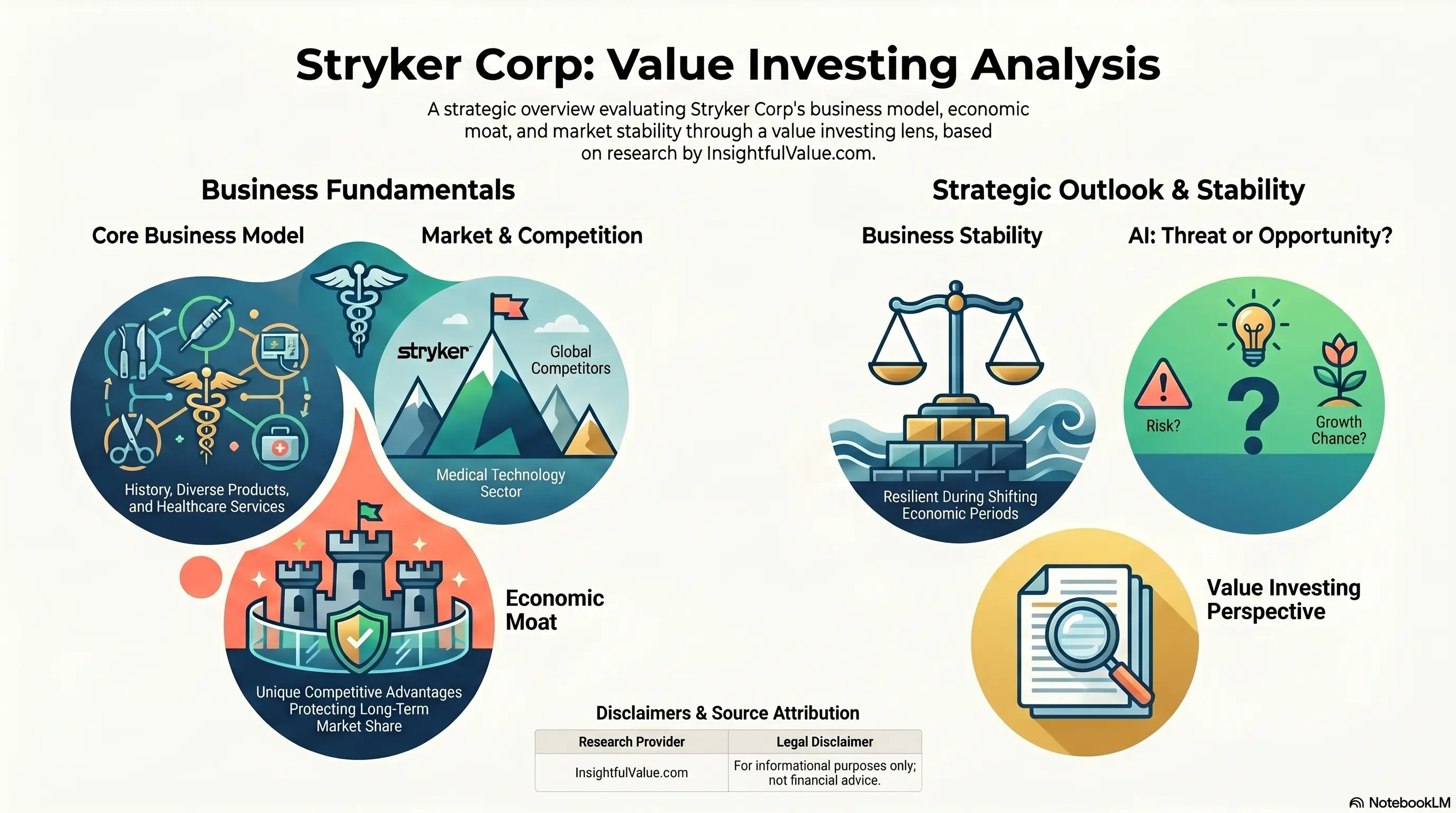
Infographic
Overview
Stryker Corporation is a global medical technology company based in Kalamazoo, Michigan. Founded in 1941, Stryker specializes in producing medical devices, equipment, and instruments used in surgical procedures, orthopedic and neurosurgical implants, and hospital beds and stretchers. They also offer a range of medical technologies, including endoscopic, neurovascular, and spinal products.
With a presence in over 100 countries, Stryker maintains operational headquarters in Kalamazoo, as well as in Mahwah, New Jersey, and in Amsterdam, Netherlands. They also have regional headquarters in Switzerland, Australia, and Singapore.
Stryker is known for its innovative and high-quality medical products and has earned numerous awards and recognition for its contributions to the medical industry. Some of its notable products include the MAKO robotic arm-assisted surgery system for hip and knee replacements, the Neptune surgical waste management system, and the SurgiCount safety sponge system.
Aside from its medical products, Stryker is also committed to corporate social responsibility and sustainability. They have initiatives to reduce their environmental impact and support diverse and inclusive workplaces. They also have partnerships and programs that provide medical assistance and training to underserved communities around the world.
In recent years, Stryker has made several acquisitions to expand its range of products and services. These include the acquisition of Wright Medical Group and Orthosensor in 2020, and K2M Group Holdings and Mobius Imaging in 2018.
As of 2021, Stryker has over 42,000 employees worldwide and reported a revenue of $14.9 billion in 2020. The company is listed on the New York Stock Exchange under the ticker symbol SYK.
How to explain to a 10 year old kid about the company?
📈 Want to read more about Stryker Corp?
Sign up for free
or
log in
⚡ Instantly access "The Checklist Value Investor — A Smarter Way to Pick Stocks" — free!
U3RyeWtlci BDb3JwIGlz IGEgY29tcG FueSB0aGF0 IGhlbHBzIG RvY3RvcnMg YW5kIGhvc3 BpdGFscyB0 YWtlIGNhcm Ugb2YgcGVv cGxlIHdoby BhcmUgaHVy dCBvciBzaW NrLiBUaGV5 IG1ha2UgYS Bsb3Qgb2Yg ZGlmZmVyZW 50IG1lZGlj YWwgdG9vbH MgYW5kIGVx dWlwbWVudC 4gRm9yIGV4 YW1wbGUsIH RoZXkgY3Jl YXRlIHNwZW NpYWwgbWFj aGluZXMgdG hhdCBoZWxw IGRvY3Rvcn MgcGVyZm9y bSBzdXJnZX JpZXMsIHRv b2xzIGZvci BmaXhpbmcg YnJva2VuIG JvbmVzLCBh bmQgZXZlbi BiZWRzIGFu ZCBjaGFpcn MgZm9yIHBh dGllbnRzIH RvIHVzZSBp biBob3NwaX RhbHMuPGJy PlN0cnlrZX IgbWFrZXMg bW9uZXkgYn kgc2VsbGlu ZyB0aGVzZS BtZWRpY2Fs IHByb2R1Y3 RzIHRvIGhv c3BpdGFscy BhbmQgY2xp bmljcy4gV2 hlbiBhIGhv c3BpdGFsIG J1eXMgdGhl aXIgdG9vbH MgYW5kIGVx dWlwbWVudC wgdGhhdCBo ZWxwcyBTdH J5a2VyIGVh cm4gbW9uZX kuIFRoZXkg YWxzbyBtYW tlIG1vbmV5 IGJ5IHByb3 ZpZGluZyBz ZXJ2aWNlcy B0byBoZWxw IGRvY3Rvcn MgYW5kIG51 cnNlcyBsZW FybiBob3cg dG8gdXNlIH RoZWlyIHBy b2R1Y3RzIG VmZmVjdGl2 ZWx5Ljxicj 5UaGUgcmVh c29uIFN0cn lrZXIgaXMg c3VjY2Vzc2 Z1bCBpcyB0 aGF0IG1hbn kgcGVvcGxl IG5lZWQgbW VkaWNhbCBo ZWxwLCBhbm QgdGhlaXIg dG9vbHMgbW FrZSBpdCBl YXNpZXIgYW 5kIHNhZmVy IGZvciBkb2 N0b3JzIHRv IHRyZWF0IH BhdGllbnRz LiBBcyB0ZW Nobm9sb2d5 IGdldHMgYm V0dGVyLCBT dHJ5a2VyIG lzIGFsd2F5 cyBpbnZlbn RpbmcgbmV3 IHByb2R1Y3 RzLCB3aGlj aCBtZWFucy B0aGV5IGNh biBoZWxwIG V2ZW4gbW9y ZSBwZW9wbG UuIFNpbmNl IHRoZXJlIH dpbGwgYWx3 YXlzIGJlIG EgbmVlZCBm b3IgbWVkaW NhbCBjYXJl LCBTdHJ5a2 VyIGlzIGxp a2VseSB0by Bjb250aW51 ZSBiZWluZy BzdWNjZXNz ZnVsIGluIH RoZSBmdXR1 cmUuIFRoZX kgd2lsbCBr ZWVwIGZpbm RpbmcgbmV3 IHdheXMgdG 8gaGVscCBk b2N0b3JzIG FuZCBwYXRp ZW50cywgd2 hpY2ggbWVh bnMgdGhleS BjYW4ga2Vl cCBncm93aW 5nIGFuZCBt YWtpbmcgbW 9uZXkuPGJy Pg==
What is special about the company?
📈 Want to read more about Stryker Corp?
Sign up for free
or
log in
🆓 Discover "The Checklist Value Investor — A Smarter Way to Pick Stocks" — free eBook!
MS4gSW5ub3 ZhdGlvbiBh bmQgVGVjaG 5vbG9neTog U3RyeWtlci BDb3JwLiBp cyBmb2N1c2 VkIG9uIGRl dmVsb3Bpbm cgYW5kIGlt cGxlbWVudG luZyBpbm5v dmF0aXZlIH RlY2hub2xv Z2llcyBpbi B0aGUgbWVk aWNhbCBkZX ZpY2UgaW5k dXN0cnkuIF RoZSBjb21w YW55IGludm VzdHMgaGVh dmlseSBpbi ByZXNlYXJj aCBhbmQgZG V2ZWxvcG1l bnQgdG8gY2 9uc3RhbnRs eSBpbXByb3 ZlIGl0cyBw cm9kdWN0cy BhbmQgYnJp bmcgbmV3IG 9uZXMgdG8g bWFya2V0Lj xicj4yLiBE aXZlcnNpZm llZCBQcm9k dWN0IFBvcn Rmb2xpbzog U3RyeWtlci BDb3JwLiBv ZmZlcnMgYS B3aWRlIHJh bmdlIG9mIG 1lZGljYWwg cHJvZHVjdH MgYW5kIHNl cnZpY2VzIG Fjcm9zcyBt dWx0aXBsZS BzZWdtZW50 cywgaW5jbH VkaW5nIG9y dGhvcGVkaW NzLCBzdXJn aWNhbCwgbm V1cm90ZWNo bm9sb2d5LC BhbmQgc3Bp bmUuIFRoaX MgZGl2ZXJz aWZpY2F0aW 9uIG1ha2Vz IHRoZSBjb2 1wYW55IGxl c3MgcmVsaW FudCBvbiBv bmUgc3BlY2 lmaWMgbWFy a2V0IG9yIH Byb2R1Y3Qu PGJyPjMuIF N0cm9uZyBH bG9iYWwgUH Jlc2VuY2U6 IFN0cnlrZX IgQ29ycC4g aGFzIGEgc3 Ryb25nIGds b2JhbCBwcm VzZW5jZSB3 aXRoIG9wZX JhdGlvbnMg aW4gb3Zlci AxMDAgY291 bnRyaWVzIG FuZCBzYWxl cyBpbiBtb3 JlIHRoYW4g MTAwIGNvdW 50cmllcy4g VGhpcyBhbG xvd3MgdGhl IGNvbXBhbn kgdG8gcmVh Y2ggYSBsYX JnZXIgbWFy a2V0IGFuZC BnZW5lcmF0 ZSByZXZlbn VlcyBmcm9t IGRpdmVyc2 UgZ2VvZ3Jh cGhpZXMuPG JyPjQuIEN1 c3RvbWVyLU ZvY3VzZWQg QXBwcm9hY2 g6IFRoZSBj b21wYW55IG hhcyBhIHN0 cm9uZyBmb2 N1cyBvbiB1 bmRlcnN0YW 5kaW5nIGFu ZCBtZWV0aW 5nIHRoZSBu ZWVkcyBvZi BpdHMgY3Vz dG9tZXJzLC BpbmNsdWRp bmcgaGVhbH RoY2FyZSBw cm9mZXNzaW 9uYWxzIGFu ZCBwYXRpZW 50cy4gU3Ry eWtlciBDb3 JwLiByZWd1 bGFybHkgY2 9uZHVjdHMg bWFya2V0IH Jlc2VhcmNo IGFuZCBlbm dhZ2VzIGlu IGNvbGxhYm 9yYXRpdmUg cGFydG5lcn NoaXBzIHRv IGRldmVsb3 AgcHJvZHVj dHMgdGhhdC BtZWV0IHRo ZSBzcGVjaW ZpYyBuZWVk cyBvZiBpdH MgY3VzdG9t ZXJzLjxicj 41LiBDb21t aXRtZW50IH RvIFN1c3Rh aW5hYmlsaX R5OiBTdHJ5 a2VyIENvcn AuIGlzIGNv bW1pdHRlZC B0byBzdXN0 YWluYWJpbG l0eSBhbmQg ZW52aXJvbm 1lbnRhbCBy ZXNwb25zaW JpbGl0eS4g VGhlIGNvbX BhbnkgaGFz IGltcGxlbW VudGVkIHN1 c3RhaW5hYm xlIHByYWN0 aWNlcyBpbi BpdHMgb3Bl cmF0aW9ucy wgcHJvZHVj dHMsIGFuZC BwYWNrYWdp bmcsIGFuZC BoYXMgc2V0 IGFtYml0aW 91cyB0YXJn ZXRzIHRvIH JlZHVjZSBp dHMgZW52aX Jvbm1lbnRh bCBpbXBhY3 QuPGJyPjYu IFN0cm9uZy BGaW5hbmNp YWwgUGVyZm 9ybWFuY2U6 IFN0cnlrZX IgQ29ycC4g aGFzIGEgY2 9uc2lzdGVu dCB0cmFjay ByZWNvcmQg b2Ygc3Ryb2 5nIGZpbmFu Y2lhbCBwZX Jmb3JtYW5j ZSwgd2l0aC BzdGVhZHkg cmV2ZW51ZS Bncm93dGgg YW5kIHByb2 ZpdGFiaWxp dHkuIFRoaX MgaGFzIGFs bG93ZWQgdG hlIGNvbXBh bnkgdG8gbW FrZSBzdHJh dGVnaWMgaW 52ZXN0bWVu dHMgaW4gaW 5ub3ZhdGlv biBhbmQgYW NxdWlzaXRp b25zIHRvIG NvbnRpbnVl IGl0cyBncm 93dGguPGJy PjcuIEluZH VzdHJ5IFJl Y29nbml0aW 9uOiBTdHJ5 a2VyIENvcn AuIGhhcyBi ZWVuIGNvbn Npc3RlbnRs eSByZWNvZ2 5pemVkIGFz IG9uZSBvZi B0aGUgdG9w IG1lZGljYW wgdGVjaG5v bG9neSBjb2 1wYW5pZXMg aW4gdGhlIH dvcmxkLCBp bmNsdWRpbm cgYmVpbmcg bmFtZWQgYW 1vbmcgdGhl ICJXb3JsZC dzIE1vc3Qg QWRtaXJlZC BDb21wYW5p ZXMiIGJ5IE ZvcnR1bmUg bWFnYXppbm UgZm9yIHNl dmVyYWwgeW VhcnMgaW4g YSByb3cu
What the company's business model?
📈 Want to read more about Stryker Corp?
Sign up for free
or
log in
📝 Join us and grab your copy of "The Checklist Value Investor — A Smarter Way to Pick Stocks"
U3RyeWtlci BDb3JwLiBp cyBhIG1lZG ljYWwgdGVj aG5vbG9neS Bjb21wYW55 IHRoYXQgc3 BlY2lhbGl6 ZXMgaW4gZG V2ZWxvcGlu ZyBhbmQgbW FudWZhY3R1 cmluZyBvcn Rob3BlZGlj IGFuZCBzdX JnaWNhbCBw cm9kdWN0cy 4gSXRzIGJ1 c2luZXNzIG 1vZGVsIGlz IGZvY3VzZW Qgb24gcHJv dmlkaW5nIG lubm92YXRp dmUgYW5kIG hpZ2gtcXVh bGl0eSBwcm 9kdWN0cyB0 byBpbXByb3 ZlIHBhdGll bnQgb3V0Y2 9tZXMgYW5k IHN1cmdpY2 FsIHByb2Nl ZHVyZXMuID xicj5UaGUg Y29tcGFueS BvcGVyYXRl cyBpbiB0aH JlZSBtYWlu IHNlZ21lbn RzOiBPcnRo b3BhZWRpY3 MsIHdoaWNo IGluY2x1ZG VzIGltcGxh bnRzIGFuZC BpbnN0cnVt ZW50cyBmb3 Igam9pbnQg cmVwbGFjZW 1lbnQgYW5k IHRyYXVtYS BzdXJnZXJp ZXM7IE1lZF N1cmcsIHdo aWNoIGluY2 x1ZGVzIHN1 cmdpY2FsIG VxdWlwbWVu dCBhbmQgbm F2aWdhdGlv biBzeXN0ZW 1zOyBhbmQg TmV1cm90ZW Nobm9sb2d5 IGFuZCBTcG luZSwgd2hp Y2ggaW5jbH VkZXMgcHJv ZHVjdHMgZm 9yIG1pbmlt YWxseSBpbn Zhc2l2ZSBz cGluZSBzdX JnZXJ5IGFu ZCBuZXVyb3 N1cmdlcnku IDxicj5TdH J5a2VyIGFs c28gaGFzIG Egc3Ryb25n IGZvY3VzIG 9uIHJlc2Vh cmNoIGFuZC BkZXZlbG9w bWVudCB0by Bjb250aW51 b3VzbHkgaW 1wcm92ZSB0 aGVpciBleG lzdGluZyBw cm9kdWN0cy BhbmQgZGV2 ZWxvcCBuZX cgb25lcy4g VGhleSBwYX J0bmVyIHdp dGggaGVhbH RoY2FyZSBw cm9mZXNzaW 9uYWxzIGFu ZCBpbnN0aX R1dGlvbnMg dG8gdW5kZX JzdGFuZCB0 aGVpciBuZW VkcyBhbmQg ZGV2ZWxvcC Bzb2x1dGlv bnMgdG8gYW RkcmVzcyB0 aGVtLiA8Yn I+SW4gYWRk aXRpb24sIF N0cnlrZXIg aGFzIGEgZ2 xvYmFsIHBy ZXNlbmNlIG FuZCBzZWxs cyBpdHMgcH JvZHVjdHMg aW4gb3Zlci AxMDAgY291 bnRyaWVzIH dvcmxkd2lk ZS4gVGhlIG NvbXBhbnkg YWxzbyBwcm 92aWRlcyB0 cmFpbmluZy BhbmQgZWR1 Y2F0aW9uIG ZvciBoZWFs dGhjYXJlIH Byb2Zlc3Np b25hbHMgb2 4gaG93IHRv IHVzZSB0aG VpciBwcm9k dWN0cyBlZm ZlY3RpdmVs eS4gPGJyPk luIHN1bW1h cnksIFN0cn lrZXIncyBi dXNpbmVzcy Btb2RlbCBp cyBjZW50ZX JlZCBvbiBp bm5vdmF0aW 9uLCBxdWFs aXR5LCBhbm QgY29sbGFi b3JhdGlvbi B3aXRoIGhl YWx0aGNhcm UgcHJvZmVz c2lvbmFscy B0byBwcm92 aWRlIGFkdm FuY2VkIG1l ZGljYWwgdG VjaG5vbG9n eSBzb2x1dG lvbnMu
Is AI a threat?
AI does pose potential threats to Stryker Corporation, which is known for its medical devices, surgical equipment, and related technologies. These threats can be categorized in several ways:
1. Substitution: AI can lead to the development of innovative technologies that could substitute some of Stryker’s products. For instance, AI can improve surgical robotics, imaging systems, or diagnostic tools. If competitors leverage AI more effectively to create superior or more cost-effective products, Stryker may face challenges in maintaining its market position.
2. Disintermediation: With the growth of telemedicine and AI-driven diagnostics, traditional roles in healthcare could be disrupted. Healthcare providers might utilize AI systems to streamline processes or make decisions without needing certain products or services from Stryker. This could lead to a change in how hospitals and clinics interact with Stryker’s offerings.
3. Margin Pressure: AI can potentially lower operational costs and improve efficiencies across the healthcare system. If healthcare providers deploy AI technologies that reduce reliance on certain medical devices or procedures, Stryker could experience margin pressure. Competitors who integrate AI into their products might offer similar or better functionality at a lower cost, impacting Stryker’s pricing power.
In summary, while AI presents opportunities for Stryker to innovate and enhance its offerings, it also poses material threats to its established products and competitive positioning through potential substitution, disintermediation, and margin pressures. Stryker must proactively adapt to these changes to maintain its market leadership.
Sensitivity to interest rates
The sensitivity of Stryker Corp’s earnings, cash flow, and valuation to changes in interest rates can be analyzed through several key aspects:
1. Cost of Borrowing: Stryker, like many corporations, may rely on debt financing for operations, acquisitions, and capital expenditures. An increase in interest rates raises the cost of borrowing, which can lead to higher interest expenses, thereby negatively impacting net income and cash flow. Conversely, if rates decrease, the cost of borrowing could lower, potentially enhancing cash flows and profitability.
2. Investment Decisions: Higher interest rates often lead to increased capital costs, which can affect Stryker’s investment decisions. If borrowing becomes more expensive, the company may delay or scale back on capital expenditures, which could impact growth opportunities and future revenue generation.
3. Discount Rate and Valuation: Valuation models, particularly discounted cash flow (DCF) analyses, are sensitive to the discount rate used. When interest rates rise, the discount rate typically increases, leading to a lower present value of future cash flows. This could result in a decreased valuation for Stryker if investors adjust their expectations based on the higher rates.
4. Consumer Behavior and Demand: Stryker operates in the healthcare sector, which can be somewhat insulated from economic fluctuations. However, higher interest rates can impact overall economic conditions, potentially reducing healthcare expenditure by consumers and entities. If businesses and individuals feel financially strained, it might affect Stryker’s sales, particularly in elective procedures.
5. Competition and Market Dynamics: Rising interest rates could influence the competitive landscape. If some companies can manage higher costs better than others, Stryker may face challenges in maintaining its market position. Additionally, if competitors are financially constrained by interest rates, this might provide Stryker with an opportunity to capture market share.
In summary, while Stryker Corp’s earnings, cash flow, and valuation are affected by interest rates, the extent of this sensitivity depends on the broader economic context, the company’s financial strategy, and market dynamics. Analyzing these factors allows for a better understanding of how interest rate changes could impact the firm.
Resilience to the future changes
📈 Want to read more about Stryker Corp?
Sign up for free
or
log in
🎁 Free download! "The Checklist Value Investor — A Smarter Way to Pick Stocks"
T25lIHJlYW xpc3RpYyBz Y2VuYXJpby B0aGF0IGNv dWxkIHBlcm 1hbmVudGx5 IGltcGFpci BTdHJ5a2Vy IENvcnBvcm F0aW9u4oCZ cyBlY29ub2 1pY3Mgb3Zl ciB0aGUgbm V4dCAzIHRv IDUgeWVhcn MgaXMgdGhl IGludHJvZH VjdGlvbiBv ZiBzdHJpY3 QgcmVndWxh dG9yeSBtZW FzdXJlcyBj b25jZXJuaW 5nIG1lZGlj YWwgZGV2aW NlcywgcGFy dGljdWxhcm x5IHRob3Nl IHJlbGF0ZW QgdG8gdGhl IHF1YWxpdH kgYW5kIHNh ZmV0eSBvZi BpbXBsYW50 cyBhbmQgc3 VyZ2ljYWwg aW5zdHJ1bW VudHMuIElm IGEgbWFqb3 IgZmVkZXJh bCBhZ2VuY3 ksIHN1Y2gg YXMgdGhlIE ZEQSwgd2Vy ZSB0byBpbX Bvc2UgbW9y ZSBzdHJpbm dlbnQgdGVz dGluZywgYX Bwcm92YWws IGFuZCBjb2 1wbGlhbmNl IHJlcXVpcm VtZW50cyBk dWUgdG8gaW 5jcmVhc2lu ZyBzYWZldH kgY29uY2Vy bnMgb3IgcH VibGljIHBy ZXNzdXJlLC BpdCBjb3Vs ZCBoYXZlIG EgZmFyLXJl YWNoaW5nIG ltcGFjdCBv biBTdHJ5a2 Vy4oCZcyBv cGVyYXRpb2 5zLjxicj5U aGUgaW1wbG ljYXRpb25z IG9mIHN1Y2 ggcmVndWxh dG9yeSBjaG FuZ2VzIHdv dWxkIGJlIH Byb2ZvdW5k Ojxicj4xLi A8c3Ryb25n Pk1hcmdpbn M8L3N0cm9u Zz46IEluY3 JlYXNlZCBy ZWd1bGF0b3 J5IGNvbXBs aWFuY2UgY2 9zdHMgd291 bGQgbGVhZC B0byBoaWdo ZXIgb3Blcm F0aW5nIGV4 cGVuc2VzLi BTdHJ5a2Vy 4oCZcyBwcm 9maXQgbWFy Z2lucyBjb3 VsZCBzaHJp bmsgc2lnbm lmaWNhbnRs eSBkdWUgdG 8gdGhlIGFk ZGVkIGNvc3 RzIG9mIFIm YW1wO0QsIH Rlc3Rpbmcs IGFuZCBwb3 RlbnRpYWwg cmVkZXNpZ2 4gb2YgZXhp c3RpbmcgcH JvZHVjdHMg dG8gbWVldC BuZXcgc3Rh bmRhcmRzLi BJZiBTdHJ5 a2VyIGlzIH VuYWJsZSB0 byBwYXNzIH RoZXNlIGNv c3RzIG9udG 8gY3VzdG9t ZXJzLCB0aG UgcHJlc3N1 cmUgb24gbW FyZ2lucyB3 b3VsZCBiZS BzdWJzdGFu dGlhbC4gUH JvZml0YWJp bGl0eSBjb3 VsZCBkZWNs aW5lLCBsZW FkaW5nIHRv IGxvd2VyIG 1hcmdpbnMg Y29tcGFyZW QgdG8gdGhl aXIgaGlzdG 9yaWNhbCBh dmVyYWdlcy 48YnI+Mi4g PHN0cm9uZz 5DYXNoIEZs b3c8L3N0cm 9uZz46IFRo ZSBkZW1hbm QgZm9yIGlt bWVkaWF0ZS BpbnZlc3Rt ZW50cyBpbi Bjb21wbGlh bmNlIGFuZC Bwcm9kdWN0 IGRldmVsb3 BtZW50IG1h eSBwcmVzc3 VyZSBTdHJ5 a2Vy4oCZcy BjYXNoIGZs b3cuIElmIH RoZSBjb21w YW55IGV4cG VyaWVuY2Vz IGRlbGF5cy BpbiBwcm9k dWN0IGFwcH JvdmFscyB3 aGlsZSBpbm N1cnJpbmcg aGlnaGVyIG Nvc3RzLCBm cmVlIGNhc2 ggZmxvd3Mg Y291bGQgZG VjbGluZS4g VGhpcyBzaX R1YXRpb24g d291bGQgbG VhdmUgbGVz cyBjYXBpdG FsIGF2YWls YWJsZSBmb3 IgZ3Jvd3Ro IGluaXRpYX RpdmVzLCBz aGFyZWhvbG RlciByZXR1 cm4gcHJvZ3 JhbXMsIG9y IGRlYnQgc2 VydmljaW5n LCBwb3Rlbn RpYWxseSB3 ZWFrZW5pbm cgdGhlIGNv bXBhbnnigJ lzIGZpbmFu Y2lhbCBmbG V4aWJpbGl0 eSBhbmQgcG VyZm9ybWFu Y2UgaW4gdG hlIGxvbmcg dGVybS48Yn I+My4gPHN0 cm9uZz5CYW xhbmNlIFNo ZWV0PC9zdH Jvbmc+OiBJ biBhbiBlbn Zpcm9ubWVu dCBvZiByZW R1Y2VkIGNh c2ggZmxvdy BhbmQgaW5j cmVhc2VkIG 9wZXJhdGlv bmFsIGNvc3 RzLCBTdHJ5 a2VyIG1pZ2 h0IGZpbmQg aXQgY2hhbG xlbmdpbmcg dG8gbWFpbn RhaW4gaXRz IGJhbGFuY2 Ugc2hlZXQg c3RyZW5ndG guIFRoZSBj b21wYW55IG 1heSBuZWVk IHRvIGluY3 JlYXNlIGl0 cyBkZWJ0IG xldmVscyB0 byBmaW5hbm NlIGNvbXBs aWFuY2UgaW 5pdGlhdGl2 ZXMgb3IgZn VuZCBvbmdv aW5nIG9wZX JhdGlvbnMs IGxlYWRpbm cgdG8gYSBk ZXRlcmlvcm F0aW9uIG9m IGRlYnQgcm F0aW9zLiBB ZGRpdGlvbm FsbHksIGlm IHRoZSBtYX JrZXQgcGVy Y2VpdmVzIG hlaWdodGVu ZWQgcmlza3 MgcmVsYXRl ZCB0byByZW d1bGF0b3J5 IGh1cmRsZX MsIGl0IGNv dWxkIGxlYW QgdG8gYSBk ZWNyZWFzZS BpbiB0aGUg Y29tcGFuee KAmXMgc3Rv Y2sgcHJpY2 UsIGFkdmVy c2VseSBhZm ZlY3Rpbmcg aXRzIGVxdW l0eSBwb3Np dGlvbi48Yn I+T3ZlcmFs bCwgaWYgc3 VjaCByZWd1 bGF0b3J5IG NoYW5nZXMg bWF0ZXJpYW xpemVkLCBT dHJ5a2VyIE NvcnBvcmF0 aW9uIGNvdW xkIGZhY2Ug YSBjaGFsbG VuZ2luZyBv cGVyYXRpbm cgZW52aXJv bm1lbnQgd2 l0aCBzcXVl ZXplZCBtYX JnaW5zLCBj b25zdHJhaW 5lZCBjYXNo IGZsb3dzLC BhbmQgaW5j cmVhc2VkIG xldmVyYWdl IG9uIGl0cy BiYWxhbmNl IHNoZWV0LC BuZWdhdGl2 ZWx5IGltcG FjdGluZyBp dHMgb3Zlcm FsbCBlY29u b21pYyBvdX Rsb29rIGFu ZCBwb3Rlbn RpYWxseSBh ZmZlY3Rpbm cgbG9uZy10 ZXJtIGNvbX BldGl0aXZl bmVzcyBpbi B0aGUgbWFy a2V0Ljxicj 4=
Interesting facts about the company
📈 Want to read more about Stryker Corp?
Sign up for free
or
log in
🆓 Discover "The Checklist Value Investor — A Smarter Way to Pick Stocks" — free eBook!
CiAgICAgIC AgICAgIDxk aXYgc3R5bG U9J3dpZHRo OiAxMDAlOy BkaXNwbGF5 OiBmbGV4Oy BqdXN0aWZ5 LWNvbnRlbn Q6IGNlbnRl cjsnPgogIC AgICAgICAg ICAgICAgPG RpdiBzdHls ZT0nCiAgIC AgICAgICAg ICAgICAgIC AgZGlzcGxh eTogZmxleD sKICAgICAg ICAgICAgIC AgICAgICBh bGlnbi1pdG VtczogY2Vu dGVyOwogIC AgICAgICAg ICAgICAgIC AgIGJhY2tn cm91bmQtY2 9sb3I6ICNm MGY0Zjg7Ci AgICAgICAg ICAgICAgIC AgICAgYm9y ZGVyOiAxcH ggc29saWQg I2QxZTNmMD sKICAgICAg ICAgICAgIC AgICAgICBi b3JkZXItcm FkaXVzOiAx MHB4OwogIC AgICAgICAg ICAgICAgIC AgIHBhZGRp bmc6IDEwcH g7CiAgICAg ICAgICAgIC AgICAgICAg bWFyZ2luOi AyMHB4IDA7 CiAgICAgIC AgICAgICAg ICAgICAgZm 9udC1mYW1p bHk6ICJTZW dvZSBVSSIs IFJvYm90by wgc2Fucy1z ZXJpZjsKIC AgICAgICAg ICAgICAgIC AgICBib3gt c2hhZG93Oi AwIDJweCA2 cHggcmdiYS gwLCAwLCAw LCAwLjA1KT sKICAgICAg ICAgICAgIC AgICAgICBt YXgtd2lkdG g6IDkwMHB4 OwogICAgIC AgICAgICAg ICAgICAgIH dpZHRoOiAx MDAlOyc+Cg ogICAgICAg ICAgICAgIC AgICAgIDxp bWcgc3JjPS Jhc3NldHMv bG9nb3MvWU tzc2dhNHph bnI3YjQwc0 12emkud2Vi cCIgYWx0PS JTdHJ5a2Vy IENvcnAiIH RpdGxlPSJT dHJ5a2VyIE NvcnAiICBj bGFzcz0iaW 1nLWZsdWlk IiBoZWlnaH Q9NTAgd2lk dGg9NTAgbG 9hZGluZz0n bGF6eScgc3 R5bGU9J2Jv cmRlci1yYW RpdXM6IDZw eDsnPgoKIC AgICAgICAg ICAgICAgIC AgICA8ZGl2 IHN0eWxlPS dmbGV4OiAx OyB0ZXh0LW FsaWduOiBj ZW50ZXI7IG 1hcmdpbi1s ZWZ0OiA1cH g7Jz4KICAg ICAgICAgIC AgICAgICAg ICAgICAgPH Agc3R5bGU9 J2ZvbnQtc2 l6ZTogMjZw eDsgY29sb3 I6ICMzMzM7 IG1hcmdpbi 1ib3R0b206 IDE1cHg7Jz 4KICAgICAg ICAgICAgIC AgICAgICAg ICAgICAgIP Cfk4ggV2Fu dCB0byByZW FkIG1vcmUg YWJvdXQgU3 RyeWtlciBD b3JwPwogIC AgICAgICAg ICAgICAgIC AgICAgICA8 L3A+CgogIC AgICAgICAg ICAgICAgIC AgICAgICA8 YSBocmVmPS dpbmRleC5w aHA/cGFnZT 1zaWdudXAn IHN0eWxlPS cKICAgICAg ICAgICAgIC AgICAgICAg ICAgICAgIG JhY2tncm91 bmQtY29sb3 I6ICMwMDdC RkY7CiAgIC AgICAgICAg ICAgICAgIC AgICAgICAg ICBjb2xvcj ogI2ZmZjsK ICAgICAgIC AgICAgICAg ICAgICAgIC AgICAgIHBh ZGRpbmc6ID EwcHggMjBw eDsKICAgIC AgICAgICAg ICAgICAgIC AgICAgICAg IGJvcmRlci 1yYWRpdXM6 IDVweDsKIC AgICAgICAg ICAgICAgIC AgICAgICAg ICAgIHRleH QtZGVjb3Jh dGlvbjogbm 9uZTsKICAg ICAgICAgIC AgICAgICAg ICAgICAgIC AgIGZvbnQt d2VpZ2h0Oi Bib2xkOwog ICAgICAgIC AgICAgICAg ICAgICAgIC AgICAgbWFy Z2luLXJpZ2 h0OiAxMHB4 OwogICAgIC AgICAgICAg ICAgICAgIC AgICAgICAg dHJhbnNpdG lvbjogYmFj a2dyb3VuZC 1jb2xvciAw LjNzIGVhc2 U7JwogICAg ICAgICAgIC AgICAgICAg ICAgICAgIC Agb25tb3Vz ZW92ZXI9J3 RoaXMuc3R5 bGUuYmFja2 dyb3VuZENv bG9yPSIjMD A1NmIzIicK ICAgICAgIC AgICAgICAg ICAgICAgIC AgICAgIG9u bW91c2VvdX Q9J3RoaXMu c3R5bGUuYm Fja2dyb3Vu ZENvbG9yPS IjMDA3QkZG Iic+CiAgIC AgICAgICAg ICAgICAgIC AgICAgICAg ICBTaWduIH VwIGZvciBm cmVlCiAgIC AgICAgICAg ICAgICAgIC AgICAgIDwv YT4KCiAgIC AgICAgICAg ICAgICAgIC AgICAgIDxz cGFuIHN0eW xlPSdtYXJn aW46IDAgOH B4OyBjb2xv cjogIzU1NT snPm9yPC9z cGFuPgoKIC AgICAgICAg ICAgICAgIC AgICAgICAg PGEgaHJlZj 0naW5kZXgu cGhwP3BhZ2 U9bG9naW4n IHN0eWxlPS cKICAgICAg ICAgICAgIC AgICAgICAg ICAgICAgIG NvbG9yOiAj MDA3QkZGOw ogICAgICAg ICAgICAgIC AgICAgICAg ICAgICAgdG V4dC1kZWNv cmF0aW9uOi B1bmRlcmxp bmU7CiAgIC AgICAgICAg ICAgICAgIC AgICAgICAg ICBmb250LX dlaWdodDog NTAwOyc+Ci AgICAgICAg ICAgICAgIC AgICAgICAg ICAgICBsb2 cgaW4KICAg ICAgICAgIC AgICAgICAg ICAgICAgPC 9hPgoKCiAg ICAgICAgIC AgICAgICAg ICAgICAgID xwIHN0eWxl PSdtYXJnaW 4tdG9wOiAx NXB4OyBmb2 50LXNpemU6 IDEzcHg7IG ZvbnQtd2Vp Z2h0OiBib2 xkOyBjb2xv cjogI2QzMm YyZjsnPgog ICAgICAgIC AgICAgICAg ICAgICAgIC AgICAg8J+T nSBKb2luIH VzIGFuZCBn cmFiIHlvdX IgY29weSBv ZiA8aT4iVG hlIENoZWNr bGlzdCBWYW x1ZSBJbnZl c3RvciDigJ QgQSBTbWFy dGVyIFdheS B0byBQaWNr IFN0b2Nrcy I8L2k+CiAg ICAgICAgIC AgICAgICAg ICAgICAgID wvcD4KCiAg ICAgICAgIC AgICAgICAg ICAgICAgID whLS0KICAg ICAgICAgIC AgICAgICAg ICAgICAgPG RpdiBzdHls ZT0nbWFyZ2 luLXRvcDog MTJweDsgZm 9udC1zaXpl OiAxM3B4Oy Bjb2xvcjog IzQ0NDsnPg ogICAgICAg ICAgICAgIC AgICAgICAg ICAgICAgU2 lnbiB1cCBu b3cgYW5kIG dldCBvdXIg ZnJlZSBlQm 9vayAKICAg ICAgICAgIC AgICAgICAg ICAgICAgIC AgIDxiPlRo ZSBDaGVja2 xpc3QgVmFs dWUgSW52ZX N0b3Ig4oCU IEEgU21hcn RlciBXYXkg dG8gUGljay BTdG9ja3M8 L2I+CiAgIC AgICAgICAg ICAgICAgIC AgICAgIDwv ZGl2PgogIC AgICAgICAg ICAgICAgIC AgICAgICAt LT4KICAgIC AgICAgICAg ICAgICAgIC AgICAgPCEt LQogICAgIC AgICAgICAg ICAgICAgIC AgICA8ZGl2 IHN0eWxlPS dtYXJnaW4t dG9wOiAxNn B4OyBmb250 LXNpemU6ID E0cHg7IGNv bG9yOiAjND Q0OyBmb250 LWZhbWlseT ogLWFwcGxl LXN5c3RlbS wgQmxpbmtN YWNTeXN0ZW 1Gb250LCBT ZWdvZSBVSS wgUm9ib3Rv LCBIZWx2ZX RpY2EgTmV1 ZSwgc2Fucy 1zZXJpZjsg bGluZS1oZW lnaHQ6IDEu NjsnPgogIC AgICAgICAg ICAgICAgIC AgICAgICAg ICAgSGF2ZS B5b3UgaGVh cmQgYWJvdX Qgb3VyIHNo b3J0IDxzdH Jvbmcgc3R5 bGU9J2Zvbn Qtd2VpZ2h0 OiA2MDA7Jz 5EYWlseSBW aWRlbyBOZX dzbGV0dGVy PC9zdHJvbm c+PwogICAg ICAgICAgIC AgICAgICAg ICAgICAgIC AgPGEgaHJl Zj0naHR0cH M6Ly93d3cu aW5zaWdodG Z1bHZhbHVl LmNvbS9uZX dzbGV0dGVy LnBocCcgdG FyZ2V0PSdf YmxhbmsnIH N0eWxlPSdj b2xvcjogIz AwN0JGRjsg dGV4dC1kZW NvcmF0aW9u OiBub25lOy Bmb250LXdl aWdodDogNT AwOyBtYXJn aW4tbGVmdD ogNnB4Oyc+ CiAgICAgIC AgICAgICAg ICAgICAgIC AgICAgICAg ICAgRmluZC BvdXQgbW9y ZQogICAgIC AgICAgICAg ICAgICAgIC AgICAgICAg PC9hPgogIC AgICAgICAg ICAgICAgIC AgICAgICA8 L2Rpdj4KIC AgICAgICAg ICAgICAgIC AgICAgICAg LS0+CiAgIC AgICAgICAg ICAgICAgIC AgPC9kaXY+ CiAgICAgIC AgICAgICAg ICA8L2Rpdj 4KICAgICAg ICAgICAgPC 9kaXY+CiAg ICAgICAgIC AgIAogICAg ICAgIAogIC AgICAgIDxz cGFuIGNsYX NzPSdibHVy cmVkLXRleH QnPgogICAg ICAgICAgIC BNUzRnUm05 MWJtIFJsWk NCcGJpQXgg T1RReExDQl RkSCBKNWEy VnlJRU52IG NuQXVJR2x6 SUcgRWdSbT l5ZEhWdSBa U0ExTURBZ2 JXIFZrYVdO aGJDQjAgWl dOb2JtOXNi MiBkNUlHTn ZiWEJoIGJu a2dZbUZ6Wl cgUWdhVzRn UzJGcyBZVz FoZW05dkxD IEJOYVdOb2 FXZGggYmk0 OFluSStNaS A0Z1ZHaGxJ R052IGJYQm hibmtnZDIg RnpJR2x1YV hScCBZV3hz ZVNCbGMzIF JoWW14cGMy aGwgWkNCaG N5QmhJRyAx aGJuVm1ZV0 4wIGRYSmxj aUJ2WmkgQm 9iM053YVhS aCBiQ0JpWl dSekxDIEJo Ym1RZ2FYUn ogSUdacGNu TjBJSCBCeW IyUjFZM1Fn IGQyRnpJR0 VnYlcgOWlh V3hsSUdodi BjM0JwZEdG c0lHIEpsWk NCallXeHMg WldRZ2RHaG xJRSBkMWNt NWxlU0JUIG RISmxkR05v WlggSXVQR0 p5UGpNdSBJ Rk4wY25scl pYIElnUTI5 eWNDNGcgZD JGeklHNWhi VyBWa0lHRm 1kR1Z5IElH bDBjeUJtYj MgVnVaR1Z5 TENCRSBjaT RnU0c5dFpY IElnVTNSeW VXdGwgY2l3 Z2QyaHZJSC BkaGN5QmhJ SEJ5IGIyMX BibVZ1ZEMg QnZjblJvYj NCbCBaR2xq SUhOMWNtIG RsYjI0Z1lX NWsgSUdsdW RtVnVkRyA5 eUxqeGljaj QwIExpQlVh R1VnWTIgOX RjR0Z1ZWVL QSBtWE1nYl c5emRDIEJt WVcxdmRYTW cgY0hKdlpI VmpkQyBCcG N5QjBhR1Vn IFUzUnllV3 RsY2kgQkdj bUZ0WlN3Zy BZVzRnWVdS cWRYIE4wWV dKc1pTQm8g YjNOd2FYUm hiQyBCaVpX UWdkWE5sIF pDQm1iM0ln YjMgSjBhRz l3WldScCBZ eUJ6ZFhKbl pYIEpwWlhN dVBHSnkgUG pVdUlGTjBj biBsclpYSW dRMjl5IGND NGdhR0Z6SU cgRWdjM1J5 YjI1biBJR1 p2WTNWeklH IDl1SUhKbG MyVmggY21O b0lHRnVaQy BCa1pYWmxi Rzl3IGJXVn VkQ3dnYzMg QmxibVJwYm 1jZyBiM1ps Y2lBa056IE F3SUcxcGJH eHAgYjI0Z2 IyNGdVaSBa RUlHbHVJRE l3IE1qQXVQ R0p5UGogWX VJRWx1SUdG ayBaR2wwYV c5dUlIIFJ2 SUcxbFpHbG ogWVd3Z1pY RjFhWCBCdF pXNTBMQ0JU IGRISjVhMl Z5SUUgTnZj bkF1SUdGcy BjMjhnY0hK dlpIIFZqWl hNZ2MzVnkg WjJsallXd2 dhVyA1emRI SjFiV1Z1IG RITXNJRzl5 ZEcgaHZjR1 ZrYVdNZyBh VzF3YkdGdW RIIE1zSUdG dVpDQnQgWl dScFkyRnNJ SCBSbFkyaH ViMnh2IFoz a2djMlZ5ZG 0gbGpaWE11 UEdKeSBQam N1SUZSb1pT IEJqYjIxd1 lXNTUgSUdo aGN5QmhJRy Bkc2IySmhi Q0J3IGNtVn paVzVqWlMg d2dkMmwwYU NCdiBjR1Z5 WVhScGIyID V6SUdsdUlH OTIgWlhJZ0 1UQXdJRyBO dmRXNTBjbW xsIGN5Qmhi bVFnYjMgWm xjaUEwTVN3 dyBNREFnWl cxd2JHIDk1 WldWeklIZH YgY214a2Qy bGtaUyA0OF luSStPQzRn IFUzUnllV3 RsY2kgQkRi M0p3TGlCby BZWE1nWVdO eGRXIGx5Wl dRZ2MyVjIg WlhKaGJDQm piMiAxd1lX NXBaWE1nIG IzWmxjaUIw YUcgVWdlV1 ZoY25NcyBJ R2x1WTJ4MV pHIGx1WnlC WGNtbG4gYU hRZ1RXVmth VyBOaGJDQk hjbTkxIGND d2dVR2g1Yz IgbHZMVU52 Ym5SeSBiMn dzSUdGdVpD IEJMTWswZ1 IzSnYgZFhB c0lIUnZJRy BWNGNHRnVa Q0JwIGRITW djSEp2Wkgg VmpkQ0J2Wm 1abCBjbWx1 WjNNdVBHIE p5UGprdUlG Um8gWlNCam IyMXdZVyA1 NUlHbHpJR0 52IGJXMXBk SFJsWkMgQj BieUJ6ZFhO MCBZV2x1WV dKcGJHIGww ZVNCaGJtUW cgYUdGeklI TmxkQyBCbm IyRnNjeUIw IGJ5QnlaV1 IxWTIgVWdh WFJ6SUdOaC BjbUp2YmlC bWIyIDkwY0 hKcGJuUXMg SUhkaGRHVn lJSCBWellX ZGxMQ0JoIG JtUWdkMkZ6 ZEcgVWdjSE p2WkhWaiBk R2x2Ymk0OF luIEkrTVRB dUlGTjAgY2 5sclpYSWdR MiA5eWNDNG dhR0Z6IElH TnZibk5wYz MgUmxiblJz ZVNCaSBaV1 Z1SUhKbFky IDluYm1sNl pXUWcgWm05 eUlHbDBjeS BCM2IzSnJj R3hoIFkyVW dZM1ZzZEgg VnlaU0JoYm 1RZyBaWFJv YVdOekxDIE J5WVc1cmFX NW4gSUc5dU lFWnZjbiBS MWJtWGlnSm x6IElERXdN Q0JDWlggTj BJRU52YlhC aCBibWxsY3 lCMGJ5IEJY YjNKcklFWn YgY2lCc2FY TjBJRyBadm NpQXhNQ0Jq IGIyNXpaV0 4xZEcgbDJa U0I1WldGeS BjeUJoYm1R Z2IyIDRnUl hSb2FYTncg YUdWeVplS0 FtWCBNZ1Yy OXliR1RpIG dKbHpJRTF2 YzMgUWdSWF JvYVdOaCBi Q0JEYjIxd1 lXIDVwWlhN Z2JHbHogZE NCbWIzSWdN VCBFZ1kyOX VjMlZqIGRY UnBkbVVnZV cgVmhjbk11 CiAgICAgIC AgPC9zcGFu PgogICAgIC AgIAogICAg ICAgIA==
See Company Q&A
📊 Get full analytics about Stryker Corp
Sign up for free
or
log in
📝 Join us and grab your copy of "The Checklist Value Investor — A Smarter Way to Pick Stocks"