Company at a Glance
Price
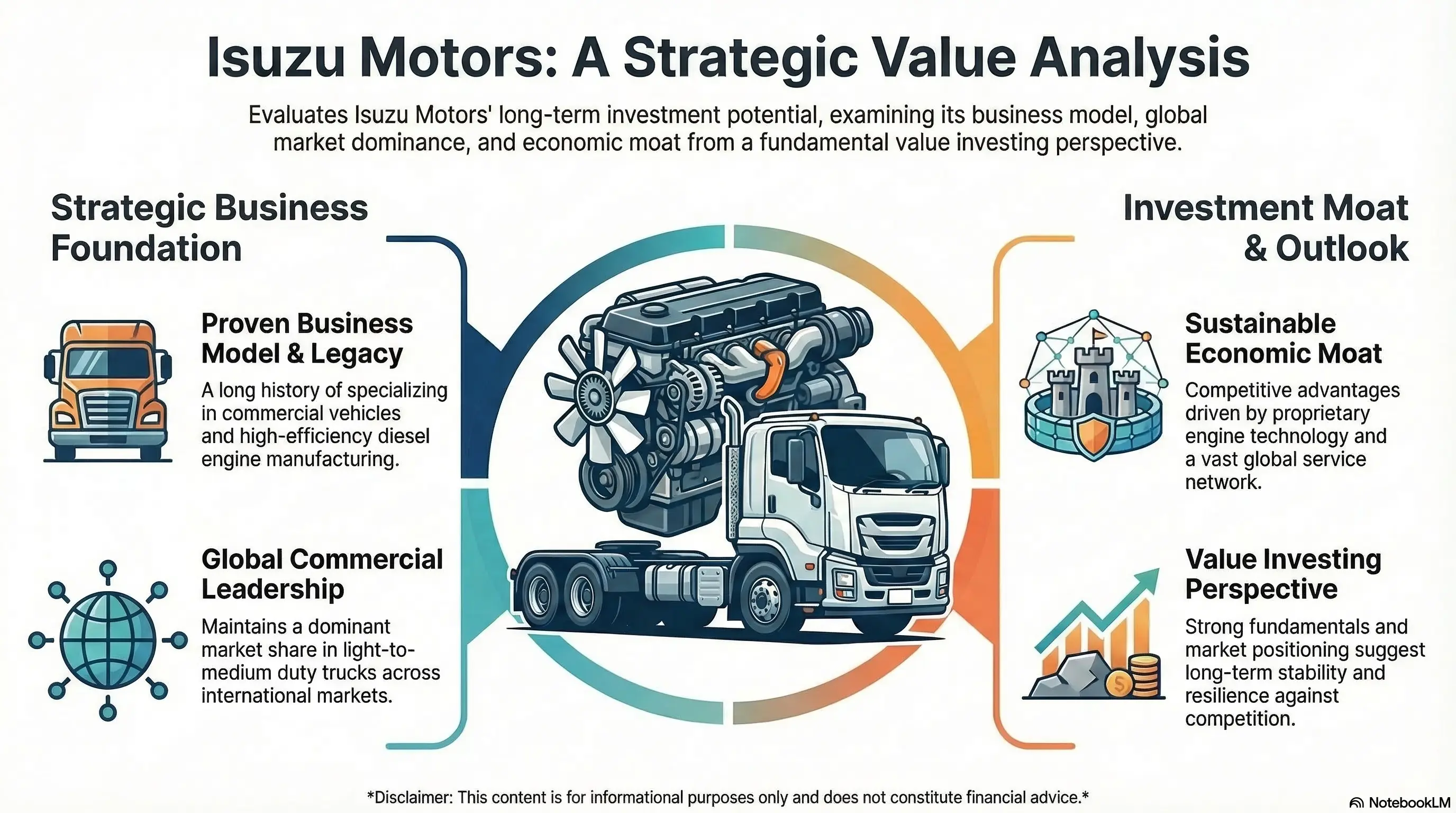
Infographic
Overview
Isuzu Motors Ltd. is a Japanese automobile and commercial vehicle manufacturing company headquartered in Tokyo, Japan. The company was founded in 1916 as a joint venture between Tokyo Gas and Electric Industrial Co. and the Tokyo Ishikawajima Shipbuilding and Engineering Co. The name "Isuzu" is derived from a Japanese river, the Isuzu River.
Isuzu began producing automobiles in 1922 and in 1953, the company introduced its first diesel-powered truck. In the 1970s and 1980s, Isuzu expanded its global presence by forming partnerships with other international car manufacturers, such as General Motors and Subaru.
Today, Isuzu is one of the world's largest producers of commercial vehicles, with a global presence in over 100 countries. The company is divided into two main business segments: the Automotive Business and the Commercial Vehicle Business. Isuzu produces a range of vehicles, including trucks, buses, SUVs, and pick-up trucks.
Isuzu is also known for its development of fuel-efficient and environmentally friendly technologies, such as its low-emission diesel engines and hybrid-electric vehicles. The company has received numerous awards and accolades for its innovations and commitment to sustainable development.
In addition to its automotive business, Isuzu also has a strong presence in the power generation, industrial engines, and marine engines industries. The company continues to invest in research and development to stay at the forefront of technological advancements in these fields.
Isuzu also has a strong commitment to social responsibility, actively engaging in corporate social responsibility initiatives to contribute to the well-being of society and the environment. This includes supporting education programs, disaster relief efforts, and environmental conservation projects.
Overall, Isuzu Motors is a globally recognized company with a strong history of innovation, a commitment to sustainability, and a dedication to serving its customers and communities.
How to explain to a 10 year old kid about the company?

📈 Want to read more about Isuzu Motors?
Sign up for free
or
log in
📖 Get insights from "The Checklist Value Investor — A Smarter Way to Pick Stocks" now!
SXN1enUgTW 90b3JzIGlz IGEgY29tcG FueSB0aGF0 IGJ1aWxkcy B2ZWhpY2xl cywgbGlrZS B0cnVja3Mg YW5kIGNhcn MuIEltYWdp bmUgd2hlbi B5b3Ugc2Vl IGJpZyBkZW xpdmVyeSB0 cnVja3MgZH JpdmluZyBh cm91bmQgeW 91ciBuZWln aGJvcmhvb2 Qgb3Igd2hl biB5b3Ugc2 VlIHZlaGlj bGVzIHRoYX QgYXJlIHVz ZWQgZm9yIG NvbnN0cnVj dGlvbiBhbm QgbW92aW5n IGhlYXZ5IH RoaW5ncy4g SXN1enUgbW FrZXMgdGhv c2Uga2luZH Mgb2YgdmVo aWNsZXMhID xicj5UbyBt YWtlIG1vbm V5LCBJc3V6 dSBzZWxscy B0aGVzZSB2 ZWhpY2xlcy B0byBvdGhl ciBjb21wYW 5pZXMgYW5k IHNvbWV0aW 1lcyB0byBy ZWd1bGFyIH Blb3BsZSB0 b28uIFRoZX kgY3JlYXRl IGRpZmZlcm VudCB0eXBl cyBvZiB2ZW hpY2xlcywg ZnJvbSBzbW FsbCBkZWxp dmVyeSB2YW 5zIHRvIGJp Zywgc3Ryb2 5nIHRydWNr cyB0aGF0IG NhbiBjYXJy eSBoZWF2eS Bsb2Fkcy4g UGVvcGxlIG FuZCBidXNp bmVzc2VzIG 5lZWQgdGhl c2UgdmVoaW NsZXMgZm9y IHRoZWlyIG V2ZXJ5ZGF5 IHdvcmssIH NvIElzdXp1 IGVhcm5zIG 1vbmV5IHdo ZW4gdGhleS BzZWxsIHRo ZW0uPGJyPk lzdXp1IGlz IHN1Y2Nlc3 NmdWwgZm9y IGEgZmV3IH JlYXNvbnMu IEZpcnN0LC B0aGV5IGZv Y3VzIG9uIG J1aWxkaW5n IHZlcnkgZH VyYWJsZSBh bmQgcmVsaW FibGUgdmVo aWNsZXMsIH doaWNoIG1l YW5zIHRoZW lyIHRydWNr cyBhbmQgY2 FycyBkb27i gJl0IGJyZW FrIGRvd24g ZWFzaWx5Li BUaGlzIG1h a2VzIGN1c3 RvbWVycyB0 cnVzdCB0aG VpciBicmFu ZCBhbmQgd2 FudCB0byBi dXkgZnJvbS B0aGVtIGFn YWluLiBTZW NvbmQsIElz dXp1IGhhcy BhIGdvb2Qg cmVwdXRhdG lvbiBmb3Ig bWFraW5nIH RydWNrcyB0 aGF0IGFyZS BwZXJmZWN0 IGZvciB0b3 VnaCBqb2Jz LCBzbyBjb2 1wYW5pZXMg dGhhdCBuZW VkIHRvIG1v dmUgZ29vZH Mgb3IgbWF0 ZXJpYWxzIG 9mdGVuIGNo b29zZSBJc3 V6dS48YnI+ SW4gdGhlIG Z1dHVyZSwg SXN1enUgaX MgbGlrZWx5 IHRvIHN0YX kgc3VjY2Vz c2Z1bCBiZW NhdXNlIHRo ZXkgYXJlIG FkYXB0aW5n IHRvIG5ldy B0ZWNobm9s b2d5LiBGb3 IgZXhhbXBs ZSwgdGhleS BhcmUgd29y a2luZyBvbi BtYWtpbmcg dmVoaWNsZX MgdGhhdCBh cmUgbW9yZS BlbnZpcm9u bWVudGFsbH kgZnJpZW5k bHkuIEFzIG 1vcmUgcGVv cGxlIGFuZC BidXNpbmVz c2VzIGNhcm UgYWJvdXQg dGFraW5nIG NhcmUgb2Yg dGhlIHBsYW 5ldCwgdGhl eSBtaWdodC B3YW50IHRv IGJ1eSB0aG VzZSBuZXdl ciwgZ3JlZW 5lciB2ZWhp Y2xlcy4gVG hpcyBjYW4g aGVscCBJc3 V6dSBrZWVw IHNlbGxpbm cgdGhlaXIg dHJ1Y2tzIG FuZCBjYXJz IGFzIHRoZS B3b3JsZCBj aGFuZ2VzLj xicj5Tbywg SXN1enUgTW 90b3JzIGJ1 aWxkcyBzdH JvbmcgdmVo aWNsZXMsIG 1ha2VzIG1v bmV5IGJ5IH NlbGxpbmcg dGhlbSwgYW 5kIGNvbnRp bnVlcyB0by BiZSBzdWNj ZXNzZnVsIG J5IGZvY3Vz aW5nIG9uIH doYXQgY3Vz dG9tZXJzIG 5lZWQgYW5k IHN0YXlpbm cgdXAtdG8t ZGF0ZSB3aX RoIG5ldyB0 ZWNobm9sb2 d5ITxicj4=
What is special about the company?
📈 Want to read more about Isuzu Motors?
Sign up for free
or
log in
🔓 Unlock our free guide: "The Checklist Value Investor — A Smarter Way to Pick Stocks"
MS4gSGlzdG 9yeSBhbmQg TGVnYWN5Oi BJc3V6dSBN b3RvcnMgaG FzIGEgbG9u ZyBoaXN0b3 J5IGluIHRo ZSBhdXRvbW 90aXZlIGlu ZHVzdHJ5LC BkYXRpbmcg YmFjayB0by AxOTE2LiBJ dCBoYXMgcG xheWVkIGEg Y3J1Y2lhbC Byb2xlIGlu IHRoZSBkZX ZlbG9wbWVu dCBvZiB0aG UgSmFwYW5l c2UgYXV0b2 1vYmlsZSBp bmR1c3RyeS BhbmQgaGFz IGVzdGFibG lzaGVkIGEg c3Ryb25nIG xlZ2FjeSBp biBtYW51Zm FjdHVyaW5n IGR1cmFibG UgYW5kIHJl bGlhYmxlIH ZlaGljbGVz Ljxicj4yLi BGb2N1cyBv biBDb21tZX JjaWFsIFZl aGljbGVzOi BJc3V6dSBN b3RvcnMgaG FzIGEgc3Ry b25nIGZvY3 VzIG9uIGNv bW1lcmNpYW wgdmVoaWNs ZXMsIHBhcn RpY3VsYXJs eSB0cnVja3 MgYW5kIGJ1 c2VzLiBJdC BpcyBrbm93 biBmb3IgcH JvZHVjaW5n IGhpZ2gtcX VhbGl0eSwg aGVhdnktZH V0eSB2ZWhp Y2xlcyB0aG F0IGFyZSB3 aWRlbHkgdX NlZCBpbiBp bmR1c3RyaW VzIHN1Y2gg YXMgY29uc3 RydWN0aW9u LCBsb2dpc3 RpY3MsIGFu ZCB0cmFuc3 BvcnRhdGlv bi48YnI+My 4gR2xvYmFs IFByZXNlbm NlOiBJc3V6 dSBNb3Rvcn MgaGFzIGEg c3Ryb25nIG dsb2JhbCBw cmVzZW5jZS BhbmQgaXMg cmVjb2duaX plZCBhcyBv bmUgb2YgdG hlIGxlYWRp bmcgY29tbW VyY2lhbCB2 ZWhpY2xlIG 1hbnVmYWN0 dXJlcnMgaW 4gdGhlIHdv cmxkLiBJdC BoYXMgYSBw cmVzZW5jZS BpbiBvdmVy IDEyMCBjb3 VudHJpZXMs IHdpdGggcH JvZHVjdGlv biBmYWNpbG l0aWVzIGFu ZCBzYWxlcy BuZXR3b3Jr cyBzcGFubm luZyBhY3Jv c3MgQXNpYS wgRXVyb3Bl LCBhbmQgdG hlIEFtZXJp Y2FzLjxicj 40LiBJbm5v dmF0aXZlIF RlY2hub2xv Z2llczogSX N1enUgTW90 b3JzIGlzIG NvbW1pdHRl ZCB0byBkZX ZlbG9waW5n IGlubm92YX RpdmUgdGVj aG5vbG9naW VzIHRvIGlt cHJvdmUgdG hlIHBlcmZv cm1hbmNlIG FuZCBlZmZp Y2llbmN5IG 9mIGl0cyB2 ZWhpY2xlcy 4gSXQgaGFz IGJlZW4gYS BwaW9uZWVy IGluIHRoZS BkZXZlbG9w bWVudCBvZi BkaWVzZWwg ZW5naW5lcy wgY29udGlu dW91c2x5IG ludHJvZHVj aW5nIG5ldy BhZHZhbmNl bWVudHMgdG 8gaW5jcmVh c2UgcG93ZX IsIGZ1ZWwg ZWZmaWNpZW 5jeSwgYW5k IHJlZHVjZS BlbWlzc2lv bnMuPGJyPj UuIENvbGxh Ym9yYXRpb2 4gYW5kIFBh cnRuZXJzaG lwczogSXN1 enUgTW90b3 JzIGhhcyBh IHN0cm9uZy BjdWx0dXJl IG9mIGNvbG xhYm9yYXRp b24gYW5kIH BhcnRuZXJz aGlwcy4gSX QgaGFzIGZv cm1lZCBzdH JhdGVnaWMg YWxsaWFuY2 VzIHdpdGgg Y29tcGFuaW VzIHN1Y2gg YXMgR2VuZX JhbCBNb3Rv cnMsIE1hem RhLCBhbmQg VG95b3RhIH RvIGV4cGFu ZCBpdHMgcH JvZHVjdCBs aW5ldXAgYW 5kIHN0cmVu Z3RoZW4gaX RzIG1hcmtl dCBwcmVzZW 5jZS48YnI+ Ni4gQ29tbW l0bWVudCB0 byBTdXN0YW luYWJpbGl0 eTogSXN1en UgTW90b3Jz IGlzIGNvbW 1pdHRlZCB0 byBzdXN0YW luYWJsZSBh bmQgZWNvLW ZyaWVuZGx5 IHByYWN0aW NlcyBpbiBp dHMgbWFudW ZhY3R1cmlu ZyBwcm9jZX NzZXMuIEl0 IGhhcyBpbX BsZW1lbnRl ZCB2YXJpb3 VzIGluaXRp YXRpdmVzLC BzdWNoIGFz IHByb21vdG luZyBiaW9k aWVzZWwgdX NlIGFuZCBk ZXZlbG9waW 5nIGVsZWN0 cmljIGFuZC BoeWJyaWQg dmVoaWNsZX MsIHRvIHJl ZHVjZSBpdH MgY2FyYm9u IGZvb3Rwcm ludC48YnI+ Ny4gRGl2ZX JzaWZpZWQg UHJvZHVjdC BMaW5ldXA6 IElzdXp1IE 1vdG9ycyBv ZmZlcnMgYS BkaXZlcnNl IHJhbmdlIG 9mIHZlaGlj bGVzLCBpbm NsdWRpbmcg cGlja3VwIH RydWNrcywg U1VWcywgYW 5kIHBhc3Nl bmdlciBjYX JzLCBpbiBh ZGRpdGlvbi B0byBpdHMg Y29tbWVyY2 lhbCB2ZWhp Y2xlcy4gVG hpcyBhbGxv d3MgdGhlIG NvbXBhbnkg dG8gY2F0ZX IgdG8gYSB3 aWRlciBjdX N0b21lciBi YXNlIGFuZC BhZGFwdCB0 byBjaGFuZ2 luZyBtYXJr ZXQgZGVtYW 5kcy48YnI+ OC4gU3Ryb2 5nIEJyYW5k IFJlcHV0YX Rpb246IElz dXp1IE1vdG 9ycyBoYXMg YnVpbHQgYS BzdHJvbmcg YnJhbmQgcm VwdXRhdGlv biBvdmVyIH RoZSB5ZWFy cywga25vd2 4gZm9yIGl0 cyBoaWdoLX F1YWxpdHkg YW5kIGR1cm FibGUgdmVo aWNsZXMuIE l0IGhhcyB3 b24gbnVtZX JvdXMgYXdh cmRzIGFuZC BhY2NvbGFk ZXMsIGZ1cn RoZXIgc29s aWRpZnlpbm cgaXRzIHBv c2l0aW9uIG FzIGEgbGVh ZGluZyBhdX RvbW9iaWxl IG1hbnVmYW N0dXJlci4=
What the company's business model?
📈 Want to read more about Isuzu Motors?
Sign up for free
or
log in
📥 Get our free eBook now: "The Checklist Value Investor — A Smarter Way to Pick Stocks"
VGhlIElzdX p1IE1vdG9y cyBjb21wYW 55J3MgYnVz aW5lc3MgbW 9kZWwgaXMg YmFzZWQgb2 4gbWFudWZh Y3R1cmluZy BhbmQgc2Vs bGluZyBjb2 1tZXJjaWFs IHZlaGljbG VzLCBwYXNz ZW5nZXIgdm VoaWNsZXMs IGFuZCBkaW VzZWwgYW5k IG5hdHVyYW wgZ2FzIGVu Z2luZXMuIF RoZXkgYWxz byBwcm92aW RlIGFmdGVy LXNhbGVzIH NlcnZpY2Vz IHN1Y2ggYX MgbWFpbnRl bmFuY2UsIH JlcGFpciwg YW5kIHNwYX JlIHBhcnRz IHNhbGVzIG ZvciB0aGVp ciBwcm9kdW N0cy4gQWRk aXRpb25hbG x5LCBJc3V6 dSBoYXMgYS BzdHJvbmcg cHJlc2VuY2 UgaW4gdGhl IGdsb2JhbC BtYXJrZXQg dGhyb3VnaC BwYXJ0bmVy c2hpcHMgYW 5kIGpvaW50 IHZlbnR1cm VzIHdpdGgg b3RoZXIgYX V0b21vYmls ZSBjb21wYW 5pZXMuIFRo ZXkgYWltIH RvIHByb3Zp ZGUgaGlnaC 1xdWFsaXR5 LCByZWxpYW JsZSwgYW5k IHN1c3RhaW 5hYmxlIHBy b2R1Y3RzIH RvIG1lZXQg dGhlIHRyYW 5zcG9ydGF0 aW9uIG5lZW RzIG9mIGlu ZGl2aWR1YW xzIGFuZCBi dXNpbmVzc2 VzIHdvcmxk d2lkZS4=
Is AI a threat?
AI has the potential to impact Isuzu Motors in several ways, yet the material threat it poses through substitution, disintermediation, or margin pressure depends on various factors in the automotive industry.
1. Substitution: AI-driven technologies may enable new modes of transportation that could serve as substitutes for traditional automotive products. For example, ride-sharing platforms powered by AI could reduce the demand for personal vehicle ownership, including Isuzu’s offerings. Additionally, advancements in electric vehicle technology, driven by AI in areas such as battery management and autonomous driving, could shift consumer preferences toward brands that adopt these technologies more quickly. Although this poses a threat, Isuzu has opportunities to adapt by integrating AI into their products, such as enhancing vehicle connectivity and driving features.
2. Disintermediation: The automotive sales process could be affected by AI, particularly as consumers increasingly seek online and direct purchasing experiences. AI can streamline the buying process through enhanced online platforms, reducing reliance on traditional dealerships. If Isuzu fails to adapt to these sales trends, it could lose market share to automakers that provide more accessible or engaging purchasing experiences. Embracing AI in customer engagement and sales could mitigate this risk.
3. Margin Pressure: The integration of AI can lead to cost optimization in manufacturing and design processes. However, the initial investment in AI technologies and development could be substantial, affecting margins in the short term. If competitors leverage AI to produce vehicles more efficiently or offer better features at lower prices, Isuzu could face margin pressure. To combat this, Isuzu may need to innovate and invest in AI-driven improvements to maintain competitiveness in pricing and product offerings.
In conclusion, while AI presents potential threats to Isuzu Motors in terms of substitution, disintermediation, and margin pressure, there are also significant opportunities for the company to innovate and enhance its offerings. The extent of the threat will depend on Isuzu’s ability to adapt to technological advancements and shifting consumer preferences in the automotive market.
Sensitivity to interest rates
Isuzu Motors’ earnings, cash flow, and valuation can be significantly sensitive to changes in interest rates for several reasons:
1. Cost of Borrowing: Higher interest rates increase the cost of borrowing for Isuzu, which can affect its ability to finance operations, invest in new projects, or expand production capacity. If the company relies on loans for capital investment, increased interest rates could lead to higher interest expenses, consequently reducing net earnings.
2. Consumer Financing: Isuzu sells vehicles that often require financing for consumers. Higher interest rates can deter customers from purchasing vehicles, as higher financing costs make monthly payments less affordable. This reduction in demand can lead to lower sales volumes, adversely affecting revenues and profitability.
3. Inventory Costs: When interest rates rise, the cost of holding inventory can increase, especially if Isuzu uses credit to finance inventory. This can lead to tighter cash flow, forcing the company to reevaluate its inventory management practices and possibly leading to increased costs associated with unsold stock.
4. Economic Impact: Interest rate changes can influence the overall economic environment. Higher rates typically result in reduced consumer spending and can slow economic growth. This can reduce demand for commercial vehicles, which is a significant market for Isuzu.
5. Valuation Metrics: Valuation of Isuzu Motors, like any other company, is often based on discounted cash flow analysis. If interest rates rise, the discount rate applied to future cash flows will typically increase, which can lower the present value of those cash flows, leading to a decrease in the company’s market valuation.
6. Foreign Exchange Implications: Fluctuations in interest rates can also impact foreign exchange rates. As a global player, Isuzu might experience currency risk if stronger domestic currency (often a byproduct of increasing interest rates) makes its exports more expensive and less competitive in international markets.
In summary, Isuzu Motors may face various challenges arising from interest rate fluctuations, affecting its earnings, cash flows, and overall market valuation. The degree of sensitivity will depend on the company’s specific financial structure, market conditions, and external economic factors.
Resilience to the future changes
📈 Want to read more about Isuzu Motors?
Sign up for free
or
log in
💡 Learn smarter stock picks with "The Checklist Value Investor — A Smarter Way to Pick Stocks"
T25lIHJlYW xpc3RpYyBz Y2VuYXJpby B0aGF0IGNv dWxkIHBlcm 1hbmVudGx5 IGltcGFpci BJc3V6dSBN b3RvcnPigJ kgZWNvbm9t aWNzIG92ZX IgdGhlIG5l eHQgM+KAkz UgeWVhcnMg aXMgYSBzaW duaWZpY2Fu dCBhbmQgcH JvbG9uZ2Vk IGRpc3J1cH Rpb24gaW4g dGhlIGdsb2 JhbCBhdXRv bW90aXZlIH N1cHBseSBj aGFpbiwgcG FydGljdWxh cmx5IHJlbG F0ZWQgdG8g c2VtaWNvbm R1Y3RvciBz aG9ydGFnZX MgYW5kIHJh dyBtYXRlcm lhbCBwcmlj ZSB2b2xhdG lsaXR5LiBT dWNoIGEgc2 NlbmFyaW8g Y291bGQgYm UgdHJpZ2dl cmVkIGJ5IG dlb3BvbGl0 aWNhbCB0ZW 5zaW9ucywg bmF0dXJhbC BkaXNhc3Rl cnMsIG9yIH B1YmxpYyBo ZWFsdGggY3 Jpc2VzIHRo YXQgaW1wZW RlIHByb2R1 Y3Rpb24gY2 FwYWJpbGl0 aWVzIGFuZC Bsb2dpc3Rp Y3MuPGJyPk luIHRoaXMg c2l0dWF0aW 9uLCBJc3V6 dSBNb3Rvcn Mgd291bGQg ZmFjZSBzZX ZlcmFsIGNo YWxsZW5nZX MuIEZpcnN0 LCB0aGUgaW 5hYmlsaXR5 IHRvIHByb2 N1cmUgY3Jp dGljYWwgY2 9tcG9uZW50 cyB3b3VsZC BsZWFkIHRv IGEgZGVjbG luZSBpbiBw cm9kdWN0aW 9uIGNhcGFj aXR5LiBUaG lzIGRlY2xp bmUgd291bG QgbGltaXQg dGhlaXIgYW JpbGl0eSB0 byBtZWV0IG N1c3RvbWVy IGRlbWFuZC wgcmVzdWx0 aW5nIGluIH JlZHVjZWQg c2FsZXMgYW 5kIG1hcmtl dCBzaGFyZS 4gQXMgcHJv ZHVjdGlvbi BzbG93cyBh bmQgaW52ZW 50b3J5IGxl dmVscyBkZW NyZWFzZSwg SXN1enUgd2 91bGQgbGlr ZWx5IHJlc2 9ydCB0byBp bmNyZWFzaW 5nIHByaWNl cywgd2hpY2 ggY291bGQg ZXJvZGUgZG VtYW5kIGZ1 cnRoZXIgYW 5kIGFsaWVu YXRlIHByaW NlLXNlbnNp dGl2ZSBjb2 5zdW1lcnMu PGJyPk1hcm dpbnMgY291 bGQgYmUgZH JhbWF0aWNh bGx5IGFmZm VjdGVkIGFz IHRoZSBjb2 1wYW55IGZh Y2VzIGhpZ2 hlciBjb3N0 cyBmb3Igcm F3IG1hdGVy aWFscyBhbm QgdHJhbnNw b3J0YXRpb2 4sIGFsb25n c2lkZSByZW R1Y2VkIGVj b25vbWllcy BvZiBzY2Fs ZS4gVGhpcy B3b3VsZCBj b21wcmVzcy Bwcm9maXQg bWFyZ2lucy wgYXMgY29z dHMgcmlzZS B3aGlsZSBy ZXZlbnVlcy Bwb3RlbnRp YWxseSBzdG FnbmF0ZSBv ciBkZWNsaW 5lLjxicj5D YXNoIGZsb3 cgd291bGQg YWxzbyBzdW ZmZXIgdW5k ZXIgdGhpcy BzY2VuYXJp by4gUmVkdW NlZCBwcm9k dWN0aW9uIH dvdWxkIGxl YWQgdG8gbG 93ZXIgcmV2 ZW51ZXMsIH doaWxlIGZp eGVkIGNvc3 Rz4oCUc3Vj aCBhcyBzYW xhcmllcywg bGVhc2UgcG F5bWVudHMs IGFuZCBvdG hlciBvcGVy YXRpb25hbC BleHBlbnNl c+KAlHdvdW xkIHJlbWFp biBsYXJnZW x5IHVuY2hh bmdlZC4gVG hpcyBjb21i aW5hdGlvbi Bjb3VsZCBs ZWFkIHRvIG 5lZ2F0aXZl IGNhc2ggZm xvdywgZm9y Y2luZyBJc3 V6dSB0byBl eHBsb3JlIG ZpbmFuY2lu ZyBvcHRpb2 5zLCB3aGlj aCBjb3VsZC ByZXN1bHQg aW4gaGlnaG VyIGludGVy ZXN0IGV4cG Vuc2VzIGlm IHRoZXkgdG FrZSBvbiBk ZWJ0Ljxicj 5PbiB0aGUg YmFsYW5jZS BzaGVldCwg cHJvbG9uZ2 VkIGRpc3J1 cHRpb24gY2 91bGQgbGVh ZCB0byBhbi BpbmNyZWFz ZSBpbiBsaW FiaWxpdGll cyBkdWUgdG 8gdGhlIG5l ZWQgZm9yIG FkZGl0aW9u YWwgZmluYW 5jaW5nLCB3 aGlsZSBhc3 NldHMgbWF5 IGRlY3JlYX NlIGluIHZh bHVlIGlmIG ludmVudG9y aWVzIHJlbW FpbiB1bnNv bGQgb3IgcH JvZHVjdGlv biBmYWNpbG l0aWVzIGFy ZSB1bmRlcn V0aWxpemVk LiBUaGUgcm VzdWx0IGNv dWxkIGJlIG EgZGVncmFk ZWQgYXNzZX QgdHVybm92 ZXIgcmF0aW 8gYW5kIHdv cnNlbmluZy BmaW5hbmNp YWwgcmF0aW 9zIG92ZXJh bGwsIHN1Y2 ggYXMgZGVi dC10by1lcX VpdHkgYW5k IGN1cnJlbn QgcmF0aW9z LCBpbXBhaX JpbmcgdGhl IGNvbXBhbn nigJlzIGZp bmFuY2lhbC BoZWFsdGgg YW5kIGZsZX hpYmlsaXR5 Ljxicj5JZi B0aGlzIHNj ZW5hcmlvIH BlcnNpc3Rz LCBJc3V6dS BtaWdodCBh bHNvIGhhdm UgdG8gcmVh c3Nlc3MgaX RzIGxvbmct dGVybSBzdH JhdGVnaWVz LCBmb2N1c2 luZyBvbiBy ZWR1Y2luZy Bjb3N0cyB0 aHJvdWdoIH Jlc3RydWN0 dXJpbmcsIG ludmVzdGlu ZyBpbiBhbH Rlcm5hdGl2 ZSBzdXBwbH kgc29sdXRp b25zLCBvci BkaXZlcnNp ZnlpbmcgaX RzIHByb2R1 Y3QgbGluZS B0byBtaXRp Z2F0ZSByaX NrcyBhc3Nv Y2lhdGVkIH dpdGggY3lj bGljYWwgZG lzcnVwdGlv bnMgaW4gdG hlIGF1dG9t b3RpdmUgaW 5kdXN0cnku IFRoaXMgbW lnaHQgaW52 b2x2ZSByZW FsbG9jYXRp bmcgcmVzb3 VyY2VzIG9y IGNoYW5naW 5nIHBhcnRu ZXJzaGlwcy wgZnVydGhl ciBpbmZsdW VuY2luZyB0 aGVpciBvcG VyYXRpb25h bCBlZmZpY2 llbmN5IGFu ZCBjb21wZX RpdGl2ZW5l c3MuPGJyPg ==
Interesting facts about the company
📈 Want to read more about Isuzu Motors?
Sign up for free
or
log in
📘 Claim your free eBook: "The Checklist Value Investor — A Smarter Way to Pick Stocks"
CiAgICAgIC AgICAgIDxk aXYgc3R5bG U9J3dpZHRo OiAxMDAlOy BkaXNwbGF5 OiBmbGV4Oy BqdXN0aWZ5 LWNvbnRlbn Q6IGNlbnRl cjsnPgogIC AgICAgICAg ICAgICAgPG RpdiBzdHls ZT0nCiAgIC AgICAgICAg ICAgICAgIC AgZGlzcGxh eTogZmxleD sKICAgICAg ICAgICAgIC AgICAgICBh bGlnbi1pdG VtczogY2Vu dGVyOwogIC AgICAgICAg ICAgICAgIC AgIGJhY2tn cm91bmQtY2 9sb3I6ICNm MGY0Zjg7Ci AgICAgICAg ICAgICAgIC AgICAgYm9y ZGVyOiAxcH ggc29saWQg I2QxZTNmMD sKICAgICAg ICAgICAgIC AgICAgICBi b3JkZXItcm FkaXVzOiAx MHB4OwogIC AgICAgICAg ICAgICAgIC AgIHBhZGRp bmc6IDEwcH g7CiAgICAg ICAgICAgIC AgICAgICAg bWFyZ2luOi AyMHB4IDA7 CiAgICAgIC AgICAgICAg ICAgICAgZm 9udC1mYW1p bHk6ICJTZW dvZSBVSSIs IFJvYm90by wgc2Fucy1z ZXJpZjsKIC AgICAgICAg ICAgICAgIC AgICBib3gt c2hhZG93Oi AwIDJweCA2 cHggcmdiYS gwLCAwLCAw LCAwLjA1KT sKICAgICAg ICAgICAgIC AgICAgICBt YXgtd2lkdG g6IDkwMHB4 OwogICAgIC AgICAgICAg ICAgICAgIH dpZHRoOiAx MDAlOyc+Cg ogICAgICAg ICAgICAgIC AgICAgIDxp bWcgc3JjPS Jhc3NldHMv bG9nb3MvWH ppMEtZS2hk REMweGZqU0 Y0NEcud2Vi cCIgYWx0PS JJc3V6dSBN b3RvcnMiIH RpdGxlPSJJ c3V6dSBNb3 RvcnMiICBj bGFzcz0iaW 1nLWZsdWlk IiBoZWlnaH Q9NTAgd2lk dGg9NTAgbG 9hZGluZz0n bGF6eScgc3 R5bGU9J2Jv cmRlci1yYW RpdXM6IDZw eDsnPgoKIC AgICAgICAg ICAgICAgIC AgICA8ZGl2 IHN0eWxlPS dmbGV4OiAx OyB0ZXh0LW FsaWduOiBj ZW50ZXI7IG 1hcmdpbi1s ZWZ0OiA1cH g7Jz4KICAg ICAgICAgIC AgICAgICAg ICAgICAgPH Agc3R5bGU9 J2ZvbnQtc2 l6ZTogMjZw eDsgY29sb3 I6ICMzMzM7 IG1hcmdpbi 1ib3R0b206 IDE1cHg7Jz 4KICAgICAg ICAgICAgIC AgICAgICAg ICAgICAgIP Cfk4ggV2Fu dCB0byByZW FkIG1vcmUg YWJvdXQgSX N1enUgTW90 b3JzPwogIC AgICAgICAg ICAgICAgIC AgICAgICA8 L3A+CgogIC AgICAgICAg ICAgICAgIC AgICAgICA8 YSBocmVmPS dpbmRleC5w aHA/cGFnZT 1zaWdudXAn IHN0eWxlPS cKICAgICAg ICAgICAgIC AgICAgICAg ICAgICAgIG JhY2tncm91 bmQtY29sb3 I6ICMwMDdC RkY7CiAgIC AgICAgICAg ICAgICAgIC AgICAgICAg ICBjb2xvcj ogI2ZmZjsK ICAgICAgIC AgICAgICAg ICAgICAgIC AgICAgIHBh ZGRpbmc6ID EwcHggMjBw eDsKICAgIC AgICAgICAg ICAgICAgIC AgICAgICAg IGJvcmRlci 1yYWRpdXM6 IDVweDsKIC AgICAgICAg ICAgICAgIC AgICAgICAg ICAgIHRleH QtZGVjb3Jh dGlvbjogbm 9uZTsKICAg ICAgICAgIC AgICAgICAg ICAgICAgIC AgIGZvbnQt d2VpZ2h0Oi Bib2xkOwog ICAgICAgIC AgICAgICAg ICAgICAgIC AgICAgbWFy Z2luLXJpZ2 h0OiAxMHB4 OwogICAgIC AgICAgICAg ICAgICAgIC AgICAgICAg dHJhbnNpdG lvbjogYmFj a2dyb3VuZC 1jb2xvciAw LjNzIGVhc2 U7JwogICAg ICAgICAgIC AgICAgICAg ICAgICAgIC Agb25tb3Vz ZW92ZXI9J3 RoaXMuc3R5 bGUuYmFja2 dyb3VuZENv bG9yPSIjMD A1NmIzIicK ICAgICAgIC AgICAgICAg ICAgICAgIC AgICAgIG9u bW91c2VvdX Q9J3RoaXMu c3R5bGUuYm Fja2dyb3Vu ZENvbG9yPS IjMDA3QkZG Iic+CiAgIC AgICAgICAg ICAgICAgIC AgICAgICAg ICBTaWduIH VwIGZvciBm cmVlCiAgIC AgICAgICAg ICAgICAgIC AgICAgIDwv YT4KCiAgIC AgICAgICAg ICAgICAgIC AgICAgIDxz cGFuIHN0eW xlPSdtYXJn aW46IDAgOH B4OyBjb2xv cjogIzU1NT snPm9yPC9z cGFuPgoKIC AgICAgICAg ICAgICAgIC AgICAgICAg PGEgaHJlZj 0naW5kZXgu cGhwP3BhZ2 U9bG9naW4n IHN0eWxlPS cKICAgICAg ICAgICAgIC AgICAgICAg ICAgICAgIG NvbG9yOiAj MDA3QkZGOw ogICAgICAg ICAgICAgIC AgICAgICAg ICAgICAgdG V4dC1kZWNv cmF0aW9uOi B1bmRlcmxp bmU7CiAgIC AgICAgICAg ICAgICAgIC AgICAgICAg ICBmb250LX dlaWdodDog NTAwOyc+Ci AgICAgICAg ICAgICAgIC AgICAgICAg ICAgICBsb2 cgaW4KICAg ICAgICAgIC AgICAgICAg ICAgICAgPC 9hPgoKCiAg ICAgICAgIC AgICAgICAg ICAgICAgID xwIHN0eWxl PSdtYXJnaW 4tdG9wOiAx NXB4OyBmb2 50LXNpemU6 IDEzcHg7IG ZvbnQtd2Vp Z2h0OiBib2 xkOyBjb2xv cjogI2QzMm YyZjsnPgog ICAgICAgIC AgICAgICAg ICAgICAgIC AgICAg4pyF IERvd25sb2 FkIDxpPiJU aGUgQ2hlY2 tsaXN0IFZh bHVlIEludm VzdG9yIOKA lCBBIFNtYX J0ZXIgV2F5 IHRvIFBpY2 sgU3RvY2tz IjwvaT4g4o CUIHRvdGFs bHkgZnJlZS EKICAgICAg ICAgICAgIC AgICAgICAg ICAgPC9wPg oKICAgICAg ICAgICAgIC AgICAgICAg ICAgPCEtLQ ogICAgICAg ICAgICAgIC AgICAgICAg ICA8ZGl2IH N0eWxlPSdt YXJnaW4tdG 9wOiAxMnB4 OyBmb250LX NpemU6IDEz cHg7IGNvbG 9yOiAjNDQ0 Oyc+CiAgIC AgICAgICAg ICAgICAgIC AgICAgICAg ICBTaWduIH VwIG5vdyBh bmQgZ2V0IG 91ciBmcmVl IGVCb29rIA ogICAgICAg ICAgICAgIC AgICAgICAg ICAgICAgPG I+VGhlIENo ZWNrbGlzdC BWYWx1ZSBJ bnZlc3Rvci DigJQgQSBT bWFydGVyIF dheSB0byBQ aWNrIFN0b2 NrczwvYj4K ICAgICAgIC AgICAgICAg ICAgICAgIC AgPC9kaXY+ CiAgICAgIC AgICAgICAg ICAgICAgIC AgIC0tPgog ICAgICAgIC AgICAgICAg ICAgICAgIC A8IS0tCiAg ICAgICAgIC AgICAgICAg ICAgICAgID xkaXYgc3R5 bGU9J21hcm dpbi10b3A6 IDE2cHg7IG ZvbnQtc2l6 ZTogMTRweD sgY29sb3I6 ICM0NDQ7IG ZvbnQtZmFt aWx5OiAtYX BwbGUtc3lz dGVtLCBCbG lua01hY1N5 c3RlbUZvbn QsIFNlZ29l IFVJLCBSb2 JvdG8sIEhl bHZldGljYS BOZXVlLCBz YW5zLXNlcm lmOyBsaW5l LWhlaWdodD ogMS42Oyc+ CiAgICAgIC AgICAgICAg ICAgICAgIC AgICAgICBI YXZlIHlvdS BoZWFyZCBh Ym91dCBvdX Igc2hvcnQg PHN0cm9uZy BzdHlsZT0n Zm9udC13ZW lnaHQ6IDYw MDsnPkRhaW x5IFZpZGVv IE5ld3NsZX R0ZXI8L3N0 cm9uZz4/Ci AgICAgICAg ICAgICAgIC AgICAgICAg ICAgICA8YS BocmVmPSdo dHRwczovL3 d3dy5pbnNp Z2h0ZnVsdm FsdWUuY29t L25ld3NsZX R0ZXIucGhw JyB0YXJnZX Q9J19ibGFu aycgc3R5bG U9J2NvbG9y OiAjMDA3Qk ZGOyB0ZXh0 LWRlY29yYX Rpb246IG5v bmU7IGZvbn Qtd2VpZ2h0 OiA1MDA7IG 1hcmdpbi1s ZWZ0OiA2cH g7Jz4KICAg ICAgICAgIC AgICAgICAg ICAgICAgIC AgICAgICBG aW5kIG91dC Btb3JlCiAg ICAgICAgIC AgICAgICAg ICAgICAgIC AgICA8L2E+ CiAgICAgIC AgICAgICAg ICAgICAgIC AgIDwvZGl2 PgogICAgIC AgICAgICAg ICAgICAgIC AgICAtLT4K ICAgICAgIC AgICAgICAg ICAgICA8L2 Rpdj4KICAg ICAgICAgIC AgICAgIDwv ZGl2PgogIC AgICAgICAg ICA8L2Rpdj 4KICAgICAg ICAgICAgCi AgICAgICAg CiAgICAgIC AgPHNwYW4g Y2xhc3M9J2 JsdXJyZWQt dGV4dCc+Ci AgICAgICAg ICAgIE1TNG dTWE4xZW4g VWdUVzkwYj NKeiBJRXhw YldsMFpXIF FnYVhNZ1lT QksgWVhCaG JtVnpaUyBC aGRYUnZiVz lpIGFXeGxJ R0Z1WkMgQm piMjF0WlhK aiBhV0ZzSU habGFHIGxq YkdVZ2JXRn UgZFdaaFkz UjFjbSBWeU lHaGxZV1J4 IGRXRnlkR1 Z5WlcgUWdh VzRnVkc5ci BlVzh1SUVs MElIIGRoY3 lCbWIzVnUg WkdWa0lHbH VJRCBFNU1U WWdZVzVrIE lHbHpJRzl1 WlMgQnZaaU IwYUdVZyBi MnhrWlhOME lFIHBoY0dG dVpYTmwgSU dGMWRHOXRi MyBScGRtVW dZMjl0IGNH RnVhV1Z6TG ogeGljajR5 TGlCVSBhR1 VnYm1GdFpT IEJKYzNWNm RTQmogYjIx bGN5Qm1jbS A5dElIUm9a U0JKIGMzVj ZkU0J5YVgg WmxjaUJwYm lCSyBZWEJo Yml3Z2QyIG hwWTJnZ2JX VmggYm5NZ1 ptbG1kSCBr Z1ltVnNiSE 1nIGFXNGdT bUZ3WVcgNW xjMlV1UEdK eSBQak11SU ZSb1pTIEJq YjIxd1lXNT UgSUhOMFlY SjBaVyBRZ1 lYTWdZU0J0 IFlXNTFabU ZqZEggVnla WElnYjJZZy BZMkZ5Y3lC aGJtIFFnZE hKMVkydHog TENCaWRYUW djMiBocFpu UmxaQ0JwIG RITWdabTlq ZFggTWdkRz hnWTI5dCBi V1Z5WTJsaG JDIEIyWldo cFkyeGwgY3 lCcGJpQjBh RyBVZ01Ua3 pNSE11IElG TnBibU5sSU ggUm9aVzRz SUVseiBkWH AxSUdoaGN5 IEJpWldOdm JXVWcgYjI1 bElHOW1JSC BSb1pTQnNZ WEpuIFpYTj BJR052Ylcg MWxjbU5wWV d3ZyBkbVZv YVdOc1pTIE J0WVc1MVpt RmogZEhWeV pYSnpJRyBs dUlIUm9aU0 IzIGIzSnNa QzQ4WW4gSS tOQzRnU1hO MSBlblVnWl c1MFpYIEps WkNCcGJuUn YgSUdFZ2Mz UnlZWCBSbF oybGpJR0Zu IGNtVmxiV1 Z1ZEMgQjNh WFJvSUVkbC BibVZ5WVd3 Z1RXIDkwYj NKeklHbHUg SURFNU56RX NJSCBkb2FX Tm9JR3hsIF pDQjBieUJo SUcgcHZhVz UwSUhabCBi blIxY21VZ1 kyIDl0Y0dG dWVTQmogWV d4c1pXUWdT WCBOMWVuVW dUVzkwIGIz SnpJRUZ0Wl ggSnBZMkVz SUVsdSBZeT RnVkdocGN5 IEJ3WVhKMG JtVnkgYzJo cGNDQnNZWC BOMFpXUWda bTl5IElITm xkbVZ5WVcg d2daR1ZqWV dSbCBjeUIx Ym5ScGJDIE JwZENCbGJt UmwgWkNCcG JpQXlNRCBF NUxqeGljaj QxIExpQkpj M1Y2ZFMgQn BjeUJyYm05 MyBiaUJtYj NJZ2NIIEp2 WkhWamFXNW 4gSUhKbGJH bGhZbSB4bE lHRnVaQ0Jr IGRYSmhZbX hsSUcgUnBa WE5sYkNCbC BibWRwYm1W ekxDIEJoYm 1RZ2FHRnog SUdKbFpXNG dZMiA5dWMy bHpkR1Z1IG RHeDVJSEpo ZEcgVmtJR0 Z6SUc5dSBa U0J2WmlCMG FHIFVnZEc5 d0lHMWggYm 5WbVlXTjBk WCBKbGNuTW diMllnIGMz VmphQ0JsYm 0gZHBibVZ6 TGp4aSBjaj QyTGlCSmJp IEJoWkdScG RHbHYgYmlC MGJ5QmpiMi AxdFpYSmph V0ZzIElIWm xhR2xqYkcg VnpMQ0JKYz NWNiBkU0Jo YkhOdklIIE J5YjJSMVky VnogSUcxaG NtbHVaUyBC bGJtZHBibV Z6IExDQnBi bVIxYzMgUn lhV0ZzSUdW dSBaMmx1Wl hNc0lHIEZ1 WkNCbGRtVn UgSUdodmJX VXRkWCBObE lHZGxibVZ5 IFlYUnZjbk 11UEcgSnlQ amN1SUVsei BkWHAxSUds eklIIFJvWl NCM2IzSnMg Wk9LQW1YTW diRyBGeVoy VnpkQ0J0IF lXNTFabUZq ZEggVnlaWE lnYjJZZyBi V1ZrYVhWdE lIIFJ2SUdo bFlYWjUgTF dSMWRIa2dk SCBKMVkydH pMaUJKIGRI TWdkSEoxWT IgdHpJR05o YmlCaSBaU0 JtYjNWdVpD IEJwYmlCdm RtVnkgSURF d01DQmpiMy BWdWRISnBa WE11IFBHSn lQamd1SUUg bHpkWHAxSU dSbCBkbVZz YjNCbFpDIE IwYUdVZ1pt bHkgYzNRZ1 lXbHlMVyBO dmIyeGxaQ0 JrIGFXVnpa V3dnWlcgNW 5hVzVsSUds dSBJSFJvWl NCM2IzIEpz WkN3Z2QyaH AgWTJnZ2FY TWdjMyBScG JHd2dkWE5s IFpDQnBiaU J6YjIgMWxJ RzltSUhSby BaV2x5SUdO MWNuIEpsYm 5RZ2JXOWsg Wld4ekxqeG ljaiA0NUxp QlVhR1VnIF kyOXRjR0Z1 ZVMgQm9ZWE 1nWVNCcyBi MjVuSUdocG MzIFJ2Y25r Z2IyWWcgY0 dGeWRHbGph WCBCaGRHbH VaeUJwIGJp QnRiM1J2Y2 4gTndiM0ow Y3l3ZyBhVz VqYkhWa2FX IDVuSUhkcG JtNXAgYm1j Z2RHaGxJSC BCeVpYTjBh V2RwIGIzVn pJRkJoY20g bHpMVVJoYT JGeSBJSEpo Ykd4NUlHIF p2ZFhJZ2RH bHQgWlhNZ2 FXNGdZUyBC eWIzY2dhVz RnIGRHaGxJ REU1T1QgQn pManhpY2o0 eCBNQzRnU1 c0Z01qIEF5 TVN3Z1NYTj EgZW5VZ1lX NXViMyBWdV kyVmtJR0Vn IGNHRnlkRz VsY24gTm9h WEFnZDJsMC BhQ0JJYjI1 a1lTIEIwYn lCcWIybHUg ZEd4NUlHUm xkbSBWc2Iz QWdhSGxrIG NtOW5aVzRn Wm4gVmxiQ0 JqWld4cyBJ SFJsWTJodW IyIHh2WjNr Z1ptOXkgSU dOdmJXMWxj bSBOcFlXd2 dkbVZvIGFX TnNaWE11SU YgUm9hWE1n YldGeSBhM0 1nWVNCemFX IGR1YVdacF kyRnUgZENC emFHbG1kQy BCMGIzZGhj bVJ6IElHVn VkbWx5YjIg NXRaVzUwWV d4cyBlU0J6 ZFhOMFlXIG x1WVdKc1pT QjAgY21GdW MzQnZjbiBS aGRHbHZiaU JtIGIzSWdk R2hsSUcgTn ZiWEJoYm5r dQogICAgIC AgIDwvc3Bh bj4KICAgIC AgICAKICAg ICAgICA=
See Company Q&A
📊 Get full analytics about Isuzu Motors
Sign up for free
or
log in
✅ Download "The Checklist Value Investor — A Smarter Way to Pick Stocks" — totally free!