Company at a Glance
Price
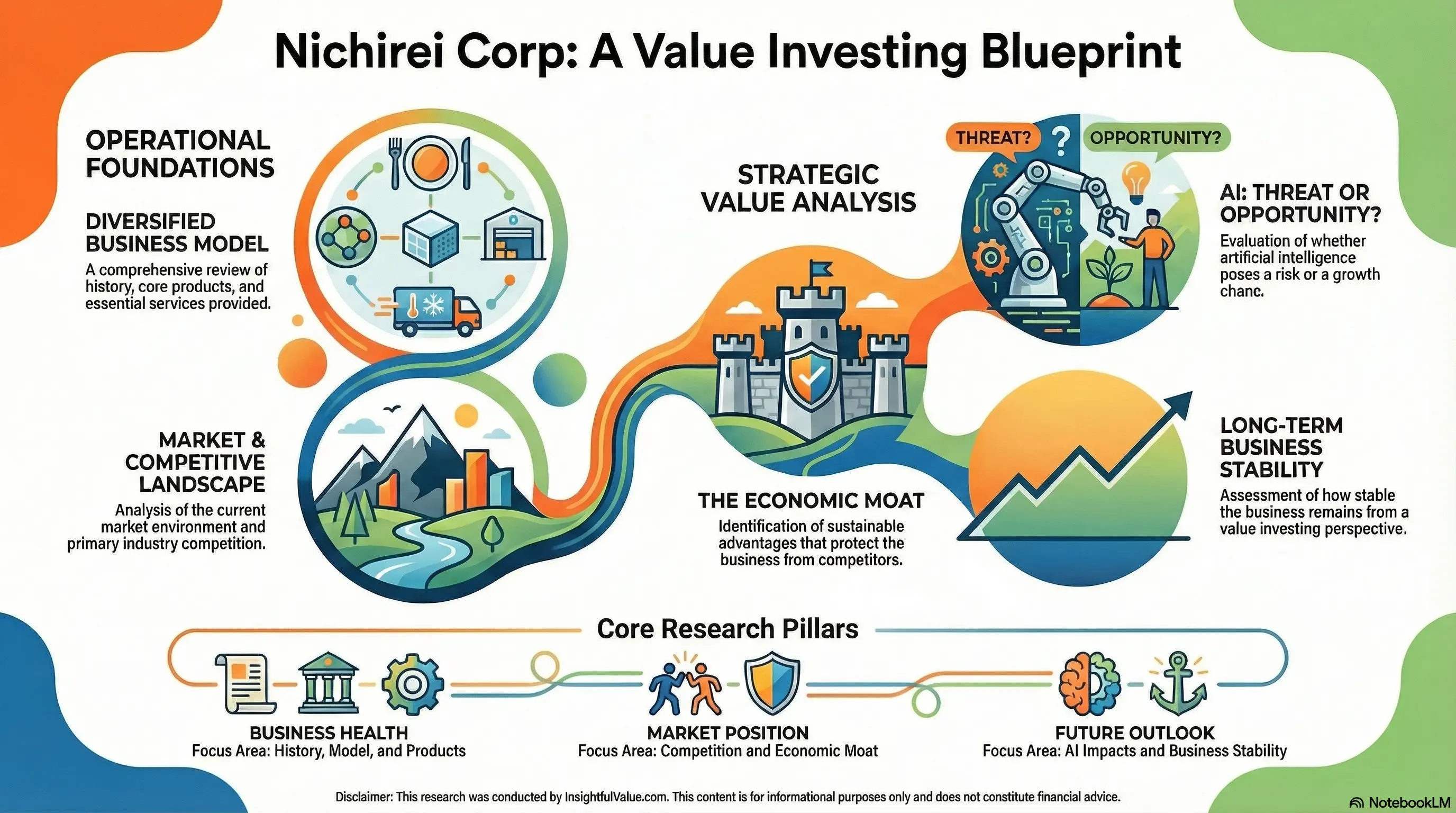
Infographic
Overview
Nichirei Corp is a Japanese company specializing in the production and distribution of frozen food, logistics and real estate. Founded in 1949, the company is headquartered in Tokyo, Japan. Nichirei Corp operates through four business segments: Frozen Foods, Logistics, Real Estate, and Others.
The Frozen Foods segment is involved in the manufacture and sale of frozen food products, including seafood, poultry, meat, vegetables, and prepared meals. The Logistics segment offers warehousing, transportation, and other logistics services. The Real Estate segment is engaged in the development and leasing of real estate properties. The Others segment includes the sale of pet food and the provision of food and environmental analysis services.
Nichirei Corp has a global presence with operations in Asia, North America, and Europe. The company has a strong focus on research and development to improve its frozen food products and expand into new markets. Nichirei Corp is also committed to environmental sustainability and has implemented various initiatives to reduce its environmental impact.
The company has a strong financial performance, with consistent growth in revenue and profits over the years. Nichirei Corp has a diverse customer base, including retail, foodservice, and industrial customers.
In addition to its business operations, Nichirei Corp is also involved in various social initiatives, including supporting local communities, promoting food education, and contributing to disaster relief efforts. The company has received recognition for its corporate social responsibility efforts, including being named one of the most socially responsible Asian companies by Forbes Asia.
Overall, Nichirei Corp is a well-established company with a strong presence in the frozen food and logistics industries, a commitment to sustainability, and a focus on contributing to society.
How to explain to a 10 year old kid about the company?

📈 Want to read more about Nichirei Corp?
Sign up for free
or
log in
📥 Get our free eBook now: "The Checklist Value Investor — A Smarter Way to Pick Stocks"
TmljaGlyZW kgQ29ycCBp cyBhIGNvbX BhbnkgZnJv bSBKYXBhbi B0aGF0IGlz IGludm9sdm VkIGluIHRo ZSBmb29kIG luZHVzdHJ5 LiBUaGV5IG 1ha2UgYW5k IHNlbGwgZG lmZmVyZW50 IHR5cGVzIG 9mIGZvb2Qg cHJvZHVjdH MsIGVzcGVj aWFsbHkgZn JvemVuIGZv b2RzLiBZb3 UgbWlnaHQg aGF2ZSBoZW FyZCBvZiBm cm96ZW4gZn J1aXRzLCB2 ZWdldGFibG VzLCBvciBt ZWFscyB0aG F0IHlvdSBj YW4gY29vay BxdWlja2x5 OyBOaWNoaX JlaSBtYWtl cyB0aGluZ3 MgbGlrZSB0 aGF0ITxicj 5IZXJl4oCZ cyBob3cgaX Qgd29ya3M6 IDxicj4xLi A8c3Ryb25n Pk1ha2luZy BGb29kPC9z dHJvbmc+Oi BOaWNoaXJl aSBwcm9kdW NlcyBhIGxv dCBvZiByZW FkeS10by1l YXQgbWVhbH MgYW5kIGZy b3plbiBmb2 9kcy4gVGhl eSBwcmVwYX JlIHRoZXNl IGZvb2RzIG luIGZhY3Rv cmllcywgcG Fja2FnZSB0 aGVtIG5pY2 VseSwgYW5k IHRoZW4gc2 VuZCB0aGVt IHRvIGdyb2 Nlcnkgc3Rv cmVzLjxicj 4yLiA8c3Ry b25nPlNlbG xpbmcgRm9v ZDwvc3Ryb2 5nPjogUGVv cGxlIGJ1eS B0aGVpciBm cm96ZW4gcH JvZHVjdHMg YXQgc3Rvcm VzIG9yIG9u bGluZS4gQm VjYXVzZSB0 aGVzZSBmb2 9kcyBjYW4g YmUgZnJvem VuIGZvciBh IGxvbmcgdG ltZSwgcGVv cGxlIGxvdm UgdGhlbSBi ZWNhdXNlIH RoZXkgY2Fu IHN0b3JlIH RoZW0gYXQg aG9tZSBhbm QgZWF0IHRo ZW0gd2hlbm V2ZXIgdGhl eSB3YW50Lj xicj4zLiA8 c3Ryb25nPl JlYWNoaW5n IE91dDwvc3 Ryb25nPjog TmljaGlyZW kgYWxzbyBz ZWxscyB0aG VpciBwcm9k dWN0cyB0by ByZXN0YXVy YW50cyBhbm Qgc2Nob29s cywgc28gdG hleSBhcmUg YWJsZSB0by BtYWtlIG1v bmV5IGZyb2 0gdGhvc2Ug YnVzaW5lc3 NlcywgdG9v Ljxicj5Ob3 csIHdoeSBp cyBOaWNoaX JlaSBzdWNj ZXNzZnVsPy A8YnI+LSA8 c3Ryb25nPk hlYWx0aHkg Q2hvaWNlcz wvc3Ryb25n PjogTW9yZS BhbmQgbW9y ZSBwZW9wbG Ugd2FudCB0 byBlYXQgaG VhbHRoeSwg YW5kIE5pY2 hpcmVpIG9m ZmVycyBwcm 9kdWN0cyB0 aGF0IGNhbi BoZWxwIHdp dGggdGhhdC 4gVGhleSBt YWtlIHN1cm UgdGhlaXIg Zm9vZHMgaG F2ZSBnb29k IGluZ3JlZG llbnRzIGFu ZCB0YXN0ZS BncmVhdC48 YnI+LSA8c3 Ryb25nPkNv bnZlbmllbm NlPC9zdHJv bmc+OiBJbi BvdXIgYnVz eSBsaXZlcy wgbWFueSBw ZW9wbGUgd2 FudCBmb29k IHRoYXTigJ lzIHF1aWNr IGFuZCBlYX N5IHRvIG1h a2UuIE5pY2 hpcmVp4oCZ cyBmcm96ZW 4gbWVhbHMg YXJlIHBlcm ZlY3QgZm9y IHRoYXQhPG JyPi0gPHN0 cm9uZz5BZG FwdGFiaWxp dHk8L3N0cm 9uZz46IFRo ZXkgcGF5IG F0dGVudGlv biB0byB3aG F0IGN1c3Rv bWVycyB3YW 50LiBJZiBw ZW9wbGUgc3 RhcnQgdG8g bGlrZSBhIG 5ldyBmbGF2 b3Igb3IgdH lwZSBvZiBm b29kLCB0aG V5IGNhbiBj cmVhdGUgbm V3IHByb2R1 Y3RzIGZhc3 Rlci48YnI+ V2h5IHdpbG wgTmljaGly ZWkgbGlrZW x5IHN0YXkg c3VjY2Vzc2 Z1bCBpbiB0 aGUgZnV0dX JlPyA8YnI+ LSA8c3Ryb2 5nPkdyb3dp bmcgRGVtYW 5kPC9zdHJv bmc+OiBBcy Btb3JlIHBl b3BsZSBhcm 91bmQgdGhl IHdvcmxkIG ZpbmQgaXQg ZWFzaWVyIH RvIGVhdCBm cm96ZW4gbW VhbHMsIE5p Y2hpcmVpIH dpbGwgY29u dGludWUgdG 8gc2VsbCBt b3JlIHByb2 R1Y3RzLjxi cj4tIDxzdH Jvbmc+SW5u b3ZhdGlvbj wvc3Ryb25n PjogVGhleS BrZWVwIGNy ZWF0aW5nIG 5ldyBmb29k cyBhbmQgaW 1wcm92aW5n IHRoZSBvbm VzIHRoZXkg YWxyZWFkeS BoYXZlLiBU aGlzIGtlZX BzIGN1c3Rv bWVycyBleG NpdGVkIGFu ZCBjb21pbm cgYmFjayBm b3IgbW9yZS 48YnI+LSA8 c3Ryb25nPk dsb2JhbCBQ cmVzZW5jZT wvc3Ryb25n PjogTmljaG lyZWkgaXNu 4oCZdCBqdX N0IGluIEph cGFuOyB0aG V5IGFyZSBl eHBhbmRpbm cgdG8gb3Ro ZXIgY291bn RyaWVzLCB3 aGljaCBtZW FucyB0aGV5 IGNhbiByZW FjaCBtb3Jl IGN1c3RvbW Vycy48YnI+ U28sIE5pY2 hpcmVpIENv cnAgaXMgZ2 9vZCBhdCBt YWtpbmcgdG FzdHksIGNv bnZlbmllbn QgZm9vZCB0 aGF0IHBlb3 BsZSB3YW50 LCBhbmQgdG hleSBhcmUg YWx3YXlzIG xvb2tpbmcg Zm9yIHdheX MgdG8gaW1w cm92ZSBhbm QgZ3JvdyE8 YnI+
What is special about the company?
📈 Want to read more about Nichirei Corp?
Sign up for free
or
log in
💡 Learn smarter stock picks with "The Checklist Value Investor — A Smarter Way to Pick Stocks"
MS4gTG9uZy BoaXN0b3J5 IGFuZCBleH BlcmllbmNl OiBOaWNoaX JlaSBDb3Jw IGhhcyBiZW VuIGluIG9w ZXJhdGlvbi BzaW5jZSAx OTM1LCBtYW tpbmcgaXQg YSB3ZWxsLW VzdGFibGlz aGVkIGNvbX Bhbnkgd2l0 aCBvdmVyID g1IHllYXJz IG9mIGV4cG VyaWVuY2Ug aW4gdGhlIG Zvb2QgaW5k dXN0cnkuIF RoaXMgbG9u ZyBoaXN0b3 J5IHNwZWFr cyB0byBpdH Mgc3RhYmls aXR5IGFuZC BzdWNjZXNz IGluIHRoZS BtYXJrZXQu PGJyPjIuIE RpdmVyc2lm aWVkIGJ1c2 luZXNzIHBv cnRmb2xpbz ogTmljaGly ZWkgQ29ycC BoYXMgYSBk aXZlcnNpZm llZCBidXNp bmVzcyBwb3 J0Zm9saW8s IGluY2x1ZG luZyBmcm96 ZW4gYW5kIH JlZnJpZ2Vy YXRlZCBmb2 9kcywgbG9n aXN0aWNzIG FuZCB3YXJl aG91c2luZy wgYW5kIG1h cmluZSBhbm QgYWdyaWN1 bHR1cmUgcH JvZHVjdHMu IFRoaXMgZG l2ZXJzaWZp Y2F0aW9uIG 5vdCBvbmx5 IGhlbHBzIH RvIG1pdGln YXRlIHJpc2 tzIGJ1dCBh bHNvIHByb3 ZpZGVzIHN0 YWJpbGl0eS BhbmQgZ3Jv d3RoIG9wcG 9ydHVuaXRp ZXMgZm9yIH RoZSBjb21w YW55Ljxicj 4zLiBHbG9i YWwgcHJlc2 VuY2U6IE5p Y2hpcmVpIE NvcnAgaGFz IGEgc3Ryb2 5nIGdsb2Jh bCBwcmVzZW 5jZSwgd2l0 aCBvcGVyYX Rpb25zIGlu IG92ZXIgMz AgY291bnRy aWVzIGFuZC ByZWdpb25z IHdvcmxkd2 lkZS4gVGhp cyBhbGxvd3 MgdGhlIGNv bXBhbnkgdG 8gdGFwIGlu dG8gZGlmZm VyZW50IG1h cmtldHMsIG FjY2VzcyBh IGRpdmVyc2 UgY3VzdG9t ZXIgYmFzZS wgYW5kIGV4 cGFuZCBpdH MgYnVzaW5l c3MgZ2xvYm FsbHkuPGJy PjQuIFN1c3 RhaW5hYmxl IHByYWN0aW NlczogTmlj aGlyZWkgQ2 9ycCBpcyBj b21taXR0ZW QgdG8gc3Vz dGFpbmFibG UgcHJhY3Rp Y2VzLCBpbm NsdWRpbmcg cmVkdWNpbm cgY2FyYm9u IGVtaXNzaW 9ucywgcHJv bW90aW5nIG Jpb2RpdmVy c2l0eSwgYW 5kIHV0aWxp emluZyByZW 5ld2FibGUg ZW5lcmd5Li BUaGUgY29t cGFueSBoYX MgYWxzbyBz ZXQgZ29hbH MgZm9yIHN1 c3RhaW5hYm xlIHBhY2th Z2luZyBhbm Qgd2FzdGUg cmVkdWN0aW 9uLCBkZW1v bnN0cmF0aW 5nIGl0cyBj b21taXRtZW 50IHRvIGVu dmlyb25tZW 50YWwgYW5k IHNvY2lhbC ByZXNwb25z aWJpbGl0eS 48YnI+NS4g SW5ub3ZhdG lvbiBhbmQg dGVjaG5vbG 9neS1kcml2 ZW46IE5pY2 hpcmVpIENv cnAgbGV2ZX JhZ2VzIGlu bm92YXRpb2 4gYW5kIHRl Y2hub2xvZ3 kgdG8gZGV2 ZWxvcCBuZX cgcHJvZHVj dHMgYW5kIG VuaGFuY2Ug aXRzIGV4aX N0aW5nIG9u ZXMuIFRoZS Bjb21wYW55 IGFsc28gaW 52ZXN0cyBp biByZXNlYX JjaCBhbmQg ZGV2ZWxvcG 1lbnQgdG8g c3RheSBhaG VhZCBvZiBt YXJrZXQgdH JlbmRzIGFu ZCBtYWludG FpbiBpdHMg Y29tcGV0aX RpdmUgZWRn ZS48YnI+Ni 4gU3Ryb25n IHBhcnRuZX JzaGlwcyBh bmQgY29sbG Fib3JhdGlv bnM6IE5pY2 hpcmVpIENv cnAgaGFzIG VzdGFibGlz aGVkIHN0cm 9uZyBwYXJ0 bmVyc2hpcH MgYW5kIGNv bGxhYm9yYX Rpb25zIHdp dGggdmFyaW 91cyBjb21w YW5pZXMsIG JvdGggaW4g SmFwYW4gYW 5kIGFicm9h ZC4gVGhlc2 UgYWxsaWFu Y2VzIGFsbG 93IHRoZSBj b21wYW55IH RvIGV4cGFu ZCBpdHMgcH JvZHVjdCBv ZmZlcmluZ3 MsIGVudGVy IG5ldyBtYX JrZXRzLCBh bmQgZXhwbG 9yZSBuZXcg YnVzaW5lc3 Mgb3Bwb3J0 dW5pdGllcy 48YnI+Ny4g RW1wbG95ZW UtY2VudHJp YyBjdWx0dX JlOiBOaWNo aXJlaSBDb3 JwIHZhbHVl cyBpdHMgZW 1wbG95ZWVz IGFuZCBoYX MgYSBwZW9w bGUtZmlyc3 QgYXBwcm9h Y2gsIGZvc3 RlcmluZyBh IGN1bHR1cm Ugb2YgcmVz cGVjdCwgZG l2ZXJzaXR5 LCBhbmQgaW 5jbHVzaW9u LiBUaGUgY2 9tcGFueSBh bHNvIHByb3 ZpZGVzIGl0 cyBlbXBsb3 llZXMgd2l0 aCB0cmFpbm luZyBhbmQg ZGV2ZWxvcG 1lbnQgb3Bw b3J0dW5pdG llcywgcHJv bW90aW5nIG Egc2Vuc2Ug b2YgY2FyZW VyIGdyb3d0 aCBhbmQgYW R2YW5jZW1l bnQu
What the company's business model?
📈 Want to read more about Nichirei Corp?
Sign up for free
or
log in
🙌 Join now to get "The Checklist Value Investor — A Smarter Way to Pick Stocks" at no cost
VGhlIE5pY2 hpcmVpIENv cnAgY29tcG FueSdzIGJ1 c2luZXNzIG 1vZGVsIGlz IHRvIHByb3 ZpZGUgYSB3 aWRlIHJhbm dlIG9mIHBy b2R1Y3RzIG FuZCBzZXJ2 aWNlcyBpbi B0aGUgZm9v ZCwgbG9naX N0aWNzLCBh bmQgaGVhbH RoY2FyZSBp bmR1c3RyaW VzLiBUaGlz IGluY2x1ZG VzIHRoZSBw cm9kdWN0aW 9uIGFuZCBz YWxlIG9mIG Zyb3plbiBm b29kcywgc2 VhZm9vZCwg bWVhdHMsIG FuZCBvdGhl ciBmb29kIH Byb2R1Y3Rz LCBhcyB3ZW xsIGFzIHRo ZSBwcm92aX Npb24gb2Yg bG9naXN0aW NzIHNvbHV0 aW9ucyBzdW NoIGFzIHdh cmVob3VzaW 5nIGFuZCB0 cmFuc3Bvcn RhdGlvbiBz ZXJ2aWNlcy 4gSW4gdGhl IGhlYWx0aG NhcmUgc2Vj dG9yLCBOaW NoaXJlaSBD b3JwIG9mZm VycyBtZWRp Y2FsIGFuZC BwaGFybWFj ZXV0aWNhbC Bwcm9kdWN0 cywgYXMgd2 VsbCBhcyBo ZWFsdGhjYX JlIHNlcnZp Y2VzIGFuZC Bzb2x1dGlv bnMuIFRoZS Bjb21wYW55 IGFsc28gZm 9jdXNlcyBv biBzdXN0YW luYWJpbGl0 eSBhbmQgaW 5ub3ZhdGlv biBpbiBpdH MgYnVzaW5l c3Mgb3Blcm F0aW9ucywg YWltaW5nIH RvIGNyZWF0 ZSB2YWx1ZS Bmb3IgaXRz IGN1c3RvbW VycyBhbmQg c3Rha2Vob2 xkZXJzLg==
Is AI a threat?
Nichirei Corp, a company primarily involved in food production and logistics, could face various challenges from AI, including substitution, disintermediation, and margin pressure.
1. Substitution: AI technologies can enhance food production processes, including automation in agriculture, food processing, and logistics. If competitors leverage AI to create more efficient production methods or develop new food alternatives, such as lab-grown meats or plant-based substitutes, Nichirei’s traditional products could be at risk. Consumers may prefer innovative substitutes that offer health benefits or sustainability advantages.
2. Disintermediation: AI can streamline supply chain operations, reducing reliance on intermediaries. For example, direct-to-consumer platforms powered by AI could disrupt traditional distribution channels. If Nichirei does not adapt its logistics and distribution strategies to incorporate AI-driven efficiencies, it may lose market share to competitors who can deliver products more swiftly or at lower costs.
3. Margin Pressure: The integration of AI in food production and supply chain management can lead to lower operational costs and enhanced productivity. This could drive prices down in the competitive marketplace. If Nichirei fails to adopt AI technologies effectively, it may be unable to maintain its margins, especially if competitors successfully reduce their costs through AI adoption.
In summary, while AI presents opportunities for innovation and efficiency, Nichirei Corp must strategically navigate these challenges to protect its products, services, and competitive positioning in the market. The adoption of AI technologies will be crucial for remaining relevant and competitive in the evolving food industry landscape.
Sensitivity to interest rates
Nichirei Corporation, being a major player in the food processing and cold storage sectors, is affected by changes in interest rates through several channels, including its earnings, cash flow, and overall valuation.
1. Earnings Sensitivity: Changes in interest rates can influence Nichirei’s earnings indirectly. Higher interest rates may lead to increased borrowing costs, impacting investment decisions, operational expansions, or the financing of acquisition strategies. If the company carries significant debt, rising interest rates can lead to higher interest expenses, which would directly reduce net profitability. Conversely, lower interest rates can facilitate greater investment and expansion, potentially increasing earnings.
2. Cash Flow Sensitivity: Interest rates affect cash flow primarily through the cost of servicing debt. If interest rates rise, the company’s cash flow may be adversely affected due to increased interest payments. This can limit available cash for operational needs or investments. Furthermore, fluctuations in interest rates can impact consumer spending; for example, higher rates might tighten disposable income, leading to reduced sales in consumer products. Conversely, declining rates could enhance cash flow if borrowing costs decrease, allowing for reinvestment or dividends.
3. Valuation Sensitivity: Valuation is generally influenced by the discount rates used in financial models. Rising interest rates tend to increase the discount rate, reducing the present value of future cash flows, which can lower the company’s valuation. The price-to-earnings ratio and similar metrics can also be affected, as investors might demand higher returns in a rising interest rate environment, placing downward pressure on valuations. In contrast, lower interest rates can enhance valuations by lowering discount rates, thereby increasing the present value of cash flows.
Overall, while Nichirei’s direct sensitivity to interest rates may be moderated by its operational model, changes in rates can still significantly impact its earnings, cash flow, and valuation perspectives.
Resilience to the future changes
📈 Want to read more about Nichirei Corp?
Sign up for free
or
log in
✍️ Sign up to get "The Checklist Value Investor — A Smarter Way to Pick Stocks" for free
QSByZWFsaX N0aWMgc2Nl bmFyaW8gdG hhdCBjb3Vs ZCBwZXJtYW 5lbnRseSBp bXBhaXIgTm ljaGlyZWkg Q29ycOKAmX MgZWNvbm9t aWNzIG92ZX IgdGhlIG5l eHQgM+KAkz UgeWVhcnMg aXMgYSBzaW duaWZpY2Fu dCBhbmQgc3 VzdGFpbmVk IGRpc3J1cH Rpb24gaW4g dGhlIGdsb2 JhbCBzdXBw bHkgY2hhaW 4gZm9yIGZy b3plbiBhbm QgcHJvY2Vz c2VkIGZvb2 QgcHJvZHVj dHMsIGV4YW NlcmJhdGVk IGJ5IGNsaW 1hdGUgY2hh bmdlIGFuZC ByZWd1bGF0 b3J5IGNoYW xsZW5nZXMu IFRoaXMgZG lzcnVwdGlv biBjb3VsZC ByZXN1bHQg ZnJvbSBzZX ZlcmFsIGZh Y3RvcnMsIG luY2x1ZGlu ZyBleHRyZW 1lIHdlYXRo ZXIgZXZlbn RzIGFmZmVj dGluZyBhZ3 JpY3VsdHVy YWwgb3V0cH V0LCBpbnRl cm5hdGlvbm FsIHRyYWRl IHRlbnNpb2 5zLCBvciBz dHJpY3Rlci ByZWd1bGF0 aW9ucyBvbi Bmb29kIHNh ZmV0eSBhbm QgZW52aXJv bm1lbnRhbC BwcmFjdGlj ZXMuPGJyPk lmIHN1Y2gg YSBzY2VuYX JpbyBwbGF5 ZWQgb3V0LC BOaWNoaXJl aSBDb3JwIG NvdWxkIGZh Y2UgYSB2YX JpZXR5IG9m IG5lZ2F0aX ZlIGltcGFj dHM6PGJyPj EuIDxzdHJv bmc+TWFyZ2 luczwvc3Ry b25nPjogVG hlIGNvbXBh bnnigJlzIH Byb2ZpdCBt YXJnaW5zIH dvdWxkIGxp a2VseSBzdW ZmZXIgZHVl IHRvIGluY3 JlYXNlZCBj b3N0cyBvZi ByYXcgbWF0 ZXJpYWxzLi BJZiBhZ3Jp Y3VsdHVyYW wgeWllbGRz IGRlY2xpbm UgZHVlIHRv IGFkdmVyc2 Ugd2VhdGhl ciBjb25kaX Rpb25zIG9y IGlmIHRoZX Jl4oCZcyBh IHNjYXJjaX R5IG9mIGVz c2VudGlhbC BpbmdyZWRp ZW50cywgdG hlIHByaWNl cyBmb3IgdG hlc2UgaW5w dXRzIHdvdW xkIGluY3Jl YXNlLiBBZG RpdGlvbmFs bHksIHJlZ3 VsYXRvcnkg Y2hhbmdlcy BtYXkgcmVx dWlyZSB1cG dyYWRlcyBv ciBpbnZlc3 RtZW50cyBp biBpbmZyYX N0cnVjdHVy ZSwgd2hpY2 ggY291bGQg ZnVydGhlci BzcXVlZXpl IG1hcmdpbn MgYXMgb3Bl cmF0aW9uYW wgY29zdHMg cmlzZS48Yn I+Mi4gPHN0 cm9uZz5DYX NoIEZsb3c8 L3N0cm9uZz 46IFdpdGgg cmVkdWNlZC BtYXJnaW5z LCBOaWNoaX JlaeKAmXMg Y2FzaCBmbG 93IHdvdWxk IGxpa2VseS BkZWNsaW5l IHNpZ25pZm ljYW50bHku IElmIHRoZS Bjb21wYW55 IGlzIGZvcm NlZCB0byBw YXNzIG9uIG hpZ2hlciBj b3N0cyB0by Bjb25zdW1l cnMsIHRoZX JlIG1heSBi ZSBhIGRlY3 JlYXNlIGlu IGRlbWFuZC wgcGFydGlj dWxhcmx5IG luIHByaWNl LXNlbnNpdG l2ZSBtYXJr ZXRzLiBDb2 5zZXF1ZW50 bHksIGxvd2 VyIHNhbGVz IHZvbHVtZS B3b3VsZCBs ZWFkIHRvIH JlZHVjZWQg Y2FzaCBpbm Zsb3dzLiBJ bmNyZWFzZW Qgb3BlcmF0 aW9uYWwgY2 9zdHMgYW5k IG5lY2Vzc2 FyeSBjYXBp dGFsIGV4cG VuZGl0dXJl cyB0byBjb2 1wbHkgd2l0 aCBuZXcgcm VndWxhdGlv bnMgd291bG QgZnVydGhl ciBzdHJhaW 4gY2FzaCBm bG93Ljxicj 4zLiA8c3Ry b25nPkJhbG FuY2UgU2hl ZXQ8L3N0cm 9uZz46IE92 ZXIgdGltZS wgd2l0aCBk ZWNsaW5pbm cgY2FzaCBm bG93cyBhbm QgcHJvZml0 IG1hcmdpbn MsIE5pY2hp cmVp4oCZcy BiYWxhbmNl IHNoZWV0IG NvdWxkIHNo b3cgc2lnbn Mgb2YgZGV0 ZXJpb3JhdG lvbi4gVGhl IGNvbXBhbn kgbWlnaHQg YmUgZm9yY2 VkIHRvIHRh a2Ugb24gYW RkaXRpb25h bCBkZWJ0IH RvIG1haW50 YWluIG9wZX JhdGlvbnMs IGxlYWRpbm cgdG8gaGln aGVyIGludG VyZXN0IGV4 cGVuc2VzLi BUaGlzIGNv dWxkIHJlc3 VsdCBpbiBh IHJpc2luZy BkZWJ0LXRv LWVxdWl0eS ByYXRpbywg ZnVydGhlci BpbmNyZWFz aW5nIGZpbm FuY2lhbCBy aXNrLiBJZi B0aGUgY29t cGFueSBleH BlcmllbmNl cyBwZXJzaX N0ZW50IGxv c3Nlcywgcm V0YWluZWQg ZWFybmluZ3 MgY291bGQg ZGltaW5pc2 ggYW5kIGVx dWl0eSB3b3 VsZCBkZWNy ZWFzZSwgd2 Vha2VuaW5n IGl0cyBvdm VyYWxsIGZp bmFuY2lhbC Bwb3NpdGlv bi48YnI+SW 4gc3VtbWFy eSwgdGhpcy BzY2VuYXJp byBjb3VsZC BjcmVhdGUg YSBjYXNjYW RpbmcgZWZm ZWN0IG9mIH Jpc2luZyBj b3N0cywgZG ltaW5pc2hp bmcgcmV2ZW 51ZXMsIGFu ZCBpbmNyZW FzZWQgZmlu YW5jaWFsIG xldmVyYWdl LCBmdW5kYW 1lbnRhbGx5 IGFsdGVyaW 5nIE5pY2hp cmVpIENvcn DigJlzIGVj b25vbWljIH ZpYWJpbGl0 eSBhbmQgbW Fya2V0IHN0 YW5kaW5nIG ZvciB0aGUg Zm9yZXNlZW FibGUgZnV0 dXJlLjxicj 4=
Interesting facts about the company
📈 Want to read more about Nichirei Corp?
Sign up for free
or
log in
🔓 Unlock our free guide: "The Checklist Value Investor — A Smarter Way to Pick Stocks"
CiAgICAgIC AgICAgIDxk aXYgc3R5bG U9J3dpZHRo OiAxMDAlOy BkaXNwbGF5 OiBmbGV4Oy BqdXN0aWZ5 LWNvbnRlbn Q6IGNlbnRl cjsnPgogIC AgICAgICAg ICAgICAgPG RpdiBzdHls ZT0nCiAgIC AgICAgICAg ICAgICAgIC AgZGlzcGxh eTogZmxleD sKICAgICAg ICAgICAgIC AgICAgICBh bGlnbi1pdG VtczogY2Vu dGVyOwogIC AgICAgICAg ICAgICAgIC AgIGJhY2tn cm91bmQtY2 9sb3I6ICNm MGY0Zjg7Ci AgICAgICAg ICAgICAgIC AgICAgYm9y ZGVyOiAxcH ggc29saWQg I2QxZTNmMD sKICAgICAg ICAgICAgIC AgICAgICBi b3JkZXItcm FkaXVzOiAx MHB4OwogIC AgICAgICAg ICAgICAgIC AgIHBhZGRp bmc6IDEwcH g7CiAgICAg ICAgICAgIC AgICAgICAg bWFyZ2luOi AyMHB4IDA7 CiAgICAgIC AgICAgICAg ICAgICAgZm 9udC1mYW1p bHk6ICJTZW dvZSBVSSIs IFJvYm90by wgc2Fucy1z ZXJpZjsKIC AgICAgICAg ICAgICAgIC AgICBib3gt c2hhZG93Oi AwIDJweCA2 cHggcmdiYS gwLCAwLCAw LCAwLjA1KT sKICAgICAg ICAgICAgIC AgICAgICBt YXgtd2lkdG g6IDkwMHB4 OwogICAgIC AgICAgICAg ICAgICAgIH dpZHRoOiAx MDAlOyc+Cg ogICAgICAg ICAgICAgIC AgICAgIDxp bWcgc3JjPS Jhc3NldHMv bG9nb3MvTE NMWElIYVNt ZnJWbElQYW JENWIud2Vi cCIgYWx0PS JOaWNoaXJl aSBDb3JwIi B0aXRsZT0i TmljaGlyZW kgQ29ycCIg IGNsYXNzPS JpbWctZmx1 aWQiIGhlaW dodD01MCB3 aWR0aD01MC Bsb2FkaW5n PSdsYXp5Jy BzdHlsZT0n Ym9yZGVyLX JhZGl1czog NnB4Oyc+Cg ogICAgICAg ICAgICAgIC AgICAgIDxk aXYgc3R5bG U9J2ZsZXg6 IDE7IHRleH QtYWxpZ246 IGNlbnRlcj sgbWFyZ2lu LWxlZnQ6ID VweDsnPgog ICAgICAgIC AgICAgICAg ICAgICAgIC A8cCBzdHls ZT0nZm9udC 1zaXplOiAy NnB4OyBjb2 xvcjogIzMz MzsgbWFyZ2 luLWJvdHRv bTogMTVweD snPgogICAg ICAgICAgIC AgICAgICAg ICAgICAgIC Ag8J+TiCBX YW50IHRvIH JlYWQgbW9y ZSBhYm91dC BOaWNoaXJl aSBDb3JwPw ogICAgICAg ICAgICAgIC AgICAgICAg ICA8L3A+Cg ogICAgICAg ICAgICAgIC AgICAgICAg ICA8YSBocm VmPSdpbmRl eC5waHA/cG FnZT1zaWdu dXAnIHN0eW xlPScKICAg ICAgICAgIC AgICAgICAg ICAgICAgIC AgIGJhY2tn cm91bmQtY2 9sb3I6ICMw MDdCRkY7Ci AgICAgICAg ICAgICAgIC AgICAgICAg ICAgICBjb2 xvcjogI2Zm ZjsKICAgIC AgICAgICAg ICAgICAgIC AgICAgICAg IHBhZGRpbm c6IDEwcHgg MjBweDsKIC AgICAgICAg ICAgICAgIC AgICAgICAg ICAgIGJvcm Rlci1yYWRp dXM6IDVweD sKICAgICAg ICAgICAgIC AgICAgICAg ICAgICAgIH RleHQtZGVj b3JhdGlvbj ogbm9uZTsK ICAgICAgIC AgICAgICAg ICAgICAgIC AgICAgIGZv bnQtd2VpZ2 h0OiBib2xk OwogICAgIC AgICAgICAg ICAgICAgIC AgICAgICAg bWFyZ2luLX JpZ2h0OiAx MHB4OwogIC AgICAgICAg ICAgICAgIC AgICAgICAg ICAgdHJhbn NpdGlvbjog YmFja2dyb3 VuZC1jb2xv ciAwLjNzIG Vhc2U7Jwog ICAgICAgIC AgICAgICAg ICAgICAgIC AgICAgb25t b3VzZW92ZX I9J3RoaXMu c3R5bGUuYm Fja2dyb3Vu ZENvbG9yPS IjMDA1NmIz IicKICAgIC AgICAgICAg ICAgICAgIC AgICAgICAg IG9ubW91c2 VvdXQ9J3Ro aXMuc3R5bG UuYmFja2dy b3VuZENvbG 9yPSIjMDA3 QkZGIic+Ci AgICAgICAg ICAgICAgIC AgICAgICAg ICAgICBTaW duIHVwIGZv ciBmcmVlCi AgICAgICAg ICAgICAgIC AgICAgICAg IDwvYT4KCi AgICAgICAg ICAgICAgIC AgICAgICAg IDxzcGFuIH N0eWxlPSdt YXJnaW46ID AgOHB4OyBj b2xvcjogIz U1NTsnPm9y PC9zcGFuPg oKICAgICAg ICAgICAgIC AgICAgICAg ICAgPGEgaH JlZj0naW5k ZXgucGhwP3 BhZ2U9bG9n aW4nIHN0eW xlPScKICAg ICAgICAgIC AgICAgICAg ICAgICAgIC AgIGNvbG9y OiAjMDA3Qk ZGOwogICAg ICAgICAgIC AgICAgICAg ICAgICAgIC AgdGV4dC1k ZWNvcmF0aW 9uOiB1bmRl cmxpbmU7Ci AgICAgICAg ICAgICAgIC AgICAgICAg ICAgICBmb2 50LXdlaWdo dDogNTAwOy c+CiAgICAg ICAgICAgIC AgICAgICAg ICAgICAgIC Bsb2cgaW4K ICAgICAgIC AgICAgICAg ICAgICAgIC AgPC9hPgoK CiAgICAgIC AgICAgICAg ICAgICAgIC AgIDxwIHN0 eWxlPSdtYX JnaW4tdG9w OiAxNXB4Oy Bmb250LXNp emU6IDEzcH g7IGZvbnQt d2VpZ2h0Oi Bib2xkOyBj b2xvcjogI2 QzMmYyZjsn PgogICAgIC AgICAgICAg ICAgICAgIC AgICAgICAg 8J+TliBHZX QgaW5zaWdo dHMgZnJvbS A8aT4iVGhl IENoZWNrbG lzdCBWYWx1 ZSBJbnZlc3 RvciDigJQg QSBTbWFydG VyIFdheSB0 byBQaWNrIF N0b2NrcyI8 L2k+IG5vdy EKICAgICAg ICAgICAgIC AgICAgICAg ICAgPC9wPg oKICAgICAg ICAgICAgIC AgICAgICAg ICAgPCEtLQ ogICAgICAg ICAgICAgIC AgICAgICAg ICA8ZGl2IH N0eWxlPSdt YXJnaW4tdG 9wOiAxMnB4 OyBmb250LX NpemU6IDEz cHg7IGNvbG 9yOiAjNDQ0 Oyc+CiAgIC AgICAgICAg ICAgICAgIC AgICAgICAg ICBTaWduIH VwIG5vdyBh bmQgZ2V0IG 91ciBmcmVl IGVCb29rIA ogICAgICAg ICAgICAgIC AgICAgICAg ICAgICAgPG I+VGhlIENo ZWNrbGlzdC BWYWx1ZSBJ bnZlc3Rvci DigJQgQSBT bWFydGVyIF dheSB0byBQ aWNrIFN0b2 NrczwvYj4K ICAgICAgIC AgICAgICAg ICAgICAgIC AgPC9kaXY+ CiAgICAgIC AgICAgICAg ICAgICAgIC AgIC0tPgog ICAgICAgIC AgICAgICAg ICAgICAgIC A8IS0tCiAg ICAgICAgIC AgICAgICAg ICAgICAgID xkaXYgc3R5 bGU9J21hcm dpbi10b3A6 IDE2cHg7IG ZvbnQtc2l6 ZTogMTRweD sgY29sb3I6 ICM0NDQ7IG ZvbnQtZmFt aWx5OiAtYX BwbGUtc3lz dGVtLCBCbG lua01hY1N5 c3RlbUZvbn QsIFNlZ29l IFVJLCBSb2 JvdG8sIEhl bHZldGljYS BOZXVlLCBz YW5zLXNlcm lmOyBsaW5l LWhlaWdodD ogMS42Oyc+ CiAgICAgIC AgICAgICAg ICAgICAgIC AgICAgICBI YXZlIHlvdS BoZWFyZCBh Ym91dCBvdX Igc2hvcnQg PHN0cm9uZy BzdHlsZT0n Zm9udC13ZW lnaHQ6IDYw MDsnPkRhaW x5IFZpZGVv IE5ld3NsZX R0ZXI8L3N0 cm9uZz4/Ci AgICAgICAg ICAgICAgIC AgICAgICAg ICAgICA8YS BocmVmPSdo dHRwczovL3 d3dy5pbnNp Z2h0ZnVsdm FsdWUuY29t L25ld3NsZX R0ZXIucGhw JyB0YXJnZX Q9J19ibGFu aycgc3R5bG U9J2NvbG9y OiAjMDA3Qk ZGOyB0ZXh0 LWRlY29yYX Rpb246IG5v bmU7IGZvbn Qtd2VpZ2h0 OiA1MDA7IG 1hcmdpbi1s ZWZ0OiA2cH g7Jz4KICAg ICAgICAgIC AgICAgICAg ICAgICAgIC AgICAgICBG aW5kIG91dC Btb3JlCiAg ICAgICAgIC AgICAgICAg ICAgICAgIC AgICA8L2E+ CiAgICAgIC AgICAgICAg ICAgICAgIC AgIDwvZGl2 PgogICAgIC AgICAgICAg ICAgICAgIC AgICAtLT4K ICAgICAgIC AgICAgICAg ICAgICA8L2 Rpdj4KICAg ICAgICAgIC AgICAgIDwv ZGl2PgogIC AgICAgICAg ICA8L2Rpdj 4KICAgICAg ICAgICAgCi AgICAgICAg CiAgICAgIC AgPHNwYW4g Y2xhc3M9J2 JsdXJyZWQt dGV4dCc+Ci AgICAgICAg ICAgIE1TNG dWR2hsSUUg NXBZMmhwY2 1WcCBJRU52 Y25BZ2QyIE Z6SUdadmRX NWsgWldRZ2 FXNGdNVCBn NU15QmllU0 JPIGIySjFj bThnVFcgOW 5hU0IzYVhS byBJSFJvWl NCaGFXIDBn YjJZZ1pYaH cgYjNKMGFX NW5JRyAxaG NtbHVaU0J3 IGNtOWtkV0 4wY3kgQm1j bTl0SUVwaC BjR0Z1SUhS dklHIDkwYU dWeUlHTnYg ZFc1MGNtbG xjeSA0OFlu SStNaTRnIF ZHaGxJR052 YlggQmhibm 5pZ0pseiBJ RzVoYldVZ1 RtIGxqYUds eVpXa2cgYV hNZ1lTQmpi MiAxaWFXNW hkR2x2IGJp QnZaaUJPYV cgTm9hU0Iz YUdsaiBhQ0 J0WldGdWN5 IEJLWVhCaG JpQmggYm1R Z2NtVnBJSC Bkb2FXTm9J RzFsIFlXNX pJSE53YVgg SnBkQ0J2Y2 lCeiBiM1Zz TGp4aWNqID R6TGlCVWFH VWcgVG1sam FHbHlaVyBr Z1EyOXljQ0 JwIGN5Qm9a V0ZrY1ggVm hjblJsY21W ayBJR2x1SU ZSdmEzIGx2 TENCS1lYQm ggYmlCaGJt UWdhRyBGek lHOXdaWEpo IGRHbHZibk 1nYVcgNGdi M1psY2lBeS BNQ0JqYjNW dWRIIEpwWl hNZ1lYSnYg ZFc1a0lIUm 9aUyBCM2Iz SnNaQzQ4IF luSStOQzRn U1cgNGdZV1 JrYVhScCBi MjRnZEc4Z2 FYIFJ6SUdO dmNtVWcgWW 5WemFXNWxj MyBNZ2IyWW diV0Z5IGFX NWxJSEJ5Yj IgUjFZM1J6 TENCMCBhR1 VnWTI5dGNH IEZ1ZVNCaG JITnYgSUdW dVoyRm5aWC BNZ2FXNGda bTl2IFpDQn djbTlqWlgg TnphVzVuSU dGdSBaQ0Jr YVhOMGNtIG xpZFhScGIy NHMgSUd4dl oybHpkRyBs amN5d2djbV ZoIGJDQmxj M1JoZEcgVX NJR0Z1WkNC diBkR2hsY2 lCeVpXIHho ZEdWa0lHSj EgYzJsdVpY TnpaWCBNdV BHSnlQalV1 IElGUm9aU0 JPYVcgTm9h WEpsYVNCRC BiM0p3SUds eklHIDl1Wl NCdlppQjAg YUdVZ2JHRn laMiBWemRD Qm1jbTk2IF pXNGdabTl2 WkMgQmpiMj F3WVc1cCBa WE1nYVc0Z2 RHIGhsSUhk dmNteGsgTE NCM2FYUm9J RyBFZ2JXRn lhMlYwIElI Tm9ZWEpsSU cgOW1JREl3 SlNCcCBiaU JLWVhCaGJp IEJoYm1RZ0 1UTWwgSUdk c2IySmhiRy B4NUxqeGlj ajQyIExpQl VhR1VnWTIg OXRjR0Z1ZV NCbyBZWE1n WVNCemRIIE p2Ym1jZ1pt OWogZFhNZ2 IyNGdjMyBW emRHRnBibU ZpIGFXeHBk SGtnWVcgNW tJR2hoY3lC cCBiWEJzWl cxbGJuIFJs WkNCMllYSn AgYjNWeklH VnVkbSBseW IyNXRaVzUw IFlXd2dZVz VrSUggTnZZ MmxoYkNCcC BibWwwYVdG MGFYIFpsY3 l3Z2FXNWog YkhWa2FXNW 5JSCBWemFX NW5JR0pwIG IyUmxaM0po WkcgRmliR1 VnY0dGaiBh MkZuYVc1bk lHIEZ1WkNC d2NtOXQgYj NScGJtY2da RyBsMlpYSn phWFI1IElH RnVaQ0JwYm 0gTnNkWE5w YjI0ZyBhVz RnYVhSeklI IGR2Y210bW IzSmogWlM0 OFluSStOeS A0Z1QyNWxJ RzltIElFNX BZMmhwY20g VnBJRU52Y2 5EaSBnSmx6 SUcxdmMzIF FnYzNWalky VnogYzJaMW JDQndjbSA5 a2RXTjBjeU JwIGN5QjBh R1VnVG0gbG phR2x5Wldr ZyBUV0ZuYV dNZ2JHIGx1 WlN3Z2QyaH AgWTJnZ2Iy Wm1aWCBKek lHRWdkbUZ5 IGFXVjBlU0 J2WmkgQm9a V0YwTFdGdS BaQzFsWVhR Z1puIEp2ZW 1WdUlHWnYg YjJSeklIUm 9ZWCBRZ1lY SmxJSEJ2IG NIVnNZWEln WVcgMXZibW NnWW5WeiBl U0IzYjNKcm FXIDVuSUds dVpHbDIgYV dSMVlXeHpM aiB4aWNqND RMaUJVIGFH VWdZMjl0Y0 cgRnVlU0Jv WVhNZyBZbV ZsYmlCeVpX IE52WjI1cG VtVmsgSUda dmNpQnBkSC BNZ2FXNXVi M1poIGRHbH ZiaXdnY20g VmpaV2wyYV c1biBJSFJv WlNCd2NtIF Z6ZEdsbmFX OTEgY3lCRV pXMXBibSBj Z1VISnBlbV VnIGFXNGdN VGsxTVMgQm hibVFnZEdo bCBJRXBoY0 dGdUlGIEYx WVd4cGRIa2 cgVFdWa1lX d2dhVyA0Z0 1qQXdOQzQ4 IFluSStPUz RnU1cgNGdN akF4Tnl3Zy BkR2hsSUU1 cFkyIGhwY2 1WcElFTnYg Y25BZ1ltVm pZVyAxbElI Um9aU0JtIG FYSnpkQ0JL WVggQmhibV Z6WlNCaiBi MjF3WVc1NU lIIFJ2SUdK bElHeHAgYz NSbFpDQnZi aSBCMGFHVW dURzl1IFpH OXVJRk4wYj IgTnJJRVY0 WTJoaCBibW RsTGp4aWNq IDR4TUM0Z1 ZHaGwgSUdO dmJYQmhibi BrZ2FHRnpJ R0VnIGMzUn liMjVuSUcg TnZiVzFwZE cxbCBiblFn ZEc4Z1oyIG wyYVc1bklH SmggWTJzZ2 RHOGdkRyBo bElHTnZiVz ExIGJtbDBl U0JoYm0gUW djM1Z3Y0c5 eSBkSE1nZG 1GeWFXIDkx Y3lCamFHRn kgYVhScFpY TWdZVyA1a0 lHUnBjMkZ6 IGRHVnlJSE psYkcgbGxa aUJsWm1adi BjblJ6SUds dUlFIHBoY0 dGdUlHRnUg WkNCaGNtOT FibSBRZ2RH aGxJSGR2IG NteGtMZz09 CiAgICAgIC AgPC9zcGFu PgogICAgIC AgIAogICAg ICAgIA==
See Company Q&A
📊 Get full analytics about Nichirei Corp
Sign up for free
or
log in
🎁 Free download! "The Checklist Value Investor — A Smarter Way to Pick Stocks"