Company at a Glance
Price
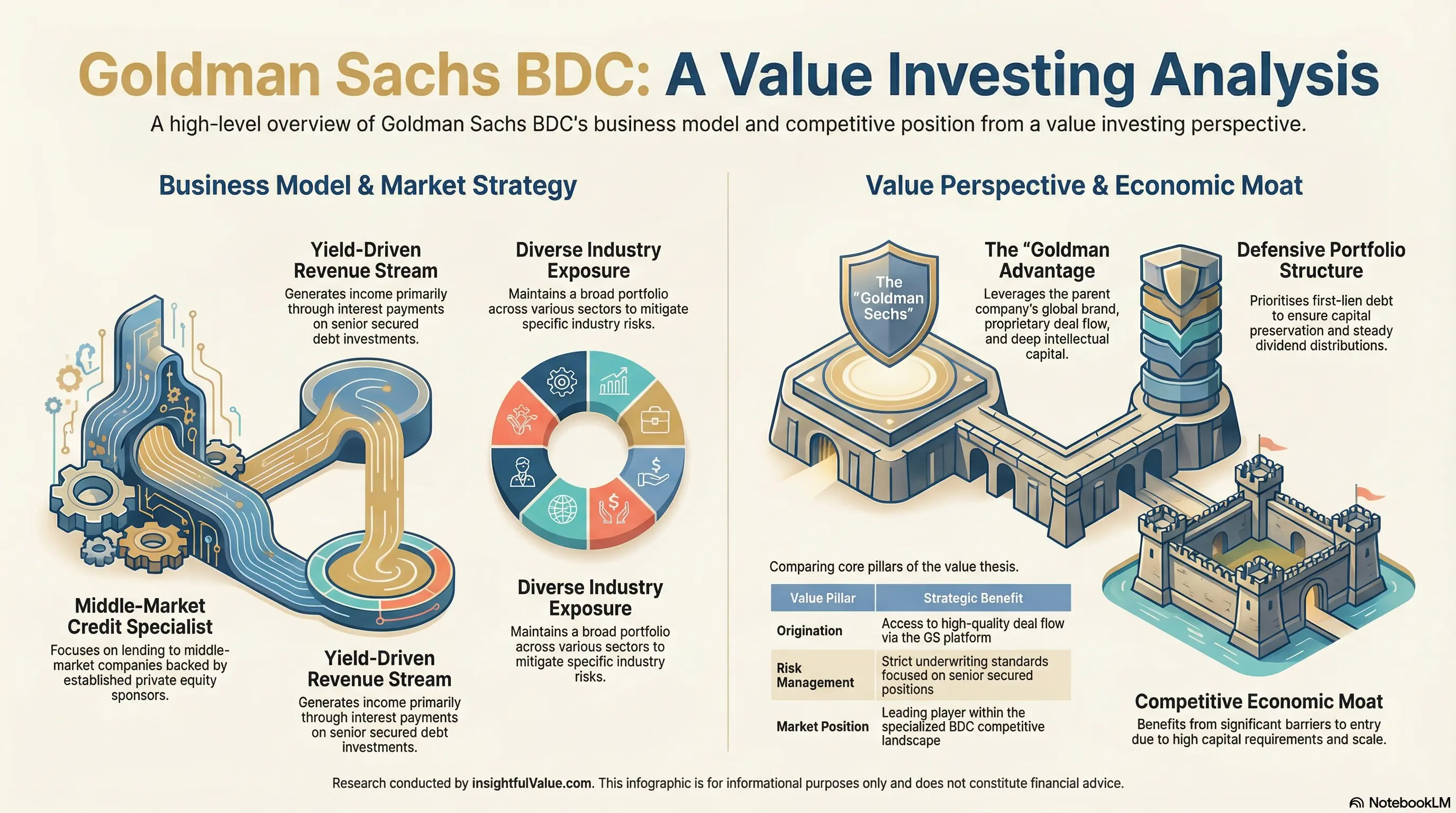
Infographic
Overview
Goldman Sachs BDC, Inc. (GSBD) is a business development company that provides debt and equity financing to middle-market companies. It is a subsidiary of investment banking firm Goldman Sachs.
Founded in 2012, Goldman Sachs BDC invests in privately-owned companies with annual revenues between $50 million and $2 billion. The company primarily focuses on providing senior secured loans, mezzanine debt, and equity capital.
GSBD is a publicly traded company and is listed on the New York Stock Exchange under the ticker symbol GSBD. It is managed by Goldman Sachs Asset Management (GSAM), a leading global investment management firm with over $1.5 trillion in assets under management.
Investment strategy
The investment strategy of Goldman Sachs BDC is to mainly invest in senior secured, unitranche, second lien, and mezzanine debt instruments, with equity co-investments in middle-market companies. The company targets businesses in a wide range of industries, including technology, healthcare, consumer and retail, industrial and manufacturing, and financial services.
GSBD seeks to partner with experienced management teams and provide flexible financing solutions to support companies in their strategic growth initiatives, such as mergers and acquisitions, refinancing, and expansion capital.
Leadership team
The leadership team of Goldman Sachs BDC includes seasoned professionals with extensive experience in finance and investment management. Curtis L. Buser serves as the company's Chairman and CEO, and Jonathan L. Lamm is the President and Chief Operating Officer. Other members of the management team include Chief Financial Officer Jon Yoder, Chief Compliance Officer Ray Kamm, and Chief Investment Officer Marc Lipschultz.
Corporate social responsibility
As a responsible corporate citizen, Goldman Sachs BDC is committed to environmental, social, and governance (ESG) principles. The company integrates ESG factors into its investment process, and also supports its portfolio companies in their own ESG goals.
GSBD also has a dedicated community engagement program, through which it partners with local non-profit organizations to support causes such as education, workforce development, and financial literacy.
Conclusion
Goldman Sachs BDC is a leading business development company that provides financing to middle-market companies. With its experienced management team, strategic investment approach, and commitment to ESG principles, GSBD is well-positioned to deliver strong returns for its investors.
How to explain to a 10 year old kid about the company?

📈 Want to read more about Goldman Sachs BDC?
Sign up for free
or
log in
📥 Get our free eBook now: "The Checklist Value Investor — A Smarter Way to Pick Stocks"
R29sZG1hbi BTYWNocyBC REMsIHdoaW NoIHN0YW5k cyBmb3IgQn VzaW5lc3Mg RGV2ZWxvcG 1lbnQgQ29t cGFueSwgaX MgbGlrZSBh IHNwZWNpYW wgYnVzaW5l c3MgdGhhdC BoZWxwcyBv dGhlciBjb2 1wYW5pZXMg Z3Jvdy4gSW 1hZ2luZSB5 b3UgaGF2ZS BhIGxlbW9u YWRlIHN0YW 5kLCBhbmQg eW91IG5lZW Qgc29tZSBt b25leSB0by BidXkgbGVt b25zIGFuZC BzdWdhci4g SWYgc29tZW 9uZSBnaXZl cyB5b3UgdG hhdCBtb25l eSwgdGhleS BtaWdodCB3 YW50IGEgbG l0dGxlIGJp dCBvZiB0aG UgbW9uZXkg eW91IG1ha2 UgZnJvbSBz ZWxsaW5nIG xlbW9uYWRl LiBHb2xkbW FuIFNhY2hz IEJEQyBkb2 VzIHNvbWV0 aGluZyBzaW 1pbGFyLjxi cj5IZXJl4o CZcyBob3cg aXQgd29ya3 M6IDxicj4x LiA8c3Ryb2 5nPkhlbHBp bmcgQ29tcG FuaWVzPC9z dHJvbmc+Oi BHb2xkbWFu IFNhY2hzIE JEQyBsZW5k cyBtb25leS B0byBvdGhl ciBidXNpbm Vzc2VzIHRo YXQgbmVlZC BpdCB0byBn cm93LiBUaG VzZSBidXNp bmVzc2VzIG NhbiB1c2Ug dGhlIG1vbm V5IHRvIGJ1 eSB0aGluZ3 MgbGlrZSBl cXVpcG1lbn QsIGhpcmUg bW9yZSB3b3 JrZXJzLCBv ciBvcGVuIG 5ldyBsb2Nh dGlvbnMuPG JyPjIuIDxz dHJvbmc+TW FraW5nIE1v bmV5PC9zdH Jvbmc+OiBX aGVuIHRoZS BidXNpbmVz c2VzIGdldC B0aGUgbW9u ZXksIHRoZX kgcGF5IGl0 IGJhY2sgd2 l0aCBleHRy YSwgY2FsbG VkIGludGVy ZXN0LiBJdO KAmXMga2lu ZCBvZiBsaW tlIHdoZW4g eW91IGJvcn JvdyBhIGJv b2sgZnJvbS BhIGxpYnJh cnk7IHRoZS BsaWJyYXJ5 IGdpdmVzIH lvdSB0aGUg Ym9vaywgYn V0IHlvdSBo YXZlIHRvIH JldHVybiBp dCBhZnRlci BhIHdoaWxl LiBUaGUgZX h0cmEgbW9u ZXkgdGhleS BwYXkgaXMg bGlrZSBzYX lpbmcg4oCc dGhhbmsgeW 914oCdIGZv ciBoZWxwaW 5nIHRoZW0g b3V0Ljxicj 4zLiA8c3Ry b25nPldoeS BJdOKAmXMg U3VjY2Vzc2 Z1bDwvc3Ry b25nPjogR2 9sZG1hbiBT YWNocyBCRE MgaXMgc3Vj Y2Vzc2Z1bC BiZWNhdXNl IGl0IGtub3 dzIGhvdyB0 byBwaWNrIG dvb2QgYnVz aW5lc3Nlcy B0byBoZWxw LiBUaGV5IG RvIGEgbG90 IG9mIHJlc2 VhcmNoIHRv IGZpbmQgYn VzaW5lc3Nl cyB0aGF0IG FyZSBsaWtl bHkgdG8gZ3 JvdyBhbmQg bWFrZSBtb2 5leS4gVGhp cyBtZWFucy B0aGV5IGFy ZSBtb3JlIG xpa2VseSB0 byBnZXQgdG hlaXIgbW9u ZXkgYmFjay B3aXRoIGlu dGVyZXN0Lj xicj40LiA8 c3Ryb25nPk Z1dHVyZSBT dWNjZXNzPC 9zdHJvbmc+ OiBQZW9wbG UgdGhpbmsg R29sZG1hbi BTYWNocyBC REMgd2lsbC Bjb250aW51 ZSB0byBiZS BzdWNjZXNz ZnVsIGJlY2 F1c2UgdGhl eSBoYXZlIG EgbG90IG9m IGV4cGVyaW VuY2UgYW5k IHNtYXJ0IH Blb3BsZSB3 aG8ga25vdy Bob3cgdG8g c3BvdCBnb2 9kIGludmVz dG1lbnQgb3 Bwb3J0dW5p dGllcy4gUG x1cywgbWFu eSBidXNpbm Vzc2VzIHdp bGwgYWx3YX lzIG5lZWQg aGVscCB0by Bncm93LCB3 aGljaCBtZW FucyB0aGVy ZSB3aWxsIG Fsd2F5cyBi ZSBhIGRlbW FuZCBmb3Ig dGhlIHNlcn ZpY2VzIHRo ZXkgcHJvdm lkZS48YnI+ U28sIGluIH N1bW1hcnks IEdvbGRtYW 4gU2FjaHMg QkRDIGlzIG xpa2UgYSBm cmllbmRseS BsZW5kZXIg dGhhdCBoZW xwcyBidXNp bmVzc2VzIG dyb3csIGVh cm5zIG1vbm V5IHdoZW4g dGhvc2UgYn VzaW5lc3Nl cyBzdWNjZW VkLCBhbmQg aGFzIGEgZ2 9vZCBjaGFu Y2Ugb2Ygc3 RheWluZyBz dWNjZXNzZn VsIGluIHRo ZSBmdXR1cm UhPGJyPg==
What is special about the company?
📈 Want to read more about Goldman Sachs BDC?
Sign up for free
or
log in
🚀 Don’t miss "The Checklist Value Investor — A Smarter Way to Pick Stocks" — free!
MS4gUmVwdX RhdGlvbiBh bmQgTGVnYW N5OiBHb2xk bWFuIFNhY2 hzIGlzIGEg cmVub3duZW QgYW5kIHBy ZXN0aWdpb3 VzIGdsb2Jh bCBpbnZlc3 RtZW50IGJh bmtpbmcgZm lybSB3aXRo IGEgc3Ryb2 5nIHJlcHV0 YXRpb24gYW 5kIGxlZ2Fj eS4gVGhpcy BhZGRzIGNy ZWRpYmlsaX R5IGFuZCB0 cnVzdCB0by B0aGUgR29s ZG1hbiBTYW NocyBCREMg Y29tcGFueS 48YnI+Mi4g RXhwZXJpZW 5jZSBhbmQg RXhwZXJ0aX NlOiBUaGUg Y29tcGFueS BoYXMgYSB0 ZWFtIG9mIG V4cGVyaWVu Y2VkIGFuZC Bza2lsbGVk IHByb2Zlc3 Npb25hbHMg d2hvIGhhdm UgZXhwZXJ0 aXNlIGluIG ludmVzdG1l bnQgYW5kIH Jpc2sgbWFu YWdlbWVudC 4gVGhpcyBo ZWxwcyB0aG VtIG1ha2Ug aW5mb3JtZW QgZGVjaXNp b25zIGFuZC BtYW5hZ2Ug dGhlaXIgcG 9ydGZvbGlv IGVmZmVjdG l2ZWx5Ljxi cj4zLiBBY2 Nlc3MgdG8g Q2FwaXRhbD ogQXMgYSBz dWJzaWRpYX J5IG9mIEdv bGRtYW4gU2 FjaHMsIHRo ZSBCREMgaG FzIGFjY2Vz cyB0byBhIH Zhc3QgcG9v bCBvZiBjYX BpdGFsLCBh bGxvd2luZy B0aGVtIHRv IG1ha2Ugc2 lnbmlmaWNh bnQgYW5kIH N0cmF0ZWdp YyBpbnZlc3 RtZW50cyBp biB2YXJpb3 VzIGNvbXBh bmllcy48Yn I+NC4gU3Ry b25nIE5ldH dvcms6IEdv bGRtYW4gU2 FjaHMgaGFz IGEgd2lkZS BuZXR3b3Jr IG9mIGNsaW VudHMsIHBh cnRuZXJzLC BhbmQgaW5k dXN0cnkgbG VhZGVycywg d2hpY2ggY2 FuIHByb3Zp ZGUgdmFsdW FibGUgaW5z aWdodHMgYW 5kIG9wcG9y dHVuaXRpZX MgZm9yIHRo ZSBCREMgY2 9tcGFueS48 YnI+NS4gRm xleGliaWxp dHkgYW5kIE FkYXB0YWJp bGl0eTogV2 l0aCB0aGUg cmVzb3VyY2 VzIGFuZCBz dXBwb3J0IG 9mIEdvbGRt YW4gU2FjaH MsIHRoZSBC REMgY29tcG FueSBjYW4g cmVtYWluIG ZsZXhpYmxl IGFuZCBhZG FwdCB0byBj aGFuZ2luZy BtYXJrZXQg Y29uZGl0aW 9ucywgbWFr aW5nIGl0IH Jlc2lsaWVu dCBhbmQgYW JsZSB0byBu YXZpZ2F0ZS B0aHJvdWdo IGNoYWxsZW 5nZXMgZWZm ZWN0aXZlbH kuPGJyPjYu IERpdmVyc2 UgUG9ydGZv bGlvOiBUaG UgQkRDIGNv bXBhbnkgaG FzIGEgZGl2 ZXJzZSBwb3 J0Zm9saW8s IHdpdGggaW 52ZXN0bWVu dHMgaW4gdm FyaW91cyBp bmR1c3RyaW VzIGFuZCBz ZWN0b3JzLC ByZWR1Y2lu ZyB0aGUgcm lzayBvZiBi ZWluZyBoZW F2aWx5IHJl bGlhbnQgb2 4gb25lIHBh cnRpY3VsYX IgYXJlYS48 YnI+Ny4gRW 1waGFzaXMg b24gQ29ycG 9yYXRlIFNv Y2lhbCBSZX Nwb25zaWJp bGl0eTogR2 9sZG1hbiBT YWNocyBoYX MgYSBzdHJv bmcgY29tbW l0bWVudCB0 byBjb3Jwb3 JhdGUgc29j aWFsIHJlc3 BvbnNpYmls aXR5LCBhbm QgdGhlIEJE QyBjb21wYW 55IGZvbGxv d3MgdGhlIH NhbWUgcHJp bmNpcGxlcy 4gVGhpcyBj YW4gYXR0cm FjdCBzb2Np YWxseSByZX Nwb25zaWJs ZSBpbnZlc3 RvcnMgYW5k IGNsaWVudH MuPGJyPjgu IEFjY2Vzcy B0byBSZXNl YXJjaCBhbm QgSW5zaWdo dHM6IFRoZS Bjb21wYW55 IGhhcyBhY2 Nlc3MgdG8g R29sZG1hbi BTYWNocycg cmVzZWFyY2 ggYW5kIGlu c2lnaHRzLC BnaXZpbmcg dGhlbSBhIG NvbXBldGl0 aXZlIGFkdm FudGFnZSBp biBkZWNpc2 lvbi1tYWtp bmcgYW5kIG lkZW50aWZ5 aW5nIHBvdG VudGlhbCBp bnZlc3RtZW 50IG9wcG9y dHVuaXRpZX MuPGJyPjku IFN0cm9uZy BQZXJmb3Jt YW5jZTogVG hlIEJEQyBj b21wYW55IG hhcyBhIHRy YWNrIHJlY2 9yZCBvZiBk ZWxpdmVyaW 5nIHN0cm9u ZyBwZXJmb3 JtYW5jZSwg d2l0aCBhIG NvbnNpc3Rl bnQgaGlzdG 9yeSBvZiBy ZXR1cm5zLC B3aGljaCBj YW4gYXR0cm FjdCBpbnZl c3RvcnMgYW 5kIGluc3Rp bGwgY29uZm lkZW5jZSBp biB0aGVpci BhYmlsaXRp ZXMuPGJyPj EwLiBHb29k IENvcnBvcm F0ZSBHb3Zl cm5hbmNlOi BHb2xkbWFu IFNhY2hzIE JEQyBmb2xs b3dzIHN0cm 9uZyBjb3Jw b3JhdGUgZ2 92ZXJuYW5j ZSBwcmFjdG ljZXMsIGVu c3VyaW5nIH RyYW5zcGFy ZW5jeSwgYW Njb3VudGFi aWxpdHksIG FuZCBldGhp Y2FsIGJlaG F2aW9yLiBU aGlzIGNhbi BmdXJ0aGVy IGVuaGFuY2 UgdGhlaXIg cmVwdXRhdG lvbiBhbmQg YXR0cmFjdC BpbnZlc3Rv cnMu
What the company's business model?
📈 Want to read more about Goldman Sachs BDC?
Sign up for free
or
log in
⚡ Instantly access "The Checklist Value Investor — A Smarter Way to Pick Stocks" — free!
VGhlIEdvbG RtYW4gU2Fj aHMgQkRDIC hCdXNpbmVz cyBEZXZlbG 9wbWVudCBD b21wYW55KS BpcyBhIHB1 YmxpY2x5IH RyYWRlZCBp bnZlc3RtZW 50IGZ1bmQg dGhhdCBwcm 92aWRlcyBj YXBpdGFsIG FuZCBmaW5h bmNpbmcgdG 8gbWlkLXNp emVkIGFuZC BzbWFsbCBj b21wYW5pZX MgdGhyb3Vn aCBsb2Fucy wgZXF1aXR5 IGludmVzdG 1lbnRzLCBh bmQgb3RoZX IgZmluYW5j aWFsIGluc3 RydW1lbnRz LiBUaGVpci BidXNpbmVz cyBtb2RlbC BpbnZvbHZl cyByYWlzaW 5nIGNhcGl0 YWwgZnJvbS BpbnZlc3Rv cnMgYW5kIH VzaW5nIGl0 IHRvIHByb3 ZpZGUgZGVi dCBhbmQgZX F1aXR5IGZp bmFuY2luZy B0byBhIHZh cmlldHkgb2 YgY29tcGFu aWVzLCBpbm NsdWRpbmcg dGhvc2UgaW 4gdGhlIHRl Y2hub2xvZ3 ksIGhlYWx0 aGNhcmUsIG FuZCBjb25z dW1lciBpbm R1c3RyaWVz LiBUaGUgY2 9tcGFueSBn ZW5lcmF0ZX MgcmV2ZW51 ZSB0aHJvdW doIGludGVy ZXN0IGFuZC BkaXZpZGVu ZHMgZnJvbS B0aGUgaW52 ZXN0bWVudH MsIGFzIHdl bGwgYXMgdG hyb3VnaCBm ZWVzIGZvci BtYW5hZ2lu ZyB0aGUgZn VuZHMuIFRo ZXkgYWxzby BhaW0gdG8g cHJvdmlkZS BpbnZlc3Rv cnMgd2l0aC BhIHN0ZWFk eSBzdHJlYW 0gb2YgaW5j b21lIHRocm 91Z2ggdGhl IHBheW1lbn Qgb2YgZGl2 aWRlbmRzLi BBZGRpdGlv bmFsbHksIH RoZSBjb21w YW55IG1heS BzZWVrIHRv IGV4aXQgaW 52ZXN0bWVu dHMgdGhyb3 VnaCBwdWJs aWMgb2ZmZX JpbmdzLCBt ZXJnZXJzLC BvciBhY3F1 aXNpdGlvbn MsIHBvdGVu dGlhbGx5IG dlbmVyYXRp bmcgY2FwaX RhbCBnYWlu cyBmb3IgaW 52ZXN0b3Jz LiBPdmVyYW xsLCB0aGUg R29sZG1hbi BTYWNocyBC REMncyBidX NpbmVzcyBt b2RlbCBpcy Bmb2N1c2Vk IG9uIHByb3 ZpZGluZyBm aW5hbmNpbm cgYW5kIGdl bmVyYXRpbm cgcmV0dXJu cyBmb3IgYm 90aCB0aGUg Y29tcGFueS BhbmQgaXRz IGludmVzdG 9ycy4=
Is AI a threat?
AI can potentially pose a material threat to Goldman Sachs BDC (Business Development Company) through various mechanisms such as substitution, disintermediation, and margin pressure, but the degree of impact depends on several factors.
1. Substitution: AI technologies can enhance or replace certain financial services that BDCs provide. For example, AI-driven platforms could streamline credit assessment, portfolio management, or investment analysis, potentially offering more efficient or cost-effective solutions compared to traditional methods. If competitors leverage AI more effectively, they could capture market share, impacting Goldman Sachs BDC’s product offerings.
2. Disintermediation: The rise of AI-driven fintech platforms allows investors to engage in direct lending or investment opportunities without needing a traditional BDC intermediary. This could result in reduced deal flow for Goldman Sachs BDC, as investors might prefer platforms that utilize AI to find better rates or terms, thereby challenging the BDC model itself.
3. Margin Pressure: As AI enables competitors to operate more efficiently, it may lead to increased competition in the BDC space, pushing down fees and margins. If Goldman Sachs BDC’s operational costs do not match the efficiency gains of tech-enabled competitors, it may struggle to maintain its profitability.
While AI presents challenges, it also offers opportunities for Goldman Sachs BDC to innovate and enhance its services. By adopting AI technologies, the firm could improve its competitive positioning, streamline operations, and create more tailored products that meet investor demands. Ultimately, the impact of AI on Goldman Sachs BDC will depend on how effectively it navigates these technological changes and integrates AI into its business model.
Sensitivity to interest rates
The sensitivity of Goldman Sachs BDC’s earnings, cash flow, and valuation to changes in interest rates can be significant due to its business model. As a Business Development Company (BDC), Goldman Sachs BDC primarily invests in debt and equity of private companies, often focusing on middle-market businesses. Here are some key points to consider regarding interest rate sensitivity:
1. Earnings: BDCs typically have a mix of fixed and floating rate loans in their portfolios. If interest rates increase, the interest income from floating rate loans rises, potentially boosting earnings. However, if the BDC also has significant levels of debt that is subject to variable rates, higher interest expenses can offset some of these gains. Consequently, the overall impact on earnings can depend on the proportion of floating versus fixed-rate instruments in both assets and liabilities.
2. Cash Flow: Similar to earnings, cash flow is influenced by interest rate changes. An increase in interest rates can lead to higher cash inflows from floating rate loans, improving cash flow. On the other hand, increased borrowing costs could lead to reduced cash flow if the BDC has substantial variable-rate debt. Furthermore, higher rates might also affect the payment behavior of borrowers, potentially increasing default risk.
3. Valuation: The valuation of Goldman Sachs BDC can also be affected by changes in interest rates. Generally, higher interest rates can lead to a rise in discount rates used for valuation models, potentially decreasing the net present value of future cash flows. This can affect the stock price and valuation multiples. However, if higher rates lead to greater income from floating-rate investments, this might counterbalance the negative effects on valuation.
Overall, while a rising interest rate environment can offer some benefits to Goldman Sachs BDC through increased income from floating-rate loans, it also poses risks related to rising costs of debt and potential borrower distress. The net impact will largely depend on the company’s specific asset-liability management, portfolio composition, and market conditions.
Resilience to the future changes
📈 Want to read more about Goldman Sachs BDC?
Sign up for free
or
log in
🔓 Unlock our free guide: "The Checklist Value Investor — A Smarter Way to Pick Stocks"
QSByZWFsaX N0aWMgc2Nl bmFyaW8gdG hhdCBjb3Vs ZCBwZXJtYW 5lbnRseSBp bXBhaXIgR2 9sZG1hbiBT YWNocyBCRE PigJlzIChC dXNpbmVzcy BEZXZlbG9w bWVudCBDb2 1wYW55KSBl Y29ub21pY3 Mgb3ZlciB0 aGUgbmV4dC Az4oCTNSB5 ZWFycyBpcy BhIHByb2xv bmdlZCBlY2 9ub21pYyBk b3dudHVybi BhY2NvbXBh bmllZCBieS BhIHNpZ25p ZmljYW50IG luY3JlYXNl IGluIGRlZm F1bHQgcmF0 ZXMgYW1vbm cgaXRzIHBv cnRmb2xpby Bjb21wYW5p ZXMuIFRoaX Mgc2NlbmFy aW8gY291bG QgYmUgdHJp Z2dlcmVkIG J5IGEgY29t YmluYXRpb2 4gb2YgZmFj dG9ycyBzdW NoIGFzIHJp c2luZyBpbn RlcmVzdCBy YXRlcywgcG Vyc2lzdGVu dCBpbmZsYX Rpb24sIGdl b3BvbGl0aW NhbCB0ZW5z aW9ucywgb3 Igc3lzdGVt aWMgcmlza3 MgaW4gZmlu YW5jaWFsIG 1hcmtldHMu PGJyPkluIH RoaXMgc2Nl bmFyaW8sIH NldmVyYWwg a2V5IG91dG NvbWVzIGNv dWxkIG9jY3 VyOjxicj4x LiA8c3Ryb2 5nPk1hcmdp bnM8L3N0cm 9uZz46IFRo ZSBjb21wYW 554oCZcyBw cm9maXQgbW FyZ2lucyB3 b3VsZCBsaW tlbHkgZXJv ZGUgYXMgdG hlIGNvc3Qg b2YgY2FwaX RhbCByaXNl cyBhbmQgdG hlIHNwcmVh ZCBiZXR3ZW VuIGJvcnJv d2luZyBjb3 N0cyBhbmQg bGVuZGluZy ByYXRlcyBu YXJyb3dzLi BBZGRpdGlv bmFsbHksIG luY3JlYXNl ZCBwcm92aX Npb25zIGZv ciBjcmVkaX QgbG9zc2Vz IGFuZCBoaW doZXIgaW50 ZXJlc3QgZX hwZW5zZXMg d291bGQgZn VydGhlciBj b21wcmVzcy BtYXJnaW5z LiBJZiBhIH NpZ25pZmlj YW50IHBvcn Rpb24gb2Yg dGhlIGxvYW 4gcG9ydGZv bGlvIHdlcm UgdG8gZXhw ZXJpZW5jZS BkaXN0cmVz cywgYSBkZW NyZWFzZSBp biBpbnRlcm VzdCBpbmNv bWUgd291bG QgYWxzbyBj b21wb3VuZC B0aGlzIGlz c3VlLjxicj 4yLiA8c3Ry b25nPkNhc2 ggRmxvdzwv c3Ryb25nPj ogVGhlIGNv bXBhbnnigJ lzIGNhc2gg ZmxvdyB3b3 VsZCBsaWtl bHkgYmVjb2 1lIHN0cmFp bmVkIGFzIH BvcnRmb2xp byBjb21wYW 5pZXMgc3Ry dWdnbGUgdG 8gc2Vydmlj ZSB0aGVpci BkZWJ0cywg bGVhZGluZy B0byBhbiBp bmNyZWFzZS BpbiBub3Bl cmZvcm1pbm cgYXNzZXRz LiBUaGlzIH NpdHVhdGlv biBjb3VsZC Bmb3JjZSBH b2xkbWFuIF NhY2hzIEJE QyB0byByZX NlcnZlIGEg bGFyZ2VyIH Byb3BvcnRp b24gb2YgaX RzIGVhcm5p bmdzIGZvci Bsb2FuIGxv c3MgcHJvdm lzaW9ucy4g Q29uc2VxdW VudGx5LCBj YXNoIGRpc3 RyaWJ1dGlv bnMgdG8gc2 hhcmVob2xk ZXJzIG1pZ2 h0IGJlIHJl ZHVjZWQgb3 IgZXZlbiBz dXNwZW5kZW QsIGltcGFj dGluZyBpbn Zlc3RvciBj b25maWRlbm NlIGFuZCB0 aGUgY29tcG FueeKAmXMg dmFsdWF0aW 9uLjxicj4z LiA8c3Ryb2 5nPkJhbGFu Y2UgU2hlZX Q8L3N0cm9u Zz46IFRoZS BiYWxhbmNl IHNoZWV0IH dvdWxkIHJl ZmxlY3QgZG V0ZXJpb3Jh dGluZyBhc3 NldCBxdWFs aXR5LCB3aX RoIGEgaGln aGVyIHBlcm NlbnRhZ2Ug b2Ygbm9wZX Jmb3JtaW5n IGxvYW5zIG FuZCBwb3Rl bnRpYWwgd3 JpdGUtb2Zm cy4gVGhpcy BkZXRlcmlv cmF0aW9uIG NvdWxkIGxl YWQgdG8gYS ByZWR1Y3Rp b24gaW4gbm V0IGFzc2V0 IHZhbHVlIC hOQVYpLiBB ZGRpdGlvbm FsbHksIGlm IHRoZSBjb2 1wYW55IG5l ZWRlZCB0by ByYWlzZSBj YXBpdGFsIH RvIGNvdmVy IGxvc3Nlcy BvciBjdXNo aW9uIGl0cy BiYWxhbmNl IHNoZWV0LC BpdCBtaWdo dCBkbyBzby BhdCBhIGRp c2NvdW50LC BmdXJ0aGVy IGRpbHV0aW 5nIHNoYXJl aG9sZGVyIG VxdWl0eS4g T3Zlci1sZX ZlcmFnZWQg cG9zaXRpb2 5zIGNvdWxk IGhlaWdodG VuIGZpbmFu Y2lhbCByaX NrLCBsZWFk aW5nIHRvIH N0cmljdGVy IGNvdmVuYW 50cyBhbmQg cG90ZW50aW FsIHJlZmlu YW5jaW5nIG lzc3Vlcy48 YnI+T3Zlcm FsbCwgaWYg c3VjaCBhIH NjZW5hcmlv IHdlcmUgdG 8gbWF0ZXJp YWxpemUsIE dvbGRtYW4g U2FjaHMgQk RDIGNvdWxk IGZhY2Ugc2 lnbmlmaWNh bnQgbG9uZy 10ZXJtIGNo YWxsZW5nZX MuIFRoZSBj b21iaW5hdG lvbiBvZiB0 aWdodGVyIG 1hcmdpbnMs IHdlYWtlbm VkIGNhc2gg ZmxvdywgYW 5kIGEgY29t cHJvbWlzZW QgYmFsYW5j ZSBzaGVldC B3b3VsZCBw cm9mb3VuZG x5IGltcGFj dCBpdHMgYW JpbGl0eSB0 byBvcGVyYX RlIGVmZmVj dGl2ZWx5IG FuZCBtYWlu dGFpbiBpdH MgZGl2aWRl bmQgcGF5b3 V0cywgdWx0 aW1hdGVseS BsZWFkaW5n IHRvIGEgbG 9zcyBvZiBp bnZlc3Rvci B0cnVzdCBh bmQgbWFya2 V0IHBvc2l0 aW9uLjxicj 4=
Interesting facts about the company
📈 Want to read more about Goldman Sachs BDC?
Sign up for free
or
log in
📘 Claim your free eBook: "The Checklist Value Investor — A Smarter Way to Pick Stocks"
CiAgICAgIC AgICAgIDxk aXYgc3R5bG U9J3dpZHRo OiAxMDAlOy BkaXNwbGF5 OiBmbGV4Oy BqdXN0aWZ5 LWNvbnRlbn Q6IGNlbnRl cjsnPgogIC AgICAgICAg ICAgICAgPG RpdiBzdHls ZT0nCiAgIC AgICAgICAg ICAgICAgIC AgZGlzcGxh eTogZmxleD sKICAgICAg ICAgICAgIC AgICAgICBh bGlnbi1pdG VtczogY2Vu dGVyOwogIC AgICAgICAg ICAgICAgIC AgIGJhY2tn cm91bmQtY2 9sb3I6ICNm MGY0Zjg7Ci AgICAgICAg ICAgICAgIC AgICAgYm9y ZGVyOiAxcH ggc29saWQg I2QxZTNmMD sKICAgICAg ICAgICAgIC AgICAgICBi b3JkZXItcm FkaXVzOiAx MHB4OwogIC AgICAgICAg ICAgICAgIC AgIHBhZGRp bmc6IDEwcH g7CiAgICAg ICAgICAgIC AgICAgICAg bWFyZ2luOi AyMHB4IDA7 CiAgICAgIC AgICAgICAg ICAgICAgZm 9udC1mYW1p bHk6ICJTZW dvZSBVSSIs IFJvYm90by wgc2Fucy1z ZXJpZjsKIC AgICAgICAg ICAgICAgIC AgICBib3gt c2hhZG93Oi AwIDJweCA2 cHggcmdiYS gwLCAwLCAw LCAwLjA1KT sKICAgICAg ICAgICAgIC AgICAgICBt YXgtd2lkdG g6IDkwMHB4 OwogICAgIC AgICAgICAg ICAgICAgIH dpZHRoOiAx MDAlOyc+Cg ogICAgICAg ICAgICAgIC AgICAgIDxp bWcgc3JjPS Jhc3NldHMv bG9nb3MvR2 ZPVjhxbmRT cDNuQzZtc1 hHWnMud2Vi cCIgYWx0PS JHb2xkbWFu IFNhY2hzIE JEQyIgdGl0 bGU9IkdvbG RtYW4gU2Fj aHMgQkRDIi AgY2xhc3M9 ImltZy1mbH VpZCIgaGVp Z2h0PTUwIH dpZHRoPTUw IGxvYWRpbm c9J2xhenkn IHN0eWxlPS dib3JkZXIt cmFkaXVzOi A2cHg7Jz4K CiAgICAgIC AgICAgICAg ICAgICAgPG RpdiBzdHls ZT0nZmxleD ogMTsgdGV4 dC1hbGlnbj ogY2VudGVy OyBtYXJnaW 4tbGVmdDog NXB4Oyc+Ci AgICAgICAg ICAgICAgIC AgICAgICAg IDxwIHN0eW xlPSdmb250 LXNpemU6ID I2cHg7IGNv bG9yOiAjMz MzOyBtYXJn aW4tYm90dG 9tOiAxNXB4 Oyc+CiAgIC AgICAgICAg ICAgICAgIC AgICAgICAg ICDwn5OIIF dhbnQgdG8g cmVhZCBtb3 JlIGFib3V0 IEdvbGRtYW 4gU2FjaHMg QkRDPwogIC AgICAgICAg ICAgICAgIC AgICAgICA8 L3A+CgogIC AgICAgICAg ICAgICAgIC AgICAgICA8 YSBocmVmPS dpbmRleC5w aHA/cGFnZT 1zaWdudXAn IHN0eWxlPS cKICAgICAg ICAgICAgIC AgICAgICAg ICAgICAgIG JhY2tncm91 bmQtY29sb3 I6ICMwMDdC RkY7CiAgIC AgICAgICAg ICAgICAgIC AgICAgICAg ICBjb2xvcj ogI2ZmZjsK ICAgICAgIC AgICAgICAg ICAgICAgIC AgICAgIHBh ZGRpbmc6ID EwcHggMjBw eDsKICAgIC AgICAgICAg ICAgICAgIC AgICAgICAg IGJvcmRlci 1yYWRpdXM6 IDVweDsKIC AgICAgICAg ICAgICAgIC AgICAgICAg ICAgIHRleH QtZGVjb3Jh dGlvbjogbm 9uZTsKICAg ICAgICAgIC AgICAgICAg ICAgICAgIC AgIGZvbnQt d2VpZ2h0Oi Bib2xkOwog ICAgICAgIC AgICAgICAg ICAgICAgIC AgICAgbWFy Z2luLXJpZ2 h0OiAxMHB4 OwogICAgIC AgICAgICAg ICAgICAgIC AgICAgICAg dHJhbnNpdG lvbjogYmFj a2dyb3VuZC 1jb2xvciAw LjNzIGVhc2 U7JwogICAg ICAgICAgIC AgICAgICAg ICAgICAgIC Agb25tb3Vz ZW92ZXI9J3 RoaXMuc3R5 bGUuYmFja2 dyb3VuZENv bG9yPSIjMD A1NmIzIicK ICAgICAgIC AgICAgICAg ICAgICAgIC AgICAgIG9u bW91c2VvdX Q9J3RoaXMu c3R5bGUuYm Fja2dyb3Vu ZENvbG9yPS IjMDA3QkZG Iic+CiAgIC AgICAgICAg ICAgICAgIC AgICAgICAg ICBTaWduIH VwIGZvciBm cmVlCiAgIC AgICAgICAg ICAgICAgIC AgICAgIDwv YT4KCiAgIC AgICAgICAg ICAgICAgIC AgICAgIDxz cGFuIHN0eW xlPSdtYXJn aW46IDAgOH B4OyBjb2xv cjogIzU1NT snPm9yPC9z cGFuPgoKIC AgICAgICAg ICAgICAgIC AgICAgICAg PGEgaHJlZj 0naW5kZXgu cGhwP3BhZ2 U9bG9naW4n IHN0eWxlPS cKICAgICAg ICAgICAgIC AgICAgICAg ICAgICAgIG NvbG9yOiAj MDA3QkZGOw ogICAgICAg ICAgICAgIC AgICAgICAg ICAgICAgdG V4dC1kZWNv cmF0aW9uOi B1bmRlcmxp bmU7CiAgIC AgICAgICAg ICAgICAgIC AgICAgICAg ICBmb250LX dlaWdodDog NTAwOyc+Ci AgICAgICAg ICAgICAgIC AgICAgICAg ICAgICBsb2 cgaW4KICAg ICAgICAgIC AgICAgICAg ICAgICAgPC 9hPgoKCiAg ICAgICAgIC AgICAgICAg ICAgICAgID xwIHN0eWxl PSdtYXJnaW 4tdG9wOiAx NXB4OyBmb2 50LXNpemU6 IDEzcHg7IG ZvbnQtd2Vp Z2h0OiBib2 xkOyBjb2xv cjogI2QzMm YyZjsnPgog ICAgICAgIC AgICAgICAg ICAgICAgIC AgICAg8J+O gSBGcmVlIG Rvd25sb2Fk ISA8aT4iVG hlIENoZWNr bGlzdCBWYW x1ZSBJbnZl c3RvciDigJ QgQSBTbWFy dGVyIFdheS B0byBQaWNr IFN0b2Nrcy I8L2k+CiAg ICAgICAgIC AgICAgICAg ICAgICAgID wvcD4KCiAg ICAgICAgIC AgICAgICAg ICAgICAgID whLS0KICAg ICAgICAgIC AgICAgICAg ICAgICAgPG RpdiBzdHls ZT0nbWFyZ2 luLXRvcDog MTJweDsgZm 9udC1zaXpl OiAxM3B4Oy Bjb2xvcjog IzQ0NDsnPg ogICAgICAg ICAgICAgIC AgICAgICAg ICAgICAgU2 lnbiB1cCBu b3cgYW5kIG dldCBvdXIg ZnJlZSBlQm 9vayAKICAg ICAgICAgIC AgICAgICAg ICAgICAgIC AgIDxiPlRo ZSBDaGVja2 xpc3QgVmFs dWUgSW52ZX N0b3Ig4oCU IEEgU21hcn RlciBXYXkg dG8gUGljay BTdG9ja3M8 L2I+CiAgIC AgICAgICAg ICAgICAgIC AgICAgIDwv ZGl2PgogIC AgICAgICAg ICAgICAgIC AgICAgICAt LT4KICAgIC AgICAgICAg ICAgICAgIC AgICAgPCEt LQogICAgIC AgICAgICAg ICAgICAgIC AgICA8ZGl2 IHN0eWxlPS dtYXJnaW4t dG9wOiAxNn B4OyBmb250 LXNpemU6ID E0cHg7IGNv bG9yOiAjND Q0OyBmb250 LWZhbWlseT ogLWFwcGxl LXN5c3RlbS wgQmxpbmtN YWNTeXN0ZW 1Gb250LCBT ZWdvZSBVSS wgUm9ib3Rv LCBIZWx2ZX RpY2EgTmV1 ZSwgc2Fucy 1zZXJpZjsg bGluZS1oZW lnaHQ6IDEu NjsnPgogIC AgICAgICAg ICAgICAgIC AgICAgICAg ICAgSGF2ZS B5b3UgaGVh cmQgYWJvdX Qgb3VyIHNo b3J0IDxzdH Jvbmcgc3R5 bGU9J2Zvbn Qtd2VpZ2h0 OiA2MDA7Jz 5EYWlseSBW aWRlbyBOZX dzbGV0dGVy PC9zdHJvbm c+PwogICAg ICAgICAgIC AgICAgICAg ICAgICAgIC AgPGEgaHJl Zj0naHR0cH M6Ly93d3cu aW5zaWdodG Z1bHZhbHVl LmNvbS9uZX dzbGV0dGVy LnBocCcgdG FyZ2V0PSdf YmxhbmsnIH N0eWxlPSdj b2xvcjogIz AwN0JGRjsg dGV4dC1kZW NvcmF0aW9u OiBub25lOy Bmb250LXdl aWdodDogNT AwOyBtYXJn aW4tbGVmdD ogNnB4Oyc+ CiAgICAgIC AgICAgICAg ICAgICAgIC AgICAgICAg ICAgRmluZC BvdXQgbW9y ZQogICAgIC AgICAgICAg ICAgICAgIC AgICAgICAg PC9hPgogIC AgICAgICAg ICAgICAgIC AgICAgICA8 L2Rpdj4KIC AgICAgICAg ICAgICAgIC AgICAgICAg LS0+CiAgIC AgICAgICAg ICAgICAgIC AgPC9kaXY+ CiAgICAgIC AgICAgICAg ICA8L2Rpdj 4KICAgICAg ICAgICAgPC 9kaXY+CiAg ICAgICAgIC AgIAogICAg ICAgIAogIC AgICAgIDxz cGFuIGNsYX NzPSdibHVy cmVkLXRleH QnPgogICAg ICAgICAgIC BNUzRnUm05 MWJtIFJsWk NCcGJpQXkg TURBNE9pQk hiMiB4a2JX RnVJRk5oIF kyaHpJRUpF UXkgd2dTVz VqTGlCMyBZ WE1nWm05MW JtIFJsWkNC cGJpQXkgTU RBNElHRnpJ RyBFZ2MzQm xZMmxoIGJI UjVJR1pwYm 0gRnVZMlVn WTI5dCBjR0 Z1ZVNCbWIy IE4xYzJWa0 lHOXUgSUhC eWIzWnBaRy BsdVp5Qm1h VzVoIGJtTn BibWNnYzIg OXNkWFJwYj I1eiBJSFJ2 SUcxcFpHIF JzWlMxdFlY SnIgWlhRZ1 kyOXRjRyBG dWFXVnpMan hpIGNqNHlM aUJRZFcgSn NhV05zZVNC MCBjbUZrWl dRNklFIGR2 YkdSdFlXNG cgVTJGamFI TWdRayBSRE xDQkpibU11 IElHbHpJR0 VnY0ggVmli R2xqYkhrZy BkSEpoWkdW a0lHIE52Yl hCaGJua2cg YkdsemRHVm tJRyA5dUlI Um9aU0JPIF pYY2dXVzl5 YXkgQlRkRz lqYXlCRiBl R05vWVc1bl pTIEIxYm1S bGNpQjAgYU dVZ2RHbGph MiBWeUlITj ViV0p2IGJD RGlnSnhIVT AgSkU0b0Nk TGp4aSBjaj R6TGlCQ1JF IE1nYzNSeW RXTjAgZFhK bE9pQkJjeS BCaElHSjFj Mmx1IFpYTn pJR1JsZG0g VnNiM0J0Wl c1MCBJR052 YlhCaGJuIG tnS0VKRVF5 a3MgSUVkdm JHUnRZVyA0 Z1UyRmphSE 1nIFFrUkRJ R2x6SUggTj FZbXBsWTNR ZyBkRzhnYz NCbFkyIGxt YVdNZ2NtVm 4gZFd4aGRH bHZibiBNZ2 MyVjBJR0o1 IElIUm9aU0 JUWlcgTjFj bWwwYVdWei BJR0Z1WkNC RmVHIE5vWV c1blpTQkQg YjIxdGFYTn phVyA5dUlD aFRSVU1wIE lHRnVaQ0J0 ZFggTjBJR1 JwYzNSeSBh V0oxZEdVZ1 lYIFFnYkdW aGMzUWcgT1 RBbElHOW1J RyBsMGN5Qj BZWGhoIFlt eGxJR2x1WT IgOXRaU0Iw YnlCeiBhR0 Z5WldodmJH IFJsY25NdV BHSnkgUGpR dUlFbHVkbS BWemRHMWxi blFnIGNHOX lkR1p2Ykcg bHZPaUJIYj J4ayBiV0Z1 SUZOaFkyIG h6SUVKRVF5 QncgY21sdF lYSnBiSCBr Z2FXNTJaWE 4wIGN5QnBi aUJrWlcgSj BJR0Z1WkNC bCBjWFZwZE hrZ2MyIFZq ZFhKcGRHbG wgY3lCdlpp QnRhVyBSa2 JHVXRiV0Z5 IGEyVjBJR0 52YlggQmhi bWxsY3l3Zy BkMmwwYUNC aElHIFp2WT NWeklHOXUg SUhObGJtbH ZjaSBCelpX TjFjbVZrIE lHeHZZVzV6 TEMgQjFibW wwY21GdSBZ MmhsSUd4dl lXIDV6TENC dFpYcDYgWV c1cGJtVWda RyBWaWRDd2 dZVzVrIElH MXBibTl5YV ggUjVJR1Z4 ZFdsMCBlU0 JwYm5abGMz IFJ0Wlc1MG N5NDggWW5J K05TNGdTVy A1MlpYTjBi V1Z1IGRDQn pkSEpoZEcg Vm5lVG9nVk dobCBJR052 YlhCaGJuIG 5pZ0pseklH bHUgZG1Wem RHMWxibiBR Z2MzUnlZWF JsIFoza2dh WE1nWW0gRn paV1FnYjI0 ZyBjSEp2ZG 1sa2FXIDVu SUdac1pYaH AgWW14bElH TmhjRyBsMF lXd2dkRzhn IGMzVndjRz l5ZEMgQjBh R1VnWjNKdi BkM1JvSUdG dVpDIEJ6ZE hKaGRHVm4g YVdNZ2FXNX BkRyBsaGRH bDJaWE1nIG IyWWdhWFJ6 SUggQnZjbl JtYjJ4cCBi eUJqYjIxd1 lXIDVwWlhN dUlGUm8gYV hNZ2FXNWpi SCBWa1pYTW dZV054IGRX bHphWFJwYj IgNGdabWx1 WVc1aiBhVz VuTENCeVpX IE5oY0dsMF lXeHAgZW1G MGFXOXVjeS B3Z1lXNWtJ SEpsIFptbH VZVzVqYVcg NW5JRzltSU dWNCBhWE4w YVc1bklHIF JsWW5RdVBH SnkgUGpZdU lFVjRjRyBW eWFXVnVZMl ZrIElHMWhi bUZuWlcgMW xiblFnZEdW aCBiVG9nUj I5c1pHIDFo YmlCVFlXTm 8gY3lCQ1JF TWdhWCBNZ2 JXRnVZV2Rs IFpDQmllU0 JoYmkgQmxl SEJsY21sbC BibU5sWkNC MFpXIEZ0SU hkcGRHZ2cg WW1GamEyZH liMyBWdVpI TWdhVzRnIG FXNTJaWE4w YlcgVnVkQ0 JpWVc1ciBh VzVuTENCd2 NtIGwyWVhS bElHVnggZF dsMGVTd2dZ VyA1a0lHeG xkbVZ5IFlX ZGxaQ0JtYV cgNWhibU5s TGlCVSBhR1 VnWTI5dGNH IEZ1ZVNCaG JITnYgSUdK bGJtVm1hWC BSeklHWnli MjBnIGRHaG xJR1Y0Y0cg VnlkR2x6Wl NCaCBibVFn Y21WemIzIF Z5WTJWeklH OW0gSUdsMG N5QndZWCBK bGJuUWdZMj l0IGNHRnVl U3dnUjIgOX NaRzFoYmlC VCBZV05vY3 k0OFluIEkr Tnk0Z1UzUn kgYjI1bklI QmxjbSBadm NtMWhibU5s IE9pQkhiMn hrYlcgRnVJ Rk5oWTJoei BJRUpFUXlC b1lYIE1nWT I5dWMybHog ZEdWdWRHeD VJRyBSbGJH bDJaWEpsIF pDQnpkSEp2 Ym0gY2djR1 Z5Wm05eSBi V0Z1WTJVc0 lIIGRwZEdn Z2RHOTAgWV d3Z2NtVjBk WCBKdWN5Qn ZaaUE1IExq a2xJSE5wYm 0gTmxJR2x1 WTJWdyBkR2 x2Ymk0Z1FY IE1nYjJZZ0 1qQXkgTUN3 Z2RHaGxJRy BOdmJYQmhi bmtnIGFHRn pJR0VnYm0g VjBJR0Z6Yz JWMCBJSFpo YkhWbElHID ltSUdGd2NI SnYgZUdsdF lYUmxiSCBr Z0pERXVNeU JpIGFXeHNh Vzl1TGogeG ljajQ0TGlC VCBiMk5wWV d3Z2NtIFZ6 Y0c5dWMybG kgYVd4cGRI azZJRSBsdU lHRmtaR2ww IGFXOXVJSF J2SUcgbDBj eUJtYVc1aC BibU5wWVd3 Z2NHIFZ5Wm 05eWJXRnUg WTJVc0lFZH ZiRyBSdFlX NGdVMkZqIG FITWdRa1JE SUcgbHpJR0 52YlcxcCBk SFJsWkNCMG J5IEJ5WlhO d2IyNXogYV dKc1pTQnBi biBabGMzUn BibWNnIFlX NWtJR2hoY3 kgQnBiWEJz WlcxbCBibl JsWkNCbGJu IFpwY205dW JXVnUgZEdG c0xDQnpiMi BOcFlXd3NJ R0Z1IFpDQm 5iM1psY20g NWhibU5sSU NoRiBVMGNw SUhCeWFXID VqYVhCc1pY TWcgYVc1MG J5QnBkSCBN Z2FXNTJaWE 4wIGJXVnVk Q0J3Y20gOW paWE56TGp4 aSBjajQ1TG lCRGIzIEp3 YjNKaGRHVW cgYzI5amFX RnNJSCBKbG MzQnZibk5w IFltbHNhWF I1T2kgQlVh R1VnWTI5dC BjR0Z1ZVNC aGJIIE52SU doaGN5Qmgg SUhOMGNtOX VaeSBCbWIy TjFjeUJ2IG JpQmpiM0p3 YjMgSmhkR1 VnYzI5aiBh V0ZzSUhKbG MzIEJ2Ym5O cFltbHMgYV hSNUlHRnVa QyBCcGN5Qm hZM1JwIGRt VnNlU0JwYm 4gWnZiSFps WkNCcCBiaU J3YUdsc1lX IDUwYUhKdm NIa2cgWVc1 a0lHTnZiVy AxMWJtbDBl U0J6IFpYSj JhV05sSUcg bHVhWFJwWV hScCBkbVZ6 TENCcGJtIE 5zZFdScGJt Y2cgWlcxd2 JHOTVaVyBV Z2RtOXNkVz UwIFpXVnlJ SEJ5YjIgZH lZVzF6SUdG dSBaQ0JqYU dGeWFYIFJo WW14bElHUn YgYm1GMGFX OXVjeSA0OF luSStNVEF1 IElFSnZZWE prSUcgOW1J RVJwY21Wai BkRzl5Y3pv Z1IyIDlzWk cxaGJpQlQg WVdOb2N5Qk NSRSBQaWdK bHpJRUp2IF lYSmtJRzlt SUUgUnBjbV ZqZEc5eSBj eUJwY3lCam IyIDF3YjNO bFpDQnYgWm lCbGVIQmxj bSBsbGJtTm xaQ0J3IGNt OW1aWE56YV cgOXVZV3h6 SUhkcCBkR2 dnWkdsMlpY IEp6WlNCaV lXTnIgWjNK dmRXNWtjeS BCaGJtUWda WGh3IFpYSj BhWE5sSUcg bHVJR1pwYm 1GdSBZMlVz SUdsdWRtIF Z6ZEdsdVp5 d2cgWVc1a0 lHTnZjbiBC dmNtRjBaU0 JuIGIzWmxj bTVoYm0gTm xMaUJVYUds eiBJR1Z1Yz NWeVpYIE1n YzNSeWIyNW 4gSUc5MlpY SnphVyBkb2 RDQmhibVFn IGMzUnlZWF JsWjIgbGpJ R2QxYVdSaC BibU5sSUda dmNpIEIwYU dVZ1kyOXQg Y0dGdWVTND 0KICAgICAg ICA8L3NwYW 4+CiAgICAg ICAgCiAgIC AgICAg
See Company Q&A
📊 Get full analytics about Goldman Sachs BDC
Sign up for free
or
log in
🔓 Unlock our free guide: "The Checklist Value Investor — A Smarter Way to Pick Stocks"