Company at a Glance
Price
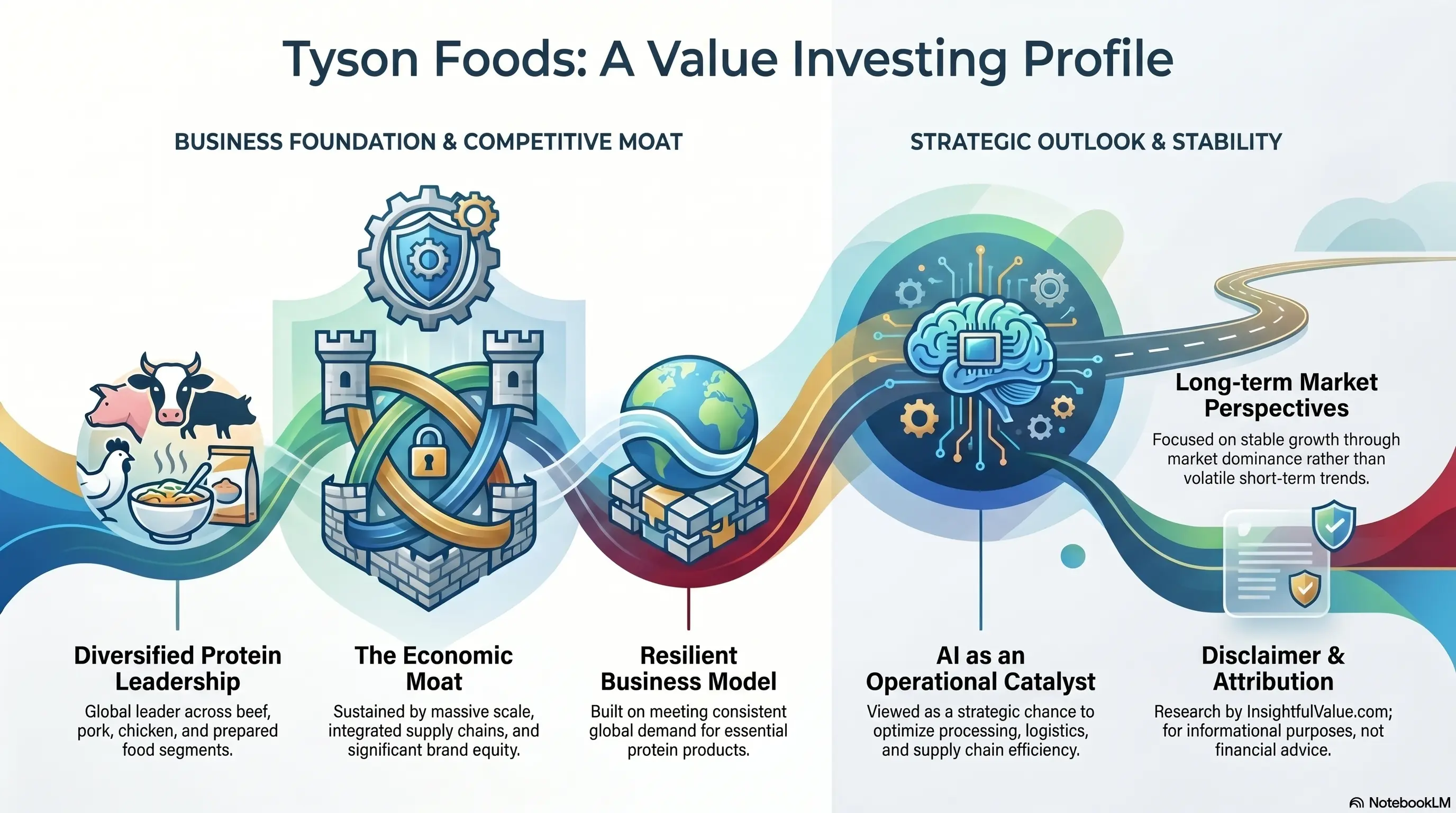
Infographic
Overview
Tyson Foods, Inc. is one of the largest food companies in the world, primarily known for its production of chicken, beef, and pork. Headquartered in Springdale, Arkansas, the company was founded by John W. Tyson in 1931. Over the decades, Tyson Foods has grown significantly through acquisitions and expansions, becoming a key player in the global protein market.
The company’s operations span the entire supply chain, from farming and processing to distribution and marketing. Tyson Foods operates various brands, including Tyson, Jimmy Dean, Hillshire Farm, and Edouardo’s, among others. These products range from fresh meats to ready-to-eat meals and snacks.
Tyson Foods emphasizes sustainability and animal welfare in its practices, focusing on responsible sourcing of ingredients and reducing its environmental footprint. The company has made commitments to improve practices related to greenhouse gas emissions and waste management.
Tyson Foods is publicly traded on the New York Stock Exchange under the symbol TSN and is known for its substantial role in the U.S. meat industry, as well as its significant contributions to the economy through jobs and agricultural support. The company frequently engages in community initiatives and supports various charitable causes.
In recent years, Tyson Foods has also been involved in addressing issues related to food safety and quality, as well as adapting to changing consumer preferences, including a growing demand for plant-based protein options.
How to explain to a 10 year old kid about the company?

📈 Want to read more about Tyson Foods?
Sign up for free
or
log in
📘 Claim your free eBook: "The Checklist Value Investor — A Smarter Way to Pick Stocks"
VHlzb24gRm 9vZHMgaXMg YSBiaWcgY2 9tcGFueSB0 aGF0IHNwZW NpYWxpemVz IGluIG1ha2 luZyBmb29k LCBlc3BlY2 lhbGx5IG1l YXQgbGlrZS BjaGlja2Vu LCBiZWVmLC BhbmQgcG9y ay4gSW1hZ2 luZSBnb2lu ZyB0byB5b3 VyIGZhdm9y aXRlIHJlc3 RhdXJhbnQg b3IgZ3JvY2 VyeSBzdG9y ZTsgYSBsb3 Qgb2YgdGhl IGNoaWNrZW 4gbnVnZ2V0 cywgaG90IG RvZ3MsIGFu ZCBvdGhlci BtZWF0IHBy b2R1Y3RzIH lvdSBzZWUg dGhlcmUgbW lnaHQgY29t ZSBmcm9tIF R5c29uIEZv b2RzLjxicj 5IZXJl4oCZ cyBob3cgdG hleSBtYWtl IG1vbmV5Oi BUeXNvbiBy YWlzZXMgYW 5pbWFscywg bGlrZSBjaG lja2VucyBh bmQgY293cy wgYW5kIHBy b2Nlc3Nlcy B0aGVtIGlu dG8gZm9vZC B0aGF0IHBl b3BsZSBsaW tlIHRvIGVh dC4gT25jZS B0aGV5IG1h a2UgdGhlIG Zvb2QsIHRo ZXkgc2VsbC BpdCB0byBn cm9jZXJ5IH N0b3Jlcywg cmVzdGF1cm FudHMsIGFu ZCBvdGhlci BwbGFjZXMu IFBlb3BsZS BwYXkgbW9u ZXkgdG8gYn V5IHRob3Nl IHByb2R1Y3 RzLCBhbmQg dGhhdOKAmX MgaG93IFR5 c29uIG1ha2 VzIGl0cyBw cm9maXQuPG JyPlR5c29u IEZvb2RzIG hhcyBiZWVu IHJlYWxseS BzdWNjZXNz ZnVsIGZvci BhIGZldyBy ZWFzb25zLi BGaXJzdCwg dGhleSBoYX ZlIGJlZW4g YXJvdW5kIG ZvciBhIGxv bmcgdGltZS BhbmQga25v dyBob3cgdG 8gcnVuIHRo ZWlyIGJ1c2 luZXNzIHdl bGwuIFRoZX kgYWxzbyBw YXkgYXR0ZW 50aW9uIHRv IHdoYXQgcG VvcGxlIHdh bnQuIEZvci BleGFtcGxl LCBpZiBtb3 JlIHBlb3Bs ZSBhcmUgbG 9va2luZyBm b3IgaGVhbH RoeSBmb29k IG9wdGlvbn MsIFR5c29u IHdvcmtzIG 9uIGNyZWF0 aW5nIHRob3 NlIHByb2R1 Y3RzLiA8Yn I+TW9yZW92 ZXIsIGFzIG 1vcmUgcGVv cGxlIGFyb3 VuZCB0aGUg d29ybGQgZW F0IG1vcmUg bWVhdCBhbm QgbG9vayBm b3IgY29udm VuaWVudCBm b29kIG9wdG lvbnMsIFR5 c29uIGlzIG luIGEgZ29v ZCBwb3NpdG lvbiB0byBn cm93LiBUaG V5IGFsc28g aW52ZXN0IG luIHRlY2hu b2xvZ3kgdG 8gbWFrZSB0 aGVpciBmb2 9kIHNhZmVy IGFuZCBiZX R0ZXIgcXVh bGl0eS4gVG hpcyBoZWxw cyB0aGVtIH N0YXkgYWhl YWQgb2Ygb3 RoZXIgY29t cGFuaWVzLj xicj5JbiB0 aGUgZnV0dX JlLCB3aXRo IHRoZSB3b3 JsZCBwb3B1 bGF0aW9uIG dyb3dpbmcs IG1vcmUgcG VvcGxlIHdp bGwgbmVlZC B0byBlYXQs IGFuZCBUeX NvbiBGb29k cyB3aWxsIG NvbnRpbnVl IHRvIHBsYX kgYSBiaWcg cm9sZSBpbi Bwcm92aWRp bmcgZm9vZC 4gQXMgbG9u ZyBhcyB0aG V5IGtlZXAg YWRhcHRpbm cgdG8gd2hh dCBwZW9wbG Ugd2FudCBh bmQgbmVlZG luZyBnb29k IGZvb2QsIH RoZXkgYXJl IGxpa2VseS B0byBzdGF5 IHN1Y2Nlc3 NmdWwuPGJy Pg==
What is special about the company?
📈 Want to read more about Tyson Foods?
Sign up for free
or
log in
✅ Download "The Checklist Value Investor — A Smarter Way to Pick Stocks" — totally free!
VGhlcmUgYX JlIGEgZmV3 IG5vdGFibG UgdGhpbmdz IHRoYXQgbW FrZSBUeXNv biBGb29kcy BzdGFuZCBv dXQgYXMgYS Bjb21wYW55 Ojxicj4xLi BTaXplIGFu ZCBzY29wZT ogVHlzb24g Rm9vZHMgaX Mgb25lIG9m IHRoZSBsYX JnZXN0IGZv b2QgY29tcG FuaWVzIGlu IHRoZSB3b3 JsZCwgd2l0 aCBvdmVyIC Q0MCBiaWxs aW9uIGluIG FubnVhbCBy ZXZlbnVlIG FuZCBhcHBy b3hpbWF0ZW x5IDE0MSww MDAgZW1wbG 95ZWVzLiBU aGV5IG9wZX JhdGUgaW4g bXVsdGlwbG Ugc2VnbWVu dHMsIGluY2 x1ZGluZyBw b3VsdHJ5LC BiZWVmLCBw b3JrLCBhbm QgcHJlcGFy ZWQgZm9vZH MsIGFuZCBo YXZlIGEgZ2 xvYmFsIHBy ZXNlbmNlIG luIG92ZXIg MTMwIGNvdW 50cmllcy48 YnI+Mi4gUm FuZ2Ugb2Yg cHJvZHVjdH M6IFR5c29u IEZvb2RzIG 9mZmVycyBh IGRpdmVyc2 UgcmFuZ2Ug b2YgcHJvZH VjdHMgcmFu Z2luZyBmcm 9tIGZyZXNo IG1lYXRzIG FuZCBwb3Vs dHJ5IHRvIH ByZXBhcmVk IGZvb2RzIG FuZCBzbmFj a3MuIFRoZX kgYWxzbyBo YXZlIGEgc3 Ryb25nIHBv cnRmb2xpby BvZiBwb3B1 bGFyIGNvbn N1bWVyIGJy YW5kcywgaW 5jbHVkaW5n IEppbW15IE RlYW4sIEhp bGxzaGlyZS BGYXJtLCBh bmQgQWlkZW xscy48YnI+ My4gQ29tbW l0bWVudCB0 byBzdXN0YW luYWJpbGl0 eTogVHlzb2 4gRm9vZHMg aGFzIG1hZG UgYSBjb21t aXRtZW50IH RvIHN1c3Rh aW5hYmxlIH ByYWN0aWNl cyBhbmQgcm VkdWNpbmcg dGhlaXIgZW 52aXJvbm1l bnRhbCBpbX BhY3QuIFRo ZXkgaGF2ZS BzZXQgZ29h bHMgdG8gcm VkdWNlIGdy ZWVuaG91c2 UgZ2FzIGVt aXNzaW9ucy wgY29uc2Vy dmUgd2F0ZX IgYW5kIGVu ZXJneSwgYW 5kIGRlY3Jl YXNlIHdhc3 RlLjxicj40 LiBFbXBoYX NpcyBvbiBm b29kIHNhZm V0eTogVHlz b24gRm9vZH MgaGFzIGEg c3Ryb25nIG ZvY3VzIG9u IGZvb2Qgc2 FmZXR5IGFu ZCBxdWFsaX R5LiBUaGV5 IGhhdmUgaW 1wbGVtZW50 ZWQgcmlnb3 JvdXMgcHJv dG9jb2xzIG FuZCBzdGFu ZGFyZHMgdG 8gZW5zdXJl IHRoZSBzYW ZldHkgb2Yg dGhlaXIgcH JvZHVjdHMs IGFuZCBoYX ZlIGludmVz dGVkIGluIG lubm92YXRp dmUgdGVjaG 5vbG9naWVz IHRvIGltcH JvdmUgZm9v ZCBzYWZldH kgdGhyb3Vn aG91dCB0aG VpciBzdXBw bHkgY2hhaW 4uPGJyPjUu IENvcnBvcm F0ZSByZXNw b25zaWJpbG l0eTogVHlz b24gRm9vZH MgaXMgY29t bWl0dGVkIH RvIGdpdmlu ZyBiYWNrIH RvIHRoZSBj b21tdW5pdG llcyBpbiB3 aGljaCB0aG V5IG9wZXJh dGUuIFRoZX kgaGF2ZSB2 YXJpb3VzIG luaXRpYXRp dmVzIGluIH BsYWNlLCBz dWNoIGFzIG h1bmdlciBy ZWxpZWYgZW Zmb3J0cyBh bmQgc3VwcG 9ydGluZyBs b2NhbCBmYX JtZXJzLCB0 byBwcm9tb3 RlIHN1c3Rh aW5hYmxlIG Zvb2Qgc3lz dGVtcyBhbm Qgc3VwcG9y dCB0aG9zZS BpbiBuZWVk Ljxicj42Li BJbm5vdmF0 aW9uOiBUeX NvbiBGb29k cyBpcyBjb2 5zdGFudGx5 IGxvb2tpbm cgZm9yIHdh eXMgdG8gaW 5ub3ZhdGUg YW5kIGltcH JvdmUgdGhl aXIgcHJvZH VjdHMgYW5k IHByb2Nlc3 Nlcy4gVGhl eSBoYXZlIG EgZGVkaWNh dGVkIHJlc2 VhcmNoIGFu ZCBkZXZlbG 9wbWVudCB0 ZWFtIGNvbn N0YW50bHkg d29ya2luZy BvbiBuZXcg cHJvZHVjdH MgYW5kIHRl Y2hub2xvZ2 llcywgYW5k IGhhdmUgYW xzbyBpbnZl c3RlZCBpbi BzdGFydC11 cHMgYW5kIH BhcnRuZXJz aGlwcyB0by BzdGF5IGF0 IHRoZSBmb3 JlZnJvbnQg b2YgdGhlIG luZHVzdHJ5 Lg==
What the company's business model?
📈 Want to read more about Tyson Foods?
Sign up for free
or
log in
📘 Claim your free eBook: "The Checklist Value Investor — A Smarter Way to Pick Stocks"
VHlzb24gRm 9vZHMgaXMg YSBtdWx0aW 5hdGlvbmFs IGZvb2QgY2 9tcGFueSB0 aGF0IG9wZX JhdGVzIGlu IHRoZSBidX NpbmVzcy10 by1idXNpbm VzcyAoQjJC KSBhbmQgYn VzaW5lc3Mt dG8tY29uc3 VtZXIgKEIy QykgbWFya2 V0cy4gVGhl IGNvbXBhbn kncyBidXNp bmVzcyBtb2 RlbCBpcyBi YXNlZCBvbi B0aGUgcHJv ZHVjdGlvbi wgcHJvY2Vz c2luZywgYW 5kIG1hcmtl dGluZyBvZi BjaGlja2Vu LCBiZWVmLC Bwb3JrLCBh bmQgcHJlcG FyZWQgZm9v ZHMuIDxicj 4xLiBJbnRl Z3JhdGVkIH N1cHBseSBj aGFpbjogVH lzb24gRm9v ZHMgb3Blcm F0ZXMgYSBm dWxseSBpbn RlZ3JhdGVk IHN1cHBseS BjaGFpbiB0 aGF0IGluY2 x1ZGVzIHNv dXJjaW5nLC Bwcm9jZXNz aW5nLCBhbm QgZGlzdHJp YnV0aW5nIH JhdyBtYXRl cmlhbHMgYW 5kIGZpbmlz aGVkIHByb2 R1Y3RzLiBU aGlzIGFsbG 93cyB0aGUg Y29tcGFueS B0byBoYXZl IGNvbnRyb2 wgb3ZlciB0 aGUgcXVhbG l0eSBhbmQg c3VwcGx5IG 9mIGl0cyBw cm9kdWN0cy 48YnI+Mi4g VmVydGljYW wgaW50ZWdy YXRpb246IF RoZSBjb21w YW55IGhhcy BhIHN0cm9u ZyB2ZXJ0aW NhbCBpbnRl Z3JhdGlvbi BzdHJhdGVn eSwgd2hpY2 ggaW52b2x2 ZXMgb3duaW 5nIGFuZCBj b250cm9sbG luZyB2YXJp b3VzIHN0YW dlcyBvZiB0 aGUgcHJvZH VjdGlvbiBw cm9jZXNzLi BUaGlzIGlu Y2x1ZGVzIG 93bmluZyBm ZWVkIG1pbG xzLCBoYXRj aGVyaWVzLC Bwcm9jZXNz aW5nIHBsYW 50cywgYW5k IHRyYW5zcG 9ydGF0aW9u IGZsZWV0cy 48YnI+My4g RGl2ZXJzaW ZpY2F0aW9u IG9mIHByb2 R1Y3RzIGFu ZCBicmFuZH M6IFR5c29u IEZvb2RzIG 9mZmVycyBh IGRpdmVyc2 UgcmFuZ2Ug b2YgcHJvZH VjdHMsIGlu Y2x1ZGluZy BmcmVzaCBh bmQgZnJvem VuIGNoaWNr ZW4sIGJlZW YsIHBvcmss IGFuZCBwcm VwYXJlZCBm b29kcy4gVG hlIGNvbXBh bnkgYWxzby BoYXMgYSBw b3J0Zm9saW 8gb2YgcG9w dWxhciBhbm QgcmVjb2du aXplZCBicm FuZHMgc3Vj aCBhcyBUeX NvbiwgSGls bHNoaXJlIE Zhcm0sIEpp bW15IERlYW 4sIGFuZCBC YWxsIFBhcm suPGJyPjQu IERpc3RyaW J1dGlvbjog VHlzb24gRm 9vZHMgaGFz IGEgd2lkZX NwcmVhZCBk aXN0cmlidX Rpb24gbmV0 d29yaywgc3 VwcGx5aW5n IGl0cyBwcm 9kdWN0cyB0 byB2YXJpb3 VzIGZvb2Qg cmV0YWlsZX JzLCBmb29k c2VydmljZS BkaXN0cmli dXRvcnMsIG FuZCByZXN0 YXVyYW50cy 4gVGhlIGNv bXBhbnkgYW xzbyBzZWxs cyBpdHMgcH JvZHVjdHMg ZGlyZWN0bH kgdG8gY29u c3VtZXJzIH Rocm91Z2gg ZS1jb21tZX JjZSBwbGF0 Zm9ybXMuPG JyPjUuIElu bm92YXRpb2 46IFRoZSBj b21wYW55IH BsYWNlcyBh IHN0cm9uZy BlbXBoYXNp cyBvbiBpbm 5vdmF0aW9u IGluIHByb2 R1Y3QgZGV2 ZWxvcG1lbn QgYW5kIHBy b2Nlc3MgaW 1wcm92ZW1l bnQuIFRoaX MgaGFzIGxl ZCB0byB0aG UgbGF1bmNo IG9mIG5ldy Bwcm9kdWN0 cyBzdWNoIG FzIHBsYW50 LWJhc2VkIH Byb3RlaW5z IGFuZCBpbX Byb3ZlZCBw cm9kdWN0aW 9uIG1ldGhv ZHMsIHJlc3 VsdGluZyBp biBpbmNyZW FzZWQgZWZm aWNpZW5jeS BhbmQgY29z dCBzYXZpbm dzLjxicj42 LiBDb3N0IG NvbnRyb2w6 IFR5c29uIE Zvb2RzIHV0 aWxpemVzIG FkdmFuY2Vk IHRlY2hub2 xvZ3kgYW5k IGVmZmljaW VudCBwcm9k dWN0aW9uIG 1ldGhvZHMg dG8gbWFuYW dlIGNvc3Rz IGFuZCBtYW ludGFpbiBj b21wZXRpdG l2ZSBwcmlj ZXMgZm9yIG l0cyBwcm9k dWN0cy48Yn I+Ny4gU3Vz dGFpbmFiaW xpdHk6IFRo ZSBjb21wYW 55IGhhcyBh IHN0cm9uZy Bmb2N1cyBv biBzdXN0YW luYWJpbGl0 eSBhbmQgaG FzIGltcGxl bWVudGVkIH ZhcmlvdXMg aW5pdGlhdG l2ZXMgdG8g cmVkdWNlIG l0cyBlbnZp cm9ubWVudG FsIGZvb3Rw cmludCwgc3 VjaCBhcyBz b3VyY2luZy BzdXN0YWlu YWJsZSBpbm dyZWRpZW50 cyBhbmQgcm VkdWNpbmcg d2FzdGUuPG JyPkluIHN1 bW1hcnksIF R5c29uIEZv b2RzJyBidX NpbmVzcyBt b2RlbCBpcy BjZW50ZXJl ZCBhcm91bm QgYW4gaW50 ZWdyYXRlZC BzdXBwbHkg Y2hhaW4sIH ZlcnRpY2Fs IGludGVncm F0aW9uLCBk aXZlcnNpZm ljYXRpb24g b2YgcHJvZH VjdHMgYW5k IGJyYW5kcy wgd2lkZXNw cmVhZCBkaX N0cmlidXRp b24sIGlubm 92YXRpb24s IGNvc3QgY2 9udHJvbCwg YW5kIHN1c3 RhaW5hYmls aXR5LiBUaG lzIG1vZGVs IGFsbG93cy B0aGUgY29t cGFueSB0by BlZmZpY2ll bnRseSBwcm 9kdWNlIGFu ZCBkZWxpdm VyIGhpZ2gt cXVhbGl0eS Bmb29kIHBy b2R1Y3RzIH RvIGEgZGl2 ZXJzZSBjdX N0b21lciBi YXNlLg==
Is AI a threat?
AI can pose several potential threats to Tyson Foods and its business landscape, particularly in terms of substitution, disintermediation, and margin pressure.
Substitution: As advancements in AI and biotechnology continue, alternative protein sources such as lab-grown meat and plant-based products are gaining traction. These alternatives could appeal to consumers seeking sustainable or healthier options, thereby substituting traditional meat products. If Tyson Foods does not adapt by investing in or developing these alternatives, it could lose market share to competitors who offer innovative and appealing substitutes.
Disintermediation: AI technologies can facilitate direct-to-consumer sales models, potentially bypassing traditional retail channels. With the rise of online grocery shopping and meal delivery services, customers can purchase products directly from manufacturers or through platforms that leverage AI for personalized recommendations. This shift could pressure Tyson Foods to rethink its distribution strategies and possibly reduce the influence of intermediaries, affecting traditional sales volumes and relationships with retail partners.
Margin Pressure: The implementation of AI in supply chain management, production processes, and consumer marketing could lead to increased efficiency and cost reductions. However, as competitors adopt these technologies, Tyson Foods may face increased pressure to lower prices to maintain market competitiveness. Additionally, if AI-driven alternative proteins capture consumer interest, Tyson could experience margin pressure from these lower-cost substitutes if it fails to innovate or optimize its own operations.
In conclusion, Tyson Foods must be proactive in addressing these potential threats by embracing technological advancements, diversifying its product offerings, and adapting to changes in consumer preferences and market dynamics. Failure to do so could jeopardize its competitive positioning in the evolving food industry.
Sensitivity to interest rates
The sensitivity of Tyson Foods’ earnings, cash flow, and valuation to changes in interest rates can be analyzed through several key factors.
1. Earnings Sensitivity: Tyson Foods’ earnings can be impacted by interest rate changes primarily due to increased borrowing costs. If interest rates rise, financing for operations, expansion, or acquisitions becomes more expensive, which may reduce net income. Additionally, higher interest rates typically correlate with lower consumer spending power, affecting demand for Tyson’s products and potentially leading to decreased sales volume.
2. Cash Flow Sensitivity: The cash flow of Tyson Foods is closely tied to its operational efficiency and financing costs. Increased interest rates can lead to higher interest expenses on existing debt, reducing free cash flow. If cash flow is constricted, it could affect the company’s ability to invest in growth initiatives, pay dividends, or reduce debt levels. Moreover, rising interest rates can indirectly impact cash flow through changes in consumer behavior, as higher borrowing costs may lead consumers to cut back on discretionary spending, potentially affecting sales.
3. Valuation Sensitivity: The valuation of Tyson Foods, like many companies, is sensitive to interest rates through the discount rate used in financial models. Higher interest rates generally lead to an increase in the discount rate, which reduces the present value of future cash flows and can lead to a lower valuation. The price-to-earnings (P/E) ratio and other valuation multiples can also compress as investors seek higher returns in the bond market, making equities less attractive.
In summary, Tyson Foods’ earnings, cash flow, and valuation are influenced by interest rate changes, with higher rates generally leading to increased costs and reduced disposable income for consumers, thereby impacting the company’s financial performance and market valuation.
Resilience to the future changes
📈 Want to read more about Tyson Foods?
Sign up for free
or
log in
📘 Claim your free eBook: "The Checklist Value Investor — A Smarter Way to Pick Stocks"
T25lIHJlYW xpc3RpYyBz Y2VuYXJpby B0aGF0IGNv dWxkIHBlcm 1hbmVudGx5 IGltcGFpci BUeXNvbiBG b29kc+KAmS BlY29ub21p Y3Mgb3Zlci B0aGUgbmV4 dCAzIHRvID UgeWVhcnMg aXMgYSBzaW duaWZpY2Fu dCBhbmQgc3 VzdGFpbmVk IGluY3JlYX NlIGluIGZl ZWQgYW5kIG xhYm9yIGNv c3RzLCBkcm l2ZW4gYnkg YSBjb21iaW 5hdGlvbiBv ZiBzdXBwbH kgY2hhaW4g ZGlzcnVwdG lvbnMsIGNs aW1hdGUgY2 hhbmdlIGlt cGFjdHMgb2 4gYWdyaWN1 bHR1cmFsIH Byb2R1Y3Rp b24sIGFuZC Bwb3RlbnRp YWxseSBzdH JpY3RlciBs YWJvciByZW d1bGF0aW9u cy48YnI+SW 4gdGhpcyBz Y2VuYXJpby wgZmVlZCBj b3N0cyBjb3 VsZCByaXNl IGRyYW1hdG ljYWxseSBk dWUgdG8gYW R2ZXJzZSB3 ZWF0aGVyIG NvbmRpdGlv bnMgYWZmZW N0aW5nIGNy b3AgeWllbG RzLCB3aGlj aCBhcmUgZX NzZW50aWFs IGZvciBhbm ltYWwgZmVl ZC4gU2ltdW x0YW5lb3Vz bHksIGxhYm 9yIGNvc3Rz IGNvdWxkIG JlIGRyaXZl biB1cCBieS BpbmNyZWFz ZWQgbWluaW 11bSB3YWdl IGxhd3MsIG EgdGlnaHRl bmluZyBsYW JvciBtYXJr ZXQsIGFuZC BoZWlnaHRl bmVkIGxhYm 9yIGRlbWFu ZHMgZnJvbS B3b3JrZXJz IHNlZWtpbm cgYmV0dGVy IGNvbmRpdG lvbnMuIElm IHRoZXNlIG ZhY3RvcnMg cGVyc2lzdC wgVHlzb24g Rm9vZHMgd2 91bGQgZmFj ZSBhIGNvbX BvdW5kZWQg aW5jcmVhc2 UgaW4gcHJv ZHVjdGlvbi Bjb3N0cy48 YnI+QXMgbW FyZ2lucyBj b21wcmVzcy wgdGhlIGNv bXBhbnnigJ lzIHByb2Zp dGFiaWxpdH kgd291bGQg bGlrZWx5IG RlY2xpbmUg c2lnbmlmaW NhbnRseS4g T3BlcmF0aW 5nIG1hcmdp bnMsIHdoaW NoIGFyZSB1 c3VhbGx5IH RpZ2h0IGlu IHRoZSBtZW F0IHByb2Nl c3NpbmcgaW 5kdXN0cnks IGNvdWxkIG NvbnRyYWN0 IGJ5IHNldm VyYWwgcGVy Y2VudGFnZS Bwb2ludHMu IEZvciBpbn N0YW5jZSwg aWYgbWFyZ2 lucyB3ZXJl IHByZXZpb3 VzbHkgYXJv dW5kIDctMT AlLCB0aGV5 IG1pZ2h0IG Ryb3AgdG8g NC02JSBvci Bsb3dlciwg ZGVwZW5kaW 5nIG9uIHRo ZSBzZXZlcm l0eSBvZiBj b3N0IGluY3 JlYXNlcyBh bmQgdGhlIG NvbXBhbnni gJlzIGFiaW xpdHkgdG8g cGFzcyB0aG VzZSBjb3N0 cyBvbnRvIG NvbnN1bWVy cy48YnI+Q2 FzaCBmbG93 IHdvdWxkIG Fsc28gYmUg bmVnYXRpdm VseSBpbXBh Y3RlZC4gV2 l0aCBpbmNy ZWFzZWQgY2 9zdHMsIFR5 c29uIG1pZ2 h0IGhhdmUg dG8gaW52ZX N0IG1vcmUg aW4gZWZmaW NpZW5jeSBp bXByb3ZlbW VudHMgb3Ig dGVjaG5vbG 9neSB0byBt aXRpZ2F0ZS ByaXNpbmcg ZXhwZW5zZX MsIHdoaWNo IGNvdWxkIG xlYWQgdG8g ZWxldmF0ZW QgY2FwaXRh bCBleHBlbm RpdHVyZXMu IElmIHRoaX MgaW5jcmVh c2UgaW4gc3 BlbmRpbmcg ZG9lcyBub3 QgeWllbGQg dGhlIGRlc2 lyZWQgZWZm aWNpZW5jeS BnYWlucywg ZnJlZSBjYX NoIGZsb3cg Y291bGQgZG VjbGluZSwg bWFraW5nIG l0IGhhcmRl ciBmb3IgdG hlIGNvbXBh bnkgdG8gZn VuZCBkaXZp ZGVuZHMsIH JlaW52ZXN0 IGluIHRoZS BidXNpbmVz cywgb3Igcm VkdWNlIGRl YnQuPGJyPl RoZSBiYWxh bmNlIHNoZW V0IGNvdWxk IGZhY2Ugc3 RyYWluIGFz IHdlbGwuIE lmIGxvd2Vy IG1hcmdpbn MgYW5kIGNh c2ggZmxvdy BwZXJzaXN0 LCB0aGUgY2 9tcGFueSBt YXkgbmVlZC B0byBpbmNy ZWFzZSBpdH MgZGVidCB0 byBtYWludG FpbiBvcGVy YXRpb25zIG 9yIGludmVz dCBpbiBjb3 N0LXNhdmlu ZyBtZWFzdX Jlcy4gVGhp cyBjb3VsZC ByZXN1bHQg aW4gYSBoaW doZXIgZGVi dC10by1lcX VpdHkgcmF0 aW8sIGFsdG VyaW5nIGlu dmVzdG9yc+ KAmSBwZXJj ZXB0aW9uIG 9mIHJpc2sg YXNzb2NpYX RlZCB3aXRo IHRoZSBjb2 1wYW554oCZ cyBmaW5hbm NpYWwgaGVh bHRoLiBJZi BpbnZlc3Rv cnMgYmVjb2 1lIGNhdXRp b3VzLCBpdC Bjb3VsZCBs ZWFkIHRvIG EgbG93ZXJl ZCBzaGFyZS BwcmljZSwg aW1wYWN0aW 5nIHRoZSBj b21wYW554o CZcyBtYXJr ZXQgY2FwaX RhbGl6YXRp b24uPGJyPk 92ZXJhbGws IGluIHRoaX Mgc2NlbmFy aW8sIFR5c2 9uIEZvb2Rz IGNvdWxkIG ZpbmQgaXRz ZWxmIGluIG EgcHJlY2Fy aW91cyBwb3 NpdGlvbiB3 aXRoIHJlZH VjZWQgbWFy Z2lucywgY2 9uc3RyYWlu ZWQgY2FzaC BmbG93LCBh bmQgYSBsZX ZlcmFnZWQg YmFsYW5jZS BzaGVldCwg aW1wYWN0aW 5nIGxvbmct dGVybSBncm 93dGggYW5k IHNoYXJlaG 9sZGVyIGNv bmZpZGVuY2 UuPGJyPg==
Interesting facts about the company
📈 Want to read more about Tyson Foods?
Sign up for free
or
log in
👥 Free eBook for new users: "The Checklist Value Investor — A Smarter Way to Pick Stocks"
CiAgICAgIC AgICAgIDxk aXYgc3R5bG U9J3dpZHRo OiAxMDAlOy BkaXNwbGF5 OiBmbGV4Oy BqdXN0aWZ5 LWNvbnRlbn Q6IGNlbnRl cjsnPgogIC AgICAgICAg ICAgICAgPG RpdiBzdHls ZT0nCiAgIC AgICAgICAg ICAgICAgIC AgZGlzcGxh eTogZmxleD sKICAgICAg ICAgICAgIC AgICAgICBh bGlnbi1pdG VtczogY2Vu dGVyOwogIC AgICAgICAg ICAgICAgIC AgIGJhY2tn cm91bmQtY2 9sb3I6ICNm MGY0Zjg7Ci AgICAgICAg ICAgICAgIC AgICAgYm9y ZGVyOiAxcH ggc29saWQg I2QxZTNmMD sKICAgICAg ICAgICAgIC AgICAgICBi b3JkZXItcm FkaXVzOiAx MHB4OwogIC AgICAgICAg ICAgICAgIC AgIHBhZGRp bmc6IDEwcH g7CiAgICAg ICAgICAgIC AgICAgICAg bWFyZ2luOi AyMHB4IDA7 CiAgICAgIC AgICAgICAg ICAgICAgZm 9udC1mYW1p bHk6ICJTZW dvZSBVSSIs IFJvYm90by wgc2Fucy1z ZXJpZjsKIC AgICAgICAg ICAgICAgIC AgICBib3gt c2hhZG93Oi AwIDJweCA2 cHggcmdiYS gwLCAwLCAw LCAwLjA1KT sKICAgICAg ICAgICAgIC AgICAgICBt YXgtd2lkdG g6IDkwMHB4 OwogICAgIC AgICAgICAg ICAgICAgIH dpZHRoOiAx MDAlOyc+Cg ogICAgICAg ICAgICAgIC AgICAgIDxp bWcgc3JjPS Jhc3NldHMv bG9nb3MvRD FNU3NDdnhX c0tmemNoRF dVamwud2Vi cCIgYWx0PS JUeXNvbiBG b29kcyIgdG l0bGU9IlR5 c29uIEZvb2 RzIiAgY2xh c3M9ImltZy 1mbHVpZCIg aGVpZ2h0PT UwIHdpZHRo PTUwIGxvYW Rpbmc9J2xh enknIHN0eW xlPSdib3Jk ZXItcmFkaX VzOiA2cHg7 Jz4KCiAgIC AgICAgICAg ICAgICAgIC AgPGRpdiBz dHlsZT0nZm xleDogMTsg dGV4dC1hbG lnbjogY2Vu dGVyOyBtYX JnaW4tbGVm dDogNXB4Oy c+CiAgICAg ICAgICAgIC AgICAgICAg ICAgIDxwIH N0eWxlPSdm b250LXNpem U6IDI2cHg7 IGNvbG9yOi AjMzMzOyBt YXJnaW4tYm 90dG9tOiAx NXB4Oyc+Ci AgICAgICAg ICAgICAgIC AgICAgICAg ICAgICDwn5 OIIFdhbnQg dG8gcmVhZC Btb3JlIGFi b3V0IFR5c2 9uIEZvb2Rz PwogICAgIC AgICAgICAg ICAgICAgIC AgICA8L3A+ CgogICAgIC AgICAgICAg ICAgICAgIC AgICA8YSBo cmVmPSdpbm RleC5waHA/ cGFnZT1zaW dudXAnIHN0 eWxlPScKIC AgICAgICAg ICAgICAgIC AgICAgICAg ICAgIGJhY2 tncm91bmQt Y29sb3I6IC MwMDdCRkY7 CiAgICAgIC AgICAgICAg ICAgICAgIC AgICAgICBj b2xvcjogI2 ZmZjsKICAg ICAgICAgIC AgICAgICAg ICAgICAgIC AgIHBhZGRp bmc6IDEwcH ggMjBweDsK ICAgICAgIC AgICAgICAg ICAgICAgIC AgICAgIGJv cmRlci1yYW RpdXM6IDVw eDsKICAgIC AgICAgICAg ICAgICAgIC AgICAgICAg IHRleHQtZG Vjb3JhdGlv bjogbm9uZT sKICAgICAg ICAgICAgIC AgICAgICAg ICAgICAgIG ZvbnQtd2Vp Z2h0OiBib2 xkOwogICAg ICAgICAgIC AgICAgICAg ICAgICAgIC AgbWFyZ2lu LXJpZ2h0Oi AxMHB4Owog ICAgICAgIC AgICAgICAg ICAgICAgIC AgICAgdHJh bnNpdGlvbj ogYmFja2dy b3VuZC1jb2 xvciAwLjNz IGVhc2U7Jw ogICAgICAg ICAgICAgIC AgICAgICAg ICAgICAgb2 5tb3VzZW92 ZXI9J3RoaX Muc3R5bGUu YmFja2dyb3 VuZENvbG9y PSIjMDA1Nm IzIicKICAg ICAgICAgIC AgICAgICAg ICAgICAgIC AgIG9ubW91 c2VvdXQ9J3 RoaXMuc3R5 bGUuYmFja2 dyb3VuZENv bG9yPSIjMD A3QkZGIic+ CiAgICAgIC AgICAgICAg ICAgICAgIC AgICAgICBT aWduIHVwIG ZvciBmcmVl CiAgICAgIC AgICAgICAg ICAgICAgIC AgIDwvYT4K CiAgICAgIC AgICAgICAg ICAgICAgIC AgIDxzcGFu IHN0eWxlPS dtYXJnaW46 IDAgOHB4Oy Bjb2xvcjog IzU1NTsnPm 9yPC9zcGFu PgoKICAgIC AgICAgICAg ICAgICAgIC AgICAgPGEg aHJlZj0naW 5kZXgucGhw P3BhZ2U9bG 9naW4nIHN0 eWxlPScKIC AgICAgICAg ICAgICAgIC AgICAgICAg ICAgIGNvbG 9yOiAjMDA3 QkZGOwogIC AgICAgICAg ICAgICAgIC AgICAgICAg ICAgdGV4dC 1kZWNvcmF0 aW9uOiB1bm RlcmxpbmU7 CiAgICAgIC AgICAgICAg ICAgICAgIC AgICAgICBm b250LXdlaW dodDogNTAw Oyc+CiAgIC AgICAgICAg ICAgICAgIC AgICAgICAg ICBsb2cgaW 4KICAgICAg ICAgICAgIC AgICAgICAg ICAgPC9hPg oKCiAgICAg ICAgICAgIC AgICAgICAg ICAgIDxwIH N0eWxlPSdt YXJnaW4tdG 9wOiAxNXB4 OyBmb250LX NpemU6IDEz cHg7IGZvbn Qtd2VpZ2h0 OiBib2xkOy Bjb2xvcjog I2QzMmYyZj snPgogICAg ICAgICAgIC AgICAgICAg ICAgICAgIC Ag4pyN77iP IFNpZ24gdX AgdG8gZ2V0 IDxpPiJUaG UgQ2hlY2ts aXN0IFZhbH VlIEludmVz dG9yIOKAlC BBIFNtYXJ0 ZXIgV2F5IH RvIFBpY2sg U3RvY2tzIj wvaT4gZm9y IGZyZWUKIC AgICAgICAg ICAgICAgIC AgICAgICAg PC9wPgoKIC AgICAgICAg ICAgICAgIC AgICAgICAg PCEtLQogIC AgICAgICAg ICAgICAgIC AgICAgICA8 ZGl2IHN0eW xlPSdtYXJn aW4tdG9wOi AxMnB4OyBm b250LXNpem U6IDEzcHg7 IGNvbG9yOi AjNDQ0Oyc+ CiAgICAgIC AgICAgICAg ICAgICAgIC AgICAgICBT aWduIHVwIG 5vdyBhbmQg Z2V0IG91ci BmcmVlIGVC b29rIAogIC AgICAgICAg ICAgICAgIC AgICAgICAg ICAgPGI+VG hlIENoZWNr bGlzdCBWYW x1ZSBJbnZl c3RvciDigJ QgQSBTbWFy dGVyIFdheS B0byBQaWNr IFN0b2Nrcz wvYj4KICAg ICAgICAgIC AgICAgICAg ICAgICAgPC 9kaXY+CiAg ICAgICAgIC AgICAgICAg ICAgICAgIC 0tPgogICAg ICAgICAgIC AgICAgICAg ICAgICA8IS 0tCiAgICAg ICAgICAgIC AgICAgICAg ICAgIDxkaX Ygc3R5bGU9 J21hcmdpbi 10b3A6IDE2 cHg7IGZvbn Qtc2l6ZTog MTRweDsgY2 9sb3I6ICM0 NDQ7IGZvbn QtZmFtaWx5 OiAtYXBwbG Utc3lzdGVt LCBCbGlua0 1hY1N5c3Rl bUZvbnQsIF NlZ29lIFVJ LCBSb2JvdG 8sIEhlbHZl dGljYSBOZX VlLCBzYW5z LXNlcmlmOy BsaW5lLWhl aWdodDogMS 42Oyc+CiAg ICAgICAgIC AgICAgICAg ICAgICAgIC AgICBIYXZl IHlvdSBoZW FyZCBhYm91 dCBvdXIgc2 hvcnQgPHN0 cm9uZyBzdH lsZT0nZm9u dC13ZWlnaH Q6IDYwMDsn PkRhaWx5IF ZpZGVvIE5l d3NsZXR0ZX I8L3N0cm9u Zz4/CiAgIC AgICAgICAg ICAgICAgIC AgICAgICAg ICA8YSBocm VmPSdodHRw czovL3d3dy 5pbnNpZ2h0 ZnVsdmFsdW UuY29tL25l d3NsZXR0ZX IucGhwJyB0 YXJnZXQ9J1 9ibGFuaycg c3R5bGU9J2 NvbG9yOiAj MDA3QkZGOy B0ZXh0LWRl Y29yYXRpb2 46IG5vbmU7 IGZvbnQtd2 VpZ2h0OiA1 MDA7IG1hcm dpbi1sZWZ0 OiA2cHg7Jz 4KICAgICAg ICAgICAgIC AgICAgICAg ICAgICAgIC AgICBGaW5k IG91dCBtb3 JlCiAgICAg ICAgICAgIC AgICAgICAg ICAgICAgIC A8L2E+CiAg ICAgICAgIC AgICAgICAg ICAgICAgID wvZGl2Pgog ICAgICAgIC AgICAgICAg ICAgICAgIC AtLT4KICAg ICAgICAgIC AgICAgICAg ICA8L2Rpdj 4KICAgICAg ICAgICAgIC AgIDwvZGl2 PgogICAgIC AgICAgICA8 L2Rpdj4KIC AgICAgICAg ICAgCiAgIC AgICAgCiAg ICAgICAgPH NwYW4gY2xh c3M9J2JsdX JyZWQtdGV4 dCc+CiAgIC AgICAgICAg IE1TNGdWSG x6YjIgNGdS bTl2WkhNZy BkMkZ6SUda dmRXIDVrWl dRZ2FXNGcg TVRrek5TQm llUyBCS2Iy aHVJRmN1IE lGUjVjMjl1 TEMgQjNhWF JvSUdGdSBJ R2x1ZG1Wem RHIDFsYm5R Z2IyWWcgYW 5WemRDQWtO VCBBd0lIUn ZJSEIxIGNt Tm9ZWE5sSU cgRWdjMjFo Ykd3ZyBabV ZsWkNCaGJt IFFnYzJWbF pDQmkgZFhO cGJtVnpjeS BCcGJpQkJj bXRoIGJuTm hjeTQ4WW4g SStNaTRnVk dobCBJR052 YlhCaGJuIG tnZDJGeklH OXkgYVdkcG JtRnNiSCBr Z1kyRnNiR1 ZrIElGUjVj Mjl1NG8gQ1 pjeUJTWlda cCBibVZrSU VabFpXIFFz SUhCeWIyUj EgWTJsdVp5 Qm1aVyBWa0 lHWnZjaUJq IGFHbGphMl Z1Y3kgQmhi bVFnWlhabC BiblIxWVd4 c2VTIEJsZU hCaGJtUnAg Ym1jZ2FXNT BieSBCdmRH aGxjaUJoIG JtbHRZV3dn Wm0gVmxaSE 11UEdKeSBQ ak11SUZSNW MyIDl1SUVa dmIyUnogSU dseklHTjFj biBKbGJuUn NlU0JvIFpX RmtjWFZoY2 4gUmxjbVZr SUdsdSBJRk 53Y21sdVoy IFJoYkdVc0 lFRnkgYTJG dWMyRnpJRy BGdVpDQm9Z WE1nIGIzWm xjaUF4TXog a3NNREF3SU dWdCBjR3h2 ZVdWbGN5IE IzYjNKc1pI ZHAgWkdVdV BHSnlQaiBR dUlGUm9aU0 JVIGVYTnZi aUJtWVcgMX BiSGtnYzNS cCBiR3dnYj NkdWN5IEEz SlNCdlppQj AgYUdVZ1ky OXRjRyBGdW VlS0FtWE1n IGMyaGhjbV Z6SUcgRnVa Q0JvWVhNZy BZU0J1WlhR Z2QyIDl5ZE dnZ2IyWWcg YjNabGNpQW tNVCBVZ1lt bHNiR2x2IG JpNDhZbkkr TlMgNGdWSG x6YjI0ZyBS bTl2WkhNZ2 FYIE1nZEdo bElHeGggY2 1kbGMzUWdi VyBWaGRDQn djbTlqIFpY TnpiM0lnYV cgNGdkR2hs SUZWdSBhWF JsWkNCVGRH IEYwWlhNZ1 lXNWsgSUc5 dVpTQnZaaS BCMGFHVWdi R0Z5IFoyVn pkQ0JwYmkg QjBhR1VnZD I5eSBiR1Fz SUhCeWIyIF IxWTJsdVp5 QnYgZG1WeU lESXdKUyBC dlppQmhiR3 dnIFkyaHBZ MnRsYmkgd2 dZbVZsWml3 ZyBZVzVrSU hCdmNtIHNn YVc0Z2RHaG wgSUdOdmRX NTBjbiBrdV BHSnlQall1 IElFbHVJR0 ZrWkcgbDBh Vzl1SUhSdi BJRzFsWVhR Z2NIIEp2Wk hWamRITXMg SUZSNWMyOX VJRSBadmIy UnpJR0ZzIG MyOGdjSEp2 WkggVmpaWE 1nWVNCMiBZ WEpwWlhSNU lHIDltSUc5 MGFHVnkgSU dadmIyUWdj SCBKdlpIVm pkSE1nIGFX NWpiSFZrYV cgNW5JR1p5 YjNwbCBiaU J0WldGc2N5 IHdnYzI1aF kydHogTENC aGJtUWdjRy BWMElHWnZi MlF1IFBHSn lQamN1SUYg Um9aU0JqYj IxdyBZVzU1 SUdoaGN5IE JtWVdObFpD QnQgZFd4MG FYQnNaUyBC bGRHaHBZMk ZzIElHRnVa Q0JzWlcgZG hiQ0JqYUdG cyBiR1Z1Wj JWeklHIDky WlhJZ2RHaG wgSUhsbFlY SnpMQyBCcG JtTnNkV1Jw IGJtY2dZV3 hzWlcgZGhk R2x2Ym5NZy BiMllnWVc1 cGJXIEZzSU dOeWRXVnMg ZEhrZ1lXNW tJSCBkdmNt dHdiR0ZqIF pTQnpZV1ps ZEgga2dkbW x2YkdGMCBh Vzl1Y3k0OF luIEkrT0M0 Z1ZIbHogYj I0Z1JtOXZa SCBNZ2FHRn pJR0VnIGFH bHpkRzl5ZV MgQnZaaUJw Ym01diBkbU YwYVc5dUlH IEZ1WkNCM1 lYTWcgYjI1 bElHOW1JSC BSb1pTQm1h WEp6IGRDQm piMjF3WVcg NXBaWE1nZE c4ZyBkWE5s SUdGdWRHIG xpYVc5MGFX TnogSUdsdU lHTm9hVyBO clpXNGdjSE p2IFpIVmpk R2x2YmkgQn BiaUIwYUdV ZyBNVGsxTU hNdVBHIEp5 UGprdUlFbH UgSURJd01U WXNJRiBSNW MyOXVJRVp2 IGIyUnpJR0 ZqY1ggVnBj bVZrSUVocC BiR3h6YUds eVpTIEJDY2 1GdVpITXMg SUhkb2FXTm 9JRyBseklH dHViM2R1IE lHWnZjaUJw ZEggTWdjRz l3ZFd4aCBj aUJpY21GdV pIIE1nYkds clpTQksgYV cxdGVTQkVa VyBGdUxDQk NZV3hzIElG QmhjbXNzSU cgRnVaQ0JU WVhKaCBJRX hsWlM0OFlu IEkrTVRBdU lGUjUgYzI5 dUlFWnZiMi BSeklHaGhj eUJoIElITj BjbTl1Wnkg QmpiMjF0YV hSdCBaVzUw SUhSdklIIE 4xYzNSaGFX NWggWW1sc2 FYUjVJRyBG dVpDQm9ZWE 1nIGMyVjBJ R0VnWjIgOW hiQ0IwYnlC eSBaV1IxWT JVZ1ozIEps Wlc1b2IzVn ogWlNCbllY TWdaVyAxcG MzTnBiMjV6 IElHSjVJRE 13SlMgQmll U0F5TURNdy BManhpY2o0 eE1TIDRnU1 c0Z01qQXgg T0N3Z1JtOX lZbSBWeklI SmhibXRsIF pDQlVlWE52 YmkgQkdiMj lrY3lCaCBj eUIwYUdVZ0 16IEp1WkNC dGIzTjAgSU haaGJIVmhZ bSB4bElHSn lZVzVrIElH bHVJSFJvWl MgQjNiM0pz WkN3ZyBkMm wwYUNCaGJp IEJsYzNScG JXRjAgWldR Z1luSmhibS BRZ2RtRnNk V1VnIGIyWW dKREV5TGog a2dZbWxzYk dsdiBiaTQ4 WW5JK01UIE l1SUZSb1pT QmogYjIxd1 lXNTVJRyBo aGN5QmhJSE 4wIGNtOXVa eUJtYjIgTj FjeUJ2YmlC biBhWFpwYm 1jZ1ltIEZq YXlCMGJ5Qj AgYUdVZ1ky OXRiWCBWdW FYUjVMQ0Iz IGFYUm9JR0 VnY0cgRnlk R2xqZFd4aC BjaUJsYlhC b1lYIE5wY3 lCdmJpQm8g ZFc1blpYSW djbSBWc2FX Vm1MaUJKIG JpQXlNREU1 TEMgQlVlWE 52YmlCRyBi MjlrY3lCa2 IyIDVoZEdW a0lHOTIgWl hJZ0pEVXdJ RyAxcGJHeH BiMjRnIGRH OGdhSFZ1Wj IgVnlJSEps YkdsbCBaaU J2Y21kaGJt IGw2WVhScG IyNXogTGp4 aWNqNHhNeS A0Z1ZIbHpi MjRnIFJtOX ZaSE1nYUcg RnpJR0VnYz JsbiBibWxt YVdOaGJuIF FnY0hKbGMy VnUgWTJVZ2 FXNTBaWCBK dVlYUnBiMj VoIGJHeDVM Q0IzYVggUm 9JRzl3WlhK aCBkR2x2Ym 5NZ2FXIDRn YjNabGNpQX ggTURBZ1ky OTFibiBSeW FXVnpJR0Z1 IFpDQndjbT lrZFcgTjBj eUJ6YjJ4ay BJR2x1SUc5 MlpYIElnTV RNd0lHTnYg ZFc1MGNtbG xjeSA0OFlu SStNVFF1IE lGUjVjMjl1 SUUgWnZiMl J6SUdseiBJ SFJvWlNCdl ptIFpwWTJs aGJDQncgY2 05MFpXbHVJ SCBOMWNIQn NhV1Z5IElH WnZjaUJ0WV cgNTVJSE53 YjNKMCBjeU IwWldGdGN5 IHdnYVc1am JIVmsgYVc1 bklIUm9aUy BCTFlXNXpZ WE1nIFEybD BlU0JEYUcg bGxabk1nWV c1ayBJSFJv WlNCT1pYIG NnV1c5eWF5 QkwgYm1sam EzTXVQRyBK eVBqRTFMaU JVIGFHVWdZ Mjl0Y0cgRn VlU0JvWVhN ZyBabUZqWl dRZ1kzIEpw ZEdsamFYTn QgSUdadmNp QnBkSCBNZ2 NtVnNhV0Z1 IFkyVWdiMj RnWm0gRmpk Rzl5ZVNCbS BZWEp0YVc1 bklHIEZ1Wk NCMGFHVWcg Ym1WbllYUn BkbSBVZ1pX NTJhWEp2IG JtMWxiblJo YkMgQnBiWE JoWTNRZyBi MllnYVhSek lIIEJ5YjJS MVkzUnAgYj I0Z2JXVjBh RyA5a2N5ND 0KICAgICAg ICA8L3NwYW 4+CiAgICAg ICAgCiAgIC AgICAg
See Company Q&A
📊 Get full analytics about Tyson Foods
Sign up for free
or
log in
🎁 Free download! "The Checklist Value Investor — A Smarter Way to Pick Stocks"