Company at a Glance
Price
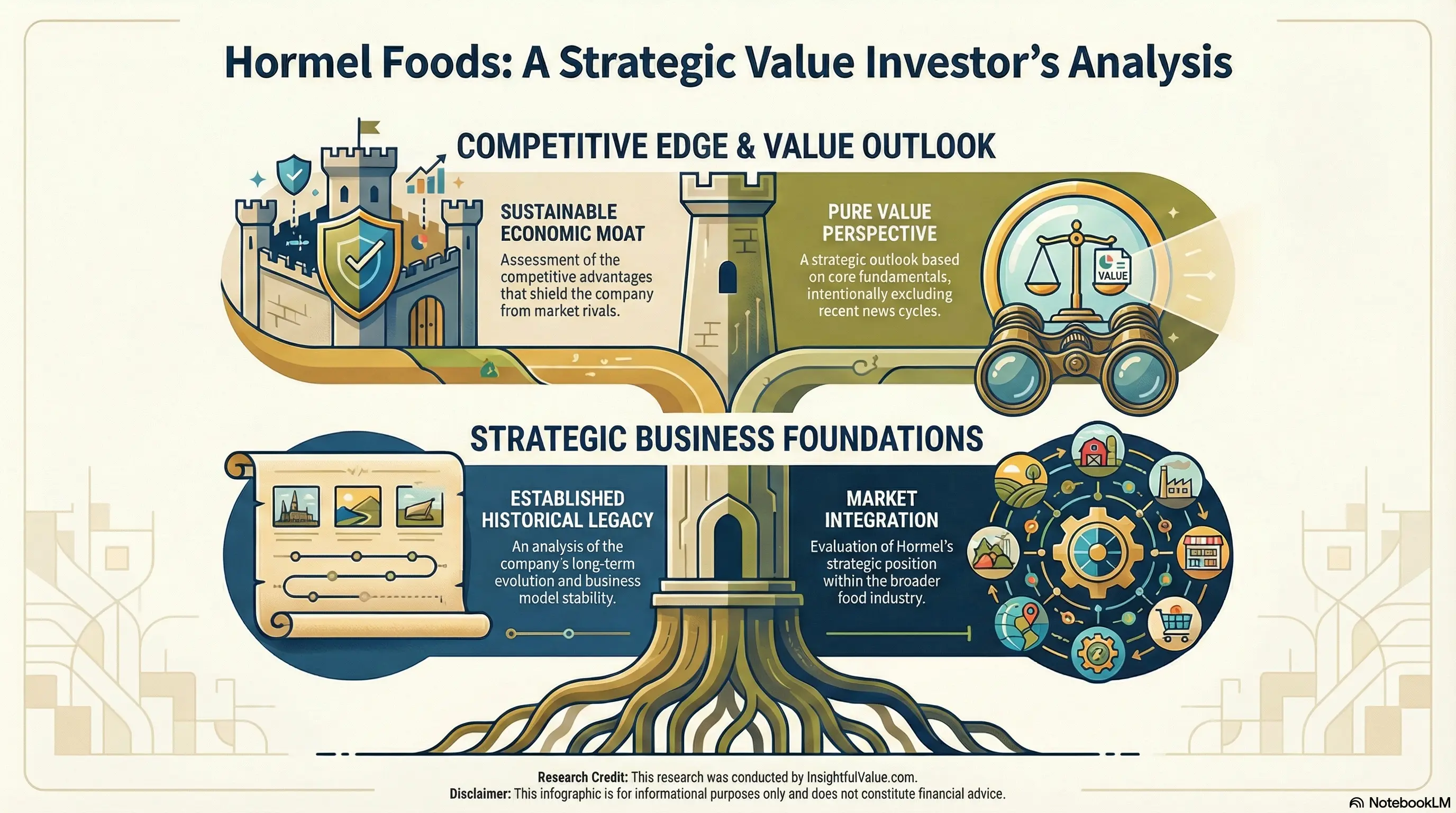
Infographic
Overview
Hormel Foods Corporation is a multinational food company based in Austin, Minnesota. It was founded in 1891 as the George A. Hormel & Company, and went public in 1928.
With its diverse portfolio of brands, Hormel Foods is one of the largest producers of branded food products in the United States. The company has a presence in over 75 countries and has approximately 20,000 employees worldwide.
Hormel Foods' portfolio of brands includes well-known names such as Hormel, Spam, Skippy, Applegate, Columbus, and Justin's. The company's products are sold in both retail and foodservice channels, serving a variety of consumers' needs.
Hormel Foods is committed to producing high-quality, safe, and nutritious products for its consumers. The company has a strong focus on sustainability and strives to minimize its environmental impact through responsible practices in sourcing, packaging, and manufacturing.
In addition to its core business of producing and selling food products, Hormel Foods also has a philanthropic arm, the Hormel Foods Corporation Charitable Trust, which supports hunger relief, education, and other important causes in the communities it serves.
Overall, Hormel Foods is a well-respected and established company with a strong commitment to its consumers, employees, and communities.
How to explain to a 10 year old kid about the company?

📈 Want to read more about Hormel Foods?
Sign up for free
or
log in
📖 Get insights from "The Checklist Value Investor — A Smarter Way to Pick Stocks" now!
SG9ybWVsIE Zvb2RzIGlz IGEgY29tcG FueSB0aGF0 IG1ha2VzIG EgbG90IG9m IGRpZmZlcm VudCB0eXBl cyBvZiBmb2 9kLCBlc3Bl Y2lhbGx5IH RoaW5ncyBs aWtlIG1lYX RzLCBjYW5u ZWQgZm9vZH MsIGFuZCBz bmFja3MuIF lvdSBtaWdo dCByZWNvZ2 5pemUgc29t ZSBvZiB0aG VpciBwcm9k dWN0cyBsaW tlIFNwYW0s IHR1cmtleS wgYW5kIGNo aWxpLiA8Yn I+VGhleSBt YWtlIG1vbm V5IGJ5IHNl bGxpbmcgdG hlc2UgZm9v ZHMgdG8gZ3 JvY2VyeSBz dG9yZXMgYW 5kIG90aGVy IHBsYWNlcy B3aGVyZSBw ZW9wbGUgYn V5IGZvb2Qs IGxpa2Ugcm VzdGF1cmFu dHMuIFdoZW 4gYSBmYW1p bHkgZ29lcy B0byB0aGUg c3RvcmUgYW 5kIGJ1eXMg YSBjYW4gb2 YgSG9ybWVs IGNoaWxpIG 9yIGEgcGFj a2FnZSBvZi B0aGVpciBi YWNvbiwgdG hhdCBtb25l eSBnb2VzIH RvIEhvcm1l bCBGb29kcy 4gVGhlIG1v cmUgcGVvcG xlIGxpa2Ug dGhlaXIgcH JvZHVjdHMg YW5kIGJ1eS B0aGVtLCB0 aGUgbW9yZS Btb25leSB0 aGUgY29tcG FueSBtYWtl cy48YnI+SG 9ybWVsIEZv b2RzIGlzIH N1Y2Nlc3Nm dWwgZm9yIG EgZmV3IHJl YXNvbnMuIE ZpcnN0LCB0 aGV5IGhhdm UgYmVlbiBh cm91bmQgZm 9yIGEgbG9u ZyB0aW1lLC BzbyBtYW55 IHBlb3BsZS Brbm93IGFu ZCB0cnVzdC B0aGVpciBi cmFuZHMuIF NlY29uZCwg dGhleSBrZW VwIGNvbWlu ZyB1cCB3aX RoIG5ldyBh bmQgdGFzdH kgcHJvZHVj dHMgdGhhdC BwZW9wbGUg d2FudCB0by B0cnksIHdo aWNoIGtlZX BzIGN1c3Rv bWVycyBpbn RlcmVzdGVk LiBUaGV5IG Fsc28gcGF5 IGF0dGVudG lvbiB0byB3 aGF0IHBlb3 BsZSB3YW50 IHRvIGVhdC wgbGlrZSBo ZWFsdGhpZX Igb3B0aW9u cywgYW5kIG 1ha2UgY2hh bmdlcyB3aG VuIG5lZWRl ZC48YnI+SW 4gdGhlIGZ1 dHVyZSwgSG 9ybWVsIEZv b2RzIHdpbG wgbGlrZWx5 IHN0YXkgc3 VjY2Vzc2Z1 bCBiZWNhdX NlIHRoZXkg YXJlIGFsd2 F5cyBsb29r aW5nIGZvci B3YXlzIHRv IGltcHJvdm Ugd2hhdCB0 aGV5IG1ha2 UgYW5kIGhv dyB0aGV5IG RvIGJ1c2lu ZXNzLiBUaG V5IHBheSBj bG9zZSBhdH RlbnRpb24g dG8gdHJlbm RzLCBzdWNo IGFzIHBlb3 BsZSB3YW50 aW5nIG1vcm UgaGVhbHRo eSBvciBjb2 52ZW5pZW50 IGZvb2RzLi BBcyBsb25n IGFzIHRoZX kga2VlcCBt ZWV0aW5nIH doYXQgY3Vz dG9tZXJzIH dhbnQsIHRo ZXnigJlyZS BsaWtlbHkg dG8gY29udG ludWUgZG9p bmcgd2VsbC BhbmQgbWFr aW5nIG1vbm V5Ljxicj4=
What is special about the company?
📈 Want to read more about Hormel Foods?
Sign up for free
or
log in
📘 Claim your free eBook: "The Checklist Value Investor — A Smarter Way to Pick Stocks"
MS4gTG9uZy BIaXN0b3J5 OiBIb3JtZW wgRm9vZHMg aGFzIGJlZW 4gaW4gb3Bl cmF0aW9uIG ZvciBvdmVy IDEyMCB5ZW FycywgbWFr aW5nIGl0IG 9uZSBvZiB0 aGUgb2xkZX N0IGZvb2Qg Y29tcGFuaW VzIGluIHRo ZSBVbml0ZW QgU3RhdGVz LiBUaGlzIG xvbmcgaGlz dG9yeSBoYX MgYWxsb3dl ZCB0aGUgY2 9tcGFueSB0 byBlc3RhYm xpc2ggYSBz dHJvbmcgYn JhbmQgaWRl bnRpdHkgYW 5kIGJ1aWxk IGEgbG95YW wgY3VzdG9t ZXIgYmFzZS 48YnI+Mi4g RGl2ZXJzaW ZpZWQgUG9y dGZvbGlvOi BIb3JtZWwg Rm9vZHMgaG FzIGEgZGl2 ZXJzZSBwb3 J0Zm9saW8g b2Ygb3Zlci A1MCBicmFu ZHMsIGluY2 x1ZGluZyBw b3B1bGFyIH Byb2R1Y3Rz IHN1Y2ggYX MgU3BhbSwg U2tpcHB5IH BlYW51dCBi dXR0ZXIsIG FuZCBBcHBs ZWdhdGUgb3 JnYW5pYyBt ZWF0cy4gVG hpcyBhbGxv d3MgdGhlIG NvbXBhbnkg dG8gY2F0ZX IgdG8gdmFy aW91cyBjb2 5zdW1lciBu ZWVkcyBhbm QgcHJlZmVy ZW5jZXMgYW 5kIHJlZHVj ZXMgaXRzIG RlcGVuZGVu Y2Ugb24gYW 55IG9uZSBw cm9kdWN0Lj xicj4zLiBD b21taXRtZW 50IHRvIFF1 YWxpdHk6IE hvcm1lbCBG b29kcyBoYX MgYSBzdHJp Y3QgcXVhbG l0eSBhc3N1 cmFuY2UgcH JvZ3JhbSBp biBwbGFjZS B0byBlbnN1 cmUgdGhhdC BpdHMgcHJv ZHVjdHMgbW VldCB0aGUg aGlnaGVzdC BzdGFuZGFy ZHMgb2Ygc2 FmZXR5IGFu ZCBxdWFsaX R5LiBUaGlz IGNvbW1pdG 1lbnQgdG8g cXVhbGl0eS BoYXMgZWFy bmVkIHRoZS Bjb21wYW55 IG51bWVyb3 VzIGF3YXJk cyBhbmQgYW Njb2xhZGVz IHRocm91Z2 hvdXQgaXRz IGhpc3Rvcn kuPGJyPjQu IElubm92YX Rpb246IFRo ZSBjb21wYW 55IGhhcyBh IHN0cm9uZy Bmb2N1cyBv biBpbm5vdm F0aW9uIGFu ZCBpcyBjb2 5zdGFudGx5 IHNlZWtpbm cgbmV3IGFu ZCBpbXByb3 ZlZCB3YXlz IHRvIG1lZX QgY29uc3Vt ZXIgbmVlZH MuIFRoaXMg aW5jbHVkZX MgZGV2ZWxv cGluZyBuZX cgcHJvZHVj dHMsIGltcH JvdmluZyBl eGlzdGluZy Bwcm9kdWN0 cywgYW5kIG ltcGxlbWVu dGluZyBtb3 JlIHN1c3Rh aW5hYmxlIH ByYWN0aWNl cy48YnI+NS 4gU3Ryb25n IEZpbmFuY2 lhbCBQZXJm b3JtYW5jZT ogSG9ybWVs IEZvb2RzIG hhcyBhIHRy YWNrIHJlY2 9yZCBvZiBz dHJvbmcgZm luYW5jaWFs IHBlcmZvcm 1hbmNlLCB3 aXRoIGNvbn Npc3RlbnQg cmV2ZW51ZS Bncm93dGgg YW5kIHN0YW JsZSBwcm9m aXRhYmlsaX R5LiBUaGlz IGhhcyBhbG xvd2VkIHRo ZSBjb21wYW 55IHRvIGlu dmVzdCBpbi BuZXcgdGVj aG5vbG9naW VzIGFuZCBm YWNpbGl0aW VzIGFuZCBl eHBhbmQgaX RzIGdsb2Jh bCByZWFjaC 48YnI+Ni4g Q29ycG9yYX RlIFNvY2lh bCBSZXNwb2 5zaWJpbGl0 eTogVGhlIG NvbXBhbnkg aXMgY29tbW l0dGVkIHRv IGl0cyBjb3 Jwb3JhdGUg c29jaWFsIH Jlc3BvbnNp YmlsaXR5LC B3aXRoIGlu aXRpYXRpdm VzIGZvY3Vz ZWQgb24gc3 VzdGFpbmFi aWxpdHksIG RpdmVyc2l0 eSBhbmQgaW 5jbHVzaW9u LCBhbmQgZ2 l2aW5nIGJh Y2sgdG8gdG hlIGNvbW11 bml0eS4gSG 9ybWVsIEZv b2RzIGhhcy ByZWNlaXZl ZCBudW1lcm 91cyBhd2Fy ZHMgZm9yIG l0cyBjb3Jw b3JhdGUgc2 9jaWFsIHJl c3BvbnNpYm lsaXR5IGVm Zm9ydHMuPG JyPjcuIEN1 bHR1cmUgb2 YgSW50ZWdy aXR5IGFuZC BFdGhpY3M6 IEhvcm1lbC BGb29kcyBo YXMgYSBzdH JvbmcgY3Vs dHVyZSBvZi BpbnRlZ3Jp dHkgYW5kIG V0aGljcywg d2hpY2ggaX MgcmVmbGVj dGVkIGluIG l0cyBjb3Jl IHZhbHVlcy BhbmQgYnVz aW5lc3MgcH JhY3RpY2Vz LiBUaGUgY2 9tcGFueSBo YXMgYmVlbi ByZWNvZ25p emVkIGZvci BpdHMgZXRo aWNhbCBzdG FuZGFyZHMg YW5kIHRyYW 5zcGFyZW5j eSBpbiBpdH Mgb3BlcmF0 aW9ucy4=
What the company's business model?
📈 Want to read more about Hormel Foods?
Sign up for free
or
log in
📥 Get our free eBook now: "The Checklist Value Investor — A Smarter Way to Pick Stocks"
SG9ybWVsIE Zvb2RzIENv cnBvcmF0aW 9uIGlzIGEg Z2xvYmFsIG Zvb2QgY29t cGFueSB0aG F0IHNwZWNp YWxpemVzIG luIHByb2R1 Y2luZyBhbm QgbWFya2V0 aW5nIHZhcm lvdXMgY29u c3VtZXIgZm 9vZCBwcm9k dWN0cy4gVG hlIGNvbXBh bnkncyBidX NpbmVzcyBt b2RlbCBjYW 4gYmUgZGVz Y3JpYmVkIG FzIGZvbGxv d3M6PGJyPj EuIERpdmVy c2UgUHJvZH VjdCBQb3J0 Zm9saW86IE hvcm1lbCBG b29kcyBvZm ZlcnMgYSBk aXZlcnNlIH BvcnRmb2xp byBvZiBicm FuZGVkIGFu ZCB1bmJyYW 5kZWQgZm9v ZCBwcm9kdW N0cywgaW5j bHVkaW5nIG 1lYXQsIGRh aXJ5LCBhbm Qgb3RoZXIg Z3JvY2VyeS BpdGVtcy4g VGhlc2UgcH JvZHVjdHMg YXJlIHNvbG QgdGhyb3Vn aCB2YXJpb3 VzIGNoYW5u ZWxzIHN1Y2 ggYXMgcmV0 YWlsLCBmb2 9kc2Vydmlj ZSwgYW5kIG 9ubGluZS48 YnI+Mi4gQn JhbmQgTWFu YWdlbWVudD ogVGhlIGNv bXBhbnkgZm 9jdXNlcyBv biBidWlsZG luZyBhbmQg bWFuYWdpbm cgc3Ryb25n IGFuZCByZW NvZ25pemFi bGUgYnJhbm RzIHRoYXQg cmVzb25hdG Ugd2l0aCBj b25zdW1lcn MsIHN1Y2gg YXMgSG9ybW VsLCBTUEFN LCBTa2lwcH ksIEplbm5p ZS1PLCBXaG 9sbHkgR3Vh Y2Ftb2xlLC BhbmQgQXBw bGVnYXRlLj xicj4zLiBJ bm5vdmF0aW 9uIGFuZCBR dWFsaXR5Oi BIb3JtZWwg Rm9vZHMgaX MgY29tbWl0 dGVkIHRvIG NvbnRpbnVv dXMgaW5ub3 ZhdGlvbiBh bmQgcHJvZH VjdCBkZXZl bG9wbWVudC B0byBtZWV0 IGNoYW5naW 5nIGNvbnN1 bWVyIHByZW ZlcmVuY2Vz IGFuZCBkZW 1hbmRzLiBU aGUgY29tcG FueSBhbHNv IG1haW50YW lucyBhIHN0 cm9uZyBmb2 N1cyBvbiBx dWFsaXR5IG Fzc3VyYW5j ZSBhbmQgZm 9vZCBzYWZl dHkgc3Rhbm RhcmRzLjxi cj40LiBFZm ZpY2llbnQg U3VwcGx5IE NoYWluOiBI b3JtZWwgRm 9vZHMgaGFz IGEgdmVydG ljYWxseSBp bnRlZ3JhdG VkIHN1cHBs eSBjaGFpbi wgd2hpY2gg YWxsb3dzIG ZvciBncmVh dGVyIGNvbn Ryb2wgb3Zl ciB0aGUgcX VhbGl0eSBh bmQgYXZhaW xhYmlsaXR5 IG9mIGl0cy Bwcm9kdWN0 cy4gVGhlIG NvbXBhbnkg YWxzbyBoYX Mgc3RyYXRl Z2ljIHBhcn RuZXJzaGlw cyB3aXRoIH N1cHBsaWVy cywgZGlzdH JpYnV0b3Jz LCBhbmQgcm V0YWlsZXJz IHRvIGVuc3 VyZSBlZmZp Y2llbnQgZG lzdHJpYnV0 aW9uIGFuZC BkZWxpdmVy eSBvZiBpdH MgcHJvZHVj dHMuPGJyPj UuIE1hcmtl dGluZyBhbm QgUHJvbW90 aW9uOiBUaG UgY29tcGFu eSBpbnZlc3 RzIGluIG1h cmtldGluZy BhbmQgYWR2 ZXJ0aXNpbm cgdG8gcmFp c2UgYXdhcm VuZXNzIGFu ZCBwcm9tb3 RlIGl0cyBi cmFuZHMgYW 5kIHByb2R1 Y3RzLiBUaG lzIGluY2x1 ZGVzIHRyYW RpdGlvbmFs IGFkdmVydG lzaW5nLCBz b2NpYWwgbW VkaWEsIGFu ZCBpbmZsdW VuY2VyIG1h cmtldGluZy 48YnI+Ni4g Q29zdCBNYW 5hZ2VtZW50 OiBIb3JtZW wgRm9vZHMg Zm9sbG93cy BhIGNvc3Qg bWFuYWdlbW VudCBzdHJh dGVneSB0by BtYWludGFp biBjb21wZX RpdGl2ZSBw cmljZXMgYW 5kIG1hcmdp bnMgd2l0aG 91dCBjb21w cm9taXNpbm cgb24gcHJv ZHVjdCBxdW FsaXR5Ljxi cj43LiBDdX N0b21lciBh bmQgQ29uc3 VtZXIgRm9j dXM6IFRoZS Bjb21wYW55 IHByaW9yaX RpemVzIGJ1 aWxkaW5nIG FuZCBtYWlu dGFpbmluZy BzdHJvbmcg cmVsYXRpb2 5zaGlwcyB3 aXRoIGl0cy BjdXN0b21l cnMgYW5kIG NvbnN1bWVy cyBieSB1bm RlcnN0YW5k aW5nIHRoZW lyIG5lZWRz LCBwcmVmZX JlbmNlcywg YW5kIGZlZW RiYWNrLjxi cj44LiBDb3 Jwb3JhdGUg UmVzcG9uc2 liaWxpdHk6 IEhvcm1lbC BGb29kcyBp cyBjb21taX R0ZWQgdG8g Y29ycG9yYX RlIHJlc3Bv bnNpYmlsaX R5IGJ5IGZv Y3VzaW5nIG 9uIHN1c3Rh aW5hYmlsaX R5LCBjb21t dW5pdHkgZW 5nYWdlbWVu dCwgYW5kIG V0aGljYWwg YnVzaW5lc3 MgcHJhY3Rp Y2VzLjxicj 5JbiBzdW1t YXJ5LCBIb3 JtZWwgRm9v ZHMnIGJ1c2 luZXNzIG1v ZGVsIHJldm 9sdmVzIGFy b3VuZCBvZm ZlcmluZyBh IGRpdmVyc2 UgcmFuZ2Ug b2YgaGlnaC 1xdWFsaXR5 IGZvb2QgcH JvZHVjdHMs IGJ1aWxkaW 5nIHN0cm9u ZyBicmFuZH MsIGNvbnRp bnVvdXNseS Bpbm5vdmF0 aW5nIGFuZC BpbXByb3Zp bmcsIGFuZC BtYWludGFp bmluZyBlZm ZpY2llbnQg b3BlcmF0aW 9ucyB0byBt ZWV0IHRoZS BuZWVkcyBh bmQgZGVtYW 5kcyBvZiBp dHMgY3VzdG 9tZXJzIGFu ZCBjb25zdW 1lcnMu
Is AI a threat?
AI has the potential to impact companies like Hormel Foods in several ways, but the extent of this impact depends on various factors.
1. Substitution: AI technologies can facilitate the development of alternative meat products, such as plant-based proteins or lab-grown meats. These innovations could pose a competitive threat to traditional meat products offered by Hormel. If consumer preferences shift significantly towards these alternatives due to health, environmental, or ethical considerations, Hormel may face pressure to adapt its product lines accordingly.
2. Disintermediation: AI can enhance direct-to-consumer sales channels, allowing brands to bypass traditional distribution methods. If consumers increasingly prefer to purchase products directly from producers or through platforms utilizing AI-driven recommendations, Hormel could face challenges in maintaining its traditional retail relationships. This shift could also affect the way Hormel interacts with its supply chain and distributors.
3. Margin Pressure: AI can optimize supply chain management, reduce production costs, and improve operational efficiencies. While this could benefit Hormel, greater competition from other companies utilizing AI to lower their costs could lead to margin pressures. If competitors can deliver similar products at lower prices due to AI efficiencies, Hormel might be forced to respond by reducing prices or increasing its own investment in AI.
Overall, while AI presents both challenges and opportunities for Hormel Foods, the company’s ability to adapt to these changes will be crucial in mitigating potential threats and leveraging the advantages that AI can provide in an increasingly competitive marketplace.
Sensitivity to interest rates
Hormel Foods, like many companies, is sensitive to changes in interest rates, but the extent of this sensitivity can vary based on several factors:
1. Earnings Sensitivity: Higher interest rates can increase borrowing costs for Hormel Foods if it relies on debt to finance operations or expansions. Increased costs can pressure profit margins, especially if the company cannot pass these costs onto consumers. Additionally, changes in consumer behavior due to higher borrowing costs can affect sales, potentially impacting earnings.
2. Cash Flow Sensitivity: Interest rates influence cash flow primarily through the cost of servicing debt. If interest rates rise, the cash outflow related to interest payments could increase, impacting free cash flow. Furthermore, higher rates might dampen consumer spending, leading to lower sales and potentially reduced cash flow from operations.
3. Valuation Sensitivity: Valuation models, particularly discounted cash flow (DCF) analyses, are highly sensitive to changes in interest rates. An increase in rates raises the discount rate applied to future cash flows, potentially lowering the present value of those cash flows and thus the company’s valuation. Conversely, lower interest rates can enhance valuations by increasing the present value of future earnings.
In summary, while Hormel Foods is impacted by interest rate changes, the actual sensitivity may vary based on its capital structure, the overall economic environment, and its pricing power in the market. It’s also important to consider the broader macroeconomic context, as these factors can influence consumer behavior and ultimately the company’s financials.
Resilience to the future changes
📈 Want to read more about Hormel Foods?
Sign up for free
or
log in
🆓 Discover "The Checklist Value Investor — A Smarter Way to Pick Stocks" — free eBook!
T25lIHJlYW xpc3RpYyBz Y2VuYXJpby B0aGF0IGNv dWxkIHBlcm 1hbmVudGx5 IGltcGFpci BIb3JtZWwg Rm9vZHPigJ kgZWNvbm9t aWNzIG92ZX IgdGhlIG5l eHQgM+KAkz UgeWVhcnMg aXMgYSBzaW duaWZpY2Fu dCBhbmQgcH JvbG9uZ2Vk IGRpc3J1cH Rpb24gaW4g dGhlIHN1cH BseSBjaGFp biBmb3Iga2 V5IHJhdyBt YXRlcmlhbH MsIHN1Y2gg YXMgbWVhdC AocG9yaywg YmVlZiwgYW 5kIHBvdWx0 cnkpLCBjYX VzZWQgYnkg YSBjb21iaW 5hdGlvbiBv ZiBmYWN0b3 JzIGxpa2Ug Y2xpbWF0ZS BjaGFuZ2Us IGRpc2Vhc2 Ugb3V0YnJl YWtzIChlLm cuLCBBZnJp Y2FuIHN3aW 5lIGZldmVy LCBhdmlhbi BpbmZsdWVu emEpLCBhbm QgZ2VvcG9s aXRpY2FsIH RlbnNpb25z Ljxicj5Jbi B0aGlzIHNj ZW5hcmlvLC BpZiBnbG9i YWwgbGl2ZX N0b2NrIHBv cHVsYXRpb2 5zIHdlcmUg dG8gZGVjbG luZSBzaWdu aWZpY2FudG x5IGR1ZSB0 byBkaXNlYX NlIG91dGJy ZWFrcyBvci BleHRyZW1l IHdlYXRoZX IgZXZlbnRz LCBIb3JtZW wgd291bGQg ZmFjZSBjaG FsbGVuZ2Vz IGluIHNvdX JjaW5nIHRo ZSBuZWNlc3 NhcnkgcmF3 IG1hdGVyaW FscyBmb3Ig aXRzIHByb2 R1Y3RzLiBU aGlzIHNjYX JjaXR5IGNv dWxkIGxlYW QgdG8gYSBz cGlrZSBpbi BpbnB1dCBj b3N0cywgc2 lnbmlmaWNh bnRseSBlcm 9kaW5nIHRo ZSBjb21wYW 554oCZcyBw cm9maXQgbW FyZ2lucy4g QXMgcmF3IG 1hdGVyaWFs IHByaWNlcy BpbmNyZWFz ZSwgSG9ybW VsIG1pZ2h0 IGNob29zZS B0byBwYXNz IHNvbWUgb2 YgdGhlc2Ug Y29zdHMgb2 50byBjb25z dW1lcnMsIG J1dCBjb21w ZXRpdGlvbi BpbiB0aGUg Zm9vZCBpbm R1c3RyeSBt YXkgbGltaX QgaXRzIGFi aWxpdHkgdG 8gZnVsbHkg ZG8gc28gd2 l0aG91dCBz YWNyaWZpY2 luZyBtYXJr ZXQgc2hhcm UuPGJyPkFk ZGl0aW9uYW xseSwgaWYg dGhlIGRpc3 J1cHRpb25z IGFyZSBzZX ZlcmUgYW5k IHByb2xvbm dlZCwgdGhl IGNvbXBhbn nigJlzIGFi aWxpdHkgdG 8gbWFpbnRh aW4gcHJvZH VjdGlvbiBs ZXZlbHMgYW 5kIG1lZXQg Y29uc3VtZX IgZGVtYW5k IGNvdWxkIG JlIGNvbXBy b21pc2VkLi BUaGlzIHNj ZW5hcmlvIG 1pZ2h0IGFs c28gcmVzdW x0IGluIGlu Y3JlYXNlZC B0cmFuc3Bv cnRhdGlvbi BhbmQgbG9n aXN0aWMgY2 9zdHMsIGZ1 cnRoZXIgc3 RyYWluaW5n IHByb2ZpdG FiaWxpdHku PGJyPkFzIG EgcmVzdWx0 IG9mIGRlY3 JlYXNlZCBt YXJnaW5zLC BIb3JtZWzi gJlzIGNhc2 ggZmxvdyBj b3VsZCBiZW NvbWUgY29u c3RyYWluZW QuIFRoZSBj b21iaW5hdG lvbiBvZiBy aXNpbmcgY2 9zdHMgYW5k IHN0YWduYW 50IHJldmVu dWUgZ3Jvd3 RoIG1pZ2h0 IGxlYWQgdG 8gYSBuZWdh dGl2ZSBjYX NoIGZsb3cg c2l0dWF0aW 9uLCBtYWtp bmcgaXQgZG lmZmljdWx0 IGZvciB0aG UgY29tcGFu eSB0byBpbn Zlc3QgaW4g Y2FwaXRhbC BleHBlbmRp dHVyZXMgb3 IgcmV0dXJu IGNhcGl0YW wgdG8gc2hh cmVob2xkZX JzLiBJZiB0 aGUgc2l0dW F0aW9uIHBl cnNpc3RzLC BIb3JtZWwg bWF5IGFsc2 8gZmluZCBp dCBuZWNlc3 NhcnkgdG8g dXRpbGl6ZS BkZWJ0IHRv IG1hbmFnZS BvcGVyYXRp b25zLCB3aG ljaCB3b3Vs ZCBhZHZlcn NlbHkgYWZm ZWN0IGl0cy BiYWxhbmNl IHNoZWV0Lj xicj5BIGRl dGVyaW9yYX RpbmcgYmFs YW5jZSBzaG VldCBjb3Vs ZCBpbmNsdW RlIGhpZ2hl ciBkZWJ0IG xldmVscyBk dWUgdG8gdG hlIG5lZWQg Zm9yIGJvcn Jvd2luZyB0 byBjb250aW 51ZSBvcGVy YXRpb25zIG 9yIHRvIGZp bmFuY2UgaG lnaGVyIGlu cHV0IGNvc3 RzLiBUaGUg ZXF1aXR5IH Bvc2l0aW9u IG1heSB3ZW FrZW4gaWYg Y29uc2lzdG VudCBsb3Nz ZXMgbGVhZC B0byBsb3dl ciByZXRhaW 5lZCBlYXJu aW5ncy4gVG hlIG92ZXJh bGwgZmluYW 5jaWFsIGhl YWx0aCBvZi B0aGUgY29t cGFueSBjb3 VsZCBiZSBy ZWZsZWN0ZW QgaW4gd29y c2VuaW5nIG NyZWRpdCBy YXRpbmdzLC BtYWtpbmcg ZnV0dXJlIG JvcnJvd2lu ZyBtb3JlIG V4cGVuc2l2 ZSBhbmQgZG lmZmljdWx0 Ljxicj5Jbi BzdW1tYXJ5 LCBzaG91bG QgdGhpcyBz Y2VuYXJpby BwbGF5IG91 dCwgSG9ybW VsIEZvb2Rz IGNvdWxkIG ZhY2UgcGVy bWFuZW50bH kgZGltaW5p c2hlZCBlY2 9ub21pY3Mg Y2hhcmFjdG VyaXplZCBi eSByZWR1Y2 VkIHByb2Zp dCBtYXJnaW 5zLCBzdHJh aW5lZCBjYX NoIGZsb3cs IGFuZCBhIH dlYWtlciBi YWxhbmNlIH NoZWV0LCBj dWxtaW5hdG luZyBpbiBs b25nLXRlcm 0gY2hhbGxl bmdlcyBmb3 IgdGhlIGNv bXBhbnnigJ lzIG1hcmtl dCBwb3NpdG lvbiBhbmQg Z3Jvd3RoIH Byb3NwZWN0 cy48YnI+
Interesting facts about the company
📈 Want to read more about Hormel Foods?
Sign up for free
or
log in
✅ Download "The Checklist Value Investor — A Smarter Way to Pick Stocks" — totally free!
CiAgICAgIC AgICAgIDxk aXYgc3R5bG U9J3dpZHRo OiAxMDAlOy BkaXNwbGF5 OiBmbGV4Oy BqdXN0aWZ5 LWNvbnRlbn Q6IGNlbnRl cjsnPgogIC AgICAgICAg ICAgICAgPG RpdiBzdHls ZT0nCiAgIC AgICAgICAg ICAgICAgIC AgZGlzcGxh eTogZmxleD sKICAgICAg ICAgICAgIC AgICAgICBh bGlnbi1pdG VtczogY2Vu dGVyOwogIC AgICAgICAg ICAgICAgIC AgIGJhY2tn cm91bmQtY2 9sb3I6ICNm MGY0Zjg7Ci AgICAgICAg ICAgICAgIC AgICAgYm9y ZGVyOiAxcH ggc29saWQg I2QxZTNmMD sKICAgICAg ICAgICAgIC AgICAgICBi b3JkZXItcm FkaXVzOiAx MHB4OwogIC AgICAgICAg ICAgICAgIC AgIHBhZGRp bmc6IDEwcH g7CiAgICAg ICAgICAgIC AgICAgICAg bWFyZ2luOi AyMHB4IDA7 CiAgICAgIC AgICAgICAg ICAgICAgZm 9udC1mYW1p bHk6ICJTZW dvZSBVSSIs IFJvYm90by wgc2Fucy1z ZXJpZjsKIC AgICAgICAg ICAgICAgIC AgICBib3gt c2hhZG93Oi AwIDJweCA2 cHggcmdiYS gwLCAwLCAw LCAwLjA1KT sKICAgICAg ICAgICAgIC AgICAgICBt YXgtd2lkdG g6IDkwMHB4 OwogICAgIC AgICAgICAg ICAgICAgIH dpZHRoOiAx MDAlOyc+Cg ogICAgICAg ICAgICAgIC AgICAgIDxp bWcgc3JjPS Jhc3NldHMv bG9nb3MvNH R2MVRGeWw4 Q3Z6ald6QU dMbEgud2Vi cCIgYWx0PS JIb3JtZWwg Rm9vZHMiIH RpdGxlPSJI b3JtZWwgRm 9vZHMiICBj bGFzcz0iaW 1nLWZsdWlk IiBoZWlnaH Q9NTAgd2lk dGg9NTAgbG 9hZGluZz0n bGF6eScgc3 R5bGU9J2Jv cmRlci1yYW RpdXM6IDZw eDsnPgoKIC AgICAgICAg ICAgICAgIC AgICA8ZGl2 IHN0eWxlPS dmbGV4OiAx OyB0ZXh0LW FsaWduOiBj ZW50ZXI7IG 1hcmdpbi1s ZWZ0OiA1cH g7Jz4KICAg ICAgICAgIC AgICAgICAg ICAgICAgPH Agc3R5bGU9 J2ZvbnQtc2 l6ZTogMjZw eDsgY29sb3 I6ICMzMzM7 IG1hcmdpbi 1ib3R0b206 IDE1cHg7Jz 4KICAgICAg ICAgICAgIC AgICAgICAg ICAgICAgIP Cfk4ggV2Fu dCB0byByZW FkIG1vcmUg YWJvdXQgSG 9ybWVsIEZv b2RzPwogIC AgICAgICAg ICAgICAgIC AgICAgICA8 L3A+CgogIC AgICAgICAg ICAgICAgIC AgICAgICA8 YSBocmVmPS dpbmRleC5w aHA/cGFnZT 1zaWdudXAn IHN0eWxlPS cKICAgICAg ICAgICAgIC AgICAgICAg ICAgICAgIG JhY2tncm91 bmQtY29sb3 I6ICMwMDdC RkY7CiAgIC AgICAgICAg ICAgICAgIC AgICAgICAg ICBjb2xvcj ogI2ZmZjsK ICAgICAgIC AgICAgICAg ICAgICAgIC AgICAgIHBh ZGRpbmc6ID EwcHggMjBw eDsKICAgIC AgICAgICAg ICAgICAgIC AgICAgICAg IGJvcmRlci 1yYWRpdXM6 IDVweDsKIC AgICAgICAg ICAgICAgIC AgICAgICAg ICAgIHRleH QtZGVjb3Jh dGlvbjogbm 9uZTsKICAg ICAgICAgIC AgICAgICAg ICAgICAgIC AgIGZvbnQt d2VpZ2h0Oi Bib2xkOwog ICAgICAgIC AgICAgICAg ICAgICAgIC AgICAgbWFy Z2luLXJpZ2 h0OiAxMHB4 OwogICAgIC AgICAgICAg ICAgICAgIC AgICAgICAg dHJhbnNpdG lvbjogYmFj a2dyb3VuZC 1jb2xvciAw LjNzIGVhc2 U7JwogICAg ICAgICAgIC AgICAgICAg ICAgICAgIC Agb25tb3Vz ZW92ZXI9J3 RoaXMuc3R5 bGUuYmFja2 dyb3VuZENv bG9yPSIjMD A1NmIzIicK ICAgICAgIC AgICAgICAg ICAgICAgIC AgICAgIG9u bW91c2VvdX Q9J3RoaXMu c3R5bGUuYm Fja2dyb3Vu ZENvbG9yPS IjMDA3QkZG Iic+CiAgIC AgICAgICAg ICAgICAgIC AgICAgICAg ICBTaWduIH VwIGZvciBm cmVlCiAgIC AgICAgICAg ICAgICAgIC AgICAgIDwv YT4KCiAgIC AgICAgICAg ICAgICAgIC AgICAgIDxz cGFuIHN0eW xlPSdtYXJn aW46IDAgOH B4OyBjb2xv cjogIzU1NT snPm9yPC9z cGFuPgoKIC AgICAgICAg ICAgICAgIC AgICAgICAg PGEgaHJlZj 0naW5kZXgu cGhwP3BhZ2 U9bG9naW4n IHN0eWxlPS cKICAgICAg ICAgICAgIC AgICAgICAg ICAgICAgIG NvbG9yOiAj MDA3QkZGOw ogICAgICAg ICAgICAgIC AgICAgICAg ICAgICAgdG V4dC1kZWNv cmF0aW9uOi B1bmRlcmxp bmU7CiAgIC AgICAgICAg ICAgICAgIC AgICAgICAg ICBmb250LX dlaWdodDog NTAwOyc+Ci AgICAgICAg ICAgICAgIC AgICAgICAg ICAgICBsb2 cgaW4KICAg ICAgICAgIC AgICAgICAg ICAgICAgPC 9hPgoKCiAg ICAgICAgIC AgICAgICAg ICAgICAgID xwIHN0eWxl PSdtYXJnaW 4tdG9wOiAx NXB4OyBmb2 50LXNpemU6 IDEzcHg7IG ZvbnQtd2Vp Z2h0OiBib2 xkOyBjb2xv cjogI2QzMm YyZjsnPgog ICAgICAgIC AgICAgICAg ICAgICAgIC AgICAg4pqh IEluc3Rhbn RseSBhY2Nl c3MgPGk+Il RoZSBDaGVj a2xpc3QgVm FsdWUgSW52 ZXN0b3Ig4o CUIEEgU21h cnRlciBXYX kgdG8gUGlj ayBTdG9ja3 MiPC9pPiDi gJQgZnJlZS EKICAgICAg ICAgICAgIC AgICAgICAg ICAgPC9wPg oKICAgICAg ICAgICAgIC AgICAgICAg ICAgPCEtLQ ogICAgICAg ICAgICAgIC AgICAgICAg ICA8ZGl2IH N0eWxlPSdt YXJnaW4tdG 9wOiAxMnB4 OyBmb250LX NpemU6IDEz cHg7IGNvbG 9yOiAjNDQ0 Oyc+CiAgIC AgICAgICAg ICAgICAgIC AgICAgICAg ICBTaWduIH VwIG5vdyBh bmQgZ2V0IG 91ciBmcmVl IGVCb29rIA ogICAgICAg ICAgICAgIC AgICAgICAg ICAgICAgPG I+VGhlIENo ZWNrbGlzdC BWYWx1ZSBJ bnZlc3Rvci DigJQgQSBT bWFydGVyIF dheSB0byBQ aWNrIFN0b2 NrczwvYj4K ICAgICAgIC AgICAgICAg ICAgICAgIC AgPC9kaXY+ CiAgICAgIC AgICAgICAg ICAgICAgIC AgIC0tPgog ICAgICAgIC AgICAgICAg ICAgICAgIC A8IS0tCiAg ICAgICAgIC AgICAgICAg ICAgICAgID xkaXYgc3R5 bGU9J21hcm dpbi10b3A6 IDE2cHg7IG ZvbnQtc2l6 ZTogMTRweD sgY29sb3I6 ICM0NDQ7IG ZvbnQtZmFt aWx5OiAtYX BwbGUtc3lz dGVtLCBCbG lua01hY1N5 c3RlbUZvbn QsIFNlZ29l IFVJLCBSb2 JvdG8sIEhl bHZldGljYS BOZXVlLCBz YW5zLXNlcm lmOyBsaW5l LWhlaWdodD ogMS42Oyc+ CiAgICAgIC AgICAgICAg ICAgICAgIC AgICAgICBI YXZlIHlvdS BoZWFyZCBh Ym91dCBvdX Igc2hvcnQg PHN0cm9uZy BzdHlsZT0n Zm9udC13ZW lnaHQ6IDYw MDsnPkRhaW x5IFZpZGVv IE5ld3NsZX R0ZXI8L3N0 cm9uZz4/Ci AgICAgICAg ICAgICAgIC AgICAgICAg ICAgICA8YS BocmVmPSdo dHRwczovL3 d3dy5pbnNp Z2h0ZnVsdm FsdWUuY29t L25ld3NsZX R0ZXIucGhw JyB0YXJnZX Q9J19ibGFu aycgc3R5bG U9J2NvbG9y OiAjMDA3Qk ZGOyB0ZXh0 LWRlY29yYX Rpb246IG5v bmU7IGZvbn Qtd2VpZ2h0 OiA1MDA7IG 1hcmdpbi1s ZWZ0OiA2cH g7Jz4KICAg ICAgICAgIC AgICAgICAg ICAgICAgIC AgICAgICBG aW5kIG91dC Btb3JlCiAg ICAgICAgIC AgICAgICAg ICAgICAgIC AgICA8L2E+ CiAgICAgIC AgICAgICAg ICAgICAgIC AgIDwvZGl2 PgogICAgIC AgICAgICAg ICAgICAgIC AgICAtLT4K ICAgICAgIC AgICAgICAg ICAgICA8L2 Rpdj4KICAg ICAgICAgIC AgICAgIDwv ZGl2PgogIC AgICAgICAg ICA8L2Rpdj 4KICAgICAg ICAgICAgCi AgICAgICAg CiAgICAgIC AgPHNwYW4g Y2xhc3M9J2 JsdXJyZWQt dGV4dCc+Ci AgICAgICAg ICAgIE1TNG dTRzl5Ylcg VnNJRVp2Yj JSeiBJRU52 Y25CdmNtIE YwYVc5dUlI ZGggY3lCbW IzVnVaRyBW a0lHbHVJRE U0IE9URWdZ bmtnUjIgVn ZjbWRsSUVF dSBJRWh2Y2 0xbGJDIEJw YmlCQmRYTj AgYVc0c0lF MXBibSA1bG MyOTBZUzQ4 IFluSStNaT RnVkcgaGxJ R052YlhCaC BibmtnYjNK cFoyIGx1WV d4c2VTQnog ZEdGeWRHVm tJRyA5MWRD QmhjeUJoIE lHMWxZWFFn Y0cgRmphMm x1WnlCaCBi bVFnY0hKdl kyIFZ6YzJs dVp5QnYgY0 dWeVlYUnBi MiA0c0lHSj FkQ0JvIFlY TWdjMmx1WT IgVWdaWGh3 WVc1ayBaV1 FnYVc1MGJ5 IEIyWVhKcG IzVnogSUda dmIyUWdZMi BGMFpXZHZj bWxsIGN5ND hZbkkrTXkg NGdTRzl5Yl dWcyBJRVp2 YjJSeklHIG x6SUhSb1pT QnQgWVd0bG NpQnZaaSBC d2IzQjFiR0 Z5IElHSnlZ VzVrY3kgQn pkV05vSUdG eiBJRk53WV cwc0lFIFJw Ym5SNUlFMX YgYjNKbExD QlRhMiBsd2 NIa3NJR0Z1 IFpDQkJjSE JzWlcgZGhk R1V1UEdKeS BQalF1SUVs dUlEIEU1TW pZc0lFaHYg Y20xbGJDQn BibiBSeWIy UjFZMlZrIE lIUm9aU0Iz YjMgSnNaQz FtWVcxdiBk WE1nWTJGdW JtIFZrSUcx bFlYUWcgY0 hKdlpIVmpk QyB3Z1UzQm hiUzRnIFZH aGxJRzVoYl cgVWdVM0Jo YlNCcCBjeU JoSUdOdmJX IEpwYm1GMG FXOXUgSUc5 bUlITndhVy BObElHRnVa Q0JvIFlXMH VQR0p5UGog VXVJRVIxY2 1sdSBaeUJY YjNKc1pDIE JYWVhJZ1NV a3MgSUZOd1 lXMGdZbSBW allXMWxJR0 VnIGNHOXdk V3hoY2kgQm 1iMjlrSUhO MCBZWEJzWl NCbWIzIEln UVcxbGNtbG ogWVc0Z2My OXNaRyBsbG NuTWdaSFZs IElIUnZJR2 wwY3kgQnNi MjVuSUhOby BaV3htSUd4 cFptIFV1UE dKeVBqWXUg SUVodmNtMW xiQyBCR2Iy OWtjeUJwIG N5QmhJRVp2 Y24gUjFibV VnTlRBdyBJ R052YlhCaG JuIGtzSUhk cGRHZ2cgWV c1dWRXRnNJ SCBKbGRtVn VkV1Z6IElH VjRZMlZsWk cgbHVaeUFr T1NCaSBhV3 hzYVc5dUxq IHhpY2o0M0 xpQlUgYUdV Z1kyOXRjRy BGdWVTQm9Z WE1nIFlTQn pkSEp2Ym0g Y2dZMjl0Yl dsMCBiV1Z1 ZENCMGJ5IE J6ZFhOMFlX bHUgWVdKcG JHbDBlUyBC aGJtUWdhR0 Z6IElHbHRj R3hsYlcgVn VkR1ZrSUha aCBjbWx2ZF hNZ2FXIDVw ZEdsaGRHbD IgWlhNZ2RH OGdjbSBWa2 RXTmxJSGRo IGMzUmxMQ0 JqYjIgNXpa WEoyWlNCMy BZWFJsY2l3 Z1lXIDVrSU hKbFpIVmog WlNCallYSm liMiA0Z1pX MXBjM05wIG IyNXpManhp Y2ogNDRMaU JKYmlBeSBN REV3TENCSW IzIEp0Wld3 Z1JtOXYgWk hNZ2QyRnpJ RyA1aGJXVm tJRzl1IFpT QnZaaUIwYU cgVWdNVEF3 SUUxdiBjM1 FnVkhKMWMz IFIzYjNKMG FIa2cgUTI5 dGNHRnVhVy BWeklHSjVJ RVp2IGNtSm xjeUJOWVcg ZGhlbWx1Wl M0OCBZbkkr T1M0Z1ZHIG hsSUdOdmJY QmggYm5rZ2 FHRnpJRyBF Z2MzUmhkR1 V0IGIyWXRk R2hsTFcgRn lkQ0JwYm01 diBkbUYwYV c5dUlHIE5s Ym5SbGNpd2 cgZEdobElF aHZjbSAxbG JDQkdiMjlr IGN5QlNaWE 5sWVggSmph Q0JoYm1RZy BSR1YyWld4 dmNHIDFsYm 5RZ1EyVnUg ZEdWeUxDQj NhRyBWeVpT QnVaWGNnIG NISnZaSFZq ZEggTWdZWE psSUdSbCBk bVZzYjNCbF pDIEJoYm1R Z2RHVnogZE dWa0xqeGlj aiA0eE1DNG dTRzl5IGJX VnNJRVp2Yj IgUnpJR2ho Y3lCaCBJSE 4wY205dVp5 IEJ3Y21Wel pXNWogWlNC cGJpQjBhRy BVZ1kyOXRi WFZ1IGFYUj VJR0Z1WkMg Qm9ZWE1nWk c5dSBZWFJs WkNCdmRtIF Z5SUNRMU1D QnQgYVd4c2 FXOXVJSCBS dklIWmhjbW x2IGRYTWdZ MmhoY20gbD BZV0pzWlNC diBjbWRoYm 1sNllYIFJw YjI1eklHRn UgWkNCallY VnpaWCBNZ2 MybHVZMlVn IE1qQXhNeT Q9CiAgICAg ICAgPC9zcG FuPgogICAg ICAgIAogIC AgICAgIA==
See Company Q&A
📊 Get full analytics about Hormel Foods
Sign up for free
or
log in
📖 Get insights from "The Checklist Value Investor — A Smarter Way to Pick Stocks" now!