Company at a Glance
Price
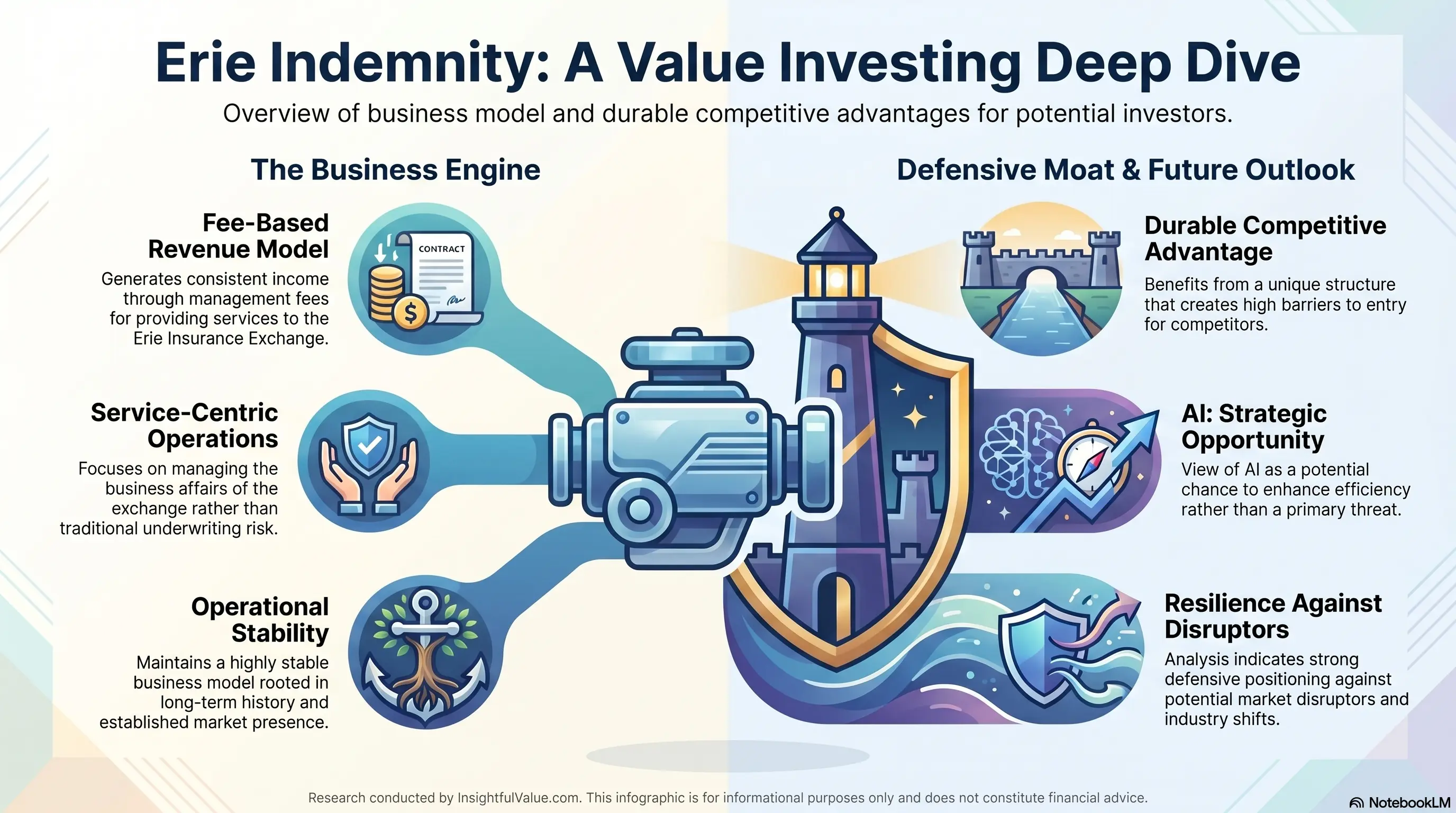
Infographic
Overview
Erie Indemnity Company is an American insurance company founded in 1925 in Erie, Pennsylvania. It is the parent company of the Erie Insurance Group, a multi-line insurance provider. The company offers various types of insurance, including auto, home, business, and life insurance. It also offers annuities and investment products.
Erie Indemnity operates through a network of independent insurance agents, who sell the company's products to individuals and businesses. The company has a strong presence in the northeastern and midwestern regions of the United States, but its products are available in 12 states and the District of Columbia.
Erie Indemnity has a customer-focused approach, aiming to provide personalized service and competitive pricing to its policyholders. It also prides itself on its financial stability and strong performance, consistently receiving high ratings from independent agencies such as A.M. Best and Standard & Poor's.
The company is committed to giving back to the communities it serves, with a focus on education and environmental sustainability. Erie Indemnity has a foundation that provides grants to educational institutions and charities, and it also has various initiatives in place to reduce its environmental impact.
Erie Indemnity is a publicly traded company on the Nasdaq stock exchange under the ticker symbol ERIE. It has been recognized as a top workplace by various publications and continues to grow and expand its reach in the insurance industry.
How to explain to a 10 year old kid about the company?

📈 Want to read more about Erie Indemnity?
Sign up for free
or
log in
🎁 Free download! "The Checklist Value Investor — A Smarter Way to Pick Stocks"
RXJpZSBJbm RlbW5pdHkg Q29tcGFueS BpcyBhIGJ1 c2luZXNzIH RoYXQgaGVs cHMgcGVvcG xlIGZlZWwg c2FmZSBhbm Qgc2VjdXJl IGJ5IG9mZm VyaW5nIGlu c3VyYW5jZS 4gSW5zdXJh bmNlIGlzIG xpa2UgaGF2 aW5nIGEgc2 FmZXR5IG5l dCB0aGF0IH Byb3RlY3Rz IHlvdSBpZi Bzb21ldGhp bmcgZ29lcy B3cm9uZywg bGlrZSBpZi B5b3VyIGNh ciBnZXRzIG RhbWFnZWQg b3IgaWYgeW 91IGhhdmUg YSBob3VzZS Bwcm9ibGVt LiA8YnI+SG VyZeKAmXMg aG93IGl0IH dvcmtzOiBX aGVuIHlvdS BidXkgYW4g aW5zdXJhbm NlIHBvbGlj eSBmcm9tIE VyaWUsIHlv dSBwYXkgYS BjZXJ0YWlu IGFtb3VudC BvZiBtb25l eSwgY2FsbG VkIGEgcHJl bWl1bSwgcm VndWxhcmx5 LCBsaWtlIG V2ZXJ5IG1v bnRoIG9yIG V2ZXJ5IHll YXIuIEluIH JldHVybiwg aWYgc29tZX RoaW5nIGJh ZCBoYXBwZW 5zLCBsaWtl IGFuIGFjY2 lkZW50IG9y IGEgaG91c2 UgZmlyZSwg RXJpZSB3aW xsIGhlbHAg cGF5IGZvci B0aGUgY29z dHMsIHNvIH lvdSBkb27i gJl0IGhhdm UgdG8gcGF5 IGV2ZXJ5dG hpbmcgeW91 cnNlbGYuIF RoaXMgaXMg aG93IEVyaW UgbWFrZXMg bW9uZXk6IH RoZXkgY29s bGVjdCBwcm VtaXVtcyBm cm9tIG1hbn kgcGVvcGxl LiBBcyBsb2 5nIGFzIG5v dCBldmVyeW 9uZSBoYXMg YSBwcm9ibG VtIGF0IHRo ZSBzYW1lIH RpbWUsIHRo ZXkgdXN1YW xseSBzcGVu ZCBsZXNzIG 9uIGNsYWlt cyAodGhlIG 1vbmV5IHRo ZXkgcGF5IG 91dCB3aGVu IHNvbWVvbm UgaGFzIGEg cHJvYmxlbS kgdGhhbiB0 aGV5IG1ha2 UgZnJvbSBw cmVtaXVtcy 48YnI+RXJp ZSBpcyBzdW NjZXNzZnVs IGJlY2F1c2 UgaXQgZm9j dXNlcyBvbi Bwcm92aWRp bmcgZ3JlYX QgY3VzdG9t ZXIgc2Vydm ljZSBhbmQg YnVpbGRpbm cgdHJ1c3Qg d2l0aCBpdH MgY2xpZW50 cy4gSGFwcH kgY3VzdG9t ZXJzIG9mdG VuIHRlbGwg dGhlaXIgZn JpZW5kcyBh bmQgZmFtaW x5IGFib3V0 IEVyaWUsIH doaWNoIGhl bHBzIHRoZS Bjb21wYW55 IGdyb3cuIF RoZXkgYWxz byBrZWVwIH dvcmtpbmcg b24gb2ZmZX JpbmcgbmV3 IHR5cGVzIG 9mIGluc3Vy YW5jZSBhbm QgaW1wcm92 aW5nIHRoZW lyIHNlcnZp Y2VzLCB3aG ljaCBrZWVw cyB0aGVtIG NvbXBldGl0 aXZlIGluIH RoZSBtYXJr ZXQuPGJyPk luIHRoZSBm dXR1cmUsIE VyaWUgaXMg bGlrZWx5IH RvIHN0YXkg c3VjY2Vzc2 Z1bCBiZWNh dXNlIHBlb3 BsZSB3aWxs IGFsd2F5cy BuZWVkIGlu c3VyYW5jZS B0byBwcm90 ZWN0IHRoZW 1zZWx2ZXMs IHRoZWlyIG ZhbWlsaWVz LCBhbmQgdG hlaXIgYmVs b25naW5ncy 4gUGx1cywg dGhleSBhZG FwdCB0byBj aGFuZ2VzLC BsaWtlIG5l dyB0ZWNobm 9sb2d5IGFu ZCBjdXN0b2 1lciBuZWVk cywgbWFraW 5nIHN1cmUg dGhleSBzdG F5IHVzZWZ1 bCBhbmQgcm VsZXZhbnQg Zm9yIHllYX JzIHRvIGNv bWUuPGJyPg ==
What is special about the company?
📈 Want to read more about Erie Indemnity?
Sign up for free
or
log in
🚀 Don’t miss "The Checklist Value Investor — A Smarter Way to Pick Stocks" — free!
MS4gRm91bm Rpbmcgb2Yg dGhlIGZpcn N0IGluc3Vy YW5jZSBleG NoYW5nZTog RXJpZSBJbm RlbW5pdHkg Q29tcGFueS B3YXMgZm91 bmRlZCBpbi AxOTI1IGFz IHRoZSBmaX JzdCBpbnN1 cmFuY2UgZX hjaGFuZ2Ug aW4gdGhlIF VuaXRlZCBT dGF0ZXMuIF RoaXMgaW5u b3ZhdGl2ZS BidXNpbmVz cyBtb2RlbC BhbGxvd2Vk IGZvciB0aG Ugc2hhcmlu ZyBvZiByaX NrIGFtb25n IGEgZ3JvdX Agb2YgcG9s aWN5aG9sZG VycywgbGVh ZGluZyB0by Btb3JlIGFm Zm9yZGFibG UgYW5kIGFj Y2Vzc2libG UgaW5zdXJh bmNlIG9wdG lvbnMuPGJy PjIuIFVuaX F1ZSBvd25l cnNoaXAgc3 RydWN0dXJl OiBFcmllIE luZGVtbml0 eSBDb21wYW 55IG9wZXJh dGVzIHVuZG VyIGEgdW5p cXVlIG93bm Vyc2hpcCBz dHJ1Y3R1cm Uga25vd24g YXMgdGhlIC JFcmllIFBs YW4uIiBVbm RlciB0aGlz IHBsYW4sIH RoZSBjb21w YW55IGlzIG 93bmVkIGJ5 IGl0cyBwb2 xpY3lob2xk ZXJzLCB3aG 8gZWxlY3Qg YSBib2FyZC BvZiBkaXJl Y3RvcnMgdG 8gb3ZlcnNl ZSBpdHMgb3 BlcmF0aW9u cy4gVGhpcy BzdHJ1Y3R1 cmUgZW5zdX JlcyB0aGF0 IHRoZSBjb2 1wYW55J3Mg Zm9jdXMgaX Mgb24gc2Vy dmluZyBpdH MgcG9saWN5 aG9sZGVycy ByYXRoZXIg dGhhbiBnZW 5lcmF0aW5n IHByb2ZpdH MgZm9yIHNo YXJlaG9sZG Vycy48YnI+ My4gU3Ryb2 5nIGZpbmFu Y2lhbCBzdG FiaWxpdHk6 IERlc3BpdG UgZWNvbm9t aWMgZG93bn R1cm5zIGFu ZCBpbmR1c3 RyeSBmbHVj dHVhdGlvbn MsIEVyaWUg SW5kZW1uaX R5IENvbXBh bnkgaGFzIG 1haW50YWlu ZWQgYSBzdH JvbmcgZmlu YW5jaWFsIG Zvb3Rpbmcu IFRoZSBjb2 1wYW55IGhh cyBjb25zaX N0ZW50bHkg YWNoaWV2ZW QgaGlnaCBy YXRpbmdzIG Zyb20gaW5k ZXBlbmRlbn QgcmF0aW5n IGFnZW5jaW VzIHN1Y2gg YXMgQS5NLi BCZXN0LCBp bmRpY2F0aW 5nIGl0cyBm aW5hbmNpYW wgc3RhYmls aXR5IGFuZC BhYmlsaXR5 IHRvIG1lZX QgaXRzIHBv bGljeWhvbG RlciBvYmxp Z2F0aW9ucy 48YnI+NC4g Q29tbWl0bW VudCB0byBj dXN0b21lci BzZXJ2aWNl OiBFcmllIE luZGVtbml0 eSBDb21wYW 55IHByaWRl cyBpdHNlbG Ygb24gaXRz IGNvbW1pdG 1lbnQgdG8g cHJvdmlkaW 5nIGV4Y2Vw dGlvbmFsIG N1c3RvbWVy IHNlcnZpY2 UuIFRoZSBj b21wYW55IG 9mZmVycyBy b3VuZC10aG UtY2xvY2sg Y2xhaW1zIH NlcnZpY2Ug YW5kIGhhcy ByZWNlaXZl ZCBudW1lcm 91cyBhd2Fy ZHMgZm9yIG l0cyBjdXN0 b21lciBzYX Rpc2ZhY3Rp b24gYW5kIH NlcnZpY2Uu PGJyPjUuIE RpdmVyc2Ug aW5zdXJhbm NlIG9mZmVy aW5nczogRX JpZSBJbmRl bW5pdHkgQ2 9tcGFueSBv ZmZlcnMgYS B3aWRlIHJh bmdlIG9mIG luc3VyYW5j ZSBwcm9kdW N0cywgaW5j bHVkaW5nIG F1dG8sIGhv bWUsIGxpZm UsIGJ1c2lu ZXNzLCBhbm QgZmluYW5j aWFsIHNlcn ZpY2VzLiBU aGlzIGRpdm Vyc2UgcG9y dGZvbGlvIG FsbG93cyB0 aGUgY29tcG FueSB0byBt ZWV0IHRoZS BpbnN1cmFu Y2UgbmVlZH Mgb2YgaW5k aXZpZHVhbH MgYW5kIGJ1 c2luZXNzZX Mgb2YgYWxs IHNpemVzLj xicj42LiBD b21tdW5pdH kgaW52b2x2 ZW1lbnQ6IF RoZSBjb21w YW55IGhhcy BhIHN0cm9u ZyBjb21taX RtZW50IHRv IGdpdmluZy BiYWNrIHRv IHRoZSBjb2 1tdW5pdGll cyBpdCBzZX J2ZXMuIEl0 IHN1cHBvcn RzIHZhcmlv dXMgY2hhcm l0YWJsZSBv cmdhbml6YX Rpb25zIGFu ZCBlbmNvdX JhZ2VzIGl0 cyBlbXBsb3 llZXMgdG8g dm9sdW50ZW VyIGluIHRo ZWlyIGxvY2 FsIGNvbW11 bml0aWVzLj xicj43LiBD b250aW51b3 VzIGdyb3d0 aCBhbmQgZX hwYW5zaW9u OiBFcmllIE luZGVtbml0 eSBDb21wYW 55IGhhcyBl eHBlcmllbm NlZCBjb25z aXN0ZW50IG dyb3d0aCBz aW5jZSBpdH MgaW5jZXB0 aW9uLCBleH BhbmRpbmcg aXRzIG9wZX JhdGlvbnMg aW50byAxMi BzdGF0ZXMg YW5kIHRoZS BEaXN0cmlj dCBvZiBDb2 x1bWJpYS4g VGhpcyBncm 93dGggaGFz IGFsbG93ZW QgdGhlIGNv bXBhbnkgdG 8gcmVhY2gg bW9yZSBjdX N0b21lcnMg YW5kIG9mZm VyIGl0cyBl eGNlbGxlbn Qgc2Vydmlj ZXMgdG8gYS B3aWRlciBh dWRpZW5jZS 48YnI+OC4g SW5ub3ZhdG lvbiBhbmQg dGVjaG5vbG 9neTogQXMg YSBsZWFkZX IgaW4gdGhl IGluc3VyYW 5jZSBpbmR1 c3RyeSwgRX JpZSBJbmRl bW5pdHkgQ2 9tcGFueSBp cyBjb25zdG FudGx5IHNl ZWtpbmcgd2 F5cyB0byBp bXByb3ZlIG l0cyBvcGVy YXRpb25zIG FuZCBiZXR0 ZXIgc2Vydm UgaXRzIGN1 c3RvbWVycy 4gVGhlIGNv bXBhbnkgaG FzIGludmVz dGVkIGluIG lubm92YXRp dmUgdGVjaG 5vbG9naWVz IGFuZCBwcm 9jZXNzZXMg dG8gc3RyZW FtbGluZSBp dHMgb3Blcm F0aW9ucyBh bmQgZW5oYW 5jZSB0aGUg Y3VzdG9tZX IgZXhwZXJp ZW5jZS4=
What the company's business model?
📈 Want to read more about Erie Indemnity?
Sign up for free
or
log in
📚 Your free copy of "The Checklist Value Investor — A Smarter Way to Pick Stocks" is waiting
VGhlIEVyaW UgSW5kZW1u aXR5IGNvbX BhbnkncyBi dXNpbmVzcy Btb2RlbCBp cyB0aGF0IG 9mIGEgcHJv cGVydHkgYW 5kIGNhc3Vh bHR5IGluc3 VyYW5jZSBw cm92aWRlci 4gVGhlIGNv bXBhbnkgb2 ZmZXJzIHZh cmlvdXMgaW 5zdXJhbmNl IHByb2R1Y3 RzIGFuZCBz ZXJ2aWNlcy wgaW5jbHVk aW5nIGF1dG 8sIGhvbWUs IGJ1c2luZX NzLCBhbmQg bGlmZSBpbn N1cmFuY2Us IGFzIHdlbG wgYXMgYW5u dWl0eSBhbm QgcmV0aXJl bWVudCBwbG FubmluZyBz ZXJ2aWNlcy 4gVGhlIGNv bXBhbnkgb3 BlcmF0ZXMg dGhyb3VnaC BhIG5ldHdv cmsgb2YgaW 5kZXBlbmRl bnQgaW5zdX JhbmNlIGFn ZW50cyBhbm QgcHJvdmlk ZXMgY292ZX JhZ2UgdG8g aW5kaXZpZH VhbHMgYW5k IGJ1c2luZX NzZXMgaW4g MTIgc3RhdG VzIGFuZCB0 aGUgRGlzdH JpY3Qgb2Yg Q29sdW1iaW EuIEVyaWUg SW5kZW1uaX R5J3MgcHJv Zml0cyBhcm UgcHJpbWFy aWx5IGdlbm VyYXRlZCB0 aHJvdWdoIG luc3VyYW5j ZSBwcmVtaX VtcyBhbmQg aW52ZXN0bW VudCBpbmNv bWUuIFRoZS Bjb21wYW55 IGFsc28gaG FzIGEgc3Vi c2lkaWFyeS wgRXJpZSBG YW1pbHkgTG lmZSBJbnN1 cmFuY2UgQ2 9tcGFueSwg d2hpY2ggc3 BlY2lhbGl6 ZXMgaW4gbG lmZSBpbnN1 cmFuY2UgcH JvZHVjdHMu
Is AI a threat?
AI does present potential challenges to Erie Indemnity Company’s products, services, and competitive positioning, though the degree of threat can vary based on several factors.
1. Substitution: AI-driven technologies can create alternative solutions for customers that may compete with traditional insurance products. For instance, insurtech startups leveraging AI could offer personalized coverage options or odemand insurance that appeal to a tech-savvy demographic. If Erie Indemnity does not adapt its offerings to incorporate AI and meet evolving customer expectations, it could face a risk of substitution from these emerging competitors.
2. Disintermediation: AI can empower consumers to bypass traditional insurance agents and brokers by providing direct-to-consumer platforms for purchasing insurance. This disintermediation could reduce the need for Erie Indemnity’s services that rely on a network of agents, potentially disrupting its established business model. If the company does not develop its own direct distribution channels or partner with tech firms to enhance customer engagement, it risks losing market share.
3. Margin Pressure: The integration of AI can lead to increased competition, as companies that effectively leverage AI for underwriting, claims processing, and customer service may operate with lower costs. This can drive down prices across the industry, putting pressure on Erie Indemnity’s margins. Moreover, if the company fails to adopt AI to improve operational efficiency, it may struggle to compete with lower-cost rivals who can offer comparable, if not superior, products.
In conclusion, while AI presents some material threats to Erie Indemnity’s business, it also offers opportunities for innovation and improved efficiency. The company’s response to these challenges—through investment in technology, adapting its service models, and enhancing customer experiences—will be crucial in determining its competitive positioning in the future.
Sensitivity to interest rates
The sensitivity of Erie Indemnity Company’s earnings, cash flow, and valuation to changes in interest rates can be analyzed through various channels:
1. Investment Portfolio: Erie Indemnity, like many insurance companies, invests a significant portion of its premiums in various fixed-income securities. When interest rates rise, the market value of existing bonds typically falls. This could lead to lower investment income in the short term. Conversely, if rates fall, the company may earn less on new investments, potentially impacting future cash flows.
2. Cost of Capital: Changes in interest rates can influence the company’s cost of capital. An increase in interest rates may raise borrowing costs if the company relies on debt financing, impacting its overall profitability and cash flow. Higher costs can lead to lower valuations as investors adjust their expectations of future earnings.
3. Policyholders’ Behavior: Interest rates can also affect policyholder behavior. Lower rates might encourage customers to retain policies or seek higher returns elsewhere, which can impact premium growth and cash flow. Conversely, higher interest rates could incentivize policyholders to consider alternative investment vehicles, affecting retention rates.
4. Discount Rates in Valuation Models: In valuation, higher interest rates increase the discount rate used in discounted cash flow (DCF) models, which can decrease the present value of future cash flows. This effect can lead to a lower valuation of the company if the market perceives increased risk or if future earnings are adjusted downward.
5. Regulatory and Economic Environment: Changes in interest rates can also affect the broader economic environment. For example, rising rates may slow economic growth, impacting the demand for insurance products and potentially leading to a decrease in premium income, affecting overall earnings and cash flow.
In summary, Erie Indemnity’s earnings, cash flow, and valuation are intricately linked to interest rate movements, influencing investment income, cost of capital, policyholder behavior, and the overall economic landscape. Monitoring interest rate trends is crucial for understanding potential impacts on the company’s financial performance.
Resilience to the future changes
📈 Want to read more about Erie Indemnity?
Sign up for free
or
log in
✅ Download "The Checklist Value Investor — A Smarter Way to Pick Stocks" — totally free!
QSByZWFsaX N0aWMgc2Nl bmFyaW8gdG hhdCBjb3Vs ZCBwZXJtYW 5lbnRseSBp bXBhaXIgRX JpZSBJbmRl bW5pdHkgQ2 9tcGFueeKA mXMgZWNvbm 9taWNzIG92 ZXIgdGhlIG 5leHQgM+KA kzUgeWVhcn MgY291bGQg YmUgdGhlIH dpZGVzcHJl YWQgYWRvcH Rpb24gb2Yg YWR2YW5jZW QgYXJ0aWZp Y2lhbCBpbn RlbGxpZ2Vu Y2UgKEFJKS BhbmQgYXV0 b21hdGlvbi B0ZWNobm9s b2dpZXMgYn kgY29tcGV0 aXRvcnMuIF RoaXMgc2Nl bmFyaW8gY2 91bGQgbGVh ZCB0byBzaW duaWZpY2Fu dCBjaGFuZ2 VzIGluIHRo ZSBpbmR1c3 RyeSBsYW5k c2NhcGUsIG luY3JlYXNp bmcgY29tcG V0aXRpb24g YW5kIGxvd2 VyaW5nIGNv c3RzIGZvci B0ZWNobm9s b2d5LWRyaX ZlbiBmaXJt cyB0aGF0IG NhbiBvZmZl ciBpbnN1cm FuY2Ugc2Vy dmljZXMgbW 9yZSBlZmZp Y2llbnRseS 48YnI+QXMg Y29tcGV0aX RvcnMgYWRv cHQgQUkgZm 9yIHVuZGVy d3JpdGluZy wgY2xhaW1z IHByb2Nlc3 NpbmcsIGFu ZCBjdXN0b2 1lciBzZXJ2 aWNlLCB0aG V5IGNvdWxk IHNpZ25pZm ljYW50bHkg cmVkdWNlIG 9wZXJhdGlv bmFsIGNvc3 RzIGFuZCBp bXByb3ZlIG N1c3RvbWVy IGV4cGVyaW VuY2UuIFRo aXMgY29tcG V0aXRpdmUg cHJlc3N1cm UgY291bGQg Zm9yY2UgRX JpZSBJbmRl bW5pdHkgdG 8gaW52ZXN0 IGhlYXZpbH kgaW4gdGVj aG5vbG9neS B0byBzdGF5 IHJlbGV2YW 50LCByZXN1 bHRpbmcgaW 4gaW5jcmVh c2VkIGNhcG l0YWwgZXhw ZW5kaXR1cm VzIGFuZCBv cGVyYXRpbm cgY29zdHMg aW4gdGhlIH Nob3J0IHRl cm0uPGJyPk lmIHRoaXMg c2NlbmFyaW 8gdW5mb2xk cywgRXJpZS BJbmRlbW5p dHnigJlzIG 1hcmdpbnMg Y291bGQgYm UgYWR2ZXJz ZWx5IGFmZm VjdGVkLiBU aGUgY29tcG FueSBtaWdo dCBzZWUgYS BkZWNsaW5l IGluIGl0cy Bwcm9maXRh YmlsaXR5IG FzIGl0IHN0 cnVnZ2xlcy B0byBjb21w ZXRlIG9uIH ByaWNpbmcg d2l0aG91dC BzYWNyaWZp Y2luZyBzZX J2aWNlIHF1 YWxpdHkuIE 9wZXJhdGlu ZyBtYXJnaW 5zIGNvdWxk IHNocmluay BkdWUgdG8g aW5jcmVhc2 VkIGV4cGVu c2VzIHJlbG F0ZWQgdG8g dGVjaG5vbG 9neSB1cGdy YWRlcyBhbm QgdGhlIHBv dGVudGlhbC BuZWVkIHRv IGxvd2VyIH ByZW1pdW1z IHRvIGF0dH JhY3QgY3Vz dG9tZXJzLi BBZGRpdGlv bmFsbHksIH RoZSBwcmVz c3VyZSB0by BtYWludGFp biBjb21wZX RpdGl2ZSBw cmljaW5nIG NvdWxkIGxl YWQgdG8gbG 93ZXIgaW52 ZXN0bWVudC BpbmNvbWUg aWYgdGhlIG NvbXBhbnkg aXMgbm90IG FibGUgdG8g bWFpbnRhaW 4gaXRzIHBy ZW1pdW0gcm V2ZW51ZS48 YnI+Q2FzaC BmbG93IHdv dWxkIGFsc2 8gYmUgaW1w YWN0ZWQuIF RoZSBpbmNy ZWFzZWQgaW 52ZXN0bWVu dCBpbiB0ZW Nobm9sb2d5 IG1pZ2h0IG luaXRpYWxs eSByZWR1Y2 UgZnJlZSBj YXNoIGZsb3 csIGFzIG9w ZXJhdGlvbm FsIGV4cGVu ZGl0dXJlcy ByaXNlIGFu ZCByZXZlbn VlIGdyb3d0 aCBwb3Rlbn RpYWxseSBz dGFnbmF0ZX MgZHVlIHRv IHByaWNpbm cgcHJlc3N1 cmVzLiBJZi B0aGUgY29t cGFueSBpcy B1bmFibGUg dG8gcmVjYX B0dXJlIGl0 cyBtYXJrZX QgcG9zaXRp b24gZWZmZW N0aXZlbHks IGl0IG1pZ2 h0IGZhY2Ug b25nb2luZy BjaGFsbGVu Z2VzIGluIG dlbmVyYXRp bmcgc3VmZm ljaWVudCBj YXNoIHRvIG Z1bmQgaXRz IG9wZXJhdG lvbnMgYW5k IGdyb3d0aC Bpbml0aWF0 aXZlcy48Yn I+T24gdGhl IGJhbGFuY2 Ugc2hlZXQs IHRoZSByZW xpYW5jZSBv biBpbmNyZW FzZWQgZGVi dCB0byBmaW 5hbmNlIHRl Y2hub2xvZ2 ljYWwgdXBn cmFkZXMgY2 91bGQgbGVh ZCB0byBoaW doZXIgbGV2 ZXJhZ2Ugcm F0aW9zLiBB IHNpZ25pZm ljYW50IGlu dmVzdG1lbn QgaW4gdGVj aG5vbG9neS wgd2l0aG91 dCBhIHByb3 BvcnRpb25h bCBpbmNyZW FzZSBpbiBy ZXZlbnVlIG FuZCBwcm9m aXQsIG1pZ2 h0IHdlYWtl biB0aGUgY2 9tcGFueeKA mXMgZXF1aX R5IHBvc2l0 aW9uLiBJZi B0aGUgY29t cGV0aXRpdm UgbGFuZHNj YXBlIGNvbn RpbnVlcyB0 byBzaGlmdC B1bmZhdm9y YWJseSwgdG hpcyBjb3Vs ZCByZXN1bH QgaW4gcmVk dWNlZCBhc3 NldCB2YWx1 YXRpb25zIH RpZWQgdG8g bWFya2V0IG NhcGl0YWxp emF0aW9uLC BmdXJ0aGVy IGltcGFjdG luZyBzaGFy ZWhvbGRlci BlcXVpdHku PGJyPkluIH N1bW1hcnks IGlmIEVyaW UgSW5kZW1u aXR5IGZhaW xzIHRvIGFk YXB0IGVmZm VjdGl2ZWx5 IHRvIHRlY2 hub2xvZ2lj YWwgY2hhbm dlcyBpbiB0 aGUgaW5kdX N0cnksIHRo ZSBjb21iaW 5hdGlvbiBv ZiBzaHJpbm tpbmcgbWFy Z2lucywgcm VkdWNlZCBj YXNoIGZsb3 csIGFuZCBh IGNvbXByb2 1pc2VkIGJh bGFuY2Ugc2 hlZXQgY291 bGQgc2lnbm lmaWNhbnRs eSBpbXBhaX IgaXRzIGVj b25vbWljIH N0YW5kaW5n IGFuZCBsb2 5nLXRlcm0g dmlhYmlsaX R5Ljxicj4=
Interesting facts about the company
📈 Want to read more about Erie Indemnity?
Sign up for free
or
log in
📝 Join us and grab your copy of "The Checklist Value Investor — A Smarter Way to Pick Stocks"
CiAgICAgIC AgICAgIDxk aXYgc3R5bG U9J3dpZHRo OiAxMDAlOy BkaXNwbGF5 OiBmbGV4Oy BqdXN0aWZ5 LWNvbnRlbn Q6IGNlbnRl cjsnPgogIC AgICAgICAg ICAgICAgPG RpdiBzdHls ZT0nCiAgIC AgICAgICAg ICAgICAgIC AgZGlzcGxh eTogZmxleD sKICAgICAg ICAgICAgIC AgICAgICBh bGlnbi1pdG VtczogY2Vu dGVyOwogIC AgICAgICAg ICAgICAgIC AgIGJhY2tn cm91bmQtY2 9sb3I6ICNm MGY0Zjg7Ci AgICAgICAg ICAgICAgIC AgICAgYm9y ZGVyOiAxcH ggc29saWQg I2QxZTNmMD sKICAgICAg ICAgICAgIC AgICAgICBi b3JkZXItcm FkaXVzOiAx MHB4OwogIC AgICAgICAg ICAgICAgIC AgIHBhZGRp bmc6IDEwcH g7CiAgICAg ICAgICAgIC AgICAgICAg bWFyZ2luOi AyMHB4IDA7 CiAgICAgIC AgICAgICAg ICAgICAgZm 9udC1mYW1p bHk6ICJTZW dvZSBVSSIs IFJvYm90by wgc2Fucy1z ZXJpZjsKIC AgICAgICAg ICAgICAgIC AgICBib3gt c2hhZG93Oi AwIDJweCA2 cHggcmdiYS gwLCAwLCAw LCAwLjA1KT sKICAgICAg ICAgICAgIC AgICAgICBt YXgtd2lkdG g6IDkwMHB4 OwogICAgIC AgICAgICAg ICAgICAgIH dpZHRoOiAx MDAlOyc+Cg ogICAgICAg ICAgICAgIC AgICAgIDxp bWcgc3JjPS Jhc3NldHMv bG9nb3MvNE FwSHZ1TnNW MXJwVnVXeT hXYWUud2Vi cCIgYWx0PS JFcmllIElu ZGVtbml0eS IgdGl0bGU9 IkVyaWUgSW 5kZW1uaXR5 IiAgY2xhc3 M9ImltZy1m bHVpZCIgaG VpZ2h0PTUw IHdpZHRoPT UwIGxvYWRp bmc9J2xhen knIHN0eWxl PSdib3JkZX ItcmFkaXVz OiA2cHg7Jz 4KCiAgICAg ICAgICAgIC AgICAgICAg PGRpdiBzdH lsZT0nZmxl eDogMTsgdG V4dC1hbGln bjogY2VudG VyOyBtYXJn aW4tbGVmdD ogNXB4Oyc+ CiAgICAgIC AgICAgICAg ICAgICAgIC AgIDxwIHN0 eWxlPSdmb2 50LXNpemU6 IDI2cHg7IG NvbG9yOiAj MzMzOyBtYX JnaW4tYm90 dG9tOiAxNX B4Oyc+CiAg ICAgICAgIC AgICAgICAg ICAgICAgIC AgICDwn5OI IFdhbnQgdG 8gcmVhZCBt b3JlIGFib3 V0IEVyaWUg SW5kZW1uaX R5PwogICAg ICAgICAgIC AgICAgICAg ICAgICA8L3 A+CgogICAg ICAgICAgIC AgICAgICAg ICAgICA8YS BocmVmPSdp bmRleC5waH A/cGFnZT1z aWdudXAnIH N0eWxlPScK ICAgICAgIC AgICAgICAg ICAgICAgIC AgICAgIGJh Y2tncm91bm QtY29sb3I6 ICMwMDdCRk Y7CiAgICAg ICAgICAgIC AgICAgICAg ICAgICAgIC Bjb2xvcjog I2ZmZjsKIC AgICAgICAg ICAgICAgIC AgICAgICAg ICAgIHBhZG Rpbmc6IDEw cHggMjBweD sKICAgICAg ICAgICAgIC AgICAgICAg ICAgICAgIG JvcmRlci1y YWRpdXM6ID VweDsKICAg ICAgICAgIC AgICAgICAg ICAgICAgIC AgIHRleHQt ZGVjb3JhdG lvbjogbm9u ZTsKICAgIC AgICAgICAg ICAgICAgIC AgICAgICAg IGZvbnQtd2 VpZ2h0OiBi b2xkOwogIC AgICAgICAg ICAgICAgIC AgICAgICAg ICAgbWFyZ2 luLXJpZ2h0 OiAxMHB4Ow ogICAgICAg ICAgICAgIC AgICAgICAg ICAgICAgdH JhbnNpdGlv bjogYmFja2 dyb3VuZC1j b2xvciAwLj NzIGVhc2U7 JwogICAgIC AgICAgICAg ICAgICAgIC AgICAgICAg b25tb3VzZW 92ZXI9J3Ro aXMuc3R5bG UuYmFja2dy b3VuZENvbG 9yPSIjMDA1 NmIzIicKIC AgICAgICAg ICAgICAgIC AgICAgICAg ICAgIG9ubW 91c2VvdXQ9 J3RoaXMuc3 R5bGUuYmFj a2dyb3VuZE NvbG9yPSIj MDA3QkZGIi c+CiAgICAg ICAgICAgIC AgICAgICAg ICAgICAgIC BTaWduIHVw IGZvciBmcm VlCiAgICAg ICAgICAgIC AgICAgICAg ICAgIDwvYT 4KCiAgICAg ICAgICAgIC AgICAgICAg ICAgIDxzcG FuIHN0eWxl PSdtYXJnaW 46IDAgOHB4 OyBjb2xvcj ogIzU1NTsn Pm9yPC9zcG FuPgoKICAg ICAgICAgIC AgICAgICAg ICAgICAgPG EgaHJlZj0n aW5kZXgucG hwP3BhZ2U9 bG9naW4nIH N0eWxlPScK ICAgICAgIC AgICAgICAg ICAgICAgIC AgICAgIGNv bG9yOiAjMD A3QkZGOwog ICAgICAgIC AgICAgICAg ICAgICAgIC AgICAgdGV4 dC1kZWNvcm F0aW9uOiB1 bmRlcmxpbm U7CiAgICAg ICAgICAgIC AgICAgICAg ICAgICAgIC Bmb250LXdl aWdodDogNT AwOyc+CiAg ICAgICAgIC AgICAgICAg ICAgICAgIC AgICBsb2cg aW4KICAgIC AgICAgICAg ICAgICAgIC AgICAgPC9h PgoKCiAgIC AgICAgICAg ICAgICAgIC AgICAgIDxw IHN0eWxlPS dtYXJnaW4t dG9wOiAxNX B4OyBmb250 LXNpemU6ID EzcHg7IGZv bnQtd2VpZ2 h0OiBib2xk OyBjb2xvcj ogI2QzMmYy ZjsnPgogIC AgICAgICAg ICAgICAgIC AgICAgICAg ICAg8J+TmC BDbGFpbSB5 b3VyIGZyZW UgZUJvb2s6 IDxpPiJUaG UgQ2hlY2ts aXN0IFZhbH VlIEludmVz dG9yIOKAlC BBIFNtYXJ0 ZXIgV2F5IH RvIFBpY2sg U3RvY2tzIj wvaT4KICAg ICAgICAgIC AgICAgICAg ICAgICAgPC 9wPgoKICAg ICAgICAgIC AgICAgICAg ICAgICAgPC EtLQogICAg ICAgICAgIC AgICAgICAg ICAgICA8ZG l2IHN0eWxl PSdtYXJnaW 4tdG9wOiAx MnB4OyBmb2 50LXNpemU6 IDEzcHg7IG NvbG9yOiAj NDQ0Oyc+Ci AgICAgICAg ICAgICAgIC AgICAgICAg ICAgICBTaW duIHVwIG5v dyBhbmQgZ2 V0IG91ciBm cmVlIGVCb2 9rIAogICAg ICAgICAgIC AgICAgICAg ICAgICAgIC AgPGI+VGhl IENoZWNrbG lzdCBWYWx1 ZSBJbnZlc3 RvciDigJQg QSBTbWFydG VyIFdheSB0 byBQaWNrIF N0b2Nrczwv Yj4KICAgIC AgICAgICAg ICAgICAgIC AgICAgPC9k aXY+CiAgIC AgICAgICAg ICAgICAgIC AgICAgIC0t PgogICAgIC AgICAgICAg ICAgICAgIC AgICA8IS0t CiAgICAgIC AgICAgICAg ICAgICAgIC AgIDxkaXYg c3R5bGU9J2 1hcmdpbi10 b3A6IDE2cH g7IGZvbnQt c2l6ZTogMT RweDsgY29s b3I6ICM0ND Q7IGZvbnQt ZmFtaWx5Oi AtYXBwbGUt c3lzdGVtLC BCbGlua01h Y1N5c3RlbU ZvbnQsIFNl Z29lIFVJLC BSb2JvdG8s IEhlbHZldG ljYSBOZXVl LCBzYW5zLX NlcmlmOyBs aW5lLWhlaW dodDogMS42 Oyc+CiAgIC AgICAgICAg ICAgICAgIC AgICAgICAg ICBIYXZlIH lvdSBoZWFy ZCBhYm91dC BvdXIgc2hv cnQgPHN0cm 9uZyBzdHls ZT0nZm9udC 13ZWlnaHQ6 IDYwMDsnPk RhaWx5IFZp ZGVvIE5ld3 NsZXR0ZXI8 L3N0cm9uZz 4/CiAgICAg ICAgICAgIC AgICAgICAg ICAgICAgIC A8YSBocmVm PSdodHRwcz ovL3d3dy5p bnNpZ2h0Zn VsdmFsdWUu Y29tL25ld3 NsZXR0ZXIu cGhwJyB0YX JnZXQ9J19i bGFuaycgc3 R5bGU9J2Nv bG9yOiAjMD A3QkZGOyB0 ZXh0LWRlY2 9yYXRpb246 IG5vbmU7IG ZvbnQtd2Vp Z2h0OiA1MD A7IG1hcmdp bi1sZWZ0Oi A2cHg7Jz4K ICAgICAgIC AgICAgICAg ICAgICAgIC AgICAgICAg ICBGaW5kIG 91dCBtb3Jl CiAgICAgIC AgICAgICAg ICAgICAgIC AgICAgICA8 L2E+CiAgIC AgICAgICAg ICAgICAgIC AgICAgIDwv ZGl2PgogIC AgICAgICAg ICAgICAgIC AgICAgICAt LT4KICAgIC AgICAgICAg ICAgICAgIC A8L2Rpdj4K ICAgICAgIC AgICAgICAg IDwvZGl2Pg ogICAgICAg ICAgICA8L2 Rpdj4KICAg ICAgICAgIC AgCiAgICAg ICAgCiAgIC AgICAgPHNw YW4gY2xhc3 M9J2JsdXJy ZWQtdGV4dC c+CiAgICAg ICAgICAgIF hTZ3ZjUzEz YUcgRjBMV0 Z5WlMxeiBi MjFsTFdsdW RHIFZ5WlhO MGFXNW4gTF daaFkzUnpM VyBGaWIzVj BMWFJvIFpT MWxjbWxsTF cgbHVaR1Z0 Ym1sMCBlUz FqYjIxd1lX IDU1S1R4aW NqNHggTGlC RmNtbGxJRS BsdVpHVnRi bWwwIGVTQj NZWE1nWm0g OTFibVJsWk NCcCBiaUF4 T1RJMUlHIE o1SUVndVR5 NGcgU0dseW RDd2dkMiBo dklITmhkeU JoIElHNWxa V1FnWm0gOX lJR0Z1SUds dSBjM1Z5WV c1alpTIEJq YjIxd1lXNT UgSUhSb1lY UWdabSA5am RYTmxaQ0J6 IGIyeGxiSG tnYjIgNGdZ WFYwYjIxdi BZbWxzWlNC cGJuIE4xY2 1GdVkyVXUg UEdKeVBqSX VJRiBSb1pT QmpiMjF3IF lXNTU0b0Na Y3kgQm9aV0 ZrY1hWaCBj blJsY25NZ1 lYIEpsSUd4 dlkyRjAgWl dRZ2FXNGdS WCBKcFpTd2 dVR1Z1IGJu TjViSFpoYm 0gbGhMQ0Jo Ym1RZyBkR2 hsZVNCb1lY IFpsSUc5Ml pYSWcgTlN3 eU1EQWdaVy Axd2JHOTVa V1Z6IElIZH ZjbXRwYm0g Y2dhVzRnYj JabSBhV05s Y3lCaFkzIE p2YzNNZ2RH aGwgSUZWdW FYUmxaQyBC VGRHRjBaWE 11IFBHSnlQ ak11SUUgVn lhV1VnU1c1 ayBaVzF1YV hSNUlHIGx6 SUhSb1pTQn QgWVc1aFoy bHVaeSBCam IyMXdZVzU1 IElHWnZjaU IwYUcgVWdS WEpwWlNCSi Bibk4xY21G dVkyIFVnUj NKdmRYQXMg SUhkb2FXTm 9JRyBseklH MWhaR1VnIG RYQWdiMlln TVQgTWdhVz V6ZFhKaCBi bU5sSUdOdm JYIEJoYm1s bGN5QjAgYU dGMElIQnli MyBacFpHVW dZU0J5IFlX NW5aU0J2Wm kgQnBibk4x Y21GdSBZMl VnY0hKdlpI IFZqZEhNc0 lHbHUgWTJ4 MVpHbHVaeS BCaGRYUnZM Q0JvIGIyMW xMQ0JzYVcg WmxMQ0JoYm 1RZyBZblZ6 YVc1bGMzIE 1nYVc1emRY SmggYm1ObE xqeGljaiA0 MExpQkpiaU F5IE1ERTVM Q0IwYUcgVW dZMjl0Y0dG dSBlU0IzWV hNZ2JtIEZ0 WldRZ2IyNW wgSUc5bUlI Um9aUyBCWG IzSnNaT0tB IG1YTWdUVz l6ZEMgQkJa RzFwY21Way BJRU52YlhC aGJtIGxsY3 lCaWVTQkcg YjNKMGRXNW xJRSAxaFoy RjZhVzVsIE xqeGljajQx TGkgQkZjbW xsSUVsdSBj M1Z5WVc1al pTIEJIY205 MWNDQm8gWV hNZ1ltVmxi aSBCeVpXTn ZaMjVwIGVt VmtJR1p2Y2 kgQnBkSE1n YjNWMCBjM1 JoYm1ScGJt IGNnWTNWem RHOXQgWlhJ Z2MyVnlkbS BsalpTd2dj bVZqIFpXbD JhVzVuSUcg NTFiV1Z5Yj NWeiBJRW91 UkM0Z1VHID kzWlhJZ1lY ZGggY21Sek lHWnZjaSBC cGRITWdZWF YwIGJ5Qmhi bVFnYUcgOX RaU0JwYm5O MSBjbUZ1WT JVdVBHIEp5 UGpZdUlGUm 8gWlNCamIy MXdZVyA1NU lHaGhjeUJo IElITjBjbT l1WnkgQm1i Mk4xY3lCdi BiaUJuYVha cGJtIGNnWW 1GamF5QjAg YnlCMGFHVW dZMiA5dGJY VnVhWFI1IE xDQmtiMjVo ZEcgbHVaeU J0YVd4cyBh Vzl1Y3lCdl ppIEJrYjJ4 c1lYSnogSU dWaFkyZ2dl VyBWaGNpQj BieUIyIFlY SnBiM1Z6SU cgTm9ZWEpw ZEdGaSBiR1 VnYjNKbllX IDVwZW1GMG FXOXUgY3lC aGJtUWdjMy BWd2NHOXlk R2x1IFp5Qj JiMngxYm4g UmxaWEpwYz IwZyBZVzF2 Ym1jZ2RHIG hsYVhJZ1pX MXcgYkc5NV pXVnpMaiB4 aWNqNDNMaU JGIGNtbGxJ RWx1WkcgVn RibWwwZVNC cCBjeUJoSU hCMVltIHhw WTJ4NUlIUn kgWVdSbFpD QmpiMiAxd1 lXNTVMQ0Iz IGFYUm9JR2 wwY3kgQnpk RzlqYXlCcy BhWE4wWldR Z2IyIDRnZE dobElFNUIg VTBSQlVTQm xlRyBOb1lX NW5aU0IxIG JtUmxjaUIw YUcgVWdjM2 x0WW05cyBJ RVZTU1VVdV BHIEp5UGpn dUlGUm8gWl NCRFJVOGdi MiBZZ1JYSn BaU0JKIGJt UmxiVzVwZE gga3NJRlJw Ylc5MCBhSG tnVG1WRFlY IE4wY204c0 lHaGggY3lC aVpXVnVJSC BkcGRHZ2dk R2hsIElHTn ZiWEJoYm4g a2dabTl5SU c5MiBaWEln TXpBZ2VXIF ZoY25Nc0lI TjAgWVhKMG FXNW5JRyBG eklHRWdZMn hoIGFXMXpJ R0ZrYW4gVn pkR1Z5SUdG dSBaQ0IzYj NKcmFXIDVu SUdocGN5Qj MgWVhrZ2RY QWdkRyA4Z2 RHaGxJSFJ2 IGNDQnNaV0 ZrWlggSnph R2x3SUhCdi BjMmwwYVc5 dUxqIHhpY2 o0NUxpQkog YmlCaFpHUn BkRyBsdmJp QjBieUJwIG RITWdhVzV6 ZFggSmhibU 5sSUc5dyBa WEpoZEdsdm JuIE1zSUhS b1pTQmogYj Ixd1lXNTVJ RyBGc2MyOG djblZ1IGN5 QmhJRkpsWV cgd2dSWE4w WVhSbCBJRV JwZG1semFX IDl1SUhSb1 lYUWcgYldG dVlXZGxjeS BCaGJtUWda R1YyIFpXeH ZjSE1nY0gg SnZjR1Z5ZE dsbCBjeUJ2 ZDI1bFpDIE JpZVNCRmNt bGwgSUVsdW MzVnlZVyA1 alpTQkhjbT kxIGNDNDhZ bkkrTVQgQX VJRVZ5YVdV ZyBTVzVrWl cxdWFYIFI1 SUdoaGN5Qm wgZUhCaGJt UmxaQyBCcG RITWdiM0Js IGNtRjBhVz l1Y3kgQmla WGx2Ym1RZy BkR2hsSUZW dWFYIFJsWk NCVGRHRjAg WlhNc0lIZH BkRyBnZ2Iy Wm1hV05sIG N5QnBiaUIw YUcgVWdWVz VwZEdWayBJ RXRwYm1ka2 IyIDBnWVc1 a0lFZGwgY2 0xaGJua2di MiBabVpYSn BibWNnIGFX NXpkWEpoYm 0gTmxJSEJ5 YjJSMSBZM1 J6SUhSdklH IE4xYzNSdm JXVnkgY3lC cGJpQjBhRy A5elpTQmpi M1Z1IGRISn BaWE11CiAg ICAgICAgPC 9zcGFuPgog ICAgICAgIA ogICAgICAg IA==
See Company Q&A
📊 Get full analytics about Erie Indemnity
Sign up for free
or
log in
🚀 Don’t miss "The Checklist Value Investor — A Smarter Way to Pick Stocks" — free!